-
ALL STAR PARTY FOR LUCILLE BALL
December
9, 1984
Directed by Dick McDonough ~ Written by Paul Keyes
Lucille
Ball (Honoree), Monty Hall (Host), Nelson Riddle and His OrchestraMonty Hall was the honorary chairman of Variety Clubs International.
Featuring
Lucy’s family: Gary Morton, Lucie Arnaz, and Desi Arnaz Jr..Lucy’s
former (and future) guest-stars: Sid Caesar,
Sammy Davis Jr., Dean Martin, John Ritter, as well as uncredited
appearances by Barbara Eden, Eva Gabor, Bernie Kopell, Rich Little,
Cesar Romero, Art Linkletter,Ken Lane (Dean Martin’s pianist),
Presenters
and entertainers also include: Joan Collins, Cary Grant, Shelley Long,
Carl Reiner, and Vicky McLureFormer
Variety Clubs honorees in attendance: James Stewart, Burt
Reynolds, and Frank Sinatra
Also
present at the party (all uncredited): Loni Anderson, Lloyd Bridges, James Caan, Sammy Cahn, Ted Danson, Barbara and Marvin
Davis (Childhood Diabetes Foundation), Altovise Davis, Charles Durning, Farrah Fawcett, George Hamilton, Barbara Harris
(Mrs. Cary Grant), Lisa Hartman, Ted Lange, Vicki Lawrence, Carol Lawrence, Michele Lee, Olympian Carl
Lewis, Hal Linden, Karl Malden, Roddy McDowell, Gloria Hatrick McLean
(Mrs. Jimmy Stewart), Donna Mills, Stefanie Powers, Barbara Sinatra,
Joan Van Ark, Dick Van Patten, Dionne Warwick, Dennis Weaver, Raquel
Welch, and Betty White.

Taped
at Warner Brothers Studios on November 18, 1984 and aired on CBS on
December 9, 1984. Due to the December air date, the room is decorated
in poinsettias. Lucy makes her entrance holding a dozen long-stem
roses. At Lucy’s center table is her husband Gary Morton, Frank and
Barbara Sinatra, Burt Reynolds and Loni Anderson, Jimmy and Gloria
Stewart, Cary Grant and Barbara Harris.
Variety,
the Children’s Charity
is
an organization founded in Pittsburgh,
Pennsylvania
in
1927, when a group of eleven men involved in show
business
set
up a social club which they named the Variety Club. On Christmas
Eve
1928,
a baby was left on the steps of the Sheridan Square Film Theatre.
When
efforts to trace the mother failed, the Variety Club named the child
Catherine Variety Sheridan, after the club and the theatre on whose
steps she was found, and undertook to fund the child’s living
expenses and education. Later the club decided to raise funds for
other disadvantaged children. The
discovery of the baby inspired the film Variety
Girl (1947).The
program was the second highest rated show of the night with a 21.7
share, second only to its lead-in “Murder She Wrote” with a 22.3
share.Monty
Hall says that this is the 9th annual Variety Club All-Star Party. Two years later, Lucille Ball
hosted the 1986 event honoring Clint Eastwood. In 1982 she
participated in the All-Star Party for Carol Burnett.
In
an interview to promote the program, Lucy said that Lucie Arnaz wrote
the lyrics to the “I Love Lucy” tribute song that she and Desi
Jr. sang. But on the show, Burt Reynolds claims the special lyrics
were by Sammy Cahn.Also
in the interview, Lucy says she’d never do another series again. Two
years later she changed her mind and agreed to do “Life With Lucy”
for Aaron Spelling and ABC. She also says she’d like to do a drama
about seniors being driven from their homes. It is likely that by
November 1984 Lucy was already in talks to do her final film, TV’s
Stone
Pillow,
which would begin filming in April 1985 and air in November of that
same year.
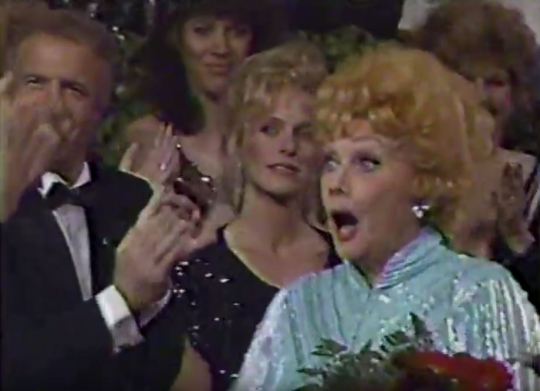
To
kick off the event, the Nelson Riddle Orchestra plays “Hey
Look Me Over” as
Lucy’s entrance music. Lucille Ball introduced the song in the 1960
Broadway musical Wildcat
by Cy Coleman.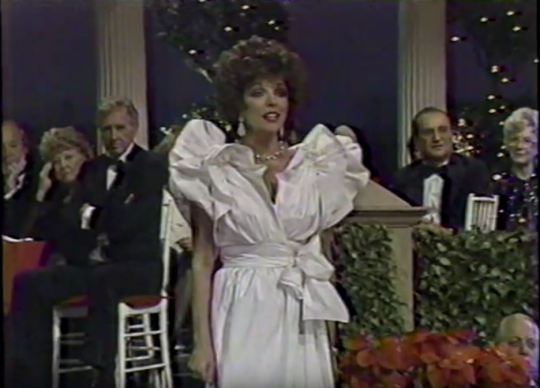
Joan
Collins
(TV’s “Dynasty”) details Lucy’s background and rise to fame; 76
films and over 500 television programs. She reminds Lucy that she
auditioned for the role of Scarlet O’Hara in Gone
With The Wind.
In 1987 Collins was honored with her own All-Star Party.Joan:
“Not
even Clark Gable could look into that face and say ‘Frankly, my dear,
I don’t give a damn’”.Frank
Sinatra
sings “You Are the Sunshine of My Life” to Lucy, a 1973 song
written and recorded by Stevie Wonder.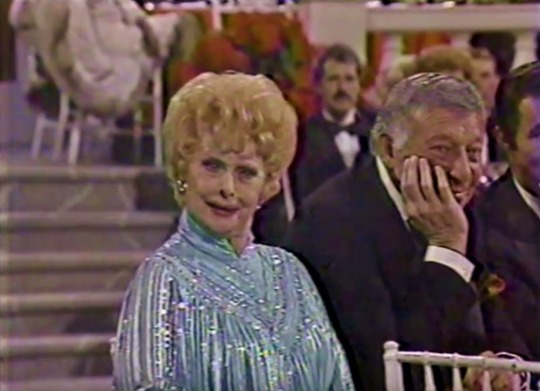
Sinatra
says to Lucy “You’re
the best thing to happen to Adam’s rib.”
This causes a quizzical look to come over Lucy’s face. Later in life,
Sinatra was known for his occasional odd references and non-sequitur.
He had been honored by Variety Clubs the previous year, 1983.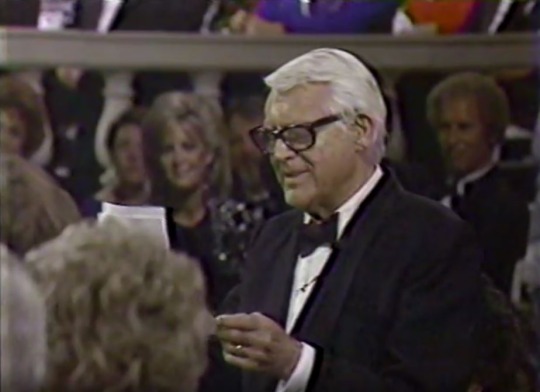
Cary
Grant
reads a letter from President Ronald Reagan. Reagan was honored with
an All-Star Party the following year, 1985. When first addressing
Ball, Grant says “Lucy, Lucy, Lucy,” imitating his falsely
attributed quote “Judy, Judy, Judy.” Grant would also read a congratulatory telegram from President Reagan in 1986,
when Clint Eastwood was honored.
Carl
Reiner
introduces and interviews Sid
Caesar
as (all the way from Germany) Professor Ludwig Von Blearyeyes, the
world’s most renowned viewer of Lucille Ball’s television shows. The
Professor describes his second favorite episode of “I Love Lucy”
which is a crazy mash-up of parts of several episodes, including
“Lucy Goes To The Hospital” (ILL S2;E16), “The Audition” (ILL S1;E16), and “Pioneer Women” (ILL S1;E25). The Professor then recounts the
same episode in Italian, proving that Lucy is known all over the
world. The description of the Professor’s favorite episode sounds
like the plot to King
Kong.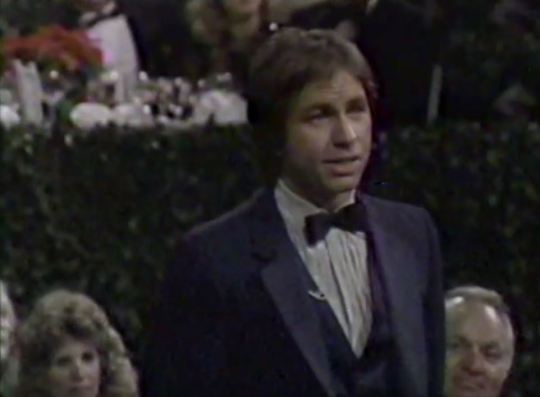
John
Ritter
is introduced as a ‘member of Lucy’s mutual admiration society,’ a
fellow comedic actor on TV. Lucille Ball had hosted a two-part
retrospective of Ritter’s show “Three’s Company” in 1982. Ritter
would be Ball’s first celebrity guest-star on “Life With Lucy” in
1986.
Ritter
introduces Olympian Carl
Lewis
and Vicki
McClure,
a young woman from Los Angeles chosen to sing at the opening
ceremonies of the 1984 Summer Olympics. McClure reprises the song she
sang at the ceremonies, “Reach Out and Touch (Somebody’s Hand).”
The song by Ashford and Simpson was
the debut solo single of Motown singer Diana
Ross,
released in April 1970.
McClure, a checkout girl at the Hughes Market in Canoga Park, was at
first just the rehearsal stand-in for Ross but she was chosen for the
real thing because as an unknown, she reflected the youthful image
that organizers hoped to project for the games.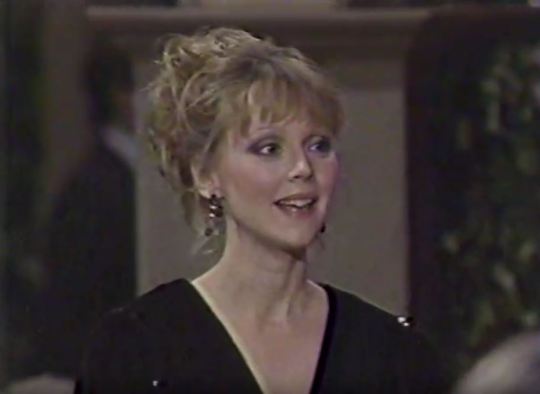
Shelley
Long
(TV’s “Cheers”) admits that she never worked with Lucy, but
admires her as a role model working mother.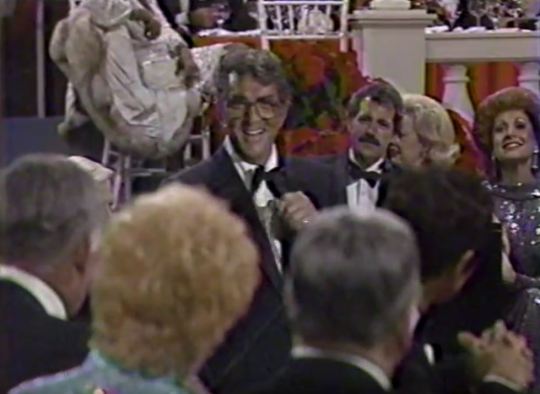
Long ‘passes the
baton’ to Dean
Martin,
while the Nelson Riddle Orchestra plays his signature song “Everybody
Loves Somebody Sometime,” a
song written in 1947 by Sam Coslow. Martin sang it in “Lucy
Dates Dean Martin” (TLS S4;E21), as well as on “Lucy Gets
Lucky,” their 1975 special.
Martin (with Ken Lane at the piano) sings “When You’re Smiling”
by Larry
Shay, Mark
Fisher and
Joe Goodwin. He
changes the lyrics to suit the occasion:“When
you’re Lucy,
When
you’re Lucy,
You’re
never off TV.
When
you’re Lucy,
That’s
all you see,
You’re
own life constantly.
On
Channel 7, 5, 4, 9, 8 or 10,
Wherever
you turn,
That’s
our Lucy again.
When
you’re Lucy,
When
you’re Lucy,
You’re
never off of TV.”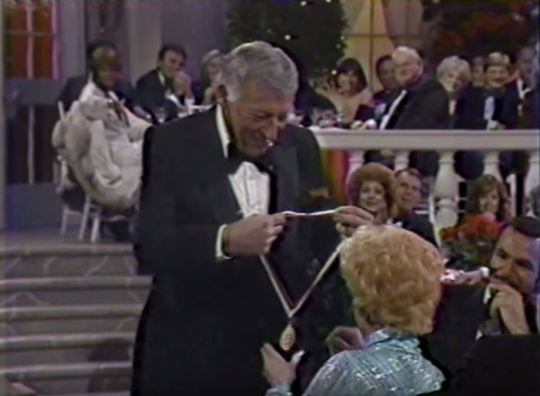
Jimmy
Stewart says
that Lucy and Gary are celebrating their wedding anniversary. Stewart
introduces Gary
Morton,
who presents Lucy with an Olympic-style medal for being a “gold
medal wife.”
Sammy
Davis Jr.’s
first remarks incorporate references to the 1961 musical Stop
the World – I Want To Get Off
by Anthony Newley and Leslie Bricusse. Davis starred in the 1978
Broadway revival of the show as well as the TV special “Sammy Stops
the World” that same year. He then gives a heartfelt and emotion
tribute to Lucy’s world-wide and timeless appeal.Sammy:
“Lucille
Desiree Ball, daughter of Desiree and Henry Ball, who stopped the
world and said ‘I wanna get on’ in Jamestown, New York. On an August
the sixth, this world of ours took little note then, but will long,
long remember. Be proud, Lucy, of your legacy. Very proud. Be
aware, as you sit here among your grateful friends, the sun never
sets on Lucille Ball. All over this worried world tonight. Nations of
untold millions are watching reruns they also watched the first time
around. In Iran and Iraq on this very night, the fighting stops long
enough for frightened people to laugh again as you hide the
frozen meat in the furnace.
In Finland after a long hard day at the factory, husbands and father
are just settling down to watch the American girl they love the most
get
half bombed on her first TV commercial.
And in Lebanon, ravished Lebanon, worried parents of many fates share
a common experience, with innocent war-torn children, who tune in to
forget the debris long enough to feed their hungry souls with
laughter as
you parade down the Champs Elysee in an outfit that drove the Paris
designers to double aperitifs.
Across the world in Singapore, Japan, whole families gather for a
‘Lucy break’ as laughter erases their problems watching you rehearse
your trip to the hospital for
television’s first birth. And in Mexico, Brazil, Argentina, Chile,
Columbia, Honduras, Guatemala, Peru, San Salvador, Venezuela, and
other sunshine countries, laughter crosses friendly and unfriendly
borders as you try to keep up with the chocolates on the assembly
line. Yes, my dear friend, Lucy, you are the one they love most.”The
specific “I Love Lucy” episodes Davis is referring to (in order)
are “The Freezer (ILL S1;E29); “Lucy Does a TV Commercial” (ILL
S1;E30); “Lucy Gets a Paris Gown” (ILL S5;E20); “Lucy Goes
to the Hospital” (ILL S2;E16); and “Job Switching” (ILL S2;E1). Lucy later said that Davis wrote the
above speech himself.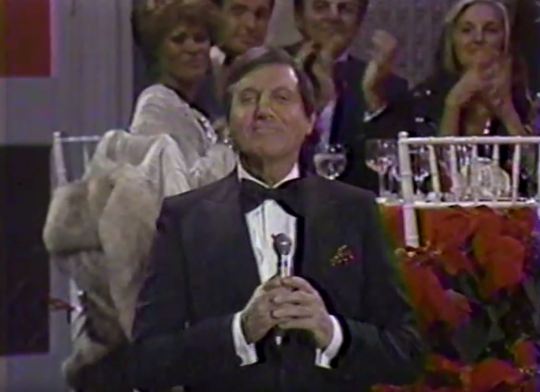
Monty
Hall returns to tell Lucy that Variety Clubs International has added
new facilities in children’s hospitals dedicated to John Wayne (in
Miami), Elizabeth Taylor (in New York City), Jimmy Stewart (in
Minnesota), Ingrid Bergman (in Des Moines), Jack Lemmon (in Buffalo),
Burt Reynolds (in Atlanta), Carol Burnett (in Los Angeles), and Frank
Sinatra (in Seattle).
Burt
Reynolds
recounts his first meeting Lucy, through an introduction by Lucie
Arnaz. Lucie and Reynolds dated for a year and a half. Nelson Riddle
and the Orchestra play the “I Love Lucy” theme by Eliot Daniel.
Lucie and Desi Jr. then sing the song to their mother with special
lyrics by Sammy Cahn. Ball struggles to hold back the tears. Lucie
Arnaz is noticeably pregnant. She would give birth to her daughter,
Katherine Luckinbill, on January 11, 1985.To
the strains of the title song from Mame,
Lucy joins Monty Hall at the front of the room where he informs her
of the naming of a research library in her honor at the Barbara
Davis Juvenile Diabetes Hospital in Denver, Colorado.
Lucille
Ball
thanks everyone for the tribute. She asks Mike Frankovich of Variety
Clubs to stand and take a bow.Lucy:
“To
everyone who said such wonderful things about me tonight, I just wish
you were all under oath.”At
the very end, the entire crowd sings “Happy Anniversary” (to the
tune of “Happy Birthday”) to Lucy and Gary, who
were married on November 19, 1961.
Oops!
Over
the entrance music, Lucille Ball can be heard to greet Dionne Warwick
saying “Hi
Diane.”
Did she think Warwick was Diahann Carroll? When Lucy sees Eva, she
just repeats over and over “A
Gabor! A Gabor! A Gabor!”
perhaps unsure if it is Eva or Zsa Zsa. Bear in mind that Ball did
not know the guest list ahead of time. While the announcer reads off
the guests stars for the opening credits, Lucy can be heard to say “I
hope I remember the names.”When
Gary Morton puts the Olympic medal around Lucy’s neck, she says “Turn
it around!”
Lucy wanted the front of the medal facing the camera. She then jokes
that she is “always directing.”
This
Date in Lucy History
– December 9
“Don
Juan and the Starlets”
(ILL S4;E18) filmed on December 9, 1955
“Lucy
and the Military Academy”
(TLS S2;E10) aired December 9, 1963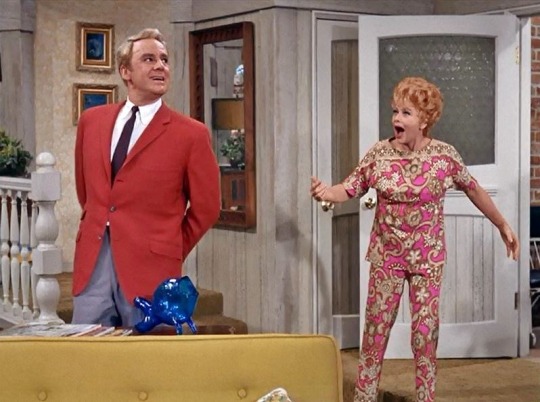
“Guess
Who Owes Lucy $23.50”
(HL S1;E11) aired December 9, 1968
 1984 Olympics, All Star Party for Lucille Ball, Barbara Davis, Burt Reynolds, Carl Lewis, Carl Reiner, Cary Grant, Dean Martin, Desi Arnaz Jr., Dick McDonough, Frank Sinatra, Gary Morton, Hey Look Me Over, I love lucy, Jimmy Stewart, Joan Collins, John Ritter, Loni Anderson, Lucie Arnaz, Lucille Ball, Mame, Monty Hall, Nelson Riddle, Paul Keyes, Reach Out and Touch Somebody’s Hand, Sammy Davis Jr., Shelley Long, Sid Caesar, Variety Clubs International, Vicky McClure
 -
LUCY THE GUEST STAR
Lucille Ball guest-starred on dozens of TV variety shows. Here’s a look at three appearances between 1968 and 1973.
“The
Bob Hope Christmas Special”
~ December 9, 1973

Starring
Bob Hope (Host), Lucille Ball, Gary Morton, Marie Osmond, Shirley
Jones, and Doris SingletonUncredited
performers play the Jewelry Saleswoman and Lucy’s MaidThe
show also includes the AP All American Football Team featuring future
NFL stars Lucious
Selman, Randy White, Randy Gradishar, Andre Tillman, and Lynn
Swan.Marie
Osmond sang “Paper
Roses” and
(with Bob Hope) “Silver
Bells.”
The
previous year, Marie’s brother Donny appeared on “Here’s Lucy.”
In 1977, Lucille Ball will guest-star on “Donny & Marie.”
This
annual Bob Hope Christmas Special was up against CBS’s “Mannix,”
a series that Lucille Ball fostered and supported after its initial
failure. Mike Connors played Mannix on a 1971 episode of “Here’s Lucy.”There
was no new episode of “Here’s Lucy” the next day, Monday,
December 10, 1973.
The
sketch featuring Lucille Ball can be viewed on the Bonus Features on
the DVD “Lucy Moves To NBC.”
Lucy’s
sketch opens
in a Jewelry Store where Bob Hope buys a diamond bracelet for his
wife Dolores’ Christmas present. Not wanting her to find it before
the holiday, he has the saleswoman send it to his friend Lucille Ball
for safe keeping. The
unnamed Jewelry Store is later said to be Cartier.Bob: “Nobody takes a comedian seriously.”
Lucy: “I never thought of you as a comedian, darling.”
Lucy
gets the package and can’t resist opening it. The card reads, “from
‘Bob”. Lucy can’t figure out which “Bob” it is from. She
guesses Robert Redford, Bob Goulet, Bob Young, and Bob Wagner before
realizing it is from Bob Hope.
Doris
Singleton drops by to visit Lucy, although Lucy never addresses her
by name. Singleton played Carolyn Appleby on “I Love Lucy” and
went on to play a variety of secretaries on “Here’s Lucy.”
After
Doris leaves, Lucy sings the title song from Mame
to the bracelet, but substitutes her own name for ‘Mame.’ Ball had
just finished filming Mame,
but the movie would not be released until the end of March 1974, four
months away.
When
Hope arrives, Lucy kisses him passionately. He attributes her
uncontrolled affection to his cologne.Bob:
“They
warned me about this Hai Karate.”Hai
Karate, a
men’s cologne made by Pfizer, is best remembered today for its
television
ads and
the inclusion of a small self-defense booklet with each bottle to
help wearers fend off women.Lucy:
“I had nothing left. My chicks had flown the nest. My rooster had
left for the golf course. I was useless, unloved, unwanted. And then
your bracelet arrived and I’m alive!”
Bob:
(under his breath) “I’m
dead.”
Lucy
opens a small wooden box and removes a lock of Hope’s hair she says
she snipped from his head when they were making Sorrowful
Jones
together. The 1949 film was the first collaboration between Hope and
Ball.
She also shows him an ashtray from the hotel room in The
Facts of Life,
their 1960 film together.
Suitcases
in hand, Lucy wants them to run off to Rio together. Just then,
Lucy’s husband Gary Morton comes home.
As
the sketch finishes, Lucy says she’s grateful to Hope for giving them
the plot to their next Monday night’s show. Both
“Here’s Lucy” and this special were pre-taped / filmed, but the
following Monday night’s “Here’s Lucy” was “Lucy
and Chuck Connors Have a Surprise Slumber Party”
(HL
S6;E13). In reality, Ball was nearly finished filming her final
season of “Here’s Lucy.”Oops! As
with most of Bob Hope’s specials, everyone’s eyes can occasionally be
seen glancing at the cue cards.
“The
Tennessee Ernie Ford Special” ~ November 16, 1968
Directed
by Robert SidneyStarring
Tennessee Ernie Ford (Host), Lucille Ball, Andy Griffith, The
Golddiggers, and Jack Benny
Although
he had been working on the Desilu backlot filming “The Andy
Griffith Show” (which had just ended after 8 years), Andy Griffith would
not act opposite Lucille Ball again until 1973, when he appeared on
“Here’s Lucy.”
Jack
Benny makes a brief appearance plugging his special, “Jack Benny’s
Bag,” which followed this show on NBC. This was Benny’s answer to “Laugh-In.”
On
the evening this NBC special, CBS’s “Petticoat Junction”
introduced June Lockhart as Dr. Janet Craig, replacing Bea Benadaret,
who had died a month earlier. Benadaret was Lucille Ball’s co-star on
her radio show “My Favorite Husband” and was her first choice to
play Ethel Mertz. When she was unavailable, Lucy gave her a
guest-star role of Miss Lewis (above) on the first season of “I Love Lucy.”
The
special was also up against CBS’s “Hogan’s Heroes.” The series
stars Bob Crane (Hogan) and John Banner (Schultz) had guest-starred
on “The Lucy Show” in 1966.
The
next day, Sunday, November 17, 1968, NBC was involved in one of the
biggest blunders in television history: The Heidi Bowl. When a
football game between the New York Jets and the Oakland Raiders was
running long, NBC made the error of starting their movie, Heidi,
instead of letting the game finish. It made the front page of the New
York Times,
was featured on evening news and proved to television executives the
appeal of pro football.
Two
days later (Monday, November 18) “Here’s Lucy” aired “Lucy’s
Birthday” (HL S1;E8).
Lucille
Ball’s appearance was her was her way of repaying Ford for appearing on
“The Lucy Show” in February 1967. Ford would also guest-star on
“Here’s Lucy” in March 1969.Excerpts
from this program can be viewed on the “Here’s Lucy” Season 6 DVD
Bonus Features.Ford
credits Lucille Ball with giving him his first big break in
television, appearing on “I Love Lucy.”
He
shares a couple of snapshots of two of his three appearances on the
series. The first is from “Tennessee Ernie Visits” (ILL S3;E28)
and the second from “Tennessee Ernie Hangs On” (ILL S3;E29) where
Lucy says she looks like Ma Kettle.Ford:
“If
Ma Kettle looked like you, they’d put her on the Playboy centerfold!”
Ma
(and Pa)
Kettle
are
characters from the successful film series of the same name, produced
by Universal
Studios,
in the late 1940s and 1950s. They are a hillbilly
couple
with fifteen children whose lives turn upside-down when they win a
new futuristic home in a slogan-writing contest. Marjorie Main (right), the actor who played Ma Kettle, would play a supporting role in 1954′s The Long, Long Trailer.
While
Ernie is praising how elegant and sophisticated Lucy is (and the
camera is on Ford), Lucy has blacked out her teeth to look like a
hillbilly.
A
nearly wordless sketch starring Lucy and Andy Griffith depicts them
as a married couple living in a tiny camper, waking up, having
breakfast, and sending the husband off to work.
In 1954 Lucille Ball
and Desi Arnaz had explored this idea in the MGM feature film The
Long, Long Trailer. In the above photo Lucy and Desi are seen with Marjorie Main!
“The
Pearl Bailey Show”
(S1;E2) ~ January 30, 1971
Starring
Pearl Bailey (Host), Lucille Ball, George Kirby, Sergio Mendes with
Brasil ’66Featuring
the Louis Bellson Orchestra, The Bob Sidney Dancers, and the Allan
Davies Singers
“The
Pearl Bailey Show” was a mid-season replacement that
ran 15 episodes on ABC. It was filmed at the Hollywood Palace
Theatre. Tough
competition from “The
Dean Martin Variety Show,”
“The
Carol Burnett Show,”
and
“Laugh-In”
helped
sink Pearl’s show.
Two
days later (February 1),
“Here’s Lucy” aired “Lucy and Aladdin’s Lamp” (HL S3;E21).Excerpts
from this program can be viewed on the “Here’s Lucy” Season 4 DVD
Bonus Features.
For
her grand entrance, Lucille Ball is carried in on a fur-lined litter
by six of the Palace Theatre Pages (the Bob Sidney Dancers). Checking
the fur’s label, Pearl finds it reads “Stolen From Pearl Bailey.”
Lucy dismisses the Pages, who dance off singing “If
you ever need us we’ll be waiting in the wings, hanging on your every
word.”
Later
in the show, Lucy (wearing a yellow mini dress) does a march number
with the Bob Sidney Dancers. The song includes snippets of
“Stouthearted Men,” “You’re A Grand Old Flag,” “The
National Emblem March” and others.
Ooops! At
one point, Lucy forgets to lip-synch when she is supposedly startled
by the drums.
1968, 1971, 1973, Andy Griffith, Bea Benadaret, Bob Hope, Cartier, christmas, Doris Singleton, Gary Morton, Hai Karate, Heidi Bowl, Here’s Lucy, Hogan’s Heroes, I love lucy, Jack Benny, Lucille Ball, Ma Kettle, Mame, Mannix, Marie Osmond, Marjorie Main, Pearl Bailey, Sorrowful Jones, Tennessee Ernie Ford, The Facts of Life, The Long Long Trailer, The Lucy Show, tv, Variety Shows -
LUCY & US SAVINGS BONDS
A look at Lucille Ball’s support of the US Savings Bond program from 1942 to 1973.

A BRIEF HISTORY OF US BONDS
Liberty
Bonds (World War I)During
World War One (1917-18) the
US government used movie stars to host bond rallies. Al
Jolson, Elsie
Janis, Mary
Pickford, Douglas Fairbanks, and Charlie
Chaplin were
among the celebrities that made public appearances promoting the
patriotic element of purchasing Liberty
Bonds. Chaplin
also made a short film, The
Bond,
at his own expense for the drive.
Defense
/ War Bonds (World War II)Secretary
of the Treasury Henry Morgenthau, Jr. began planning a national
Defense
Bond program
in the fall of 1940. The intent was to unite the attractiveness of
the baby bonds that had been implemented in the interwar period with
the patriotic element of the Liberty
Bonds from
the First World War.
The
name of the bonds was eventually changed to War
Bonds
after the Japanese attack
on Pearl Harbor on
December 7, 1941, which resulted in the United States entering the
war.
Philadelphia Daily News ~ June 6, 1942
Reports that Lucille Ball sent a $25 War Bond to each of the ten girls that were fired from backing her up on “The Big Street”.
US Savings Bonds
After the end of World War II, the US Federal Bond program continued but was renamed the US Savings Bond program. The proceeds still were used towards national defense in such military events as the Korean Conflict and the Vietnam War.

Artists,
entertainers and schools pitched in to support the war bond effort.
Occasionally, movie premieres offered admission with the purchase of
a bond, while star-studded parades and touring shows entertained
audiences and promoted bonds. The
Hollywood Bond Cavalcade (1943),
for example, was a traveling variety show featuring such stars as
Lucille Ball, Judy Garland, and Mickey Rooney.
“Christmas
Previews with Lucille Ball & Desi Arnaz”1:00 minute, December 1955
Lucy
and Desi play themselves in a living room (not the Ricardos),
trimming the tree with Savings Bonds for their children. Dividing their gifts, Lucy is surprised that one addressed “Mrs. Desi Arnaz” is for her! This one
minute black and white spot was meant to be shown in cinemas.Desi:
“There’s
no better way to express the spirit of Christmas than US Savings
Bonds.”

In
a 1962 episode of “The
Lucy Show,” Lucy
Carmichael volunteers for a women in space mission. Fearing
the dangers of space travel, Lucy tearfully regrets her decision.
“The
Lucy Show”45 seconds, filmed mid-1965 through early 1968
Starring
Lucille Ball (as herself) sitting in Lucy Carmichael’s California living
room, the main set from “The Lucy Show.”Lucille
Ball recommends United States Savings Bonds to support President
Johnson and the Vietnam War.Similar
PSAs were done by Irene Ryan as Granny from “The Beverley
Hillbillies,” Dan Blocker and Lorne Green (“Bonanza”), Ann
Marcus (“Peyton Place”), plus film stars like John Wayne and
Charlton Heston.
“Twenty Five Years of Savings Bonds”
7:30 minutes, filmed 1966

Written
by Frank Ashe. Starring
Lucille Ball (as herself) sitting in Lucy Carmichael’s California
living room, the main set from “The Lucy Show.”
This
film is part of “The Lucy Show” Season 5 DVD bonus
features.
As
Lucy narrates there is footage of actor Gregory Peck on the set of
Pork
Chop Hill (1959)
holding a poster for Savings Bonds, followed by footage of singer Pat
Boone in front of a suburban home.
When Boone’s bonds are shown in
close-up, the address given is 10201 West Pico Boulevard, the
location of 20th Century Fox Studios. In 1959, Boone appeared in Journey
to the Center of the Earth
for Fox.Footage
from a parade of stars recruited to pitch bonds (then called War
Bonds) includes Jimmy Cagney, Greer Garson, Fred Astaire, Harpo Marx,
Kay Kaiser, and Lucille Ball.Lucille Ball: “We had rallies, parades, all the old hoopla and boom-de-boom.”
Lucy
remembers the Hollywood stars that went off to fight: (Clark) Gable,
(Jimmy) Stewart, (Robert) Taylor, (Henry) Fonda, (Robert) Montgomery.
Lucy recalls that it was during a war bonds tour in January 1942
that her dear friend Carole Lombard perished in a plane crash. Only
the day before she had raised $2.5 million at an Indianapolis bond
rally.
Lucy
mentions that the US Armed forces continued to fight communism in
Korea and (now) Vietnam. She also mentions the “shameful wall”
in Berlin.Lucille Ball:
“I
don’t pretend to understand it all. I’m just Lucy, you know.”Lucy
says that the space program also benefits from Savings Bonds. In 25
years nearly 150 billion dollars of Bonds were sold. Two thirds of
those were cashed in for personal use.

“Here’s
Lucy”12 minutes, filmed September 27, 1973
Directed
by Coby Ruskin ~ Written by Bob O’Brien. Lucille
Ball (as
Lucy Carter and herself),
Gale Gordon (as
Harrison Otis Carter and himself), Lucie
Arnaz (as
Kim Carter and herself), and Roy Rowan (Announcer).A
short ‘episode’ (shot on the Unique Employment Agency set) in which
Lucy, Kim, and Uncle Harry discuss the importance of Savings Bonds.
It’s done in sitcom fashion, although there
was no studio audience and no laugh track.The
last minute and a half of the ‘episode’ the actors play themselves
and talk to the camera.Lucille
Ball:
“I
have been a supporter of the Bond program as long as there’s been a
Bond program.”It
was filmed on the same day the cast and crew filmed “Tipsy Through
the Tulips” (HL S6;E10), an episode featuring guest-star Foster Brooks.It
can be viewed on disc 4 of the “Here’s Lucy” Season Six DVD set
Bonus Features.It
is unclear whether this Public Service Announcement / ‘episode’ was
ever aired, shown, or to whom.
The
film opens with Harry at his desk reading a pamphlet about the
Payroll Savings Plan.As
usual, Lucy is late to work. First thing, Harry dictates a letter to
Henry Jones of the US Treasury Department [not a real person]. Harry
tries to convince Lucy (who pleads poverty) to enroll in the Payroll
Savings Plan to buy bonds. Harry tells Lucy that Bonds help manage
the national debt. In previous decades the push was for military
defense.Lucy
makes a joke about John Wayne, one of Lucille Ball’s favorite guest
stars. He played himself on both “I Love Lucy” and “The Lucy
Show.” Wayne was also a supporter of the Bond program, filming his own PSAs on the subject.Kim
enters and says that lots of kids at her college are only there
because their parents saved for their education through US Savings
Bonds.Kim
reminds Lucy that she may want to take a trip to Hawaii some day.
Script writer Bob O’Brien either has a short memory or didn’t do his
research. Lucy and Kim went to Hawaii in a two-part episode just a
year and a half earlier!
The
“Here’s Lucy” opening credits are the same, but the closing
credits features original music by Marl Young.
Sometime during “Here’s Lucy” Lucie Arnaz (as herself) also did her own PSA for US Savings Bonds.
Gale Gordon (as himself) also did one, on the set of “Here’s Lucy,” where he talks to “Uncle Sam” on the telephone.

 Bob O’Brien, Bonds, Carole Lombard, Coby Ruskin, Defense Bonds, Department of Defense, Desi Arnaz, Desilu, Gale Gordon, Gregory Peck, Here’s Lucy, Hollywood Bond Cavalcade, Liberty Bonds, Lucie Arnaz, Lucille Ball, Marl Young, Pat Boone, Payroll Savings Plan, Pork Chop Hill, The Big Street, The Lucy Show, tv, US Savings Bonds, US Treasury, War Bonds, World War II
 -
THE DEAN MARTIN CELEBRITY ROAST: LUCILLE BALL
February
7, 1975
Directed
by Greg GarrisonWritten
by Harry Crane, George Bloom, Tom Tenowich, Milt Rosen, Don Hinkley,
Peter Gallay, Stan Burns, and Mike Marmer

Dean
Martin
(Roastmaster) was
born Dino Paul Crocetti in Steubenville, Ohio, in 1917. He made his
screen debut in a short playing a singer in Art Mooney’s band, but
his first big screen role was 1949’s My
Friend Irma with
Jerry Lewis. This began a partnership that would be one of the most
successful screen pairings in cinema history. Later, he also worked
frequently members of “the Rat Pack”: Frank Sinatra, Joey Bishop,
Peter Lawford, and Sammy Davis Jr. His persona was that of a playboy,
usually seen with a glass of booze and a cigarette. Martin and
Lucille Ball appeared on many TV variety and award shows together and
made the TV movie “Lucy Gets Lucky” in 1975 as well as a 1966
episode of “The Lucy Show.” He died on Christmas Day in 1995 at
age 78.Dean Martin: “There isn’t anything this girl can’t do. She can sing, she can dance, she can get laughs – especially from her singing and dancing.”

Lucille
Ball (Woman
of the Hour) was
born on August 6, 1911 in Jamestown, New York. She began her screen
career in 1933 and was known in Hollywood as ‘Queen of the B’s’
due to her many appearances in ‘B’ movies. With Richard Denning,
she starred in a radio program titled “My Favorite Husband” which
eventually led to the creation of “I Love Lucy,” a television
situation comedy in which she co-starred with her real-life husband,
Latin bandleader Desi Arnaz. The program was phenomenally successful,
allowing the couple to purchase what was once RKO Studios, re-naming
it Desilu. When the show ended in 1960 (in an hour-long format known
as “The Lucy-Desi Comedy Hour”) so did Lucy and Desi’s
marriage. In 1962, hoping to keep Desilu financially solvent, Lucy
returned to the sitcom format with “The Lucy Show,” which lasted
six seasons. She followed that with a similar sitcom “Here’s
Lucy” co-starring with her real-life children, Lucie and Desi Jr.,
as well as Gale Gordon, who had joined the cast of “The Lucy Show”
during season two. Before her death in 1989, Lucy made one more
attempt at a sitcom with “Life With Lucy,” also with Gordon,
which was not a success and was canceled after just 13 episodes.Lucille Ball: “During my lifetime, I’ve had audiences with the Pope, I’ve dined with presidents…but being here tonight with people in my own business, I can honestly say how great it was being with the Pope and the presidents.”

On
The Dais (in order of speaking)Phyllis Diller was an actor and stand-up comedian best known for her eccentric stage persona, her self-deprecating humor, her wild hair and clothes, and her exaggerated, cackling laugh. Diller and Lucille Ball never acted together, but did appear on various TV specials and talk shows together. In 1972 female impersonator Jim Bailey played Phyllis Diller on a 1972 episode of “Here’s Lucy.” She died in 2012 at age 95.
Phyllis Diller: “Lucy is my kind of a girl. We’re both cut from the same mold. It’s just that I’m moldier.”

Dick Martin was born Thomas Richard Martin on January 30, 1922, in Battle Creek, Michigan. He is probably best remembered as the co-host of “Rowan & Martin’s Laugh-In” from 1967 to 1973. As a teenager he lost a lung to tuberculosis and used bottled oxygen for the rest of his life. Martin was a writer for the popular radio show “Duffy’s Tavern” before teaming up with Dan Rowan in the 1950s. They played nightclubs and Las Vegas before Martin being cast as Harry Conners, his ‘acting’ debut on the first season of “The Lucy Show.” He was married three times and died in 2008 of respiratory failure.

Dan Rowan was the comedy partner of Dick Martin, and, like Martin, is best known as the co-host of “Rowan and Martin’s Laugh-In” which aired from 1968 to 1973 and earned him a 1972 Emmy Award. In 1966 he had appeared with Lucille Ball on “The Dean Martin Show.” Rowan made two appearances on “The Lucy Show.” He died in 1987 at age 65.

Dan
Rowan and Dick Martin
roast Lucy together, befitting their comedy partnership as the hosts
of the recently canceled “Laugh-In.” When Martin was cast as
Lucy’s love interest on the first season of “The Lucy Show,” he
made it clear that he had to have time off to do his club dates with
Rowan. Although Rowan also appeared on the show, the two were never
in the same episodes.
Ruth Buzzi (as Gladys Ormphby) came to national recognition when she teamed up with Dom DeLuise as an incompetent magician and she his assistant who never spoke but sported a wide grin. The audiences demanded more of them and they eventually played several major nighttime television variety shows. She was cast on “Rowan and Martin’s Laugh-In” creating the character of Gladys Ormphby, a homely woman with a hairnet and a lethal handbag who was often found on a park bench. She played Annie Whipple on a 1972 episode of “Here’s Lucy.” In 1986, Ruth Buzzi guest-starred (with John Ritter) on the second episode of “Life With Lucy.” She was nominated for five Emmy Awards and won a Golden Globe in 1973.
Ruth
Buzzi appears
as the character she created on “Laugh In.”
Gladys says she was Lucy’s old roommate when they were both showgirls
starting out. Buzzi is the only one on the dais to play a character,
and not roast Lucy as herself.

Bob
Hope was
born Lesley Townes Hope in England in 1903. During his extensive
career in virtually all forms of media he received five honorary
Academy Awards. In 1945 Desi Arnaz was the orchestra leader on Bob
Hope’s radio show. Ball and Hope did four films together. He
appeared as himself on the season
6 opener of
“I Love Lucy.” He did a brief cameo in a 1964 episode of “The
Lucy Show.”
When
Lucille Ball moved to NBC in 1980, Hope appeared on her
welcome special.
He died in 2003 at age 100.Bob Hope: “Lucy’s always doing nice things. Even though she’s not with Desi anymore she got him a job as a dialogue coach on ‘Chico and the Man’.”

Milton Berle was born Milton Berlinger in New York City on July 12, 1908. He started performing at the age of five. He perfected his comedy in vaudeville, early silent films, and then on radio, before taking his act to the small screen, where he would be proclaimed “Mr. Television” and later “Uncle Miltie.” He hosted “Texaco Star Theater” on NBC from 1948 to 1956. The variety show was re-titled “The Milton Berle Show” in 1954 when Texaco dropped their sponsorship. The program was briefly revived in 1958, but lasted only one season. In 1959 he played himself in “Milton Berle Hides out at the Ricardos.” Berle continued to perform live, in films, and on television specials for the remainder of his career. Berle was seen in four episodes of "The Lucy Show” and two episodes of “Here’s Lucy.” On all but one, he again played himself. He died of colon cancer in 2002.
Milton Berle: “Lucille Ball has emerged as the sex symbol for men who no longer care.”

Gary Morton was a comedian who worked the famed ‘Borscht Belt’ in the Catskills Mountains. He met Lucille Ball shortly after her divorce from Desi Arnaz and they married in November 1961. At her request, Morton gave up his nightclub career and became a producer of “The Lucy Show.” Morton also served as a warm-up comic for the show’s studio audience. He made several on-camera appearances on “The Lucy Show” and “Here’s Lucy.” Morton passed away in 1999.
Gary Morton: “I’m in a very delicate position, having to roast my own wife. I can just picture her tonight, setting the electric blanket to ‘headache.’”

Gale Gordon was said to be the highest paid radio artist of the 1930’s and was in such demand that he often did two or more radio shows a day. His professional collaboration with Lucille Ball started in 1938 as the announcer of Jack Haley’s “The Wonder Show” (Wonder Bread was their sponsor). He played Mr. Atterbury on Lucy’s “My Favorite Husband” and was a front-runner for the part of Fred Mertz on “I Love Lucy.” When scheduling prevented his participation, he appeared as Mr. Littlefield, the Tropicana’s owner in two episodes of the show. In addition to Mr. Littlefield, he played a Judge in “Lucy Makes Room for Danny,” a 1958 episode of “The Lucy–Desi Comedy Hour.” “The Lucy Show” solidified his partnership with Lucille Ball for the rest of their careers. He went on to play Harrison Otis Carter in “Here’s Lucy,” Omar Whittaker in “Lucy Calls The President,” and Curtis McGibbon in “Life with Lucy.” He died in 1995 at the age of 89.
Gale Gordon: (to Lucy) “Mrs. Morton, Vivian Vance is funnier than you are.”

Totie Fields was born Sophie Feldman in 1927 (some sources cite 1930). ‘Totie’ was a childhood nickname derived from a baby’s pronunciation of ‘Sophie’. She was a nightclub comedienne whose first big break came on “The Ed Sullivan Show.” After that, she appeared on many TV talk and variety shows. She made a rare ‘acting’ appearance on a 1972 episode of “Here’s Lucy.” Fields was diabetic and had a leg amputation in 1976. Her health declined and she died in 1978.
Totie Fields: “Lucy darling, you have been a big star for many, many years and it must kill ya to see a young kid like me stepping into your shoes.”

Rich Little was born in Canada in 1938. He was a nightclub comic who became famous for his vast repertoire of impressions. His screen career began in 1964 and he appeared on virtually every TV talk and variety show over the next thirty years. He was known as “The Man of a Thousand Voices.” He guest-starred on a 1971 episode of “Here’s Lucy.”
Rich Little does his imitations of Carol Channing, Paul Lynde, Johnny Carson, and Nelson Rockefeller, the man elevated to Vice President in December 1974 when Ford assumed the presidency after Nixon’s resignation.

Henry Fonda first worked with Lucille Ball in the 1935 film I Dream Too Much. They also teamed for The Big Street (1942) and Yours Mine and Ours (1968). Fonda was nominated for three Oscars, winning in 1982 for On Golden Pond. He also won an honorary Oscar in 1981. Uncomfortable with comedy, he never acted opposite Lucille Ball on television. Fonda died in 1982 at age 77.
Henry Fonda tells a humorous (probably apocryphal) story of dating Lucy when she first got to Hollywood.

Ginger
Rogers
was
born Virginia Katherine McMath in Independence, Missouri on July 16,
1911, just one month before Lucille Ball. As a singing and dancing
actor, Rogers was mainly know for her partnership with fellow singer
/ dancer Fred Astaire in ten films. It was said that “Ginger
did everything that Fred did, except backwards – and in
heels!” During
the 1930’s Lucille Ball did five films with Rogers, whom she
considered a mentor. By the 1970s Rogers had entered
semi-retirement although she did guest star on “Here’s Lucy” in
1971. Lucie Arnaz has said that Rogers may have been a distant cousin
of Lucille Ball’s. She won an Oscar in 1940 for Kitty
Foyle,
a rare dramatic role. Rogers died in 1995.Ginger Rogers: “I’ve known Lucy longer than anyone here, I think its safe to say that. What’s not safe to say is how I feel about her.”

Foster Brooks was a newscaster and disc jockey before switching to television newscasting. His drunk act went over well with crowds at Las Vegas nightclubs and on television. Brooks was a frequent guest on talk and variety shows and several Dean Martin celebrity roasts. He actually quit drinking in the early 1960s (on a bet) and remained ‘on the wagon’ for the rest of his life. In 1973 he guest-starred on an episode of “Here’s Lucy.” He was nominated for an Emmy for his work with Dean Martin. He died in 2001 at age 89.
Foster Brooks does his drunk act, naturally. His jokes are based on the (made up) premise that he and Lucy were high school sweethearts in Jamestown. He playfully calls her ‘Big Red,’ ‘Lucille Bald,’ and ‘Cherry Head.’

Nipsey Russell was a comedian whose first major role was Officer Anderson in “Car 54, Where Are You?” (1961). Russell was a mainstay on variety shows, appearing on “Laugh-In,” “The Dean Martin Show” (1965), and the “Jackie Gleason Show,” among many others. In the 1970s Russell became a popular game show panelist, appearing on “To Tell The Truth,” “Match Game PM” (1975), and many others. He was known as television’s poet laureate. His film roles were few, but he will always be remembered for his role of the Tin Man in The Wiz (1978). He died in 2005 of cancer.
Nipsey Russell is the only panelist (aside from Phyllis Diller) who never acted opposite Lucille Ball.

Jack Benny was born on Valentine’s day 1894. He had a successful vaudeville career, and an even greater career on radio with “The Jack Benny Program” which also became a successful television show. His screen persona was known for being a penny-pincher and playing the violin. Benny was a Beverly Hills neighbor of Lucille Ball’s and the two were off-screen friends. Benny previously appeared on “The Lucy Show” as Harry Tuttle (a Jack Benny doppelganger) in “Lucy and the Plumber” (TLS S3;E2), did a voice over cameo as himself in “Lucy With George Burns” (TLS S5;E1), and played himself in “Lucy Gets Jack Benny’s Account” (TLS S6;E6). He also appeared in three episodes of “Here’s Lucy.” Benny and Ball appeared on many TV variety and award shows together. He died in 1974.
Jack
Benny
says that he’s enjoyed his trip to Las Vegas because Fred MacMurray
got him a good seat on the bus. In the 1970s, TV and film actor
MacMurray was spokesman for Greyhound Bus Lines.This
was the last public appearance of Jack Benny. Benny died weeks after
the taping of this special. Dean Martin appeared in a special
introduction dedicating the show to Benny’s memory.
Vivian Vance was born Vivian Roberta Jones in Cherryvale, Kansas in 1909, although her family quickly moved to Albuquerque, New Mexico where she was raised. She had extensive theatre experience, co-starring on Broadway with Ethel Merman in Anything Goes. She was acting in a play in Southern California when she was spotted by Desi Arnaz and hired to play Ethel Mertz, Lucy Ricardo’s neighbor and best friend. The pairing is credited with much of the success of “I Love Lucy.” Vance was convinced to join the cast of “The Lucy Show” in 1962, but stayed with the series only through season three, making occasional guest appearances afterwards. She made six appearances on “Here’s Lucy” although she also joined Lucy for a TV special “Lucy Calls the President” in 1977. Vance died two years later.
Vivian Vance (to Lucy): “You probably don’t remember me. But we go back a long way.”

Don
Rickles
worked
as a stand-up comic in nightclubs for nearly 20 years before making
his film debut in 1958. Rickles was known as an insult comic and
became a staple of Hollywood roasts. In 1967 he played a prize
fighter on an episode of “The Lucy Show.” He would be seen with
her on variety shows and specials through 1988. Rickles was the
voice of Mr. Potato Head in the animated Toy
Story franchise. He
died in April 2017 at age 90.Don Rickles: “I must be honest. I never liked Lucille Ball, I never did.”

Juicy Roast Trivia

The
“Dean Martin Celebrity Roasts” were taped in the Celebrity Room
of Las Vegas’ MGM Grand Hotel.
The hotel (destroyed by fire in 1980) was
also seen in “Lucy Gets Lucky” which co-starred Dean Martin and
was filmed in and around the newly opened casino hotel. The
establishing footage of “Lucy Gets Lucky” is nearly identical to
that of this roast.
“The
Dean Martin Celebrity Roasts” originated on NBC’s “The Dean
Martin Show” (1965-74) before becoming stand-alone specials. This
was just the third of the ‘stand-alone’ roasts. Lucille Ball sat on
the dais to roast her good friend Danny Thomas in December 1976 and
for Jimmy Stewart in June 1978.
The
afternoon this roast first aired, Lucille Ball’s daughter, Lucie
Arnaz, appeared on ABC’s “The $10,000 Pyramid.”
On
the animated series “Family
Guy”
(S13;E16) Lucille
Ball is briefly seen as a celebrity roaster for Sammy Davis,
Jr. in
a Dean Martin roast
infomercial.
Martin did indeed roast Sammy Davis Jr., on April 24, 1975, although
Lucille Ball was not actually on the dais.
In
October 2014, “Saturday
Night Live”
presented a sketch about a roast in heaven hosted by Joan Rivers
(Sarah Silverman). Lucille Ball (played by Kate McKinnon) was on the
dais of ‘dead celebrities.’
“The Dean Martin Celebrity Roasts” are available on DVD or by streaming.
ROAST BEEFS
There is some racial-based humor on this particular 1975 roast that would never be acceptable on television today. Nipsey Russell is the only person of color on the dais.
Foster Brooks: “Lucy and I were drawn to each other physically. Like two moths to a sock. I was a lusty larva and she had a cute cocoon. (looks over at Nipsey Russell) No offense to the colored man on the dais.”
[Note: While saying the word ‘cocoon’ Brooks has one of his usual ‘alcohol induced’ pauses between the first syllable and the second.]
Nipsey Russell: “In all her years on television, Lucille Ball never used a black performer. And we want her to know from the bottom of our hearts we appreciate. We had enough trouble.”

Russell’s self-deprecating joke is not exactly true. Sam McDaniel (Hattie’s brother) played a train porter (with lines) on “The Great Train Robbery” (ILL S5;E5) in 1955. Betty Allen appeared as a Kildoonan townsperson in “Lucy Goes to Scotland” (ILL S5;E17) in 1956. Ball made a conscious effort to integrate the day players employed on “Here’s Lucy” in the early 1970s. Sammy Davis Jr. guest-starred in 1970 and Flip Wilson in 1971. Although these two men were both major celebrities, lesser known
John William Sublett (aka the “Father of Rhythm Tap” and the original Sportin’ Life in Porgy and Bess) played a supporting role in two 1967 episodes of “The Lucy Show.”

Later in the telecast, insult comic Don Rickles suddenly barks at Nipsey Russell “Shut up! I hate when a spade butts in!” Russell dutifully stands up and tells him to stop saying ‘spade’ which sends Rickles into a mock tap dance.
As shocking as this sort of racial name-calling is by today’s standards, the entire Celebrity Room erupts in laughter, as does everyone on the dais.
Outside of the racial slurs, this (and most of the roasts) relied not only on jokes about the man or woman of the hour, but also about Dean Martin (his drinking) and anyone else sitting on the dais. There are numerous cutaway shots to celebrities laughing every time a joke is told. In the end, there are no real barbs slung at Lucille Ball. No one jokes about Ball’s strict work ethic, her temper, her mixed marriage and divorce, or anything touching the real world. Overall, these were fairly toothless, self-aggrandizing affairs.
As of this writing (4/14/2018) only Ruth Buzzi and Rich Little are still alive.
This
Date in Lucy History
– February
7th
"Hollywood at Last!”
(ILL S4;E17) – February 7, 1955
“Lucy
Goes to a Hollywood Premiere”
(TLS S4;E20) – February 7, 1966
“Lucy’s
Punctured Romance”
(HL S4;E22) – February 7, 1972
 1975, Bob Hope, Celebrity Room, Dan Rowan, Dean Martin, Dean Martin Celebrity Roast, Dick Martin, Don Rickles, Foster Brooks, Gale Gordon, Gary Morton, Ginger Rogers, Greg Garrison, Henry Fonda, Humor, Jack Benny, Las Vegas, Lucille Ball, MGM Grand, Milton Berle, NBC, Nipsey Russell, Phyllis Diller, Racial Slurs, Rich Little, Roast, Roasts, Ruth Buzzi, Totie Fields, Vivian Vance
 -
DONNY & MARIE
September 30, 1977 (S3;E2)

Directed
by Art FisherChoreography
by Carl JabolonskiIce
Choreography by Rob PaulWritten
by Rod Warren, Bill Dana, Paul Pumpian, Harvey Weitzman, Bruce
Vilanch, and Ed HiderSpecial
Musical Material by Earl Brown
Donny
Osmond (Himself)
began his TV career on “The Andy Williams Show” in 1963 singing
with his brothers, The Osmonds. Osmond became a teen idol in the
early 1970s as a solo singer, while continuing to sing with his older
brothers. His first solo hit was a cover of Roy Orbison’s 1958
recording of “Sweet and Innocent". Osmond’s follow-ups “Go
Away Little Girl", “Puppy Love” and “Hey Girl / I Knew You
When” vaulted him to international fame. Later in his career, Donny
Osmond acted on Broadway and in films. Before teaming with his sister
on “Donny & Marie” (1976-79)
he
guest-starred on a 1972 episode of “Here’s Lucy.”
Marie
Osmond (Herself)
was
never part of her family’s singing group, but she gained success as a
solo country
music
artist
in the 1970s and 1980s. Her best known song is a cover of the country
pop
ballad
“Paper
Roses”.
From 1976 to 1979, she and her brother Donny
hosted
the television variety show “Donny
& Marie.”
Marie is also a successful entrepreneur with a collection of dolls
sold on QVC, a philanthropist founder of the Children’s Miracle
Network, as well as a spokesperson for various weight loss products.
She is an author as well as a wife and mother.
Lucille
Ball (Herself)
was born on August 6, 1911 in Jamestown, New York. She began her
screen career in 1933 and was known in Hollywood as ‘Queen of the
B’s’ due to her many appearances in ‘B’ movies. With Richard
Denning, she starred in a radio program titled “My Favorite
Husband” which eventually led to the creation of “I Love Lucy,”
a television situation comedy in which she co-starred with her
real-life husband, Latin bandleader Desi Arnaz. The program was
phenomenally successful, allowing the couple to purchase what was
once RKO Studios, re-naming it Desilu. When the show ended in 1960
(in an hour-long format known as “The Lucy-Desi Comedy Hour”) so
did Lucy and Desi’s marriage. In 1962, hoping to keep Desilu
financially solvent, Lucy returned to the sitcom format with “The
Lucy Show,” which lasted six seasons. She followed that with a
similar sitcom “Here’s Lucy” co-starring with her real-life
children, Lucie and Desi Jr., as well as Gale Gordon, who had joined
the cast of “The Lucy Show” during season two. Before her death
in 1989, Lucy made one more attempt at a sitcom with “Life With
Lucy,” also with Gordon, which was not a success and was canceled
after just 13 episodes.
Ray
Bolger
(Himself) is probably best known for his portrayal of The Scarecrow
in 1939’s The
Wizard of Oz,
a role he parodies, nearly 40 years later, on this episode of “Donny
& Marie.” His career started in Vaudeville and he appeared in
more than a dozen Broadway shows, winning a 1949 Tony Award for
Where’s
Charley
in which he introduced the song “Once in Love With Amy.” He died
in 1987.
Paul
Lynde
(Himself) got his first big break in the Broadway cast of New Faces
of 1952. He later played the father in Bye
Bye Birdie
(1960), repeating the role in the film version. On television, he is
probably best remembered as Samantha’s joke-loving Uncle Arthur on
“Bewitched” (1965-71) and as the center square on the original
“Hollywood Squares” (1966-79). He died in 1982 at age 55.Lynde
only plays characters in the program. Although billed as a guest
star, he was more a recurring guest who did 17 episodes of the
series.
Paul
Williams
(Himself) is a singer / songwriter known for hits such as “We’ve
Only Just Begun,” “Rainy Days and Mondays,”
“Evergreen” (Oscar-winner), “Just an Old Fashioned
Love Song,” and “The Rainbow Connection.” As an actor
he has appeared in such diverse roles as Swan in The Phantom
of Paradise (1973),
Virgil in Battle
for the Planet of the Apes (1974),
and Little Enos in Smokey
and the Bandit
(1977) and its two sequels.
Virginia
Wood (The
Good Witch) had appeared in the all-star cast of
A Guide for the Married Man
in 1967, which also featured Lucille Ball.Wayne
Osmond
(Announcer – Voice / Executive Producer) is the second oldest in
the original performing Osmond Brothers. His entertainment career
began in 1962 when he first appeared on “The Andy Williams Show”
with brothers Alan, Merrill, and Jay. In 2012, he completely retired
from show business due to health problems.Ice
Angels
(Themselves) were female ice dancers who appeared regularly on the
second season of “Donny & Marie”

“Donny
& Marie” was
a one-hour variety show hosted by real-life brother and sister Donny
and Marie Osmond, which ran four seasons on ABC-TV, from 1976 to
1979, although there were two pilot episodes
in November 1975. Donny
and Marie (18 and 16 years old, respectively, when the program
premiered) were the youngest entertainers in TV history to host their
own variety show. A year later, The Keane Brothers would
break this record.
Originally,
the show was created by Sid and Marty Krofft and
videotaped in Los Angeles, but after a long battle, creative
control of the show was given to the Osmonds and “Donny &
Marie” was
moved to the specially-built Osmond Studios in Orem, Utah, in
November 1977.A
year earlier, Desi
Arnaz Sr. appeared on “Donny & Marie” for a salute to the pioneers
of television. In January 1978, Lucy and Desi’s son, Desi
Jr., also appeared on the show.
This appearance was Lucille Ball’s way of repaying Donny Osmond, who had appeared on
“Here’s Lucy” when their demographic was lacking in younger
viewers. “Donny & Marie” were lacking in older viewers, which
stars like Lucy and Ray Bolger would surely appeal to. After the
series was out of the control of Sid and Marty Krofft, it started to
draw an older demographic.For
the most part the vocals for the guest-stars were pre-recorded and
required the performers to lip-synch. At one point, Lucille Ball gets
caught up in a comic bit of business and forgets to resume mouthing
the words.Of
the writing team, Paul
Pumpian
would co-write “Lucy Moves to NBC” in 1980. Bill
Dana
was the producer of “The Milton Berle Show” (1966), which had
Lucille Ball on its very first episode.Director
Art
Fisher
would also direct “Cher…And Other Fantasies” (1979) which
guest-starred Lucille Ball.Excerpts from this program can be seen on the “Here’s Lucy” Season 5 DVD Bonus Features.

Donny,
Marie, and the Ice Angels (as ice skating cheerleaders) perform their
opening number, “High
School Dance,”
a song written and originally performed by The Sylvers on their 1976
album Something
Special.
The song hit #17 on the charts.
After
their opening monologue, Donny and Marie introduce Lucille Ball, who,
wearing a long, pink feather boa, sings “Leading
Lady.”Lucy:
“I
could be Mame or Dolly, Camille, or Miss Mae West. Ethel Merman, or
Madame Butterfly…”- Lucille
Ball played Mame
in the 1974 film adaptation of the Jerry Herman Broadway musical. - On
a 1965 episode of “The Lucy Show” she dressed up as Dolly
Levi in Hello
Dolly,
even singing the title song. - Camille,
the central character of the novel and 1938 film about a consumptive
courtesan, was mentioned by Lucy in several episodes of “I Love
Lucy.” - Later
in this “Donny & Marie” show, Lucille Ball will play Mae
West
to Paul Williams’ W.C. Fields. - Ethel
Merman
was a guest-star on two episodes of “The Lucy Show” in 1964. - Madame
Butterfly,
the heroine of the opera by Puccini, seems to be the only woman
mentioned that Lucy does not have a direct connection to. In fact,
when singing her name, Lucy incongruously flaps her arms like a
butterfly!
The
song fades into a sketch where Paul Lynde plays a Broadway producer,
Marie is a costume girl, and Donny is a director named D.W. Griffith
Park, a pun on the name of real-life film director D.W. Griffith and
Los Angeles’ largest public green space. Lucy plays the ‘new girl’ going on for the star.
In front of a marquee that reads Annie
Get Your Gun,
Lucy, dressed in a fringed cowgirl outfit, sings “There’s
No Business Like Show Business,”
which was written by Irving Berlin for the musical in 1949,
introduced by Ethel Merman. In “Lucy
Has Her Eyes Examined” (ILL S3;E11),
Lucy Ricardo and the Mertzes burst into an a capella rendition of the
show business anthem. It would also be quoted by Lucy in “Baby
Pictures” (ILL S3;E5).
Merman
herself sang the song in “Ethel Merman and the Boy Scout Show”
(TLS S2;E19).In
the next segment of the sketch, Paul Lynde is a Hollywood producer,
Marie is a busy production assistant, and Donny is a film director.
Lucy
is dressed as Mae West, standing in front of a marquee that says My
Little Chickadee,
a
1940 film that starred West and W.C. Fields.
Paul Williams enters as
W.C. Fields and they exchange witty banter based on some of Fields’
and West’s most famous quotes.
The
sequence ends with a reprise of “Leading Lady” sung by an
offstage chorus and danced by Lucille Ball along with (thanks to
special effects) six identically-attired Lucille Balls.
After
the commercial, Paul Williams is at piano singing “Waking
Up Alone,”
a song he wrote in 1971.
After
the song, Donny and Marie indulge in some banter about an album
titled “Best of Donny & Marie,” which only features Donny on
the cover. Marie jokes some of the songs on the album are “All By
Myself,” “I Walk Alone”, and “I Did It My Way.” This serves
as an intro to their “Concert Spot,” which traditionally begins
with “I’m
a Little Bit Country, I’m a Little Bit Rock and Roll” by
Marty Cooper, where Marie would
trade off singing a country music song with Donny singing a rock and
roll tune.
Concert
Spot
songs:
- Marie
singing “You’re
My World”
by Carl Sigman, Umberto Bindi, Gino Paoli. It was first written in
1963 as “Il Mio Mondo.” In
1977 it became a Top 20 hit in the USA via a remake by Helen
Reddy.
- Donny
sings “Travelin’
Band” by John
Fogerty, originally recorded by Creedence
Clearwater Revival.
It was included on their 1970 album Cosmo’s
Factory.
- Marie
sings
“Yester-Me, Yester-You, Yesterday”
a
1969 soul song
by Ron Miller and
Bryan Wells, released by Stevie Wonder on his album My
Cherie Amour.
- Donny
sings
“My Music”
by Loggins and Messina, originally released in 1973 on their Full
Sail
album. Marie joins him at the end, and they reprise a bit of “I’m
a Little Bit Country, I’m a Little Bit Rock and Roll.”

Donny
introduces “6
Minutes,”
a parody of the CBS news show “60 Minutes.” The sketch features a
‘attack / counter-attack’ face-off between James D. Crowley (Paul
Lynde) and Buzz Alexander (also Paul Lynde, thanks to special
effects). They debate what to do about the migration of killer bees.
Buzz:
“When
the killer bees turn up in your town, greet them with open arms and
say ‘hiya, honey’.”James:
“That
is the most ridiculous argument I’ve ever heard.”Buzz:
“Picky,
picky picky. He’s just prejudiced because he’s a WASP.”James:
“The
argument he offers is absolute insanity, not worth the dignity of a
reply.”Buzz:
“He’s
droning on!”James:
“He’s
not making a shred of sense.”Buzz:
“He’s
a bumbling idiot.”
Next,
Donny is seen in a music video of “Fly
Into The Wind,”
which was written and performed by Donny Osmond. The song was filmed
location in a desert-like setting.
Marie
introduces Ray
Bolger,
and they do a song and dance medley which includes “You
Make Me Feel So Young,”
a 1946 song
by Josef
Myrow and
Mack
Gordon, as well as “Younger
Than Springtime” by
Rodgers and Hammerstein, written for their 1949 Broadway musical
South
Pacific.
During the medley, the lyrics mention such dance tunes as “Melancholy
Baby,” “Boogie Woogie Fever,” “Dancing in the Dark,” and
“Disco Duck.”The
Ice Angels play Frisbee (on ice) inter-cut with location footage of
games of Frisbee on a beach, all to the song “Disco
Lucy”
(1976) by the Wilton Place Street Band, based on the original “I
Love Lucy” theme by Elliott Daniel.
At the end of the number, one
of the Ice Angels throws a Frisbee toward the camera and, in a
cut-away, Lucille Ball (dressed as she was in her initial
introduction) catches it.
The
grand finale is a musical parody of The Wizard of Oz. Although
inspired by the 1939 MGM film (as well as including one of its
stars), it does not use any of the music from the film and changes
the character names. Although Marie plays the ‘Dorothy Gale’ character,
the sketch never uses the name ‘Dorothy.’ Like the L. Frank Baum
book, the sketch also uses silver shoes instead of ruby slippers. In
1939, Lucille Ball had five films released by RKO, a studio she would
eventually buy and rename Desilu.
Clutching
her dog, Kansas farm girl Dorothy (Marie) sings “Wishing
(Will Make It So)”
as a storm whips up in the background. The song was written by Buddy
Da Sylva in 1939 (coincidentally the same year The
Wizard of Oz was
released) for the film Love
Affair.
The song was nominated for an Oscar.
In
OZmond, the Munchkins (played by the Ice Angels without their skates)
sing “You’ve
Come a Long Way from Topeka”
(“You
Came a Long Way From St. Louis”) by
John Benson Brooks and Bob Russell.
Dorothy
pleads with them, “Show
Me the Path to Go Home,” (“Show
Me the Way to Go Home”) a 1925
song by Irving King, a pseudonym for the English songwriting
team James
Campbell and Reginald Connelly.
In
an explosion of smoke, Wicked Esther, the Witch of the Wester (Paul
Lynde) appears to threaten Dorothy. After she’s gone, the Good Witch
(Virginia Wood) tells Dorothy to follow her silver shoes.
Strutting
down a paved roadway, Dorothy sings “Poor
Lost Soul” (“Two
Lost Souls”), a song by Richard Adler and Jerry Rose, written for
their 1955 Broadway musical
Damn Yankees.
The song is used as the connecting material between the introduction of each of
the characters on the road to OZmond.Crying,
she encounters Samuel Sullivan Scarecrow (Ray Bolger). He sings “It
Just Ain’t the Same Old Oz”
about how Oz is not what it used to be. He hopes the Wizard of OZmond
will return it to its former glory.Scarecrow
(singing):
“A high rise’ll soon replace my cornfield and that rainbow’s
covered up with smog.”
They
happen upon Tin
Lizzy (Lucille Ball), a tin lady who sings about getting a new dress to “turn
Tin Lizzy into Teflon Tess.”
They
run into a cowardly lion who calls himself the Fastest Cat in the Forest (Paul
Williams), who sings about his speed.
Gazing
into her crystal ball and seeing the troupe on the road to OZmond,
Wicked Esther sings “Hurry
on Down,”
first written by Nellie Lutcher in 1947.
They
arrive at the Emerald City and meet The Wizard of OZmond (Donny) who
croons “Home
Sweet Home” aka “Be it Ever So Humble, There’s No Place Like
Home” by
John Howard Payne and Henry Bishop. The Wizard offers his guests some
Oz milk, which accidentally gets dumped on Esther, melting her.The
Wizard tells Dorothy she can go back to Kansas by shining her shoes,
as the company sings “A
Shine On Your Shoes” by
Arthur Schwartz and Howard Dietz for the Broadway musical Flying
Colors,
but also heard in the film The
Band Wagon
(1953).
After
a commercial break, Donny and Marie say goodnight (still wearing
their Oz costumes), signing off with their traditional song, "May
Tomorrow Be a Perfect Day” written by their brother, Alan Osmond.
This
Date in Lucy History
– September
30
“Lucy
Plays Cleopatra”
(TLS S2;E1) – September 30, 1963
“Lucy
Visits Jack Benny”
(HL S1;E2) – September 30, 1968
- Lucille
-
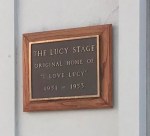
The first two seasons of “I Love Lucy” were filmed at General Service Studios (now Sunset Las Palmas) 6625 Romaine Street in Hollywood. Starting in season 3 they moved to Ren-Mar (now Red Studios) 846 North Cahuenga Boulevard.
-
THE PRACTICE
“The
Dream” (S2;E1) ~ October 13, 1976
Directed
by Noam PitlikCreated
and Written by Steve GordonSynopsis:
Dr.
Jules has an eccentric new patient (Lucille Ball) who claims to see
visions of her own death. When she correctly predicts that a
chandelier will fall, Dr. Jules starts to take her seriously. With
the date of her predicted demise fast approaching, she is
hospitalized, where she undergoes emergency brain surgery, saving her
life.
Danny
Thomas (Dr.
Jules Bedford) was
born Amos Muzyad Yakhoob Kairouz in 1912. His screen career began in
1947 but he was most famous for appearing on television in the
long-running show “Make Room for Daddy” (1953-1964), which was
shot at Desilu Studios. When the series moved from ABC to CBS in
1957, Thomas and the cast starred in a rare TV cross-over with “The
Lucy-Desi Comedy Hour” titled “Lucy
Makes Room for Danny.” In
return, Lucy and Desi turned up on Thomas’s show. Fifteen years
later, Lucy and Danny did yet another cross-over when Lucy Carter of
“Here’s Lucy” appeared on “Make Room for Granddaddy.” In
addition, Thomas also played an aging artist on a 1973 episode of
“Here’s Lucy.” Thomas is fondly remembered for founding St.
Jude Children’s Research Hospital. He is also father to actress
Marlo Thomas, who did a guest star appearance on “The Practice.” He died in 1999.
Lucille
Ball (Matilda
Morrison) was born on August 6, 1911 in Jamestown, New York. She
began her screen career in 1933 and was known in Hollywood as ‘Queen
of the B’s’ due to her many appearances in ‘B’ movies. With
Richard Denning, she starred in a radio program titled “My Favorite
Husband” which eventually led to the creation of “I Love Lucy,”
a television situation comedy in which she co-starred with her
real-life husband, Latin bandleader Desi Arnaz. The program was
phenomenally successful, allowing the couple to purchase what was
once RKO Studios, re-naming it Desilu. When the show ended in 1960
(in an hour-long format known as “The Lucy-Desi Comedy Hour”) so
did Lucy and Desi’s marriage. In 1962, hoping to keep Desilu
financially solvent, Lucy returned to the sitcom format with “The
Lucy Show,” which lasted six seasons. She followed that with a
similar sitcom “Here’s Lucy” co-starring with her real-life
children, Lucie and Desi Jr., as well as Gale Gordon, who had joined
the cast of “The Lucy Show” during season two. Before her death
in 1989, Lucy made one more attempt at a sitcom with “Life With
Lucy,” also with Gordon, which was not a success and was canceled
after just 13 episodes.Matilda
is an unmarried underwear saleswoman who is psychic.
David
Spielberg (Dr.
David Bedford) started acting on screen in 1969. This was his first
recurring role on a series. He also was featured on “The American
Girls” (1978) and “Wiseguy” (1988) among many others. He died
in 2016.Dr.
David Bedford is Jules’ son.
Dena
Dietrich (Molly
Gibbons) is
probably best known for her Chiffon Margarine commercial in which she utters the famous line: “It’s
not nice to fool Mother Nature!” She
had recurring roles on such series as “Adam’s Rib” (1973),
“Karen” (1975), “The Ropers” (1979-80), and “Philly”
(2001-02). In
1986, she guest starred on “Lucy, Legal Eagle” (LWL S1;E7), an
episode of “Life With Lucy.”Molly
is secretly in love with Jules.
Didi
Conn (Helen)
is probably best remembered for her role as Frenchie, the Beauty
School Dropout, in both Grease
and
Grease
II.
She also starred in the film You
Light Up My Life
(1977). Her childlike voice also is heard in various animated shows.Helen
is Dr. Jules Bedford’s receptionist and office manager.
Shelley
Fabares
(Jenny Bedford) achieved teen-idol
status with her role as the wholesome daughter Mary
Stone on “The Donna Reed Show” (1958-65), a part she
played for five seasons before embarking on a film career. She
also had recurring roles on “The Brian Keith Show” (1972-74) and
“One Day at a Time” (1978-84). She is the niece of Nanette
Fabray, who appeared with Lucille Ball in “Happy Anniversary and
Goodbye” in 1974.Jenny
is married to David. They have two children (who do not appear in
this episode).Mike
Evans
(Lenny) is probably best remembered as Lionel Jefferson, first on
“All in the Family” then on the spin-off “The Jeffersons.”
He left the series and was replaced by Damon Evans (no relation) only
to return to the role in 1979. In 1973, he played opposite Desi
Arnaz Jr. in the film Voyage
of the Yes.
The same year he joined the cast of “The Practice” he created
the series “Good Times,” which ran until 1979. He died in 2006 at
age 57.

“The
Practice”
was a short-lived situation comedy starring Danny Thomas as grumpy
old Dr. Jules Bedford. It was a mid-season replacement on NBC,
premiering in January 1976. It was picked up for a second season but
was canceled in January 1977 before the last two of its 27 episodes
could air.
Danny
Thomas and Lucille Ball often did cross-overs on each others shows.
Lucy Ricardo was seen on “Make Room for Daddy” (above) in 1957 and Lucy
Carter appeared on an episode of “Make Room for Granddaddy” in
1971. Thomas invited Lucille Ball to appear at the start of season
two of “The Practice” to boost ratings. At this point, “Here’s
Lucy” had ended so Ball had to appear as a newly created character,
Matilda Morrison.
Except
for specials and award shows, this would be the last time Lucille
Ball and Danny Thomas would act together on television. It is also
the last time Lucille Ball would play a character on someone else’s
show.
“The
Practice” aired opposite “Good Times” on CBS, a series created
and written by Mike Evans. Essentially Evans was competing with
himself.
This
episode was taped on August 13, 1976, one week after Lucille Ball’s
65th birthday.
The
opening credit sequence was filmed on location in Manhattan, while
the show was video taped in front of a studio audience in Hollywood.
The final frames show Danny Thomas standing in front of New York
Medical College. While
the visuals for the opening credits remained unchanged for the second
season, the music changed to a new ragtime-style theme.
During season one a more classical-sounding theme was used.Dr. Jules Bedford’s office is in a middle-class area on Manhattan’s West
Side. His son’s
practice is on exclusive Park
Avenue.
Matilda
(having a blood test): “Is
that my blood?”
Jules:
“No,
it’s Zsa Zsa Gabor’s. How it got into your body, I’ll never know.”
Although
Zsa Zsa Gabor and Lucille Ball were off-screen acquaintances, they
never worked together in front of the camera. Zsa Zsa’s sister Eva,
however, guest-starred on two episodes of “Here’s Lucy.”
Matilda
has a premonition that she’s going to die on October 14th.
The episode was first aired on October 13th, which also happens to be the date of the first scene in the hospital.
Jules:
“Where
is the pain?”
Matilda
(confused): “The
pain is.. The pain is… (to Jules) You wanna buy a bra? Mrs.
Garvas, let’s face it you’re no Jane Russell. You could use a little
lift.”

Hollywood
actress Jane
Russell
was a sex symbol of the 1940s and 50s. In
the 1970s, she started appearing in television commercials as
a spokeswoman for Playtex Cross-Your-Heart Bras. In 1959 she guest-starred on “The Westinghouse Desilu Playhouse”
in “Ballad for a Bad Man” hosted and produced by Desi Arnaz. She
was mentioned on “I Love Lucy” during “Ricky’s
Screen Test” (ILL S4;E6) in 1954.
Matilda
has to have brain surgery, which saves her life.Matilda:
(waking
up) “Am
I dead?”
Jules:
“If
you were, I’d be the first to tell you.”Ooops!
When Matilda comes out of brain surgery, Lucille Ball’s head is
covered in bandages, yet she still has on heavy eye make-up and
bright red lipstick!
This
Date in Lucy History
– October 13th
“The
Operetta”
(ILL S2;E5) – October 13, 1952
“Lucy
Runs the Rapids”
(HL S2;E4) – October 13, 1969

-
THE DANNY KAYE SHOW
November
4, 1964 (S2;E7)
Directed
by Robert ScheererWritten
by Sheldon Keller, Gary Belkin, Ernest Chambers, Larry Tucker, Paul
Mazursky, Billie Barnes, Ron Friedman, and Mel TolkinChoreographed by Tony Charmoli
Danny
Kaye
(Himself) was
born David Kaminsky in 1911 and left school at the age of 13 to work
in the Borscht Belt of Jewish resorts in the Catskill Mountains. It
was there he learned the basics of show biz. In 1939, he made his
Broadway debut in Straw
Hat Revue,
but it was the stage production of the musical Lady
in the Dark in
1940 that brought him acclaim and notice from agents. Also in 1940,
he married Sylvia Fine, who went on to manage his career. She helped
create the routines and gags, and wrote most of the songs that he
performed. Danny could sing and dance like many others, but his
specialty was reciting tongue-twisting songs and monologues. In
1962 Lucille Ball guest-starred on his CBS TV program “The Danny
Kaye Show” and made a second appearance on the program in
1964. A month before, he had appeared as himself on “The Lucy
Show.” The
two redheads appeared together on variety and tribute shows from 1965 to 1986,
a year before his death from heart failure.
Lucille
Ball (Herself
) was born on August 6, 1911 in Jamestown, New York. She began her
screen career in 1933 and was known in Hollywood as ‘Queen of the
B’s’ due to her many appearances in ‘B’ movies. With Richard
Denning, she starred in a radio program titled “My Favorite
Husband” which eventually led to the creation of “I Love Lucy,”
a television situation comedy in which she co-starred with her
real-life husband, Latin bandleader Desi Arnaz. The program was
phenomenally successful, allowing the couple to purchase what was
once RKO Studios, re-naming it Desilu. When the show ended in 1960
(in an hour-long format known as “The Lucy-Desi Comedy Hour”) so
did Lucy and Desi’s marriage. In 1962, hoping to keep Desilu
financially solvent, Lucy returned to the sitcom format with “The
Lucy Show,” which lasted six seasons. She followed that with a
similar sitcom “Here’s Lucy” co-starring with her real-life
children, Lucie and Desi Jr., as well as Gale Gordon, who had joined
the cast of “The Lucy Show” during season two. Before her death
in 1989, Lucy made one more attempt at a sitcom with “Life With
Lucy,” also with Gordon, which was not a success and was canceled
after just 13 episodes.
John
Gary
(Himself) was
one
of RCA’s top popular artists during the 1960s, and very much liked
and respected as a performer. His many best-selling albums (“Catch
a Rising Star,” “So Tenderly,” “A Little Bit of
Heaven”) are still treasured by fans.George
‘Red’ Callender (Double
Bass) was a songwriter
(“Primrose Lane,” “Pastel”), composer, conductor,
arranger, and musician who performed as bassist within Louis
Armstrong, Benny
Goodman, Nat
‘King’ Cole and Lester
Young.
Starting in the early 1950s, Callender was a much in demand studio
musician, both on bass and on tuba. He appeared on many television
programs and made many records.
Earl
Brown
(Himself) was choral director for “The Danny Kaye Show” and also
wrote special musical material for the series. This is the first time
he has appeared on camera. Kaye jokingly says Brown should go on a
diet!The
Skylarks (Themselves)
were regular performers on “The Colgate Comedy Hour” (1950-54)
and “The Dinah Shore Chevy Show” (1956-58).The
Notables
(Themselves) had appeared on screen singing in Arizona
Cyclone
and Babes
on Broadway
(both 1941) as well as Down
Missouri Way
in 1946.
Musicians
listed in the final credits, but not seen on camera:Sammy
Prager
(Pianist) was Kaye’s accompanist on many of his TV and stage shows.Sidney
Kaye
(Drummer) is not related to Danny Kaye, but he was Kaye’s drummer on
many of his TV and stage shows.Buddy
Collette
(Woodwinds) was a composer,
author, songwriter, conductor and flutist who led his own quintet in
Los Angeles. His songs include “Blue Sands,” “Santa
Monica,” “Soft Touch,” and “Room with Skies.”

Director
Robert
Scheerer won
an Emmy Award for this season of “The Danny Kaye Show,” one of
several awards the show won that year. He would be honored with eight
more nominations during his long career. He died a month before this
writing, March 3, 2018. In
addition to its Emmy Awards, 1964 was also the year “The Danny Kaye
Show” won a Peabody Award, as well as a Golden Globe
Award for Best TV Show.About the writers:
- Sheldon
Keller
later co-wrote Lucille Ball’s 1976 Special “What Now, Catherine
Curtis?”. - Gary
Belkin
co-wrote the first episode of “The Steve Lawrence Show” (1964)
which guest-starred Lucille Ball. - Ernest
Chambers
had co-written “The Danny Kaye Show” that Lucy had appeared on in
1962. - Paul
Mazursky
started out as a writer, and is now known as an actor and director,
famous for such films as An
Unmarried Women
(1978), Harry
& Tonto
(1974) and Bob
& Carol & Ted & Alice
(1969). He received five Oscar nominations. - Billy
Barnes
was known as the ‘Revue Master of Hollywood’ in the 1950s and 1960s,
creating the famous “Billy Barnes Revues”. - Ron
Friedman
was one of the writers on “Lucy in London” (1966), an hour-long
special that followed Lucy Carmichael across the pond. - Ron
Tolkin
had been nominated four times for an Emmy Award previous to this
show. He finally won in 1966 for a Sid Caesar special.

Two
days before this “Danny Kaye Show” aired, “The Lucy Show”
aired “Lucy, the Meter Maid”
(TLS S3;E7).
Following
this show, CBS aired the second of two episodes of “The Beverly
Hillbillies” set at Marineland. The first California-set episode of
“The Lucy Show” (TLS S4;E1) was also set at Marineland, as was a 1965
episode of “The Munsters.”
This
show first aired the day after the United States presidential
election of 1964
on
Tuesday, November 3, 1964. Incumbent Democratic President Lyndon
B. Johnson defeated Barry Goldwater, the Republican nominee.Danny
Kaye was mentioned in two episodes of “I Love Lucy”:
“Lucy
Meets the Queen” (ILL S5;E15) was
doubtless inspired by Danny Kaye’s November 1948 Command
performance for King George and Princess Elizabeth at the Palladium
Theatre. In fact, Kaye is referenced in this episode:
Lucy
(to the Bellboy): “Have
you ever seen the Queen?”
Bellboy:
“No,
ma’am. But I came frightful close during the coronation. I just
missed her. But I did catch a glimpse of him.”
Lucy:
“Philip?”
Bellboy:
“No,
ma’am. Danny
Kaye.”
In a
1959 episode of
“The Lucy–Desi Comedy Hour” Lucy complains about how many meals
she’s cooked as a housewife:
Ricky
(reading
Variety): “It
says here that Danny
Kaye
is going to London to give another command performance for Queen
Elizabeth.”
Lucy:
“I
wonder what the Queen is cooking for Phil tonight?”

To
open the show (before the opening credits), Danny Kaye sings “Slap
That Bass” accompanied
onstage by George ‘Red’ Callender. The song was written by George
and Ira Gershwin for the 1937 film Shall
We Dance.
It is now part of the score of the stage musical Crazy
For You.
Without
the use of costumes or scenery, Kaye and Lucille Ball perform a
sketch about a married couple (Emily and Harry) forced to fire a maid
named Brunhilde, who is monopolizing the care of their baby, Nancy.
Brunhilde is played by a shrill off-stage voice who only speaks
German.
Lucy Ricardo faced this same dilemma in “Lucy Hires a Maid”
(ILL S2;E23) in 1953 when she had to fire the domineering Mrs.
Porter (Verna Felton).
Kaye
introduces John Gary, who sings “Here
I’ll Stay.”
The song was written by Kurt Weill and Alan J. Lerner for the 1948
Broadway musical Love
Life.
Gary then sings the folk song “Red
Rosy Bush”
accompanying himself on guitar. He duets with Kaye on “Way
Back Home” a
song by Tom Waring and Al Lewis. It was made famous by Bing Crosby,
which Kaye and Gary acknowledge in their introduction. During Kaye’s
brief banter with Gary, there is an offstage noise that Kaye quickly
acknowledges.
Danny
Kaye and Lucille Ball perform “The
Balloonists” which
includes strains of “Hold
That Tiger” and
“The
Blue Danube.”
Lucy
and Kaye make various playful noises with the balloons as they sing
and dance, ultimately popping every balloon on the stage.
Introducing
their next sketch, Lucy says she is looking forward to having Kaye
appear on her show in a few weeks time. She is referring to “Lucy
Meets Danny Kaye” (TLS S3;E15).
Kaye also reminds her of when she
guest starred on his 1962 Special.
The
next sketch (this time with elaborate costuming and sets) imagines
what would happen if a snowstorm kept all but two actors in a
traveling troupe from arriving at the theatre to perform their
Victorian melodrama, “Love Has Nine Lives.” It turns into a
quick change act for the two actors as Lucy and Kaye run on and
offstage trying to cover all the characters in the play.
Lucy and
Kaye play:- Lady
Cecily Hunt - Lord
Cyril Hunt - Sophia,
their Italian upstairs maid - MacIntosh,
their Scottish butler - Count
Sidney Von Zeppelin, Cecily’s German paramour - Inspector
Fu Sheng, an Asian detective

During
the sketch, Kaye slips and calls Lady Cecily ‘Emily,’ but quickly
corrects himself. There are also lots of microphone boom shadows on
the set. Lucy’s mustache keeps falling off during the sketch, and
sometimes Ball and Kaye start to laugh, but it is all in keeping with the farcical premise of the sketch.
Lady
Cecily
(dismissing her butler): “Thank
you, MacIntosh, that’s a good apple.”Meanwhile,
Sidney and Sophia are planning to kill off Lord and Lady Hunt.
Sidney
(to
Sophia): “Zen
we will be ze masters of Hunt’s Hall.”‘Huntz’
Hall (1920-99)
was an actor best known for his roles in the Dead
End Kids
movies, which gave way to the Bowery
Boys
franchise, a highly successful series of comedies in the 1940s and
1950s. Hall
and Kaye appeared together in the Oscar-winning 1945 film
Wonder Man.
The
sketch ends with Lucy and Kaye both in drag!
As himself, Kaye comes
onstage and tells the audience that as chaotic as it appeared onstage
during the sketch, it was even more so backstage. He then plays some
backstage footage of the rehearsal. In 1982, English playwright
Michael Frayn would also use this premise for his stage play Noises
Off,
which was filmed in 1992 starring Lucy’s friend Carol Burnett.Kaye
introduces his choral director
Earl Brown,
who has re-assembled two famous close-harmony quintets, The Skylarks and The
Notables, to perform a medley with Kaye.
Danny
Kaye and The Notables perform “Pennies
from Heaven”
by Arthur
Johnston and
Johnny
Burke.
It was introduced by Bing
Crosby in
the 1936 film
of the same name.
With The Skylarks, Kaye performs “Nevertheless
(I’m In Love With You)”
by Harry
Ruby and Bert
Kalmar,
first published in 1931.
This
Date in Lucy History
– November 4th
“Lucy
Goes Duck Hunting”
(TLS S2;E6) – November 4, 1963
 1964, Billy Barnes, Buddy Collette, CBS, Danny Kaye, Earl Brown, Ernest Chambers, Gary Belkin, George Red Callender, Here I’ll Stay, Hold That Tiger, John Gary, Larry Tucker, Lucille Ball, Mel Tolkin, Paul Mazursky, Pennies from Heaven, Red Rosy Bush, Robert Scheerer, Ron Friedman, Sheldon Keller, Sidney Kaye, Slap That Bass, The Balloonists, The Danny Kaye Show, The Notables, The Skylarks, Tony Charmoli, tv, Way Back Home
 - Sheldon
-
TOAST OF THE TOWN aka THE ED SULLIVAN SHOW
“A Tribute to Lucy and Desi”
(S3;E8)
~ October
3, 1954
Directed
& Choreographed by John Wray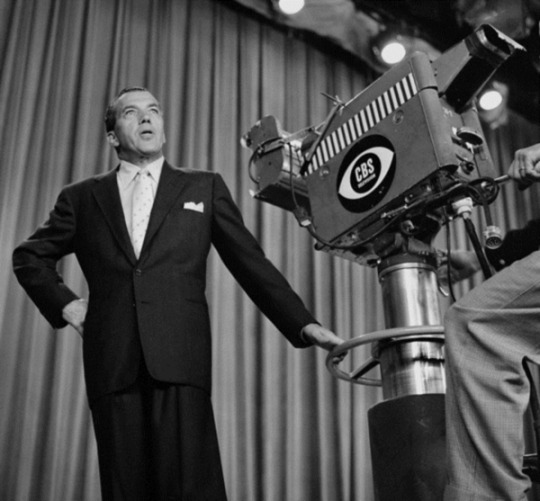
Ed
Sullivan (Himself
/ Host) was a preeminent television variety show host who is best
remembered for hosting his own show, at first titled “Toast of the
Town” but later simply known as “The Ed Sullivan Show,” which
became a staple of Sunday night viewing for millions of Americans
from 1948 to 1971. As such, his name was often mentioned on “I
Love Lucy” and Lucille Ball’s subsequent sitcoms. He introduced
America to such entertainers as Elvis Presley, The Beatles, and The
Supremes. Sullivan entered icon status when he and his television
show were worked into the plot of the Broadway musical Bye
Bye Birdie
in 1960. The musical includes the song “Hymn
for a Sunday Evening” which has a chorus that repeats Sullivan’s
name in a choir-like harmony. Hope
made an appearance in the 1964 film version. The theatre on Broadway
in New York City where Sullivan did his weekly show was named after
him in 1967. He died in 1974.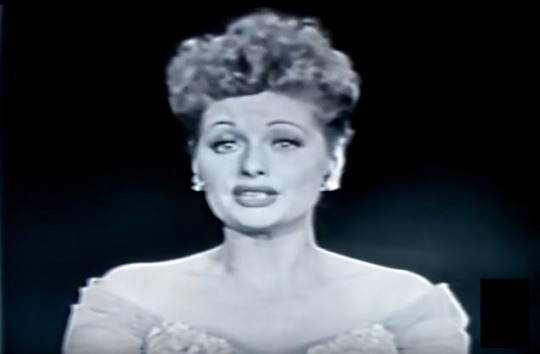
Lucille
Ball (Herself
/ Lucy Ricardo) was born on August 6, 1911 in Jamestown, New York.
She began her screen career in 1933 and was known in Hollywood as
‘Queen of the B’s’ due to her many appearances in ‘B’
movies. With Richard Denning, she starred in a radio program titled
“My Favorite Husband” which eventually led to the creation of “I
Love Lucy,” a television situation comedy in which she co-starred
with her real-life husband, Latin bandleader Desi Arnaz. The program
was phenomenally successful, allowing the couple to purchase what was
once RKO Studios, re-naming it Desilu. When the show ended in 1960
(in an hour-long format known as “The Lucy-Desi Comedy Hour”) so
did Lucy and Desi’s marriage. In 1962, hoping to keep Desilu
financially solvent, Lucy returned to the sitcom format with “The
Lucy Show,” which lasted six seasons. She followed that with a
similar sitcom “Here’s Lucy” co-starring with her real-life
children, Lucie and Desi Jr., as well as Gale Gordon, who had joined
the cast of “The Lucy Show” during season two. Before her death
in 1989, Lucy made one more attempt at a sitcom with “Life With
Lucy,” also with Gordon, which was not a success and was canceled
after just 13 episodes.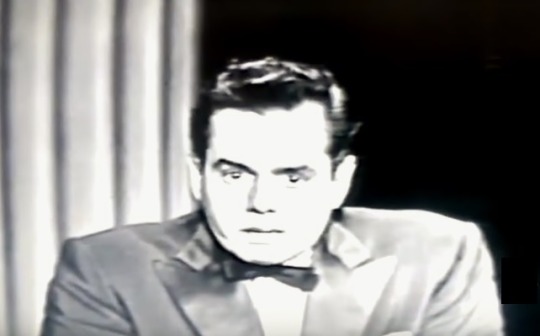
Desi
Arnaz
(Himself / Ricky Ricardo) was
born in Cuba in 1917 and immigrated to America as a youngster. He
was a musician who married Lucille Ball in 1940 after meeting her on
the set of 1939’s Too Many Girls, which he had done on stage in New
York. In order to keep him ‘off the road’ Ball convinced
producers to cast him as her husband in a new television project
based on her radio show “My Favorite Husband.” The network
was convinced. In 1951, Arnaz and Ball began playing Lucy and
Ricky Ricardo, roles they would be identified with for the rest of
their lives. The couple had two children together, Lucie and Desi Jr.
In 1960, Ball and Arnaz divorced. Desi became a producer,
responsible for such hits as “The Mothers-in-Law” (1967-69). He
re-married in 1963. Desi Aranz died in 1986, just a few years before
Ball.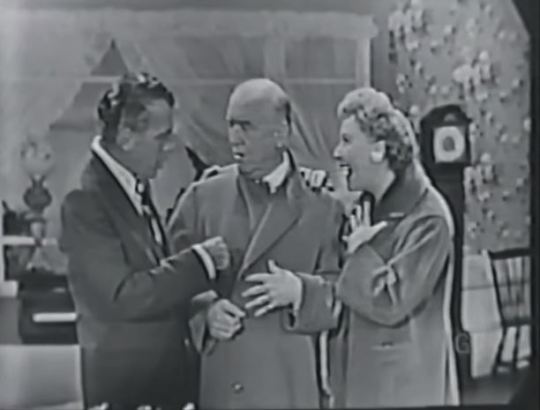
William
Frawley (Himself
/ Fred Mertz) was
already a Hollywood veteran when he was hired by Desi Arnaz to play
Fred Mertz on “I Love Lucy.” After the series concluded he joined
the cast of “My Three Sons” playing Bub Casey. He did an episode
of “The
Lucy Show” in
October 1965 which was his final TV appearance before his death in
March 1966.Vivian
Vance (Herself
/ Ethel Mertz) was
born Vivian Roberta Jones in Cherryvale, Kansas in 1909, although her
family quickly moved to Albuquerque, New Mexico where she was raised.
She had extensive theatre experience, co-starring on Broadway with
Ethel Merman in “Anything Goes.” She was acting in a play in
Southern California when she was spotted by Desi Arnaz and hired to
play Ethel Mertz, Lucy Ricardo’s neighbor and best friend. The
pairing is credited with much of the success of “I Love Lucy.”
Vance was convinced to join the cast of “The Lucy Show” in
1962, but stayed with the series only through season three, making
occasional guest appearances afterwards. She made a total of six
appearance on “Here’s Lucy.” She also joined Lucy for a TV
special “Lucy
Calls the President” in
1977. Vance died two years later.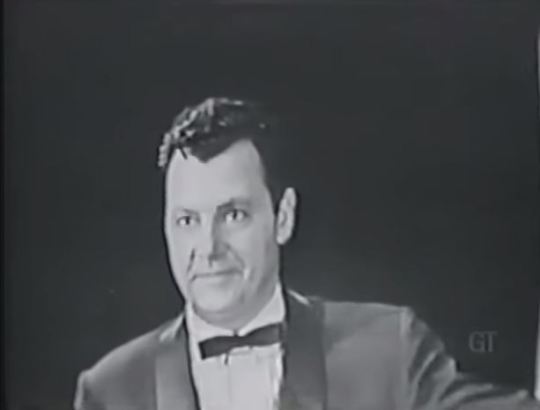
Harry
Chesney (Himself) was the vice-president of Philip Morris, the tobacco
company that first sponsored “I Love Lucy” in 1951.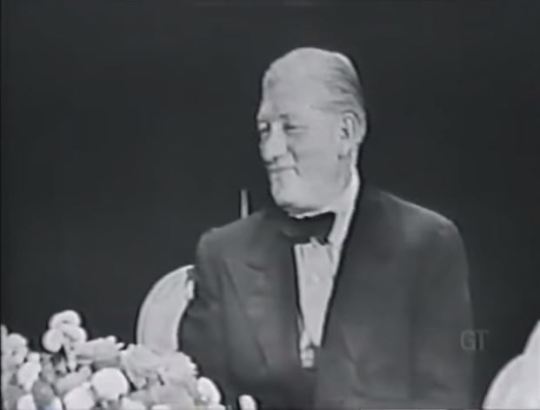
Howard
Dietz
(Himself) was a lyricist who wrote over 500 songs in his lifetime. In
1954 he was a vice-president at MGM where he is credited with
developing the Leo the lion logo as well as their slogan “Ars
Gratia Artis” (art for art’s sake). The
Long, Long Trailer
was an MGM picture.
Don
Dixon (Himself)
was a correspondent for INS, the International News Service. He was
held captive in Communist China for 18 months.
John
Hodiak
(Himself) was a busy actor at MGM who had co-starred with Lucille
Ball in their 1946 film
Two Smart People.
He was also seen in the 1944 film Lifeboat
with
Tallulah Bankhead.
Tex
O’Rourke
(Himself) was a toastmaster famous for moderating his “Circus Saints and Sinners” tributes.
Dusty
Rhodes
(Himself) was a member
of 1954 World Series Champion team the New York Giants.
He would return to “The Ed Sullivan Show” in April 1955.Robert
Taylor
(Archival Footage from Bataan)
acted alongside Desi Arnaz in the 1943 film Bataan.
He never appeared on “I Love Lucy,” but during the Ricardo’s stay
in Hollywood, Lucy Ricardo mentioned meeting him at a farmers market
and getting his autograph on an orange.Keenan
Wynn
(Archival Footage from The
Long, Long Trailer)Marjorie
Main
(Archival Footage from The
Long, Long Trailer)Johnny
Roventini (Philip
Morris Bellhop, uncredited)Julia
Meade (Voice
of Mercury Commercial)
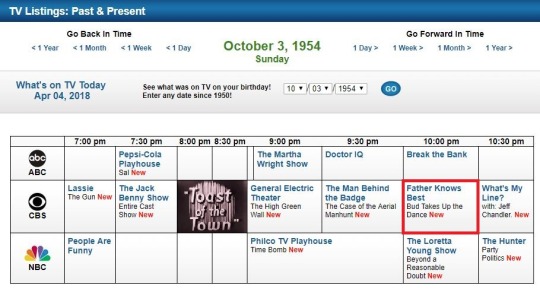
This
show was aired on CBS on October 3, 1954. Sunday nights were known as
“Ed Sullivan Show” nights in the same way that Lucy and Desi
“owned” Monday nights throughout the 1950s. This show was done
live in front of a studio audience at (what is now known as) the Ed
Sullivan Theatre in New York City.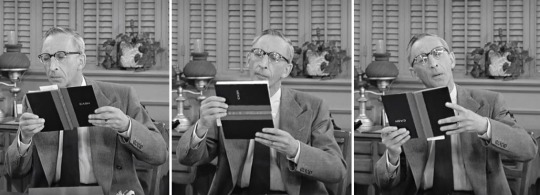
The next day “I Love Lucy”
began its fourth season on the air with “The Business Manager”
(ILL S4;E1) co-starring Charles Lane (above) as Mr. Hickox. Two weeks later
the series celebrated its 100th show.
The
same night this show aired, “Father Knows Best” made its TV debut
on CBS at 10pm. Prior to that the series had been aired on radio
since 1949. On TV, it
ran for one season and was canceled. The series
was picked up by NBC,
where it remained for three seasons. After a second cancellation in
1958, the series was picked up yet again, by CBS, where it aired
until May 1960.
This
was the second of Lucille Ball’s dozen appearances on “The Ed
Sullivan Show.” Ball and Arnaz had been on earlier in the year,
after Ed Sullivan presented “I Love Lucy” with an Emmy Award in
April 1954. Desi made eight appearances, the last being in 1960. This
is the only time the full hour of Sullivan’s show is devoted solely
to Lucy and Desi.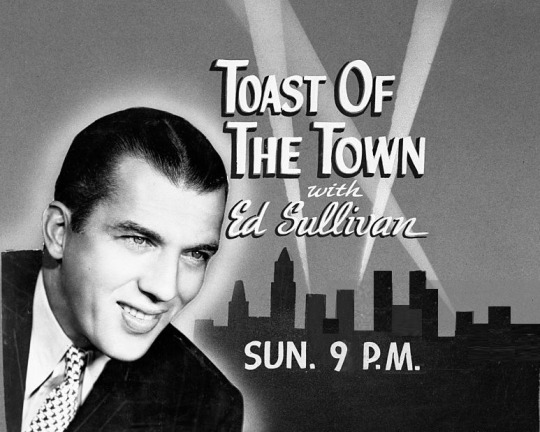
“Toast
of the Town” was not filmed in Hollywood, like “I Love Lucy.”
It was broadcast live from New York and then kinescoped to the West
Coast. Consequently, prints of this show are generally of poor
quality.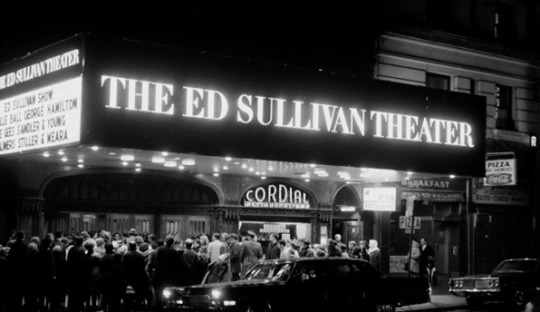
During
the run of “I Love Lucy,” Ed Sullivan and his show were mentioned several
times:
Lucy: (about Fred the dog) “He learned obedience, but he’s not ready for ‘The Ed Sullivan Show’.”
~ “The Ricardos Dedicate a Statue” (ILL S6;E27)

Johnny
Clark:
(to Ricky) “I
think I’ve got you planted on ‘The Ed Sullivan Show’ for next month.”[Celebrities would often be asked to stand-up and wave if they were
spotted on “The Ed Sullivan Show.”] ~ “Face to Face” aka “The
Ricardos Are Interviewed” (ILL S5;E7)
Lucy:
(to
a stoic Buckingham Palace Guard) “Wow,
you make Ed
Sullivan look
like laughing boy.”[Sullivan was known not to smile or laugh, something Lucy chides him for in the tribute.] ~ “Lucy Meets the Queen” (ILL S5;E15)
To
kick off the hour, Lucy and Desi perform a sketch about their meeting
with Ed Sullivan. Although the sketch feels like an episode of “I
Love Lucy,” Lucy and Desi use their own names. It opens with Lucy
knitting and Desi at home (in Beverly Hills), relaxing and reading
the Sunday papers, which are spread out all over the room. Desi is
looking for the “spor’ session” [“sports section”].
The
newspaper Desi holds is the Sunday, October 3, 1954, edition of the
New York Daily news, with the back page headline “GIANTS CHAMPS”!
The previous day, the New York Giants triumphed over the Cleveland
Indians in the 1954 World Series. Interestingly,
this was not good news to Lucy’s good friend Bob Hope, who was
part-owner of the Indians.
Two years later, October 8, 1956, Lucy and
Desi guest-starred on “The Bob Hope Chevy Show” which for the
evening was broadcast in Ed Sullivan’s time slot, a fact Hope
acknowledged in his monologue. Like this Ed Sullivan show, it was
the day after a world series victory and the MVP was invited to
appear on the show. For this “Toast of the Town” that player was
Dusty Rhodes of the New York Giants. In 1956 it would be Don Larsen
of the New York Yankees.
When
Lucy shows off what she’s been knitting, Desi immediately jumps to
conclusions: “Lucy!
Again? We’ve already done that bit!” Desi
is referring to Lucy Ricardo having a baby on “I Love Lucy.”
Prior to that, in 1951’s “Drafted” (ILL S1;E11, above), Ricky and Fred
mistake the girls knitting them sweaters for a clue that they are
expecting.
Lucy
tells him to relax, that she’s knitting it for Eve Arden’s new baby.
Arden, a friend of Ball’s from her B-movie days, was currently
starring in TV’s “Our Miss Brooks” filmed at Desilu. On September
17, 1954, she gave birth to what would be her only biological child,
Douglas Brooks West.After
arguing who should answer the telephone, Desi answers it, but can’t
quite figure out who it is on the other end.Desi
(to
Lucy, covering the phone receiver): “I
think it’s somebody from a bakery. A guy called Solomon. Ed
Solomon. He says he’s selling toast in this part of the town.”Lucy
grabs the phone and it turns out to be Ed Sullivan who is coming
right over, despite the fact that their house is a mess and they
aren’t properly dressed. Desi says they should let Ed see them as
they really are, with no pretense.Lucy:
“The
show is called ‘Toast of the Town’, not ‘Crumbs of the Town’.”She
then implores Desi to put on his shoes, to which he replies, “What
for? He knows I got feet.”
This
is very similar to an exchange in “Men Are Messy” (ILL S1;E8)
from 1951.Lucy
Ricardo:
“Put
your shoes on and pick up those papers. Company is coming.”
Ricky
Ricardo:
“It isn’t company, it’s Fred and Ethel.”
Lucy
Ricardo:
“Well, put your shoes on.”
Ricky
Ricardo: “They
know I have feet.”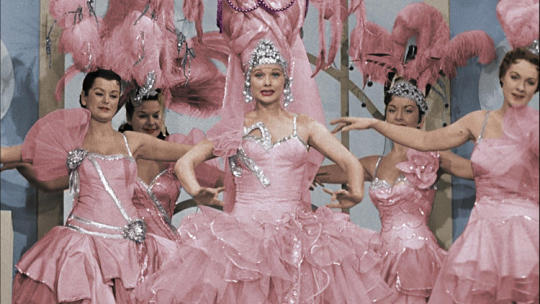
In
the next scene, they are dressed to the nines, and Lucille makes her
entrance to the strains of “A Pretty Girl Is Like A Melody” by
Irving Berlin. In 1955’s , “Lucy Gets Into Pictures” (ILL S4;E18)
Lucy Ricardo gets a role as a showgirl, strutting down a staircase
wearing a giant head-dress, while this song is playing.
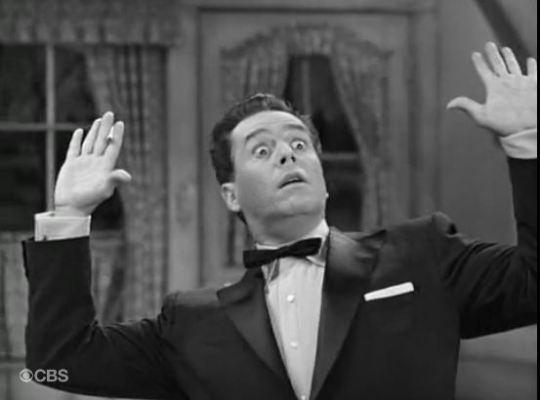
Before
Sullivan arrives, Lucy and Desi silently practice being acknowledged
from the audience, just in case that is what Sullivan has in mind.
This is visually similar to when Lucy and Ricky rehearse being
surprised with a “Housewarming” (ILL S6;E23) party when they
first move to Connecticut in 1957.The
phone rings again and Lucy talks to their agent Don Sharpe about the
purpose of Sullivan’s visit, while Desi hovers anxiously behind her:Lucille
(into
the phone): “He
is! He isn’t? He isn’t? He is! He isn’t!” (she
hangs up)
Desi:
“Well,
is he or isn’t he?”This
is another gag taken directly from “I Love Lucy.” It is possible that the “I Love Lucy” writers participated in the
scripting of this sketch.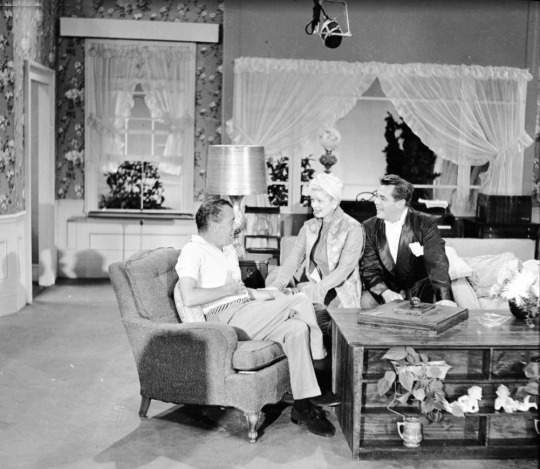
When
Sullivan finally arrives at the Arnaz home, they rush him off his
feet and pretend not to have already heard the news. Sullivan
finally spills the beans.Lucy:
“’Toast
of the Town’ and the whole slice about us!”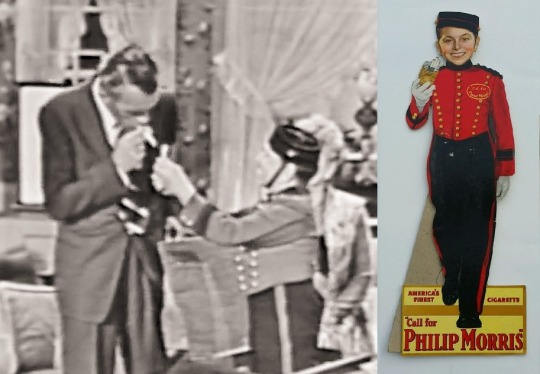
When
Sullivan asks Lucille for a cigarette, the Philip Morris bellhop
Johnny Roventini literally pops out of the coffee table and gives him
one! Although Philip Morris was not a sponsor of “Toast of the
Town,” the gag acknowledges the company’s initial support of “I Love Lucy.”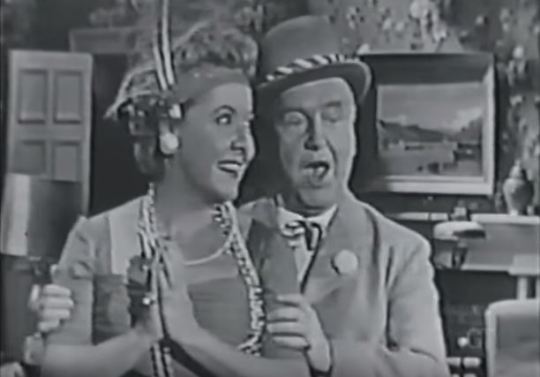
Vivian
Vance just happens to drop by – and then almost immediately Bill
Frawley. The just happen to be ready to regale Sullivan with a song, “Hullaballoo,” which Frawley says is an old vaudeville tune from
1913. He also claims that they previously performed it “on one of
the old Lucy shows” but no such song was ever sung by Fred and
Ethel on “I Love Lucy.”A
curtain then closes for their bows. Sullivan reminds Vivian that they
last met when he presented the Emmy Award to “I Love Lucy” in
Hollywood. He recalls first meeting Frawley in Leone’s Restaurant. Jimmy Walker introduced him to Sullivan. Walker was mayor of New York
City from 1926 to 1932, when Sullivan was a news correspondent.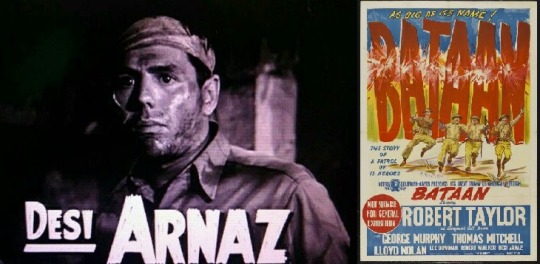
Sullivan
discusses the film Bataan
featuring Desi Arnaz and Robert Taylor. Baatan
(1943) was an MGM film about the World War II Battle of Bataan, a
region of the Philippines.After
a Mercury commercial narrated by Julia Meade, Ed Sullivan introduces
the trailer from The
Long, Long Trailer, a 1954 color film based on a novel of the same
name by Clinton Twiss. It is about a couple who buy a new trailer home and spend a year traveling across the United
States.The film stars Lucille Ball as Tacy Collini and Desi Arnaz as
Nicky Collini. The characters’ names were changed from the book to sound
more like ‘Lucy and Ricky’ (Tacy and Nicky, say it fast).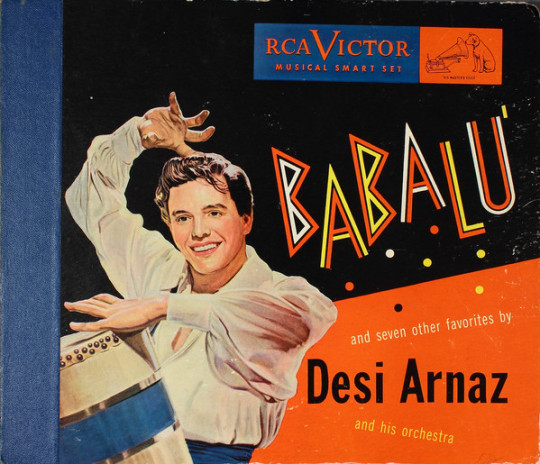
Desi
Arnaz performs his signature song “Babalu.”
He
performed the song on “I Love Lucy” in “The Audition”
(ILL S1;E6) and in “The
Ricardos Visit Cuba” (ILL S6;E9), where Desi was joined by
Richard Keith (Little Ricky). Other times it was partially heard or
sung for comedic purposes, such as in “Lucy
Hires an English Tutor” (ILL S2;E13), “Ricky’s Life
Story"
(ILL S3;E1), “The Publicity Agent” (ILL S1;E31) and “The
Young Fans" (ILL S1;E20). Desi
Arnaz first recorded the song in 1947, although he had performed it
as part of his nightclub act prior to that.After
Desi finishes singing, Sullivan tells his audience that Desi has had
a fever of 101 all day, but insisted on singing “Babalu” anyway.Finally,
the “Circus Saints and Sinners Luncheon” begins, a
formal tribute (the actual “Toast” of the town) with speeches
from and about the Arnazes.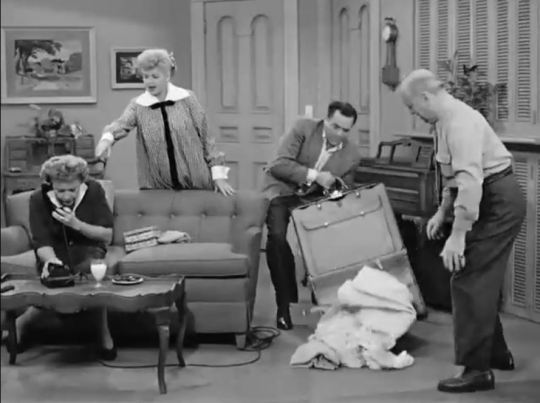
- A
clip from “Lucy Goes to the Hospital” (ILL S2;E16), which first
aired on January 19, 1953. This
was Desi Arnaz’s favorite episode.This is the
episode that made “I Love Lucy” a national phenomenon. It is
estimated that 72% of the American public who owned a television
tuned in to see the birth of Little Ricky. His birth was timed to
coincide with Desi Jr.’s birth, that same day. This episode aired
the day before the inauguration of President Eisenhower and five
months before the coronation of Queen Elizabeth II. More people
watched this “I Love Lucy” episode than either one of those
televised historic events. - To
kick things off, Ed Sullivan reads a letter from Bernard
Baruch
(1870-1965). Baruch was a financier and powerful political
consultant who had served with Sullivan on a Government-appointed
Entertainment Committee to bolster post-war morale in America. - Toastmaster
Tex O’Rourke
discusses Ball and Arnaz’s childhoods and their early work in
show-business. - Baseball
player Dusty Rhodes some brief comments of his own.

Lucille
Ball is first to make her remarks, thanking the networks and
production staff of “I Love Lucy,” and ultimately Desi:Lucy:
“This
guy, who seems to be in all places at once, making like an actor, a
banker, a politician – in short, a producer – gets my vote as the
greatest producer of all time. And I have two little Arnazes at home
to prove it.”Desi
Arnaz expresses his appreciation to Lucy and the United States of
America for giving him the opportunities he has enjoyed.Desi:
“We
came to this country and we didn’t have a cent in our pockets. From
cleaning canary cages to this night in New York is a long ways. And I
don’t think there’s any other country in the world that could
give you that opportunity.”Both
Lucy and Desi become visibly emotional while making their speeches. “Desi
was very sincere about that,” said Madelyn Davis, who along with
her partner, Bob Carroll Jr., wrote every episode of the first four
seasons of “I Love Lucy” with Jess Oppenheimer. “Lucy got
teary and even Ed Sullivan. Desi wasn’t kidding. They had nothing.”
The
show includes Lincoln Mercury commercials starring Ed Sullivan. Lucy
and Desi had participated in such commercials in their first
appearance on “Toast of the Town” in April 1954. During the
sketch that starts the show, Lucy says the words “High dramatic”
and Ed reminds her that on his show, it is “Merc-O-Matic,” which
was Lincoln Mercury’s own automatic transmission, introduced in 1951.
This
Date in Lucy History
– October 3rd
“Lucy
Visits Grauman’s”
(ILL S5;E1) – October 3, 1955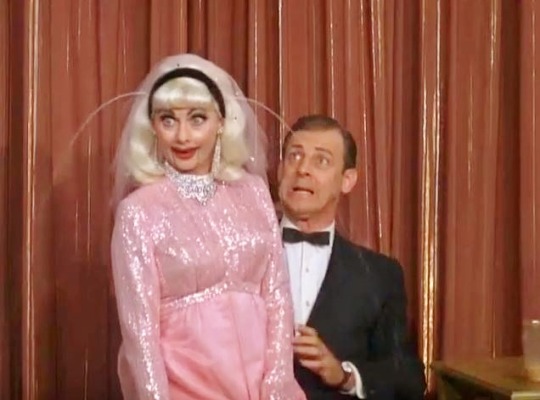
“Lucy
and Paul Winchell”
(TLS S5;E4) – October 3, 1966
 1954, Bataan, CBS, Circus Saints and Sinners, Desi Arnaz, Don Dixon, Don Sharpe, Dusty Rhodes, Ed Sullivan, Eve Arden, Harry Chesney, Howard Dietz, hullabaloo, I love lucy, John Hodiak, John Wray, Johnny Roventini, Julia Meade, Keenan Wynn, Lucille Ball, Marjorie Main, MGM, New York Giants, Robert Taylor, Tex O’Rourke, The Ed Sullivan Show, The Long Long Trailer, Toast of the Town, Vivian Vance, William Frawley
 - A
-
SUNDAY SHOWCASE: THE LUCY-DESI MILTON BERLE SPECIAL
November
1, 1959
Directed
by Desi Arnaz ~ Written by Lou Derman and Arthur Julian ~ Script
Consultants Bob Schiller and Bob Weiskopf
Milton
Berle (Himself)
was born Milton Berlinger in New York City on July 12, 1908. He
started performing at the age of five. He perfected his comedy in
vaudeville, early silent films, and then on radio, before taking his
act to the small screen, where he would be proclaimed “Mr.
Television” and later “Uncle Miltie.” He hosted “Texaco Star
Theater” on NBC from 1948 to 1956. The variety show was re-titled
“The Milton Berle Show” in 1954 when Texaco dropped their
sponsorship. The program was briefly revived in 1958, but lasted only
one season. In 1959 he played himself in “Milton
Berle Hides out at the Ricardos.” This
cross-over is in repayment for that appearance. Berle
continued to perform live, in films, and on television specials for
the remainder of his career. He was seen in three episodes of "The
Lucy Show” and two episodes of “Here’s Lucy.” On all but one,
he played himself. He died of colon cancer in 2002.
Lucille
Ball (Lucy
Ricardo) was born on August 6, 1911 in Jamestown, New York. She began
her screen career in 1933 and was known in Hollywood as ‘Queen of
the B’s’ due to her many appearances in ‘B’ movies. With
Richard Denning, she starred in a radio program titled “My Favorite
Husband” which eventually led to the creation of “I Love Lucy,”
a television situation comedy in which she co-starred with her
real-life husband, Latin bandleader Desi Arnaz. The program was
phenomenally successful, allowing the couple to purchase what was
once RKO Studios, re-naming it Desilu. When the show ended in 1960
(in an hour-long format known as “The Lucy-Desi Comedy Hour”) so
did Lucy and Desi’s marriage. In 1962, hoping to keep Desilu
financially solvent, Lucy returned to the sitcom format with “The
Lucy Show,” which lasted six seasons. She followed that with a
similar sitcom “Here’s Lucy” co-starring with her real-life
children, Lucie and Desi Jr., as well as Gale Gordon, who had joined
the cast of “The Lucy Show” during season two. Before her death
in 1989, Lucy made one more attempt at a sitcom with “Life With
Lucy,” also with Gordon, which was not a success and was canceled
after just 13 episodes.Desi
Arnaz
(Ricky Ricardo / Director) was
born in Cuba in 1917 and immigrated to America as a youngster. He
was a musician who married Lucille Ball in 1940 after meeting her on
the set of 1939’s Too Many Girls, which he had done on stage in New
York. In order to keep him ‘off the road’ Ball convinced
producers to cast him as her husband in a new television project
based on her radio show “My Favorite Husband.” The network
was convinced. In 1951, Arnaz and Ball began playing Lucy and
Ricky Ricardo, roles they would be identified with for the rest of
their lives. The couple had two children together, Lucie and Desi Jr.
In 1960, Ball and Arnaz divorced. Desi became a producer,
responsible for such hits as “The Mothers-in-Law” (1967-69). He
re-married in 1963. Desi Aranz died in 1986, just a few years before
Ball.
George
Macready (Edward
Jones, Jewel Thief, left) was a classically trained actor who did 15 plays
on Broadway and claimed to be descended from Shakespearean actor
William Macready. The scar on his cheek is not make-up. Macready was
in a serious auto accident while in college.‘Edward
Jones’ is probably an alias.Mike
Mazurki (Maxwell
Mason, Jewel Thief, right) was in the cast of 1955’s Blood
Alley,
a film John Wayne promoted when he appeared on “I Love Lucy”.
Mazurski was also seen in 1945’s Bud
Abbott and Lou Costello in Hollywood,
which also featured Lucille Ball. He had a role in the Lucille Ball
film The
Facts of Life
(1960) and was seen with Milton Berle in It’s
a Mad, Mad, Mad, Mad World
(1963).‘Maxwell
Mason’ is probably an alias.
Marion
Colby
(Ruth Berle) was a singer-dancer whose first screen appearance was in
Holiday
Inn
(1942).Colby
is playing Milton Berle’s wife, whose maiden name was Ruth Cosgrove.
Coincidentally,
Ruth Cosgrove is also the name of a character played by Doris
Singleton on a 1966 “The Lucy Show.” The real Ruth Berle will
appear as herself (with her husband) in a 1967 episode of the series.
Lloyd
Corrigan
(Justice of the Peace) was
a portly character actor, who played bit parts in silent movies,
before switching his attention to writing and directing. He returned
to acting in the 1940s, appearing in two films with Lucille Ball. He
made three appearances on “The Lucy Show.”
Stephen
Bekassy
(Jacques Marcel, Jeweler) was born in Hungary in 1907. He did nearly
80 films and television shows between 1930 and 1964.Jacques
Marcel
is also the name of the French fashion designer who knocks-off Lucy
and Ethel’s designer burlap dresses in “Lucy Gets a Paris Gown”
(ILL S5;E20).
Cyril
Delavanti
(Wedding Chapel Manager) was a London-born
character actor, who had a lengthy career in American films and on
television. He
was seen in the 1947 film Lured
with Lucille Ball.
Nancy
Kulp
(Girl at Wishing Well) played
the cockney hotel maid who teaches Lucy how to curtsy in “Lucy
Meets the Queen” (ILL S5;E15)
and went on to play an Air Force Captain on “Lucy Becomes an
Astronaut” (TLS S1;E6).
Born in Harrisburg, PA, Kulp will always be remembered as Miss Jane
Hathaway, the upright secretary of banker Drysdale on “The Beverly
Hillbillies” (1962-1971) which premiered just five days before “The
Lucy Show.” The role of Miss Hathaway earned Kulp an Emmy
nomination in 1967. She made an unsuccessful run for Pennsylvania
congress in 1984, after which she retired and taught acting.Leslie
Sheldon
(Harriet) has only one previous credit, a February 1959 episode of
“The D.A.’s Man.”Jack
Berle
(Doorman, uncredited) was
the older brother of Milton Berle. He made eleven uncredited
appearances on the “Here’s Lucy” as well as two episodes of “The
Lucy Show.”Sayre
Dearing
(Check, uncredited) was seen in six films with Lucille Ball between
1939 and 1954.Emelio
Muscelli
(Maitre ’D, uncredited)Monty
O’Grady
(Program Salesman, uncredited) was
first seen with Lucille Ball in The
Long, Long Trailer (1953)
and played a passenger on the S.S. Constitution in “Second
Honeymoon” (ILL S5;E14).
He was a traveler at the airport when “The
Ricardos Go to Japan”
(1959).
He made more than a dozen appearances on “The Lucy Show” and a
half dozen more on “Here’s Lucy.”
He also played a casino patron in “Lucy Goes To Vegas” (TLS
S3;E17) in 1965.Paul
Cristo
(Paul, Front Desk Clerk, uncredited) appeared
in the audience of The
Most Happy Fella during “Lucy’s
Night in Town” (ILL S6;E22).
He did two episodes of “The Lucy-Desi Comedy Hour” and did two
episode of “The Lucy Show.” Coming full circle, he was in the
theatre audience of Lucy’s 1963 film with Bob Hope, Critic’s
Choice.Sammy
Shack
(Taxi Driver, uncredited) appeared in more than 100 films and
television shows from 1937 to 1971.
Fred
Sherman
(Drunk, uncredited) also played the drunken patron in “The Diner”
(ILL S3;E27) in 1954. His drunk act was so good that he was also cast
as the drunk in Some Like It Hot (1959), “Northwest Passage”
(1959), and on “Laramie” (1961).Casino
Patrons (uncredited):- Ralph
Brooks made
four films with Lucille Ball between 1940 and 1956. He
also played a casino patron in “Lucy Goes To Vegas” (TLS S3;E17)
in 1965. - Bess
Flowers
was
dubbed ‘Queen of the Extras’ in Hollywood and is credited with
more than 700 film and TV appearances from 1923 to 1964. She was seen
in the audience of Over
the Teacups in “Ethel’s
Birthday” (ILL S4;E8) and The
Most Happy Fella during “Lucy’s
Night in Town” (ILL S6;E22).
She made five uncredited appearances on “The Lucy Show.” - Hans
Moebus
was
a German-born actor who appeared as an uncredited background
performer in hundreds of movies and TV shows, including the Lucille
Ball films DuBarry
Was a Lady (1943), A
Woman of Distinction (1950),
and The
Facts of Life (1960).
He was seen on the dock during the “I Love Lucy” episode “Bon
Voyage” (ILL S5;E13).
Moebus did
two episodes of “The Lucy Show.” - Hazel
Pierce
was
Lucille Ball’s camera and lighting stand-in throughout “I Love
Lucy.” She also made frequent appearances on the show, although
only once did she speak. She made 21 uncredited on-camera
appearances on “The Lucy Show.” In “Lucy Plays Cleopatra”
(TLS S2;E1), she finally received screen credit as Mary Lou. She was
also an uncredited extra in the film Forever
Darling (1956). - Norman
Stevans
was
in the audience of “Over The Teacups” during “Ethel’s
Birthday” (ILL S4;E8) and
at the airport when “The
Ricardo’s Go To Japan,” a
1959 episode of “The Lucy-Desi Comedy Hour.” He made two
appearances on “Here’s Lucy” and was seen in the 1974 Lucille
Ball film Mame. - Perk
Lazelle appeared
on a 1960 episode of “The Desilu Westinghouse Playhouse” titled
“The Man in the Funny Suit.” It was introduced by Desi Arnaz and
also featured Paul Cristo, Bess Flowers, Rudy Germane, and Monty
O’Grady. Lazelle also was a background performer on four episodes of
Desilu’s “The Untouchables.”
Croupiers and Dealers (uncredited):
- George
Bruggeman
was
a passenger on the S.S. Constitution when Lucy and Ricky Ricardo has
their “Second
Honeymoon” (ILL S5;E14) in
1956. He was also an extra in the Lucille Ball / Bob Hope film The
Facts of Life (1960). - Rudy
Germane
did
three films with Lucille Ball as well as a 1966 episode of “The
Lucy Show.”
Roy
Rowan
(Announcer) was the announcer for all of Lucille Ball’s
television shows. He even made on camera appearances.

“Sunday
Showcase” was an NBC anthology series featuring
various specials. Some were comedy, and others were serious drama by
famous authors. This special is available on video or streaming.Writers
Larry Rhine and Lou Derman would go on to write ten episodes of
“Here’s Lucy” between 1970 and 1973. In 1959 they were writing
for Desilu’s “December Bride.” Script Supervisors Bob Schiller
and Bob Weiskopf started writing for “I Love Lucy” in 1955 and
were responsible for all 13 episodes of “The Lucy-Desi Comedy
Hour,” including the one starring Milton Berle.
This was only Desi
Arnaz’s second directing credit, after staging “Milton Berle Hides
Out at the Ricardos” a few weeks earlier. He went on to direct
the last two of “The Lucy-Desi Comedy Hours” and 23 episodes of
“The Mothers-in-Law,” which he also produced under Desi Arnaz
Productions.
Desilu
production staff working on this special include Bud Molin (Film
Editor), Irma Kusely (Hairstylist), W. Argyle Nelson (Production
Supervisor), Hal King (Make-Up), Edward Stevenson (Lucille Ball’s
Costume Designer).
This
NBC special was a reciprocal appearance in return for Milton Berle
being on “The Lucy-Desi Comedy Hour” in “Milton Berle Hides Out
at the Ricardos” on September 25, 1959. There is no mention of Lucy and Ricky’s Connecticut homelife, Little Ricky, or the Mertzes.
El
Rancho Vegas was
a hotel and casino on
the Las
Vegas Strip.
It was located at 2500 Las
Vegas Boulevard,
at the southwest corner of Las
Vegas Boulevard and Sahara
Avenue, and
opened on April 3, 1941. Until 1942, it was the largest hotel in Las
Vegas with 110 rooms!
On June 17, 1960, just 8 ½ months after this
special aired, the hotel was destroyed by fire. In 1982, the El
Rancho Hotel and Casino –
formerly
known as the Thunderbird and later as the Silverbird – opened
across the street from the former site of the El Rancho Vegas,
creating some confusion between the two.
This
is not the first time Lucy
Ricardo traveled to Las Vegas, the Ricardos and Mertzes went there
in “Lucy
Hunts Uranium,” a
1958 episode of “The Lucy-Desi Comedy Hour.” They don’t visit
the casino, however, being too busy hunting uranium with Fred
MacMurray. At the start of season six, Ricky Ricardo says he caught
Orson Welles’ nightclub act while he was playing Las Vegas. This is
not shown on screen and it is never discussed just how or when Ricky
went to Vegas.
Lucy
Ricardo also gambled in a casino when she visited Monte Carlo during her trip to Europe. On
“The Lucy Show,” Lucy Carmichael and Vivian Bagley flew from
Danfield to Vegas in January 1965. The episode, however, was filmed
entirely in the studio, with no location or establishing footage of
Las Vegas.
On
“Here’s Lucy,” Lucy Carter went to Vegas in “Lucy
and Wayne Newton” (HL S2;E22).
The
show opens with a daylight montage of the the Las
Vegas strip circa
1970 from a moving car.
In the Lucille Ball Special “Lucy Gets
Lucky,” the action was filmed in and around Las Vegas’ newly opened
MGM
Grand. The special begins with an aerial view of the Vegas Strip
circa 1975, this time at night.
Berle’s
monologue in front of the casino audience mentions a “Mr.
Katleman.” He is referring to the El Rancho Vegas’ owner, Beldon
Katleman (1914-88). Katleman is credited with innovating the casino
buffet!
Berle:
(to his audience)
“I’d like to leave you with three words that so eloquently describe
Las Vegas: Please Bring Money.”When
Ricky figures out Lucy is headed to bother Milton Berle, she calls
him the Cuban Charlie Chan. Charlie Chan was a fictional Asian detective who was the subject of several Hollywood films.
While
Lucy is getting Berle’s autograph, someone puts a coin into his slot
machine and wins the jackpot. The machines on the casino floor were
made by Mills
Novelty Company. The machines were nicknamed ‘one armed bandits’
due to their single pull lever.
The
premise of the show implies that Lucy Ricardo has not previously met
Milton Berle, when in fact, Berle hid out at the Ricardo’s
Connecticut home just five weeks earlier! Lucy claims to want Mr.
Berle’s autograph for a “sweet little old lady” who lives next
door to them. Unless Lucy is fibbing to get an autograph for
herself, no “little old ladies” were ever mentioned or depicted
in Westport on “I Love Lucy” or “The Lucy-Desi Comedy Hour.”
Lucy
tries to repair the relationship between Milton Berle and his wife by
sending her a telegram to come to Las Vegas, where her husband is to
buy her a diamond ring. Berle is convinced by Lucy to purchase the
most expensive gem in the store, the world-famous Winthrop diamond.Mr.
Marcel:
“Are Mrs. Berle’s lobes pierced?”
Berle:
“I
think so. On windy days, her ears whistle.”
Lucy
tries on the ring to show it off to the front desk clerk and can’t
get it off. This is a situation that also will happen to Lucy
Carmichael when she tries on a ring Mr. Mooney bought for her wife
in “Lucy
and the Ring-a-Ding Ring” (TLS S5;E5). It
happens again to Lucy Carter, when she tries on Elizabeth Taylor’s
world-famous 68 karat Cartier diamond ring (above) in “Lucy Meets the
Burtons” (HL S3;E1) in 1970.
In
Berle’s dressing room, Lucy sticks her hand in his freezer hoping the
ring will come off. When she takes it out, her hand is dripping with
icicles. This time it is just her hand, but in “The Freezer” (ILL
S1;E29), her entire body was frosted over from being trapped inside a
walk-in freezer.
The
two jewel thieves approach Lucy (who is still wearing the ring) and
tell her they are jewelry wholesalers. The plot of this special is
similar to “The Great Train Robbery” (ILL S5;E5) where Lucy is
also taken in by a jewel thief who lies about his identity.
Fleeing
the jewel thieves, Lucy and Milton take cover in a wedding chapel
where they disguise themselves as Bruce Wellington and Cynthia
Parker, a couple from England. The Justice of the Peace tells Berle
to take his hat off in the chapel, but Berle says he’d rather keep it
on because in the rush to get there he’s developed a ‘beastly
headache.’
Lucy:
(in
a broad Cockney accent) “From
the train to the plane he caught a beastly pain.”
Justice
of the Peace: “I
beg your pardon?”
Lucy:
(in
a refined English accent, enunciating each word) “From
the train to the plane he caught a beastly pain.”
Berle:
“By
George, I think she’s go it. She’s got it!”
This
exchange is inspired by the song “The Rain in Spain” from the
Lerner and Loewe Broadway musical My
Fair Lady,
which opened on Broadway in 1956. The film version would not be made
until 1964. The following year, Lucille Ball did her own version, “My
Fair Lucy” (TLS S3;E20) on “The Lucy Show.”
Just
as they are making a clean get-away, they learn that they are the
10,000th couple to get married in the El Rancho Vegas Chapel and they
have won a $1,000 prize, delivered by bandleader Ricky Ricardo!
This
Date in Lucy History
– November 1st
"Mr.
and Mrs. TV Show” aka “The Ricardos are Interviewed” (ILL S4;E5) – November 1, 1954 (although preempted in many areas
until April 11, 1965)
“Lucy
Helps Danny Thomas”
(TLS S4;E7) – November 1, 1965
“Lucy
and Her All-Nun Band”
(HL S4;E8) – November 1, 1971
“Lucy
Make Curtis Byte the Dust”
(LWL S1;E6) – November 1, 1986
 Arthur Julian, Beldon Katleman, Bob Schiller, Bob Weiskopf, Casino, Cyril Delavanti, Desi Arnaz, Desilu, El Rancho Vegas, Emelio Muscelli, Fred Sherman, George Macready, Jack Berle, Jewel Thieves, Las Vegas, Leslie Sheldon, Lou Derman, Lucille Ball, Marion Colby, Mike Mazurski, Milton Berle, Monty O’Grady, Nancy Kulp, Paul Cristo, Ralph Brooks, Ruth Berle, Sammy Shack, Sayre Dearing, Sunday Special, The Milton Berle Lucy-Desi Special
 - Ralph
-
Subscribe
Subscribed
Already have a WordPress.com account? Log in now.
 Papermoon Loves Lucy