-
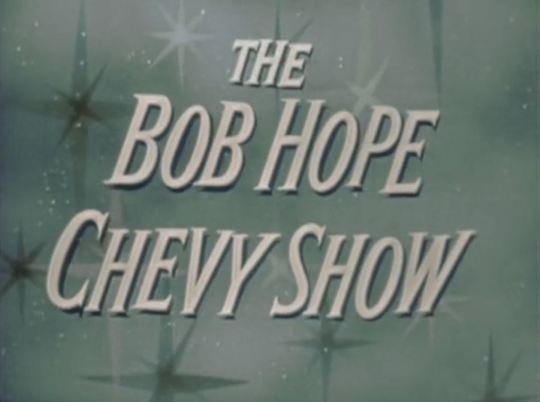
THE BOB HOPE CHEVY SHOW
October 21, 1956
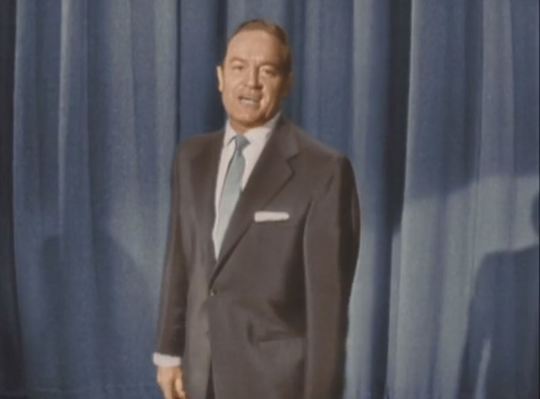
Bob
Hope
(Himself / Ricky Ricardo) was
born Lesley Townes Hope in England in 1903. During his extensive
career in virtually all forms of media he received five honorary
Academy Awards. In 1945 Desi Arnaz was the orchestra leader on Bob
Hope’s radio show. Ball and Hope did four films together. He
appeared as himself on the season
6 opener of
“I Love Lucy.” He did a brief cameo in a 1964 episode of “The
Lucy Show.” When Lucille Ball moved to NBC in 1980, Hope appeared on her welcome special. He
died in 2003 at age 100.Lucille
Ball (Lucy
Ricardo) was born on August 6, 1911 in Jamestown, New York. She began
her screen career in 1933 and was known in Hollywood as ‘Queen of
the B’s’ due to her many appearances in ‘B’ movies. With
Richard Denning, she starred in a radio program titled “My Favorite
Husband” which eventually led to the creation of “I Love Lucy,”
a television situation comedy in which she co-starred with her
real-life husband, Latin bandleader Desi Arnaz. The program was
phenomenally successful, allowing the couple to purchase what was
once RKO Studios, re-naming it Desilu. When the show ended in 1960
(in an hour-long format known as “The Lucy-Desi Comedy Hour”) so
did Lucy and Desi’s marriage. In 1962, hoping to keep Desilu
financially solvent, Lucy returned to the sitcom format with “The
Lucy Show,” which lasted six seasons. She followed that with a
similar sitcom “Here’s Lucy” co-starring with her real-life
children, Lucie and Desi Jr., as well as Gale Gordon, who had joined
the cast of “The Lucy Show” during season two. Before her death
in 1989, Lucy made one more attempt at a sitcom with “Life With
Lucy,” also with Gordon, which was not a success and was canceled
after just 13 episodes.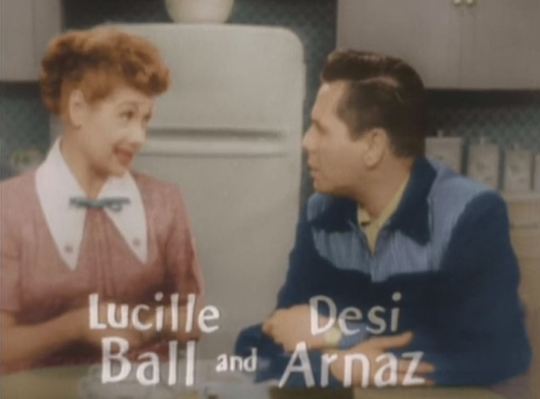
Desi Arnaz (Fred Mertz) was born in Cuba in 1917 and immigrated to America as a youngster. He was a musician who married Lucille Ball in 1940 after meeting her on the set of 1939’s Too Many Girls, which he had done on stage in New York. In order to keep him ‘off the road’ Ball convinced producers to cast him as her husband in a new television project based on her radio show “My Favorite Husband.” The network was convinced. In 1951, Arnaz and Ball began playing Lucy and Ricky Ricardo, roles they would be identified with for the rest of their lives. The couple had two children together, Lucie and Desi Jr. In 1960, Ball and Arnaz divorced. Desi became a producer, responsible for such hits as “The Mothers-in-Law” (1967-69). He re-married in 1963. Desi Aranz died in 1986, just a few years before Ball.
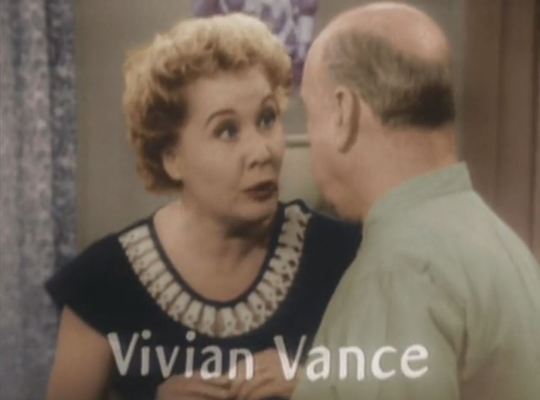
Vivian
Vance
(Ethel Mertz) was
born Vivian Roberta Jones in Cherryvale, Kansas in 1909, although her
family quickly moved to Albuquerque, New Mexico where she was raised.
She had extensive theatre experience, co-starring on Broadway with
Ethel Merman in Anything Goes. She was acting in a play in
Southern California when she was spotted by Desi Arnaz and hired to
play Ethel Mertz, Lucy Ricardo’s neighbor and best friend. The
pairing is credited with much of the success of “I Love Lucy.”
Vance was convinced to join the cast of “The Lucy Show” in
1962, but stayed with the series only through season three, making
occasional guest appearances afterwards. She made a total of six
appearance on “Here’s Lucy.” She also joined Lucy for a
TV special “Lucy Calls the President” in 1977. Vance died two
years later.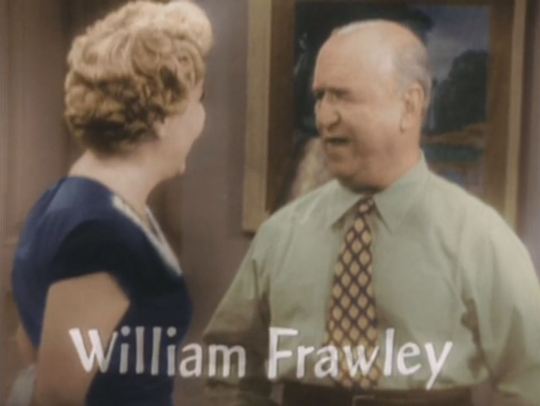
William
Frawley
(Captain Blystone) was
already a Hollywood veteran when he was hired by Desi Arnaz to play
Fred Mertz on “I Love Lucy.” After the series concluded he joined
the cast of “My Three Sons” playing Bub Casey. He did an episode
of “The Lucy Show” in October 1965 which was his final TV
appearance before his death in March 1966.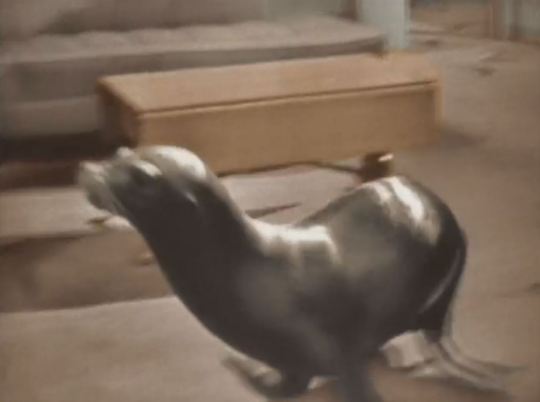
Tommy
(Trained Seal)Others guests on the show that evening were
James
Cagney, Diana Dors,
New York Yankee Don
“No Hit” Larsen,
and Les
Brown and his Band of Renown.The Hollywood DebStars
(up and coming young women in the entertainment business nominated by
the make-up industry) include:- Nicola Michaels aka Niki Dantine (from
MGM) - Elaine Aikens aka Elaine Aiken (from Paramount)
- Dani Crayne
(from Warner Brothers) - Anna Navarro (from NBC)
- Nancy Kilgas (from
CBS) - Roxanne Arlen (from Pine Talent Productions)
- Stephanie Griffin
(from DelBar Productions) - Carol Nugent (from American National
Studios) - Autumn Russell (from Al Wallace)
- Veneita Stevenson
(from RKO)
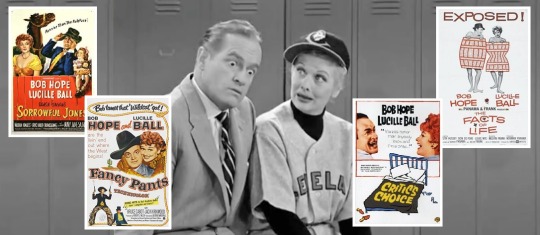
This cross-over episode of “The Bob Hope Show” aired on NBC (Hope’s network of choice) two weeks after his guest-star appearance as himself on the season six opener of “I Love Lucy.”
Because the show is sponsored by Chevrolet, the opening theme is their jingle “See the U.S.A. In a Chevrolet” by Leo Corday and Leon Carr. Dinah Shore sang the song after 1952, and it became something of a signature song for her. Later the song was also sung by Pat Boone on his “Pat Boone-Chevy Showroom” (1957-60) on ABC. Hope’s signature tune “Thanks for the Memory” by Ralph Rainger is saved for the closing credits, with special lyrics about the 1957 Chevies.

In Hope’s opening monologue, he promises a look at the new 1957 Chevrolet cars. He then alludes to the new TV season. Hope wonders who is running the country with Walter Winchell on TV and IKE out campaigning. Winchell’s new NBC variety series was titled “The Walter Winchell Show” and it premiered three days before this “The Bob Hope Chevy Show.” It lasted just one season. A month after Hope mentioned IKE campaigning, Eisenhower handily won election to a second term as US President.

Hope says that Sid Caesar’s back – with a new wife. Hope is referring to the third season of NBC’s “Caesar’s Hour.” Nanette Fabray left the show after a misunderstanding when her business manager, unbeknownst to her, made unreasonable demands during contract renewal negotiations. Fabray and Caesar did not reconcile until years later. Fabray appeared with Lucille Ball in the her 1974 special “Happy Anniversary and Goodbye.”

Hope says that Steve Allen is back and busy as ever. Allen’s new show on NBC was titled “The Steve Allen Plymouth Show” (another show sponsored by a car manufacturer) and would run five seasons. Steve Allen interviewed Lucy Whittaker (Lucille Ball) in 1977′s “Lucy Calls the President.”

Hope also reports that Perry Como is back. Hope is referring to Como’s hosting of “The Kraft Music Hall.” Como appeared on the premiere of the aforementioned “Walter Winchell Show” to promote the “Kraft Music Hall.”

Trying to make a joke about “The Ed Sullivan Show” (which he says “owns Sunday nights), Hope mistakenly says “Elvin Presley” instead of “Elvis Presley.”

Hope does a joke about Winston Churchill’s son being on
“The
$64,000 Question.”
On September 18, 1956, a month before this Bob Hope Show
first aired, Rudolph Churchill was a guest contestant on the American
quiz show hosted by Lucille Ball’s friend Hal March. Churchill and
the other contestants all got the answers right that evening and it
was discovered that
they were already given the answers. This
began what is know as the quiz show scandals in Hollywood.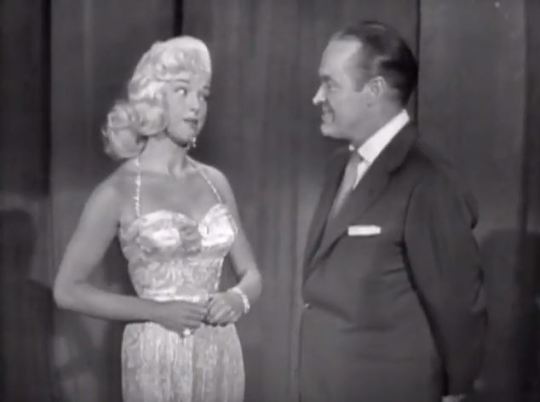
English-born Diana Dors does a sketch where she plays Hope’s wife in a traditional English cottage. Dors
and Hope then do a companion sketch about a married couple in modern
day America where the house practically cleans itself. They even have
a baby (several) thanks to automation.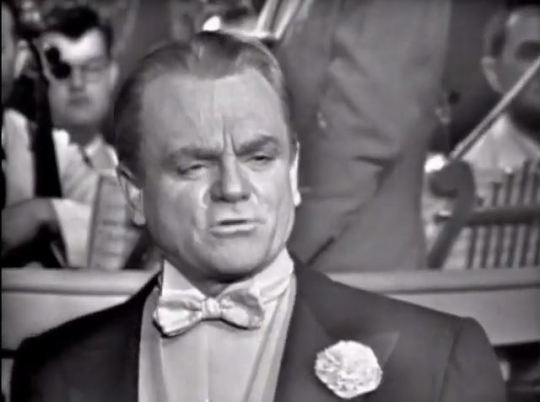
Hope
and Cagney sing and dance to “Mary’s
a Grand Old Name” by
George M. Cohan. Cagney won an Oscar for playing George M. Cohan in
the 1942 film
Yankee
Doodle Dandy,
which also featured the song. It was also in the film The
Seven Little Foys
(1955), which is mentioned by Hope. Cagney says he is doing a new
film about Lon Chaney called Man
of a Thousand Faces.
It was released in 1957. Hope also makes a joke about Burt
Lancaster’s 1956 film Trapeze.
During Hope and Cagney’s introductions of the DebStars, background singers perform “A Pretty Girl Is Like A Melody,” “You Oughta Be in Pictures” and “You Are Too Lovely.”
After ogling the DebStars, Cagney does an imitation of Ernest Borgnine saying “What’re you doin’ tonight, Marty?” from the 1955 film Marty. About Cagney, Hope says he’s such a tough guy that he thinks Somebody Up There Likes Me is a comedy. The dramatic 1956 film is about the life of boxer Rocky Graziano.
Hope
rightfully states that he knew Lucy long before she met Desi and
wonders what it would be like if he’d married Lucy. This sets up the
premise of the “I Love Lucy” cross-over sketch that follows.The
“I Love Lucy” theme is played at the start of the sketch.Although
the “I Love Lucy” set is used, it is slightly changed to
accommodate the action. There are now closet doors at the extreme left and right edge of the set. The set dressing in the hallway is also different.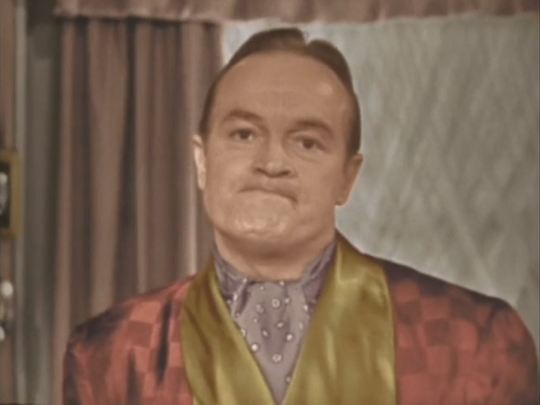
The
sketch was probably recorded in advance, possibly on the “I Love
Lucy” stage, to accommodate the cast, including the live seal. This
is born out by the fact that during Hope’s “curtain call” during
the final credits, only William Frawley and Vivian Vance come out to
shake Hope’s hand, and they are dressed in different clothes than
they were wearing moments before. Lucille Ball and Desi Arnaz do not
appear as “themselves” out of context of the characters they play
in the sketch.The
action opens on the Ricardo’s New York City apartment with Lucy
leading a live seal from the front door into the living room closet.
Ball has some trouble getting the seal through the closet door,
despite tempting it with food.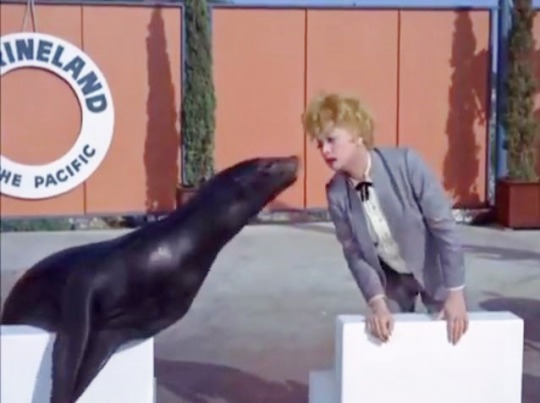
Lucille Ball would work with live
seals again in “Lucy at Marineland” (TLS S4;E1).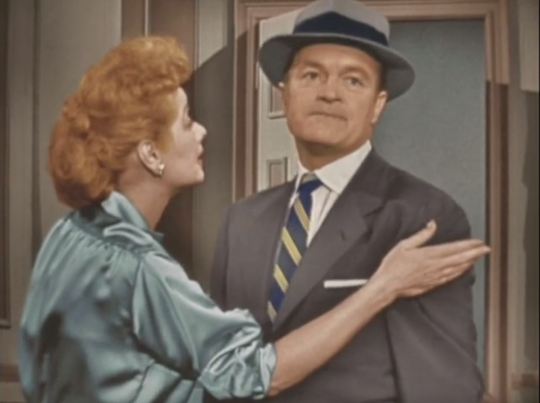
When
Ricky (Bob Hope) comes home, Lucy smothers him with kisses, which
makes him suspicious that something is up.Lucy:
“What
are you talking about? I give you a kiss every day.”
Ricky:
“I know, but this is October. You just kissed me through Lincoln’s
Birthday.”
Lincoln’s
Birthday was formerly a Federal holiday celebrated on February 12. It is now marked only in select states, having been replaced by Presidents’ Day at the Federal level.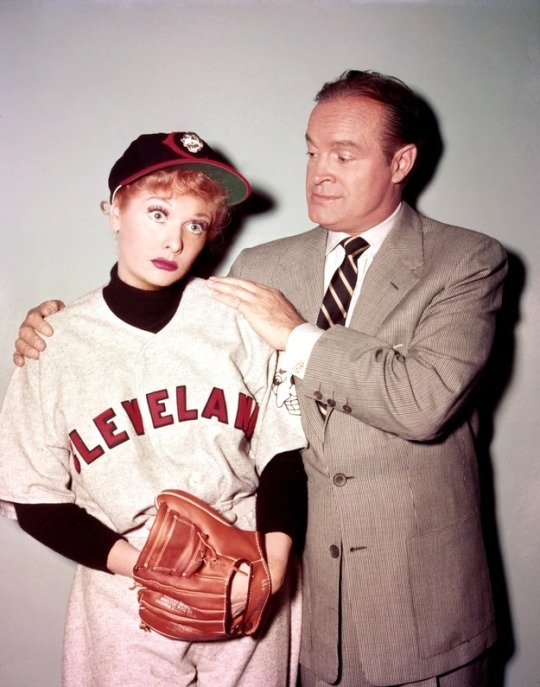
When
Ricky tosses his hat into the closet where the seal is hiding, it
immediately comes flying back at him, nearly landing back on his
head, but missing.Lucy:
“We’ve got termites!”
Ricky:
“One of them must pitch for Cleveland.”
Hope
was part-owner of the Cleveland Indians, and never missed an
opportunity to joke about the team.Lucy says she was just trying to help by getting the closet fumigated.
Ricky:
“You’re always helping, like when we went on our honeymoon. You
thought we’d be lonesome so you invited your mother along.”
Lucy:
“I was just trying to help.”
Ricky:
“Who were you helping? You’re father?”While
Lucy Ricardo’s mother was an integral part of “I Love Lucy” in
its last few seasons, her father was never mentioned. In real-life,
Lucille Ball’s father died when she was an infant and she was raised
by her grandfather. Like most cross-overs, Hope’s writers appear not
to have been avid watchers of “I Love Lucy.”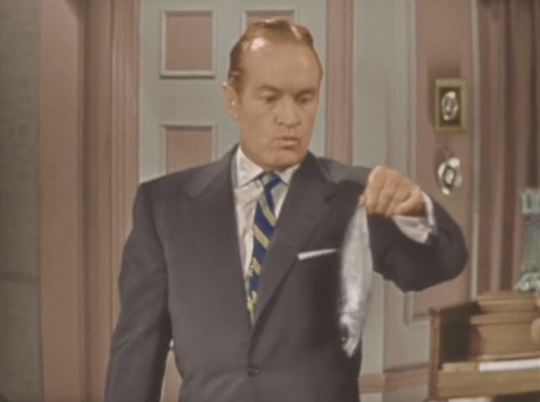
Seeing a
plate of whole fish (the seal’s food) on the coffee table, Ricky gets
suspicious. He calls them “Texas anchovies.” Lucy explains that
they are her first dividend from her membership in the Herring of the
Month Club.Ricky
says he has an audition in the morning for the 100-piece Havana
Symphony Orchestra: 99 bongos and a sweet potato.When
Fred enters (played by Desi Arnaz), Lucy barely recognizes
him:Lucy:
“Well Fred, I didn’t recognize you. You look like a new man. Took
off a little weight, put on a little hair.”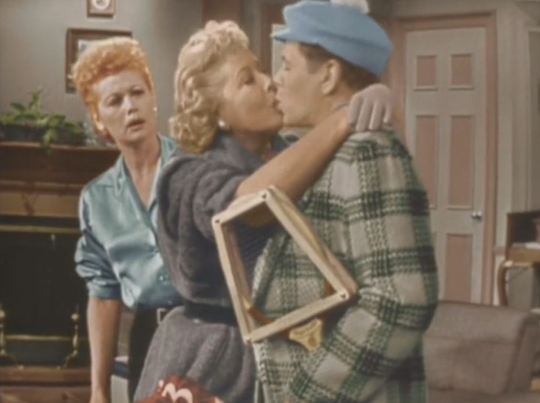
When
Ethel smothers Fred (Ricky) in kisses, Lucy (or Lucille
Ball) says
“All right, break it up. Let’s not overdo it.” On
“I Love Lucy,” Vivian Vance did not enjoy having to be
affectionate with William Frawley. If the script required them to
smooch, an air kiss was all Frawley and Vance would do – and that
reluctantly.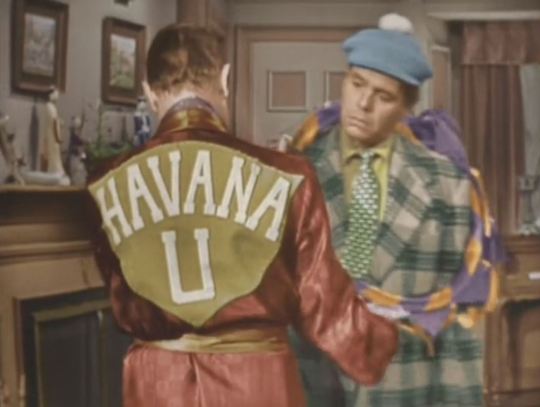
When
Ricky (Hope) turns his back to the audience, his bathrobe says
“Havana U” on it.
On “I Love Lucy” Ricky Ricardo claimed to
have attended the University, and even sang their fight song in one
episode.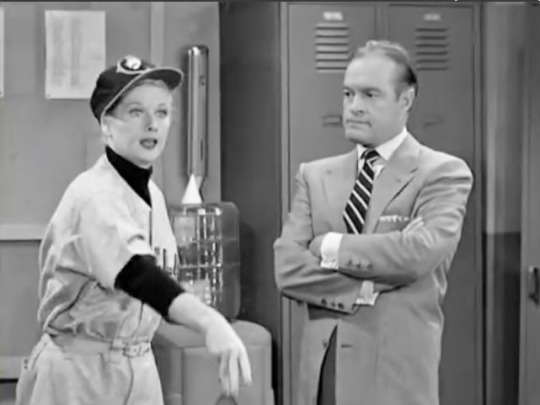
When
Ricky can’t understand Fred’s thick Cuban accent, Bob Hope recycles a
punchline he also used on “Lucy Meets Bob Hope” (ILL S6;E1) the
week before: “You’re
trying to tell me something!”
Lucy
insists on playing charades. When Ricky complains he needs to go to
bed, he asks Lucy “Who do you think I am?” As if a charade clue,
she quickly replies “The
Beast From Hollow Mountain”!
This was the title of a low-budget horror flick about a modern-day
dinosaur on the loose. The movie was released in August 1956.When
Lucy announces that Fred and Ethel’s apartment is being fumigated (to
hide that Captain Blystone is staying there), she says that the girls
will sleep in the bedroom and the boys will take the living room.
Hope breaks the fourth wall to address the audience:Hope:
“How
do you like that? I marry Lucy and wind up with Desi.”Both
Ricky and Fred dive for the sofa at the same time. Hope is still
straddling the fourth wall.Hope
(to Desi):
“One chorus of ‘Babalu’ and out you go.”Then
Desi mutters under his breath “I
should have never left CBS”
which is likely an ad-lib by Arnaz.When
Ricky opens the closet door a huge circus ball rolls out. Lucy
claims it is a beach ball for the little girl next door. When Ricky
(Hope) tries to lift it, it is heavy, and he remarks “Who’s
the little girl? Sophie Tucker?”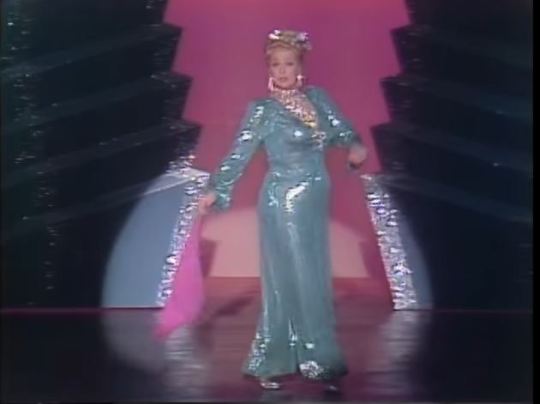
Sophie
Tucker
was a vaudeville personality of sturdy build. Lucille Ball would
play Tucker on “Bob Hope’s All-Star Comedy Salute to Vaudeville”
in 1977.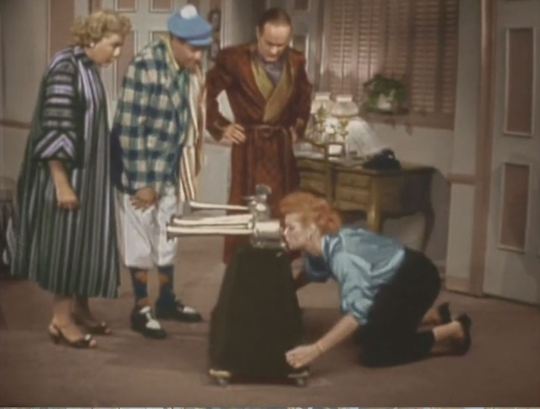
In
another closet, Ricky finds what Lucy calls a
‘gramasousaxylophonovitch’, a series of horns arranged like a
xylophone.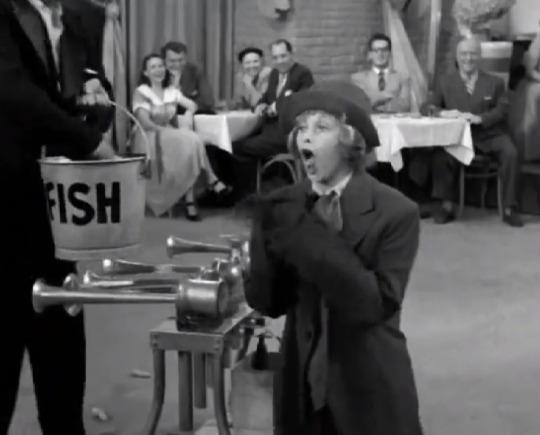
Five years earlier, on
“The Audition” (ILL S1;E6), Lucy Ricardo pretended to be a
trained seal and played
“How Dry Am I” on the (what she called then) the
‘saxavibratronophonovitch’, but is virtually the same instrument. This
was also part of the act Lucille Ball and Desi Arnaz toured live
across the country to convince CBS and sponsors that their pairing
would work on television.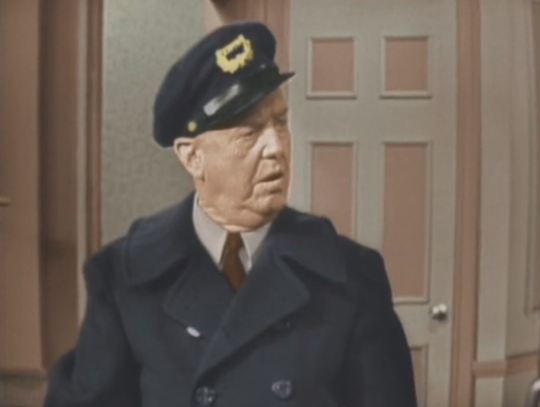
Lucy’s
performance wakes Captain Blystone (William Frawley) upstairs, who
comes to claim his seal, who he calls Tommy. Lucy introduces the
seal as her music teacher!
$64000 Question, 1956, Caesar’s Hour, Chevrolet, Cleveland Indians, DebStars, Desi Arnaz, Diana Dors, Don Larsen, Elvis Presley, I love lucy, Jimmy Cagney, Lucille Ball, Man of a Thousand Faces, Marty, Mary’s A Grand Old Name, Nanette Fabray, NBC, New York Yankees, See the USA in a Chevrolet, Somebody Up There Likes Me, Thanks for the Memory, The Bob Hope Chevy Show, The Bob Hope Show, The Seven Little Foys, The Walter Winchell Show, trained seal, Trapeze, Vivian Vance, Yankee Doodle Dandy - Nicola Michaels aka Niki Dantine (from
-
THE LUCY STORY
“The
Ann Sothern Show” (S2;E1) ~ October 5, 1959
Directed
by James V. Kern ~ Written by Leonard GersheSynopsis
Lucy
Ricardo is mad at Ricky, so she packs her bags and moves into a hotel
managed by her old friend Katy O’Connor. Finding out that Katy is
unmarried, Lucy is determined to fix her up with her boss, Mr. Devry,
using herself as bait. The plan backfires when Mr. Devry finds out
the truth and turns the tables on the girls.Cast
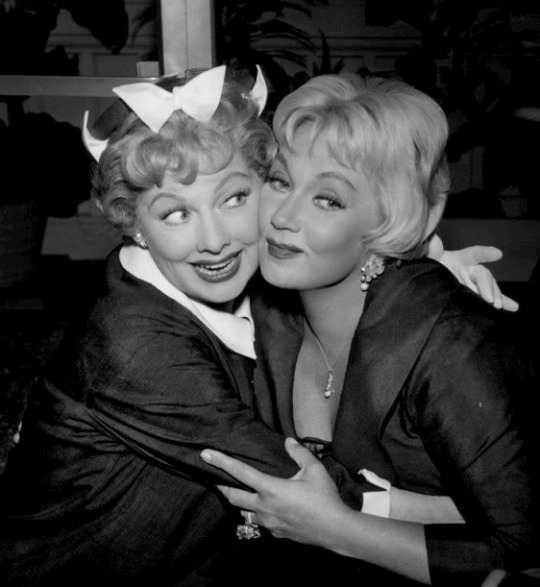
Ann
Sothern (Katy
O’Connor) was born Henrietta Lake in 1909. She appeared
in the first “Lucy-Desi Comedy Hour” “Lucy
Takes a Cruise to Havana”
(1957)
as Susie MacNamara, the same character she played on her show
“Private Secretary” from 1953 to 1957. After that show was
shelved due to a contract dispute, Ball appeared in return crossover
on “The Ann Sothern Show” in 1959. Sothern appeared with
Ball in five films between 1933 and 1943. On “The Lucy Show,” she
made seven appearances as Rosie Hannigan aka The Countess Frambois, a
countess down on her luck. She was nominated for an Oscar for her
final screen appearance in The
Whales of August in
1987. She is buried near her home in Sun Valley, Idaho, a place also
dear to Lucy and Desi.Katy
is the assistant manager of the Bartley House Hotel. She is
unmarried.Lucille
Ball (Lucy
Ricardo) was born on August 6, 1911 in Jamestown, New York. She began
her screen career in 1933 and was known in Hollywood as ‘Queen of
the B’s’ due to her many appearances in ‘B’ movies. With
Richard Denning, she starred in a radio program titled “My Favorite
Husband” which eventually led to the creation of “I Love Lucy,”
a television situation comedy in which she co-starred with her
real-life husband, Latin bandleader Desi Arnaz. The program was
phenomenally successful, allowing the couple to purchase what was
once RKO Studios, re-naming it Desilu. When the show ended in 1960
(in an hour-long format known as “The Lucy-Desi Comedy Hour”) so
did Lucy and Desi’s marriage. In 1962, hoping to keep Desilu
financially solvent, Lucy returned to the sitcom format with “The
Lucy Show,” which lasted six seasons. She followed that with a
similar sitcom “Here’s Lucy” co-starring with her real-life
children, Lucie and Desi Jr., as well as Gale Gordon, who had joined
the cast of “The Lucy Show” during season two. Before her death
in 1989, Lucy made one more attempt at a sitcom with “Life With
Lucy,” also with Gordon, which was not a success and was canceled
after just 13 episodes.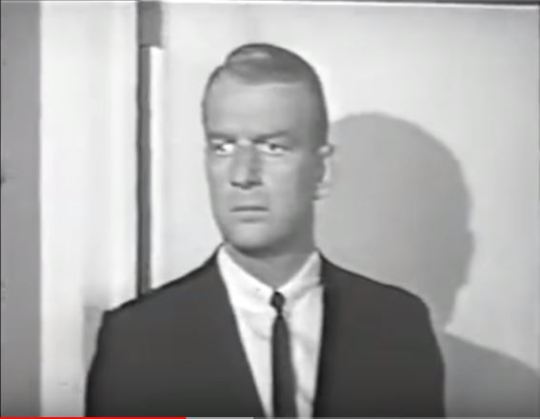
Don
Porter (James
Devry) played Mr. Devry for 46 episodes of “The Ann Sothern Show”
from 1959 to 1961. He previously played Peter Sands on “Private
Secretary” from 1953 until the show’s end in 1957. In 1974 Porter
had a reunion with Lucille Ball in three projects: a January episode
of “Here’s Lucy”; in the musical film Mame,
playing snooty Mr. Upson; and in the Lucille Ball special “Happy Anniversary and
Goodbye.” He
died in 1997 at age 84.Mr.
Devry is the manager of the Bartley House Hotel. He is an eligible
bachelor.
Ann
Tyrell
(Olive Smith) played Olive for 55 episodes of “The Ann Sothern
Show” from 1958 to 1961. She previously played Vi Praskins on
“Private Secretary” from 1953 to 1957. Critics often said that
she was the “Ethel” to Ann Sothern’s “Lucy.” Her last screen
credit was in 1964 and she died in 1983.Jack
Mullaney (Johnny
Wallace) played Mr. Wallace for 22 episodes of “The Ann Sothern
Show” from 1958 to 1959. His final screen credit was in 1980’s
remake Little
Miss Marker.
He died two years later at age 52.
James
V. Kern
directed 22 episodes of “The Ann Sothern Show.” He began
directing “I Love Lucy” in 1957 at the end of the Hollywood
episodes and did a total of 40 episodes. His final directing work was for “My
Three Sons.” He died in 1966. His place of death is listed as
Desilu Studios.James
Gershe
wrote a baker’s dozen of episodes of “Private Secretary” and half
a dozen of “The Ann Sothern
Show.” He is best remembered for his Broadway play Butterflies
Are Free,
as well as the screenplay for the 1972 film. He wrote two episodes of
“The Lucy Show,” one of which featured Ann Sothern. Gershe was
nominated for an Oscar for 1957’s Funny
Face.Ann
Sothern and her sister, Bonnie Lake, wrote the series’ theme song
“Katy”.

About her good friend, Lucille Ball once remarked, “The best comedienne in this business, bar none, is Ann Sothern.”
Unlike
most Desilu shows, “The Ann Sothern Show” was not
filmed before a live studio audience as Sothern reportedly did not
like to play comedy in front of an audience. A laugh
track was
used throughout the run. For a time, some episodes featured a
disclaimer during the end credits reading “Audience Reaction
Technically Produced.”
This
episode of “The Ann Sothern Show” is sponsored by Tang, a
fruit-flavored drink first sold in powdered form in 1959 (meaning it
was brand new when it was a sponsor) by General Foods. Sales of the
beverage mix were weak until 1962, when NASA used
it on John
Glenn’s Mercury
and
Gemini missions.
Since
then, it has been closely associated with the US space program,
leading to the misconception that Tang was invented for or by NASA.
Sothern and her cast would often appear in commercials for the
sponsors’ products at the end of the episode. She would then sign off
with,“Well,
goodnight everybody. Stay happy!”.
During
its first two seasons, “The Ann Sothern Show” aired on
Monday nights at 9:30pm on CBS immediately following Desilu’s “The
Danny Thomas Show” (aka
“Make
Room For Daddy”).
The
series’ first two seasons received decent ratings, however, at the
start of the 1960-61 season, the series moved to Thursday nights at
9:30pm opposite the ABC hit
show “The
Untouchables”, also filmed by Desilu.
The ratings plummeted and CBS canceled the show in the spring of
1961.
Cable
channel Nick
at Nite aired “The
Ann Sothern Show” from
1987 to 1990. To date, no plans for a DVD release have been
announced.
Ann
and Lucy first became acquainted back in 1933, when both made brief
appearances as bathing beauties in a Darryl Zanuck melodrama Broadway
Thru a Keyhole. Although Ball has a line of dialogue, Sothern is hard to find in the chorus.
This
cross-over represents the only time Lucille Ball would play Lucy
Ricardo without Desi Arnaz as Ricky. In reality, Lucille Ball and
Desi Arnaz’s marriage was ending. They would announce their
separation after the final episode of “The Lucy-Desi Comedy Hour”
in April 1960, six months after this cross-over episode of “The Ann
Sothern Show” aired.
Like
“I Love Lucy,” “The Ann Sothern Show” featured characters
named Ethel (Alice Pearce), Fred (Arch Whiting), and Richy (Jimmy
Phillips). The show also employed some of “I Love Lucy’s” best character actors: Doris Singleton, Charles Lane, Elvia Allman, Ross
Elliott, Paul Dubov, Howard McNear, George O’Hanlon, John Emery,
Lurene Tuttle, Richard Reeves, Herb Vigran, Eleanor Audley, Jack
Albertson, Van Johnson, Lawrence Dobkin, Jesslyn Fax, Jack Chefe,
Norman Varden, and Joseph Kearns.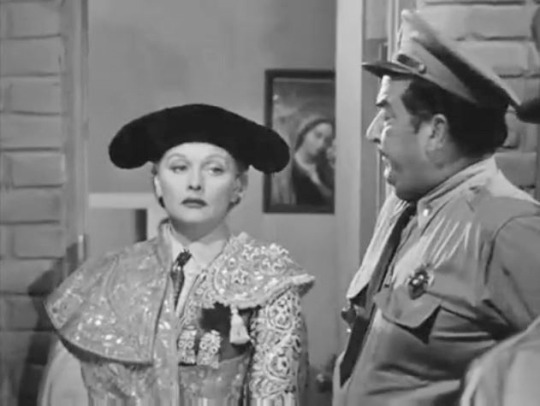
“The
Ann Sothern Show” premiered on CBS on October 6, 1958, the same
night that “Westinghouse Desilu Playhouse” presented “Lucy Goes
To Mexico”, the season two opener of “The Lucy-Desi Comedy Hour.”
For the rest of the 1958-59 season, “The Ann Sothern Show” would
serve as lead in for new episodes of “The Lucy-Desi Comedy Hour.”Arriving
at Katy’s office, Lucy says she has been trying for weeks to get
Ricky to take her away for the weekend. That morning, Lucy found a
note from Ricky on her pillow:“Dear
Lucy. Had to go skin-diving with Charlie Snyder. Be home around nine.
Next weekend we go for sure.”On
“I Love Lucy” no one named Charlie Snyder was ever mentioned, nor
did Ricky Ricardo ever show an interest for skin-diving. Throughout
the episode, there is no mention of Little Ricky, the Mertzes, or the
fact that Lucy Ricardo lives in Westport, Connecticut. It is probably
assumed that the viewing audience knows Lucy’s backstory from the
past eight years of “I Love Lucy” and “The Lucy-Desi Comedy
Hour.”
Determined
to teach him a lesson, Lucy checks in to the hotel that Katy manages,
the [fictional] Bartley House Hotel.
It is revealed that Lucy is staying in one of the Bartley’s finer
rooms, Suite 341. Two other real-life Manhattan hospitality
establishments are mentioned: the Plaza Hotel and the Pierre Hotel.
The Plaza is on the corner of 5th Avenue and 59th Street and opened
to the public in 1907. The Pierre is a luxury hotel that opened in
1930 and is situated on Fifth Avenue at 61st Street, facing Central
Park.Lucy
says that she calls herself ‘Lucille’ when things get serious. In
fact, on “I Love Lucy” Lucy never called herself Lucille, nor did
anyone else. Her full name was only used when dealing with official
identification like passports or birth certificates.Lucy
tells Katy that their mutual friend Edna Philips has two kids and a
beagle. Lucy compliments the beagle.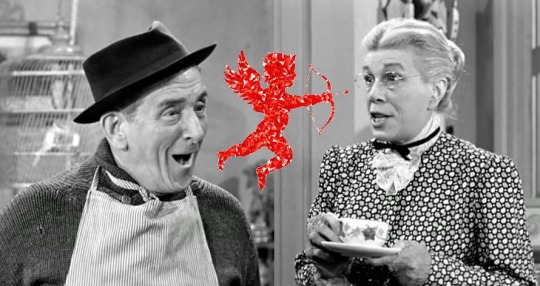
When
Lucy finds out Katy is still not married, she is determined to play
matchmaker and fix her up with her boss, Mr. Devry. Lucy Ricardo
played matchmaker several times on “I Love Lucy,” fixing up Sam
“the fly” Carter and Dorothy “the spider” Cook in “The
Matchmaker” (ILL S4;E4); “Lucy
is Matchmaker” (ILL S2;E27) where
she tries to fix up Eddie Grant and Sylvia Collins;
and “Lucy
Plays Cupid” (ILL S1;E15, above) where
she sets her bow in the direction of the elderly Miss Lewis (Bea
Benadaret) and the neighborhood butcher Mr. Ritter (Edward Everett
Horton).Katy
calls her boss “bloodless Devry” and says Lucy might as well have
fallen for “a stuffed pimento.” Mr. Devry overhears these remarks and
is determined to prove them wrong.
Thinking
Lucy has fallen in love with Mr. Devry herself, Katy calls Lucy “Madame
du Barry.”
Ball had portrayed the character, in Du
Barry Was a Lady (1943).
Sothern was originally scheduled to play the role, but had to drop
out of the film when she discovered she was pregnant. The real-life
Madame du Barry (1743-93) was the last mistress of French King Louis
XV.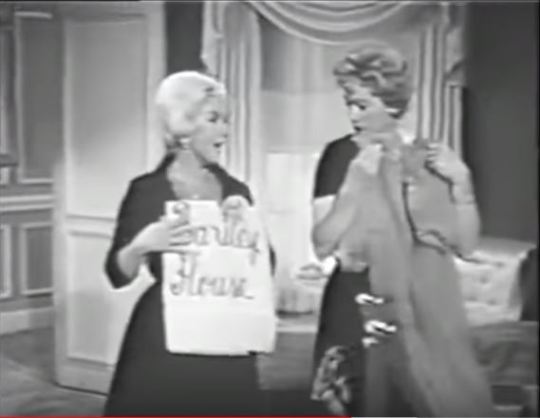
Mr.
Devry decides to turn the tables on Lucy and makes amorous overtures
to her. When packing to leave, Katy finds Lucy’s suitcase contains the Bartley’s (largely monogrammed) hotel towels.
To
get her to stay, Katy slips a handful of Rock-a-Bye Sleep Tablets
into Lucy’s champagne. To get back at her, while Katy is in the
bedroom, Lucy puts the tablets inside Katy’s chocolates.
Realizing
they have slipped each other a mickey, they sing “Rock-a-bye Baby”
to each other preparing to nod off. Luckily, Mr. Devry rescues them
from their slumber.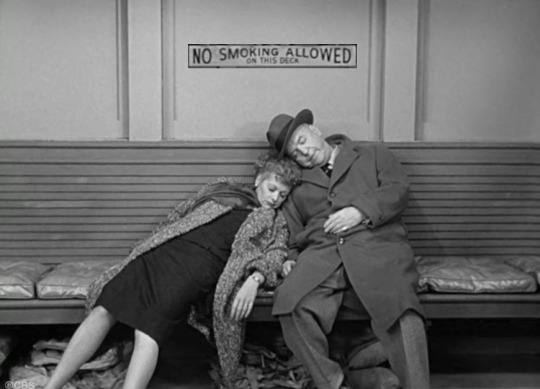
Lucy Ricardo also had too many sleeping pills
when she rode the “Staten Island Ferry” (ILL S5;E12) to help Fred
get over his sea sickness.
This
Date in Lucy History
~ October 5, 1959
“Ricky’s
‘Life’ Story”
(ILL S3;E1) – October 5, 1953
“Lucy
and the Winter Sports”
(TLS S3;E3) – October 5, 1964
“Lucy
and the Drum Contest”
(HL S3;E3) – October 5, 19701959, Ann Sothern, Ann Tyrell, Bartley House Hotel, Bonnie Lake, Broadway Thru A Keyhole, CBS, Don Porter, Du Barry Was A Lady, I love lucy, Jack Mullaney, James V. Kern, Katy O’Connor, Leonard Gershe, Lucille Ball, Lucy Ricardo, Matchmaker, Tang, The Ann Sothern Show, The Lucy-Desi Comedy Hour, tv, TV Crossovers -
LUCY UPSETS THE WILLIAMS HOUSEHOLD
“Make
Room for Daddy”
aka “The Danny Thomas Show” (S6;E14) ~ January 5, 1959
Directed
by Sheldon Leonard ~ Written by Sid Dorfman and Arthur StanderSynopsis
While
rehearsing a show together, Danny Williams invites Ricky and Lucy
Ricardo to move in to his apartment. Lucy and Kathy, meanwhile, are
spending up a storm at the department stores. To curb their spending, the boys cut off their
charge accounts in this battle of the sexes.Cast

Danny
Thomas (Danny
Williams) was
born Amos Muzyad Yakhoob Kairouz in 1912. His screen career began in
1947 but he was most famous for appearing on television in the
long-running show “Make Room for Daddy” (1953-1964), which was
shot at Desilu Studios. When the series moved from ABC to CBS in
1957, Thomas and the cast starred in a rare TV cross-over with “The
Lucy-Desi Comedy Hour” titled “Lucy
Makes Room for Danny.” In
return, Lucy and Desi turned up on Thomas’s show in this episode. In addition,
Thomas played himself on “The Lucy Show” in 1965 also played an aging artist on a 1973 episode of “Here’s
Lucy.” Thomas is fondly remembered for founding St. Jude
Children’s Research Hospital. He is also father to actress Marlo
Thomas. He died in 1999.
Lucille
Ball (Lucy
Ricardo) was born on August 6, 1911 in Jamestown, New York. She began
her screen career in 1933 and was known in Hollywood as ‘Queen of
the B’s’ due to her many appearances in ‘B’ movies. With
Richard Denning, she starred in a radio program titled “My Favorite
Husband” which eventually led to the creation of “I Love Lucy,”
a television situation comedy in which she co-starred with her
real-life husband, Latin bandleader Desi Arnaz. The program was
phenomenally successful, allowing the couple to purchase what was
once RKO Studios, re-naming it Desilu. When the show ended in 1960
(in an hour-long format known as “The Lucy-Desi Comedy Hour”) so
did Lucy and Desi’s marriage. In 1962, hoping to keep Desilu
financially solvent, Lucy returned to the sitcom format with “The
Lucy Show,” which lasted six seasons. She followed that with a
similar sitcom “Here’s Lucy” co-starring with her real-life
children, Lucie and Desi Jr., as well as Gale Gordon, who had joined
the cast of “The Lucy Show” during season two. Before her death
in 1989, Lucy made one more attempt at a sitcom with “Life With
Lucy,” also with Gordon, which was not a success and was canceled
after just 13 episodes.Desi
Arnaz (Ricky
Ricardo) was born in Cuba in 1917 and immigrated to America as a
youngster. He was a musician who married Lucille Ball in 1940 after
meeting her on the set of 1939’s Too Many Girls, which he had done on
stage in New York. In order to keep him ‘off the road’ Ball
convinced producers to cast him as her husband in a new television
project based on her radio show “My Favorite Husband.” The
network was convinced. In 1951, Arnaz and Ball began playing Lucy
and Ricky Ricardo, roles they would be identified with for the rest
of their lives. The couple had two children together, Lucie and Desi
Jr. In 1960, Ball and Arnaz divorced. Desi became a producer,
responsible for such hits as “The Mothers-in-Law” (1967-69). He
re-married in 1963. Desi Aranz died in 1986, just a few years before
Ball.
Marjorie
Lord (Kathy
Williams) was the ‘second’ Mrs. Williams, joining the cast in 1957
as a nurse who cared for Danny’s son, Rusty. Lord was previously
seen on stage and screen. She also appeared on “The Lucy-Desi
Comedy Hour” titled “Lucy
Makes Room for Danny.”
She
died on November 28, 2015, at the age of 97.
Angela
Cartwright (Linda
Williams) joined the cast of “The Danny Thomas Show” in 1957 at
the age of five. In 1965 she played the role of Brigitta in The
Sound Of Music. That
same year she played Penny Robinson on TV’s “Lost in Space.”
Her first appearance with Lucille Ball was on “Lucy
Makes Room for Danny.”Sandra
Wright
(Sales Clerk) makes her third and final screen appearance here. The
credits list her as “Sanda” Wright.Bennett
Green
(Club Employee / Store Clerk, uncredited) was Desi Arnaz’s camera and
lighting stand-in for the run of “I Love Lucy.” He frequently
also appeared on camera and had a few lines, often wearing Desi’s
wardrobe. Green subsequently did eight episodes of “The Lucy Show”
and appeared in “Mr. and Mrs.” (1964) with Ball and Bob Hope.A
Police Officer and other Ohrbach’s Store Clerks are played by
uncredited background performers.

“Make
Room for Daddy”
(aka “The Danny Thomas Show”) ran from 1953 to 1957 on ABC and
from 1957 to 1964 on CBS. In March 1953, Danny
Thomas chose Desilu Studios to film it using
its three-camera method, perfected on “I Love Lucy,” which
ran concurrently on CBS. When “I Love Lucy” went off the air (in
its half-hour format) in 1957 and “Make Room for Daddy” was
facing cancellation, CBS acquired the show and moved “Make Room for Daddy” into
“Lucy’s” old time slot.
In
1970, after a couple of reunion specials, ABC brought back “Make Room for Daddy” as “Make
Room for Granddaddy.” In
addition to Lord, Rusty Hamer and Angela Cartwright, other returning
regulars were Sid Melton as Charley Halper and Hans Conried as Uncle
Tonoose. The show lasted only one year, producing 24 episodes.
According to Lord, the series faced many obstacles, including the the
absence of producer / director Sheldon Leonard to control Thomas and
improve the quality of the scripts, and the fact that ABC switched
the time slot of the show from Wednesday nights at 8pm to Thursday
nights at 9pm. In 1981, the reboot’s 16th episode was also a “Lucy” cross-over, this time with “Here’s
Lucy” and Lucy Carter.“Make
Room for Daddy” takes place in New York City, but the show was
filmed in front of a studio audience in Hollywood, California.Rusty
Hamer (Rusty
Williams) does not appear in this episode, despite being a regular
cast member. He is, however, depicted in the show’s opening credits.
Coincidentally, Hamer also also did not appear in the 1971 cross-over
between “Make Room For Granddaddy” and “Here’s Lucy.” Interestingly, Little Ricky is also absent from this cross-over episode. Both boys are not even mentioned!
When
“I Love Lucy” finished its half-hour format in 1957, “Make Room
for Daddy” was given its prized Monday night time slot. To
symbolize the show’s “move” from ABC to CBS, a cross-over episode
of “The Lucy-Desi Comedy Hour” titled “Lucy Makes Room for
Danny” depicting the Williams Family moving (temporarily) into the
Ricardo’s Westport, Connecticut, home. “Lucy Upsets the Williams
Household” was Desilu’s way of repaying Danny Thomas productions
for doing “Lucy Makes Room for Danny” a few months earlier.
CBS
aired “Make Room for Daddy” at 9, with “The Westinghouse Desilu
Playhouse” at 10pm. This was the umbrella title of the hour that
presented “The Lucy-Desi Comedy Hour.” Weeks that “Lucy” was
not on, other programming was presented. On January 5, 1959,
that program was titled “Trial at Devil’s Canyon,” featuring
character actor Vito Scotti, who would later appear on two episodes
of “The Lucy Show.” Most of the “Westinghouse Desilu Playhouse”
presentations featured introductions by Desi Arnaz and appliance
commercials by Westinghouse spokesperson Betty Furness.
On
December 1, 1958, the air date of “Lucy Makes Room for Danny” on
“The Westinghouse Desilu Playhouse,” the episode of “Make Room
for Daddy” shown at 9pm was titled “Linda’s Tonsils.”
Sandwiched
between “Make Room for Daddy” and “The Westinghouse Desilu
Playhouse” CBS aired yet another Desilu sitcom, “The Ann Sothern
Show” (Desi Arnaz, Executive Producer), which also did a cross-over
featuring Lucy Ricardo. Before Sothern’s first series “Private
Secretary” was canceled (due to a contract dispute), it, too,
featured a cross-over with “The Lucy-Desi Comedy Hour” with Susie
McNamara (Ann Sothern, above) joining Lucy McGillicuddy for a singles cruise
to Havana in 1940. On the evening of January 5, 1959, “The Ann
Sothern Show” featured two of Lucille Ball’s favorite character
actors, Charles Lane and Sid Melton.“Make
Room for Daddy” shared at least one Desilu staff member with “I
Love Lucy” and “The Lucy-Desi Comedy Hour,” Production Manager
(later Supervisor) W.
Argyle Nelson.
Nelson was born in 1901 and died in 1970.
Producer
and Director Sheldon
Leonard
had appeared on “I Love Lucy” as Harry Martin, salesman for the
Handy Dandy appliance company in “Sales Resistance” (ILL S2;E17).
He played himself on a 1967 episode of “The Lucy Show.”
The
episode opens in Danny’s nightclub with Ricky Ricardo (conga drum in
hand) and Danny Williams rehearsing “I’ll
See You in C.U.B.A.”
by Irving Berlin. It was previously sung by Ricky (Desi Arnaz) on
“The Mustache” (ILL S1;E23) and “Ricky’s Contract” (ILL
S4;E9). Lucie Arnaz currently performs the song in her show “Latin
Roots,” a tribute to her father.
Ricky
gets a phone call that Lucy is in jail. She’s been accused of
running a gambling racket with gumball machines. Clearly the lack of
logic is a tell-tale sign that there are different writers for “Make
Room for Daddy.” To keep Lucy from distracting Ricky from his
rehearsal schedule, Danny suggests the couple move in with them in
their New York City apartment. Ricky references the debacle that
occurred when the Williams’ rented their Connecticut house. These
events occurred in “Lucy Makes Room for Danny,” a December 1957
episode of “The Lucy-Desi Comedy Hour.”
Linda:
“Daddy, I want to be a chorus girl.”
Danny:
“Don’t be silly, who ever heard of a six year old chorus girl.”
Linda:
“Couldn’t you lie about my age?”Ricky
calls Linda “a
regular Lucy Junior” regarding
her eagerness to get into show business. [Above, Cartwright is with Gale Gordon on “Lucy Makes Room for Danny.”] The
dialogue mentions Ethel
Mertz.
Vivian Vance does not appear in the episode, however.
Lucy
and Kathy are seen shopping at Ohrbach’s. Ohrbach’s was
a moderate-priced department store focusing primarily on clothing and
accessories. From its modest start in 1923 until the chain’s demise
in 1987, Ohrbach’s expanded dramatically after World
War II,
and opened numerous branch locations in the metro areas of New York,
New Jersey, and Los Angeles. Its original flagship store was located
on Union
Square in New
York City, which
is probably where Lucy and Kathy are supposed to be shopping. Although the name “Ohrbach’s” is seen on the walls of the department store set, the name is not mentioned in the dialogue.
Lucy
buys seven negligees, intending to keep just two. In 1971’s “Make
Room for Granddaddy” cross-over with “Here’s Lucy,” Lucy Carter
comments on how many negligees are in Kathy’s closet.Lucy
equates marriage to the Battle of the Sexes:- Declaration of War (the
wedding) - Series of Peace Talks (the honeymoon)
- Break in
Negotiations (the marriage)
She
calls the negligee their “combat uniform” and orders seven
negligees for Kathy, too. Ricky is onto Lucy’s tricks, despite her
turning on the waterworks, but Danny doesn’t catch on nearly as
quickly.
Ricky:
“Listen,
you Lebanese lame-brain. In the battle of the sexes, Lucy’s a
general and you’re a 4-F.”Four
F
was the draft designation declaring a candidate unfit for military
service.Later
in the episode, Ricky calls Danny a “camel
trader.” Ethnic
jokes like these were never indulged on “I Love Lucy” and sound
odd coming from Desi Arnaz, who, after all, was an immigrant himself.When
Danny cuts off Kathy’s charge accounts, Lucy and Kathy buy $180 of
dog food and sell it off at half price to get enough cash to buy new
evening gowns. Ricky reminds him that he forgot to turn off their
credit at the pet store.
Danny
suggest they use reverse psychology on the girls, open their charge
accounts, and give up the battle, theorizing that without an enemy, the girls will give up the fight.Ricky:
“Do
you know what Lucy could buy at Macy’s alone?”
Danny:
“What?”
Ricky:
“Gimbles!”Macy’s Department store was mentioned several times on “I Love Lucy,” as
was their rival, Gimbles. Although Macy’s is still in business
today, Gimbles ceased operations in 1987, the same year Orbach’s went
chapter 11.
Back at Orbach’s with charge-a-plates restored,
Lucy practically buys out the store and has is weighed down with multiple hats, furs, and bangles. She is followed by a retinue of clerks holding
her many packages.
Taking
a break from their shopping, Lucy and Kathy recall when booking agent Fred
Duncan and Harry Stuart both bought their wives extravagant gifts –
because they were having affairs. Lucy immediately assumes Ricky is
in love with another woman and dissolves into her trademark tears. “Waaaa! I’ve lost him!”The
underscoring of the show works in a few notes of the “I Love Lucy”
theme song during the scene transitions.
In the end, Lucy
has made a complete change, wearing simple, old clothes, knitting
Ricky bongo covers, and putting up preserves. “Your
favorite: Cuban piccalilli.”
This
Date in Lucy History
~ January 5
“Ricky
Has Labor Pains”
(ILL S2;E14) – January 5, 1953
“Lucy
and Liberace”
(HL S2;E16) – January 5, 1970
 1959, Angela Cartwright, Ann Sothern, Arthur Stander, Bennett Green, CBS, Danny Thomas, Desi Arnaz, Gimbels, I love lucy, I’ll See You in C.U.B.A, Lucille Ball, Macy’s, Make Room for Daddy, Make Room for Granddaddy, Marjorie Lord, negligees, Orbach’s, Rusy Hamer, Sandra Wright, Sheldon Leonard, Sid Dorfman, The Lucy-Desi Comedy Hour, tv, TV Crossovers, W. Argyle Nelson
 - Declaration of War (the
-
LUCY AND THE LECHER aka LUCY, THE HOUSEGUEST
“Make Room for Granddaddy” (S1;E16) ~ January 21, 1971


Directed
by John Rich ~ Written by Lee ErwinSynopsis
Kathy’s
old friend Lucy Carter comes to New York for a visit. When Danny
comes home from a trip, there is a series of accidental flirtations
between Lucy and Danny that make her believe he is being unfaithful
to Kathy.Cast

Danny
Thomas (Danny
Williams) was
born Amos Muzyad Yakhoob Kairouz in 1912. His screen career began in
1947 but he was most famous for appearing on television in the
long-running show “Make Room for Daddy” (1953-1964), which was
shot at Desilu Studios. When the series moved from ABC to CBS in
1957, Thomas and the cast starred in a rare TV cross-over with “The
Lucy-Desi Comedy Hour” titled “Lucy
Makes Room for Danny.” In
return, Lucy and Desi turned up on Thomas’s show. In addition,
Thomas also played an aging artist on a 1973 episode of “Here’s
Lucy.” Thomas is fondly remembered for founding St. Jude
Children’s Research Hospital. He is also father to actress Marlo
Thomas. He died in 1999.
Lucille
Ball (Lucy
Carter) was born on August 6, 1911 in Jamestown, New York. She began
her screen career in 1933 and was known in Hollywood as ‘Queen of
the B’s’ due to her many appearances in ‘B’ movies. With
Richard Denning, she starred in a radio program titled “My Favorite
Husband” which eventually led to the creation of “I Love Lucy,”
a television situation comedy in which she co-starred with her
real-life husband, Latin bandleader Desi Arnaz. The program was
phenomenally successful, allowing the couple to purchase what was
once RKO Studios, re-naming it Desilu. When the show ended in 1960
(in an hour-long format known as “The Lucy-Desi Comedy Hour”) so
did Lucy and Desi’s marriage. In 1962, hoping to keep Desilu
financially solvent, Lucy returned to the sitcom format with “The
Lucy Show,” which lasted six seasons. She followed that with a
similar sitcom “Here’s Lucy” co-starring with her real-life
children, Lucie and Desi Jr., as well as Gale Gordon, who had joined
the cast of “The Lucy Show” during season two. Before her death
in 1989, Lucy made one more attempt at a sitcom with “Life With
Lucy,” also with Gordon, which was not a success and was canceled
after just 13 episodes.
Marjorie
Lord (Kathy
Williams) was the ‘second’ Mrs. Williams, joining the cast in 1957
as a nurse who cared for Danny’s son, Rusty. Lord was previously
seen on stage and screen. She also appeared on “The Lucy-Desi
Comedy Hour” titled “Lucy
Makes Room for Danny.”
She
died on November 28, 2015, at the age of 97.
Angela
Cartwright (Linda
Williams) joined the cast of “The Danny Thomas Show” in 1957 at
the age of five. In 1965 she played the role of Brigitta in The
Sound Of Music. That
same year she played Penny Robinson on TV’s “Lost in Space.”
Her last appearance with Lucille Ball was on “Lucy
Makes Room for Danny.”
Doris
Singleton (Grace
Munson) created the role of Caroline Appleby on “I Love Lucy,”
although she was known as Lillian Appleby in the first of her ten
appearances. She made two appearances on “The Lucy Show” and four
appearances on “Here’s Lucy,” all as secretaries. Doris
Singleton died in 2012 at age 92.
Although
credited as playing Sylvia, the character is referred to as Grace
Munson in the dialogue.
Joseph
Mell (Taxi
Driver) was seen in five episodes of “The Lucy Show” and one of
“Here’s Lucy.” In 1964 he appeared in the TV special “Mr. and
Mrs.” (aka “The Lucille Ball Comedy Hour”), which featured many
of the Desilu regulars.Michael
Hughes (Michael
Wilson, uncredited) played this character in every episode of “Make
Room for Granddaddy” although in this episode, only his voice is
heard.
The
title of this episode has been variously listed as “Lucy Visits”
and “Lucy Carter, Houseguest,” possibly to avoid the use of the
word “lecher.”
The
same week this episode of “Make Room for Granddaddy” aired on
ABC, CBS aired “Lucy and the Raffle” (HL S3;E19).

“Make
Room for Granddaddy” was a sequel to Danny Thomas’s phenomenally
successful series, “Make
Room for Daddy” (aka “The Danny Thomas Show”) which ran from 1953 to 1957 on ABC and from 1957 to 1964
on CBS. In March 1953, Danny Thomas chose ABC
and Desilu Studios to film it using its three-camera
method, perfected on “I Love Lucy,” which ran concurrently on
CBS. When “I Love Lucy” went off the air (in its half-hour
format) in 1957, CBS moved “Make Room for Daddy” into its old
time slot. The series was responsible for the creation of another
long-running Desilu sitcom, “The Andy Griffith Show.” In the
seventh season, Danny Thomas is arrested by Sheriff Andy
Taylor (Andy Griffith) and detained in the small town
of Mayberry in an episode entitled “Danny Meets Andy
Griffith.” The episode aired on February 15, 1960 and “The
Andy Griffith Show” premiered later that year on October 3.
In
1970, ABC brought back “Make Room for Daddy” as “Make
Room for Granddaddy.” For
the series premiere, Sherry Jackson reprised her role of oldest
daughter Terry who left her son, six-year-old Michael (played by
Michael Hughes), in the care of grandparents Danny and Kathy so she
could join her husband, who was stationed overseas. In addition to
Lord, Rusty Hamer (who is not in “Lucy and the Lecher”) and
Cartwright, other returning regulars were Sid Melton as Charley
Halper and Hans Conried as Uncle Tonoose. The show lasted only one
year, producing 24 episodes. According to Lord, the series faced many
obstacles, including the inexperience of child actor Michael Hughes,
the absence of producer / director Sheldon Leonard to control Thomas
and improve the quality of the scripts, and the fact that ABC
switched the time slot of the show from Wednesday nights at 8pm to
Thursday nights at 9pm. As a result, the ratings went from mediocre
to poor. In 1986, Lucille Ball would also take a sitcom to ABC and
have similar luck – the ill-fated “Life With Lucy.”
This
is one of three episodes of “Make Room for Granddaddy” produced
by Richard
Crenna,
who had guest-starred on a 1952 episode of “I Love Lucy” as
Arthur Morton, a young man who has a crush on Lucy Ricardo in “The
Young Fans” (ILL S1;E20). His character was based on one he played
on “Our Miss Brooks” named Walter Denton.
Director
John
Rich
started directing on CBS in July 1951, a few months before the
premiere of “I Love Lucy.” He directed episodes of “Our Miss
Brooks” (starring producer Crenna), “That Girl” (starring Danny
Thomas’ daughter, Marlo), and episodes of “The New Dick Van Dyke
Show” (another re-boot of a successful franchise) which aired on
CBS after “Here’s Lucy.”Writer
Lee
Erwin
makes his debut writing for both Danny Thomas and Lucille Ball. Erwin
passed away less than a year after this episode aired.
Lucille
Ball agreed to guest-star on Thomas’s show in order to boost ratings
for the series. Thomas later repaid Ball by appearing on “Here’s
Lucy” when they were in a similar ratings slump during their final
season. Thomas played artist Danny Gallupi in “Lucy and Danny
Thomas” (HL S6;E1). On “The Lucy Show,” Thomas had played
himself in an episode titled “Lucy Helps Danny Thomas” (TLS
S4;E7).
This
episode of “Make Room for Granddaddy” is included on the Bonus
Features of “Here’s Lucy: Season 3” DVD available from MPI Video. It is introduced by Marjorie Lord.
Although
oddly credited with playing Sylvia, Lucy friend and co-star Doris
Singleton is called by the name Grace Munson in the show. Grace
Munson is a character from “I Love Lucy” that appeared on camera
twice but was often spoken about. Her first appearance was as a
member of the Wednesday Afternoon Fine Arts League in 1953’s “The
Club Election” (ILL S2;E19) where she is played by Lucille Ball’s
camera and lighting stand-in, Hazel Pierce. Coincidentally, in that
same episode, Doris Singleton appears as Lillian (later Carolyn)
Appleby.
In season six, the Munsons have also moved to Connecticut
and she and her husband Harry (Tristram Coffin) appear in 1957′s “Country
Club Dance” (ILL S6;E25) where Grace is played by Ruth Brady. The
guest star is Barbra Eden, who plays Grace’s cousin, the sexy Diana
Jordan. The Munsons also had a son, Billy, who was the same age as
Little Ricky.
In
the Lucy-verse, Danny Williams and his family have met Lucy Ricardo
and Lucy Carter, while Danny Thomas has met Lucy Carmichael.
The
series takes place in New York City. The opening credits were filmed
on location, but the show was filmed in front of a studio audience in
Hollywood, California. Lucille Ball is listed as “Special Guest
Star” in the opening credits, complete with film of her appearance.
Lucy
Carter and Kathy Williams were friends in school. Lucy has not met
Danny Williams when the show begins. Lucy asks Kathy if she’s seen
Sylvia Newton, Helena Rivkin or Janet Robinson (with the funny nose).
Kathy reports that Sylvia has changed a good deal and Helena dyes her
hair. Lucy is happy to say she’s never had to do anything to hers!Over
coffee, Lucy asks about someone named Mabel Cockenlocker! Kathy
reports that Mabel is still trying to lose weight. This name contains
quite a bit of sexual innuendo for Lucille Ball. It is apparent that
these are not Lucy’s writers and that they are on the more
adventurous ABC instead of the conservative Tiffany Network, CBS.Lucy
Carter mentions her “late husband” (although not by name),
something she rarely did on “Here’s Lucy.” She does not, however,
mention her children, Kim and Craig, or her boss / brother-in-law, Harry.
Lucy
wonders why Kathy is not more suspicious of Danny’s being away from
home so much, intimating that he might be a womanizer. This sounds
more like Lucille Ball talking, not Lucy Carter. Before marrying Gary
Morton in 1961, Ball was married to Desi Arnaz, whom Ball constantly
suspected of being unfaithful. The creation of “I Love Lucy” was
her attempt to keep Arnaz at home in Hollywood, where she could keep
an eye on him!Danny
Thomas makes his first entrance seven minutes into the episode.
The
taxi driver (Joseph Mell) says Danny is one of his favorite
comedians, although he thinks he is Jack Benny. Danny corrects him
and says he is Jackie Gleason!As the taxi driver leaves, he calls Danny “Mr. Berle”! Lucy Carter met all three comedians during
the course of “Here’s Lucy.”
Thinking
that Danny won’t be home that evening, Kathy gives Lucy her bed.
Danny comes home unexpectedly and naturally mistakes the tucked-in
Lucy for Kathy.Kathy: “Lucy, this is my husband, Danny.”
Lucy: “We’ve already met.”
Kathy: “Where?”
Lucy: “In bed.”
A similar thing happened in “Lucy Makes Room for
Danny” when Danny Williams was sleeping in the Ricardo’s bed having
rented their house. Lucy sneaks into her old bedroom for her
toothbrush and a sleepy but amorous Danny thinks she is Kathy.
When
Lucy comes downstairs for breakfast, Danny is at the piano singing
“The
More I See You”
by Harry
Warren and Mack
Gordon. It was
originally sung by Dick
Haymes in
the 1945 film Diamond
Horseshoe.
In
1966, Chris
Montez released
the most commercially successful and well-known recording of the
song. Lucy naturally thinks Danny is singing the romantic ballad to her and
is immediately suspicious of his intentions.
Fearing
Danny is a “sex maniac” Lucy calls the operator and asks to be
connected to Mary Jane Lewis at (874) 555-8962. On “Here’s Lucy,”
Mary Jane is Lucy Carter’s friend played by Mary Jane Croft (above). Croft does not appear here nor do we hear her distinctive high-pitched voice.
To
dissuade what she thinks are his lecherous intentions, Lucy decides
to be less feminine. She dons Danny’s clothes and smokes one of his
cigars, even striking a match on her back pocket. She tries to talk
about boxing with Danny, even throwing a few punches. When Danny
blocks one of them with his hand, she dissolves into the trademark
Lucy “Waaaa”. Naturally, Kathy comes through the door while Danny
is consoling her with a hug.Danny:
“I
may be a grandfather, but I’m not embalmed yet!”In
the last few minutes of the episode, the doorbell rings and it is
another one of Kathy’s old school chums, Grace Munson (Doris
Singleton). Danny roles his eyes. He has a flashback of his
accidentally flirtation with Lucy and heads out the door for his next
gig in Philadelphia.
It
is possible that Kathy Williams met Grace when the Williams rented
the Ricardo home in Westport, Connecticut, where the Munsons also
lived.
When Lucy and Danny fall to the floor in a clumsy fumble, the audience can see the black tape used to mark actor positions for camera shots.
This
Date in Lucy History
~ January 21
“Lucy
Plays Cupid”
(ILL S1;E15) – January 21, 1952
“Little
Ricky Gets a Dog”
(ILL S6;E15) – January 21, 1957
“Lucy
Becomes a Reporter”
(TLS S1;E17) – January 21, 1963
“Lucy
is N.G. as an R.N.” (HL S6;E17) – January 21, 19741971, ABC, Angela Cartwright, Danny Thomas, Doris Singleton, Grace Munson, Jack Benny, Jackie Gleason, John Rich, Joseph Mell, Lee Erwin, Lucille Ball, Lucy Carter, lucy makes room for danny, Make Room for Daddy, Make Room for Granddaddy, Marjorie Lord, Mary Jane Lewis, Michael Hughes, Milton Berle, Richard Crenna, The More I See You, tv, TV Crossover -
BUNGLE ABBEY
May 31, 1981


Directed
by Lucille Ball ~ Written by Seaman Jacobs and Fred S. FoxSynopsis
The
misadventures of the monks of the Brothers of Benevolence Monks at
the San Fernando Abbey, a monastery founded by Brother Bungle. In the
pilot, the monks attempt to raise $5,000 to help the nearby
children’s orphanage by selling the valuable painting of Brother
Bungle that hangs in the monastery.Cast

Gale
Gordon
(The Abbot) was said to be the highest paid radio artist of the
1930’s and was in such demand that he often did two or more radio
shows a day. His professional collaboration with Lucille Ball started
in 1938 as the announcer of Jack Haley’s “The Wonder Show”
(Wonder Bread was their sponsor). He played Mr. Atterbury on Lucy’s
“My Favorite Husband” and was a front-runner for the part of Fred
Mertz on “I Love Lucy.” When scheduling prevented his
participation, he appeared as Mr. Littlefield, the Tropicana’s
owner in two
episodes of
the show. In addition to Mr. Littlefield, he played a Judge in “Lucy
Makes Room for Danny,” a
1958 episode of “The Lucy–Desi Comedy Hour.” “The Lucy Show”
solidified his partnership with Lucille Ball for the rest of their
careers. He went on to play Harrison Otis Carter in “Here’s Lucy”
and Curtis McGibbon in “Life with Lucy.” He died in 1995 at the
age of 89.
Charlie
Callas (Brother
Charles) was stand-up comic and actor known for his nervous chatter.
He
was also known for his role as Malcolm Argos, the restaurant owner
and former con man on the Eddie Albert and Robert
Wagner television
series “Switch” (1975–78).
Callas was the voice of Elliott the dragon
in Disney’s live-action/animated musical
film Pete’s
Dragon (1977).
He appeared with Lucille Ball on “Frank Sinatra: The First 40
Years” on NBC. Callas died in 2011 at age 83.Brother
Charles is in charge when The Abbot is away.Before entering the monastery, Brother Charles was a nightclub comic.

Gino
Conforti
(Brother Gino) began
his TV acting career in 1968 and has been continually working since,
although mostly as one-off characters. He had a recurring role as
Felipe on “Three’s Company” from 1980 to 1982, a series Lucille
Ball admired. He played the burglar in “Lucy
Plays Cops and Robbers” (HL S6;E14) in
1974. He was also seen in “Lucy
Gets Lucky” and
“Three for Two” in
1975.Before
entering the monastery, Brother Gino was known as “the Little Cat
Burglar.”
Graham
Jarvis
(Brother Virgil) was probably best known as Charlie Haggers on “Mary
Hartman, Mary Hartman” (1976-77). Two days after the airing of his
final series “7th Heaven” on April 14, 2003, Jarvis died at age 72.Brother
Virgil is the Abbey’s cook.
Guy
Marks
(Brother Hush) was
born Mario Scarpa in Philadelphia in 1923. He is probably best
remembered as Freddy on 18 episodes of “The Joey Bishop Show”
(1962-63). Marks played a Crook in a 1969 episode of “Here’s Lucy,”
also starring Gale Gordon. He died in Brigantine, New Jersey in
1987.Brother
Hush has taken a vow of silence and does not speak. Before entering
the monastery, he was a convicted counterfeiter.
Peter
Palmer
(Brother Peter) was best known on stage and screen as Abner Yokum in
the Broadway and film musical Li’l
Abner (1959),
his screen debut. His most recent screen credit was a 1994 episode of
“Thunder Alley.”Brother
Peter enjoys needlepoint. Before entering the monastery he was a professional football player.Antony
Alda
(Brother Antony) was the son
of actor and Lucille Ball favorite
Robert Alda and Italian actress Flora Marino, making him
the younger half-brother of Alan Alda. The year before this
pilot, he appeared with his half-brother on an episode of “M*A*S*H”.
He died in 2009 at age 52.Brother
Antony plays the piano, but does not have any dialogue. His name is
not spoken aloud.
William
Lanteau
(Edgar Forsythe) first
appeared with Lucille Ball in The
Facts of Life (1960).
In addition to an episode of “The
Lucy Show,” Lanteau
did four episodes of “Here’s Lucy,” and the 1964 special “Mr.
and Mrs.” He is best remembered for playing Charlie the Mailman in
the play and the film On
Golden Pond (1981).Edgar
Forsythe is an art dealer of questionable ethics from Chicago.


This
unsold pilot was the result of Lucille Ball’s brief stay at NBC.
Aside from the TV special “Lucy Moves to NBC” (February 8, 1980),
this is the only tangible evidence of Ball’s work at the peacock
network. By 1986 she will be on ABC, meaning Lucille Ball has worked
on all three major television networks in her career.
This
pilot was aired just once, on May 31, 1981. It is now only available
for viewing as a bonus feature on the MPI Video release “Lucy
Moves to NBC.”
This
is Lucille Ball’s only solo directing credit. She was credited as
co-director
of “Lucy, the Sheriff” (HL S6;E18) in 1974 with Coby Ruskin. Ball
fired Ruskin during the rehearsal period and took
over as director. This is a largely matter of semantics. As star,
executive producer, and studio president, Lucille Ball often
‘directed’ from the set, while her directors of record were in the
booth directing camera movement. Most all ‘behind the scenes footage’
of Lucille Ball shot during episode filming (post 1962) bears this
out.Writers
Fred
S. Fox and Seaman Jacobs
had written 3 episodes of “The Lucy Show” and 28 episodes of
“Here’s Lucy.” Jacobs and Fox wrote extensively for “The Bob
Hope Specials” on NBC. The second draft of the script was submitted
on November 25, 1980.
Aside
from Lucy’s regular co-star Gale Gordon, only three of the cast had
previously worked for Lucille Ball: Guy Marks, William Lanteau, and
Gino Conforti. Antony Alda and Lanteau were billed as “special
guests” in the end credits. Alda was likely hired as a favor to
his father, Robert, who Lucy cast several times on her sitcoms.
In
the DVD introduction to the pilot, actor Gino Conforti recalls that
the premise was inspired by a bit remembered from a Broadway variety
show such as “New Faces” or “La Plume De Ma Tante” where a
slightly built monk tugged on the abbey bell-pull, which then lifted
him off his feet, up out of sight of the audience. In the pilot, that
bit belongs to Conforti.
THE BUNGLE ABBEY Production Staff
-
Lucille Ball’s long-time press rep Howard McClay acted as Creative Consultant on the pilot. McClay’s name was used by Ball when she was talking on the telephone in “Lucy Moves to NBC” the prior year.
- As
associate director, Ball employed Jerry
Leshay,
who had done similar chores on “The Judy Garland Show” (1964) on
CBS. - Lucy and her husband Gary Morton were executive producers, while
Norman
C. Hopps
was their Associate Producer. Hopps had this title for NBC’s hit
“Sanford and Son” (1972-77) and it’s short-lived spin-off
“Sanford Arms” (1977). - Robert
Isenberg,
a television cameraman, is listed as Creative Consultant of “Bungle
Abbey.” - Ten-time Emmy winning Art Director Roy
Christopher
was later Art Director for NBC’s hit sitcom “Wings.” - Costumer
Bill
Belew
headed
the design team for Elvis
Presley’s
stage wear and much of his personal wardrobe from 1969 to 1977, an
odd choice considering the “Bungle Abbey” wardrobe consisted
mostly of monk’s robes. - Dialogue
Coach Ty
Nutt was
also listed as a cast member of “Lucy Moves to NBC.” - Three time
Emmy winner Olin
Younger
served as Lighting Director for this pilot as well as “An All-Star
Party for Lucille Ball” on CBS in 1984. - Make Up was by Harry
Blake,
who also did many of the NBC Bob Hope specials.

The
first scene after the opening credits has the monks stomping grapes
for wine! This is an obvious nod to one of the best-loved episodes
of “I Love Lucy,” “Lucy’s Italian Movie” (ILL S5;E23) in
1956.
As
he stomps grapes, Brother Charles sings and dances a bit of “Forty
Second Street,”
the
title song from
the 1933 film
musical
42nd
Street,
with music by Harry
Warren and
lyrics by Al
Dubin. In 1980, the song was also included in the Broadway musical of the same
name.
Brother
Virgil
(to a wise-cracking Brother Charles): “Who
do you pray to at night? Milton Berle?”Milton
Berle
was nicknamed “Mr. Television” during the 1950s. He guest-starred
as himself on a 1957 episode of “The Lucy-Desi Comedy Hour.” He
also did two episodes of “The Lucy Show” and two of “Here’s
Lucy,” only once playing a character other than himself.
Later,
inside the Abbey, the monks are playing poker with Brother Virgil’s
stale biscuits acting as chips. Brother Charles holds the stale
biscuits over his eyes and croons a chorus of “I
Only Have Eyes For You,”
another song
by composer Harry
Warren and
lyricist Al
Dubin,
written for the film Dames
(1934). It has become a jazz
standard,
and has been covered by numerous musicians.
Brother
Charles:
“Brother Virgil, any chance of you making up your mind today? Are
you gonna call, fold, or what?”
Brother
Virgil: “I
don’t know, I’m praying for divine guidance.”
Brother
Gino:
“From
who? Jimmy the Greek?”Dimetrios
Georgios Synodinos (1918–96), better known as Jimmy
the Greek,
was a sports commentator
and Las
Vegas bookmaker.
In
1981 he appeared in the film
Cannonball Run as
a bookie.
Brother
Charles:
“Brother Peter, you never told us where you learned to do
needlepoint.”
Brother
Peter:
“From a cheerleader when I was a Dallas Cowboy.”The
Dallas Cowboy Cheerleaders are the best known of the NFL cheer squads. In 1979, ABC aired a TV movie about them, which spawned a
sequel in 1980. The Dallas Cowboys were division champions in 1980
and 1981.After
Brother Charles introduces The Abbot by doing an imitation of Ed
Sullivan, The Abbot says “Will
you please forget your checkered career as a nightclub comic.”
When
The Abbot is gone, Brother Charles does his W.C. Fields impression.
The
painting of Brother Bungle is said to be a genuine Van Camp at least
sixty years old. On the telephone, Mr. Webber of the Chicago Art
Institute appraises it at about $15,000.Brother
Charles (to
Brother Virgil): “I
say unto thee. Get thyself into thy miserable kitchen whence thou
hast turned San Fernando Abbey into Heartburn Haven.”
To drive up the price of the portrait bid on by Mr. Forsythe, Brother Charles disguises himself as Signore Alphonso, an art dealer from Rome.
Brother
Virgil: (pouring
Mr. Forsythe a glass of wine) “I
hope you enjoy our Bungle Burgundy.”
Mr.
Forsythe:
(drinks
and grimaces in revulsion) “Excellent.
I’ve never had Burbank wine before. I’ll take a case.”
After
the painting is sold for $10,000, the monks celebrate by playing
instruments and dancing to “Alexander’s
Ragtime Band,”
a
song by Irving
Berlin.
It was his first major hit, in 1911, the same year Lucille Ball was
born. Lucy Carter and Carol Krausemeyer (Carol Burnett) sang and
danced to it during “The Hollywood Unemployment Follies” (HL
S3;E22) in 1971.The
Abbot:
“I
took over the Abbey and made it a refuge for the needy. I said
‘Please bring me your tired, your poor, your huddled masses, yearning
to breath free.’”
Brother
Virgil:
“It
says that on the Statue of Liberty.”
The
Abbot:
(incredulous) “It
does???”
In
a 1965 episode of “The Lucy Show,” Mr. Mooney (Gale Gordon)
equates the state of California to
the
Statue
of Liberty
saying: “Give
me your tired, your poor, your weak, your lunatics, your cuckoo birds
– and they all flock here!” This
is another very loose paraphrase of Emma Lazarus’s 1883 poem “The
New Colossus” inscribed at the pedestal of the Statue of
Liberty.
In
a 1970 TV special “Swing out America” Lucille Ball was the
interior voice of the Statue of Liberty. In an episode of “Life
With Lucy” in 1986, Lucy Barker wore a souvenir Statue of Liberty
Crown and carried a torch and book for a sight gag. The previous
summer, Miss Liberty celebrated her 100th birthday.

I have to agree with Gino Conforti, this pilot would never have been picked up for series in 1981. When Gale Gordon is on screen, the show is at least grounded, but when Brother Charles (Charlie Callas) is in charge, it turns into sketch material. Except for the grape stomping opening, it is hard to see Lucille Ball’s directorial influence. By today’s standards, the script features some homophobic humor about a monk’s sexual orientation. Brother Hush’s nonsensical and silly hand signs imitating Sign Language are also of questionable taste considering he is not deaf.
 1981, 42nd Street, Alexander’s Ragtime Band, Antony Alda, Bungle Abbey, Charlie Callas, Dallas Cowboy Cheerleaders, Fred S. Fox, Gale Gordon, Gino Conforti, Graham Jarvis, Grape Stomping, Guy Marks, I Only Have Eyes for You, Jimmy the Greek, Lucille Ball, Lucy Moves To NBC, Milton Berle, NBC, Peter Palmer, Seaman Jacobs, Statue of Liberty, tv, William Lanteau
 -
-
MR. & MRS. aka THE LUCILLE BALL COMEDY HOUR
April
19, 1964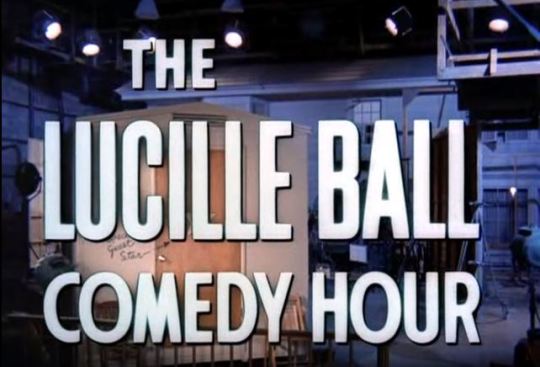

Directed
by Jack Donohue ~ Written by Richard Powell, based on the play by Sherwood Schwartz, with special material by Arthur JulianSynopsis
Lucille
Ball plays the head of a studio trying to track down Bob Hope to star
in a TV special about husband and wife television stars. The first
half concerns Lucy’s tracking the elusive Hope all around the world.
The second half presents the special that they eventually do
together.Cast
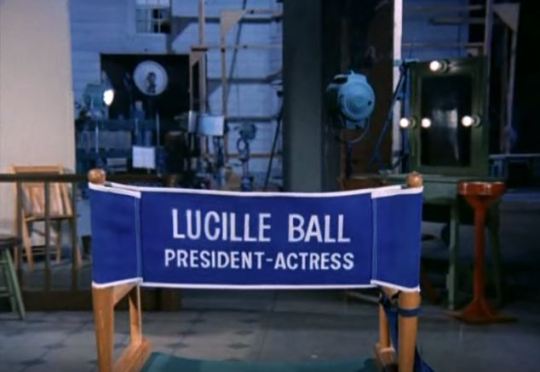
Lucille
Ball (’Herself’
/ Bonnie Blakely) was
born on August 6, 1911 in Jamestown, New York. She began her screen
career in 1933 and was known in Hollywood as ‘Queen of the B’s’
due to her many appearances in ‘B’ movies. With Richard Denning,
she starred in a radio program titled “My Favorite Husband” which
eventually led to the creation of “I Love Lucy,” a television
situation comedy in which she co-starred with her real-life husband,
Latin bandleader Desi Arnaz. The program was phenomenally successful,
allowing the couple to purchase what was once RKO Studios, re-naming
it Desilu. When the show ended in 1960 (in an hour-long format known
as “The Lucy-Desi Comedy Hour”) so did Lucy and Desi’s
marriage. In 1962, hoping to keep Desilu financially solvent, Lucy
returned to the sitcom format with “The Lucy Show,” which lasted
six seasons. She followed that with a similar sitcom “Here’s
Lucy” co-starring with her real-life children, Lucie and Desi Jr.,
as well as Gale Gordon, who had joined the cast of “The Lucy Show”
during season two. Before her death in 1989, Lucy made one more
attempt at a sitcom with “Life With Lucy,” also with Gordon.‘Lucille Ball’ is the president of Consolidated Pictures. Bonnie Blakely is a television star.
Bob
Hope (’Himself’
/ Bill Blakely) was born Lesley Townes Hope in England in 1903.
During his extensive career in virtually all forms of media he
received five honorary Academy Awards. In 1945, Desi Arnaz was the
orchestra leader on Bob Hope’s radio show. Ball and Hope did four
films together. He appeared as himself on the season
6 opener of
“I Love Lucy.” He did a brief cameo in a 1964 episode of “The
Lucy Show.” He
died in 2003 at age 100.Bill Blakely is a television star.
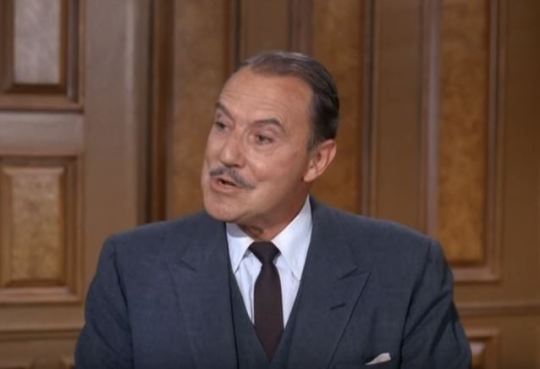
Gale
Gordon
(Elliott Harvey) was
said to be the highest paid radio artist of the 1930’s and was in
such demand that he often did two or more radio shows a day. His
professional collaboration with Lucille Ball started in 1938 as the
announcer of Jack Haley’s “The Wonder Show” (Wonder Bread was
their sponsor). He played Mr. Atterbury on Lucy’s “My Favorite
Husband” and was a front-runner for the part of Fred Mertz on “I
Love Lucy.” When scheduling prevented his participation, he
appeared as Mr. Littlefield, the Tropicana’s owner in two
episodes of
the show. In addition to Mr. Littlefield, he played a Judge in “Lucy
Makes Room for Danny,” a
1958 episode of “The Lucy–Desi Comedy Hour.” “The Lucy Show”
solidified his partnership with Lucille Ball for the rest of their
careers. He went on to play Harrison Otis Carter in “Here’s Lucy”
and Curtis McGibbon in “Life with Lucy.” He died in 1995 at the
age of 89.Mr. Harvey
is the Chairman of the Board of Consolidated Pictures.John
Dehner
(Mr. Henderson, below right) was seen alongside Ball and Hope in Critic’s
Choice,
released the year before this special. Dehner’s career started in
1941 and lasted until 1989, amassing nearly three hundred screen
credits. He died in 1992 at age 76.Mr.
Henderson is a full partner in the ad agency Henderson Grisby Beane
and Smith.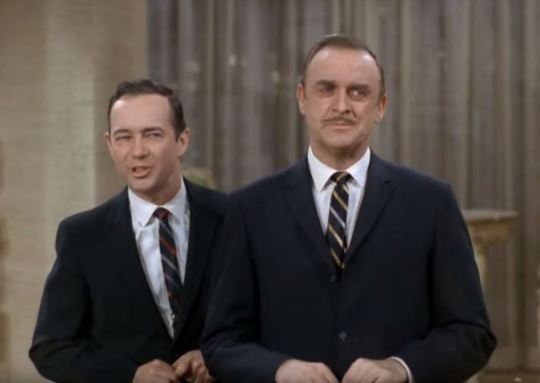
William
Lanteau
(Mr. Potter, above left) first
appeared with Lucille Ball in The
Facts of Life (1960).
In addition to an episode of “The
Lucy Show,” Lanteau
did four episodes of “Here’s Lucy.” He is best remembered
for playing Charlie the Mailman in the play and the film On
Golden Pond (1981).Mr.
Potter works for Henderson Grisby Beane and Smith.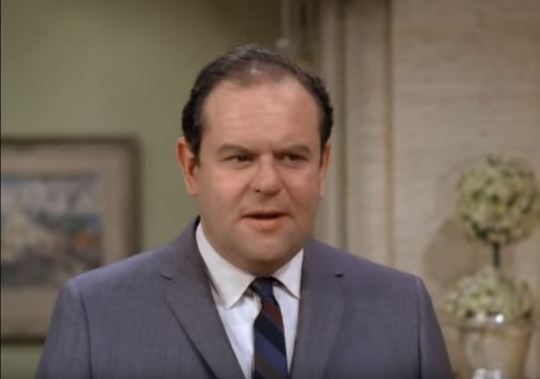
Jack
Weston
(Cash) started acting on television one month after the premiere of
“I Love Lucy” in 1951. He made three appearances on “The
Westinghouse-Desilu Playhouse” from 1958 to 1960. Weston’s final
screen credit was Short
Circuit 2
in 1988. He died in 1996 at age 71.Cash
is Bonnie and Bill’s agent and manager.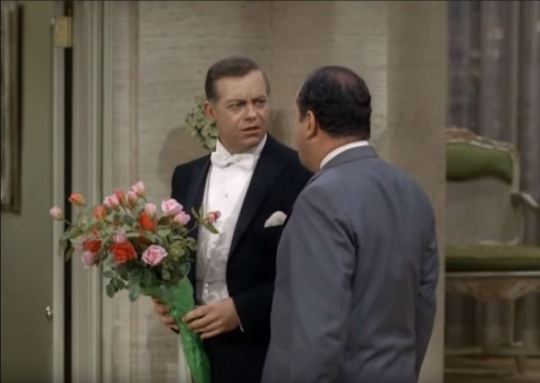
Max
Showalter
(Walter Creighton) was
born in Kansas in 1917. He got the acting bug as a toddler when
mother took him to the local theater where she played piano for
silent movies. He acted in 92 shows at the Pasadena Playhouse between
1935 and 1938 and made his Broadway debut in Knights
of Song. On
Broadway he played the role of Horace Vandergelder in Hello,
Dolly! more
than 3,000 times opposite such luminaries as Carol Channing, Betty
Grable, and Ginger Rogers. Showalter made more than a thousand TV and
film appearances. He was seen on two episodes of “The Lucy Show.”
Toward the end of his life he lived in Connecticut and died there in
2000.Walter
is Bonnie’s fiancee, masquerading as her brother.Joseph
Mell (Sam)
played
Bailiffs in “Lucy
the Meter Maid” (TLS S3;E7) and “Lucy
is Her Own Lawyer” (TLS S2;E23).
His first role on “The Lucy Show” was as a Butcher in “Together
for Christmas” (S1;E13).
Mell also appeared in a 1969 episode of “Here’s Lucy.” In 1971,
he was a Taxi Driver on “Lucy and the Lecher,” a cross-over
episode of Danny Thomas’s “Make Room for Granddaddy” in which
Lucille Ball played Lucy Carter, her character from “Here’s
Lucy.”Sam
is a tailor working for Lucille Ball.Sid
Gould (Sid)
made
more than 45 appearances on “The Lucy Show,” all as background
characters. He also did nearly 50 episodes of “Here’s Lucy.”
Gould (born Sydney Greenfader) was Lucille Ball’s cousin by
marriage to Gary Morton. He was married to Vanda Barra, who also
appeared on “The Lucy Show” and “Here’s Lucy.”Sid
is a composer working for Lucille Ball.
Eddie
Ryder
(Mike) appeared
as Bones Snodgrass on the “Our Miss Brooks” (also starring Gale
Gordon) from 1953-54 under the name Eddie Riley. He was also seen in
“Lucy and the Submarine” (TLS S5;E22) in 1966. From
1961 to 1966 Ryder played Dr. Simon Agurski in 22 episodes of “Dr.
Kildare.” He died in 1997 at age 74.Mike
is an executive at Consolidated Pictures. Ryder is the only actor who
gets a final credit using his character name (“Eddie Ryder as
Mike”), but the name is never spoken aloud in the show.Danny
Klega (Russian
Translator) was a Czech-born actor who was often cast as German. His
first screen credit was 1962’s The
Four Horsemen of the Apocalypse
and his last was 1970’s Which
Way to the Front?
He died in 2015 at age 91.John
Banner (Lieutenant
Gitterman, German Border Guard, below left) was
born in Vienna in 1910. He achieved television immortality for his
portrayal of the POW camp guard Sergeant Schultz in the TV series
“Hogan’s Heroes.” Ironically, Banner was a Jew and had been in
a German concentration camp himself. He was in all 168 episodes of
the series, the only actor aside from leading man Bob Crane to have
that distinction. His catchphrase as Schultz was “I
know nothing!” which
he repeated in a cameo as Schultz on “Lucy and Bob Crane” (TLS
S4;E22) in 1966. He died in his home city of Vienna in 1973.Gitterman
was also the name used for Hans Conreid’s acting and music professor
character on “The Lucy Show.”
Rudy
Dolan
(German Border Guard #2, above right) was active from 1957 to 1964, often cast as
policemen and other officials.Sally
Mills (TWA
Flight Attendant) played small roles on television from 1961 to 1971,
appearing on Desilu’s “The Andy Griffith Show” and “Gomer Pyle:
USMC.” For eight years, Mills was a spokesperson for Safeway
Supermarkets.Stanley
Farrar
(Consolidated Board Member) was
seen on “I Love Lucy” in “Home
Movies” (ILL S3;E20) where
he played a character named Bennett Green, who actually appears with
him on this special and “Staten
Island Ferry” (ILL S5;E12).
He was seen in two celebrity-themed episodes of “The Lucy Show”
in 1964 and 1965, one of which also starred Max Showalter, who
appears in this special.Bennett
Green
(Consolidated Board Member, uncredited) was
Desi Arnaz’s camera and lighting stand-in during “I Love Lucy.”
He did frequent background work on “The Lucy Show.”Joan
Swift
(Consolidated Board Secretary, uncredited) made
six appearances on the “The Lucy Show” as well as two episodes of
“Here’s Lucy.” Her
final screen credit was in “Lucy’s Gets Lucky” in 1975.Charles
FieldRoy
Rowan (Announcer,
uncredited) was the announcer for all of Lucille Ball’s sitcoms. He
even made a a couple of on camera appearances on “The Lucy Show.”
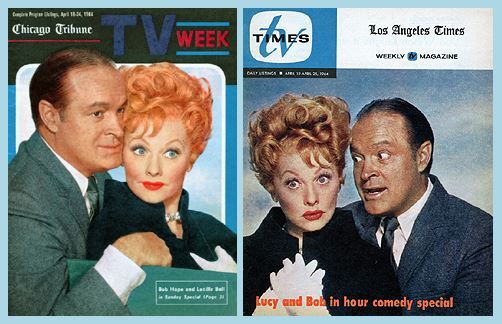
During
contractual negotiations with CBS for a second season of “The
Lucy Show,” Lucille Ball signed for $30,000 to
co-star in “The Lucille Ball Comedy Hour” to be aired in the
spring of 1964.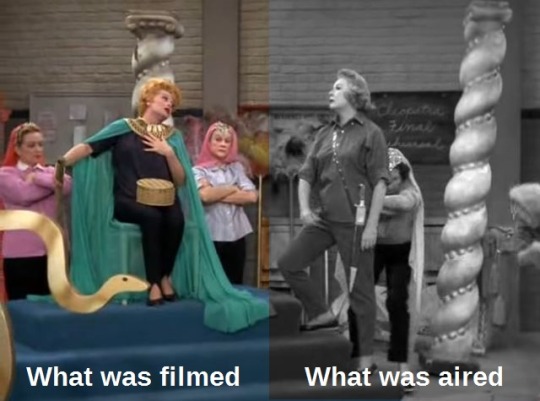
This
special was broadcast in color, one of Lucy’s first major appearances
in color on television. Although “The Lucy Show” had started
filming in color in the fall of 1963, CBS declined to air the series
in color until September 1965.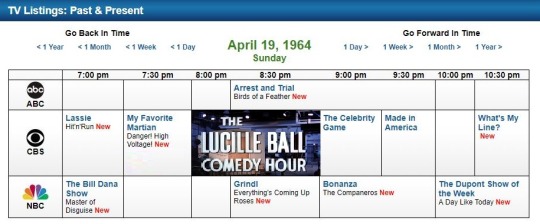
On
ABC, the second half hour of “Mr. and Mrs.” was up against an
episode of “Arrest and Trial” that also starred Jack Weston.
Meanwhile, NBC ran a show starring another funny redhead, Imogene
Coca, in “Grindl.” The special’s lead-in was another Sherwood
Schwartz show, “My Favorite Martian.”
Director Jack
Donohue also
served in the same capacity for 107 episodes of “The Lucy Show,”
and 35 of “Here’s Lucy.” His final screen credit was “Lucy
Gets Lucky” in
1980.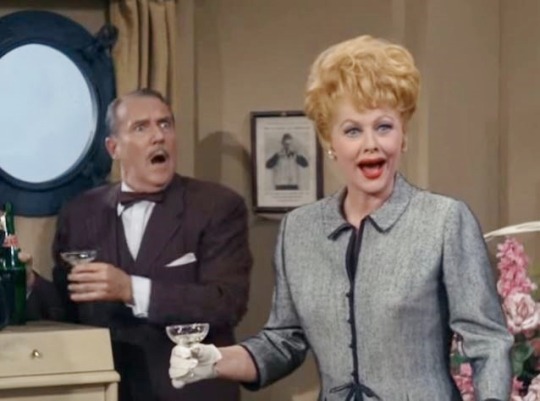
The
day after this special premiered, CBS aired “Lucy Is a Process
Server” (TLS S2;E27), also directed by Jack Donohue and co-starring
Gale Gordon.
“Mr.
and Mrs.” is based on an un-produced full-length stage play of the same name by
Sherwood Schwartz. It was boiled down to 30 minutes by Richard Powell
(teleplay) with special material by Arthur Julian, who were both
writers for Red Skelton during the 1950s. Sherwood
Schwartz
won his only Primetime Emmy Award in 1961 as the head writer for “The
Red Skelton Hour.” Schwartz
was the creative genius behind “The Brady Bunch” (1969-74) and
“Gilligan’s Island,” which would start airing in the fall of
1964. “The Brady Bunch” was based in part on Lucille Ball’s film
Yours,
Mine and Ours
(1968). Ball declined to make the TV version, opting instead to do
“Here’s Lucy.” At age 90, after his TV successes, Schwartz
returned to writing for the theatre with Rockers,
a play about a retirement home.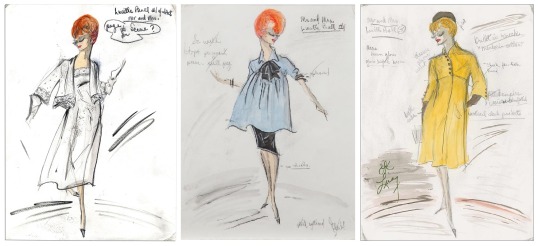
Lucille
Ball’s gowns for the special were by the Oscar-winning Edith
Head.
Head had dressed Lucille Ball in both of her film collaborations with
Bob Hope, Critic’s
Choice
(1963) and The
Facts of Life
(1960). Della Fox was the costumer and Kenneth Westcott was the props
master, both of whom also worked on “The Lucy Show.” Lucille
Ball’s usual hairstylist Irma Kusely and make-up artist Hal King were
also involved in this special. Jess Oppenheimer, creator and longtime
producer/head-writer of “I Love Lucy,” served as Executive
Producer.
Once,
during rehearsal, Bob Hope got too close to the camera, a fact
promptly noted by director Jack Donohue. Ball roughly shoved Hope to
his proper mark. “Lucy,”
said Donohue soothingly, “Please
don’t touch the actors. You never know where they’ve been.” A
little later, when Ball had her way with the handling of a scene,
Hope said, “That’s
what I like to work with—pliable producers and flexible
directors.” This
story appeared in the 1993 book Desilu:
The Story of Lucille Ball and Desi Arnaz by
Steven Sanders and Tom Gilbert.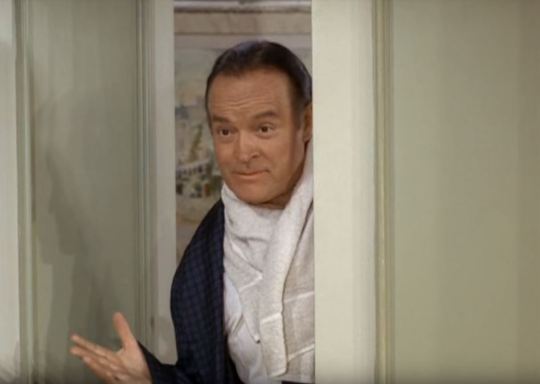
Bob Hope
and Lucille Ball rehearsed three full days, just as she would have her
regular half-hour television series. The show was then filmed before
a live studio audience with three cameras recording the action and a
laugh track added later to ‘sweeten’ the comedy. The next day, Hope
returned to film the single jungle scene in which Ball finally
locates him. The wrap-around story was true-to-life, not only because
it depicted Lucy as the president of a major studio (albeit not named
Desilu), but because it featured Bob as a world-traveler. Known in
show-business circles as “Rapid Robert,” Hope was famous
for dashing from a movie set to a benefit to a television special –
all in different cities. The day before Hope reported to Desilu for
rehearsals, he was in Washington on behalf of the 1964 Easter Seals
campaign. He had flown there after finishing a one-hour segment of
his own Chrysler TV series. As soon as he finished his stint with
Lucy, he was off to promote his latest movie. “While I’m
flying across the country,” Hope quipped at the time, “Lucy
will be talking about me. That’s why it’s a coveted role.” Lucy had her say in the matter: “All those scenes showing me
trying to catch up with Bob is from real life. If the world only knew
what I went through to get him on this stage to work with me in this
project!”
In
the special Lucille Ball is the President of Consolidated Studios.
Mr. Harvey (Gale Gordon) is the chairman of the board and represents
a bank that has extended a significant loan to the studio. Gale
Gordon was also playing a banker named Mr. Mooney on “The Lucy
Show” when the special was filmed.Lucy:
“Just
because I’m an actress does not mean I’m not a good president!”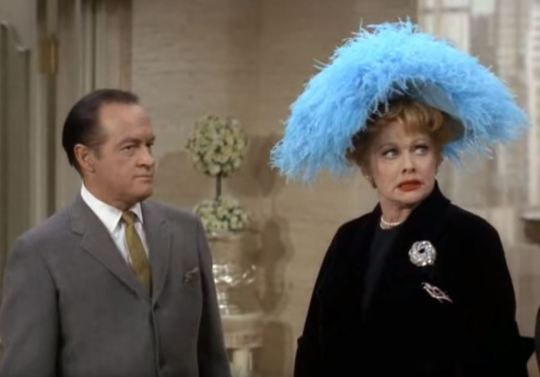
The
wardrobe designer in Lucy’s busy office is holding the actual Edith
Head costume renderings for Lucille Ball’s outfits in the special.
After
doing some checking behind Lucy’s back, Mr. Harvey discovers that Bob
Hope is not available until the week of July
4, 1976,
after he emcees the 200th Anniversary of America’s Independence. Twelve years later, the
writers were proved absolutely right when Bob Hope hosted the NBC TV
special “Bob Hope’s Bicentennial Star Spangled Spectacular” on
July 4, 1976.
SAN FRANCISCO
Mr.
Harvey and Lucy fly to San Francisco to track down Bob Hope. Footage
of a jet landing was supplied courtesy of TWA, a carrier that went
out of business in 2001.Lucy:
“This is not business, it’s show business.”
Mr.
Harvey: “Business
is business.”
In
San
Francisco,
the TWA flight attendant mistakes Mr. Harvey for Gary Morton, Lucy’s
real-life husband. She says she saw him on “The Ed Sullivan Show.”
Morton made two appearances on “Ed Sullivan,” in 1961 and 1962,
but it is hard to fathom how anyone could visually mistake Gale
Gordon for Gary Morton. The Flight Attendant informs them that Bob
Hope was in first class, while they were in coach, but he was rushed
aboard an Army bomber across the tarmac headed for…ALASKA
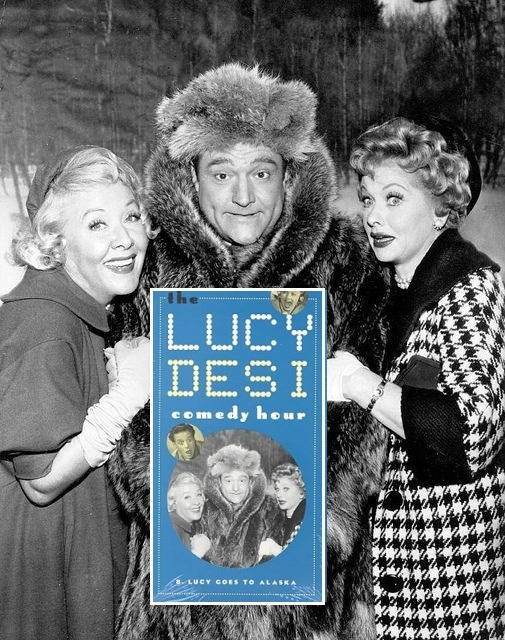
Lucy
and Mr. Harvey travel to Alaska
to track him down using a dog sled. This is not the first time
Lucille Ball has done scenes set in the 50th state. In “Lucy Goes To Alaska,” a 1959 episode of “The
Lucy-Desi Comedy Hour” when the Ricardos and Mertzes flew there to
perform with Red Skelton (coincidentally) in honor of their recent
statehood. In
Alaska, Lucy and Mr. Harvey find out Bob Hope has already gone to…MOSCOW
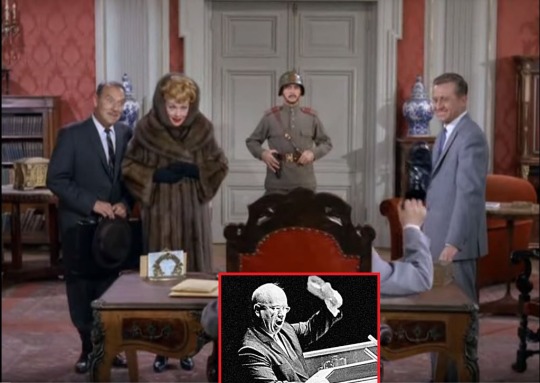
In a Kremlin office, a translator tells a man with his back to us
that Lucy and Mr. Harvey are looking for Bob Hope. The unseen man
laughs and pounds a shoe on his desk. During a 1960 meeting at the
United Nations, Soviet Leader Khrushchev
pounded his shoe on his desk in protest of a speech by Philippine
delegate Lorenzo Sumulong.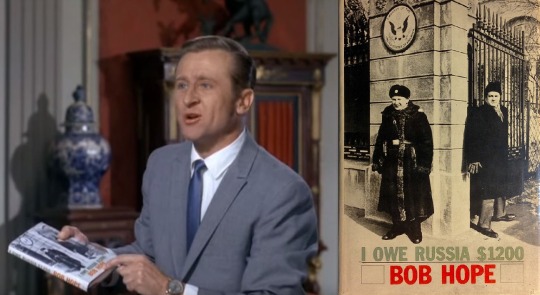
The
translator shows off an autographed copy of Bob Hope’s new book. This
is a plug for Hope’s 1963 book
I Owe Russia $1,200,
which Hope wrote with ghostwriter Mort Lachman after his trip to
Russia.Lucy and Mr. Harvey learn that Bob Hope just left Moscow headed to…
GERMANY
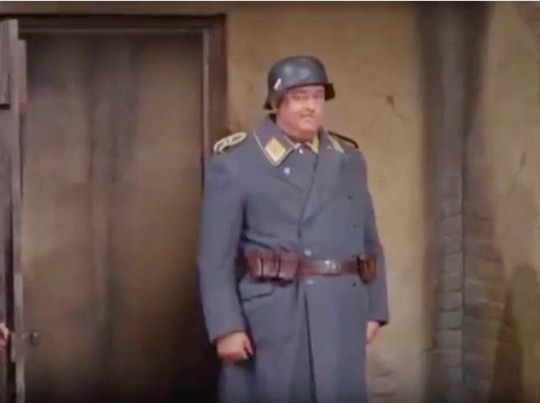
Lucy and Mr. Harvey cross the border into Germany driving a single scooter. The
two other vehicles in the studio-filmed scene are Volkswagens, naturally.
The guards (one of them “Hogan’s Heroes” star John Banner, who did a cameo as Sergeant Schultz on a 1966 “The Lucy Show”) tell
them that Bob Hope has already been through and gone on to the
airport to…THE PHILIPPINES
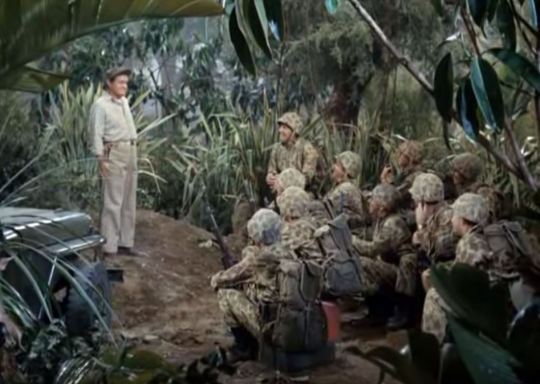
In
a jungle clearing, holding a golf club, Bob Hope is finally found
singing “Thanks
for the Memory” to
a group of American GIs in camouflage gear. The song was
written in 1938 by Ralph Rainger and Leo Robin for the film The
Big Broadcast of 1938 starring
Hope and Dorothy Lamour. It became associated with Bob Hope, who used
it as his theme song. He sang it at the end of his guest-appearance on “I Love Lucy” in
1956 and during his cameo in “Lucy Moves to NBC” in 1980.As
Lucy explains the script of the special to Hope amid a downpour, the
show cross-fades to the first scene of…
“MR. & MRS.”
starring
Lucille Ball and Bob Hope as Bonnie and Bill Blakely, the stars of
America’s number one television show.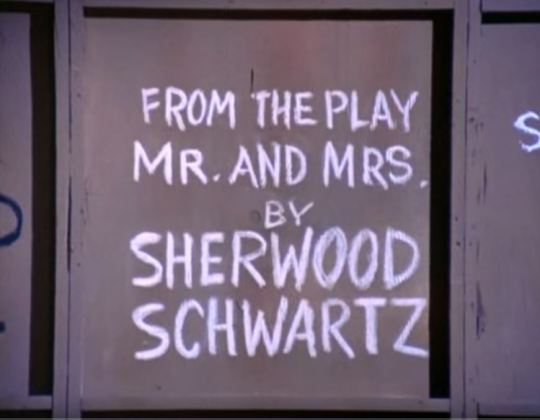
Fighting
off autograph seekers to get through their front door of their swanky
Manhattan apartment, Bill says
“I signed mine ‘Ringo’.”
He is referring to Ringo Starr, one of the Beatles. In 1964 they
became an international success when they made their first appearance
on “The Ed Sullivan Show.” The same date this special aired in
the USA, “Around the Beatles” was taped at Wembley Stadium for
ITV in England. It was aired in America on November 15, 1964.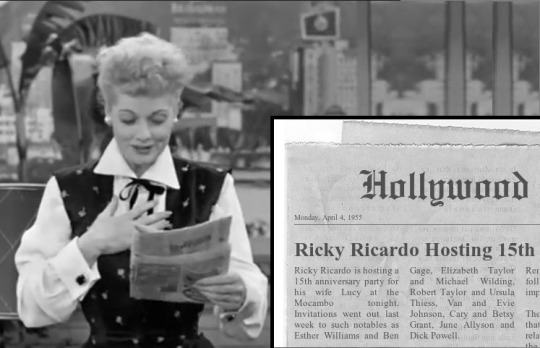
Bill
brags that a Cleveland newspaper compared him with Cary Grant. Grant’s name was often mentioned on “I Love Lucy” during their stay in Hollywood.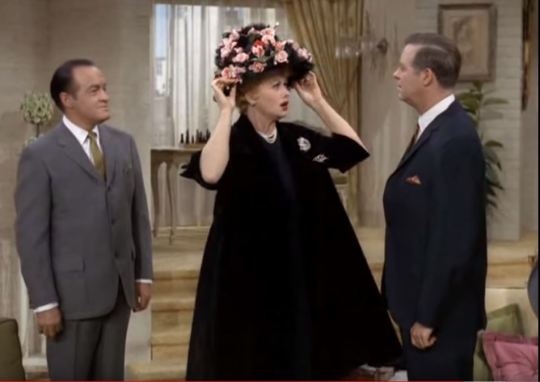
Walter
tells Cash he works at Peerless Department Store in Newark. His
father owns the store. (This implies that “Mr. and Mrs.” takes place in New York City, not Hollywood, where most TV shows are shot today.) They are opening a branch of their store in Japan, which will keep Walter out of the country for several months.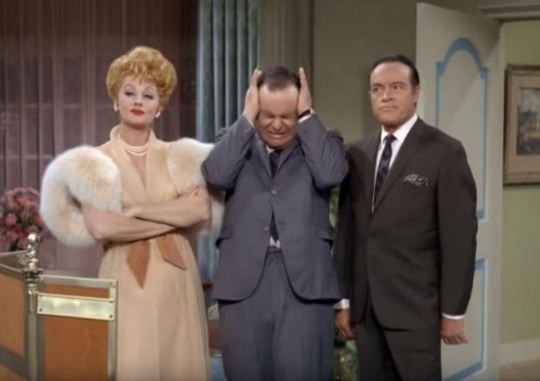
To
boost ratings the ad agency wants Bonnie and Bill to have a baby as
their characters and in real life.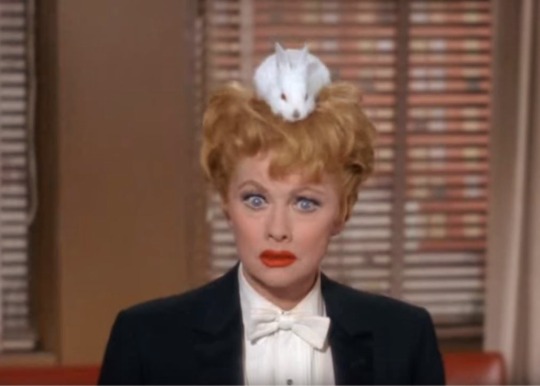
Bonnie
(indignant): “Having
a child happens to be an act of God.”
Mr.
Henderson:
“We
cleared this with the sponsor.”Bonnie
and Walter head for the door to go to the opera.Mr.
Henderson:
“Bonnie, please. The sponsor is expecting a baby.”
Bonnie:
“I’ll throw him a shower.”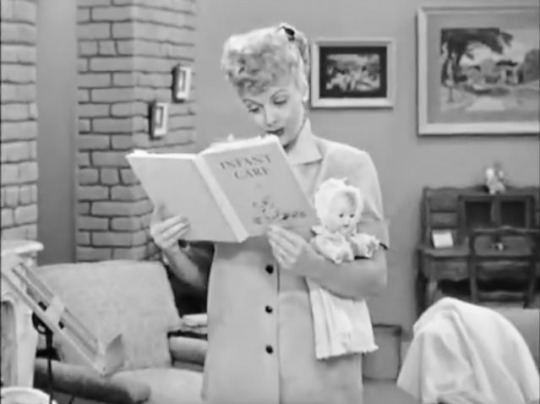
When Lucy Ricardo was to give birth on “I Love Lucy” in 1953, the story line had to be approved by the sponsor and the network. Lucy Ricardo and Lucille Ball gave birth at the same time – with the episode timed to coincide with Ball’s Cesarean. Lucy and Ethel also threw a ‘daddy shower’ for Ricky, to make him feel more a part of her pregnancy.
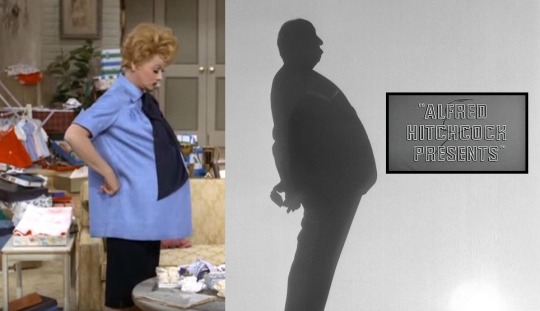
Eight
months later, Bonnie comes waddling into the living room extremely
pregnant. The underscoring plays “Funeral
March of a Marionette”
written by Charles Gounod around 1879. It is probably more familiar
as the theme tune of “Alfred Hitchcock Presents” (1955). Ball makes sure she stands in profile so the joke visually pays off. The tune was also used during “Little Ricky’s Pageant” (ILL S6;E10) in
1956 during the entrance of the gnomes.Lucille Ball does the same
physical comedy business to lower herself into a chair that she did
as pregnant Lucy Ricardo. The Blakely apartment is a mess with baby
items and various gifts from fans. Bonnie claims they’ve received 300
pair of baby socks.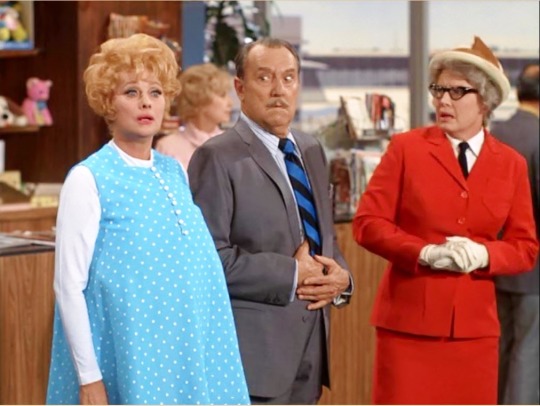
Walter
thinks Bill is the father and Bill thinks Walter is the father. They
realize that Bonnie is not really pregnant after all. Lucy Carter
will also fake her pregnancy (using a well-placed pillow) in “Lucy,
the Part-Time Wife” (HL S3;E14, above) in 1970. While filming “Mr. and
Mrs.” Lucille Ball was 52 years old.Thinking
Bonnie is actually with child, Henderson’s agency runs a contest to
name the baby. The winning names are Gunther and Pandora.
Oops!
John Dehner (Mr. Henderson) says that name of his firm is “Henderson
Beane Grisby and Smith” instead of what Lucy previously said,
“Henderson Grisby Beane and Smith.” When Bob Hope mentions the
firm, he gets the names in the same order as Dehner, so likely Lucy
is the one who jumbled the list.A
couple of times, it is apparent that Bob Hope is looking at cue
cards, not unusual for “rapid Robert” who had little time for memorizing lines.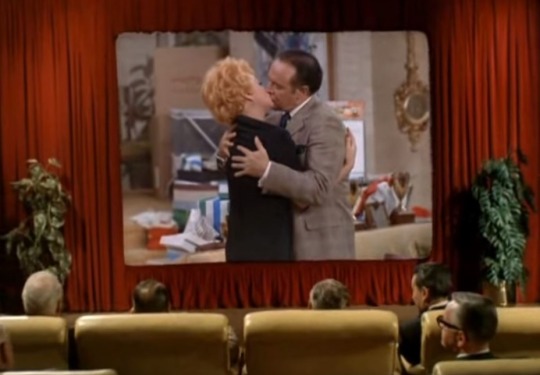
As
Bonnie and Bill kiss, the scene becomes the Consolidated Board of
Directors watching the special in a screening room. Lucy enters
dressed like a tramp, something she also did with Red Skelton in
“Lucy Goes To Alaska” in 1959. The flower in her lapel squirts
water in Mr. Harvey’s face and the credits roll.
This
Date in Lucy History
– April 19th
"The
Black Wig” (ILL S3;E26) – April 19, 1954

The first half of this rarely seen special is oddly different from the second. Lucy and Gale Gordon’s comic travelogue on ‘the search for Hope’ is clever and often laugh out loud funny. But the second half, boiled down from Sherwood Schwartz’s play, is a bit less engaging. The half hour starts well enough, but fizzles and feels very stage-bound. Still, lots of fun and an interesting footnote to “The Lucy Show” years.
 Arthur Julian, Bennett Green, Bicentennial, Bob Hope, Charles Field, Danny Klega, Eddie Rider, Edith Head, Gale Gordon, Jack Donohue, Jack Weston, Joan Swift, John Banner, John Dehner, Joseph Mell, Lucille Ball, Max Showalter, Mr. & Mrs., mr. and mrs., Richard Powell, Roy Rowan, Rudy Dolan, Sally Mills, San Franciso, Sherwood Schwartz, Sid Gould, Stanley Farrar, The Lucille Ball Comedy Hour, The Lucy Show, William Lanteau
 -
STONE PILLOW
November
5, 1985

Directed
by George Schaefer ~ Written by Rose Leiman GoldembergSynopsis
When
recent college graduate Carrie Lang (Daphne Zuniga) begins working
for a New York City homeless shelter, she is told to ‘hit the streets’
to learn how to better do her job. There she meets Florabelle
(Lucille Ball), an eccentric loner who sleeps on the streets and
keeps her worldly possessions in a shopping cart. When Carrie is
robbed, Florabelle helps her survive among the homeless – until she
finds out that Carrie is part of the system, not a victim.Cast
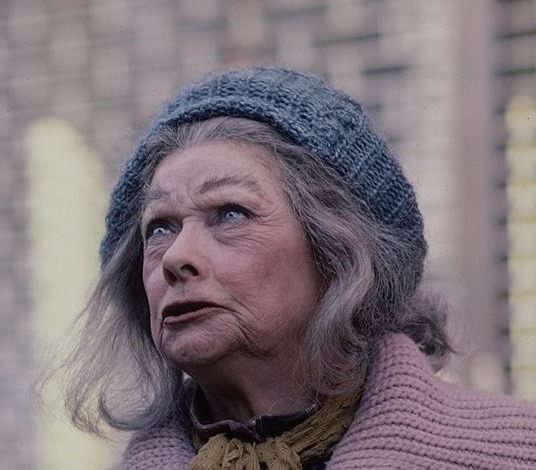
Lucille
Ball (Florabelle)
was
born on August 6, 1911 in Jamestown, New York. She began her screen
career in 1933 and was known in Hollywood as ‘Queen of the B’s’
due to her many appearances in ‘B’ movies. With Richard Denning,
she starred in a radio program titled “My Favorite Husband” which
eventually led to the creation of “I Love Lucy,” a television
situation comedy in which she co-starred with her real-life husband,
Latin bandleader Desi Arnaz. The program was phenomenally successful,
allowing the couple to purchase what was once RKO Studios, re-naming
it Desilu. When the show ended in 1960 (in an hour-long format known
as “The Lucy-Desi Comedy Hour”) so did Lucy and Desi’s
marriage. In 1962, hoping to keep Desilu financially solvent, Lucy
returned to the sitcom format with “The Lucy Show,” which lasted
six seasons. She followed that with a similar sitcom “Here’s
Lucy” co-starring with her real-life children, Lucie and Desi Jr.,
as well as Gale Gordon, who had joined the cast of “The Lucy Show”
during season two. Before her death in 1989, Lucy made one more
attempt at a sitcom with “Life With Lucy,” also with Gordon.
Daphne
Zuniga (Carrie
Lang) made her screen acting debut in 1982. Prior to “Stone
Pillow” she did two episodes of “Family Ties.” She also had
recurring roles on “American Dreams” (2004), “Beautiful People”
(2005), and “One Tree Hill” (2008). Prior to “Stone Pillow”
Zuniga was well reviewed in The
Sure Thing,
released in March 1985.Carrie
is the new hire at the Delano Shelter.William
Converse-Roberts (Max) made his small screen debut in 1979. He
had recurring roles on “The Days and Nights of Molly Dodd”
(1987), “Reasonable Doubts” (1991), and “Any Day Now”
(1998).Max
is a CPA helping the homeless, who call him “Census Taker.”Susan
Batson (Ruby) is an actor,
writer, director, producer, and teacher. She made her screen debut in
1969. She was in the cast of the stage and Emmy-nominated television
adaptation of A Raisin in the Sun in
2008.Stephen
Lang (Tim)
played
Happy, one of Dustin
Hoffman’s
sons, in the 1984 Broadway revival of Death
of a Salesman,
followed by the acclaimed TV adaptation of the play the same year as
“Stone Pillow.” He
plays Miles Quarich in Avatar
(2009)
and may repeat the role in sequels through 2025.Tim
is the manager of the Delano Shelter.Anna
Maria Horsford (Collins)
is probably best remembered as Thelma on the sitcom “Amen”
(1986-91). She was nominated for two daytime Emmy Awards for her
work on “The Bold and the Beautiful” (2016 & 2017).Collins
is the security guard at the Delano Shelter.Stefan
Schnabel (Mr.
Berman) began acting in films in 1949. He
is most familiar to television audiences for his 17-year stint as Dr.
Stephen Jackson on the long-running soap opera
“The Guiding
Light.” After
more than 20 years on Broadway, he appeared in his final play along
side Marlo Thomas and Olympia Dukakis in Social
Security.
He died in 1999 at age 87.Mr.
Berman is a pharmacist.Imogene
Bliss
(Violet) started on TV in 1971 on the soap “The Doctors.” Eleven
years after “Stone Pillow,” she appeared in her final TV movie “The Christmas Tree” (1996).Michael
Champagne (Supermarket Manager) makes his screen debut with
“Stone Pillow.” He has only one more screen credit, as a day
player on “As The World Turns” in 1989.Gloria
Cromwell (Grace, Bus Terminal Matron) played Nurse Cromwell on
“The Doctors” from 1970 to 1975, which was her screen debut. She
died in 2008 at age 81.Patrick
Kilpatrick (Young Thug) made his second TV appearance with “Stone
Pillow” but has since accrued more than 150 screen credits, with 15
films in the pipeline through 2018.John
Ramsey (Older Thug) was seen as a judge on a dozen episodes of
“Law & Order” from 1991 to 2001.Matthew
Locriccio (Tony) started screen acting in 1977 and was also in
two episodes of “Law & Order” in 1990 and 1997.Victor
Raider-Wexler (Joe) made his screen debut in the feature film
Benji (1974). “Stone Pillow” is his second TV film and
only third screen credit. His later film and television work was as a
voice artist.Lucy
calls Joe “Giuseppe.” Joe and Tony drive a produce truck.Pat
McNamara (Officer Daggett) was a background player on ABC’s
Gothic soap opera “Dark Shadows” in 1966. He played Sheriff
Perkins in Silence of the Lambs (1991).Josephine
Nichols (Bag Lady in Ladies Room) starting acting on TV in 1954.
She played housemother Mrs. Plumm on PBS’s “Uncommon Women and
Others” opposite Meryl Streep in 1979. From 1980 to 1981 she
played Kate Marshall on the NBC soap “Texas.” “Stone Pillow”
is her final screen appearance. She died eleven years later at age
82.Patricia
O’Connell (Hargrove Shelter Guard) did her first TV movie in
1973. Her final screen credit was in 2001. She died in 2016.Gary
Singer (Hargrove Shelter Guard) is making his only screen
appearance.Rebecca
Schull (Mrs.
Nelson) began acting on television in 1980 and is probably best known
for playing Fay on “Wings” (1990-97).Mrs.
Nelson is in charge of the Hargrove Shelter in Brooklyn.Peter
Phillips
(Bus Driver) is making the second of his four TV appearances.Mary
Lou Rosato (Bus
Terminal Cop) is an acclaimed stage actor who worked with John
Houseman off-Broadway and did more than a dozen Broadway plays and
musicals between 1973 and 1997.Edward
Seamon
(Al) is known for The
Devil’s Advocate
(1997),
Consenting
Adults
(1992), and
School
Ties (1992).Al
operates Twigs, a corner bodega.Raymond
Serra
(Stan) did his first film The
Gambler
in 1974. He played Chief Sterns in the Teenage
Ninja Turtles
movies (1990 & 1991).Stan
runs the bookstore across the street from Twigs.Alex
Paez (Young
Thug, uncredited) received
an Emmy Award for his performances in “Unicorn Tales”
(1979), a series of mini musicals for NBC.
In
1985, in addition to “Stone Pillow,” he also appeared on “Miami
Vice” and “The Cosby Show.”William
Preston
(Homeless Man in Street, uncredited) started an acting at age 47. He
had extensive stage experience, performing in over 60 Shakespeare
productions. He appeared on Broadway in three plays between 1986 and
1998. He was a regular on “The Conan O’Brien Show” as Carl ‘Oldy’ Olson. He died at age 76.Stewart
B. Stewart (Dapper
Man on Bench, uncredited)Brandon
Danziger
(Sonny, uncredited) is making his screen debut.Sonny
is Florabelle’s son, seen in a memory flashback.A
young homeless woman named Mary Kellen, and many other homeless men
and women in the shelters and on the streets, are played by
uncredited background performers.
Director
George
Schaefer
won seven Emmy Awards and a 1954 Tony Award. He died in 1997 at age
76. This is his only time working with Lucille Ball.
Screenwriter
Rose
Leiman Goldemberg had
written the Emmy-nominated “The Burning Bed” the year before “Stone PIllow,”
another star-led teleplay about a headline topic, spouse abuse.The
score for “Stone Pillow” was composed by Georges
Delerue,
who scored more than 350 films and TV shows. He was nominated for
five Oscars, winning in 1979 for A
Little Romance.
He died in 1992.
Despite
being set in February, the film was actually filmed on location in
New York City during a unusually hot spring. Filming was supposed to
begin in March, but was postponed until late April due to
screenwriter
Rose
Leiman Goldemberg’s daughter being tragically killed in a car
accident.
Lucille
Ball had to wear several layers of heavy clothes and a voluminous
wig. After shooting one day, Ball passed out from dehydration. She
also broke a tendon in her right hand manipulating the unwieldy
shopping cart. As
a result, she was hospitalized for a week. Her doctors also informed
her that she was allergic to cigarettes, which she had been smoking
for more than 50 years.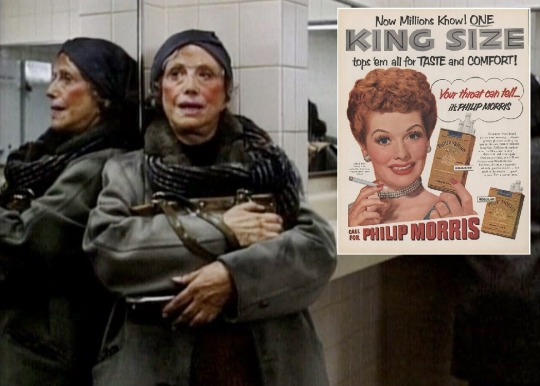
Port
Authority Bag Lady: “I hope ya got a cigarette.”
Florabelle:
“No Siree, Bob. Smokin’ gets yer lungs.”This
is the first time Desilu or Lucille Ball Productions (LBP) did not
produce a Lucille Ball television project. This is also the first
time the entire cast and crew have no prior experience working with
Lucille Ball.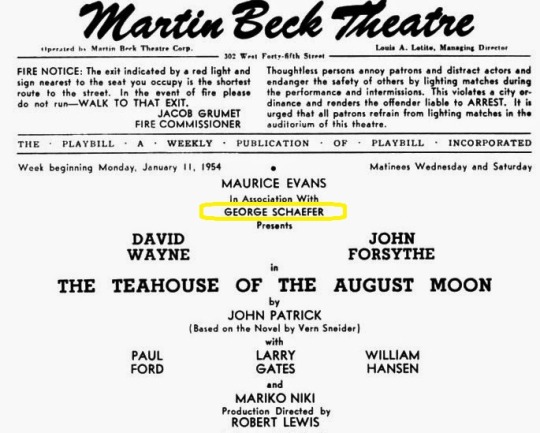
Because
the film was shot in New York City and directed by Tony-winner George Schaefer, it employs many award-winning
stage actors who worked regularly in the theatre: William
Converse-Roberts, Mary Lou Rosato (Drama Desk Award), William
Preston, Stefan Schnable, Stephen Lang (Tony nominee), Josephine
Nichols, Susan Batson (Tony and Drama Desk nominee), Imogene Bliss,
John Ramsey, Victor Raider-Wexler, Pat McNamara, Patricia O’Connell
(Drama Desk nominee), Peter Phillips, Edward Seamon, and Raymond
Serra. These actors also frequently appeared in soap operas and
television shows produced in New York, including “Dark Shadows,”
“The Doctors” and “The Cosby Show.”
To
promote the film,
Lucy
appeared on “The Tonight Show” with Joan Rivers. She shared that
she had lost 23 lbs and that she was refused service at a restaurant
while shooting, due to her appearance and the place not recognizing
her.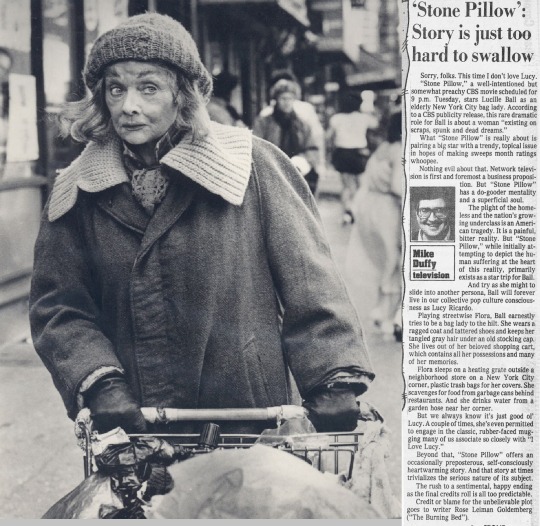
The
film received mixed reviews, but ranked as one of the top 10 highest
rated telecasts that week, and it led Ball to make one last attempt
to return to her comedy roots with “Life
with Lucy” the
next year. John J. O’Connor, in his review in The
New York Times,
wrote:“’Stone
Pillow’ is a carefully contrived concoction, earnest but not above
being cute and nearly outrageous in its determination to jerk a few
tears. Accepted on that level, the exercise works reasonably well….
Miss Ball is in total control from the opening scene…”
Lucille
Ball was 74 years old at the time of filming. She started making
movies in 1933 with Roman
Scandals.
Although it is a made for television movie, this is Lucille Ball’s
final film. Her final theatrical release was Mame
in 1974.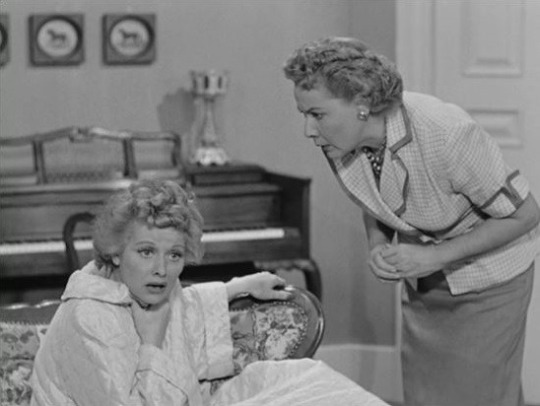
“Stone
Pillow” was aired 34 years to the day that the first filmed (but
fourth aired) episode of “I Love Lucy” was broadcast.After
a brief flirtation with NBC in 1980, Lucille Ball is back on CBS. It
wouldn’t last long. When CBS declined to pick-up “Life With Lucy,”
the short-lived sitcom was aired on ABC, meaning Lucille Ball worked
on all three major networks during her long and storied career.
In
a 2004 interview Oscar-winning “Stone Pillow” cinematographer
Walter Lassally said that Lucy refused to call her make-up woman
Kathryn Bihr (pronounced ‘beer’) by her last name for fear of being
overheard shouting “BEER!” on the set. Instead, she decided to
call her ‘Baker’. Lassally wondered why Lucy just didn’t call her
Katie.
Ball
said that homelessness is what affected her most. She mused that the
title really should be “Without An Address.” In French-speaking
Canada, the film’s title is “Sous
les étoiles de New York” (“Under the Stars of New York”). In
Spain it was called “La cama de asfalto” (“The Asphalt Bed,”
which was also the title in Germany), oddly similar to “The Burning
Bed,” the screenwriter’s previous project.
Tim
(to Carrie): “You
think there’s something so different about the homeless? A few bad
breaks, a few checks that don’t come, we could all be sleeping on
stone pillows.”
About
why she wanted to do “Stone Pillow”:“I
hadn’t worked in a long time because the scripts I was getting were
so disgusting and all anybody really wanted me to do was Lucy all
over again. So when CBS told me director George Schaefer wanted to
work with me, that and fascinating subject matter was what got me to
do it. I don’t care how I look on screen, so that was it.“
About
her research to play a bag lady:“I
did not talk to any of them…but I don’t believe what everybody
says…that they are on the streets because they want to be there.
Well, that may be true for some of the older, more disturbed ladies
who just don’t have any more hope left, but I don’t believe that’s
true of all of them.”
Ball
did confess to reading Shopping
Bag Ladies,
a
book
by
Anne Marie Rousseau, published in 1982. Rousseau also acted as the
film’s technical adviser.About
her grandmother, Florabelle:“She
was a pioneer lady, and I just wanted this bag lady I played to be
independent and have her own little survival kit, her own way of
doing things without begging. Of course, one reason Florabelle
wouldn’t take money handouts was because nobody would let her in
anyplace to spend it.“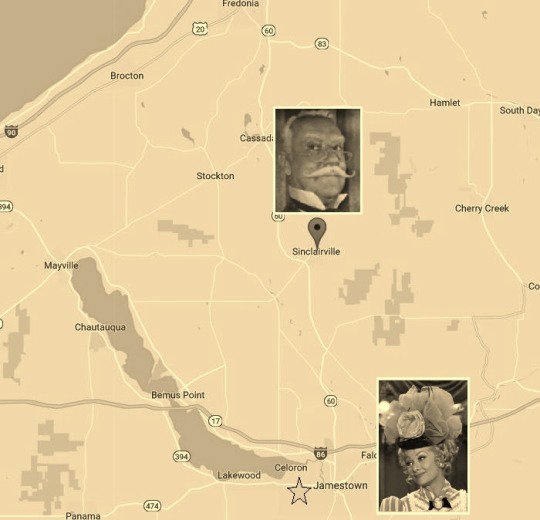
Lucy’s
grandmother Florabelle
Emmaline Hunt,
was mentioned in two episodes of “Here’s Lucy” – “Lucy Takes
Over” (HL S2;E23) in 1970, and “Lucy, The Sheriff” (HL S6;E18)
in 1974.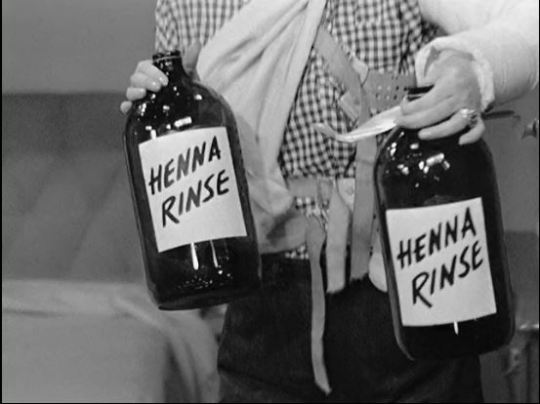
About
her legacy:“I never expected to be around this long, and the length of time
I’ve been around never occurred to me until one day recently I found
out that I was outliving my supply of henna. I managed to get some
from Egypt…so I guess I’m in good shape.”Florabelle:
“Well,
I’m still here.”
In
2009, “Stone Pillow” was mentioned by Marge (voiced by Julie
Kavner) on the Fox animated series “The Simpsons.” In the episode,
Marge, Homer, and the kids go into debt and must sleep at a homeless
shelter.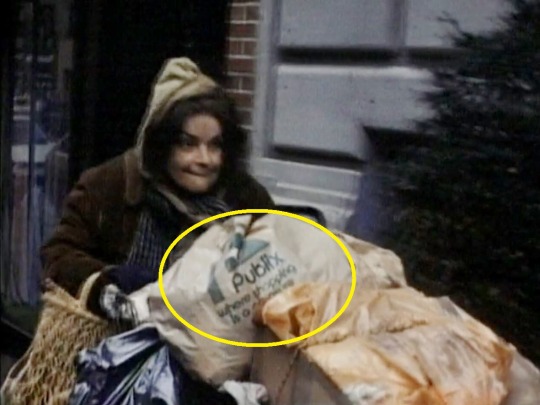
When
Florabelle’s cart is stolen by another bag lady, a grocery bag from
Publix
is clearly visible. There has never been a Publix store in or around
New York, so the bag was probably unwittingly sourced from a props
shop or other supplier.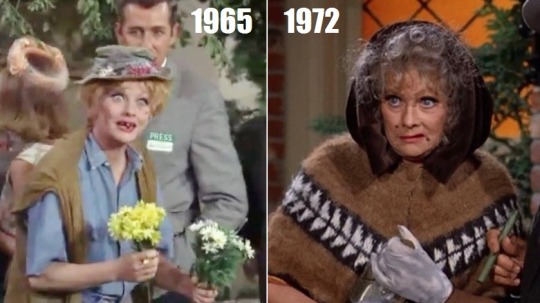
On
her sitcoms, Lucy’s version of ‘little old ladies’ or ‘bag ladies’
was always presented as a romanticized and somewhat cartoonish
version of aging and poverty. For “Stone Pillow,” Lucille Ball
had a hand in Florabelle’s make-up and costume design.
Outside
the bodega, Joe gives Florabelle a raw egg, which Lucille Ball cracks
open and eats in one take. Ball consciously allows Florabelle to
enjoy the egg, rather than doing one of her trademark faces of
revulsion, as Lucy Ricardo did when first tasting Vitameatavegamin.
Florabelle
says she lived on a farm with her husband and son (‘Sonny’) and grew
vegetables. She remembers her home had curtains and wicker furniture.
She tells Carrie that she got ill, and when she was released from the
hospital her husband and son were gone. She says that she worked in a
War Plant, which implies that this may have happened sometime during
World War II. She went on Welfare and was evicted from her rooming
house, landing on the streets.
Florabelle
and Carrie take shelter in the bowels of Grand
Central Terminal. “Lucy Wants a Career,” a 1959 episode of “The Lucy-Desi Comedy
Hour,” used establishing footage (above) of the Grand Hall of Grand Central,
although the episode was shot in Hollywood.Mr.
Berman:
(about his drug store) “The
landlord raised the rent and I lost my lease.”
Florabelle:
“Where
will you go?”
Mr.
Berman:
“Where
everybody goes to die – Florida.”
Florabelle:
“It’s
nice and warm there, anyways.”
Mr.
Berman:
“Feh!
I hate it. Nobody’s under a hundred. I call it ‘the last resort.’”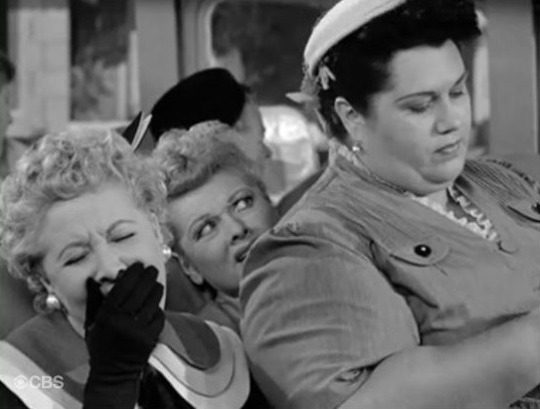
When
Florabelle is mistakenly herded onto a bus to the Brooklyn shelter,
an overweight woman accidentally sits on her. A similar thing
happened in “The Tour” (ILL S4;E30) in 1955, when Lucy Ricardo
was switching seats on a bus tour of the movie stars’ homes.
In
the TV room of the Hargrove shelter, the women are watching Joan
Collins as Alexis in “Dynasty.”
The
nighttime soap was broadcast on ABC from 1981 to 1989. In “Lucy
Makes a Hit With John Ritter” (LWL S1;E2), Joan Collins is
mentioned as a possible replacement for an actress (Sally Kemp) doing
a play with Ritter. Coincidentally, Kemp was also a “Dynasty”
cast member. She played
Marcia, Blake Carrington’s secretary for several years. The
Carrington’s housekeeper, Jeanette, was played by Virginia Hawkins,
who had a small role in a 1969 episode of “Here’s Lucy.”
Over
the final credits, Carrie drives Florabelle to a run-down little
cottage with a garden. Flora digs her hands into the soil with smile
on her face.
This
Date in Lucy History
– November 5
“Lucy
Thinks Ricky Is Trying to Murder Her” (ILL S1;E4) –
November 5, 1951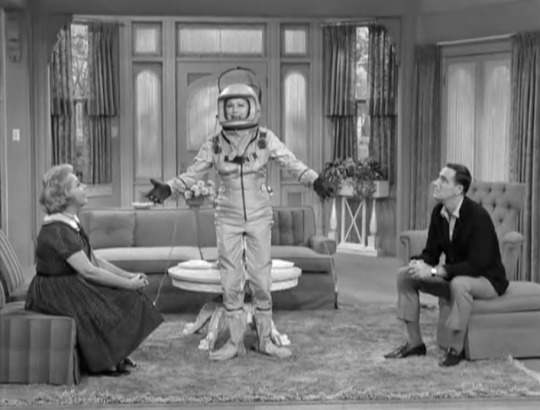
“Lucy
Becomes an Astronaut" (TLS S1;E6) –
November 5, 1962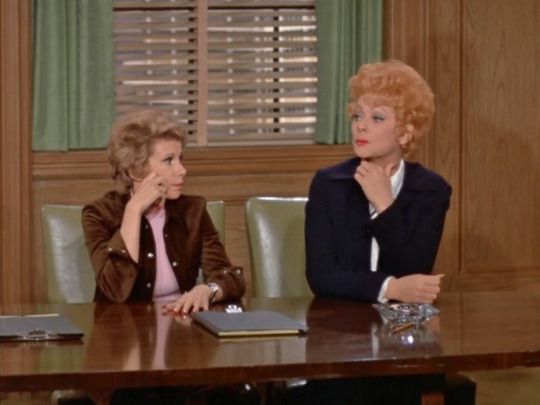
“Lucy
and Joan Rivers Do Jury Duty" (HL
S6;E9) – November 5, 1973

Put in context of the movie of the week about topical subjects, this movie is a lot better than its reputation. Lucille Ball’s vast experience and dedication to downplaying her “Lucy” character is what makes this movie work. Experienced director Schaefer surrounds Ball with experienced stage thespians, with one exception – Daphne Zuniga. Zuniga was Hollywood’s flavor-of-the-week in 1985, but when Ball is momentarily absent from the screen and it focuses on Zuniga, the film feels amateurish. Overall, the film feels a bit oppressive and often aimless, especially in the latter third. But Lucille Ball is wonderful, heartwarming, and a revelation for those who only know her as “Lucy.”
 Alex Perez, Anna Maria Horsford, Brandon Danziger, Daphne Zuniga, Edward Seamon, Gary Singer, George Schaefer, Gloria Cromwell, Imogene Bliss, John Ramsey, Josephine Nichols, Lucille Ball, Mary Lou Rosato, Matthew Locriccio, Michael Champagne, Pat McNamara, Patricia O’Connell, Patrick Kilpatrick, Peter Phillips, Raymond Serra, Rebecca Schull, Rose Leiman Goldemberg, Stefan Schnable, Stephen Lang, Stone Pillow, Stuart B. Stuart, Susan Batson, Victor Raider Wexler, William Converse Roberts, William Preston
 -
LUCY MOVES TO NBC
February
8, 1980

Directed
by Jack Donohue ~ Written by Hal Kanter, Robert O’Brien, and Paul
PumpianSynopsis
TV
star Lucille Ball is convinced to come back to work for NBC. She is
welcomed back by some of the network’s top stars and immediately
gets to work creating her first show, “The Music Mart” starring
Donald O’Connor and Gloria DeHaven.Main Cast

Lucille
Ball (Herself)
was
born on August 6, 1911 in Jamestown, New York. She began her screen
career in 1933 and was known in Hollywood as ‘Queen of the B’s’
due to her many appearances in ‘B’ movies. With Richard Denning,
she starred in a radio program titled “My Favorite Husband” which
eventually led to the creation of “I Love Lucy,” a television
situation comedy in which she co-starred with her real-life husband,
Latin bandleader Desi Arnaz. The program was phenomenally successful,
allowing the couple to purchase what was once RKO Studios, re-naming
it Desilu. When the show ended in 1960 (in an hour-long format known
as “The Lucy-Desi Comedy Hour”) so did Lucy and Desi’s
marriage. In 1962, hoping to keep Desilu financially solvent, Lucy
returned to the sitcom format with “The Lucy Show,” which lasted
six seasons. She followed that with a similar sitcom “Here’s
Lucy” co-starring with her real-life children, Lucie and Desi Jr.,
as well as Gale Gordon, who had joined the cast of “The Lucy Show”
during season two. Before her death in 1989, Lucy made one more
attempt at a sitcom with “Life With Lucy,” also with Gordon.Gale
Gordon
(Himself) was
said to be the highest paid radio artist of the 1930’s and was in
such demand that he often did two or more radio shows a day. His
professional collaboration with Lucille Ball started in 1938 as the
announcer of Jack Haley’s “The Wonder Show” (Wonder Bread was
their sponsor). He played Mr. Atterbury on Lucy’s “My Favorite
Husband” and was a front-runner for the part of Fred Mertz on “I
Love Lucy.” When scheduling prevented his participation, he
appeared as Mr. Littlefield, the Tropicana’s owner in two
episodes of
the show. In addition to Mr. Littlefield, he played a Judge in “Lucy
Makes Room for Danny,” a
1958 episode of “The Lucy–Desi Comedy Hour.” “The Lucy Show”
solidified his partnership with Lucille Ball for the rest of their
careers. He went on to play Harrison Otis Carter in “Here’s Lucy”
and Curtis McGibbon in “Life with Lucy.” He died in 1995 at the
age of 89.
Gary
Imhoff
(Fred Silverman) made his screen debut in a 1973 Thanksgiving special
based on the Boston company of the musical Godspell
performing at Plymouth Plantation. He is now a professional acting
teacher in the Los Angeles area.Imhoff
is playing the real-life head of NBC, Fred Silverman.
Gary
Coleman (Gary
Coleman, Vice President in Charge of Primetime Programming) became a
household name as the star of NBC’s “Diff’rent Strokes”
(1978-86). He appeared with Lucille Ball on several awards shows
and “Night of 100 Stars II” (1985). He died in 2010 at the age of
42.Gary
Coleman says starring in “Diff’rent Strokes” is just part-time
work.Robert
Alda
(Mickey Ludin) originated
the role of Sky Masterson in Broadway’s Guys
and Dolls,
winning the 1951 Tony Award. He is the father of Alan Alda of
“M*A*S*H” fame. He made one appearance on the “The Lucy Show,”
and did three episodes of “Here’s Lucy.” Alda died in 1986.Mickey
Ludin is Lucy’s lawyer.Takayo
Doran
(Choo Choo) makes her fourth screen appearance with this special.
That same year she did various voices for the animated series
“Heathcliff.”Choo
Choo is Lucy’s maid. There was also a character named Choo Choo in
the Lucille Ball special “Happy Anniversary and Goodbye” (1974).
Doris
Singleton
(Wanda Clark) created
the role of Caroline Appleby on “I Love Lucy,” although she was
known as Lillian Appleby in the first of her ten appearances. She
made two appearances on “The Lucy Show” and four appearances on
“Here’s Lucy,” all as secretaries. Doris Singleton died in 2012
at age 92.Singleton
plays Wanda Clark, who was the real-life personal secretary to
Lucille Ball. Clark was not an actress, but did a cameo on “Here’s
Lucy” in 1969.
Playing Themselves

Ruta
Lee
was born in Montreal, Canada in 1935. She was in the film Seven
Brides for Seven Brothers in 1954 and has amassed more than 150
screen credits. In 1972 she did two episodes of “The Lucy Show.”Jack
Klugman
was a stage, screen and television actor most recognized as Oscar
Madison on TV’s “The Odd Couple” (1970-75). Although Klugman
never appeared on a Lucille Ball sitcom, his co-star Tony Randall did
a 1971 episode of “Here’s Lucy.” Klugman was seen with Lucille
Ball in 1978 on “Circus of the Stars #2.” He died in 2012 at age
90.Johnny
Carson was
born in 1925 in Corning, Iowa. He was a talk show host and
comedian, best known for his 30 years as host of “The Tonight Show”
(1962–92) for which he received six Emmy Awards. Johnny Carson and
Lucille Ball appeared together many times on TV specials and award
shows.From 1968 to 1980 Lucille Ball made 16 appearances on “The Tonight Show” with Johnny Carson and Ed McMahon. Carson played himself on “Here’s Lucy” in 1969. He died in
2005 as an icon of late night television.
Bob
Hope was
born Lesley Townes Hope in England in 1903. During his extensive
career in virtually all forms of media he received five honorary
Academy Awards. In 1945 Desi Arnaz was the orchestra leader on Bob
Hope’s radio show. Ball and Hope did four films together. He appeared as himself on the season
6 opener of
“I Love Lucy.” He
did a brief cameo in a 1964 episode of “The Lucy Show.” He died
in 2003 at age 100.Gene
Kelly
was an Oscar-winning performer who did four films with Lucille Ball
between 1943 and 1967. In 1978 Lucille Ball and Gloria DeHaven were
guests on the TV tribute special “Gene Kelly: An American in
Pasadena.” A Hollywood legend for his effortless dancing, Kelly
died in 1996 at age 83.
The Cast of “The Music Mart”

Donald
O’Connor
(Himself / Wally Coogan) was another legendary Hollywood star noted
for his dancing. This is his first time appearing with Lucille Ball,
but he went on to appear with Lucy and Gary Coleman in “Night of
100 Stars II” (1985). He died in 2003 at age 78.Wally
Coogan owns a music store in downtown Burbank.Goria
DeHaven (Herself
/ Carol Coogan) did the films Thousands
Cheer
and Best
Foot Forward
(both in 1943) with Lucille Ball. She died in 2016 at age 91.Carol
Coogan is a politician who is married to Wally.
Scotty
Plummer (Scotty
Coogan) was
a highly regarded banjo player
who earned the title “Prince of Banjo.” He also toured as a
headliner with Liberace in
the mid-1970s.
Plummer
was killed in a motorbike accident in 1992, leaving behind his wife
Denise and daughter Kylen.Scotty
Coogan is Wally’s son. In the opening credits of “Lucy Moves to
NBC,” Plummer gets an ‘introducing’ credit after all other stars
are announced.Sidney
Miller
(Al Cody) appeared in a 1968 episode of “The Lucy Show.” That
same year she appeared with Lucille Ball in the film Yours,
Mine and Ours.
He died in 2004 at age 87.Al
Cody is musician friend of Wally’s.Ivery
Wheeler
(Ivery) is a tap dancer making his first screen appearance.Ivery
is a clerk at Coogan’s Music Mart.Micki
McKenzie
(Lola) makes only her third screen appearance with this special. She
also participated in the DVD short film about the making of “Lucy
Goes To NBC” issued in 2012.Lola
is a bookkeeper at Coogan’s Music Mart.
Lucille
Ball (Sister
Hitchcock)Sister
Hitchcock is a Mission worker in the manner of the Salvation Army.
The name Hitchcock is probably a bow to director Alfred Hitchcock,
who often had cameos in his films, just as Lucy does in her sitcom.Gale
Gordon
(Mr. Tetley)Mr.
Tetley is the credit manager for a motorcycle shop.
Others in the Cast
Roy
Rowan (Voice
Over Announcer, uncredited) was Lucille Ball’s announcer for all of
her sitcoms. He also made occasional on-camera appearances.Gary
Morton
(Announcer at the Fairmont Hotel, uncredited) was Lucille Ball’s
husband and the Executive Producer of this special. On “Here’s
Lucy” he often played emcee’s or did voice over introductions of
acts set in clubs.Ty
NuttNBC
Workmen, the Audience at Donald O’Connor’s performance, O’Connor’s
back-up dancers, Scotty Coogan’s Rock Band, Customers at Coogan’s
Music Mart, and the Audience at the Election Rally are all played by
uncredited background performers.


The
final draft of the script is dated October 12, 1979. It was taped in
late 1979 and aired Friday, February 8, 1980.The
famous NBC 3-note chime tones are integrated into the opening theme
music. The special utilizes a laugh track.
Writer
Hal
Kanter was
primarily known as one of the Emmy-winning writers behind “The
Academy Awards” telecast, something he started doing in 1963. In
2003 he appeared in the TV documentary “Lucy: TV’s Comedy Queen.”
He also produced “Lucy Moves to NBC.” Robert
O’Brien had
written 54 episodes of “The Lucy Show,” 24 of “Here’s Lucy,”
and the 1975 special “Lucy Gets Lucky.” Director Jack
Donohue also
served in the same capacity for “Lucy Gets Lucky,” as well as
helming 107 episodes of “The Lucy Show,” and 35 of “Here’s
Lucy.” He made on-camera appearances on several episodes of the
shows he directed.
Lucille
Ball started her television career on CBS, where “I Love Lucy,”
“The Lucy Show,” and “Here’s Lucy” all aired. Her first five
TV specials after the end of “Here’s Lucy” in 1974 were also for
CBS. Her final sitcom, “Life With Lucy” in 1986, was aired on
ABC, meaning Lucille Ball appeared on all three major networks
throughout her career.
Unlike
Ball’s previous specials, this one ran 90 minutes (73 minutes without
commercials) rather than an hour. The special is clearly divided into
two sections, the last half hour devoted solely to Lucy’s sitcom
pilot “The Music Mart.” Whether this was to be an actual pilot
for a new series or not is unclear. There are no credits, but the
show-within-the-show lasts nearly 26 minutes, the average length of
time (in 1980) of a television half hour without commercials. During
“The Music Mart” the action never shifts back to Lucy at NBC.
Only after the sitcom pilot concludes is there a brief tag in Lucy’s
NBC office.
Lucy’s
move to NBC didn’t actually produce any hits for the network, but it
did produce one real pilot (not “The Music Mart”) in 1981 that
was directed by Lucille Ball, “Bungle Abbey,” a quirky sitcom
about a monastery inhabited by out-of-the-ordinary monks. The pilot
starred Charlie Callas, Guy Marks, Gino Conforti, Graham Jarvis,
Peter Palmer, and Gale Gordon. Gino Conforti (above right) later said that the
series would have never worked, and that it was a challenge to write
enough material for the one pilot episode, but it was still fun to
do. Although
promising, Lucy’s controversial move to NBC only resulted in this one
special, the “Bungle Abbey” pilot, and several guest appearances
on Bob Hope specials.
The
special opens with a bus tour through Beverly Hills, passing the
homes of Henry Fonda, Jimmy Stewart, and (of course) Lucille Ball.
Ball orders the driver to stop because she wants to get out. She says
“It’s
my way of saving gas.”
In 1979, the US experienced its second energy crisis, with the price
of crude oil doubling, resulting in long lines at service stations.
This
opening scene should be familiar to Lucy fans, since Lucy Ricardo
also toured the movie stars’ homes on a bus in “The Tour” (ILL
S4;E30) in 1955. In that episode, the bus also pulled up alongside
Lucy’s home, doubling on screen for the home of Richard Widmark.Inside
Lucy’s Roxbury Drive mansion, she is playing backgammon with Ruta
Lee. Backgammon was one of Ball’s favorite pastimes. In “What Now,
Catherine Curtis?” (1976) she played backgammon with Joe Bologna. Her
Asian housekeeper, Choo Choo, answers the door to admit Lucy’s
manager, Mickey Ludin. Mickey tells Lucy that he’s invited NBC
executive Fred Silverman over to convince her to get back to work.
Lucy:
“All
my old shows are running morning, noon and night. If I went back, I’d
be so busy rehearsing I wouldn’t be able to watch my old shows
morning, noon, and night.”In
reality, Lucille Ball often said that she seldom watched her old
shows.
Mickey
(answering
the doorbell for Choo Choo): “Mr.
Silverman’s a little wary of Orientals ever since he canceled “Kung
Fu.”Fred
Silverman
(Gary Imhoff) was one of the few executives to work at all three of
the major networks. He started at CBS in 1970, moved to ABC in 1975,
and landed at NBC in 1978. It was while he was at ABC that the hit
show “Kung Fu” (1972-75) was canceled. Star David Carradine later
claimed that the series ended because he left it, not that it was
canceled by the network.
It is unclear why Silverman did not play
himself in this special. Something similar happened when a role was
was written for real-life producer Dore Schary on “I Love Lucy.”
Schary (inset photo) withdrew at the last minute, claiming illness, although others
later said that he got cold feet. The part was filled by Vivian
Vance’s husband, Phil Ober (above).Lucy:
“Mr. Silverman, may I get you something? Scotch and soda? Bourbon
and water? Milk and cookies?”
Fred
Silverman: “I’ve
been a fan of yours since you started, Miss Ball.”
Lucy:
“Oh? You had a TV set in your nursery.”
Actor
Gary Imhoff was just 28 years old (but looked far younger) when the
special was taped, while the real Fred Silverman was 42. The gag was
that the man running NBC was a mere child.While
at Lucy’s home, Silverman gets a call from the White House. He talks
to the Vice President.Fred
Silverman:
“Hello,
Fritz. Yes, that’s what I told Jody. I’m sorry, I can’t give the Oval
Office an hour of prime time. After all, that’s only the White House,
not the ‘Little House on the Prairie.’”
“Little
House on the Prairie” (1973-83) was an hour-long NBC drama based on
the novels by Laura Ingalls Wilder. The phone rings again, this time
it is the President of the United States.Fred
Silverman:
“Fifteen
minutes, Jimmy. No, no, don’t put Rosalynn on. I’m in a very
important meeting with the first lady of television. That’s right,
Lucy.”
Fritz
was the nickname of Vice President Walter
Mondale,
who served under President Jimmy
Carter
from 1977 to 1981. Jody
Powell was
Carter’s Press Secretary. If all this seems familiar, Lucille Ball
did a 1977 TV special called “Lucy Calls the President” (1977) where
Lucy Whittaker phones President Jimmy Carter, who then invites
himself and First Lady Rosalynn to dinner at her Indiana home.
Jack
Klugman welcomes Lucy to NBC as honorary chairman of the studio’s
hospitality committee. He says he was delayed because he got attacked
by wild savages due to the taping of “The
$1.98 Beauty Show”
(1978-80). Klugman was the star of NBC’s “Quincy
M.E.”
(1976-83). As Dr. Quincy, he gives Lucy some parting advice: avoid
the NBC commissary!
Four
NBC workman putting the finishing touches on Lucy’s office suddenly
break into a chorus of “Hello, Lucy!” to the tune of “Hello,
Dolly!,”
the title song from the 1964 Jerry Herman musical of the same name.
In a 1965 episode of “The Lucy Show” (above) Lucy Carmichael dressed as
Dolly and sang the song, re-titled “Hello, Solly!” to fit the
plot.After
the first commercial break, Lucy is on the telephone to a “Mr.
McClay.” This is reference to Lucille Ball’s long-time publicist
Howard
McClay,
who is also an associate producer of this special.
Secretary
Wanda announces Johnny Carson’s entrance just as Ed McMahon did on
“The Tonight Show with Johnny Carson”: “Heeeeeere’s
Johnny!”
Carson comes into Lucy’s office with the “Tonight Show” theme
music playing. Breaking the fourth wall, Carson cuts off the studio
audiences’ applause with a sweeping gesture and they instantly fall
silent, just as he did on his talk show. Carson delivers some
one-liners about his favorite target, Burbank. There is also some
innuendo about Johnny Carson’s work schedule at NBC. In 1980,after
more than a year of speculation, Carson finally re-negotiated his
contract with the network for a shorter work week, only doing one
hour a night, four nights a week. Perhaps not so coincidentally, the
evening this special aired, Johnny’s guest was Bob Hope, who will be
the next NBC star through Lucy’s office door.
Johnny
Carson:
“Don’t
tell me you’re the one that has to find a new pilot for Don
Rickles?”
Lucy:
“No.
I’m here to do a comedy show.”Don
Rickles starred in NBC’s sitcom “CPO Sharkey” from 1976 to
1978. He was also a guest star on “The Lucy Show” in 1967. In
1976, Johnny Carson impulsively crashed the show mid-taping, while he was
shooting “Tonight” at his nearby studio.
After
the sound of a peacock pierces the air, Lucy shouts “Quiet,
Clyde!”
She explains to Carson that Silverman gave her a live peacock to
remind her that she’s now at NBC. The bit is repeated later with Gale
Gordon shushing the bird. The peacock and its rainbow plumage became the symbol of NBC when the network started broadcasting in color.
The peacock was briefly replaced in the 1980s by a red and blue stylized “N” which is seen on the special in the establishing footage (above) of the studio building.
Carson
pulls out a four-page pamphlet on being a good TV producer and reads
some of them to Lucy.
#1
– Always cast the right actor for the right job
Johnny
Carson:
“For
example, if you’re doing a show about an Olympic pole vaulter,
immediately you do not hire Orson Welles.”#2
– No star is indispensableJohnny
Carson:
“Even
when Milton Berle was Mr. Television, the network gave him the pink
slip.”Lucy:
“Yeah,
and he’s still wearing it.“
#3
– Stay within your budgetLucy:
“It’s
amazing what some of these stars get for just showing up. Oh, not
you, Johnny. You deserve every penny. You keep more people up at
night than Mexican food.”
Bob
Hope enters Lucy’s office and sings “Thanks
For the Memory.” Hope
also sang the song when he guest starred on “I Love Lucy” in
1956. Like Carson, he breaks the fourth wall, holding his hand to
his ear to solicit more exit applause.
Bob
Hope’s home network was NBC for nearly all of his TV career. When
Hope guest-starred as himself on CBS’s “I Love Lucy” in 1956, his
last line was “I
may never go back to NBC.”
Gale
Gordon
is the next to come through Lucy’s office door. When he hears she is
hiring a production assistant, he can’t hide his eagerness to get the
job. Lucy is reluctant.Lucy:
“I played your secretary for so long, I’d feel uncomfortable giving
you orders.”
Gale
Gordon:
“Nonsense. When you played my secretary on ‘The Lucy Show’ you
always gave me more orders than I ever gave you.”During
all of Lucille Ball and Gale Gordon’s onscreen collaborations, this
is the first and only time he has been called Gale, although Ball
always went by the name Lucy.
Lucy:
(about
the name to put on her parking space) “Tell
them it’s the same old Lucy.”The
second half hour of the special begins in San Francisco’s Fairmont
Hotel, where Lucy and Gale have traveled to sign Donald O’Connor.
Interestingly, the first three notes of the background piano music in
the hotel showroom are the same as the NBC chimes.
On
the way to their table, Lucy encounters Gene
Kelly.
In early May 1980 Kelly guest-hosted and episode of NBC’s “The Big
Show.” A week later, Donald O’Connor also appeared on the variety
program.Kelly
has come to San Francisco to introduce Donald O’Connor. He reminds
Lucy that the two are old friends.Lucy:
“Oh,
I know. Who could ever forget you two in ‘Singing Up a Storm’?”
Gene
Kelly:
“It
was called ‘Singing in the Rain’.”
Lucy:
“Oh?
You made a sequel?”When
introducing O’Connor, Kelly makes a slightly racist comment (by
today’s standards):Gene
Kelly:
“He
proves that we Irish also have rhythm.”Earlier
in the special, there was humor derived from Asian housekeeper Choo
Choo’s inability to pronounce the letter “L” and substituting “R”
instead. When Mickey tells Choo Choo he knows that Lucy is in the
living room playing backgammon, she says to herself “How
he know she is praying?”
Onstage
at the Fairmont Showroom, Donald O’Connor sings a medley of songs
that he performed on screen, all with re-written lyrics:- “Anything
Goes” from
the musical of the same name by Cole Porter. The film was made in
1956.
- “You’re
Just In Love”
from the musical Call
Me Madam
by Irving Berlin. The film was made in 1953.
- “Singin’
in the Rain”
from the musical of the same name. The film was made in 1952.

The song “Singin’
in the Rain” by
Arthur Freed and Nacio Herb Brown was first written in 1931. It was
previously heard in a 1971 episode of “Here’s Lucy” (above).
O’Connor
invites Lucy on stage and sings “Real
Live Girl”
to her, a song from the 1962 Broadway musical Little
Me
by Cy Coleman and Carolyn Leigh, the same team that wrote Lucille
Ball’s only Broadway musical Wildcat
in 1960. The song was also sung on a 1968 episode of “The Lucy
Show” (above) by guest-star Sid Caesar, who introduced it on Broadway.
Lucy
tells Donald O’Connor she wants to do a musical television series
with a plot similar to his film 1954 film There’s
No Business Like Show Business.
This time, Lucy wants him to play the father.Lucy:
“Don’t
you think people will believe you as a father?”
Donald
O’Connor: “My
own kids don’t.”
Gale
Gordon:
“You
have children, huh?”
Donald
O’Connor:
“Oh,
yes, four. Two boys, a girl, and one that won’t tell us what it is.”
When
Gale suggests they will have to clear their idea with the network
brass, Lucy says “Forget
it, Gale. I’m going to trust my own instincts. The public is fed up
with computers deciding what they want to see.” The
line gets a tiny smattering of applause from the studio audience.
Little did they know in 1980 how pervasive computers would become
worldwide.
Lucy
wants to cast Gloria
DeHaven
as Donald O’Connor’s wife on the series. The two played husband and
wife in the 1949 Universal film Yes
Sir, That’s My Baby.
O’Connor
and DeHaven had been friends as children and that was the first of
two films they were in together, the other being Out
to Sea nearly
50 years later.
They also played a married couple on a 1986 episode of “The Love
Boat.” In 1980, DeHaven made guest star appearances on NBC’s “BJ
and the Bear” and “Hello, Larry.”
“THE
MUSIC MART”At the first table read for Lucy’s new sitcom we learn that the series is titled “The Music Mart” and stars Donald O’Connor as
music store owner and former big band musician Wally Coogan, Gloria DeHaven as his politician wife Carol, Scotty Plummer as his son Scotty, Micki McKenzie as the bookeeper Lola, Ivery Wheeler as their clerk Ivery, Lucille Ball as Sister Hitchcock, and Gale Gordon as a credit officer named Mr. Tetley. It takes place primarily at Coogan’s Music Mart, a music store in Burbank. The table read scene dissolves to the actual show…

Wally
Coogan:
“Hey Lola, what’s with the earphones?”
Lola
Coogan:
“It’s
Earth Wind and Fire.”
Wally
Coogan:
“I
don’t care if it’s Olivia Newton and John.”
Wally
Coogan and his Musical Merry Men are comprised of:- Al
Cody (who
could beat out a disco tune that would make Donna Summer spring) - Speedy
Novak
(who has dropped into second gear) - Go
Go Benson (who
looks like he might ‘go’ at any minute) - Cookie
Baker (who
is starting to crumble) - Junior
Collins (who
is now a senior citizen)

Ivery
(to
Wally): “Woo-wee!
I just love that old-time jive. You must have been a real groovy
rudy to cut a rug while you jitterbug to Swing and Sway with Sammy
Kaye.”
Wally:
“Well, it sure beats tryin’ to dance to that hooey of David Bowie.”
Swing
and Sway with Sammy Kaye will be mentioned by Gale Gordon on “Life
With Lucy” in 1986.Carol:
(about her son Scotty) “Now that he’s turning 18 he can vote, you
know.”
Wally:
“Kids
grow up fast enough. At 18 they’re still innocent, trusting,
open-minded, beautiful people. Why turn them into Democrats and
Republicans?”Although
he was hoping for a motorcycle for his 18th birthday, Scotty gets a $2,500 collectible banjo that once belonged
to Eddie Peabody.Ivery:
“Who’s
Eddie Peabody?”
Scotty:
“Oh, he was a banjo player.”
Wally:
“A
banjo player? Eddie Peabody A
banjo player? Was Nijinsky a hoofer? Was Rembrandt a cartoonist? Is
Danny Thomas the Pope?”
Eddie
Peabody
(1902-70) was
an American banjo
player, instrument developer, and musical entertainer whose career
spanned five decades. He was the most famous
banjoist of
his era.When
Scotty is trying to get a loan to buy a motorcycle, he offers credit
manager Mr. Tetley his collectible banjo for collateral, telling him
it once belonged to Eddie Peabody.Mr.
Tetley:
“Wasn’t he was a banjo player?”
Scotty:
“A
banjo player? You call Eddie Peabody just A
banjo player? Was Nijinsky a bush pilot? Was Lindbergh a dancer? Is
the Pope Danny Thomas?”During
the scene between Scotty and Mr. Tetley, Lucille Ball’s distinctive
laugh can clearly be heard in the background.Al
dumps a box of toupees out to decide which one to wear onstage at the
Rally. Carol likes one he calls “his
Robert Redford”
but Wally says it makes him look more like Barbra Streisand.
At
the Election Rally, Wally and Carol sing “Walkin’
My Baby Back Home.”
The song was written by Roy
Turk and Fred
E. Ahlert in 1930.
It
was the title song from the 1953 film starring Donald
O’Connor.
Sister
Hitchcock joins Wally and Carol to sing “Bill Bailey Won’t You Please Come Home?”
The song was written in 1902 by Hughie Canon. Scotty takes over with
a banjo solo.
In
the special’s final moments, Sister Hitchcock is on Lucy’s office TV
screen where she is watching with Fred Silverman and Gary Coleman,
who have now traded jobs. Lucy remarks “I
can hardly wait to see the next episode of ‘Different Strokes’.”
This
Date in Lucy History
– February 8th
“Fan
Magazine Interview” (ILL S3;E17) – February 8,
1954
“My
Fair Lucy” (TLS S3;E20) – February 8, 1965
“The Unemployment Follies” (HL S3;E22) –
February 8, 1971

This is a sprawling oddity. The first hour a virtual commercial for 1980 NBC and its stars. The last half hour is a terribly dated show-within-a-show faux sitcom set in a music store. Some of the humor (even by 1980′s standards) is questionable. On the plus side, Lucy is is great form, and feels relaxed in her banter with the parade of stars playing themselves. Gary Coleman is shoe-horned into the special, and real-life people like Fred Silverman and Wanda Clark are played by others. This is the only tangible proof that Lucille Ball was ever under contract to NBC.
1980, Bob Hope, Donald O’Connor, Doris Singleton, Fred Silverman, Gale Gordon, Gary Coleman, Gary Imhoff, Gary Morton, Gene Kelly, Gloria DeHaven, Ivery Wheeler, Jack Donohue, Jack Klugman, Johnny Carson, Lucille Ball, Lucille Ball Specials, Lucy Moves To NBC, Micki McKenzie, NBC, Paul Pumpian, Robert Alda, Robert O’Brien, Ruta Lee, Scotty Plummer, Sid Miller, Takayo Doran, tv, Ty Nutt, Wanda Clark - “Anything
-
LUCY CALLS THE PRESIDENT
November 21, 1977


Directed
by Marc Daniels ~ Written by Madelyn
Davis and Bob Carroll Jr.Synopsis
Indiana
resident Lucy Whittaker calls the White House to talk to President
Carter about a local housing project and finds he has invited himself
to dinner! Lucy’s friends, family, and most of the town soon get
involved, causing nothing but chaos in the Whittaker home.Cast

Lucille
Ball (Lucy
Whittaker) was
born on August 6, 1911 in Jamestown, New York. She began her screen
career in 1933 and was known in Hollywood as ‘Queen of the B’s’
due to her many appearances in ‘B’ movies. With Richard Denning,
she starred in a radio program titled “My Favorite Husband” which
eventually led to the creation of “I Love Lucy,” a television
situation comedy in which she co-starred with her real-life husband,
Latin bandleader Desi Arnaz. The program was phenomenally successful,
allowing the couple to purchase what was once RKO Studios, re-naming
it Desilu. When the show ended in 1960 (in an hour-long format known
as “The Lucy-Desi Comedy Hour”) so did Lucy and Desi’s
marriage. In 1962, hoping to keep Desilu financially solvent, Lucy
returned to the sitcom format with “The Lucy Show,” which lasted
six seasons. She followed that with a similar sitcom “Here’s
Lucy” co-starring with her real-life children, Lucie and Desi Jr.,
as well as Gale Gordon, who had joined the cast of “The Lucy Show”
during season two. Before her death in 1989, Lucy made one more
attempt at a sitcom with “Life With Lucy,” also with Gordon.Vivian
Vance (Viv)
was
born Vivian Roberta Jones in Cherryvale, Kansas in 1909, although her
family quickly moved to Albuquerque, New Mexico where she was raised.
She had extensive theatre experience, co-starring on Broadway with
Ethel Merman in Anything
Goes.
She was acting in a play in Southern California when she was spotted
by Desi Arnaz and hired to play Ethel Mertz, Lucy Ricardo’s
neighbor and best friend. The pairing is credited with much of the
success of “I Love Lucy.” Vance was convinced to join the
cast of “The Lucy Show” in 1962, but stayed with the series only
through season three, making occasional guest appearances afterwards.
Vance made six guest star appearances on “Here’s Lucy.” Vance
died in 1979.Viv
is Lucy Whittaker’s best friend and has lived next door to her for
twenty years. Her (unseen) husband’s name is Leonard. We never learn their last name.Gale
Gordon (Omar Whittaker) was
said to be the highest paid radio artist of the 1930’s and was in
such demand that he often did two or more radio shows a day. His
professional collaboration with Lucille Ball started in 1938 as the
announcer of Jack Haley’s “The Wonder Show” (Wonder Bread was
their sponsor). He played Mr. Atterbury on Lucy’s “My Favorite
Husband” and was a front-runner for the part of Fred Mertz on “I
Love Lucy.” When scheduling prevented his participation, he
appeared as Mr. Littlefield, the Tropicana’s owner
in two episodes of
the show. In addition to Mr. Littlefield, he played a Judge in “Lucy
Makes Room for Danny,” a
1958 episode of “The Lucy–Desi Comedy Hour.” “The Lucy Show”
solidified his partnership with Lucille Ball for the rest of their
careers. He went on to play Harrison Otis Carter in “Here’s Lucy”
and Curtis McGibbon in “Life with Lucy.” He died in 1995 at the
age of 89.Omar
is Lucy Whittaker’s father-in-law.Ed
McMahon (Floyd
Whittaker) was
born in 1923 in Detroit, Michigan. He was a comedian, actor, singer,
game show host, and announcer. He is most famous for his thirty year
run as Johnny Carson’s sidekick, announcer, and second banana on
“The Tonight Show.” He acted with Lucille Ball on “Lucy, the
Wealthy Widow” (HL S6;E3) as well as “Lucy
and Johnny Carson” (HL S2;E11) in
which he played himself. He died in 2009.Floyd
is Lucy’s husband. He owns a bowling alley.Mary
Wickes
(Millie Baker) was
one of Lucille Ball’s closest friends and at one time, a neighbor.
She made a memorable appearances on “I Love Lucy” as ballet
mistress Madame Lamond in “The
Ballet” (ILL S1;E19). In
her initial “Lucy Show” appearances her characters name was
Frances, but she then made four more as a variety of characters for a
total of 8 episodes. She made 9 appearances on “Here’s Lucy” as
various characters. This is their final collaboration on screen.
Wickes died in 1995.Miss
Mildred Baker is Lucy and Floyd’s aunt.Mary
Jane Croft (Midge Bowser) played
Betty Ramsey during season six of “I Love Lucy.” She also played
Cynthia Harcourt in “Lucy
is Envious” (ILL S3;E23) and
Evelyn Bigsby in “Return
Home from Europe” (ILL S5;E26).
She played Audrey Simmons on “The Lucy Show” but when Lucy
Carmichael moved to California, she played Mary Jane Lewis, the
actor’s married name and the same one she uses on all 31 of her
episodes of “Here’s Lucy. She died in 1999 at the age of 83.This is Croft’s final screen appearance.
James
E. Brodhead (Mayor Wally Bowser) previously
played Tilford in “The
Big Game” (S6;E2) and the Foreman, Mr. Miller, in “Lucy and Joan Rivers Do Jury Duty”
(HL S6;E9).
His career lasted until 1995.Steve
Allen
(Himself) was a talk show and variety host as well as a published
composer. Although he was seen with Lucille Ball on awards and quiz
shows, this is their first time acting together. Allen was married
to Jayne Meadows, whose sister Audrey would guest-star on “Life
With Lucy” in 1986.Allen
interviews Lucy for his new TV show “The People Watchers.”John
William Young
(John, TV Director) makes his television debut with this special. He
is perhaps best
remembered
as Tinker in Patrick
Swayze’s Road
House (1989).
Stack
Pierce
(Secret Service Agent Stockley, right) was
a professional baseball player for six years, first with the
Cleveland Indians and then with the Milwaukee Braves, before turning
to acting. He died in 2016.Joey
Forman (Secret
Service Agent Thatcher, above left) had
a nightclub act with Mickey Rooney during the 1950s that led to his
appearance on many TV variety shows. He appeared in “Lucy Gets
Lucky” in 1975.Mrs.
Lillian Carter (Herself)
was
born in 1898 in Richland, Georgia. She was married to James Earl
Carter Sr. Her son, James Earl “Jimmy” Carter, became the 39th President of the United States in January 1977. She died in 1983 in
Plains, Georgia.Roy
Rowan (Voice
Over Announcer, uncredited) was Lucille Ball’s announcer for all of
her sitcoms. He also made occasional on-camera appearances.Reverend
and Mrs. Harris, the town councilmen and their blue-haired wives, and
all the other guests are played by uncredited background performers.

This
was Lucille Ball’s fifth prime time special after the end of
“Here’s Lucy” in 1974. They include “Happy
Anniversary and Goodbye” (1974),
“Lucy
Gets Lucky” (1975),
“Three for Two” (1975), and
“What Now, Catherine Curtis?” (1976).
Returning
to her sitcom format, Lucy tapes (not films) in front of a studio
audience and uses a laugh track as ‘sweetener.’ Interestingly, when
introducing the show and its stars, announcer Roy Rowan never calls
it “Lucy Calls the President” just “The Lucille Ball Special.”This
special aired on CBS during Thanksgiving week on a Monday night, the
traditional night “Lucy” sitcoms aired from 1951 to 1974. As
with later seasons of “Here’s Lucy,” it was up against “Monday
Night Football” on ABC. This
special is available on DVD from MPI video or can be streamed online.
This
was the last time Lucille Ball and Vivian
Vance appeared on screen together. During filming, Vance was
already suffering from the cancer that would lead to her death two
years later. Traces of her recent stroke can be seen on her mouth
and speech. It was Mary Jane Croft’s final screen performance as
well as the last time Lucille Ball would work with Mary Wickes.
As the host of the quiz show “I’ve Got a Secret” Steve Allen had both Lucille Ball…

…and Vivian Vance as guests.
During
the table read, new art director Hub Braden sat down in Lucy’s
director-high chair. Vivian Vance delicately came over to Braden,
whispering “you
are sitting in the Queen’s chair. No one sits in that chair except
Lucy.”
Vivian explained only Lucy and Gary Morton were allowed the high
directors chairs. Even director Marc Daniels had a low director’s
chair. Coincidentally, the script also contains some confusion about
director’s chairs, when Lucy Whittaker sits in the one meant for
Steve Allen during her interview.During
the course of taping, Lucy would call ‘cut’ if she didn’t like the
flow of the scene. Confronting director Marc Daniels on stage, Lucy
would demand changes.In
the middle of the video taping of the special, Lucy was supposed to
step in a prop cake. Ball did not like the staging of the
scene. An argument ensued in which Lucy screamed at Daniels and the
entire cast. The cast disappeared behind the scenes while Ball and
Daniels argued over the scene in front of the studio audience. At the
craft services table, Hub Braden asked Vivian Vance “does
Lucy blow up like this often?” Vivian replied, “We
put up with Lucy and her temperament, knowing we will all kiss and
make up after she blows her top. We have experienced Lucy’s behavior
for years. It is all part of the job!”
Thirty minutes later, with the audience still seated, the scene was
successfully taped. Vivian Vance later said “Cast
mates only talked to Lucy when they worked together. Lucy only called
them when she needed them for a television special.”
Some
of this behavior can be attributed to the fact that Ball had also
just lost her mother, Dede in July. She was visibly distraught at
her mother’s absence from the audience. It is said that Dede never
missed a filming of her daughter’s shows.Like the previous Lucille Ball Specials, the show reunites many “Here’s Lucy” production staff, including hairstylist Irma Kusely, associate producer Howard McClay, and costumer Renita Reachi.

The expansive living room set, with kitchen and front yard, was built on the Warner Brothers Studio stage, the same studio that filmed Mame (1974).

In
1963, Lucy Carmichael didn’t wait for the president to come to her,
she went to him in “Lucy Visits the White House” (TLS S1;E25).
At the time, John F. Kennedy was occupying the Oval Office. Although
he did not appear, a voice double supplied a final offstage line.
In
1971, Lucy Carter spoke to the President of the United States on the
telephone in “Lucy and the Astronauts” (HL S4;E5). Although his
name was not spoken, Lucy
does, however, ask about his daughters. Richard Nixon had two
daughters, Tricia and Julie.
This
special was first aired on actor Lawrence Luckinbill’s 43rd birthday. He married Lucie Arnaz less than two years later, becoming
Lucille Ball’s son-in-law.
The
action takes place in the living room of the Whittaker home on
Overlook Road in Bundy, Indiana, 20 miles north of Indianapolis.
Although there is no real town of Bundy in Indiana, the name is
popular there. Indiana was the home of impressionist painter John
Elwood Bundy (1853-1933).Millie: “I’m so excited I’m two jumps ahead of a flit.”

President
Carter plans to stop by the Whittaker home on their way to Chicago
from a fundraiser in Indianapolis. He tells Lucy that his mother,
Miss Lillian, his wife Rosalynn, and daughter Amy, will be with him.
Gale
Gordon is playing Ed McMahon’s father. There are just 17 years
difference in their ages. Hearing Lucy call Gordon “dad” is more
unusual, since he is just five years older than Ball and their
previous sitcom relationship was that of contemporaries. Ball is
twelve years older than McMahon.Lucy
calls the President to complain that the Federal government is
building low-cost housing on the outskirts of Bundy, which will mean
the destruction of Camp Sunny Slope, a camp for underprivileged kids.Lucy:
(on phone) “How
would you feel if somebody tore down Amy’s tree house?”
In
the second scene, Viv bursts through the door excitedly, having heard
that the president is coming. Floyd says to Omar “you’d
think they’d just won a Caribbean cruise on a quiz show.” Lucy
Ricardo and Ethel Mertz tried to win a cruise on a quiz show in
“Ricky’s Hawaiian Vacation” (ILL S3;E22, above).
A flashback set in 1940
during the first “Lucy-Desi Comedy Hour” (1957) finds Lucy
McGillicuddy and newlywed Ethel Mertz on a cruise. Lucy’s private secretary co-worker Susie (Ann Sothern) is also aboard.
Lucy Carter and
Vivian Jones also went on a cruise in a two-part “Here’s Lucy” in
1971.
Seeing
Omar with an apron on and kerchief on his head, Millie calls him
“King of the Gypsies.” Lucy Ricardo played Camille, Queen of the
Gypsies, in “The Pleasant Peasant,” an operetta she wrote and
starred in for the Wednesday Afternoon Fine Arts League in 1952’s
“The Operetta” (ILL S2;E5, above).Millie’s
brother Wilbur is a banker. She threatens Viv that he might foreclose
on her house.
During
the preparations for the Carters’ visit, Omar says he needs to go to
the hardware
store.
In his final appearance with Lucille Ball in “Life With Lucy”
(1986), Gale Gordon played hardware store owner Curtis McGibbon.
Omar
is a staunch Republican. Lucy says he has ‘little elephants’ on his
undershorts. When Omar is pressed into service to stand in for the president
during Lucy’s ‘rehearsal,’ he says “I
just hope Ronnie Reagan doesn’t hear about this!”
President Ronald
Reagan was
previously mentioned in several episodes of “Here’s Lucy” during
his stint as Governor of California. During his presidency, he was
mentioned on “Life With Lucy” (1986). A year later, Lucille Ball
formally met Reagan when she accepted her Kennedy Center Honors.
Rehearsing
“Hail To the Chief,” Lucy plays the saxophone,
Viv plays the piano, and Floyd is on the drum. The tune is
unrecognizable. Lucy Ricardo, Lucy Carmichael, Lucy Carter, Lucy
Whittaker, and (in 1986) Lucy Barker, all played the saxophone in
episodes. Vivian played keyboards as Ethel Mertz and Vivian Bagley.
Lucy
(to
Omar): “We’re
practicing ‘Hail to the Chief’ so we can play it when President
Carter gets here. How did it sound?”
Omar:
“Like
you voted for Ford.”After
the resignation of Republican President Richard Nixon in 1974, Vice
President Gerald
Ford
(himself replacing former Veep Spiro Agnew, who also resigned)
assumed the office of president for the remainder of Nixon’s term.
Ford
is the only person to have served as both vice president and
president without being elected to either office. He lost his bid to
retain the office to Democrat Jimmy Carter. His 895
day-long presidency is the shortest in
American history for any president who did not die in office.
Instead
of “Hail to the Chief,” Viv and Floyd strike up a chorus of
“Sweet
Georgia Brown,”
in honor of the Carters’ home state. The
song was first written in 1925 by Ben Bernie, Kenneth Casey, and Maceo Pinkard. It
was last heard on “Here’s Lucy” played on the violin by Jack
Benny in “Lucy and Jack Benny’s Biography” (HL S3;E11) in 1970.
Steve
Allen is coming to Bundy to interview Lucy for his new show “The
People Watchers.” The sound of the clap board startles Lucy
Whittaker just like it did Lucy Ricardo in “Ricky’s Screen Test”
(ILL S4;E6) in 1954.
Oops!
When Lucy tires to remove her noisy chains during the interview, the
letters on them are “L” and “M” for Lucille
Morton
(her married name). Unfortunately, nobody thought to turn the “M”
upside down to correspond with the character’s name, Lucy Whittaker!
Wearing
a lettered t-shirt and carrying a bowling ball with writing on it,
Floyd walks in on Lucy’s interview with Steve Allen to get a free
plug for his bowling alley on 438 South Walnut Street (“six lanes,
no league play on weekends”).
Fred Mertz did something similar when
“The Ricardos are Interviewed” (ILL S5;E7) on TV in 1955. While
the cameras are rolling, Fred lowers his suit jacket and reveals a
plug for his apartment building written on the back of his shirt!At
the end of the first half hour, Omar fixes the lawn sprinklers and
they go off during Steve Allen’s interview. Getting people wet
(generally Gale Gordon) was one of the staple comedy bits on “Here’s
Lucy.”
When
Lucy says that there is no lunch because of the Carters’ coming to
dinner, Omar gripes “Another
one of Carter’s cut-backs.”
The quip gets a smattering of applause from the (likely Republican)
studio audience!Lucy’s
menu for the presidential dinner is:- Barbecued Chicken
- Potato
Salad - Green
Salad - Baked
Beans (brought by Midge) - Homemade
Pies and Cakes (baked by Viv)
Although
the initial guest list is 11, Omar invites his bridge partner Martha
Rudy. Viv invites her husband Leonard and his mother. Aunt Millie
invites her brother Wilbur, Aunt Beatrice, and the Reverend Harris
and his wife. Mayor Bowser invites the four Bundy city councilmen
and their wives. This brings the total to 26 (if Lucy can remember to
include her husband Floyd). Later, Agent Thatcher announces the total
guests has increased to 42!
Midge
has had her hair done for the occasion. Beautician Carol had to open
the shop on a Sunday because “the
wife of every city councilman was there. The blue rinse flowed like
wine.”
Floyd:
(returning from the grocery store with Lucy) “I
thought we’d never get out of that market. Everyone wanted to talk
to you.”
Lucy:
“Yeah,
well, that’s the price of fame. Now I know how Farrah Fawcett feels.”Farrah
Fawcett
was a
four-time Emmy
Award nominee
who rose to international fame when she posed for her iconic red
swimsuit poster – which became the best selling pin-up poster
in history. On TV she starred as private investigator Jill
Munroe in
the first season of the television series “Charlie’s
Angels” (1976–77).
In 1996, she was ranked #26 on TV
Guide’s "50
Greatest TV stars of All-Time.“
She died of cancer in 2009.
Thinking
Agent Thatcher is a prowler, Floyd hits him over the head with a
skillet. Lucy quickly comes up with a plan to get them off the hook
with Agent Stockley. Omar says “The
way her mind works, she could have been ‘The Godmother’.”
Omar is punning about the blockbuster films The
Godfather
(1972) and The
Godfather Part II (1974),
based on the Mario Puzo novel of 1969. Nine days before this special
aired in November 1977, NBC broadcast a re-cut version of both films
titled The
Godfather Saga.
Viv:
“Come
see my cake. I’m so proud of it, Lucy.”
Lucy:
“Oh,
it’s a work of art. It was so clever of you to make President
Carter’s teeth out of peanuts.”Before
running for president, Jimmy Carter and his family were peanut
farmers.Unmarried
Millie tells Agent Thatcher her phone number is 555-4321. She asks
Thatcher if he’s going to frisk her. He declines.This
is the last time Lucy (whatever her last name may be) will make fun
of Vivian (or Ethel’s) eating habits.
As
if in an old western movie, Lucy and Viv face off with their pastry
guns full of red icing.Viv:
“You
wouldn’t dare.”
Lucy:
“Maybe
not, but I’d like to.”
Viv:
“Two
can play that game.”
Lucy:
“Well?”
Viv:
“Smile
when you say that.”
Lucy:
(broad
grin) “Well?”
A similar exchange occurred on “I Love Lucy” in 1954′s “Home Movies” (ILL S3;E20) also written by Davis (then Pugh) and Carroll, when Lucy and Ethel are dressed as Western gunslingers Tex and Nevada:
Lucy Ricardo: “Hold it! I didn’t cut them cards.”
Ethel Mertz: “Are you accusin’ me of cheatin’?”
Lucy Ricardo: “Yep, I’m accusin’ you of cheatin’.”
Ethel Mertz: “Smile when you say that.”
Lucy Ricardo: (broad grin) “Yep, I’m accusin’ you of cheatin’.”
This
is not the first time Lucy and Viv have ended up covered in red icing
shot through pastry guns. In “Lucy’s Sister Pays a Visit” (TLS
S1;E15) in 1963, it happened to Lucy Carmichael and Viv Bagley.
Omar
shows up for dinner dressed in his World War II military uniform:
Captain Omar Whittaker of the 831st Fighter Squadron.Aunt
Millie accuses Viv of eating one of her deviled eggs. She made 50,
one for each state. Kansas is missing!
Viv:
“What
do you know. I swallowed my home state.”In
real life, Vivian Vance (nee Jones) was born in Cherryvale,
Kansas, although her family soon moved to Albuquerque, New Mexico, which
would become Ethel Mertz’s home state on “I Love Lucy.”
In
the end, President Carter is called back to Washington on urgent
business and cannot come to dinner. But Miss Lillian phones and says
she’d be glad to come. Lillian Carter’s brief telephone scene was
obviously shot separately from the special, perhaps at her own home.
She was not on the set with the cast.
This
Date in Lucy History
– November 21st
“Lucy
and John Wayne”
(TLS S5;E10) – November 21, 1966

Three years after she gave up the sitcom format, Lucille Ball gives it (what she thinks) will be one last attempt – and reunites some of her favorite people to do it. In hindsight, this special can be bittersweet, knowing that it is the last we will see of Viv, Mary Jane, and Mary Wickes with Lucille Ball. Nine years later, Lucy was convinced to try it all over again with the ill-fated “Life With Lucy”. She really should have left it here. Flaws aside (and there are a few), this feels like vintage Lucy all over again.
Amy Carter, Bob Carroll Jr., Ed McMahon, Gale Gordon, Hail to the Chief, Indiana, James E. Brodhead, Jimmy Carter, Joey Forman, John F. Kennedy, John William Young, Laurence Luckinbill, Lillian Carter, Lucie Arnaz, Lucille Ball, Lucille Ball Specials, Lucy Calls The President, Madelyn Davis, Marc Daniels, Mary Jane Croft, Mary Wickes, President Carter, Richard Nixon, Ronald Reagan, Roy Rowan, Saxophone, Stack Pierce, Steve Allen, Sweet Georgia Brown, Vivian Vance - Barbecued Chicken
-
WHAT NOW, CATHERINE CURTIS?
March
30, 1976

Directed
by Charles Walters ~ Written by Sheldon
Keller and Lynn Roth“Part
Two: First Affair” based on a story by Milly SchoenbaumSynopsis
Catherine
Curtis (Lucille Ball) has divorced her husband and moved out on her
own. In Part One, Catherine unpacks and muses about her new life.
In Part Two, she flirts with a widowed handyman (Art Carney). In
Part Three, Catherine falls in love with a younger man (Joseph Bologna), but is afraid
their age difference will be their undoing.Cast

Lucille
Ball (Catherine
Curtis) was
born on August 6, 1911 in Jamestown, New York. She began her screen
career in 1933 and was known in Hollywood as ‘Queen of the B’s’
due to her many appearances in ‘B’ movies. With Richard Denning,
she starred in a radio program titled “My Favorite Husband” which
eventually led to the creation of “I Love Lucy,” a television
situation comedy in which she co-starred with her real-life husband,
Latin bandleader Desi Arnaz. The program was phenomenally successful,
allowing the couple to purchase what was once RKO Studios, re-naming
it Desilu. When the show ended in 1960 (in an hour-long format known
as “The Lucy-Desi Comedy Hour”) so did Lucy and Desi’s
marriage. In 1962, hoping to keep Desilu financially solvent, Lucy
returned to the sitcom format with “The Lucy Show,” which lasted
six seasons. She followed that with a similar sitcom “Here’s
Lucy” co-starring with her real-life children, Lucie and Desi Jr.,
as well as Gale Gordon, who had joined the cast of “The Lucy Show”
during season two. Before her death in 1989, Lucy made one more
attempt at a sitcom with “Life With Lucy,” also with Gordon.Catherine
Curtis is a recent divorcee.
Art
Carney (Mr.
Slaney in “First Affair”) is probably best remembered as Ed
Norton on Jackie Gleason’s “The Honeymooners,” a character that
won him five Emmy Awards. He also won an Oscar for the film Harry
and Tonto.
He had played Lucille Ball’s husband in the 1967 film A
Guide for the Married Man.
He was also married to Lucille Ball in the 1974 special “Happy
Anniversary and Goodbye.” Carney died in 2003 at age 85.
Mr.
Slaney is a carpenter installing bookshelves for Mrs. Curtis. We
never learn his first name.
Joseph
Bologna
(Peter in “First Love”) makes his only appearance opposite
Lucille Ball after writing her last special “Three For Two” in
1975. Bologna was a performer and writer, mostly with his wife,
Renee Taylor. They were nominated for an Oscar for writing 1970’s
Lovers
and Other Strangers
and won an Emmy for “Acts of Love and Other Comedies.” He died
in 2017 at age 82.Peter
was married for six years, but divorced ten years before the action
begins. We never learn his last name.

Director Charles
Walters was
an uncredited director on Ziegfeld
Follies (1945)
which starred Lucille Ball, although not in the segment he staged. He
also directed two episodes of “Here’s Lucy” and also directed
“Three For Two” in 1975.
This
was Lucille Ball’s fourth prime time special after the end of
“Here’s Lucy” in 1974. They include “Happy
Anniversary and Goodbye” (1974),
“Lucy
Gets Lucky” (1975),
and “Three for Two” (1975), four months
earlier. This
special is available on DVD from MPI video or can be streamed online.
It was originally aired on CBS in the USA.
This
special was the #16 show for the week and won its time slot with a
22.6 rating and 36% share of the audience. Variety said,“Lucille
Ball delivers an outstanding performance.”
Writer
Sheldon
Keller
makes his debut writing for Lucille Ball. He wrote two Art Carney
specials in 1959 and won an Emmy Award for a 1966 Carol Channing
special. Milly
Schoenbaum
was a press representative who worked on more than thirty Broadway
shows between 1970 and 1985.
Like
the previous Lucille Ball Specials, the show reunites many “Here’s
Lucy” production
staff, including hairstylist Irma Kusely, prop master Kenneth
Westcott, costumer Renita Reachi, and script supervisor Dorothy
Aldworth.All
three acts take place in Catherine Cutis’s New York City apartment.
The special was filmed in Hollywood at 20th Century Fox studios and includes stock footage of a New York City
street (at the start) and a jet flying through the clouds (at the
end).The
surname Curtis is found in Lucille Ball’s family tree ten generations
back (1500’s). It was more recently the first name of Gale Gordon’s
character on “Life With Lucy” (1986). In the special Lucille
Ball’s character is given both a first and a last name, while Art
Carney only gets a last name, and Joe Bologna is only referred to by
his first name.Like
the previous Lucille Ball Special, “Three For Two” (1975), this
hour is divided into three distinct stories. The first is titled
“First Night” and presents Lucille Ball as Catherine Curtis in a
monologue. The second, with Art Carney, is titled “First Affair,”
and the last, featuring Joseph Bologna, “First Love.”

Part
I ~ “First Night” {19 minutes}A voice over by Ball introduces Catherine Curtis, who was married for 23 years and has two daughters, Melinda and Elizabeth. Melinda is in college, while Elizabeth is married with a child named Stacy, making Catherine a grandmother (or, as she calls herself “Nana”). She is facing life alone for the first time.

The
special opens with sepia toned photos of Lucille Ball drawn from her
actual scrapbooks including baby and wedding photos of Ball’s
real-life daughter Lucie Arnaz and ending with a divorce decree
between Catherine Curtis and Bennett Curtis, a character we never
meet.Catherine’s
new phone number is GRamercy 5-5525. On dial telephones, letters were
often used to indicate neighborhoods. In this case, GR represents
47, so Catherine’s number is 475-5525 in the Gramercy Park area of
Manhattan.Before the divorce, Catherine
and her family lived in Connecticut, with her husband commuting to
New York, which she calls “Fun City.”
Catherine:
(talking
to herself, imitating her ex-husband) “Catherine,
we’ll move to Connecticut. You’ll love the country. (as
herself)
Well, I hated the country, Ben. I hated the crabgrass. I hated the
mulch. I hated the compost heap. And I hated you, Bennett Curtis.
Damn you!”Lucy
Ricardo and her family also moved to Connecticut (above photo) while her husband
worked in New York City and, although it took some time to adjust to,
she eventually was happy with her new home in the country. Later in
the special Catherine says,Catherine:
“We
lived in Westport, Connecticut. It was not zoned for screaming.”
While
unpacking, Catherine turns on the radio and immediately hears “One
less man to pick up after. I should be happy, but all I do is cry”
before she angrily switches stations. This is the song “One
Less Bell To Answer”
by Burt Bacharach and Hal David written in 1967 for Keely Smith, who
sings it here. Not coincidentally, Keely’s original version was arranged and conducted by Nelson Riddle, who is credited with music for this special.Oops!
When
Catherine’s daughter Elizabeth calls her on the phone and turns the
conversation to her father, Catherine says “Elizabeth,
I did not call to discuss that”
when Elizabeth clearly called her,
not the other way around.

Part
II ~“First Affair” {13 minutes}Part
Two opens with Ball’s voice-over and pans the now fully
decorated and brightly lit apartment. It takes place three months
after she moved in during Part I.
Mr.
Slaney tells Catherine he finds it a crying shame “How
people who share a wall can’t even share a hello.”
He admits it is not original; he heard Merv Griffin say it. “The
Merv Griffin Show” was a talk and variety program hosted by Griffin from 1962 to 1986. He interviewed Lucille Ball in 1973
and 1980.Mr. Slaney: Give me the old ways every time. People today, with their speed and their instants and their jiffies and their speedies, it’s getting crazy. With their shake-a-bakes and your bake-a-shakes and your minute mix and your quickie mix and your ready mix and your here-a-mix-there-a-mix everywhere a mix-mix.”
Catherine: “What are you talking about Mr. Slaney?”
Mr. Slaney: “I don’t know. Just poke around there and you’ll find out I said something.”Mr.
Slaney is a widower who lived in an apartment building Rego Park with
his wife Grace. They knew all their neighbors:- Tom and Emma Dole
(1A) - Willhelm and Colleen Luft (1B)
- Max and Florence Booberman
(1C) - Sy and Annie Booberman (1D)
- Frank and Sally Booberman
(1E)
The three Booberman Brothers ran the Booberman Foam Rubber
business.Catherine:
“That’s a lot of Boobermans.”
Catherine:
“My
husband and I never raised our voices to each other in over 23
years.”
Mr.
Slaney:
“Honest
to God? How could you live like that? Being married all those years
there’s bound to be some aggravation that stores up in side of you. I
mean, if you don’t let it out, you could get herpes.”
Catherine:
“Or
a divorce.”

Part
III ~ “First Love” {19 minutes}Ball’s voice over introduces the segment, which picks up almost a
year after Part I. Catherine has now found a job and fallen in love
with a younger man.
Peter
is 14 years younger than Catherine. In reality, Joseph Bologna is 25
years younger than Lucille Ball. Catherine
facetiously calls Peter a “40 year-old virgin” when he says that
there were no women before her. Based on this comment, Catherine
Curtis is age 54. At the time of filming, Lucille Ball was 65 and
Joseph Bologna 42.As
the segment begins, Peter and Catherine are coming home to her
apartment after seeing a play.Peter:
“It
was the worst single play I have ever seen in my life but I loved it
because an English actor can read graffiti off a wall and make it
sound like Shakespeare.”
Catherine:
“I
agree.”
Peter:
(affecting
a broad English accent) “For
a rollicking good time, call Kinky Kitty; Stratford two, double
seven, naught naught.”Peter
proposes they remain in their formal wear for a month, sipping
champagne on the subway, singing “Begin the Beguine” at the
automat, and tap dancing their way into the hearts of millions. He
then sings a few bars of “Puttin’
on the Ritz,”
a song written by Irving Berlin in 1927.
“Begin
the Beguine” (which
Peter doesn’t sing) was written by Cole Porter in 1935. The automat
was a dining establishment comprised primarily of vending machines. The first automat in
the United States was opened by Horn and Hardart in 1902. Their last
New York City location closed in 1991.Peter
then suggests flying to his favorite city, London, and staying at the
Connaught on Grosvernor Square, lunching at the White Elephant, going
to the theatre every night, and having late supper at the Tramp. He
then launches into a few bars of “A
Foggy Day (in London Town),”
which was written by George and Ira Gershwin in 1937.
The Connaught in Mayfair,
central London, is a five-star hotel first opened in
1815. The name was taken from the title of Queen Victoria’s
son, Prince Arthur, the first Duke of Connaught.
The
White Elephant on the River was
first opened in the 1960s on Curzon Street and quickly became the hot
dining spot for celebrities. It has since closed. Tramp is
a private, members only nightclub located
on Jermyn Street in
central London. Founded in 1969, Tramp is considered to be one
of the most exclusive clubs in the world and is a regular
haunt for celebrities.
Lucy
Ricardo, Lucy Carmichael, and Lucy Carter all enjoyed trips to
London, although only in the prime time special “Lucy in London”
(1966) did Lucille Ball actually film there.Peter,
tired of Catherine’s obsession with their age difference,
sarcastically suggests they instead go to Sun City, where he’ll buy
her a Gucci corset and a sequined cane. Sun
City,
first opened in 1960, is a location in Arizona popular as a
retirement community. It was first mentioned in “Lucy and Joan
Rivers Do Jury Duty” (HL S6;E9) in 1973.
Catherine:
(about Sun City) “You
won’t like it there. They don’t get ‘Sesame Street’.”“Sesame
Street,”
a popular children’s television program on PBS, first hit the
airwaves in November 1969. The show was mentioned in 1970’s
“Lucy and Donny Osmond” (HL S5;E11). In 2007 “Sesame
Street”
mentioned “I Love
Lucy,”
although they were referring to Lucy the
Lazy Lizard. During the reference, the background music was similar
to the “I Love
Lucy”
theme. In the book Sesame
Street Unpaved
it is pointed out that Snuffy shares his astrological sign, Leo, with
Lucille Ball.
Catherine
would rather play backgammon
than talk about going away with Peter. Lucille Ball was a games
enthusiast, and backgammon was her favorite game for much of her
later years.Catherine:
“You
can have any young chick in the world. Why me?”
Peter:
“In
the ten years since my divorce, you’re the first woman I’ve gone out
with who knows who John Garfield is.”
Catherine:
“Oh,
for God’s sake!”
Peter:
“Hey, I’m serious. Do you know what it’s like to go out with a
girl who thinks that Joe DiMaggio is a veal dish?”When
Catherine breaks down in tears, Peter imitates Clark Gable as Rhett
Butler in Gone
With the Wind.
Catherine:
“Stop
wallowing in the past: Garfield, DiMaggio, Gable, Catherine Curtis.
You’re a nostalgia freak, that’s what you are. I just don’t want to
be added to your collection of antiques.”John
Garfield
(1913-52, above left) was an actor nominated for two Oscars for his films Four
Daughters (1938)
and Body
and Soul (1947).
Joe
DiMaggio
(1914-99, above right) was a baseball center
fielder who
played his entire 13-year career for the New York Yankees. He
also was briefly married to Marilyn Monroe. DiMaggio was mentioned on
“I Love Lucy” in “Lucy is Enceinte” (ILL S2;E10) in 1952.
Clark
Gable
(1901-60, above center) was an Oscar-winning actor for his role in Gone
With the Wind (1939).
Lucille Ball was on the short list to play opposite Gable in the
film and did a screen test for the role. The film was mentioned in
1954’s “Lucy Writes a Novel” (ILL S3;E24) and in 1971’s “The
Hollywood Unemployment Follies” (HL S3;E22). On “Here’s Lucy”
the film was satirized in a sketch on “Lucy and Flip Go Legit”
(HL S4;E1).Peter
impulsively offers to fly Catherine to San Francisco’s Fisherman’s
Wharf for seafood. He sings a few bars of “San
Francisco,”
a
song from the 1936 film San
Francisco written
by Bronislaw
Kaper and Walter
Jurmann,
with lyrics by Gus
Kahn.
Catherine:
(to
Peter) “San
Francisco, London, marriage! Just once I’d like you to suggest
something that doesn’t require a passport or a Wasserman Test.”The
Wasserman
Test (named
for its innovator) was a blood test that screened for syphilis. In
the first half of the 1900s, many people in the United States who
wanted a marriage license had to take a blood test first, depending
on which state they lived in. However, strides in medical care and a
convincing body of evidence have now eliminated this marriage license
requirement in all but a handful of states.
Regarding
passports,
Lucy Ricardo had trouble with hers throughout her trip to Europe.
Catherine does not, of course, need a passport to go to San
Francisco.
In
the end, Catherine and Peter fly away on a jet plane to San
Francisco. In “Lucy Gets Lucky” (1975) Lucy also boarded a plane with
her male lead (Dean Martin) and flew off into the sunset.
This
Date in Lucy History
– March 30th
“Lucy
Changes Her Mind"
(ILL S2;E21) – March 30, 1953
“Lucy
and the Scout Trip”
(TLS S2;E26) – March 30, 1964

Superstitious Lucille Ball took to heart the old axiom that good things come in threes. This special, even more than “Three for Two”, is a well-written balance of drama and comedy. Lucille Ball shows off her acting chops in a nearly 20 minute-long monologue. This is one of the best of serio-comic Lucy.
 1976, A Foggy Day, Art Carney, backgammon, Begin the Beguine, Charles Walter, Clark Gable, Joe DiMaggio, John Garfield, Joseph Bologna, Keely Smith, London England, Lucille Ball, Lynn Roth, Milly Schoenbaum, Nelson Riddle, One Less Bell To Answer, Passports, Puttin’ on the Ritz, San Francisco, Sesame Street, Sheldon Keller, Sun City, The Connaught, The Lucille Ball Specials, The White Elephant on the River, Tramp, Wasserman Test, Westport Connecticut, What Now Catherine Curtis
 - Tom and Emma Dole
-
Subscribe
Subscribed
Already have a WordPress.com account? Log in now.
 Papermoon Loves Lucy