-
FANCY PANTS
July 19, 1950

Fancy Pants is based on the 1915 novel Ruggles of Red Gap by Harry Leon Wilson,
which was adapted for the stage by Harrison Rhodes and opened on Broadway on December 25, 1915. It featured songs by Sigmund Romberg and Harold Atteridge and ran for 33 performances. It was first filmed in 1918 (starring Taylor Holmes and Lillian Drew), again in 1923 (starring Edward Everett Horton and Louise Dresser), and a third time in 1935 (starring Charles Laughton and Mary Boland). In 1957, seven years after Fancy Pants, a television version of Ruggles of Red Gap was made starring Michael Redgrave and Imogene Coca.
The film premiered in Hollywood on July 19, 1950.

Lucille Ball on set with director George Marshall and her stunt double.
Produced by Robert L. Welch
Welch had just produced Sorrowful Jones (1949) with Hope and Ball.
Directed by George Marshall
Marshall had already directed Hope and Ball in Sorrowful Jones (1949). He was known to have a knack for location shooting and Ball rehired him to direct the location shooting during season two of “Here’s Lucy” in 1969.
Written by Edmund Hartmann and Robert O’Brien, with contributions from Iz Elinson, Richard L. Breen, Frank Butler, Barney Dean, Richard English, and Richard Flournoy
Of this group, O’Brien and Elinson would write for Lucille Ball on “The Lucy Show” and “Here’s Lucy”.

Costume Design by Mary K. Dodson
Dodson was under contract to Paramount from 1944 to 1951, working under master designer Edith Head. She previously designed Sorrowful Jones starring Ball and Hope.

Synopsis: In 1905, an American actor (Arthur Tyler) impersonating an English butler named Humphry is hired by a nouveau riche woman (Effie Floud) from New Mexico to refine her husband and her headstrong daughter (Aggie). Complications ensue when the town believes Arthur to be an Earl, and President Roosevelt decides to pay a visit.

A down-on-his-luck English Lord takes a liking to Agatha and to impress her (and her haughty mother) hires a troupe of actors to portray his family and staff at his friend’s empty mansion. The actors use their stage names when meeting Effie and Aggie.
CREDITED CAST

Lucille Ball (Agatha Floud, American Debutante) was born on August 6, 1911 in Jamestown, New York. She began her screen career in 1933 and was known in Hollywood as ‘Queen of the B’s’ due to her many appearances in ‘B’ movies. With Richard Denning, she starred in a radio program titled “My Favorite Husband” which eventually led to the creation of “I Love Lucy,” a television situation comedy in which she co-starred with her real-life husband, Latin bandleader Desi Arnaz. The program was phenomenally successful, allowing the couple to purchase what was once RKO Studios, re-naming it Desilu. When the show ended in 1960 (in an hour-long format known as “The Lucy-Desi Comedy Hour”) so did Lucy and Desi’s marriage. In 1962, hoping to keep Desilu financially solvent, Lucy returned to the sitcom format with “The Lucy Show,” which lasted six seasons. She followed that with a similar sitcom “Here’s Lucy” co-starring with her real-life children, Lucie and Desi Jr., as well as Gale Gordon, who had joined the cast of “The Lucy Show” during season two. Before her death in April 1989, Lucy made one more attempt at a sitcom with “Life With Lucy,” also with Gordon, which was not a success and was canceled after just 13 episodes. She died on April 26, 1989 at the age of 77.
Ball’s singing voice is provided by Annette Warren, who also sang for her in Sorrowful Jones (1949). She provided the singing voice for Pepper (Iris Adrian) in the Bob Hope film The Paleface (1947).

Bob Hope (Mr. Arthur Tyler / ‘Humphrey’ aka ‘Oliver Grimes’ aka ‘Fancy Pants’) was born Lesley Townes Hope in England in 1903. During his extensive career in virtually all forms of media he received five honorary Academy Awards. In 1945, Desi Arnaz was the orchestra leader on Bob Hope’s radio show. Ball and Hope did three other films together. He appeared as himself on the season 6 opener of “I Love Lucy.” He did a brief cameo in a 1964 episode of “The Lucy Show.” He died in 2003 at age 100.
Hope’s screen credit reads: “Starring Mr. Robert Hope (Formerly Bob)”.
After his name credit, Hope appears, puts on a monocle and says to the audience: “No popcorn during my performance, peasants!"
Bruce Cabot (Cart Belknap, Aggie’s Fiancee) appeared with Lucille Ball in 1934′s Men of the Night. In 1949, he joined Hope and Ball in Sorrowful Jones. His main claim to fame is rescuing Fay Wray from King Kong (1933).
Jack Kirkwood (Mike Floud, Aggie’s Father) was born in Scotland and made his Hollywood debut in 1947, just three years before this, his only film with Lucille Ball. His final role was in the failed 1961 sitcom “One Happy Family”.
Lea Penman (Effie Floud, Aggie’s Mother) was a Broadway actress from 1917 to 1949, including the original Annie Get Your Gun with Ethel Merman. This is her only film with Lucille Ball.
Hugh French (George Van Basingwell, Aggie’s Suitor) was a London-born performer who started out as a chorus boy. He gave up acting in the 1950s and became a top agent, numbering Richard Burton among his clients.
Eric Blore (Lionel Boswell / ‘Sir Wimbley, 13th Earl of Brinstead’) was an English actor who had done four films with Lucille Ball between 1935 and 1938, including Top Hat. He did only one film after Fancy Pants and died in 1959.
Joseph Vitale (Wampum, the Floud’s Hired Hand) did six other films with Bob Hope; three before Fancy Pants, and three after. He appeared in red face in 1949′s Paleface, which is probably how he got this role.
John Alexander (President Teddy Roosevelt) also played Teddy Brewster in Arsenic and Old Lace (1944), a character who is under the delusion that he is Teddy Roosevelt. In 1959, he turned up as a General on “Sergeant Bilko” in an episode where Lucille Ball had a brief cameo.

Norma Varden (Gwendolyn Fairmore / ‘Lady Maude Brinstead’)
is probably best known for playing Frau Schmidt, the somewhat circumspect housekeeper at the Von Trapp mansion in 1965′s The Sound Of Music. Lucy fans will remember her as weepy Mrs. Benson, who Lucy Ricardo convinces to swap apartments in “The Ricardos Change Apartments” (ILL S2;E26) in 1953. The London-born actress turned up on an episode of “The Lucy Show”.Virginia Keiley (Julia Dorset / ‘Cousin Rosalind, Duchess of Dover’)
was born in April 1918 in Jersey, Channel Islands. She was known for Rose of Tralee (1942) and The Strange Case of Dr. Manning (1957). She died in 1990 in London, England.
Colin Keith-Johnston (Sir Twombley, Friend of George) was an English actor making his only film with Lucille Ball and Bob Hope. He is best known for the film Berkeley Square (1933).
Joe Wong (Wong, the Floud’s Cook)
was born in Manila, Philippines as Jose Ocampo Cobarrubias. At the time, he was a regular singer on “The Ken Murray Show” (1950), one episode of which also featured Lucille Ball and Desi Arnaz.
UNCREDITED CAST (with connections to Lucille Ball)
Grace Albertson (Dolly) was seen with Lucille Ball as the Perfume Girl in Du Barry Was a Lady (1943).
Hank Bell (Barfly) played Hank in Valley of the Sun (1942) with Lucille Ball.

Oliver Blake (Mr. Andrews) played Zeb Allen, who buys Ricky and Fred’s old clothes in “Changing The Boys’ Wardrobe” (ILL S3;E10) in 1953. He also was seen as Mr. Judlow in The Long, Long Trailer (1954).
Wanda Cantlon (Cowgirl) was Lucille Ball’s stunt double and appeared in three previous films with her, including playing her maid in Miss Grant Takes Richmond (1949).
Chester Conklin (Guest) was also an uncredited extra in Valley of the Sun (1942) starring Lucille Ball.
Charles Cooley (Parson) had just been seen with Hope and Ball in Sorrowful Jones (1949) as well as a dozen other Bob Hope films. He also was a regular on “The Bob Hope Show” on television.
Edgar Dearing (Mr. Jones)
makes his seventh appearance in a Lucille Ball film and will also appear in The Long, Long Trailer (1953).
Alex Frazer (Stagehand) also appeared with Lucille Ball in Lured (1947).
Sam Harris (Umpire) was one of Hollywood’s busiest background performers, doing eleven films with Ball before Fancy Pants and three after. On TV he was an extra on “I Love Lucy,” “The Lucy-Desi Comedy Hour,” and “The Lucy Show.”
Percy Helton (Mayor Fogarty) appeared on Desilu’s “December Bride” and Desi Arnaz’s “The Mothers-in-Law” in addition to scores of other television programs.
Robin Hughes (J. Cunliffe Coots / ‘Cyril’ aka ‘Detective Kirk’) appeared in a 1959 episode of “The Westinghouse-Desilu Playhouse” hosted by Desi Arnaz.
Hughes is uncredited, despite having an integral role in “Lady Alecia’s Pearls” and having a fair amount of dialogue.
Olaf Hytten (Stage Manager) has appeared with Ball in the 1934 film Bulldog Drummond Strikes Back.
Bob Kortman (Henchman) recently appeared with Ball and Hope in Sorrowful Jones (1949) as well as two 1934 films with Lucille Ball.
John Mallon was also seen with Hope and Ball in Sorrowful Jones (1949).
Mira McKinney (Mollie) also was in A Woman of Distinction with Lucille Ball, also in 1950.
Howard M. Mitchell was also in Murder at the Vanities and Jealousy with Lucille Ball, both in 1934.

Ida Moore (Betsy) played Mrs. Knickerbocker on “I Love Lucy” in “The Club Election” (ILL S2;E19) in 1953.
Hope Sansberry (Millie) made her screen debut in Fancy Pants. She was a recurring character on “Sergeant Bilko” including the episode that featured Lucille Ball “Bilko’s Ape Man” in 1959.

Almira Sessions (Belle) later played a Little Old Lady in “Jack Benny’s Carnival Nights” featuring Lucille Ball in 1968.
OPENING NARRATION

“January 6th, 1912. William Howard Taft, president of these United States, signs an Enabling Act admitting the territory of New Mexico into the Union as the 47th state. From a far day in 1850, the stubborn frontiersmen of this great territory asserted their rights to statehood. This, then, is not the story of how New Mexico won its heartbreaking struggle for admission. Rather, it is an account of one of the reasons the struggle took 62 years.This, then, is the saga of a lost cause and one man who helped to lose it.”
THE MUSIC

Jay Livingston plays the songs for Lucy and Bob while Ray Evans looks on.

The songs “(Hey) Fancy Pants!” and “Home Cookin’” were written by Jay Livingston and Ray Evans and sung by Annette Warren dubbing Lucille Ball.

The musical score was by Van Cleve, who had also scored Sorrowful Jones (1949).

When Aggie and Humphrey are wandering the New Mexico desert and see mirages, the underscoring utilizes Theramin, played by Hollywood’s master of Theramin, Dr. Samuel Hoffman. Hoffman also provided the ethereal music when Lucy Ricardo daydreams about fame and fortune in Hollywood during “Lucy and the Dummy” (ILL S5;E3) in 1955.
TRIVIA

Paramount began production on this film in 1947, with Mel Epstein slated as producer, Edmund Hartmann working on the screenplay, and Betty Hutton as the star. News items report that Hutton declined the role, and that the studio attempted to borrow Jane Russell from Howard Hughes to co-star with Hope, but the deal fell through. The production was canceled, and was rekindled in 1949.

Some scenes were shot on location in Santa Fe, New Mexico, and at Busch Gardens and Chatsworth in Los Angeles.

Fred Astaire dropped by the set of Fancy Pants, just in time to watch Bob Hope go through a few dance steps.
This movie was made just before Lucille Ball got pregnant with her daughter Lucie, and before “I Love Lucy” was in development. At the time, Ball was starring on radio in “My Favorite Husband.” This was her 74th film.

The film’s working titles were The Lady of Lariat Loop, Lariat Loop and Where Men Are Men.

The interior set representing the first floor of Norma Desmond’s mansion in Sunset Boulevard (1950) starring Gloria Swanson was also used in this film, giving fans of that classic a rare opportunity to see it in full color.
In a scene involving Lucille Ball and Bob Hope on a mechanical horse, Hope took a tumble and suffered a mild concussion on August 1, 1949.
Production was delayed by his injury and a series of script changes.
“In making a film with the gay and
carefree title Fancy Pants, I was
thrown from a prop horse seven feet
high. I landed on my back on a cement floor. Lucille Ball was supposed
to be giving me riding lessons, and
George Marshall, the director, wanted more action and more jiggle for
the closeups. He ordered
the restraining straps removed from the prop
steed. When it started its
mechanical bucketybucking, it went faster
and faster. Then it tossed
me off. I was still conscious when they carried
me out, and I was sure I
had broken something
important. They took me
to Hollywood Presbyterian Hospital and laid
me under the x-ray machine. Aside from a sore
back and a sorer head, I
was all right.” ~ Bob Hope
This was the second of four feature films that Bob Hope and Lucille Ball made together. The first was Sorrowful Jones (1949). Fancy Pants was followed by Critic’s Choice (1963) and The Facts of Life (1960).

The original finale, in which a fleeing Bob Hope and Lucille Ball were to be rescued by surprise guest star Roy Rogers, was abandoned just before the scene was shot.

The film made $2.6 million dollars at the box office. Note that the copy calls Lucille Ball a “Wildcat” gal a full decade before she played Wildcat Jackson in the Broadway musical Wildcat (1960)!

DC Feature Films Comic Book – Fall 1950.

Bob Hope and Lucille Ball often included the names of their recent films when a spokesperson for products and services.


Fancy Pants was Included among the American Film Institute’s 2000 list of the 500 movies nominated for the Top 100 Funniest American Movies.
FAST FORWARD

In “Lucy Becomes a Sculptress” (ILL S2;E15) in 1953, Lucy and Ricky are looking at their baby pictures (real photos of Lucy and Desi) and Lucy asks if they called him fancy pants!

"Lux Radio Theater” broadcast a 60 minute radio adaptation of the movie on September 10, 1951, with Bob Hope and Lucille Ball reprising their film roles. Norma Varden also returned and Gail Bonney (Mrs Hudson on “I Love Lucy”) was added to the cast.

The gag of Eric Blore’s Sir Wimbley speaking in an incomprehensible English accent was repeated in “Lucy Meets The Queen” (ILL S5;E15) in 1956.

New Mexico would also be the setting of “Ethel’s Hometown” (ILL S4;E16) in 1955. It is reckoned that Ethel Mae Potter was born in Albuquerque around 1905, the same year that Fancy Pants takes place. The town was chosen because it was also the hometown of Vivian Vance, who was raised there but born in Cherryvale, Kansas.

In “The Celebrity Next Door” (LDCH S1;E2) Richard Deacon plays Tallulah Bankhead’s British butler, Winslow. Also in that same episode, Fred Mertz pretends to be Lucy Ricardo’s butler!

The documentary film “Hollywood Without Make-Up” (1963) by Ken Murray includes behind-the-scenes footage of Ball filming Fancy Pants, including Lucy doing a stunt with a break-away table.

On a 1964 episode of “The Danny Kaye Show” guest star Lucille Ball and Kaye play actors who’s co-stars are stranded in a snowstorm and can’t get to the theatre. Kaye and Ball portray all the characters, including English butlers, maids, Lords and Ladies.

Some of the butlers of “Here’s Lucy,” including Gale Gordon, pretending to be Lucy’s butler!

Fancy Pants ends with a chase sequence on a railroad sidecar, a device which was also integral to the chase sequence in “Lucy Hunts Uranium” (LDCH S1;E3) with Fred MacMurray.

On the talk show “Dinah!: Bob Hope: The Road to Hollywood” on April 15, 1977, Ball appears with Hope to promote his new book The Road To Hollywood. Lucy mentions the film in her interview.

In “Happy Birthday, Bob: A Salute to Bob Hope’s 75th Birthday” on May 29, 1978 a clip from the film is included during a tribute (introduced by Lucy) to his female co-stars.

A clip from the film is also included in “Bob Hope’s Love Affair with Lucy” (1989) a tribute special Hope made after Ball’s death.

Sold at auction in 2015: “Cotton khaki riding trousers worn by Lucille Ball in ‘Fancy Pants’ (Paramount), co-starring Bob Hope. Interior label handwritten “Miss Lucile [sic] Ball." The starting bid was $500,with an estimated value of $1,000 to $2,000. The winning bid price was not disclosed.

Two of Lucille Ball’s dresses designed by Mary K. Dodson.
-
RED SKELTON
JULY 18, 1913

Red Skelton was born Richard Bernard Skelton in Vincennes, Indiana. He left school after the third grade to join a traveling medicine show and from there entered vaudeville.
He was best known for his national radio and television shows between 1937 and 1971, especially as host of the television program “The Red Skelton Show.”
The son of a circus clown, he always considered himself more clown than comedian. His most famous character was the tramp Freddy the Freeloader. He was dubbed ‘America’s Clown Prince’. Lucy and Red were both famous for their hair color, although Skelton’s was real!
“My mother told me something I’ve never forgotten: ‘Don’t take life too seriously, son, you don’t come out of it alive anyway.” ~ Red Skelton

His first film was Having Wonderful Time in 1938, which is where he first met Lucille Ball. Note that he used his real name “Richard” in the credits, with (Red) in parentheses.

The pair went on to appear together in Du Barry Was a Lady (1943), a musical film in which the two sang Cole Porter’s “Friendship” with Gene Kelly.

That same year, both were featured in Thousands Cheer (1943), a wartime celebration of music and romance in which both played themselves (along with 28 other stars).

In Ziegfeld Follies (1945), Ball and Skelton were in different segments, she as a showgirl lion tamer and he as a TV spokesman for a miracle tonic laced with alcohol.

This was this routine that inspired Lucy’s famous Vitameatavegamin routine on “I Love Lucy.”

Their final film together before their respective television fame was The Fuller Brush Girl (1950) in which Lucille Ball takes over the lead created by Red Skelton in The Fuller Brush Man (1948), and makes a cameo appearance in this comedy sequel.

On television, Red Skelton ruled Tuesday nights on NBC just as Lucy did Mondays on CBS.

In 1956, now firmly established as two of America’s favorite small screen celebrities, Ball and Skelton were two of the many stars to help celebrate the eighth anniversary of “The Ed Sullivan Show”.

A year later, Lucy, Desi and Red appeared on “The Jackie Gleason Show” to mark the 65th Birthday of Eddie Cantor, who Lucille worked with when she first got to Hollywood in the early 1930s. Coincidentally, Lucille is on the cover of TV Guide that week to celebrate TV’s tenth year!
“I’m nuts and I know it. But so long as I make ’em laugh, they ain’t going to lock me up.” ~ Red Skelton

In 1959, Skelton appeared on “The Lucy-Desi Comedy Hour” – his first time on a Lucille Ball television show. The episode was a tribute to Alaska’s statehood and set in Nome, although filmed California and Sun Valley, Idaho.

Skelton revives his Freddie the Freeloader character in a pantomime and musical number with Lucille Ball especially written for the show.

Nine years later, on the 1968 “Dean Martin Show” Christmas Show, Red Skelton, Lucille Ball (and may other stars) make brief cameo appearances as themselves promising that toys and gifts will be sent to children’s orphanages and hospitals across North America.

Two years later, both stars were among a group wishing Dean Martin well on his sixth season opener. Skelton played Willy Lump Lump, Dean’s surprised guest in the closet!

Two months later, in November 1970, Lucille Ball and Skelton turn up in uncredited cameos to mark “Jack Benny’s 20th Anniversary”. Lucy plays Jack’s maid, Janet, and Red plays a Western Union messenger! Naturally, he doesn’t get a tip from the famous miser! Both stars are on screen for less than a minute each!

Two weeks later, both stars answered the call of mutual friend John Wayne for “Swing Out, Sweet Land” a television celebration of Americana. Lucy voiced the Statue of Liberty, while Red was a colonial printing process operator.

In 1978, Ball and Skelton hosted segments of “TV: The Fabulous ‘50s”. It was re-run in 1980. Ball’s segment was on sitcoms, while Skelton’s was about comedy itself.

Later that same month (March 1978), they were part of “A Tribute to Mr. Television, Milton Berle” on NBC.

In 1979, Red and Lucy joined what seemed like half of Hollywood at the Kennedy Center for “Happy Birthday, Bob” – a tribute to Bob Hope on his 75th birthday!

On September 29, 1979, Red and Lucy turned up on “General Electric All-Star Anniversary” on CBS.
John Wayne hosted this program which recalls the music, song, and comedy of the past 100 years and marked the one-hundredth anniversary of the General Electric Company. Lucille sang, danced, and chatted with the host while Skelton was glimpsed as an old man watching a parade.

At the start of the 1980′s (their last decade of stardom), Red and Lucy (and many others) honored Old Blue Eyes in “Sinatra: The First 40 Years.”

In 1984′s “Bob Hope’s Unrehearsed Antics of the Stars” Lucille Ball told the story of her audition for Gone With The Wind. Skelton was also on hand.
At “The 38th Primetime Emmy Awards” on September 21, 1986, Lucille Ball presents The Governor’s Award to Red Skelton.

In late 1988 (aired early 1989) on Fox, Red Skelton was inducted into the “Television Academy Hall of Fame”. Lucille Ball (an inaugural inductee) was in attendance. Skelton was introduced by Burt Lancaster.
This was the last time Lucy and Red would appear on television together.
Lucille Ball died in April 1989, while Red Skelton (two years younger than Lucy), lived until September 1997, passing away at age 84.
His last television appearance was on “Inside the Dream Factory” on November 1, 1995, hosted by Faye Dunaway.
He was married three times and had two children; Valentina and Richard.
“All men make mistakes, but married men find out about them sooner.” ~ Red Skelton

“Good night and may God bless.” ~ Red Skelton
-
HERE’S LUCIE!
July 17, 1951

Lucie Arnaz was born on July 17, 1951, the first child of Lucille Ball and Desi Arnaz. She was raised and educated in Los Angeles, with a brief stay in New York City. Contrary to popular opinion, Lucie was never seen on her parents’ now iconic sitcom, “I Love Lucy,” although she did make appearances on “The Lucy Show” and was a series regular on “Here’s Lucy.” Lucie has appeared to great renown on Broadway, films, television, and cabaret stages everywhere. With her brother, Desi Jr., she is caretaker to her parents legacy through Desilu Too. She is married to actor Laurence Luckinbill, a mother and grandmother, and lives in Palm Springs, California.
To mark her birthday, here is a collection of some of my favorite photos and screen grabs from her illustrious TV career!


-
HUMILIATED & UNHAPPY
July 16, 1960

TV Guide ~ July 16-22, 1960 (Vol.8, No.29 & Issue #381)
Cover photo by Sherm Weisberg, Fashions by Sacks Fifth Avenue
This was Lucille Ball’s tenth (of 39) TV Guide covers.

“A VISIT WITH LUCILLE BALL” by Dan Jenkins
On January 19, 1953, Desi Arnaz rushed exultantly into the Hollywood Brown Derby, grinning that wide, idiotic grin common to new fathers for the past several eons. Striding down a side isle, he threw his arms excitedly in the air and shouted, “Now we got everythin’!”
By “everythin’,” Arnaz was encompassing quite a bit of territory – an eight-pound son born that morning, the birth of the Ricardo son on ‘I Love Lucy’ that same night and a gold-plated peak of popularity for a television series which, in all probability, will never again be approached.
On May 4, 1960, just seven years later, Desi Arnaz and Lucille Ball, quite possibly the most widely known couple in show-business history, were divorced. She had sued for divorce once before (she didn’t complete the proceedings), but that was back in 1944 when Desi was a corporal in the Army, Lucy was a star at MGM and World War II was getting all the headlines. By 1960, the Lucy-Desi combine had made so many headlines that no one even bothered to look at the press-clipping scrapbooks any more, or the countless awards that had rolled in on them from all over the country.
On an overcast spring afternoon, just 10 days after the divorce, Lucille Ball was sitting in her small but tastefully decorated dressing room on the Desilu lot. That morning, during a short drive over to the neighboring Paramount lot to confer with the producers of her upcoming picture with Bob Hope, she had stuck her head out the window of her chauffeur-driven car and shouted to a friend, “Hi! Remember me? I used to work at Desilu.”
The remark was not only typical of Lucy Ball but an unwitting reflection of her character and a classic off-the-cuff example of the laugh-clown-laugh tradition. Like most true clowns, Lucy is not a jovial, outgoing person. Her devastating sense of humor, often with a cutting edge, is reserved for her friends. In her dealings with the press she is precise, truthful – and sparing with words. A newsman asked her recently if she had plans to marry again. Lucy stared at him for a few seconds and said simply, “No.” (1) The newsman felt that Lucy had missed her calling and should be rushed into the negotiations with Khrushchev forthwith.Relaxing (which is to say, at least sitting down for a few minutes) with an old friend in her dressing room that spring afternoon, Lucy alternated between abrupt sentences and spilled-over paragraphs. On the subject of her immediate plans, she talked almost as though by rote.
“I start rehearsals this week for a picture with Bob Hope. It’s called ‘The Facts of Life.’ [She did not wince at the title.] I liked it the minute I read the script and said I’d do it if Bob would. It’s written and produced by Norman Panama and Melvin Frank. We have a 10-week shooting schedule.
"Then I go to New York with the two children, my mother and two maids. We have a seven-room apartment on 69th Street at Lexington. I’ll start rehearsals right away for a Broadway show, ‘Wildcat.’ It’s a comedy with music, not a musical comedy, but the music is important. I play a girl wildcatter in the Southwestern oil fields around the turn of the century. It was written by N. Richard Nash, who wrote ‘The Rainmaker.’ He is co-producer with Michael Kidd, the director. We’re still looking for a leading man. I want an unknown. He has to be big, husky, around 40. He has to be able to throw me around, and I’m a pretty big girl. He has to be able to sing, at least a little. (2) I have to sing, too. It’s pretty bad. When I practice, I hold my hands over my ears. We open out of town – I don’t know where – and come to New York in December. [Ed. Note: ‘Wildcat’ is now scheduled to make its debut in Philadelphia in November.] (3)
"I’m terrified. I’ve never been on the stage before, except in ‘Dream Girl’ years ago. But we always filmed ‘I Love Lucy’ before a live audience. I knew a long time ago that I was eventually going to go to Broadway and that’s one reason why we shot Lucy that way. But I’m still terrified. The contract for the play runs 18 months. Maybe it will last that long. Maybe longer. And maybe it will last three days.” (4)
The phone rang. A man’s voice, the resonant kind which a telephone seems to make louder, wanted to know if Lucy would like to go out that night.
Lucy’s expression indicated that the whole idea was a bore but the man prattled on. He apparently had a commitment to attend a young night-club singer’s act.
“I’ve seen him twice already,” Lucy said into the phone, “and his press agent is now saying I’ve been there eight times. If I go again the kid will be saying I’m in love with him. He’s 2-feet-6 and nine years old. I don’t want any part of it.” The voice on the phone turned to a tone of urgent pleading. Lucy held the phone away from her at arms length and looked to the ceiling for advice and guidance. She finally hung up.
“I go out because people ask me to,” she said. “I have no love for night clubs, unless there’s an act I especially want to see. And I don’t especially want to see this kid’s again.”
She lit another cigarette. “Nervous habit,” she said. “I don’t inhale, never did. Just nerves.”
"I get tired too easily. The reaction is beginning to set in. I’ve had pneumonia twice in a year. That’s not good.”
There was a long silence. Even for old friends, Lucy is not an easy person to talk to.
“I filed for the divorce the day after I finished my last piece of film under the Westinghouse contract,” she said suddenly. “I should have done it long ago.”
Would there ever be any more Lucy-Desi specials like those Westinghouse had sponsored? (5)
She stared. “No,” she said abruptly. She paused. “Even if everything were alright, we’d never work together again. We had six years of a pretty successful series and two years of specials. Why try to top it? That would be foolish. We always knew that when the time came to quit, we’d quit. We were lucky. We quit while we were still ahead.”
Was she happy?
Another stare. “Am I happy? No. Not yet. I will be. I’ve been humiliated. That’s not easy for a woman.”
She started to talk about the recent years with Desi. She talked in a quiet, factual monotone, a voice that had been all through bitterness and was now beyond it. She talked with an implicit faith that what she was saying was off the record. It was.
Some day, it was suggested to her, somebody was going to write the story. She stared. “Who would want to?” (6)
She looked over at the framed picture of Desi that stood on a small table. “Look at him,” she said. “That’s the way he looked 10 years ago. He doesn’t look like that now. He’ll never look like that again.”
The door was opened and a spring breeze began drawing some of the heavy cigarette smoke out of the room. Lucy smiled a little and turned to her desk.
“Try to write,” she said finally, “more than I said but not as much as I said.”
FOOTNOTES
(1) Lucille Ball did indeed marry again – to Gary Morton (born Morton Goldaper) on November 21, 1961. They remained married until her death.
(2)
Gordon MacRae, Jock Mahoney, and Gene Barry were considered before Lucille selected Keith Andes to play the role of Joe Dynamite. He was indeed 40 years old at the time of casting. He committed suicide in 2005.
(3) ‘Wildcat’s’ Philadelphia tryout opened on October 29, 1960. The Broadway opening had to be postponed when trucks hauling the sets and costumes to New York were stranded on the New Jersey Turnpike by a major blizzard. After two previews, the show opened on December 16th at Broadway’s Alvin (now Neil Simon) Theatre.
(4) ‘Wildcat’ ran for 171 regular performances. The show was on hiatus from February 5, 1961 through February 9, 1961 during Lucille Ball’s illness. The production was to take a 9-week hiatus after June 3rd, 1961 and re-open August 7, 1961, to complete Ball’s contract, but the show closed and did not return due to Ball’s physical exhaustion.
(5) Jenkins is referring to the 13 “The Lucy-Desi Comedy Hours” which were part of the “Westinghouse-Desilu Playhouse” which continued the adventures of the Ricardos and the Mertzes, including guest stars, musical numbers, and travel-themed episodes.
(6) Lucy and Desi’s tempestuous marriage has been the subject of several books, two television movies, an award-winning documentary, and at least one stage musical!

TV Guide columnist Dan Jenkins had his name used by “I Love Lucy” in “Redecorating” (ILL S2;E8) in 1952 for the used furniture salesman played by Hans Conried.
His name was also mentioned in “Lucy and Ethel Buy The Same Dress” (S3;E3) as a possible emcee for their television show. His qualifications? He plays tissue paper and comb!

In 1953, when Lucille Ball was accused of being a Communist, the real Dan Jenkins stood up at a press conference and said “Well, I think we all owe Lucy a vote of thanks, and I think a lot of us owe her an apology.” Lucy and Desi walked over to where Jenkins was standing and gave him a huge hug. Jenkins later said, “From that time on, we were very good friends.” His last interview with Lucy was in 1986 during “Life with Lucy.”

OTHER ARTICLES
- “Shari Lewis and her Puppets” – Lewis was a ventriloquist who’s main character was the sock puppet Lambchop. In 1960, after years of guest-starring on television, Lewis got her own show, which lasted three years on NBC.
- “Ty Hardin’s Whirlwind Career” – Ty Hardin and his western show “Bronco” (1958-63) was ABC TV’s answer to Clint Walker’s “Cheyenne”.
- “From the Mouth’s of Babes Comes Happy’s Gimmick” – “Happy” (1960-61) was the nickname of a baby, who’s thoughts could be heard by the viewers in this one-season sitcom. It was filmed at Desilu Studios.
- “The Untouchables – Fact and Fiction: Part 2″ – “The Untouchables” (1959-63) was a series that began on “The Westinghouse-Desilu Playhouse” and turned into a hit weekly show by Desilu.
PHOTO FEATURES
- “Linkletter’s Packing Tips” – Art Linkletter was one of television’s most popular hosts and presenters. Lucille Ball appeared on his show “House Party” in 1965 as well as a 1966 episode of “The Lucy Show” and a 1970 episode of “Here’s Lucy,”
both times playing himself.
- “Connie Stevens’ Calorie Counter” – Connie Stevens was a singer and actress then playing Cricket Blake on “Hawaiian Eye” (1959-63).
REVIEW
- “Mystery Show” – was a mystery anthology series broadcast on NBC from May 1960 to September 1960 as a summer replacement for “The Dinah Shore Chevy Show” with Walter Slezak as host, except for the last three episodes, which had Vincent Price as host.

At the time Evelyn Bigsby was the Associate Managing Editor for Women’s Features at TV Guide’s Hollywood Bureau. Her name was given to the new mother (played by Mary Jane Croft) who sits next to Lucy on the plane in “Return Home From Europe” (ILL S5;E26) in 1956.

Depending on the time zone, “I Love Lucy” was re-run every morning at 10 or 11am. Here it competed with “The Price Is Right” which was broadcast in color! NBC (RCA) was the leader in color television and staked its claim far soon than CBS. “The Lucy Show” didn’t air in color until the fall of 1965.

In another market, “I Love Lucy” ran weekdays at 10am. This edition (same cover and feature articles, different listings) included “Lucy” episode descriptions, while others did not.
Notice that an hour earlier the same channel re-ran Desilu’s series “December Bride”.
On Monday, July 18, 1960, the re-run was “Second Honeymoon” (ILL S5;E14). From this we can logically assume that this week, in this particular TV market, channel 2 and 8 presented:
- TUESDAY, JULY 19, 1960 – “Lucy Meets the Queen (ILL S5;E15)
- WEDNESDAY, JULY 20, 1960 – “The Fox Hunt” (ILL S5;E16)

- THURSDAY, JULY 21, 1960 – “Lucy Goes To Scotland” (ILL S5;E17)
- FRIDAY, JULY 22, 1960 – “Paris at Last” (ILL S5;E18)

On Tuesday, July 19, 1960, at 8:30pm, CBS aired the unsold pilot for “Head of the Family”. The pilot had Carl Reiner as TV writer Rob Petrie, Barbara Britton as Rob’s wife Laura, Sylvia Miles as Sally Rogers, and Morty Gunty as Buddy Sorrell. In 1961, CBS would score a hit with a new name and a new cast of Dick Van Dyke, Mary Tyler Moore, Rose Marie, and Morey Amsterdam, filmed at Desilu Studios.
For American TV viewers, this was the week between the Democratic National Convention (July 11-15) and the Republican National Convention (July 25-28). Both parties affirmed their November presidential candidates: John F. Kennedy (D) and Richard M. Nixon ®. Kennedy would prove the victor on Election Day.

Eight years earlier, in July 1952,
an estimated 70 million voters watched the broadcasts, which ended with the nominations of Adlai Stevenson II and Dwight D. Eisenhower. Although the conventions were also televised in 1948, few Americans owned a TV set to watch them. There was a popular myth that Stevenson lost the election because of backlash from interrupting airings of “I Love Lucy” with hour-long campaign ads. Another story has Stevenson receiving a telegram from a Lucy fan that read: “I love Lucy, but I hate you.” The situation was paralleled on “I Love Lucy” in “The Club Election” (ILL S2;E19). By 1956, the conventions were less a novelty on television, and drew smaller ratings and less attention. In the summer of 1956, Lucy and Desi were preparing their sixth and final season of “I Love Lucy” and storylines had to revolve around big name guest stars (Orson Welles and Bob Hope) and the move to Connecticut.
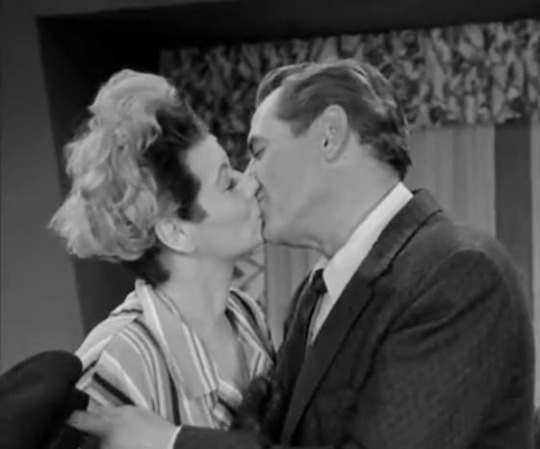
Lucille Ball’s last appearance as Lucy Ricardo was on April 1, 1960, just four and a half months before this issue of TV Guide hit the stands. She wouldn’t return to series television until September 1962, by which time Lucille will be back on the cover of TV Guide once again. She remained a yearly fixture on the Guide cover until 1974 and then made only one more original appearance to mark her return with “Life With Lucy.”

After this article comes out, the next time TV viewers see Lucille Ball on their home screens is to promote her film with Bob Hope, The Facts of Life, on “The Garry Moore Show” on September 27, 1960. The film opened in November 1960.
For more about TV Guide and “I Love Lucy” click here!
-
BALL at the PEAK
July 15, 1967

After 15 consecutive years on television, Lucille Ball was still receiving acclaim for “The Lucy Show”. In 1967, Ball won the Emmy Award for Outstanding Lead Actress in a Comedy Series.

“Bold and graphic day-glow like colors are on full display in this ‘Groovy’ work by one of America’s great post-war illustrators. It’s the quintessence of the MOD Look. Lucille Ball’s striking resemblance is captured in a triple portrait with twisting, curving and undulating flat patters. It’s set against a TV screen test pattern that doubles as a hallucinatory background.”

Bob Peak contributed a total of 39 cover illustrations to TV Guide. Lucille Ball appeared (in illustration and photography) on 39 covers. This was Ball’s 17th appearance.


Bob Peak (1927–1992)
was the father of the American Movie Poster. United Artists studio hired Peak in 1961 to design the poster images for the film West Side Story. The success of Peak’s work on that film led to work on posters for the big-budget musicals My Fair Lady and Camelot. In the mid-1970s Peak’s style would become familiar to fans of science fiction films when he created the poster art for the futuristic film Rollerball (1975), which was followed by the first six Star Trek films, Superman (1978), Excalibur (1981), Apocalypse Now (1979), The Spy Who Loved Me and other James Bond concepts. Peak received a commission from the U.S. Postal Service to design 30 stamps for the 1984 Summer Olympics in Los Angeles and the 1984 Winter Olympics in Sarajevo, Yugoslavia.

Peak and Ball collaborated again on Mame (1974).


“The President Wore A Dress to the Stockholders Meeting” by Dwight Whitney. The article discusses Lucille Ball’s tenure as President of Desilu after her ex-husband’s departure in 1962. A year after this TV Guide, Ball sold the studio to Gulf + Western and the TV production arm of her company to Paramount.

The issue also contained articles and features on Nichelle Nichols of “Star Trek” (a Desilu series), “Stage ‘67″, Miss Germany 1967, TV Reporters, Expo ‘67, and the All-Star Baseball Game.
For More About TV Guide and “I Love Lucy” Click Here!
-
KAYE BALLARD: THE SHOW GOES ON!


The documentary feature Kaye Ballard: The Show Goes On! will feature her appearance in “Lucy and Harry’s Italian Bombshell” (HL S4;E3) in 1971. She died in 2019 at age 93.
-
MILTON BERLE
July 12, 1908

Milton Berle was born Milton (Mendel) Berlinger in New York City on July 12, 1908. He started performing at the age of five. He perfected his comedy in vaudeville, early silent films, and then on radio, before taking his act to the small screen, where he would be proclaimed “Mr. Television” and later “Uncle Miltie.” He hosted “Texaco Star Theater” on NBC from 1948 to 1956. The variety show was re-titled “The Milton Berle Show” in 1954 when Texaco dropped their sponsorship. The program was briefly revived in 1958, but lasted only one season. One of his classic bits was to dress in drag.

Berle won two Emmy Awards in 1950 for Most Kinescoped Personality and Best Kinescope show – a category that only existed in 1950. Here they are used as set dressing for his office on “The Lucy-Desi Comedy Hour” in 1959. Desilu also reproduced his TV Guide cover from earlier in the year. The caricature is by Al Hirschfeld. Berle received an honorary Emmy in 1979 engraved “Mr. Television”.

Lucille Ball and Desi Arnaz appeared on “The Milton Berle Show” on February 22, 1949, although Berle was out sick, replaced by Walter O’Keefe, delaying a Berle and Ball collaboration until 1950, when Berle hosted “Show of The Year: Cerebral Palsy Telethon” on June 10 and Lucy and Desi were guests. In the decade that followed, Berle (on NBC) and Ball (on CBS) both became the biggest stars of television.

Like Lucille Ball, Uncle Miltie had his own comic book! This is the first issue dated December 1950.

Ball and Berle returned for a second season of their respective TV shows in 1952, sharing the cover of this regional TV Guide.

Lucille Ball was atop the TV totem pole on the cover of this April 1953 TV Guide while Milton Berle stands on the shoulders of Imogene Coca and Sid Caesar, flanked by the Texaco gas pump and holding a jester’s staff. This was only the third National issue and the second to feature Lucille Ball.

‘Mr. Television’ and ‘The Queen of Comedy’ finally came together in 1959 on “The Lucy-Desi Comedy Hour” episode “Milton Berle Hides Out at the Ricardos” (LDCH E11). Berle plays himself, promoting his new novel “Earthquake”. As the above photo shows, Berle does his drag act while hiding out to finish his next book. That same year, Lucy and Milton both participated in a tribute to Eleanor Roosevelt on her Diamond Jubilee. It was broadcast on NBC.

Also in 1959, Lucy and Desi returned the favor by appearing on “Sunday Showcase: The Lucy-Desi Milton Berle Special” on NBC. The special was set in Las Vegas and the Arnaz’s played the Ricardos.

In December 1965, shortly after Lucy Carmichael moved to Los Angeles on “The Lucy Show,” “Lucy Saves Milton Berle” when she thinks he has taken to drink. Berle (playing himself) is doing research for a movie, and tells Lucy that the drunk she saw was actually his brother Arthur!

In payback, Lucille Ball appears on the first episode of Berle’s new variety show, “The Milton Berle Show” on September 9, 1966. The show only lasts one season.

A few weeks later, once again trading appearances, Milton Berle does a brief wordless cameo in “Lucy and John Wayne” on “The Lucy Show.”

Two seasons later, Lucy Carmichael will again meet Milton Berle for the first time in "Lucy Meets the Berles”. This time, however, she meets both Milton and his wife, Ruth Cosgrove Berle, who also plays herself.

On “Here’s Lucy,” Berle finally gets to play a character different than himself as used car dealer Cheerful Charlie in a November 1969 installment that also features his real-life brother Jack (right).

For the opening of season 24 of “The Ed Sullivan Show” Ed hosts the ‘Georgie Awards’ for Entertainer of the Year, from Caesar’s Palace, Las Vegas. Lucille Ball and Milton Berle are on hand to present awards.

“The 23rd Annual Primetime Emmy Awards” were broadcast on NBC on . May 9, 1971. Lucy attended the Awards with her husband Gary, her daughter Lucie, and her son-in-law Phil Vandervoort. Milton Berle was also in attendance.

“Zenith Presents: A Salute to Television’s 25th Anniversary” on September 10, 1972, brought together many of the most popular names of early broadcasting and included classic film clips, kine-scopes, video tape segments, and the personal memories of those who were a vital part of entertainment history. Naturally this included Ball, Berle, and Hope.

In late 1973, the Friars Club celebrated presented “A Show Business Salute To Milton Berle”. Sammy Davis Jr. hosted with guests Lucille Ball, Jackie Gleason, Bob Hope, Kirk Douglas, Red Foxx, and Carol O’Connor.

A few months later, Berle made his only appearance on “Here’s Lucy” (once again playing himself) in “Milton Berle is the Life of the Party”. Lucy Carter bids on Berle’s appearance on a telethon in order to enliven one of her dreary parties.

When “The Dean Martin Celebrity Roast” feted Lucille Ball in 1975, Milton Berle was one of the many colleagues on hand to roast and toast the Queen of Comedy.

While America was celebrating its bicentennial in 1976, the National Broadcast Corporation was celebrating 50 years in show business with “NBC: The First 50 Years.” Naturally, “Mr. Television” (an NBC star) and Lucille Ball (then very associated with CBS) were there to mark the occasion. A few days later, CBS honored Lucille Ball for a quarter century of television with “CBS Salutes Lucy: The First 25 Years”. Berle hopped over to the Tiffany Network to help pay tribute.

Less than a month later, Lucy and Milton were back on “The Dean Martin Celebrity Roast” to rib their mutual friend Danny Thomas, who spent time on both NBC and CBS during his career.

On March 26, 1978, Lucille Ball, Joey Bishop, George Carlin, Johnny Carson, Angie Dickinson, Kirk Douglas, Jim Henson, Bob Hope, Gabe Kaplan, Gene Kelly, Donny and Marie Osmond, Gregory Peck, and Carl Reiner were all on hand for “A Tribute to Mr. Television, Milton Berle”.

Lucy and Milton were back in Vegas for yet another “Dean Martin Celebrity Roast” to honor actor Jimmy Stewart in 1979.

In 1980, Lucy and Miltie were present for “Sinatra: The First 40 Years” at Caesar’s Palace Las Vegas.

“Bob Hope’s 30th Anniversary Television Special” on January 18, 1981, was a retrospect of Bob Hope’s first 30 years on TV. Celebrating with Bob are guests Lucille Ball, Milton Berle, Danny Thomas, George Burns, Sammy Davis Jr., and many others.

Milton Berle (in drag) joined Lucille Ball for “Bob Hope’s Women I Love – Beautiful But Funny” on February 28, 1982. Other than Bob, Milton was the only other biological male in the show!

Appropriately, Milton Berle and Lucille Ball were among the first inductees into “The First Annual Television Academy Hall of Fame Awards” on March 4, 1984. Steve Allen introduces Berle while Carol Burnett does the honors for Ball.

That same year “Bob Hope’s Unrehearsed Antics of the Stars”. Ball tells Hope about her disastrous audition for Gone With the Wind.

Berle and Ball (now an NBC employee) are there for the special “Bob Hope Buys NBC?” in 1985. Former President Gerald Ford also makes an appearance!

As President of the Friars Club, Milton Berle was present for most all of their events, including their tribute to Gene Kelly in late 1985. Lucille Ball and Gary Morton also attending the honoring.

Lucille Ball was a presenter at “The 38th Primetime Emmy Awards” on September 21, 1986. Milton Berle was also in attendance.

The final performance of Lucille Ball on television was in “Happy Birthday, Bob: 50 Stars Salute Your 50 Years at NBC” on May 16, 1988. She sang “Comedy is No Joke”. Milton Berle was also in attendance.

For the “AFI Life Achievement Award: A Salute to Jack Lemmon” on March 10, 1988
The audience is full of celebrity friends, including including Lucille Ball and Milton Berle.

“The Princess Grace Foundation Special Gala Tribute to Cary Grant” on October 19, 1988. Lucille Ball attends with her husband, Gary Morton. Milton Berle is also there.
This would be the last time Ball and Berle shared the same television marquee. Lucille Ball died six months later. A week before her passing, Ruth Cosgrove Berle died. In 1991, he married again to Lorna Adams. They remained married until Milton Berle died of colon cancer in 2002 at age 93.

“I live to laugh, and I laugh to live.” ~ Milton Berle
Al Hirschfeld, Bob Hope, CBS, Danny Thomas, Dean Martin, Desi Arnaz, Emmy Awards, Frank Sinatra, Gene Kelly, Here’s Lucy, Jack Berle, Jack Lemmon, Jimmy Stewart, Lorna Adams, Lucie Arnaz, Lucille Ball, Milton Berle, Mr. Television, Phil Vandevoort, Princess Grace, Ruth Cosgrove, Texaco Star Theatre, The Lucy Show, The Lucy-Desi Comedy Hour, The Milton Berle Show, tv, TV Guide, Uncle Miltie, Uncle Milty, Zenith -
DUMMY ACHE
July 10, 1936

SYNOPSIS: Knowing that her husband, Edgar, would disapprove of her starring in a play, Florence acts very suspicious about where she is going when a rehearsal comes up. Edgar follows her to the home of co-star Al St. Claire and spies while they enact a scene in which Florence discovers that her lover is married to Lois (Lucille Ball). Florence becomes enraged and shoots Al. Edgar thinks the scene is for real. He comes in, finds a dummy of Al stuffed in a laundry basket, and before Florence can explain, carries it away to dispose of “the body”. Limbs are spilling out of the hamper as he lugs it down the street and naturally the police soon catch up with Edgar, so before long, all confusion is cleared up.

Leslie Goodwins (Director), Lee Marcus (Producer), Bert Gilroy (Associate Producer). Filmed at RKO-Radio Pictures. 18 minutes length.

Lucille Ball (Lois Mason, the Actress / ‘Mrs. Marino’)
was born on August 6, 1911 in Jamestown, New York. She began her screen career in 1933 and was known in Hollywood as ‘Queen of the B’s’ due to her many appearances in ‘B’ movies. With Richard Denning, she starred in a radio program titled “My Favorite Husband” which eventually led to the creation of “I Love Lucy,” a television situation comedy in which she co-starred with her real-life husband, Latin bandleader Desi Arnaz. The program was phenomenally successful, allowing the couple to purchase what was once RKO Studios, re-naming it Desilu. When the show ended in 1960 (in an hour-long format known as “The Lucy-Desi Comedy Hour”) so did Lucy and Desi’s marriage. In 1962, hoping to keep Desilu financially solvent, Lucy returned to the sitcom format with “The Lucy Show,” which lasted six seasons. She followed that with a similar sitcom “Here’s Lucy” co-starring with her real-life children, Lucie and Desi Jr., as well as Gale Gordon, who had joined the cast of “The Lucy Show” during season two. Before her death in 1989, Lucy made one more attempt at a sitcom with “Life With Lucy,” also with Gordon, which was not a success and was canceled after just 13 episodes.
Edgar Kennedy (Edgar)
was born on April 26, 1890, near Monterey, California. He became a professional boxer, claiming to have gone 14 rounds against The Manassas Mauler, Jack Dempsey.
At Mack Sennett’s Studios he was allegedly one of the original Keystone Kops, but soon graduated from bit parts to supporting roles, including Tillie’s Punctured Romance (1914) with Charles Chaplin. RKO hired Kennedy to appear in a series of comedy shorts called “The Average Man,” in which he played the head of a family. The shorts had very tight shooting schedules, often as few as three days. With Lucille Ball, he made Kid Millions (1934) A Night at the Biltmore Bowl (1935), neither of which were part of his series of ‘average man’ short films. He made over 200 short subjects and appeared in over 100 feature films, still in demand right up to the day he died of cancer on November 9, 1948.

Florence Lake (Florence Kennedy / ‘Dolores Doran’)
was born as Florence Silverlake on November 27, 1904 in Charleston, South Carolina. Florence was the older sister of Arthur Lake, who was famous for playing “Dagwood” on radio, TV and films.
She was best known for Wrong Direction (1934), Secret Service (1931) and Quiet Please! (1933). She was the best known of Edgar Kennedy’s screen wives in his series of short domestic comedies. After his death in 1948, she continued to appear in minor film roles and many television parts. Aside from Dummy Ache, she did three RKO films with Lucille Ball, two episodes of “Here’s Lucy” and the special “Happy Anniversary and Goodbye.” She was married to John Graham Owens and died on April 11, 1980.

Lake in “Lucy and the Raffle” (HL S3;E19) in 1971
Dot Farley (Florence’s Mother)
was born Dorothea Farley on February 6, 1881 in Chicago, Illinois. She was known for So Big (1924), The Little Irish Girl (1926) and The Signal Tower (1924). She appeared in many Mack Sennett films in the silent era and later became well known for playing Edgar Kennedy’s mother-in-Law in his series of domestic comedies for RKO. In 1941, she joined Lucille Ball in Look Who’s Laughing, a film based on radio’s “Fibber McGee & Molly.” She died on May 2, 1971

Jack Rice (Florence’s Brother) was born Earl Clifford Rice on May 14, 1893 in Michigan. He is known for his work on Feather Your Nest (1944), Poisoned Ivory (1934) and Blondie’s Holiday (1947). Rice did seven other films with Lucille Ball between 1934 and 1947. He died on December 14, 1968.

Rice in “Lucy Meets Orson Welles” (ILL S6;E3) in 1956.

George Lewis (Al St. Claire, the Actor / ‘Rupert Marino’) was born on December 10, 1903 in Guadalajara, Mexico. He was known for Zorro’s Black Whip (1944), Radar Patrol vs. Spy King (1949) and Malice in the Palace (1949). He was married to Mary Louise Lohman. This was his only appearance with Lucille Ball. He died on December 8, 1995.

Harry Bowen (Bowen, the Cabbie)
was born on October 4, 1888 in Brooklyn, New York. He broke into the film industry doing film shorts during the silent era. In 1929 that he made his first appearance in a full-length feature, with a small role in Red Hot Rhythm, directed by Leo McCarey. During his 20-year career, Bowen appeared in over 150 films, most of them film shorts. Other notable films include: the 1933 classic King Kong and Flying Down to Rio (1933). Previous to Dummy Ache, he was seen with Lucille Ball in Three Little Pigskins (1934) and The Whole Town’s Talking (1935). Bowen died in 1951 at age 53.
Billy Franey (Mr. Samuels aka Pitchfork Man) was born in Chicago in 1889. Hey appeared in more than 400 films between 1914 and 1941, mostly playing comedic roles. His late career included numerous uncredited appearances in classics like Bringing Up Baby. Starting in 1937, he played Pop, the father-in-law of Edgar Kennedy in several of his series of short comedies. In 1938 he did two films with Lucille Ball: Next Time I Marry and Go Chase Yourself, followed by Panama Lady in 1939. He contracted influenza and died from complications involving the illness in 1940.
The two policemen (speaking roles) are not credited. The film also includes background performers playing the frightened citizens.

An insert shot of the printed program for the play that Florence is secretly performing in.
Dummy Ache was nominated for an Academy Award as the Best Short Subject of 1936. It lost to The Public Pays, an installment of MGM’s Crime Does Not Pay series.

The “Average Man” short comedies starred Edgar Kennedy as a blustery, stubborn everyman determined to accomplish a household project or get ahead professionally, despite the meddling of his featherbrained wife (usually Florence Lake), her freeloading brother (originally William Eugene, then Jack Rice) and his dubious mother-in-law (Dot Farley). Kennedy pioneered the kind of domestic situation comedy that later became familiar on television. Each installment would end with Edgar embarrassed, humbled or defeated, looking at the camera and doing his patented slow burn. The Edgar Kennedy Series, with its theme song “Chopsticks”, became a standard part of the movie-going experience: Kennedy made six “Average Man” shorts a year for 17 years.
From 1931 to 1948, Edgar Kennedy and Florence played husband and wife in more than 60 domestic comedy short films like Dummy Ache. Dot Farley and Jack Rice was in an equal number as Mother and Brother.

Dummy Ache is heavily reworked from a silent comedy short, Dumb Daddies (1928), starring Max Davidson. Edgar Kennedy himself had a part in Dumb Daddies as a policeman.

It was remade into When Wifie’s Away, also an RKO short, starring Leon Erroll (above) in 1941.

The premise of misunderstandings based on overheard rehearsals by actors was used by Desilu in 1952′s “New Neighbors” (ILL S1;E21), in which Lucy and Ethel spy on the O’Brien’s (Hayden Rorke and K.T. Stevens) mistaking their rehearsal for a spy drama for their intent to blow up the US capital! Just as in Dummy Ache, the plot ends with police intervention!

Most of the Edgar Kennedy Shorts are available on low-cost DVD.

-
Desi’s TOPS Picks!
July 9, 1955
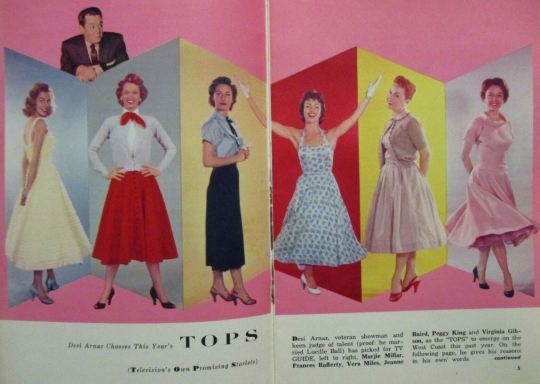
For the July 9, 1955 issue of TV Guide, Desi Arnaz was tasked with picking TOPS – Television’s Own Promising Starlets! Arnaz picked six young women he believed would be popular and successful on television in the years to come. This was a rare time that Lucille Ball was not part of the article, except for her name being dropped as Desi’s original TOPS pick. There is not even a photo of Lucy!
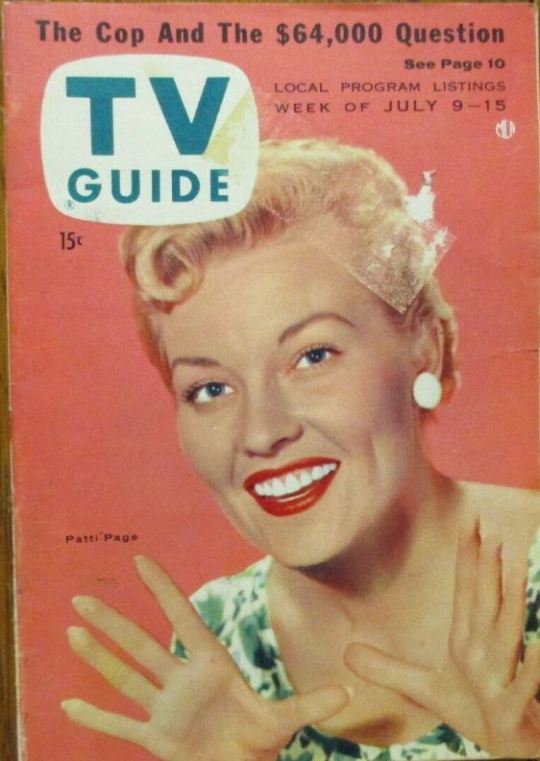
The cover features Clara Ann Fowler (1927-2013), known by her stage name Patti Page, a singer of pop and country music and occasional actress. She was the top-charting female vocalist and best-selling female artist of the 1950s, selling over 100 million records during a six-decade long career.
Page’s signature song, “Tennessee Waltz”, was one of the biggest-selling singles of the 20th century. Page had three additional #1 hit singles between 1950 and 1953, “All My Love (Bolero)”, “I Went to Your Wedding”, and “(How Much Is That) Doggie in the Window”. In 1955, Page was seen in “The Patti Page Show,” her own 15-minute television show and was a frequent musical guest on variety programs.
Here’s a closer look at Desi’s TOPS, along with notes about their career since 1955:

MARJIE MILLAR was born on August 10, 1930 in Tacoma, Washington, as Marjorie Joy Miller.
In 1935, she won a Shirley Temple look-alike contest at Tacoma’s Roxy Theater over 200 other local contestants.
Mogul Hal Wallis took an immediate interest in her.
In March 1952 she was named “Miss Hollywood Star of 1952."
She was crowned one of Hollywood’s new deb stars by Hollywood hair stylists in 1953.
She was known for Money from Home (1953) and About Mrs. Leslie (1954). In July 1955 she had just finished two seasons on ABC TV’s Emmy-nominated series “Where’s Raymond?” starring Ray Bolger. After Desi’s recognition, she did the film When Gangland Strikes (1956). She was married to Charles Candoo, John Dennis McCallum, John Florea, and James Sidney Rollins Jr. She died on April 16, 1966 in Coronado, California.

Desilu Connection: On “Where’s Raymond” she acted opposite “I Love Lucy” character actors Elvia Allman, Bobby Jellison, Shirley Mitchell, Verna Felton, Jay Novello, Joi Lansing, and Wil Wright, as well as creative staff Argyle Nelson, Claudio Guzman, and Dann Cahn. The series filmed at General Service Studios, just like “I Love Lucy”.

FRANCES RAFFERTY
was born on June 16, 1922 in Sioux City, Iowa. During the Depression her family moved to Los Angeles in search of work. Frances was signed by MGM at the age of 19 and began with a dancing bit in Presenting Lily Mars (1943) starring Judy Garland.
She was a war-era cover girl for Yank, the Army weekly.
Unable to secure starring parts, Frances remained a B-level co-star. She died in 2004 at age 81.

Desilu Connection: Lucille Ball was instrumental in casting Rafferty in Desilu’s hit sitcom “December Bride” (1954-59), where she played Ruth Henshaw in 156 episodes, including one that starred Desi Arnaz as himself! At MGM, she was in the films Thousands Cheer (1943) and Abbott and Costello in Hollywood (1945) with Lucille Ball.

VERA MILES (nee Ralston) was born in Boise City, Oklahoma on August 23, 1929. Miles won the title of "Miss Kansas” in 1948, leading soon to small roles in Hollywood films and television. series. The same week this TV Guide hit the stands, she appeared in the film Wichita, starring Joel McRae as Wyatt Earp. Coincidentally, Miles went to high school in Wichita, Kansas. Her main claim to fame was as one of Alfred Hitchcock’s ‘blondes’ appearing in Psycho (1960) as Lila Crane, Marion’s sister. Miles also did the 1983 sequel playing the same role.

Desilu Connection: In 1958, Miles did “Mr. Tutt”, an episode of Desilu’s Colgate Theatre, produced by Desi Arnaz. In 1966, Miles appeared on an episode of “The Bob Hope Show” with Lucille Ball.

JEANNE BAIRD was born on March 28, 1927 in Du Bois, Pennsylvania. She got her start in TV’s “The Living Christ” as Martha in 1951.

Desilu Connection: In 1955 she did an episode of “I Married Joan” (NBC’s answer to “I Love Lucy”) which filmed at General Services Studios, same as “Lucy”.

PEGGY KING was born in 1930 and known as “Pretty Perky Peggy King” when she appeared on “The George Gobel Show” (1954-57) and guest-starred on many other TV shows.
In 1952, MGM signed her to a contract, which led to a cameo in Vincente Minnelli’s The Bad and the Beautiful and a series of commercial jingles for Hunt’s tomato sauce. These last brought her to the attention of Mitch Miller, who signed her to a long-term contract, under which she made two best-selling albums. She sang the Oscar-nominated song “Count Your Blessings” on the 1955 Academy Awards telecast, and both Billboard and Down Beat magazine named her Best New Singer of 1955–56. She was nominated for an Emmy in 1955, the same year this TV Guide was published. The Broadcast Pioneers of Philadelphia inducted King into their Hall of Fame in 2010, which led to her resuming her singing career in 2013.

Desilu Connection: There is no known direct connection between King and Lucy and Desi, although both were associated with MGM and Vincente Minnelli. It is likely that Desi is just listening to the Hollywood critics, who praised King highly and predicted she would rival the greats. While she had a moderate success, she never achieved the legendary status of Garland, Shore, Whiting, or Stafford.

VIRGINIA GIBSON was born on April 9, 1925 in St. Louis, Missouri, as Virginia Gorski.
In the fall of 1943, she was a dancer in Roll Up Your Sleeves on Broadway. Gibson was signed by Warner Brothers in 1950 and made her film debut in Tea for Two (1950).
On television, Gibson was a regular on “Captain Billy’s Showboat” (1948). She also starred in “So This Is Hollywood” (1955) and was a regular performer on “The Johnny Carson Show (1955–56). In 1956 she returned to Broadway to play Ethel Merman’s daughter in the musical Happy Hunting, earning a Tony nomination for her work. She died in 2013 at age 88.

Desilu Connection: Gibson is perhaps best known for playing Liza, one of the Seven Brides for Seven Brothers in MGM’s 1955 musical. Lucy and Desi were also at MGM during this time, and even mentioned Seven Brides on an episode of “I Love Lucy.”

If the idea of Desi Arnaz and young female talent rings a bell, it should! Ricky Ricardo was often faced with a green-eyed Lucy when surrounded by beautiful Hollywood starlets. It happened in “Don Juan and the Starlets” (ILL S4;E17), which coincidentally (or not) was aired around the same time as this article was being written for TV Guide!

Lucy again got jealous of Ricky fraternizing with up-and-coming young talent in “Desert Island” (ILL S6;E8) just a year later.

Editor’s Notes: Considering the well-known circumstances of the Arnaz divorce, and Desi’s reputation as a womanizer, it might be easy to conclude that producer Desi had some sort of personal interest in promoting these attractive young ladies in TV Guide. However, I’m not so sure that is a reasonable assumption to make. First, articles of this sort were rarely written by the ‘author’ (Desi) but by press agents, with approval of the person with the byline. The extent of Desi’s control of the list or the text that accompanies them is up for debate. In fact, some of these talented women are only tangentially related to Arnaz publicly, and some – not at all.

When all is said and done, the only one on the list that has approached icon status is Vera Miles, due mainly to her participation in Hitchcock’s Psycho. While Frances Rafferty was on a weekly TV series (”December Bride”) the show has not fared well in syndication and is largely forgotten by today’s viewers. However, Rafferty is the most likely to have been ‘Desi’s pick’ due to her working on the Desilu lot and appearing with him in an episode of the show. At the time, Peggy King was certainly the odds-on favorite for stardom, so her inclusion was a no-brainer. Virginia Gibson took a left turn back to Broadway and earned a Tony nod, so that interrupted her trajectory toward Hollywood fame. Sadly Millar and Baird’s careers fizzled and are only remembered today by die-hard fans.
-
AMSEL on the BALL
July 6, 1974

Artist Richard Amsel’s first TV Guide cover was of the Duke and Duchess of Windsor in 1972, promoting an article about television’s tributes to the recently deceased Duke of Windsor, once King Edward VIII. His final cover was of newscasters Tom Brokaw, Peter Jennings and Dan Rather in October 1985, just before his death form AIDS at age 37. Amsel did 37 covers in all, more than any other artist. Coincidentally, Lucille Ball appeared on 39 covers, more than anyone else. This was her 17th appearance; her 6th non-photographic appearance.

Amsel was also a prolific designer for popular film posters, landing his first job in 1969 (age 22) for Barbra Streisand’s Hello, Dolly. He designed the now iconic posters for The Sting, Raiders of the Lost Ark, and Chinatown.
Perhaps the most beloved of Amsel’s TV Guide covers was his portrait of Lucille Ball, which heralded an article about her retirement from series television in 1974.

Amsel’s original illustration. Note that the signature is differently placed.


Amsel’s first pencil sketch for the cover.

Inside the issue, an article by Terrence O’Flaherty titled “TV Will Never Be Quite The Same Again” about Lucille Ball’s retirement from series television. The photo is from “Lucy at Marineland” (TLS S4;E1). The photo is from a TV Guide cover photo shoot from late August 1965 done on location.
For a look at “I Love Lucy” and TV Guide, click here!
-
Subscribe
Subscribed
Already have a WordPress.com account? Log in now.
 Papermoon Loves Lucy