-
Amy Poehler to Direct Lucille Ball, Desi Arnaz Documentary
“I am so excited to work with Imagine Docs to help present the incredible life and work of the brave and hilarious Lucille Ball, and her husband Desi Arnaz,” said Poehler.
-
RAY FERRELL
August 24, 1949
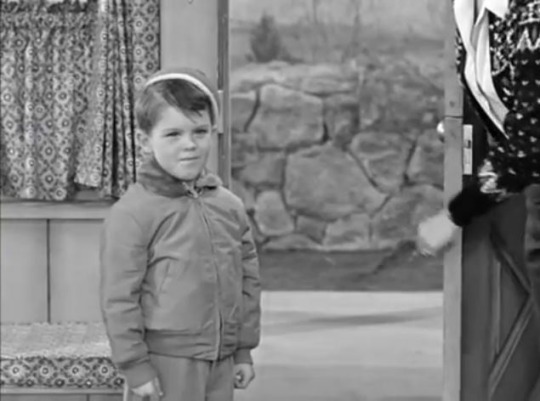
Ray Ferrell was born on August 24, 1949, in Los Angeles, California, as Raymond Delmer Ferrell. He was best known for playing Bruce Ramsey on three episodes of “I Love Lucy.” He was the younger brother of Todd Ferrell who played Boomer Bates on “Lassie”. Ray also appeared on “Lassie” but not in the same season as his brother. They did, however, play brothers on three television programs, one directed by “Lucy” director James V. Kern, who likely was influential with Ray’s casting on “I Love Lucy.”

He made his screen debut at age 5 in the CBS anthology series “Four Star Playhouse.”

He was also known for 14 episodes of the TV series “Peck’s Bad Girl” (1959). “Peck’s” also featured “Lucy” cast members Doris Singleton, Lawrence Dobkin, and Bart Braverman.
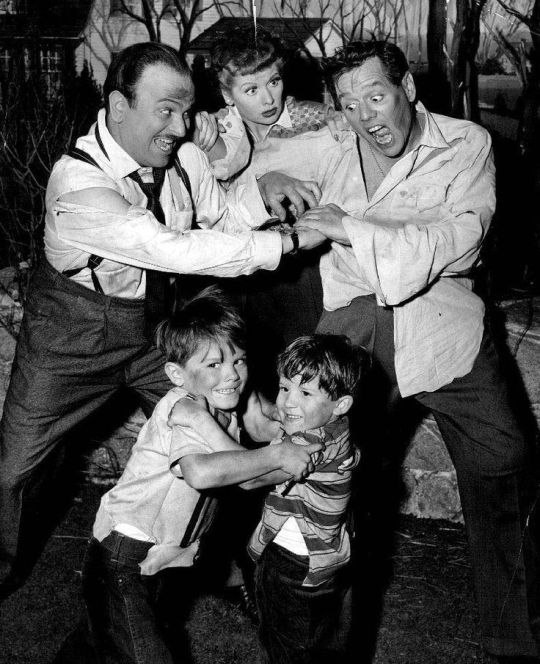
His first appearance on “I Love Lucy” was titled “Lucy Gets Chummy With The Neighbors” (ILL S6;E18) on February 18, 1957.
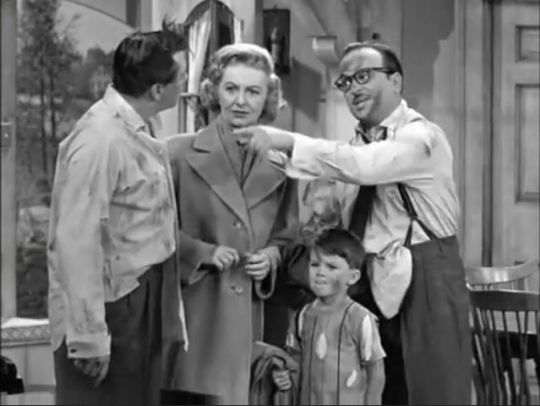
Ferrell played Bruce Ramsey, the son of the Ricardo’s neighbors Ralph and Betty Ramsey (played by Frank Nelson and Mary Jane Croft).

Bruce was Little Ricky’s best friend.
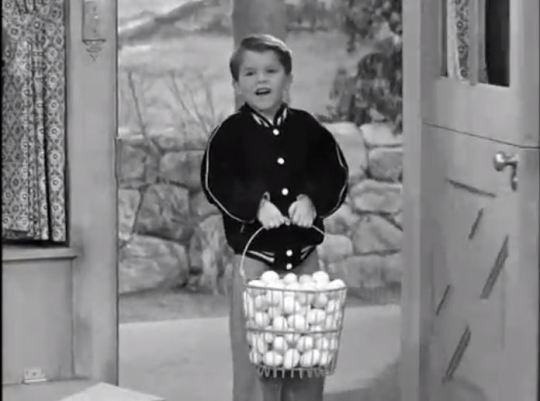
His second appearance was in “Lucy Does the Tango” (ILL S6;E20) on March 11, 1957. The episode was notable for the longest laugh on the series. Eggs were integral to that laugh and to Bruce’s appearance. This is the only time Bruce appears, but his parents do not!
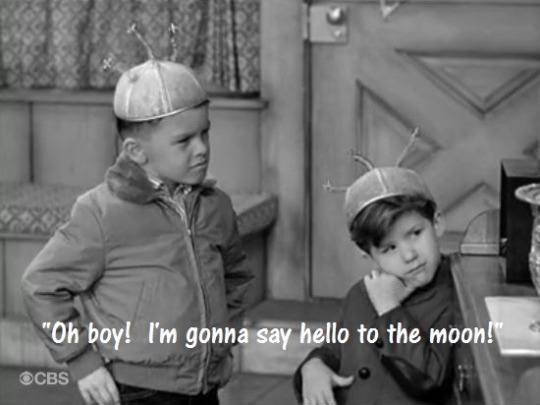
In “Housewarming” (ILL S6;E23) on April 1, 1957, Ferrell’s third and final series appearance, the Ricardos and Mertzes install an intercom, which the boys believe can help them talk to outer space!
“That isn’t the moon, that’s my mommy!” ~ Bruce Ramsey

Also in 1957, Ferrell appeared in an episode of “The Box Brothers,” a short-lived CBS sitcom starring Gale Gordon.

After “I Love Lucy” Ferrell did a 1958 episode of Desilu’s Western series “The Texan” starring Rory Calhoun…

…and two episodes of “Zane Grey Theater” in 1958 and 1960 starring Jack Carson.

Ray Ferrell left show business in 1961 with his final appearance (age 12) on “The Detectives” starring Robert Taylor.
He died on August 25, 2006 in Athens, Tennessee, one day after his 57th birthday.
-
BARBARA EDEN
August 23, 1931

Barbara Eden was born Barbara Jean Morehead in Phoenix Arizona in 1931, although for years her birth year was thought to be 1934. It was fairly common for young actresses to lie about their age in Hollywood. After her parents divorced, her mother married a telephone lineman, the same profession as Lucille Ball’s father. Eden’s first public performance was singing in the church choir. As a teenager, she sang in local bands in night clubs. At age 16, she studied singing and acting. She graduated from High School in San Francisco in the Spring Class of 1949. As Barbara Huffman, she was elected Miss San Francisco in 1951 and she also entered the Miss California pageant. Her name was changed to Eden by her first agent.

“If gentlemen prefer blondes then I’m a blonde that prefers gentlemen.” ~ Barbara Eden

Eden began her television career as a semi-regular on “The Johnny Carson Show” (not to be confused with “The Tonight Show”) in 1955.

Contrary to popular belief, “I Love Lucy” was not Eden’s first small screen appearance. She had been seen in a November 1956 episode of “West Point.”

She had also made the RKO film Back from Eternity, a remake of a Lucille Ball film called Five Came Back, which would not be released until later in 1957. It was directed by John Farrow (Mia’s father) and co-starred Keith Andes, who would play Lucy Carmichael’s boyfriend on “The Lucy Show” and co-star with Ball in Wildcat on Broadway in 1960. Eden played a college reporter and was uncredited. Coincidentally, the film also featured Tristram Coffin, who played Diana Jordan’s cousin Harry Munson in “Country Club Dance.”

In “Country Club Dance” (ILL S6;E25), the male population of Westport is all agog when sexy Diana Jordan (Barbara Eden) visits. Lucy, Ethel and Betty Ramsey decide that getting glamorous is the best revenge. The now-classic episode was filmed on March 21, 1957 and first aired on April 22, 1957.

Needless to say, that night at the Westport Country Club shapely young Diana’s ‘dance card’ is full! Pat Boone (not in attendance, but mentioned) was Diana’s favorite singer!

William Asher, the director of this episode, would later direct Barbara Eden in the short-lived sitcom "Harper Valley PTA” (1981-82) and "I Dream of Jeannie… Fifteen Years Later,” a reunion special aired in 1985.

After filming was completed, Desilu gave some of its guest stars small gifts. This 10K gold-filled Zippo lighter was a present for Eden.

That same year, Eden appeared in an episode of the Desilu sitcom “December Bride” starring Harry Morgan.

In early 1962, Eden was on the Desilu backlot to play “The Manicurist” on “The Andy Griffith Show.” At the same time, “The Lucy Show” was filming its first season.

The next time Lucy and Eden appeared on screen together was at the 1968 Primetime Emmy Awards. Ball was nominated (and won) for Best Actress in a Comedy for “The Lucy Show”. “Jeannie” and Eden were then in their third season, but failed to break the top 30 and were not nominated, although Eden, as a recognizable TV figure, was present at the awards. Throughout its long run, the popular sitcom only garnered one Emmy nomination, for Sidney Sheldon’s writing. Barbara and Ball were also presenters (not together) at the 1986 Prime Time Emmy Awards.

In 1982, Lucy and Eden were among the many women (and one man in drag) assembled for “Bob Hope’s Women I Love: Beautiful and Funny.” Coincidentally, this special also featured Mary Martin, who was Larry Hagman’s (Major Nelson on “I Dream of Jeannie”) real-life mother. Eden was a favorite of Hope’s, appearing on a dozen Bob Hope specials.

Eden was present (though she did not speak or get credited) at 1984′s “All-Star Party for Lucille Ball.” Two years later they returned for “All-Star Party for Clint Eastwood.” As a former honoree, Lucy hosted, but Eden was still only an attendee.

In 1987, Lucy and Barbara joined a myriad of luminaries for “Happy 100th Birthday Hollywood” although they performed in different segments. A year later, Lucy, in one of her final TV appearances, was with Eden in “The Princess Grace Foundation’s Special Gala Tribute to Cary Grant.” Grant never acted opposite either star.
OUT OF THE BOTTLE!

In 1965, producer Sidney Sheldon signed Eden to star in his upcoming fantasy sitcom “I Dream of Jeannie” that would air on NBC. It was aimed at wooing audiences away from ABC’s fantasy sitcom “Bewitched.” Eden played Jeannie, a beautiful genie from ancient Persia set free from her bottle by astronaut and Air Force Captain (later Major) Anthony "Tony” Nelson, played by Larry Hagman.

Also in the “Jeannie” cast of regulars was Hayden Rorke (as psychiatrist Dr. Alfred Bellows), who first appeared with Lucille Ball on stage in Dream Girl (1947).

Like Eden, Rorke also did a one-off appearance on “I Love Lucy” as new neighbor Mr. O’Brien who Lucy thinks is a spy, but turns out to be just an actor.

He would later be seen on “Here’s Lucy” as a judge deciding if Lucy Carter has held an illegal raffle or not.
Lurene Tuttle, who played the President of The Wednesday Afternoon Fine Arts League in “The Club Election” (ILL S2;E19) in 1953, played Jeannie’s mother in a 1965 episode.
Phil Ober, Vivian Vance’s ex-husband and the actor who played Dore Schary in “Don Juan is Shelved” (ILL S4;E21) in 1955, played General Stone in two season one episodes of “Jeannie.”
Vinton Hayworth, who played General Schaeffer on “Jeannie” did two films with Lucille Ball: That Girl From Paris (1936) and That’s Right – You’re Wrong (1939).

Like Vance, Eden also was married to one of her co-stars and later divorced him. In 1958, Eden married Michael Ansara, who played many roles on “Jeannie” including the Blue Djinn (above).

On “Jeannie,” Major Nelson was an astronaut. On “The Lucy Show” Lucy Carmichael was an astronaut (for a day) in a season one episode. Like “Jeannie” this episode was written to capitalize on America’s space race.


In 1971, “Here’s Lucy” also did an astronaut-themed episode. By that time, American astronauts had landed on the moon! Coincidentally, actor Robert Hogan (center in both photos) also played an astronaut on “Jeannie” in 1970.

“Jeannie” was produced by Sheldon Leonard, who played himself on a 1967 episode of “The Lucy Show”.

Like “The Lucy Show”, “Jeannie” premiered in black and white before switching to color for the remainder of its run.
Other actors who appeared on both “Jeannie” and “Lucy”: George DeNormand, Benny Rubin, Jackie Coogan, J. Pat O’Malley, Reta Shaw, Richard Reeves, Romo Vincent, Jonathan Hole, Kathleen Freeman, Bill Quinn, Herbie Faye, Milton Berle, Jack Carter, Jamie Farr, John McGiver, Richard Deacon, Don Ho, Alan Hewitt, Don Rickles, Alan Oppenheimer, Jack Collins, Parley Baer, Herb Vigran, Ruth McDevitt, Sandra Gould, Foster Brooks, James Hong, William Fawcett, Stafford Repp, and Sid Melton.
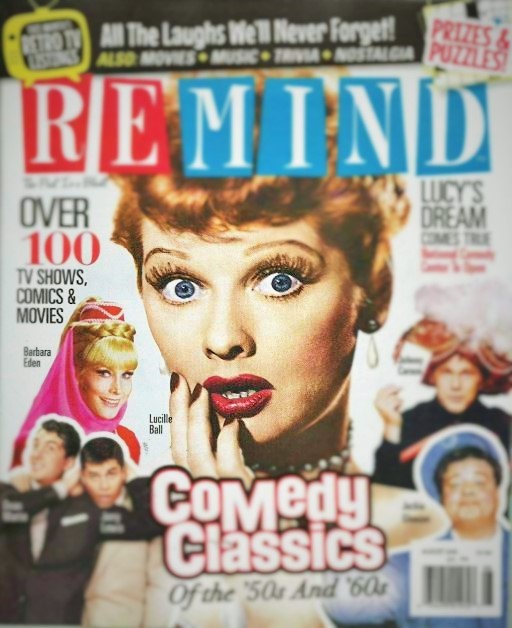
Eden played this role for five years and 139 episodes. In eight episodes, Eden donned a brunette wig to portray Jeannie’s evil sister (also named Jeannie) who lusts after Tony Nelson, and in two episodes played Jeannie’s hapless mother.
AFTER THE BALL & THE BOTTLE….

Barbara Eden later said in interviews that Lucy was a generous performer and caring person, contrasting to another (unnamed) female star she had worked with. Lucille Ball thought that Eden’s costume was not attractive enough, so Lucy and Irma Kusely (Lucy’s hairstylist) spent rehearsal time ‘bedazzling’ the dress. Ball offered to put Eden under contract at her Desilu Workshop, but Eden found out later that day that 20th Century Fox had picked up her option, so Eden graciously declined Lucy’s offer.
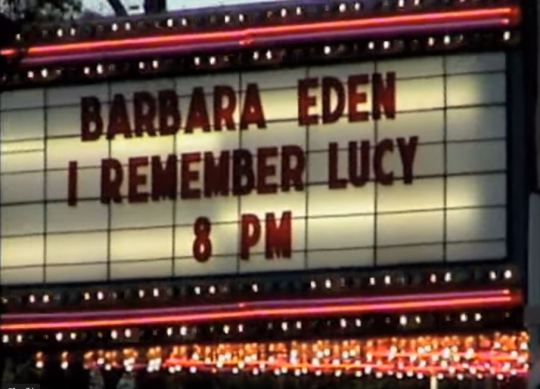
“It was the third job I had in Los Angeles and she was so good to me. I can’t tell you how sweet she was. I had a dress on that she didn’t think was outstanding enough. She asked me to take it off and the next thing I knew, she was sitting there putting sparkling things all over it, just to make it look better.” ~ Barbara Eden, October 2017

In 2005, Barbara Eden traveled to Jamestown to participate in Lucy-Desi Days.

Eden was married three times and had one child who died in 2001 at the age of 35.
“I’ve never stopped working. If you’re active, you can appreciate what you did in the past, you don’t feel like it’s gone.” ~ Barbara Eden
AS OF TODAY!
AUGUST 23, 2020 – As of this writing, Barbara Eden is one of the oldest known surviving ADULT cast members of “I Love Lucy.” She is not, however, the oldest. Mary Ellen Kaye (Mrs. Taylor in “Lucy Hates To Leave”) is a year older than Eden, and Cher’s mother Georgia Holt (Model in “Lucy Gets A Paris Gown”) is 94.
There is no birth or death information for: Maggie Magennis (Starlet in “Don Juan
and the Starlets”), Helen Silvers (Dancer Rosemary in “Lucy is
Jealous of Girl Singer”), Barbara Logan (Stewardess in “The
Ricardos Visit Cuba"), Milldred Law (Stewardess in “Return Home
from Europe”), and Jody Drew (Miss Ballantine, Mr. Reilly’s Secretary in “Don Juan
is Shelved”).Astronauts, Back From Eternity, Barbara Eden, Bob Hope, Country Club Dance, December Bride, Desi Arnaz, Dream Girl, Hayden Rorke, Here’s Lucy, I Dream of Jeannie, I love lucy, Jeannie, Johnny Carson, Larry Hagman, Lucille Ball, Lucy, Lurene Tuttle, Michael Ansara, NASA, Phil Ober, Robert Hogan, Sheldon Leonard, sitcoms, The Andy Griffith Show, The Lucy Show, tv, Vinton Hayworth, Vivian Vance, West Point -
JAY NOVELLO
August 22, 1904

Jay Novello was born Michael Romano in Chicago to Italaian-American parents. Novello began his 47-year acting career in the 1930s, performing on radio.
Novello was limited mostly to bits in minor films, one of his notable being the officious Spanish consul in Frank Capra’s Pocketful of Miracles (1961).
Novello’s first role as a guest star on television was on CBS’s “The George Burns and Gracie Allen Show” in 1951.
Dapper Novello is probably best remembered for playing Mayor Lugatto on “McHale’s Navy” in 1965.

He played a recurring role as Mr. Negley, the mailman, on Lucille Ball’s radio show “My Favorite Husband”. He also played Mr. Curry in “Numerology,” (May 1950), which was later made into “The Seance” where Curry was renamed Mr. Merriweather. The first version of “Numerology” (also starring Novello) aired in 1948 when the characters were named the Cugats.

Speaking of which, Novello first appeared on “I Love Lucy” in 1951 as superstitious theatrical agent Mr. Merriweather in “The Seance" (ILL S1;E7),

Nervous new tenant Mr. Beecher in 1954′s “The Sublease” (ILL S3;E31)

Mario in “The Visitor from Italy” (ILL S6;E5) in 1956

Candy Store owner Mr. Bundy in 1963′s “Lucy and the Safecracker” (TLS S2;E5)

Restaurateur Tony DiBello on “Lucy Meets a Millionaire” (TLS S2;E24) in 1964.
DESILU NOVELLO

In 1955 and 1958, Jay Novello did two episodes of “The Danny Thomas Show” filmed at Desilu Studios.

In 1962 and 1964, Novello made two appearances on “The Andy Griffith Show,” filmed on the Desilu backlot.

In 1966, Novello appeared in an Italian-themed episode of “My Three Sons,” also filmed on the Desilu lot.

The following year, Novello worked for Desi Arnaz on his series “The Mothers- In-Law” playing a drunk in jail. The show was written by original Lucy writers Bob Carroll and Madelyn Davis.

In 1967 and 1969, Novello turned up on “Gomer Pyle: USMC” filmed at Desilu / Paramount. In 1966, Gomer Pyle (Jim Nabors) made a cameo appearance on “The Lucy Show.”

In 1973, Novello did an episode of “The Brady Bunch” in which he played a bike shop owner named Mr. Martinelli who Peter goes to work for. Coincidentally, Martinelli was also the name of the pizzeria owner (played by Eduardo Ciannelli) in “Visitor from Italy” (ILL S6;E5). Lucille Ball’s son Desi Arnaz played himself on “The Brady Bunch” in February 1970.

In 1968 and 1975, Novello did three episodes of Desilu’s “Mannix”, a CBS show saved from cancellation by Lucille Ball. In 1971, Mike Connors (who played the title role) played Joe Mannix on an episode of “Here’s Lucy.”

Novello’s first marriage, to Rose Motto, ended in divorce. In 1961, he married Patricia C. (nicknamed ‘Lucy’!) Lewis and they remained together until his death from lung cancer in 1982, aged 78.
-
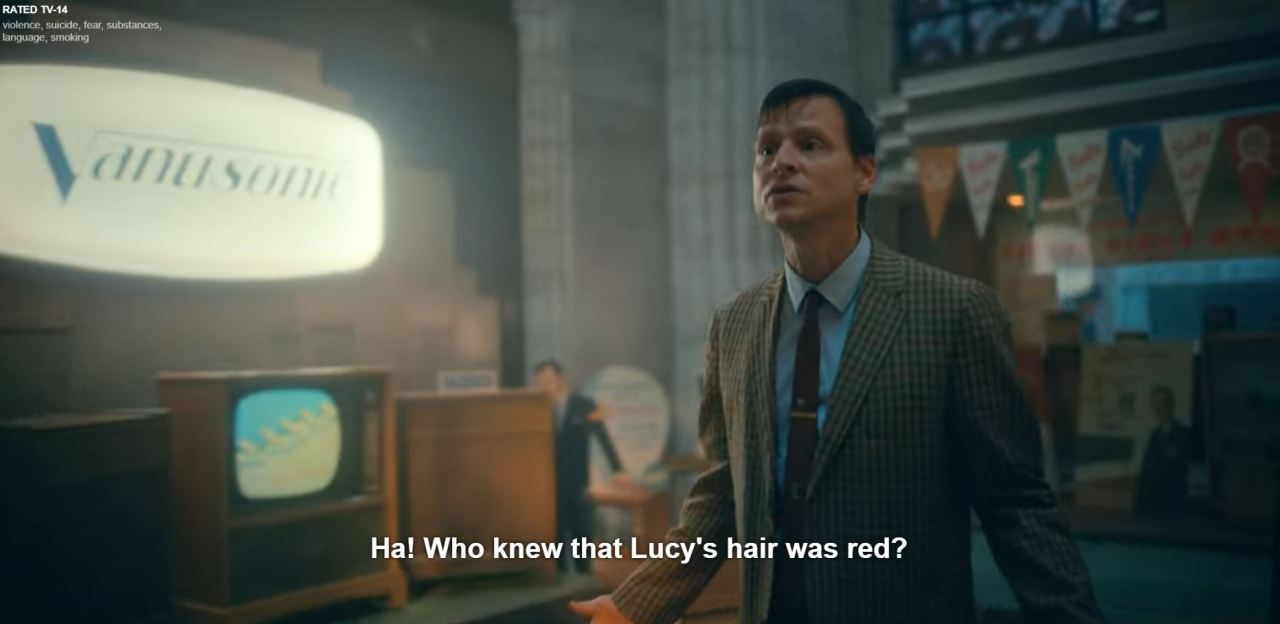
In the first episode of Season 2 of THE UMBRELLA ACADEMY on Netflix, a Dallas appliance salesman (Kevin Rankin) in 1960 is pitching the new SilverTone Omega model Television Set with ColorVision! He remarks:
“Ha! Who knew that Lucy’s hair was red?”
The Umbrella Academy is a work of fiction based on a popular comic book, so historical accuracy cannot be relied upon. In early 1960, there were about 500,000 color television sets sold in the United States, most manufactured by RCA. RCA was the parent company of NBC, so the peacock network took the lead in color broadcasting while CBS was hoping to strike out on their own, but lagging behind.

Although it is possible that one of Lucille Ball’s color films was aired on television before mid-1960, it was very rare for films (even color ones) to be aired in color. Ball’s first network prime time appearance in color was on a November 1962 episode of “The Danny Kaye Show” on CBS. Viewers of the program were treated to TWO redheads in glorious color.

In 1962, her own series for the same network, “The Lucy Show” was filmed and aired in black and white. Starting in season two Ball paid additional fees to have the series shot in color, but even then CBS still declined to air it in color. Lucy wasn’t seen in color on her own television show until September 1965!
So would a TV salesman in 1960 know that Lucille Ball’s hair was red? Possibly, but not likely by watching television!
-
NATIONAL HAWAII DAY!
JULY 5th

National Hawaii Day is observed annually every July 5th to celebrate becoming the 50th state of the US.

However, statehood was officially granted on August 21, 1959. It’s not known why the holiday is held on July 5th. Hawaii holds the distinction of being one of four states that were once independent nations, along with California, Texas, and Vermont.

Statehood bills for Hawaii were introduced into the US Congress as early as 1919. Additional bills were introduced in 1935, 1947 and 1950. In 1959, the US Congress finally approved the statehood bill, the Hawaii Admission Act. This was followed by a referendum in which Hawaiian residents voted in support of statehood and on August 21, 1959 (the third Friday in August), President Dwight D. Eisenhower signed a proclamation making Hawaii the 50th state.

In 1940′s Dance, Girl, Dance, Lucille Ball did the Hula, a dance developed in Hawaii by the Polynesian settlers.

Hawaii was a cherished get-away spot for the Arnaz family to escape from the pressures of Hollywood.
In 2007, Lucie Arnaz remembered their trips to Hawaii fondly:
“It was before my parents were divorced and the time when they were at their happiest. No arguing, no work to take them away, and they just loved being there and with each other.”

In “Lucy Gets Ricky On The Radio” (1951), Lucy has trouble remembering whether Alaska and Hawaii are states or not. At the time, both were territories working towards statehood.

Hawaii was also mentioned on “I Love Lucy” in “Ricky’s Hawaiian Vacation” (ILL S3;E22) in 1952.

Despite the episode’s title, the closest Ricky and the gang get to Hawaii is the living room!

It is reported that in 1954, before television was widely available in Hawaii, Hilo High School put on a sanctioned “I Love Lucy” play!

“I Love Lucy – The Play” was written by Hollywood dramatist Christopher Sergal in 1953. Act 1 opens in their messy living room, based on the TV show’s eighth episode, “Men Are Messy.” Lucy and Ricky argue over finances. Lucy changes the subject by wanting to look up Ricky’s horoscope, from “The Séance.” She does this to encourage Ricky to ask Mr. Littlefield, owner of the Tropicana nightclub, for a raise (from “Ricky Asks for a Raise”). Peggy and Arthur, “The Young Fans” are also in the cast. Later, Mr. Littlefield comes over to the messy apartment and wonders how Ricky can manage the Tropicana if he can’t manage his own wife.

It wasn’t until December 1952 that television began broadcasting in Honolulu. It spread to Maui and the Kona Coast two years later. Several students in the 1954 play had to drive to a home in Waimea to watch the show for the first time. The sister of a Hilo High School teacher living in Hollywood met with the publicity manager for Lucy and Desi and told them about the approaching production. Lucille Ball was reportedly “thrilled,” and asked for pictures of the Hilo High School cast. The “I Love Lucy” senior play had four daytime student performances and one night showing for the community. It was also staged at the Kilauea Military Reservation. The Arnazes sent them a congratulatory telegram.
Reviewer Thelma Olival in the Hilo Tribune Herald wrote,
“If you want to laugh until tears run down your cheeks and your sides ache go see ‘I Love Lucy,’ the hilarious comedy production by Hilo High School’s senior class. The cast literally had its audience rolling in the aisles.”

In 1957 Lucy, Desi and their two young children vacationed in Kona. Students at Hilo High School sent them lei and a corsage to the Kona Inn. Principal Harry Chuck said that these gifts were sent as a token of appreciation to the Arnazes since they were the only “outsiders” who had ever sent a good-luck message to the school prior to a student production. Skip Lambert remembered seeing them when he was 12 at the Kailua pier.
“Lucy had walked from the hotel to the pier to greet Desi after a day of sport fishing, with her two small kids in tow. There was nothing ‘movie star-ish’ about them, but I remember Lucy was the palest Caucasian woman I had ever seen!”

In “Lucy Gets the Bird” (TLS S3;E12) in 1964, the episode opens with Lucy and Viv collecting trading stamps. Viv wonders if they have enough to get to Hawaii. Lucy says they have enough to get as far as Harrisburg, Pennsylvania.

Also in 1964, The New York World’s Fair declared August 31st “Lucy Day”. Ball visited the Hawaii Pavilion on her whirlwind tour of the Fair.

Lucy and Vivian eventually go on a cruise to Hawaii in a 1971 episode of “Here’s Lucy.”

The two-parter was titled “Lucy Goes Hawaiian” and featured Gale Gordon, Desi Arnaz, Jr., and Lucie Arnaz.

In both 1954 and 1971, Lucy gets to sing and dance the hula and “A Hawaiian War Chant” is heard. Unlike many television shows of the period, no actual filming was done in Hawaii. Even the cruise ship was created on a soundstage.

In 1977, Lucille Ball appeared on “The Don Ho Show” filmed in Hilo, Hawaii, and aired on ABC TV.

Hawaii was mention several times on the short lived “Life With Lucy” (1987). In the first episode, Curtis had just returned from vacationing there and in the second episode guest star John Ritter says that his wife is in Hawaii with the kids. In an un-aired episode, Leonard plans to use his vacation from M&B Hardware to go to Hawaii and lie on the beach.

Hawaii is for the birds!

-
IT HAPPENED LAST NIGHT: LUCY & THE BOMPS!
by Earl Wilson, August 19, 1950


Lucille Ball wanted to keep Desi home and off the road so she petitioned for him to play her husband on radio’s “My Favorite Husband”. The network balked and Richard Denning got the role instead. When it came time to transfer the show to television, Lucy made the same demand. Now a radio star in her own right, she was able to convince the network – nervous about America believing an ‘All-American girl’ like Lucy would be married to a Latin bandleader – to give them a chance to prove it! The Arnazs’ built a comedy and musical act and took it on the road. When the show got to the Roxy in New York City, syndicated columnist Earl Wilson tagged along and wrote the following feature, which appeared on August 19, 1950. Coincidentally, the Roxy was also the theatre where Desi Arnaz was performing when he wed Lucille Ball in 1940.
[NOTE: Although the text of Wilson’s article is repeated below verbatim, the photos and footnotes were added for editorial consideration.]

Lucille Ball has been one of our most appreciated movie actresses for quite a while, but it was seeing her do a bump on the stage that made me really come to realize how talented she is.

It was after she’d done her clever act with husband Desi Arnaz at the Roxy that I talked to the flamin’ redhead about it.

“Wasn’t that a bump?” I asked her, as we got into a cab and pulled away from the stagedoor. I wanted to be sure, because some snooty actresses wouldn’t want it thought that they ever did a bump.“That was a married woman’s refined version of a bump.”

Lucille was sitting back in the cab, exhausted from several shows that day, and clamoring to be taken somewhere to see a show. She said she had been entertaining all day and now she wanted to be entertained for a change.

“Did you say refined?” Desi looked across the cab at her. I was between them. “Any harder you do it and you will knock my hot off,” he said in his charming accent. (1)

At Desi’s urging, she told me a story showing that doing the bump is for her not new. It seems that once she made a picture for Eric Palmer called Dance, Girl, Dance. (2)
“He was telling me, ‘Those bomps. Don’t do those bomps bad or the sansors will keep the picture.’
“So I was doing a very tame dance, not bumping at all. I had on a 27-pound dress, silver lame, with bugle beads, and it rolled from side to side when I shook.
“Durin’ a scene, Palmer jumped up and said, ‘Oh, oh, that was a bomp. I told you no bomps.’

“I went up to him and I said, ‘Mr. Palmer, that was not a bomp. THIS is a bomp.’ “And I bumped and I wrapped those 27 pounds of beads right around his neck!”

It’s a pleasure to talk to two such honest, earthy people after listening to some others who are always posing. A lot of people are astonished that they are celebrating their 10th wedding anniversary because, as Desi points out, “Everyone said it wouldn’t last a month.” “And WE didn’t think it would last a week,” Lucille said. (3)
Being romantically inclined, I asked for the details which most everybody must have forgotten by now but the participants themselves.
“Where did you get married?” I asked Desi.

“The Byram River Beagle Club, at Greenwich, Conn.,” Lucille said. (4)
“Thank you, I can never say that,” said her Cuban husband.
“Yes, you can. Try it,” Lucille said.

“The By-ram River Bee-gul Club,” Desi said dutifully and slowly.
“Faster!” commanded Lucille. (5)
“The Byver Regal Civer Club,” responded Desi.

“Oh, my,” said Lucille, “We were married by Judge John J. O’Brien. He’s the one who married Tommy Manville so many times.” (6)

Although Desi missed a show at the Roxy, where he was then appearing, to get married, he remembers, just as vividly, how on his wedding night he woke up the bride about 5 A.M. and demanded that she get him a glass of water. The funny thing is that she did.

“About 9 o’clock she woke me up,” Desi recalls, “and she said ‘Listen, you—, the next time you want a glass of water you get it yourself!’” (7)
Desi explains that he’s never made such a request since.

Desi and Lucille have formed their own company which they call Desilu Productions, this being a combination, of course of their two first names. “First time I ever got top billing,” Desi says.

They plan to do concerts, radio, television and movies together. Lucille comes from Butte, Mont., and, as everybody knows, has red hair. (8)
Lucille made up a description of herself around which a movie will be made. The title which describes her so accurately is “Blazing Beulah From Butte,” and we figure it ought to get the money. (9)
Never underestimate that Desi.

When they were getting married it appeared that she might not be able to because of a commitment to Harold Lloyd.
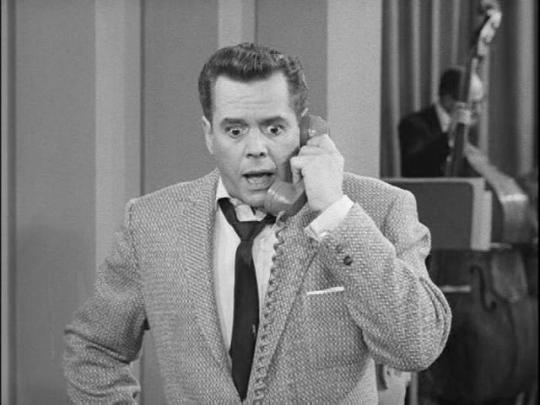
Desi called Lloyd from New York and defiantly announced to him that Lucille couldn’t be available that week, as he was marrying her. “Y-yes, D-desi, c-can she be back next k-weeek?” stammered Lloyd, who never does. (10)
Desi is pretty masterful; when he speaks, to Lucille he is her master’s voice.
FOOTNOTES
(1) The ‘bomps’ discussed are undoubtedly from the “Cuban Pete / Sally Sweet” number, where Lucy gyrates her hips while singing “Chick-Chicky-Boom Chick-Chicky-Boom.” The routine was repeated (with ‘bomps’ included) on “I Love Lucy” in “The Diet” (ILL S1;E3) in October 1951.
(2) The article consistently mis-spells Erich Pommer as ‘Eric Palmer.’ Pommer was the producer of Lucille Ball’s 1940 film Dance, Girl, Dance at RKO.
(3) Lucy and Desi’s marriage lasted twenty years, from 1940 to 1960, although Lucille divorced Desi in the mid-1940s, Lucy never signed the paperwork. After their second divorce was final, Lucy revealed that Desi was unfaithful and a drinker, and that they were no longer compatible. Lucy charged “mental cruelty” and told the court of Desi’s temper tantrums. Some years later, she described the reason for the split as “the same old booze and broads.”
Both Ball and Arnaz remarried, although they stayed friends and later admitted that they had always loved one another.
(4) Lucy and Desi married in Connecticut due to its shorter waiting period on licenses and blood tests. The Byram River Beagle Club in Greenwich was originally a Hunt and Kennel Club that became a speakeasy during Prohibition and after that a supper club. It was a favorite hangout of baseball great Babe Ruth. A single-family home now stands on the property. In April 1952, “I Love Lucy” aired an episode called “The Marriage License” (ILL S1;E26) that was largely set in Greenwich and mentioned The Byram River Beagle Club, although no scenes were set there because Lucy purposely left Ricky’s wallet at home and they ran out of gas!
(5) In “The Marriage License” Ricky also had trouble pronouncing the name. On “I Love Lucy” making fun of Ricky’s English was a usual source of comedy – mostly by Lucy – just as it appears to be here – in 1950.
(6) Thomas Franklyn Manville, Jr., known as Tommy Manville (1894-1967), was a Manhattan socialite and heir to the Johns-Manville asbestos fortune. He was a celebrity in the mid-20th Century due to both his inherited wealth and his record-breaking 13 marriages to 11 women, which won him an entry in the Guinness Book of World Records. At the time of this interview, however, Manville was only on his 6th wife! The termination of his marriages usually resulted in gossip, widespread publicity, and huge cash settlements.
At the time of his death it was estimated that Manville spent more than $1.25 million on divorce settlements.
(7) This exchange (with slight variation) was later worked into “I Love Lucy”!
(8) At the start of her career – and apparently well into 1950 – Lucille Ball purported to have been born in Butte, Montana, despite her actual birthplace being Jamestown, in upstate New York. Ball (who then went by the name Diane Belmont) thought it sounded more interesting and exotic.
(9) Despite the alliterative title, “Blazing Beulah from Butte” was never made, perhaps because shortly afterwards Ball admitted her true birthplace. “Blazing Beulah from Jamestown” doesn’t have quite the same ring. It’s also likely that this was a clever bon mot on Desi’s part to create a more colorful interview.
(10) Comic actor and director Harold Lloyd had put Lucille under contract for his film A Girl, A Guy, and A Gob, to be filmed in 1940. There was some speculation that marrying Arnaz would interfere with the shooting schedule.
TRIVIA

While Lucy and Desi were at the Roxy, the theatre was also showing Night and the City, which had premiered there on June 5, 1950. At this time it was common for a larger entertainment venues like the Roxy to present both a stage show and a first run film. Night and the City starred Richard Widmark, who Lucy and Desi later convinced to guest-star on “I Love Lucy” in “The Tour” (ILL S4;E30) in May 1955.

In “Return Home From Europe” (ILL S5;E26), Ricky gets a long-distance telephone call from the manager of the Roxy, Mr. Rothafel, offering him a job, if he can get back to New York immediately. In reality, Rothafel was the name of the founder of the Roxy, Mr. Samuel ‘Roxy’ Rothafel. Rothafel died in early 1936, however, so this was probably Desi’s way of honoring him.

Earl Wilson was mentioned on “I Love Lucy” in “The Fox Hunt” (ILL S5;E16). While trying to wangle an invitation to Sir Clive’s country manor,
Lucy makes up a story about the Mertzes meeting an Earl in the hotel lobby. When Sir Clive rattles off the names of some Earls to jog her memory, she fibs that he was just promoted from Assistant Earl, the Earl of Wilson, who canceled because he’s got the gout! Lucy’s imaginary Earl is actually a reference to Earl Wilson (1907-87), a journalist and television panelist of the time. His nationally syndicated column frequently mentioned Lucy and Desi.

In 1974, Lucy strikes a pose for Wilson during her promotional tour for Mame.
-
LUCY: A TRIBUTE Closed!
August 17, 2015

On August 17, 2015, Universal Studios Florida (USF) closed their LUCY: A TRIBUTE exhibit and gift shop.

The exhibit first opened its doors in May 1992, two years after the Orlando theme park / studios debuted. For the first two years of USF’s operation the building housed Silver Screen Collectibles, a movie-themed gift shop and collectibles store.

A similar attraction had previously opened at Universal Studios Hollywood in 1989. It too, closed its doors permanently in 1997.

Universal had so much memorabilia left over that they decided to open a similar exhibit on the East Coast.

In addition to the many costumes, portraits, personal letters and jewelry worn by Lucy, the collection also featured all five of her shows’ Emmys on display.
Some of the Emmys have disclaimers that the Lucille Ball Estate granted Universal Studios permission for the recreations.

The exhibit featured a scale model of the sound stages where “I Love Lucy” was filmed.

The museum also had interactive elements like The “I Love Lucy” Quiz.

The exhibit was a combination of personal and professional memorabilia.


All good museum experiences end at the gift shop!

After the exhibit closed, many of the items found their way into the collection of the Lucy-Desi Museum in Jamestown, New York.

The building was transformed into a Hello Kitty / Betty Boop themed gift shop. Notice the heart embossed in the building’s trim remains.

A reproduction of Lucille Ball’s Walk of Fame Star is still part of the pavement outside the exhibit.

You can still find Lucy impersonators roaming the park, despite the closure of the exhibit.


The only remnant of Lucy in the building today is on the ‘make a penny’ machine, which embosses your penny with the Lucy logo or a Vitameatavegamin bottle.

Lucy merchandise can still be found at The Film Vault Motion Picture Memorabilia gift shop, a short walk away.

[some photos credit Alicia Stella of Orlando Park Stop and World of Micah]
-
A FUNNY THING HAPPENED ON THE WAY TO THE SITCOM
August 17 – 21, 2020

The series is presented on BBC Radio 4 in five 14-minute segments over five days: August 17-21, 2020.
Synopsis: The onscreen pairing of Lucille and Desi is brilliant, but the American Network is doubtful.
Written by Gregg Oppenheimer based on his book “Laughs, Luck and Lucy”
Directed by Martin Jarvis
Produced by Rosalind AyresCAST

Anne Heche (Lucille Ball / Lucy Ricardo) made her TV debut playing twins Vicki and Marley on the soap “Another World” from 1987 to 1991. Since then she has mixed TV roles with film and Broadway with equal success. Ironically, she auditioned for the role in I’m Not There (2007) that went to Cate Blanchett, who has been mentioned as the next person to play Lucille Ball on film. In 2000 Heche won a Lucy Award (named for Lucille Ball) for developing and directing the HBO movie If These Walls Could Talk 2.

Wilmer Valderrama (Desi Arnaz / Ricky Ricardo) got his start on TV playing Fez in “That ‘70s Show”. In a 2001 episode of the series, Fez dreamed he was Ricky Ricardo married to Donna (Laura Prepon). In 2008 he traveled to Lucille Ball’s hometown of Jamestown to present “A Tribute to Desi Arnaz” as part of Lucy-Desi Days. Valderrama (born in Venezuela) said he’s always been inspired by Arnaz as a performer and Hispanic American. I think ‘I Love Lucy’ was one of the most influential pieces of work in any decade. He claims that watching sitcoms like “I Love Lucy” helped him learn English. He said it was exciting to see a Hispanic actor established on television so many decades ago and to see someone who looked and sounded a little like himself.

Jared Harris (Jess Oppenheimer) is the son of legendary Irish actor Richard Harris. In 1966, when Jared was five years old, his father and Lucille Ball both guest starred on the new “Milton Berle Show”. In addition to his many film roles, he was part of the award-winning cast of “Mad Men” and the recently acclaimed “Chernobyl.”

Alfred Molina (Harry Ackerman) was born in England in 1953 but first came to the attention of film-goers through his small role in 1981′s Raiders of the Lost Ark. He has since been successful in both comedy and drama, as well as doing voice-over for animation. Molina is now a hit with a new generation of movie fans as Doc Ock in the Spider Man films. In “Feud: Bette and Joan” he played film director Robert Aldrich, who started out as second AD on Lucille Ball’s 1942 film The Big Street.

Mike McShane (Hubbell Robinson) was born and raised in the United States, but has acted extensively on stage and screen in Great Britain. Fans of TV’s “Seinfeld” may recognize him for his two appearances as Franklin Delano Romanowski. In 2006/07 McShane voiced the ravenous plant in the London stage revival of Little Shop of Horrors. The musical famously includes a reference to Lucille Ball.

Matthew Floyd Miller (Don Sharpe) reprises the role he played in the LA TheatreWorks production of “A Funny Thing Happened on the Way To the Sitcom” in 2018.

Janine Barris (Betty Garrett) was raised in Fairlawn, New Jersey. She is best known for playing Heather in the film Crazy Stupid Love (2011). Barris’ great uncle was George Barris, who was famous for photographing Marilyn Monroe, a star Lucy Ricardo emulated and even dressed as on one occasion. Janine Barris plays Betty Garrett, who appeared with Lucy in 1978′s “Gene Kelly: An American in Pasadena”.

Stacy Keach (William Frawley / Fred Mertz) is an acclaimed stage and screen actor who won a Golden Glob and an Emmy nomination for playing Ernest Hemingway on television in 1988. He shared the screen with Lucille Ball at the 1984 and 1986 Emmy Awards telecasts. He is currently seen on “Blue Bloods” and “Man With A Plan”. He is probably best known for playing “Mike Hammer” from 1984 to 1987.

Anna Mathias (Vivian Vance / Ethel Mertz) was born in San Francisco, California, and fittingly made her screen debut on a 1975 episode of “The Streets of San Francisco”. In 1985 she worked with Lucille Ball’s friend and colleague George Burns. She now concentrates on voice-over work.
Matthew Wolf (Marc Daniels)
Mark Sullivan (Richard Denning)
André Sogliuzzo (William S. Paley)
Others: Anna Lyse Erikson, Allegra Riggio

The book was first published in 1996. It took Gregg Oppenheimer seven years to write. An audio version was first presented in Los Angeles in 2015.

And then again in 2018.

It was recorded for audio in front of a live audience. Starring (in alphabetical order): Ron Bottitta as William S. Paley, William Frawley, and others; Seamus Dever as Jess Oppenheimer; Sarah Drew as Lucille Ball; Abigail Marks as Vivian Vance, Betty Garrett, and others; Matthew Floyd Miller as Don Sharpe, Bob LeMond, and others; Rob Nagle as Hubbell Robinson and others; Oscar Nunez as Desi Arnaz; and Nick Toren as Harry Ackerman.

Author Gregg Oppenheimer with Lucille Ball.
LISTEN TO EPISODE ONE BY CLICKING HERE!
-
GLORIA BLONDELL
August 16, 1910

Was born to theatrical parents in New York City in 1910.
She once said, “[S]ome member of my family has been in the theater ever since the time of Richard the Lionhearted.” She is the younger sister of Joan Blondell, also an actress. First appearing on Broadway in the 1935 Three Men on a Horse. On radio, she did 26 episodes of seven different series.

Coincidentally, she made her silver screen debut with The Daredevil Drivers (1938), playing a character named Lucy! Even more coincidental, Dick Purcell played a character named Bill Foster, which was later the name of her character’s husband on “I Love Lucy”!

The only time she appeared together with her older sister Joan was in The Model Wife (1941), although Gloria was uncredited.

Gloria saw most of her work in the 1940s as the voice of Disney’s ‘Daisy Duck’ for Disney. Blondell did six short films as Donald’s girlfriend.

In October 1949, she joined future “Lucy” actors Florence Bates, Jerry Hausner, Hans Conried, Benny Rubin, and Mary Shipp in the second TV episode of “Obler Comedy Theatre”.

Blondell’s only collaboration with Lucille Ball was in “The Anniversary Present” (ILL S2;E3) in 1952. Blondell plays neighbor Grace Foster, who, with her husband Bill, also lives at 623 East 68th Street. Grace works for Josef Jeweler and agrees to help Ricky get a discount on pearls for Lucy’s anniversary present. Lucy mis-interprets their communications and believes them to be having an affair!

Grace Foster was first mentioned in “The Gossip” (ILL S1;E24) where her jealous husband Bill makes an appearance (played by Richard Reeves), but Grace is only mentioned – as a ravishing blonde! In “The Anniversary Present”, Bill is out-of-town and Grace has become a brunette. Here the Fosters are live in apartment 3B, which is the original number of the apartment the Ricardos get from switching with the Bensons at the end of season two. In “The Anniversary Present”, the Fosters live in apartment 2A!

Also in this episode is ubiquitous TV character actor Herb Vigran as Jule, Ricky’s music union agent. Coincidentally, Vigran was also in the cast of “The Life of Riley,” playing Riley’s co-worker, Muley. Vigran and Gloria Blondell shared five episodes, but (just as on this episode of “I Love Lucy”) never had any scenes together! Blondell did 54 episodes of the NBC sitcom starring William Bendix between 1953 and 1958.

In addition to Blondell and Vigran, “The Life of Riley” also featured “Lucy” actors Mary Jane Croft, Richard Deacon, Vivi Janis, George O’Hanlon, Nancy Kulp, Dayton Lummis, James Burke, Florence Lake, Mary Ellen Kay, Benny Rubin, Ray Kellogg, Howard McNear, Norman Leavitt, Pierre Watkin, and Bobby Jellison.

Also in 1952, Blondell had an uncredited role in Don’t Bother To Knock starring Marilyn Monroe and Richard Widmark. Other “Lucy” actors in the cast include Verna Felton, and Lurene Tuttle.

In 1953, Blondell joined Hans Conried (one of Lucille Ball’s favorite actors) and Bob Jellison in the sci-fi comedy The Twonky.

In 1957, Blondell had an uncredited role in the Walter Brennan film God Is My Partner. The cast included “Lucy” veterans Ellen Corby, Charles Lane, Joe Mell, Nancy Kulp, and Norman Leavitt.

In 1965, as after Vivian Vance left “The Lucy Show,” Lucille Ball tried out Gloria’s sister Joan as a regular character. It lasted two episodes: “Lucy and Joan” and “Lucy the Stuntman”. Ball and Blondell did not get along off stage, resulting in heated arguments. After the final shot, with the studio audience still present, Lucy made a ‘flushing’ motion in Blondell’s direction. Blondell shouted, “Fuck you, Lucille Ball.” The two never reconciled.

Gloria married film producer Albert Broccoli (of James Bond fame) on July 26, 1940; they divorced August 7, 1945. On September 14, 1946, she married Victor Hunter in Monterey, California. They remained married until his death in 1980.
Gloria and Victor had one premature daughter, who died at birth. Gloria also nearly died from blood loss, and her life was only saved by an emergency hysterectomy.
She died at age 70 in 1986 from cancer. Despite erroneous reports, she was not interred in Forest Lawn Memorial Park Cemetery but cremated.

-
Subscribe
Subscribed
Already have a WordPress.com account? Log in now.
 Papermoon Loves Lucy