-
BARNEY PHILLIPS
October 20, 1913

Barney Phillips was born Bernard Philip Ofner in St. Louis, Missouri. He went on to become a recognizable character actor on radio, television, and films, mostly playing hard-edged law enforcement officials. After graduating college in 1935, he moved to Los Angeles.

Interested in acting, he got a small part in western called Black Aces in 1937, but it did not immediately lead to other roles.
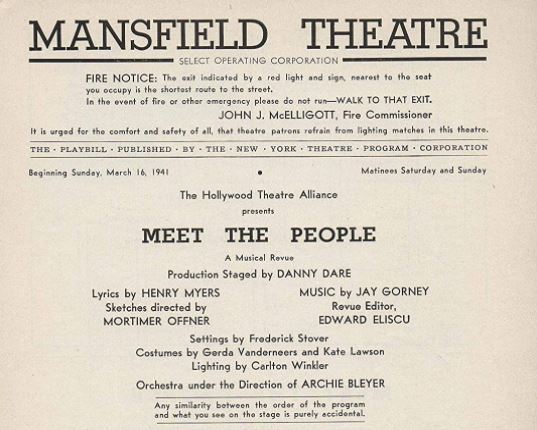
In 1940, he was in Meet the People on Broadway. He shared the stage with Jack Albertson, Jack Gilford, and Nanette Fabray (stage debut), all of whom would also work with Lucille Ball. This musical has nothing to do with the identically titled 1944 film featuring Lucille Ball.
Phillips enlisted in the United States Army in July 1941, serving in the signal corps during World War II.

He made his TV debut on “Dragnet” in 1951 as Sergeant Ed Jacobs. He had also done the show on radio. After Barney disappeared from the show after the first season, it was widely believed that he had died. Apparently viewers confused him with Barton Yarborough, who had died early in the first season. He took out an ad in the newspaper assuring people that he was alive and well and available to work.

In 1952 and 1953 he did two episodes of “Our Miss Brooks” filmed at Desilu Studios. Due to his work on the popular “Dragnet”, both times he played law enforcement officials.

His one and only time acting with Lucille Ball was on “I Love Lucy” in “Ricky’s European Booking” (ILL S5;E10), playing Mr. Jamison, the man from the District Attorney’s Office investigating Lucy and Ethel’s raffle for Ladies Overseas Aid.

In March 1958, he did a single episode of Desilu’s helicopter series “Whirlybirds”. The episode marked Pernell Roberts’ TV debut.

In May 1961, Phillips returned to the Desilu backlot to film an episode of “The Andy Griffith Show” where he was on the other side of the law in “Barney Gets His Man.”

In January 1963, he returned to law enforcement and Desilu to film an episode of “The Dick Van Dyke Show” titled “The Cat Burglar.”

In March 1963 Phillips did a single episode of “The Untouchables” one of Desilu’s most successful yet controversial series.

Of all his credits, he is best remembered as the Venusian invader masquerading as soda jerk Haley, behind the diner counter of “The Twilight Zone’s” “Will The Real Martian Please Stand Up?” in 1961. The final moment, in which he removes his cap revealing a third eye, remains one of the most memorable moments in TV history. He continued doing episodic television for the next twenty five years, with his last roles on “Lou Grant” and “The Dukes of Hazard” in 1982.

His final screen role came posthumously in Beyond Reason, a film written, directed and starring Telly Savalas which was filmed in 1979 and not released until 1985. In a welcome change, he played a doctor.
In 1941 he married actress Marie DeForrest. He died on August 17, 1982 at age 68.

-
LUCY & DESI: DIVORCED!
October 16, 1944

On this date in 1944, Lucille Desiree Ball was granted a divorce from Desiderio Alberto Arnaz in a Los Angeles Superior court. The two had separated on September 6, 1944. Ball’s mother, Desiree “Dede” Ball, was in court to substantiate Lucille’s accusations. Arnaz was then in the military, serving as a Staff Sergeant in the US Army. Ball accused Arnaz of walking out on her and making her “a nervous wreck” interfering with her professional life. Ball requested no alimony.


The New York Daily News reported that Lucille Ball went directly from the courtroom to work on her ironically titled MGM film Without Love.

Without Love starred Katharine Hepburn and Spencer Tracy. Filming had begun on October 11 and continued into December 1944. The film premiered in March 1945 and opened wide in May.

While Ball’s divorce decree was in the news, Ball’s film Meet The People was finishing its run in cinemas. The film had premiered in Los Angeles on June 1, 1944, and was released nationally on September 7th.

The Bakersfield Californian used a United Press release that concentrated on their couple’s financial difficulties. It also recalls a previous interview where Ball off-handedly remarked that she was surprised that her marriage had lasted for four years. The headline (created by the Californian, not UP) called US Army Staff Sergeant Desi Arnaz simply the “Cuban”.

Another California newspaper printed a longer version of the UP story, with a headline that also reduced Lucille Ball to the color of her hair! It also includes the fashion note that Ball wore “a bright turquoise coat that set off her hair.”


The book Desilu by Coyne Sanders and Tom Gilbert states that Lucy and Desi spent the night before the divorce together, voiding the interlocutory decree. In later interviews, Lucille merely said she didn’t sign the final papers.

Desilu also gives a possible motivation for Ball’s legal action, as well as inferring that it might have been retaliatory and that she never had any intention on finalizing the divorce. As history tells, the marriage continued until April 1960, when the couple ended their marriage for good. Although they never reunited and both remarried, they remained lifelong friends and it is said that they were the loves of each others’ lives.

-
LIZ SELLS DRESSES
October 16, 1948

“Liz Sells Dresses” is episode #13 of the radio series MY FAVORITE HUSBAND broadcast on October 16, 1948.
Synopsis ~ Liz accidentally returns a dress to a more expensive store than where she bought it, and makes money on the deal. She then decides to go into business buying dresses at one store and returning them at another.
Note: This episode was aired before the characters names were changed from Cugat to Cooper. It was also before Jell-O came aboard to sponsor the show and before the regular cast featured Bea Benadaret and Gale Gordon as the Atterburys.

“My Favorite Husband” was based on the novels Mr. and Mrs. Cugat, the Record of a Happy Marriage (1940) and Outside Eden (1945) by Isabel Scott Rorick, which had previously been adapted into the film Are Husbands Necessary? (1942). “My Favorite Husband” was first broadcast as a one-time special on July 5, 1948. Lucille Ball and Lee Bowman played the characters of Liz and George Cugat, and a positive response to this broadcast convinced CBS to launch “My Favorite Husband” as a series. Bowman was not available Richard Denning was cast as George. On January 7, 1949, confusion with bandleader Xavier Cugat prompted a name change to Cooper. On this same episode Jell-O became its sponsor. A total of 124 episodes of the program aired from July 23, 1948 through March 31, 1951. After about ten episodes had been written, writers Fox and Davenport departed and three new writers took over – Bob Carroll, Jr., Madelyn Pugh, and head writer/producer Jess Oppenheimer. In March 1949 Gale Gordon took over the existing role of George’s boss, Rudolph Atterbury, and Bea Benaderet was added as his wife, Iris. CBS brought “My Favorite Husband” to television in 1953, starring Joan Caulfield and Barry Nelson as Liz and George Cooper. The television version ran two-and-a-half seasons, from September 1953 through December 1955, running concurrently with “I Love Lucy.” It was produced live at CBS Television City for most of its run, until switching to film for a truncated third season filmed (ironically) at Desilu and recasting Liz Cooper with Vanessa Brown.
MAIN CAST

Lucille Ball (Liz Cugat) was born on August 6, 1911 in Jamestown, New York. She began her screen career in 1933 and was known in Hollywood as ‘Queen of the B’s’ due to her many appearances in ‘B’ movies. “My Favorite Husband” eventually led to the creation of “I Love Lucy,” a television situation comedy in which she co-starred with her real-life husband, Latin bandleader Desi Arnaz. The program was phenomenally successful, allowing the couple to purchase what was once RKO Studios, re-naming it Desilu. When the show ended in 1960 (in an hour-long format known as “The Lucy-Desi Comedy Hour”) so did Lucy and Desi’s marriage. In 1962, hoping to keep Desilu financially solvent, Lucy returned to the sitcom format with “The Lucy Show,” which lasted six seasons. She followed that with a similar sitcom “Here’s Lucy” co-starring with her real-life children, Lucie and Desi Jr., as well as Gale Gordon, who had joined the cast of “The Lucy Show” during season two. Before her death in 1989, Lucy made one more attempt at a sitcom with “Life With Lucy,” also with Gordon.
Richard Denning (George Cugat) was born Louis Albert Heindrich Denninger Jr., in Poughkeepsie, New York. When he was 18 months old, his family moved to Los Angeles. Plans called for him to take over his father’s garment manufacturing business, but he developed an interest in acting. Denning enlisted in the US Navy during World War II. He is best known for his roles in various science fiction and horror films of the 1950s. Although he teamed with Lucille Ball on radio in “My Favorite Husband,” the two never acted together on screen. While “I Love Lucy” was on the air, he was seen on another CBS TV series, “Mr. & Mrs. North.” From 1968 to 1980 he played the Governor on “Hawaii 5-0″, his final role. He died in 1998 at age 84.
Ruth Perrott (Katie, the Maid / Sales Girl) was also later seen on “I Love Lucy.” She first played Mrs. Pomerantz, a member of the surprise investigating committee for the Society Matrons League in “Pioneer Women” (ILL S1;E25), as one of the member of the Wednesday Afternoon Fine Arts League in “Lucy and Ethel Buy the Same Dress” (ILL S3;E3), and also played a nurse when “Lucy Goes to the Hospital” (ILL S2;E16). She died in 1996 at the age of 96.
Bob LeMond (Announcer) also served as the announcer for the pilot episode of “I Love Lucy”. When the long-lost pilot was finally discovered in 1990, a few moments of the opening narration were damaged and lost, so LeMond – fifty years later – recreated the narration for the CBS special and subsequent DVD release.
GUEST CAST

John Hiestand (Cory Cartwright) served as the announcer for the radio show “Let George Do It” from 1946 to 1950. In 1955 he did an episode of “Our Miss Brooks” opposite Gale Gordon.

Hans Conried (Mr. Quigley, Returns Clerk at Gordons) first co-starred with Lucille Ball in The Big Street (1942). He then appeared on “I Love Lucy” as used furniture man Dan Jenkins in “Redecorating” (ILL S2;E8) and later that same season as Percy Livermore in “Lucy Hires an English Tutor” (ILL S2;E13) – both in 1952. The following year he began an association with Disney by voicing Captain Hook in Peter Pan. On “The Lucy Show” he played Professor Gitterman in “Lucy’s Barbershop Quartet” (TLS S1;E19) and in “Lucy Plays Cleopatra” (TLS S2;E1). He was probably best known as Uncle Tonoose on “Make Room for Daddy” starring Danny Thomas, which was filmed on the Desilu lot. He joined Thomas on a season 6 episode of “Here’s Lucy” in 1973. He died in 1982 at age 64.

Bea Benadaret (Store Clerk at Gordons / Little Old Lady) was considered the front-runner to be cast as Ethel Mertz but when “I Love Lucy” was ready to start production she was already playing a similar role on TV’s “The George Burns and Gracie Allen Show” so Vivian Vance was cast instead. On “I Love Lucy” she was cast as Lucy Ricarodo’s spinster neighbor, Miss Lewis, in “Lucy Plays Cupid” (ILL S1;E15) in early 1952. Later, she was a success in her own show, “Petticoat Junction” as Shady Rest Hotel proprietress Kate Bradley. She starred in the series until her death in 1968.
In 1949, Bea Benadaret will play the regular role of Iris Atterbury, Liz’s best friend. The voice she uses for the Little Old Lady shopper is the same one she uses as Miss Lewis on “I Love Lucy.”

Frank Nelson (Floorwalker at Gordons) was born on May 6, 1911 (three months before Lucille Ball) in Colorado Springs, Colorado. He started working as a radio announcer at the age of 15. He later appeared on such popular radio shows as “The Great Gildersleeve,” “Burns and Allen,” and “Fibber McGee & Molly”. Aside from Lucille Ball, Nelson is perhaps most associated with Jack Benny and was a fifteen-year regular on his radio and television programs. His trademark was playing clerks and other working stiffs, suddenly turning to Benny with a drawn out “Yeeeeeeeeees?” Nelson appeared in 11 episodes of “I Love Lucy”, including three as quiz master Freddy Fillmore, and two as Ralph Ramsey, plus appearance on “The Lucy-Desi Comedy Hour” – making him the only actor to play two different recurring roles on “I Love Lucy.” Nelson returned to the role of the frazzled Train Conductor for an episode of “The Lucy Show” in 1963. This marks his final appearance on a Lucille Ball sitcom.

Sandra Gould (Store Clerk at Kramers / Shopper) is probably best remembered as the second actor to play Gladys Kravitz on “Bewitched” (1966-71). On “I Love Lucy,” she played Nancy Johnson in “Oil Wells” (ILL S3;E18) and makes a brief appearance as an alarmed strap-hanger in “Lucy and the Loving Cup” (ILL S6;E12). In 1962 she appeared in the fourth episode of “The Lucy Show” as a bank secretary.
THE EPISODE
ANNOUNCER: “Let’s look in on the Cugats and see what they’re doing. The house looks normal for this time of the morning. The breakfast table is set. The morning paper is on the table. Katie is out in the kitchen and — hey, wait a minute. There’s a sign pinned to the kitchen door. ‘Katie – Please don’t make any noise.’ There goes Liz Cugat tiptoeing into the kitchen.”
Liz chastises Katie for making noise, but Katie says it is just the bacon hissing in the skillet. Today is the day George looks at Liz’s checkbook.
KATIE: “It’s sort of like Blue Monday or Gloomy Sunday, isn’t it Mrs. Cugat.”
LIZ: “Worse. If George wakes up it will be Sickening Saturday.”Katie says her first husband Clarence wrote all the checks he wanted to and was never overdrawn – but he didn’t have an account at the bank.
KATIE: “Good old Clarence. I haven’t seen him in five years.”
LIZ: “What’s he doing?”
KATIE: “Ten years!”George wakes up and comes down for breakfast. Liz butters him up with sweet talk and a big kiss.
LIZ: “How do I kiss, George?”
GEORGE: “Like you are way overdrawn.”Liz explains a discrepancy in her checkbook by saying that she doesn’t like nines, so she makes them tens. George tries to understand Liz’s logic when it comes to arithmetic but it is hopeless.

George encounters an expense listed as “DICR” – Dress I Couldn’t Resist. Liz tells George she actually made money by not buying it at a more expensive store where it cost $20 more! She spent her invisible savings on a hat! Liz describes the dress:
LIZ: “It’s navy blue with white polka-dots. It’s got a little white collar and a sash at the back.”

Except for the sash, Liz might well be describing the iconic Elois Jenssen dress that would become identified with Lucy Ricardo on “I Love Lucy.” It became so recognizable, that when Lucy Carter had a garage sale in 1971, it was hanging among the treasures!
Liz tries turning on the water works, but George insists she return the dress, and Liz reluctantly agrees to do so.
At Gordons Department Store that afternoon, Liz encounters Cory Cartwright (John Heistand), her bachelor friend. The sales clerk (Bea Benadaret) tells Liz he’s been trying to make time with the store dummies!
Liz goes to the Returns Department and is greeted by a depressed and sniveling Mr. Quigley, who promises money “cheerfully” returned. He asks why Liz is returning the dress, but none of her reasons justify a refund. She confesses that a bank vice president checked her accounts told her to return it. She says she tried to kiss him to persuade him, but to no avail. Mr. Quigley (not knowing that man is her favorite husband, George) promises to refund her money if she will give up her life of crime! Liz goes along in order to get her refund and get out of there.
LIZ: “I promise. After all, there’s no future in it. Pretty soon every bank in the country will have a Dick Tracy television burglar alarm!”

“Dick Tracy” was a phenomenally successful comic strip, radio program, and film serial about the adventures of a square-jawed detective named Dick Tracy. It made its debut in 1931, created by Chester Gould, and lasted until 1977. In August 1948, the comic strip introduced the Teleguard, a portable, antenna-less television burglar alarm! The word ‘television’ does not mean broadcast TV but video cameras, much like the modern CCTV (Closed Circuit Television) cameras now commonplace across the world, including in banks. Liz actually has predicted the future!
Liz finally gets her refund and meets Cory for lunch.
CORY: “I’ve been in the lingerie department. I’ve seen every item in this store down to the foundation.”
Counting her refund, Liz realizes that she has received $20 more than she’s paid. She suddenly realizes that she’s mistakenly returned the dress to Gordons when she actually bought it at Kramers! After a moment of indecision on what to do, Liz decides to return to Kramers to buy more dresses!

This is similar to the plot of “The Business Manager” (ILLS4;E1), in which Lucy Ricardo realizes that she can balance her books by buying and selling groceries on credit for the entire building.
At Kramers, the Clerk (Sandra Gould) gets suspicious why she would buy two moer dresses of the same color and style. Liz facetiously says she’s one of the Andrews Sisters.
CLERK: “Which one are you? Patty, Maxine, or LaVerne?”
LIZ: “Neither. I’m their brother Dana.”
The Andrews Sisters were a very successful trio of singing sisters during World War II with 19 gold records and sales of nearly 100 million copies. The sisters began performing in the early 1930s when the Depression wiped out their father’s business. In 1937, the sisters scored their first big hit with “Bei Mir Bist Du Schoen.” In addition to “Boogie Woogie Bugle Boy,” their best-known songs included “Don’t Sit Under the Apple Tree” and “Rum and Coca Cola.” The trio officially broke up after the death of LaVerne in 1967, when a suitable replacement could not be found. Patty Andrews guest starred on “Here’s Lucy” as herself in 1969. The plot had Lucy Carter and her daughter Kim (Lucie Arnaz) stepping in for the other two singers for a charity show.
During a poker game in “Be a Pal” (ILL S1;E2), Lucy calls her two queens ‘sisters.’ When Fred looks at his newly-dealt hand he quips “You can tell your two Andrews Sisters not to wait up for LaVerne.”

Dana Andrews (1909-92) was not related to the Andrews Sisters, but was a successful actor. He had been in the Oscar-winning film The Best Years of Our Lives in 1946, and had three films released in 1948 alone. In 1961, Dana Andrews and Lucille Ball both presented awards on the “Bob Hope Sports Show.”
George feels guilty about asking Liz to return the blue dress, so he has come to Gordons to re-buy it for her. Meanwhile, Liz tries to get a refund from Mr. Quigley for the two dresses she’s bought at Kramers. Mr. Quigley has a nervous breakdown.
MR. QUIGLEY: “I should have never taken this job. I was so happy in ladies underwear!”
The Clerk notices that they ordered and 35 of the blue polka dot dresses and now they have 36. The jig is up! Mr. Quigley demands that Liz give him the money he refunded her and get out of the store.
On her way out, Liz encounters a Little Old Lady Shopper (Bea Benadaret again) who has seen Liz carrying the blue polka dot dresses and wants to buy one from her. She needs it to go to a dance.
OLD LADY: “We all went to Arthur Murray’s and learned the Lindy Crawl.”
LIZ: “You mean the Lindy Hop.”
OLD LADY: “Not the way I do it!”
Arthur Murray (1895-1991) was a ballroom dancer and businessman, whose name is most often associated with the chain of dance studios that bear his name. He was mentioned in Desi Arnaz’s song “Cuban Pete” and in “The Young Fans” (ILL S1;E20). One of the dances taught there was The Lindy Hop, a very popular during the swing era of the 1930s and ‘40s. Lindy was described as a jazz dance and is a member of the swing dance family.
Liz sells the dress to the little old lady for $59, making a profit of $20! She decides if she sold one, she can sell another, and develops a slick line of sales talk in order to sell the other dresses to customers in the store already!

Liz’s methodology (and Lucille Ball’s voice) is the same is it will be when she tries to sell the extra meat she mistakenly ordered for “The Freezer” (ILL S1;E29) to shoppers in a local butcher shop.
LIZ: (to Customer) “Hey lady, step in a little closer. You’re blocking traffic.”
SALES CLERK: “Hey! That’s my customer.”
LIZ (fast talking): “Get away kid, ya bother me. (To Customer) Honest Liz Cugat, the biggest used dress dealer in town. Gimme $39.50 and I’m losing money on the deal. Come back tomorrow and I’ll give myself a hot foot and have a fire sale!”Liz is approached by the indignant Floor Walker (Frank Nelson) who believes her to be a sales girl poaching customers from her co-workers. He directs her to go sell something to a gentlemen who just happens to be her husband George. So she won’t be recognized, Liz grabs a black hat with a veil.LIZ (in a Brooklyn accent): “I’m in mourning. It was a catastrophe. To say nothing of it being a tragedy.”
 The Floor Walker tells Liz to take the hat off and get back to work so Liz returns to her customer (George) wearing a lampshade on her head. Liz tries to sell George the same dress she tried to return. When George flatters the clerk’s figure, Liz smacks him!
Later, at home. George presents Liz with the blue polka dot dress.
GEORGE (To Liz): “You should have seen the sales girl who waited on me! She was a real creep! Tomorrow I’ll buy you something to wear on your head to go with the dress.”
LIZ: “A hat?”
GEORGE: “No. A polka-dot lampshade. You’re a pretty rotten actress, Liz!”
LIZ (Brooklyn accent): “Well, how do you like that! He knew about it all the time!”
In the usual bedtime coda, Liz is awake and trying to make up poems about the moon.
LIZ: “The moon is big, the moon is yellow…”
GEORGE: “…and he lives alone, the lucky fellow.”[Ed. Note: Had this episode taken place in 1949, “fellow” would certainly have been rhymed with “Jell-O” and yellow compared to Lemon Jell-O!]
LIZ: “The moon is bright, the moon is deep…”
GEORGE: “Please shut up and go to sleep.”The Cugats kiss. End of episode!

-
FRITZ FELD
October 15, 1900

Fritz Feld was born Fritz Feilchenfeld in Berlin, Germany, in 1900. He eventually appeared in over 140 films in 72 years, both silent and sound. His trademark was to slap his mouth with the palm of his hand to create a ‘pop’ sound to indicated both his superiority and his annoyance. The first use of the ‘pop’ sound was in If You Knew Susie in 1948.

After immigrating to America in the 1920′s, he worked on two 1930 Broadway productions that were thematically ‘close to home’ for him: Grand Hotel (set in Berlin) and a play called Berlin. He did not appear in the shows, but was a director.

He appeared with Lucy in two 1938 films, Go Chase Yourself as Count Pierre Fountaine de Louis-Louis…

…and The Affairs of Annabel as Vladimir, a frustrated director. In that same year, Feld appeared in what would prove his most popular film, Bringing Up Baby starring Katharine Hepburn and Cary Grant.


He made his television debut in 1949 with the series “Jackson and Jill” playing Jose Alvarado. The series ran through 1953 although for the most part it has been forgotten.

In “Paris at Last” (ILL S5;E18) Feld plays the Tour Guide. He leads Fred and Ethel past the outdoor café where Lucy is lunching on snails! Sadly, he does not do his trademark ‘pop’ and this is his only series appearance, his last time acting opposite Lucille Ball.

Just before his day of shooting on “I Love Lucy,” Feld was employed by Lucy and Desi for an episode of their “December Bride” aired on Halloween night 1955. It also featured Lucy players Roy Roberts, Gail Bonney, and Almira Sessions. Executive Producer Desi Arnaz appeared on the series as himself in February 1956.

From 1960 to 1962 Feld made three appearances on “The Danny Thomas Show”, filmed on the Desilu lot. He played three different characters on the series. In late 1958 and early 1959, the Williams’ and the Ricardos’ made reciprocal appearances on each others’ shows. Feld appeared on screen with Angela Cartwright (Linda), with whom he later did three episodes of Lost In Space (1966-67), all as Mr. Zumdish.

His final film role was in Homer and Eddie starring Whoopie Goldberg and John Belushi. Feld played a mortician.

From 1940 until his death in 1993, Feld was married to Virginia Christine who was famous for her role as Mrs. Olson in television commercials for Folgers Coffee. They had two children.

-
DINNER FOR TWELVE
October 14, 1950

“Dinner for Twelve” (aka “Liz Cooks Dinner for Twelve”) is episode #101 [some sources say #100] of the radio series MY FAVORITE HUSBAND broadcast on October 14, 1950.
This was the sixth episode of the third season of MY FAVORITE HUSBAND. There were 31 new episodes, with the season ending on March 31, 1951.
This episode was fully animated and can be found on Vimeo. It was created by Wayne Wilson in 2012.
Synopsis ~ George has invited ten dinner guests on the maid’s day off and Liz is determined to prove to George’s mother that she can prepare a dinner for twelve without any help.

“My Favorite Husband” was based on the novels Mr. and Mrs. Cugat, the Record of a Happy Marriage (1940) and Outside Eden (1945) by Isabel Scott Rorick, which had previously been adapted into the film Are Husbands Necessary? (1942). “My Favorite Husband” was first broadcast as a one-time special on July 5, 1948. Lucille Ball and Lee Bowman played the characters of Liz and George Cugat, and a positive response to this broadcast convinced CBS to launch “My Favorite Husband” as a series. Bowman was not available Richard Denning was cast as George. On January 7, 1949, confusion with bandleader Xavier Cugat prompted a name change to Cooper. On this same episode Jell-O became its sponsor. A total of 124 episodes of the program aired from July 23, 1948 through March 31, 1951. After about ten episodes had been written, writers Fox and Davenport departed and three new writers took over – Bob Carroll, Jr., Madelyn Pugh, and head writer/producer Jess Oppenheimer. In March 1949 Gale Gordon took over the existing role of George’s boss, Rudolph Atterbury, and Bea Benaderet was added as his wife, Iris. CBS brought “My Favorite Husband” to television in 1953, starring Joan Caulfield and Barry Nelson as Liz and George Cooper. The television version ran two-and-a-half seasons, from September 1953 through December 1955, running concurrently with “I Love Lucy.” It was produced live at CBS Television City for most of its run, until switching to film for a truncated third season filmed (ironically) at Desilu and recasting Liz Cooper with Vanessa Brown.
MAIN CAST

Lucille Ball (Liz Cooper) was born on August 6, 1911 in Jamestown, New York. She began her screen career in 1933 and was known in Hollywood as ‘Queen of the B’s’ due to her many appearances in ‘B’ movies. With Richard Denning, she starred in a radio program titled “My Favorite Husband” which eventually led to the creation of “I Love Lucy,” a television situation comedy in which she co-starred with her real-life husband, Latin bandleader Desi Arnaz. The program was phenomenally successful, allowing the couple to purchase what was once RKO Studios, re-naming it Desilu. When the show ended in 1960 (in an hour-long format known as “The Lucy-Desi Comedy Hour”) so did Lucy and Desi’s marriage. In 1962, hoping to keep Desilu financially solvent, Lucy returned to the sitcom format with “The Lucy Show,” which lasted six seasons. She followed that with a similar sitcom “Here’s Lucy” co-starring with her real-life children, Lucie and Desi Jr., as well as Gale Gordon, who had joined the cast of “The Lucy Show” during season two. Before her death in 1989, Lucy made one more attempt at a sitcom with “Life With Lucy,” also with Gordon.
Richard Denning (George Cooper) was born Louis Albert Heindrich Denninger Jr., in Poughkeepsie, New York. When he was 18 months old, his family moved to Los Angeles. Plans called for him to take over his father’s garment manufacturing business, but he developed an interest in acting. Denning enlisted in the US Navy during World War II. He is best known for his roles in various science fiction and horror films of the 1950s. Although he teamed with Lucille Ball on radio in “My Favorite Husband,” the two never acted together on screen. While “I Love Lucy” was on the air, he was seen on another CBS TV series, “Mr. & Mrs. North.” From 1968 to 1980 he played the Governor on “Hawaii 5-0″, his final role. He died in 1998 at age 84.
Bea Benadaret (Iris Atterbury) was considered the front-runner to be cast as Ethel Mertz but when “I Love Lucy” was ready to start production she was already playing a similar role on TV’s “The George Burns and Gracie Allen Show” so Vivian Vance was cast instead. On “I Love Lucy” she was cast as Lucy Ricardo’s spinster neighbor, Miss Lewis, in “Lucy Plays Cupid” (ILL S1;E15) in early 1952. Later, she was a success in her own show, “Petticoat Junction” as Shady Rest Hotel proprietress Kate Bradley. She starred in the series until her death in 1968.
Ruth Perrott (Katie, the Maid) was also later seen on “I Love Lucy.” She first played Mrs. Pomerantz, a member of the surprise investigating committee for the Society Matrons League in “Pioneer Women” (ILL S1;E25), as one of the member of the Wednesday Afternoon Fine Arts League in “Lucy and Ethel Buy the Same Dress” (ILL S3;E3), and also played a nurse when “Lucy Goes to the Hospital” (ILL S2;E16). She died in 1996 at the age of 96.
Bob LeMond (Announcer) also served as the announcer for the pilot episode of “I Love Lucy”. When the long-lost pilot was finally discovered in 1990, a few moments of the opening narration were damaged and lost, so LeMond – fifty years later – recreated the narration for the CBS special and subsequent DVD release.
Gale Gordon (Rudolph Atterbury, George’s boss and Iris’s husband) does not appear in this episode, although the character is mentioned.
GUEST CAST

Eleanor Audley (Leaticia Cooper, George’s Mother) previously played this character in “George is Messy” on June 14, 1950. She would later play Eleanor Spalding, owner of the Westport home the Ricardos buy in “Lucy Wants To Move to the Country” (ILL S6;E15) in 1957, as well as one of the Garden Club judges in “Lucy Raises Tulips” (ILL S6;E26).

Richard Crenna (Delivery Boy) would make his television debut with Lucille Ball as Arthur Morton in “The Young Fans” (ILL S1;E20). The character is virtually a carbon copy of Walter Denton, the role he played for four years on radio’s “Our Miss Brooks” starring Eve Arden. In 1952, Desilu brought the show to television where Crenna recreated his role. He later starred in Desilu’s “The Real McCoys.” He would become one of Hollywood’s busiest actors, starring in “Vega$” and Sylvester Stallone’s Rambo films. He died in 2003.
THE EPISODE

ANNOUNCER: “In a little white two-story house located at 321 Bundy Drive in the bustling little suburb of Sheridan Falls, George Cooper is just leaving for the bank.”
Before leaving for work, George breaks the news to Liz that his mother is coming to dinner that night.
At the dinner table that evening, Mother Cooper (Eleanor Audley) is reminding her son to eat his spinach, thinking Liz is not feeding him properly. George suddenly remembers that he’s invited the Atterbury’s and some out-of-town clients to dinner on Monday night – dinner for twelve. The only problem is, Katie is going away on vacation on Sunday, so Mother Cooper suggest Liz cook the dinner herself.
Liz brags that she made the soufflé herself. Mother Cooper insists that Liz give her the recipe – right now!
LIZ: “Well, you just put all the cheese and things in a bowl. They you take a piece of ‘souff’ and put it on the top.”
Liz vows to cook dinner Monday night – all on her own. Monday morning, Liz cooks breakfast for George. The eggs are stone cold. Liz says she cooked them the night before and froze them to save time.

In “Lucy’s Schedule” (ILL S1;E31), to save time, Lucy prepares Ricky’s breakfast the night before and freezes it. She serves him frozen fried egg, exactly what Liz served George two years earlier!
Liz has invited Iris Atterbury over to help her cook the dinner for twelve. George leaves for work and the women repair to the kitchen to get a start on dinner. When Liz says she’s decided on chicken as the main course, Iris wonders assumes it will be broiled chicken.
LIZ (indignant): “Please! Does Oscar of the Waldorf serve broiled chicken? We are having poulet almondine.”

Oscar Tschirky (1866-1950) was a Swiss-American restaurateur who was maître d’hôtel of Delmonico’s Restaurant and subsequently the Waldorf-Astoria Hotel in Manhattan, New York, United States. He was widely known as "Oscar of the Waldorf” and published a large cookbook.
He is credited with having created the Waldorf salad, and for aiding in the popularization of the Thousand Island dressing.
He died three weeks after this episode aired.
Liz realizes that she needs mushrooms but that she doesn’t have any in the house. She wonders whether she can use the mushrooms growing in the backyard. Iris points out that they may be toadstools, which are poisonous. Liz decides to use walnuts instead.
The girls peel onions for the dressing. They begin to tear-up from cutting the onions.
LIZ (tearfully): “This is the best time I’ve had in ages!”
IRIS (crying): “Me too!”
In “The Million Dollar Idea” (ILL S3;E13) in 1954, Lucy and Ethel were awash in tears when they peeled onions to make Aunt Martha’s Old Fashioned Salad Dressing.
ANNOUNCER: “As we return to the Cooper’s it’s several hours later and we find the kitchen knee deep in dirty saucepans, greasy skillets, broken eggshells, and well-thumbed cookbooks. Surveying the wreckage are Liz and Iris Atterbury.”
Iris wonders whether the chickens are ready to come out of the oven. Liz says she put them on at 9am at 600 degrees! Iris points out that they were only supposed to cook at 300 degrees.
LIZ: “I know but we have two chickens so I doubled it!”
IRIS: “I never would have thought of that.”They open the over and find their two chickens have burned to a crisp and resemble “two little lumps of charcoal with legs and wings”! Just then, Mother Cooper arrives.

Lucy burned two chickens in “The Matchmaker” (ILL S4;E4) when preparing dinner for Sam (the spider) and Dorothy (the fly) a dating couple Lucy hopes to lure into matrimonial bliss.
Liz and Iris don’t tell Mother Cooper about the burned chickens. Chicken almandine is her favorite dish. She advises Liz on her cooking technique:
MOTHER: “You just keep your eye on them until they’re a nice crinkly brown.”
IRIS: “How about a nice crusty black?”Mother Cooper discovers that Liz has burned the dinner. They trade insults and Mother storms out in a huff. Iris promises to help Liz cook a new dinner, but first she has to go to the beauty parlor to have her hair done.
When Iris gets home from the beauty parlor she phones Liz to see how the dinner is going. Liz is dazed and confused.
LIZ: “Iris, you are talking to a woman who’s gone through eight chickens today.”
Liz reports that the pressure cooker exploded and the chickens are still on the ceiling.

When Lucy and Ethel are working at the chocolate factory in “Job Switching” (ILL S2;E1), Ricky and Fred are cooking dinner at home. Ricky puts two chickens in the pressure cooker, which explodes and strands the birds on the ceiling!
Liz’s fifth and sixth birds were accidentally thrown in the garbage disposal. The seventh and eighth birds arrived from the butcher still alive! Iris asks Liz if she has cooked them yet.
LIZ: “Cook ‘em? I can’t even catch ‘em! When last seen, seven and eight were going east on Bundy Drive.”
IRIS: “You poor thing! Eight chickens and nothing to show for it!”
LIZ: “Oh, yes I have. Before she left seven laid an egg on the kitchen table.”
Iris tells Liz everything will be alright. Just then, a delivery boy from Johnson’s Catering Service (Dick Crenna) arrives at the Cooper’s back door with a meal for twelve: Roast prime ribs of beef, green beans, potatoes, and Yorkshire pudding. The meal was sent by Katie!

Just as she is about to call Katie to thank her, the Delivery Boy returns with another catered dinner: Lobster Thermidor with French fries and asparagus. This meal was sent over by Iris!

The Delivery Boy returns yet a third time! This time with Pheasant under Glass sent by Mr. Atterbury! Liz tips the boy with a bowl of Yorkshire pudding.
Oops! Yorkshire pudding is not served in a bowl. It is not a pudding in the American sense, but similar to pop-overs, designed to sop up the drippings and gravy when served with a roast beef.
The phone rings and it is Mother Cooper telling Liz that she has made a dinner for twelve and will bring it over. Liz says thanks but no thanks, and invites her to make the dinner party 13.
The phone rings once again – it is George. He has called to tell Liz that he has made a mistake. The dinner isn’t until next Monday night!
LIZ: “Oh, no!”
Announcer Bob LeMond reminds listeners that Lucille Ball can currently be seen in The Fuller Brush Girl and that they can read about her in the current issue of Pageant Magazine.


-
TOO MANY TELEVISION SETS
October 14, 1949

“Too Many Television Sets” (aka “Liz and George Order a Television Set” aka “Television”) is episode #58 of the radio series MY FAVORITE HUSBAND broadcast on October 14, 1949.
This was the sixth episode of the second season of MY FAVORITE HUSBAND. There were 43 new episodes, with the season ending on June 25, 1950.
Synopsis ~
Liz can’t get George interested in buying a television set, until they spend an evening at the Atterburys, who have one. With his interest piqued, George arranges one be sent over on trial. Little does he know Liz has done the same thing – as have the Atterbury’s!

“My Favorite Husband” was based on the novels Mr. and Mrs. Cugat, the Record of a Happy Marriage (1940) and Outside Eden (1945) by Isabel Scott Rorick, which had previously been adapted into the film Are Husbands Necessary? (1942). “My Favorite Husband” was first broadcast as a one-time special on July 5, 1948. Lucille Ball and Lee Bowman played the characters of Liz and George Cugat, and a positive response to this broadcast convinced CBS to launch “My Favorite Husband” as a series. Bowman was not available Richard Denning was cast as George. On January 7, 1949, confusion with bandleader Xavier Cugat prompted a name change to Cooper. On this same episode Jell-O became its sponsor. A total of 124 episodes of the program aired from July 23, 1948 through March 31, 1951. After about ten episodes had been written, writers Fox and Davenport departed and three new writers took over – Bob Carroll, Jr., Madelyn Pugh, and head writer/producer Jess Oppenheimer. In March 1949 Gale Gordon took over the existing role of George’s boss, Rudolph Atterbury, and Bea Benaderet was added as his wife, Iris. CBS brought “My Favorite Husband” to television in 1953, starring Joan Caulfield and Barry Nelson as Liz and George Cooper. The television version ran two-and-a-half seasons, from September 1953 through December 1955, running concurrently with “I Love Lucy.” It was produced live at CBS Television City for most of its run, until switching to film for a truncated third season filmed (ironically) at Desilu and recasting Liz Cooper with Vanessa Brown.
MAIN CAST

Lucille Ball (Liz Cooper) was born on August 6, 1911 in Jamestown, New York. She began her screen career in 1933 and was known in Hollywood as ‘Queen of the B’s’ due to her many appearances in ‘B’ movies. With Richard Denning, she starred in a radio program titled “My Favorite Husband” which eventually led to the creation of “I Love Lucy,” a television situation comedy in which she co-starred with her real-life husband, Latin bandleader Desi Arnaz. The program was phenomenally successful, allowing the couple to purchase what was once RKO Studios, re-naming it Desilu. When the show ended in 1960 (in an hour-long format known as “The Lucy-Desi Comedy Hour”) so did Lucy and Desi’s marriage. In 1962, hoping to keep Desilu financially solvent, Lucy returned to the sitcom format with “The Lucy Show,” which lasted six seasons. She followed that with a similar sitcom “Here’s Lucy” co-starring with her real-life children, Lucie and Desi Jr., as well as Gale Gordon, who had joined the cast of “The Lucy Show” during season two. Before her death in 1989, Lucy made one more attempt at a sitcom with “Life With Lucy,” also with Gordon.
Richard Denning (George Cooper) was born Louis Albert Heindrich Denninger Jr., in Poughkeepsie, New York. When he was 18 months old, his family moved to Los Angeles. Plans called for him to take over his father’s garment manufacturing business, but he developed an interest in acting. Denning enlisted in the US Navy during World War II. He is best known for his roles in various science fiction and horror films of the 1950s. Although he teamed with Lucille Ball on radio in “My Favorite Husband,” the two never acted together on screen. While “I Love Lucy” was on the air, he was seen on another CBS TV series, “Mr. & Mrs. North.” From 1968 to 1980 he played the Governor on “Hawaii 5-0″, his final role. He died in 1998 at age 84.
Gale Gordon (Rudolph Atterbury) had worked with Lucille Ball on “The Wonder Show” on radio in 1938. One of the front-runners to play Fred Mertz on “I Love Lucy,” he eventually played Alvin Littlefield, owner of the Tropicana, during two episodes in 1952. After playing a Judge in an episode of “The Lucy-Desi Comedy Hour” in 1958, he would re-team with Lucy for all of her subsequent series’: as Theodore J. Mooney in ”The Lucy Show”; as Harrison Otis Carter in “Here’s Lucy”; and as Curtis McGibbon on "Life with Lucy.” Gordon died in 1995 at the age of 89.
Bea Benadaret (Iris Atterbury) was considered the front-runner to be cast as Ethel Mertz but when “I Love Lucy” was ready to start production she was already playing a similar role on TV’s “The George Burns and Gracie Allen Show” so Vivian Vance was cast instead. On “I Love Lucy” she was cast as Lucy Ricarodo’s spinster neighbor, Miss Lewis, in “Lucy Plays Cupid” (ILL S1;E15) in early 1952. Later, she was a success in her own show, “Petticoat Junction” as Shady Rest Hotel proprietress Kate Bradley. She starred in the series until her death in 1968.
Ruth Perrott (Katie, the Maid) was also later seen on “I Love Lucy.” She first played Mrs. Pomerantz, a member of the surprise investigating committee for the Society Matrons League in “Pioneer Women” (ILL S1;E25), as one of the member of the Wednesday Afternoon Fine Arts League in “Lucy and Ethel Buy the Same Dress” (ILL S3;E3), and also played a nurse when “Lucy Goes to the Hospital” (ILL S2;E16). She died in 1996 at the age of 96.
Bob LeMond (Announcer) also served as the announcer for the pilot episode of “I Love Lucy”. When the long-lost pilot was finally discovered in 1990, a few moments of the opening narration were damaged and lost, so LeMond – fifty years later – recreated the narration for the CBS special and subsequent DVD release.
GUEST CAST

Jay Novello (Joe Beckett, the Atterbury’s Neighbor) would appear on “I Love Lucy” as superstitious Mr. Merriweather in “The Seance” (ILL S1;E7), nervous Mr. Beecher in “The Sublease” (ILL S3;E31), and Mario the gondolier in “The Visitor from Italy” (ILL S6;E5). He also appeared on two episodes of “The Lucy Show,” but dapper Novello is probably best remembered for playing Mayor Lugatto on “McHale’s Navy” in 1965.

Wally Maher (Mr. Trimble) appeared on radio as the title character in the series “The Adventures of Michael Shayne, Private Detective”. In 1947 he appeared on radio with Lucille Ball in “Dark Corner”. Earlier in 1949, he was heard on “My Favorite Husband” in “Vacation Time.” He was a regular on “Let George Do It” and “Lineup” and was frequently heard on “The Cavalcade of America” and “Lux Radio Theatre.” Maher passed away in December 1951, only 43 years old.
Although the original Michael Shayne, the role was later played by Richard Denning (George Cooper).

Peter Leeds (TV Deliveryman) was born in Bayonne, NJ, and will also be heard on “My Favorite Husband in “Mother In-Law” in November 1949 and “Dance Lessons” in June 1950. He will be seen as the Reporter questioning the Maharincess of Franistan in “The Publicity Agent” (ILL S1;E31). He starred with Lucy in the films The Long, Long Trailer (1953) and The Facts of Life (1960) with Bob Hope. Coincidentally, he also appeared in “Lucy and Bob Hope” (ILL S6;E1) as well as an episode of “Here’s Lucy” in 1971.
EPISODE
ANNOUNCER: “As we look in on the Coopers, dinner is over. George Cooper is in the living room reading the paper. Liz Cooper is in the kitchen talking to Katie, the maid.”
Liz tells Katie that she has a plan to get George to buy her a television set. She is going to hold up a big glass pie plate in front of her face and pretend like she’s a television wrestler.
LIZ: “Do I look like television?”
KATIE: “Well your face is all wavy and distorted.”
LIZ: “I look like television alright.”Liz enters the living room with the pie plate in front of her face, but George thinks she is a washing machine.

Lucille Ball actually voiced a washing machine named Lina for a Westinghouse industrial film titled “Ellis in Freedomland” (1952). In 1958, she hid inside a washing machine at the end of “Lucy Buys Westinghouse”, another industrial film for the appliance manufacturer.

In 1952′s “Lucy Does a TV Commercial” (ILL S1;E30), Lucy Ricardo dispenses with the pie plate and disembowels her television set to look like she’s on the air! Like George, Ricky isn’t buying it.
George guesses that Liz is supposed to be a sailor looking out of a port hole, but warns her that he is not going to buy a television set, effectively ending the conversation. Liz says she is a social pariah because she doesn’t have a television set.
LIZ: “I never know who won the fights or what Kukla and Fran are doing to Ollie.”

“Kukla, Fran, and Ollie” was a children’s television show created by Burr Tillstrom that aired from 1947 to 1957. Kukla and Ollie were puppets and actress Fran Allison interacted with them. The show won a 1949 Peabody Award and went on to win two Emmys.
George suggests Liz read the newspaper or listen to the radio instead.
LIZ: “Television is taking the place of the newspaper.”
GEORGE: “It is, huh? Well, I’d like to see you wrap the garbage in a television set!”
Before the advent of plastic garbage bags, food waste from the kitchen was generally wrapped in old newspapers before being deposited in the trash bin outside the home.
LIZ: “Every house on the block has an aerial. Our house looks positively naked.”

Before cable television and internet streaming, homes received television broadcast signals via an antenna (aerial) on the roof. In “Lucy Puts Up a TV Antenna” (TLS S1;E9) Lucy Carmichael decides to save the cost of an installation and erect the aerial herself – to disastrous results.
George agrees to buy the aerial – but not the television set.
LIZ: “Oh, great, that’ll fool everybody. Before we go out at night we can peel onions so our eyes will be bloodshot!”
Liz asks George to buy him an apple box instead.
LIZ: “If I have to watch it [TV] through a store window, at least I’ll have something to sit on.”

Before television sets became affordable to the general public, it was not uncommon to find people gathered in front of an appliance store window to view it from the street.
Liz answers the telephone. It is Iris, who brags about her brand new television set, which was delivered the day before.
IRIS: “I did my knitting last night with Ed Wynn; I had breakfast with Tex and Jinx; and this afternoon I took a bath with Hopalong Cassidy!”

“The Ed Wynn Show” was a variety show broadcast from September 22,1949 to July 4, 1950 on the CBS Television Network. Comedian and former vaudevillian Ed Wynn was the star of the program. Lucille Ball and Desi Arnaz made their television debut as a couple on the show on Christmas Eve 1949, just a few weeks after this episode of “My Favorite Husband”.

“Tex and Jinx” were Eugenia “Jinx” Falkenberg and her husband John “Tex” McCRary. The couple were popular radio hosts who began on television in January 1947.

“Hopalong Cassidy” made the leap from books and movies to the small screen on June 24, 1949, kicking off the legacy of the Western on television. These were not new, but simply cut-down versions of the feature films that were in cinemas from 1935 to 1948. The film / TV series had William Boyd in the title role. A new TV series (also starring Boyd) with newly-filmed adventures, began in 1952.
Iris’s comment about “taking a bath with Hopalong Cassidy” gets a big reaction from the “My Favorite Husband” studio audience not used to salacious innuendo.
Iris comes up with an idea to help Liz convince George to buy her a television set. She invites the Coopers to come over, where their TV will be showing a football game. George will naturally see the joys of owning a TV and give in!
Instead of Iris or Rudolph, the Atterbury’s front door is answered by their neighbor, Joe Beckett (Jay Novello), the local TVM (television moocher). He says they just missed the big brawl!
GEORGE: “Mr. and Mrs. Atterbury?”
JOE: “No. The Terrible Turk and Gorgeous George!”
Wrestling matches were very popular on radio and early television, producing such colorful wrestlers as the Terrible Turk and Gorgeous George. George Raymond Wagner (1915–63), was known as Gorgeous George because of his long blonde hair. He was mentioned on “I Love Lucy” in “Pioneer Women” (ILL S1;E25) and “Ricky’s Movie Offer” (ILL S4;E6). In 1949, Republic Pictures released a film starring Gorgeous George. Laurence LeBell (1907-48) was known as Ali Alaba, The Terrible Turk, a name that was used by many wrestlers from the late 19th century onwards. He died in a car crash just weeks after this episode aired.
Joe warns the Coopers not to sit behind Iris because they only have a ten inch screen. (Liz adds that Iris has a 16″ neck.) He advises that they visit the Schraders who watch “Pantomime Quiz” and serve sandwiches. The Andersons have beer, but you have to watch Western movies.

“Pantomime Quiz” (later titled “Stump the Stars”), was a television game show hosted by Mike Stokey. Running from 1947 to 1959, it has the distinction of being one of the few television series to air on all four TV networks during the Golden Age of Television. Lucille Ball is reported to have been on the series in December 1947, which would make it her television debut.
George realizes Liz’s scheme but is insistent that he won’t watch television. When he hears a football game is on, however, he is intrigued, and decides to see “how bad it looks”.
Liz’s incessant chattering makes Mr. Atterbury miss several key plays in the game. Mr. Beckett is back but then the picture suddenly goes black! They have to imagine the game and the commercials.
ANNOUNCER: “Liz’s plan to get George interested in television has blown a fuse. Right now, Liz is on her way downtown to drown her sorrows by buying a new hat…”

On her way down Sheridan Boulevard, Liz stops in front of a Trimble’s Appliance Store to gaze at the television in the window. An elderly man stops to chat with her about the joys of television. He convinces her to go in and ask about buying one. Of course, he turns out to be Mr. Trimble himself. She tells him to send over a set on trial.

Later that day, George finds himself in front of the same store, where he encounters the same elderly man! Needless to say, Mr. Trimble is successful in selling another set to George! Mr. Trimble thinks the address sounds familiar, but isn’t sure.

Still later, the Atterbury’s are doing the marketing when they stop in front of Trimble’s Appliance Store. Mr. Atterbury, already having a set, is convinced to send George Cooper. Mr. Trimble is now positive that he’s gotten the same address three times. He thinks he is being tricked and vows that he will only send over one TV set on trial, not three.
After dinner, the Coopers decide to stay in for the evening. The doorbell rings. Unbeknownst to one another, they both are expecting a TV delivery, but instead, it is the Atterburys. A moment later the bell rings again and a deliveryman (and Mr. Beckett) is there with one new television set. Naturally, the Atterburys, Liz, and George, all think they are the ones who bought the set!
The Atterburys think the Coopers are ungrateful and they decide to leave. Rudolph tries to take the TV set with him, but the set is damaged in the tussle.
LIZ: “You’re right Iris, this IS the television set you sent out!”
This ending is reminiscent of when the Ricardos and Mertzes argue over who broke a TV set Fred and Ethel gave Lucy and Ricky as a gift. They, too, argue over ownership of the set, until it is irreparably damaged!

LUCY: “Look what happened to YOUR television set!”
1949, Bea Benadaret, Bob LeMond, Ed Wynn, Gale Gordon, Gorgeous George, Hopalong Cassidy, Jay Novello, Kukla Fran and Ollie, Lucille Ball, Mike stokey, My Favorite Husband, Pantomime Quiz, Peter Leeds, Radio, Richard Denning, Ruth Perrott, Television, Television Set, Tex and Jinx, The Terrible Turk, Wally Maher -
PATSY MORAN
October 13, 1905

Patsy Moran was born Adeline Alberta Moran in Philadelphia, Pennsylvania.

She made her film debut in the Laurel and Hardy comedy Block-Heads (1938) as Lulu.

She quickly followed-up with Laurel and Hardy’s Saps at Sea (1940) as a telephone switchboard operator.

On radio, she portrayed boarding house owner Martha Hooper, wife of the title character of “Major Hoople” (1942-43). Arthur Q. Bryan (Mr. Chambers on “I Love Lucy”) as Martha’s ne’er do well husband. Conrad Binyon played their son Little Alvin.

On November 24, 1943, Moran appeared on the radio show “Mail Call” that also featured Lucille Ball, although the two did not interact on the air. Moran did a sketch with her film co-stars Laurel and Hardy called “The Wedding Night.” “Mail Call” was only available to the troops overseas and not broadcast stateside.

Patsy Moran appeared in MGM’s Meet The People (1943) with Lucille Ball, who played the leading role of Julie Hampton while Moran went uncredited as a homely girl. The film also featured future “Lucy” actors Betty Jaynes, Leon Belasco, Dick Elliott, and Eve Whitney.

Patsy Moran was married to actor and stuntman Pat Moran, who appeared on “I Love Lucy” as Buffo the Clown in “The Audition” (ILL S1;E6) in 1951. Pat and Patsy were both in 1951′s Lemon Drop Kid with William Frawley (Fred Mertz).

Patsy played the laundry worker who attacks Lucy (hidden in a laundry bag) with a crowbar in “Bonus Bucks” (ILL S3;E21) in 1954. This was her TV debut. Her scene at the Speedy Laundry features a couple of bloopers. When Ricky bursts into the laundry room the crowbar falls off the wall and the Moran has to look for it on the floor.

Second, when one of her co-workers enters to stop her bashing Lucy on the head, a Desilu crew member can be spotted through the open door!

Her final screen credit was also the final episode of the anthology series “Your Favorite Story” aired on January 13, 1955, hosted by Adolphe Menjou.
Patsy Moran died on December 10, 1968 at age 65.
-
BENNETT GREEN
October 13, 1904

Bennett Green was born in Jersey City, New Jersey, on October 13, 1904. He is primarily remembered as Desi Arnaz’s camera and lighting stand-in on “I Love Lucy” but also frequently appeared on camera.

His first screen appearance was uncredited, in the Universal serial Raiders of Ghost City (1944).
His first appearance on TV was in the “I Love Lucy” episode, “The Audition” (ILL S1;E6), just six weeks after its premiere mid-October 1951. He went on to appear in at least 22 episodes (probably more), nearly always as a messenger or deliveryman, and most times uncredited. Sometimes he would have a line of dialogue. Here are some notable appearances:

In “Breaking the Lease” (ILL S1;E18) Green played a scruffy bum at Ricky’s late-night living room concert, while Hazel Pierce (Lucille Ball’s stand-in) looks over his shoulder.

In “Pregnant Women Are Unpredictable” (ILL S2;E11), Green plays a Deliveryman bringing Lucy a heart-shaped box of chocolates. This time he wears a mustache to look slightly different. Lucy doesn’t bother to tip!

Green was the orderly who apprehends a wild native witch doctor (aka Ricky) when “Lucy Goes To The Hospital” (ILL S2;E16).

In order to patch things up between Lucy and Ricky (who he believes are feuding) Fred orders Lucy some flowers from Ricky with the help of Pete the florist played by Bennett Green in “The Black Eye” (ILL S2;E20). Green is finally given a character name!

In “Sentimental Anniversary” (ILL S3;E16), Green and Hazel Pierce (Lucy’s stand-in) are first through the door for the surprise party planned by the Mertzes. Little do they know the Ricardos are celebrating in the closet!
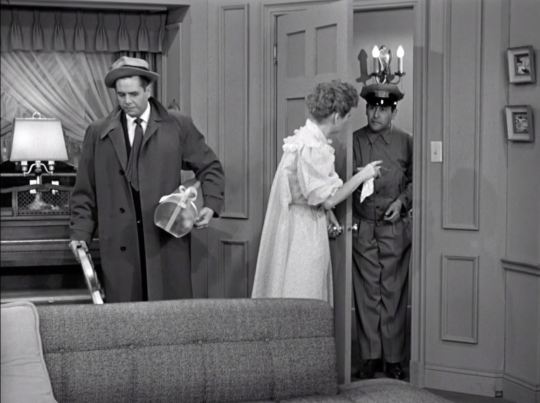
In “The Matchmaker” (ILL S4;E4), Green is a Western Union messenger who delivers a telegram to announce that Dorothy ‘Spider’ and Sam ‘Fly’ have decided to tie the knot!

Green and Hazel Pierce (behind Lucy) are dining in the Brown Derby booth next to William Holden in “Hollywood at Last!” (ILL S4;E16).
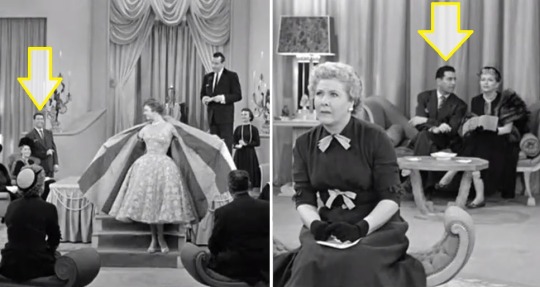
During “The Fashion Show” (ILL S4;E20), Green appears in two different places at the same time: he is in front at the right of the stairs where the clothes are modeled, and he is also sitting behind Ethel at the back of the room! Busy Bennett!

When “Ricky Sells the Car” (ILL S5;E4), Green delivers the train tickets that cause lots of confusion between the Ricardos and Mertzes.


In “Homecoming” (ILL S5;E6), Green and Hazel Pierce are among the neighbors welcoming the Ricardos and Mertzes home from Hollywood. When their cab pulls up to 623 East 68th Street, Green is wearing one of Ricky’s jackets! Camera and lighting stand-ins were required to be the same height and body size as the actors, even though they may not resemble them. They were not doubles, but stand-ins.

In “Lucy Meets Bob Hope” (ILL S6;E1), Lucy must convince the Yankee Stadium hot dog vendor (Green with a mustache) to swap clothes with her, which he does!

Staying with the series to the very end, Green was in the crowd when “The Ricardos Dedicate a Statue” (ILL S6;E27) at Westport’s Yankee Doodle Dandy Day!

In 1959, when Lucy and Desi (as the Ricardos) turned up on “The Danny Thomas Show”, Bennett Green was in the background! Needless to say, “Lucy Upsets the Williams Household” and causes chaos at Orbachs!

Having been present in the last scene of the half hour series, Bennett was also in the last scene of the hour-long series, the last time we see the Ricardos and Mertzes in April 1960, “Lucy Meets the Mustache” (LDCH S3;E3) starring Ernie Kovacs.

In 1961, Green did two episodes of CBS’s “Angel”, a show filmed at Desilu Studios. In one, he acted opposite Doris Singleton (aka Caroline Appleby). The short-lived series was created by Jess Oppenheimer.

In October 1962, while Lucille Ball was premiering “The Lucy Show”, Green made a single appearance on Desilu’s “Fair Exchange” starring Eddie Foy Jr. and Victor Maddern. The series was best known for the debut of Judy Carne.

When Lucille Ball finally returned to network television with “The Lucy Show” she employed Green as a background performer in at least ten episodes, probably more.

When “Lucy Goes To Art Class” (TLS S2;E15), one of her classmates is Bennett Green. The instructor was played by John Carradine.

During the run of “The Lucy Show” Lucille Ball presented a 1964 special titled “The Lucille Ball Comedy Hour” aka “Mr. and Mrs.” in which Bennett Green played a member of the board of directors of Consolidated Pictures; Lucy is President.

He was a supermarket checker in “Lucy and Joan” (TLS S4;E4), where the Joan of the title was not Crawford, but Bennett!

It’s a reunion of sorts when both Green and Hazel Pierce turn up as guests at a dude ranch in “Lucy the Rain Goddess” (TLS S4;E15).
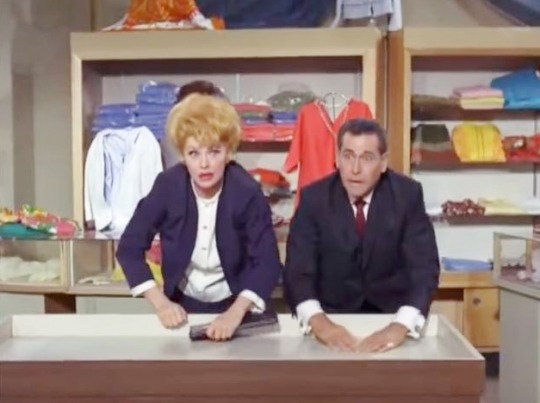
When “Lucy Bags a Bargain” (TLS S4;E17) Green and Mrs. Carmichael both get to the sales table too late! Sold out!

When Lucy gets on the jury of a daytime drama (with Jane Kean) in “Lucy and the Soap Opera” (TLS S4;E19), Bennett Green is the jury foreman!

When “Lucy Goes To A Hollywood Premiere” (TLS S4;E20), Mr. Mooney went as the guest of Mr. Albertini (Bennett Green) a fellow banker. They are interviewed on the red carpet while Lucy is disguised as an usher!

Bennett is ‘behind the camera’ when “Lucy Puts Main Street on the Map” (TLS S5;E18).

When “Lucy Sues Mooney” (TLS S6;E12) Bennett Green appears as the Medical Attendant who wheels Lucy into court.
Ironically, Green’s final appearance on “The Lucy Show” in “Mooney’s Other Wife” (TLS S6;E18) is as a Western Union telegram messenger, just as he was 15 years earlier on “I Love Lucy.”
After “The Lucy Show” Green retired from show business, never appearing in “Here’s Lucy” or any other show. He died on September 8, 1982 at age 77.

-
CORNEL WILDE
October 13, 1912

Cornel Louis Wilde was born Kornél Lajos Weisz in Privigye, Kingdom of Hungary (now Prievidza, Slovakia) on October 13, 1912. When his family immigrated to the United States in 1920, his name was Anglicized to Cornelius Wilde. Wilde attended the City College of New York as a pre-med student, then winning a scholarship to Columbia University. He qualified for the United States fencing team for the 1936 Summer Olympics, but quit the team to take a role in the theater.

Wilde’s acting career began in 1933, when he made his debut on Broadway in They All Come To Moscow. In 1936 he began making small, uncredited appearances in films.

In 1937, he married Patricia Wright and had a daughter, Wendy. The Wildes frequently shaved years off of their ages. Wilde also hid his foreign birth by claiming to have been born in New York City.

The couple divorced in 1951 and Wilde quickly remarried to Jean Wallace with whom he had a son, Cornel Wallace Wilde. The marriage lasted 30 years before they divorced.

By the 1940s he had signed a contract with 20th Century Fox and his first credited role was in High Sierra (1941) starring Humphrey Bogart and Ida Lupino.

In the 1940s he became a major leading man and was nominated for the Academy Award for Best Actor for his performance in 1945’s A Song to Remember.

In late April 1948, Lucille Ball and Cornel Wilde appeared on “Lux Radio Theatre” in “It Had To Be You” based on the 1947 film. Lucy took the role originally played by her friend Ginger Rogers and Wilde recreated his role from the film.

In the 1950s his star dimmed a little, and aside from an occasional blockbuster like The Greatest Show on Earth (1952), which was supposed to be his first big screen encounter with Lucille Ball, but she withdrew from the film due to her pregnancy.

In 1955, Wilde did his first television show, “The Star Upstairs” (ILL S4;E25) in a script originally written for Van Johnson. Johnson’s participation was delayed due to his being a spokesman for Lucky Strike, a competitor of “I Love Lucy’s” sponsor Philip Morris. He eventually did “The Dancing Star” (ILL S4;E27).

The story has Lucy Ricardo desperate to meet her 100th celebrity in Hollywood – and Cornel Wilde is conveniently in the suite right above theirs.

Despite Ricky’s disapproval, Lucy sneaks into his room – then can’t get out again!

In the episode, Ricky manages to get in a plug for Wilde’s new movie The Big Combo, which had opened in February, two weeks before the episode was filmed.

His final screen role was an episode of “Murder She Wrote” in 1987. Wilde played a doctor who is found dead in his hot tub!
Wilde died of leukemia in 1989, three days after his 77th birthday and just six months after the death of Lucille Ball.
“I realized long ago that I could not depend on luck to bring me success. I worked hard, extra hard to improve my chance by increasing my abilities and my experience. It was my goal to accomplish, in my life, something of value and to do it with self-respect and integrity.” ~ Cornel Wilde

-
QUICK! WHY DO THEY LOVE LUCY?
October 13, 1952

Lucille Ball and Desi Arnaz were on the cover of Quick Magazine (volume 7 #13) on October 13, 1952. The inside article was titled “Why Do They Love Lucy?”
Quick Magazine was published by Cowles Magazines, Inc., from 1949 to 1953. They also published Life. Readers were encouraged to “Get Quick on your newsstand an carry it in your pocket or your purse… and read it wherever you are”. A new Quick Magazine was first published in November 2010.

Photograph from “The Audition” (ILL S1;E6) filmed October 15, 1951.

Photographs from “The Freezer” (ILL S1;E29) filmed March 29, 1952 and “The Mustache” (ILL S1;E23) filmed February 8, 1952.

A candid photograph of Lucille Ball at home with her daughter, Lucie.

Lucille Ball worked with Buster Keaton on the 1946 film Easy To Wed. She reunited with him in the 1965 “Salute To Stan Laurel”.

This magazine was published three days after the filming of “Pregnant Women Are Unpredictable” (ILL S2;E11)…

and on the same day as the first airing of “The Operetta” (ILL S2;E5).

Lucille Ball had previously appeared on the cover on November 27, 1950. Ball was still doing her radio show, “My Favorite Husband.”

She appeared again on April 13, 1953, with newborn Desi Jr.
-
Subscribe
Subscribed
Already have a WordPress.com account? Log in now.
 Papermoon Loves Lucy