-
LIZ LEARNS TO DRIVE
November 13, 1948

“Liz Learns To Drive” (aka “Liz’s Driving License” and “Liz Learns to Drive”) is episode #16 of the radio series MY FAVORITE HUSBAND broadcast on November 13, 1948.
Synopsis ~ George teaches Liz to drive and she immediately gets in an accident. Through a communications mix-up, George thinks Liz has intentionally run over George’s high school sweetheart, Myra Ponsenby!
Note: This episode was aired before the characters names were changed from Cugat to Cooper. It was also before Jell-O came aboard to sponsor the show and before the regular cast featured Bea Benadaret and Gale Gordon as the Atterburys.

“My Favorite Husband” was based on the novels Mr. and Mrs. Cugat, the Record of a Happy Marriage (1940) and Outside Eden (1945) by Isabel Scott Rorick, which had previously been adapted into the film Are Husbands Necessary? (1942). “My Favorite Husband” was first broadcast as a one-time special on July 5, 1948. Lucille Ball and Lee Bowman played the characters of Liz and George Cugat, and a positive response to this broadcast convinced CBS to launch “My Favorite Husband” as a series. Bowman was not available Richard Denning was cast as George. On January 7, 1949, confusion with bandleader Xavier Cugat prompted a name change to Cooper. On this same episode Jell-O became its sponsor. A total of 124 episodes of the program aired from July 23, 1948 through March 31, 1951. After about ten episodes had been written, writers Fox and Davenport departed and three new writers took over – Bob Carroll, Jr., Madelyn Pugh, and head writer/producer Jess Oppenheimer. In March 1949 Gale Gordon took over the existing role of George’s boss, Rudolph Atterbury, and Bea Benaderet was added as his wife, Iris. CBS brought “My Favorite Husband” to television in 1953, starring Joan Caulfield and Barry Nelson as Liz and George Cooper. The television version ran two-and-a-half seasons, from September 1953 through December 1955, running concurrently with “I Love Lucy.” It was produced live at CBS Television City for most of its run, until switching to film for a truncated third season filmed (ironically) at Desilu and recasting Liz Cooper with Vanessa Brown.
MAIN CAST

Lucille Ball (Liz Cugat) was born on August 6, 1911 in Jamestown, New York. She began her screen career in 1933 and was known in Hollywood as ‘Queen of the B’s’ due to her many appearances in ‘B’ movies. “My Favorite Husband” eventually led to the creation of “I Love Lucy,” a television situation comedy in which she co-starred with her real-life husband, Latin bandleader Desi Arnaz. The program was phenomenally successful, allowing the couple to purchase what was once RKO Studios, re-naming it Desilu. When the show ended in 1960 (in an hour-long format known as “The Lucy-Desi Comedy Hour”) so did Lucy and Desi’s marriage. In 1962, hoping to keep Desilu financially solvent, Lucy returned to the sitcom format with “The Lucy Show,” which lasted six seasons. She followed that with a similar sitcom “Here’s Lucy” co-starring with her real-life children, Lucie and Desi Jr., as well as Gale Gordon, who had joined the cast of “The Lucy Show” during season two. Before her death in 1989, Lucy made one more attempt at a sitcom with “Life With Lucy,” also with Gordon.
Richard Denning (George Cugat) was born Louis Albert Heindrich Denninger Jr., in Poughkeepsie, New York. When he was 18 months old, his family moved to Los Angeles. Plans called for him to take over his father’s garment manufacturing business, but he developed an interest in acting. Denning enlisted in the US Navy during World War II. He is best known for his roles in various science fiction and horror films of the 1950s. Although he teamed with Lucille Ball on radio in “My Favorite Husband,” the two never acted together on screen. While “I Love Lucy” was on the air, he was seen on another CBS TV series, “Mr. & Mrs. North.” From 1968 to 1980 he played the Governor on “Hawaii 5-0″, his final role. He died in 1998 at age 84.
Ruth Perrott (Katie, the Maid) was also later seen on “I Love Lucy.” She first played Mrs. Pomerantz, a member of the surprise investigating committee for the Society Matrons League in “Pioneer Women” (ILL S1;E25), as one of the member of the Wednesday Afternoon Fine Arts League in “Lucy and Ethel Buy the Same Dress” (ILL S3;E3), and also played a nurse when “Lucy Goes to the Hospital” (ILL S2;E16). She died in 1996 at the age of 96.
Bob LeMond (Announcer) also served as the announcer for the pilot episode of “I Love Lucy”. When the long-lost pilot was finally discovered in 1990, a few moments of the opening narration were damaged and lost, so LeMond – fifty years later – recreated the narration for the CBS special and subsequent DVD release.
GUEST CAST

John Hiestand (Cory Cartwright) served as the announcer for the radio show “Let George Do It” from 1946 to 1950. In 1955 he did an episode of “Our Miss Brooks” opposite Gale Gordon.

Bea Benadaret (Woman Driver) was considered the front-runner to be cast as Ethel Mertz but when “I Love Lucy” was ready to start production she was already playing a similar role on TV’s “The George Burns and Gracie Allen Show” so Vivian Vance was cast instead. On “I Love Lucy” she was cast as Lucy Ricardo’s spinster neighbor, Miss Lewis, in “Lucy Plays Cupid” (ILL S1;E15) in early 1952. Later, she was a success in her own show, “Petticoat Junction” as Shady Rest Hotel proprietress Kate Bradley. She starred in the series until her death in 1968.

Frank Nelson (Officer Frank Nelson) was born on May 6, 1911 (three months before Lucille Ball) in Colorado Springs, Colorado. He started working as a radio announcer at the age of 15. He later appeared on such popular radio shows as “The Great Gildersleeve,” “Burns and Allen,” and “Fibber McGee & Molly”. Aside from Lucille Ball, Nelson is perhaps most associated with Jack Benny and was a fifteen-year regular on his radio and television programs. His trademark was playing clerks and other working stiffs, suddenly turning to Benny with a drawn out “Yeeeeeeeeees?” Nelson appeared in 11 episodes of “I Love Lucy”, including three as quiz master Freddy Fillmore, and two as Ralph Ramsey, plus appearance on “The Lucy-Desi Comedy Hour” – making him the only actor to play two different recurring roles on “I Love Lucy.” Nelson returned to the role of the frazzled Train Conductor for an episode of “The Lucy Show” in 1963. This marks his final appearance on a Lucille Ball sitcom.

Herb Vigran (Sergeant Martin Lewis, Homicide Squad) made several appearances on “My Favorite Husband.” He would later play Jule, Ricky’s music union agent on two episodes of “I Love Lucy”. He would go on to play Joe (and Mrs. Trumbull’s nephew), the washing machine repairman in “Never Do Business With Friends” (S2;E31) and Al Sparks, the publicity man who hires Lucy and Ethel to play Martians on top of the Empire State Building in “Lucy is Envious” (S3;E23). Of his 350 screen roles, he also made six appearances on “The Lucy Show.”
The name Martin Lewis may be a tribute to the comedy team of Dean Martin and Jerry Lewis, who first performed together in 1946, and went their separate ways ten years later.
THE EPISODE
ANNOUNCER: “It is morning, and Katie the maid has just put breakfast on the table and Liz and George are sitting down to it.”
George is reluctant to read the paper at the table after Liz’s previous chastisement about ignoring her at breakfast. This time, she encourages him to pick up the newspaper and when he does, she has torn a hole through the center so she can see him and he can read the news!

Lucy Ricardo also had the same complaint about Ricky on “I Love Lucy”!
LIZ: “I’m looking at you through an automobile ad. The new Nash has blue eyes for headlights. And your ears look like both doors are wide open.”

Nash Motors Company was an American automobile manufacturer based in Kenosha, Wisconsin, from 1916 to 1957. In 1938 Nash debuted the heating and ventilation system which is still used today.
The aerodynamic 1949 Nash Airflyte was the first car of an advanced design introduced by the company after the war. Nash went out of business in February 1954.
Katie says she had the same problem with her first husband, Clarence. As a last resort, she set his newspaper on fire!

In “Be A Pal” (ILL S1;E2), Lucy also tries setting fire to the newspaper to get her husband’s attention! Considering all the trouble Desi had to assure the studio audience’s safety for the Los Angels Fire Department, it is amazing this stunt was allowed!
Through his ‘holy’ newspaper, George reads about his old college girlfriend, Myra Ponsenby. Liz is unenthusiastic.
LIZ: “What’s new in Lower Slobbovia?”

In “First Stop” (ILL S4;E14) Fred Mertz calls One Oak Cabins “Lower Slobbovia,” which is a term first used in 1946 by Al Capp in his comic strip “Li’l Abner” to describe a place that was unenlightened and socially backward.
Liz is clearly jealous and wishes Myra would “drop dead” claiming there isn’t room enough for the both of them in town. George says the article claims she is driving into town in her new imported car called a Zebra [a fictional car].
LIZ: “I’m glad she’s got a car. It was dangerous riding around on that broomstick.”
Myra is married to Mr. Minky the peanut king, who Liz insists she married for his money. Tired of hearing about Myra, Liz begs George for another driving lesson. The last time he gave her a lesson she drove their Hudson into someone’s kitchen!

The Hudson Motor Car Company made automobiles in Detroit, Michigan from 1909 to 1954. In 1954, Hudson merged with Nash-Kelvinator to form American Motors Corporation (AMC). The Hudson name was discontinued in 1957.
George gives in and promises to give her a lesson on the back roads after work. When he gets home, she tells him she practiced before he got there, but forgot to open the garage door! Liz finally finds the starter (after trying the cigarette lighter and the radio). Then she has trouble finding the clutch. George is foaming at the mouth in anxiety.
Liz finally gets the car on the road – but the wrong side! They nearly have a collision! George gets frustrated and Liz dissolves into tears.

Much of the driving lesson dialogue and situations were recycled in the episode “Safe Driving Week” in October 1950. In it, George is elected town Safety Chairman just when Liz creates havoc on the roads.
Later, Cory Cartwright volunteers to help Liz pass her driving test. He wishes her luck, as she goes into the police station to get her driver’s license.
NELSON: “Name?”
LIZ: “Elizabeth Cugat.”
NELSON: “Address?”
LIZ: “321 Bundy.”
NELSON: “Race?”
LIZ: “Of course not! I don’t even have a driver’s license!”After much rhetorical to-ing and fro-ing, he takes her fingerprints and gives her the eye test:
NELSON: “Read the letters on the wall over there.”
LIZ: “M-E-N.”
The eye test and fingerprinting that Liz undergoes are repeated when Lucy Carter helps her son Craig get a license in a 1969 episode of “Here’s Lucy.”
Somehow Liz passes the driving test and gets her license. Naturally she gets in an accident on the way home with Cory. The car is a wreck, but they are okay. The other driver is a woman (Bea Benadaret) who says she will call her lawyer and the police.
Liz doesn’t know what she will say to George about the damage to the car. Cory agrees to help her get it fixed before George finds out.

When “Lucy Learns To Drive” (ILL S4;E12) in 1955, she also has an accident after her first lesson. Like Liz, she has to come up with a story so that her favorite husband doesn’t get angry!
When Liz finally gets home, George tells her that Myra Ponsenby has been reported missing. Liz couldn’t care less, but George wants to know why she’s so late home and is acting so peculiar. The phone rings and George eavesdrops on her conversation about the car. Not knowing to whom or what she’s talking about, George believes that his wife has done away with Myra!
LIZ (on the phone): “You know how George feels about that old wreck. That wasn’t the first time she’d been hit. Did you see all those dents in her trunk? And her rear bumper was in pretty bad shape, too. Wasn’t it awful? I thought she’d never stop yelling. And all I did was hit her with the front wheels.”

An overheard telephone conversation on the very first filmed “I Love Lucy” episode in 1951 convinces Lucy that Ricky is going to murder her! Of course, Ricky is merely talking about ‘getting rid’ of his girl singer, Joanne.
George, thinking Liz is a murderer, emerges from hiding to confront her. Clueless, Liz doesn’t know what all the fuss is about, but George is sure she will ‘get the chair’! Just then the doorbell rings and it is Sergeant Lewis (Herb Vigran), of the homicide squad. A worried Liz hides in the kitchen while George answers the door. After a moment of doubt, Liz decides to give herself up. She tells the Sergeant to arrest her!
Down at the police station, Liz is confronted by the policeman who issued her driver’s license, who has now transferred to homicide. The questions he asks mirror those of the driving test earlier in the day. Liz decides to tell him the whole story, thinking she’s confessing to a traffic accident and not a murder!
NELSON: “What did you do with the body?”
LIZ: “I had them jack it up and haul it away on a truck.”

Frank Nelson also played a policeman named Nelson in “Ricky and Fred Are TV Fans” (ILL S2;E30) in 1953. In it, Lucy and Ethel are mistaken for Sticky Fingers Sal and Pickpocket Pearl. The dialogue is different, but also features rapid fire questions and answers between Ball and Nelson.
The telephone rings and it is announced that Myra Ponsenby has been found alive! She was in jail after speeding through a small town and arrested.

In “Tennessee Bound” (ILL S4;E15) new driver Lucy Ricardo also sped through a small town (Bent Fork) and was arrested!
After a moment, Liz suddenly realizes that that they assumed she murdered Myra! Liz laughs, knowing that she will now get the car fixed without any fuss!

In the usual bedtime tag, Liz is up late reading a murder mystery. George spoils the ending so he can get some sleep: the butler did it. George says the butler killed his wife because she talked too much when he was trying to go to sleep!
LIZ: “Ohhhh! Goodnight, George.”
-
RAY KELLOGG
November 12, 1919

Ray Kellogg was born on November 12, 1919. He was a big, burly character actor who appeared in more than 130 TV and film projects from 1942 to 1972.

From 1942 to 1954 he appeared uncredited in seven feature films. He made his television debut in a November 1954 episode of “I Love Lucy” titled “Ricky’s Screen Test” (ILL S4;E7). Kellogg plays the Assistant Director who startles Lucy with his loud “Quiet on the set!”.

Once in Hollywood, Kellogg appeared in “Bullfight Dance” (ILL S4;E22) as the props man in charge of Lucy’s bull costume.

His third and final series appearance was as a uniformed TWA airline crew member in “Return Home From Europe” (ILL S5;E26) in 1956. He is called to the cabin when Lucy’s baby is revealed to be a cheese, causing mid-air chaos!

In October 1957, Kellogg did an episode of the Desilu series “December Bride”. Desi Arnaz made an appearance as himself on his show in 1956.

In March 1960, Kellogg played a policeman on Desilu’s “The Untouchables”. This was just one of his many appearances as a uniformed law enforcement official. The episode also featured “Lucy” cast members Eleanor Audley, Hazel Pierce, and George DeNormand. In March 1966 “The Lucy Show” did a satire on “The Untouchables” that featured its stars Robert Stack, Bruce Gordon, Steve London, and Walter Winchell.

Between 1958 and 1962, Kellogg made four appearances on Desilu’s “The Real McCoys” – two of which wearing blue.

From 1954 to 1963, Kellogg made three appearances on “Make Room for Daddy” aka “The Danny Thomas Show” – all as policemen. His 1954 appearance also featured Doris Singleton (Caroline Appleby). In 1958, the series switched from ABC to CBS and did reciprocal crossover episodes with “The Lucy-Desi Comedy Hour.”

In 1963 he did an episode of Desilu’s short-lives series “Glynis” that also featured Saverio LoMedico, who played the Roman Bellboy in “Lucy’s Italian Movie” (ILL S5;E23).

In early 1964, Kellogg was on the Desilu backlot to film an episode of “The Andy Griffith Show” in which he played a truck driver.

That same year, Kellogg reteamed with Lucille Ball on “The Lucy Show”. First, he played a country club doorman, who announces Mrs. Carmichael – on roller skates – in “Lucy the Good Skate” (TLS S3;E1).

In “Lucy the Coin Collector” (TLS S3;E13) Kellogg is back in blue to console Lucy and Viv when a valuable collectible coin slips down the gutter in the street.

Three months later he was yet another doorman in “Lucy Meets Danny Kaye” (TLS S3;E15). Mrs. Carmichael buys Henderson the doorman’s uniform to sneak into the hotel to see Kaye.

Officer Kellogg is back when Lucy is put to test in “Lucy and Art Linkletter” (TLS S4;E16) in 1966. Is he a real cop, or an actor hired by Linkletter?

In the middle of his “Lucy Show” run of appearances, Kellogg appeared in Bob Hope’s special “15 of My Leading Ladies” or “Richard Burton Eat Your Heart Out”. He played the director of a film starring Dina Merrill and had no scenes with Lucille Ball.

Kellogg was back on the beat in “Lucy and the Ring-a-Ding Ring” (TLS S5;E5) in 1966.

He gets a motorcycle when “Viv Visits Lucy” (TLS S5;E5) in January 1967. He is joined by John J. Fox as a Sunset Strip patrolman.

In his final series appearance in January 1968, Kellogg (along with Fox) must apprehend “Lucy and the Stolen Stole” (TLS S6;E19), although she’s innocent of all charges.

In February 1965, he took a break from playing policemen on “My Three Sons”, filmed on the Desilu lot.

Between 1962 and 1965, Kellogg did six appearances on “The Dick Van Dyke Show” also filmed at Desilu. In one, he traded his police blues for army khakis. In one, of course, he played a cop.

From 1964 to 1969, he did four episodes of “Gomer Pyle U.S.M.C.” as various characters (but no policemen). The series was originally filmed at Desilu and did a quick crossover with “The Lucy Show” in “Lucy Gets Caught Up In The Draft” (TLS S5;E9) in 1966.

He was back with Lucille Ball on “Here’s Lucy” as a party guest in “Guess Who Owes Lucy $23.50?” (HL S1;E11) in December 1968 with guest star Van Johnson.

His final appearance with Lucille Ball three months later was (again) as a motorcycle cop in “Lucy Helps Craig Get a Driver’s License” (HL S1;E24) in 1969, although a month earlier he was seen on a “Jack Benny” special that also featured Lucille Ball but the two did not share any screen time.

Kellogg’s final role was as a bartender (not a policeman) on three episodes of “Maude” in 1972.
Ray Kellogg died on September 26, 1981 in Olympia, Washington, at age 61.
[Note: Due to confusion with visual effects artist Ray Kellogg (1905-76), finding specific personal information about Kellogg through online sources is unreliable.]
 Andy Griffith, Bob Hope, Danny Thomas, December Bride, Dick Van Dyke, Glynis Johns, Gomer Pyle USMC, Here’s Lucy, I love lucy, jack gilford, Lucille Ball, Make Room for Daddy, Maude, My Three Sons, Ray Kellogg, The Andy Griffith Show, The Dick Van Dyke Show, The Lucy Show, The Real McCoys, The Untouchables, Vivian Vance
 -
BABY SITTING
November 11, 1949

“Baby Sitting” (aka “Liz Takes Up Baby Sitting”) is episode #62 of the radio series MY FAVORITE HUSBAND broadcast on November 11, 1949, sponsored by Jell-O.
This was the tenth episode of the second season of MY FAVORITE HUSBAND. There were 43 new episodes, with the season ending on June 25, 1950.
Synopsis ~ Liz takes up baby sitting to balance her financial books and earn money for George’s Christmas present.

This episode shares plot elements with the “I Love Lucy” episode “The Amateur Hour” (ILL S1;E14) in 1952. Like Liz Cooper, Lucy Ricardo makes extra money by baby sitting.

“My Favorite Husband” was based on the novels Mr. and Mrs. Cugat, the Record of a Happy Marriage (1940) and Outside Eden (1945) by Isabel Scott Rorick, which had previously been adapted into the film Are Husbands Necessary? (1942). “My Favorite Husband” was first broadcast as a one-time special on July 5, 1948. Lucille Ball and Lee Bowman played the characters of Liz and George Cugat, and a positive response to this broadcast convinced CBS to launch “My Favorite Husband” as a series. Bowman was not available Richard Denning was cast as George. On January 7, 1949, confusion with bandleader Xavier Cugat prompted a name change to Cooper. On this same episode Jell-O became its sponsor. A total of 124 episodes of the program aired from July 23, 1948 through March 31, 1951. After about ten episodes had been written, writers Fox and Davenport departed and three new writers took over – Bob Carroll, Jr., Madelyn Pugh, and head writer/producer Jess Oppenheimer. In March 1949 Gale Gordon took over the existing role of George’s boss, Rudolph Atterbury, and Bea Benaderet was added as his wife, Iris. CBS brought “My Favorite Husband” to television in 1953, starring Joan Caulfield and Barry Nelson as Liz and George Cooper. The television version ran two-and-a-half seasons, from September 1953 through December 1955, running concurrently with “I Love Lucy.” It was produced live at CBS Television City for most of its run, until switching to film for a truncated third season filmed (ironically) at Desilu and recasting Liz Cooper with Vanessa Brown.
MAIN CAST

Lucille Ball (Liz Cooper) was born on August 6, 1911 in Jamestown, New York. She began her screen career in 1933 and was known in Hollywood as ‘Queen of the B’s’ due to her many appearances in ‘B’ movies. With Richard Denning, she starred in a radio program titled “My Favorite Husband” which eventually led to the creation of “I Love Lucy,” a television situation comedy in which she co-starred with her real-life husband, Latin bandleader Desi Arnaz. The program was phenomenally successful, allowing the couple to purchase what was once RKO Studios, re-naming it Desilu. When the show ended in 1960 (in an hour-long format known as “The Lucy-Desi Comedy Hour”) so did Lucy and Desi’s marriage. In 1962, hoping to keep Desilu financially solvent, Lucy returned to the sitcom format with “The Lucy Show,” which lasted six seasons. She followed that with a similar sitcom “Here’s Lucy” co-starring with her real-life children, Lucie and Desi Jr., as well as Gale Gordon, who had joined the cast of “The Lucy Show” during season two. Before her death in 1989, Lucy made one more attempt at a sitcom with “Life With Lucy,” also with Gordon.
Richard Denning (George Cooper) was born Louis Albert Heindrich Denninger Jr., in Poughkeepsie, New York. When he was 18 months old, his family moved to Los Angeles. Plans called for him to take over his father’s garment manufacturing business, but he developed an interest in acting. Denning enlisted in the US Navy during World War II. He is best known for his roles in various science fiction and horror films of the 1950s. Although he teamed with Lucille Ball on radio in “My Favorite Husband,” the two never acted together on screen. While “I Love Lucy” was on the air, he was seen on another CBS TV series, “Mr. & Mrs. North.” From 1968 to 1980 he played the Governor on “Hawaii 5-0″, his final role. He died in 1998 at age 84.
Gale Gordon (Rudolph Atterbury) had worked with Lucille Ball on “The Wonder Show” on radio in 1938. One of the front-runners to play Fred Mertz on “I Love Lucy,” he eventually played Alvin Littlefield, owner of the Tropicana, during two episodes in 1952. After playing a Judge in an episode of “The Lucy-Desi Comedy Hour” in 1958, he would re-team with Lucy for all of her subsequent series’: as Theodore J. Mooney in ”The Lucy Show”; as Harrison Otis Carter in “Here’s Lucy”; and as Curtis McGibbon on "Life with Lucy.” Gordon died in 1995 at the age of 89.
Bea Benadaret (Iris Atterbury) was considered the front-runner to be cast as Ethel Mertz but when “I Love Lucy” was ready to start production she was already playing a similar role on TV’s “The George Burns and Gracie Allen Show” so Vivian Vance was cast instead. On “I Love Lucy” she was cast as Lucy Ricardo’s spinster neighbor, Miss Lewis, in “Lucy Plays Cupid” (ILL S1;E15) in early 1952. Later, she was a success in her own show, “Petticoat Junction” as Shady Rest Hotel proprietress Kate Bradley. She starred in the series until her death in 1968.
Ruth Perrott (Katie, the Maid) was also later seen on “I Love Lucy.” She first played Mrs. Pomerantz, a member of the surprise investigating committee for the Society Matrons League in “Pioneer Women” (ILL S1;E25), as one of the member of the Wednesday Afternoon Fine Arts League in “Lucy and Ethel Buy the Same Dress” (ILL S3;E3), and also played a nurse when “Lucy Goes to the Hospital” (ILL S2;E16). She died in 1996 at the age of 96.
Bob LeMond (Announcer) also served as the announcer for the pilot episode of “I Love Lucy”. When the long-lost pilot was finally discovered in 1990, a few moments of the opening narration were damaged and lost, so LeMond – fifty years later – recreated the narration for the CBS special and subsequent DVD release.
GUEST CAST

Hans Conried (Mr. Wood) first co-starred with Lucille Ball in The Big Street (1942). He then appeared on “I Love Lucy” as used furniture man Dan Jenkins in “Redecorating” (ILL S2;E8) and later that same season as Percy Livermore in “Lucy Hires an English Tutor” (ILL S2;E13) – both in 1952. The following year he began an association with Disney by voicing Captain Hook in Peter Pan. On “The Lucy Show” he played Professor Gitterman in “Lucy’s Barbershop Quartet” (TLS S1;E19) and in “Lucy Plays Cleopatra” (TLS S2;E1). He was probably best known as Uncle Tonoose on “Make Room for Daddy” starring Danny Thomas, which was filmed on the Desilu lot. He joined Thomas on a season 6 episode of “Here’s Lucy” in 1973. He died in 1982 at age 64.
Mr. Wood has eleven children: Bob, Madelyn, Adele, Lucille, Ruth, Lucius, Jessie, Walter, Jess, Joanne, and Hugo.

Jacob "Jack” Kruschen (Mr. Pearson) was a Canadian character actor who worked in film, television and radio. During the 1940s, he became a staple of West Coast radio drama. He had several roles in programs made especially for the Armed Forces Radio Service (AFRS) broadcast for the benefit of members on active duty in the military in the 1940s and 1950s.
He was nominated for the Academy Award for Best Supporting Actor for his role as Dr. Dreyfuss in the 1960 comedy-drama The Apartment. He played a mechanic in The Long, Long Trailer (1954).
Mr. Pearson is the father of Tommy, the child Liz is baby sitting.
EPISODE
ANNOUNCER: “As we look in on the Coopers it’s morning. George Cooper is in the dining room eating breakfast, and Liz is hiding in the kitchen with Katie the maid.”

Liz is avoiding seeing George because it is the day he wants to go over their Christmas list and Liz has not put a penny in the Christmas Club account all year long! She reluctantly goes into the dining room to try the ‘smooch’ treatment on him. George wants to take half the money in the account and pay bills. Liz tries to ‘Christmas’ him out of the plan, calling him a Scrooge. He relents but that still leaves Liz with an empty Christmas Club account and a full list.
 Later, Liz comes up with the idea to make fruitcake for everyone on the list. That will work for everyone except George. She wonders if she could make money with a part-time job. Since George has taken the newspaper to work with him, Liz goes next door to see Mr. Wood (Hans Conried), since four of his eleven children have paper routes. Liz arrives just as all eleven of them stamped out the door for school at the same time!
MR. WOOD: “Goodbye, Bob, Madelyn, Adele, Lucille, Ruth, Lucius, Jessie, Walter, Jess, Joanne!”
After a pause, Little Hugo also scampers by making eleven. These are the names of some of the staff of My Favorite Husband.- Bob LeMond (Announcer)
- Madleyn Pugh (Writer)
- Adele is the name often ascribed to Liz’s Mother, Mrs. Elliott
- Lucille Ball (Liz Cooper)
- Jess Oppenheimer (writer)
- Ruth Perrott (Katie the Maid
Mr. Wood says the morning (and evening) stampede can be hazardous since someone has a sharp propeller on his atomic beanie.
Atomic Beanies were previously known as propeller hats. In the 1940s they became a big hit with kids and were widely sold. The word atomic was adopted just a few years after the detonation of the first atomic bomb.

Lucy Ricardo wore one in “Don Juan is Shelved” (ILL S4;E22) in 1955.
Mr. Wood suggests she try to take his daughter Adele’s old job – baby sitting!
Liz dresses up to go on her first baby sitting assignment to take care of Tommy Pearson, who is a sure shot with a pea shooter! She tells George she is going to a lecture with Iris Atterbury.
Twenty minutes later, George is pacing the living room without Liz. He figures if Liz is with Iris, Rudolph is available to go to a movie. Iris picks up the phone and knows nothing about the lecture – until she suddenly realizes Liz has lied to George and covers her tracks. But too late! The cat is out of the bag and both wonder where Liz can be!

After a commercial for Jell-O, the story resumes with Liz arriving home from babysitting, driven by Mr. Pearson, Tommy’s father (Jack Kruschen). George is waiting up for her to ask her about the lecture. Liz lies and says the lecture was about financial matters.
LIZ: “He said not to put your money in fiscals this year. The frost ruined them all.”
About the British pound:
LIZ: “It’s being invalidated. It won’t be long before the pound only weighs eight ounces. It makes easier to carry their money around.”
George finally confronts her that he knows there was no lecture. Liz can’t tell him where she really was, so George assumes that he has a rival. Liz, having no other choice, plays along.
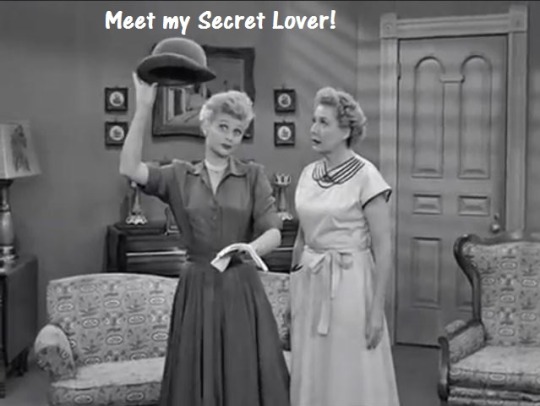 George spends the night sleeping on the couch. Liz fills Katie in on George’s misapprehension, enjoying the fun. Iris phones and asks Liz about ‘the other man’ in her life. Liz denies there is another man and Iris assumes she is lying to her!George seeks advice from his boss, Mr. Atterbury, who suggest he fight fire with fire and pretend he is in love with another woman. George thinks it might work and is determined to try it.Next day Liz is ready to leave to baby sit and George acts unbothered. Liz is bewildered by his behavior. He says that he is doing the same thing. Liz accuses him of making it up. To prove it, he makes a phone call to Mr. Atterbury, pretending it is his old girlfriend Helen. Mr. Atterbury plays along, but luckily Liz can’t hear his voice – just the radio listeners. Liz storms out angry.Mr. Pearson leaves for the day and George is at the door to confront him – thinking he is Liz’s lover! He knocks him out! Liz tells him the truth.
LIZ: “You just punched yourself out of a Christmas present!”

In the live Jell-O commercial Lucy and Bob LeMond adopt a western theme. Hopalong Lucidy is tracking down the notorious Jell-O family.
LUCIDY: “Yippe-yi-o-ky-ah!”

Coincidentally, when Lucy Ricardo babysits in “The Amateur Hour” (ILL S1;E14) the song she performs with the Hudson Twins is also a western.
After the commercial Bob LeMond does a PSA for CARE, who are sending food packages to impoverished people overseas. There is also a commercial for Log Cabin Syrup, another General Foods product.
-
THE DARK CORNER
November 10, 1947

Synopsis ~ A former San Francisco private eye, just in back New York after two years in prison (the victim of a frame-up), finds himself a target for another send-up and murder.

Directed by Fred MacKaye with musical direction by Louis Silvers and sound effects by Charlie Forsyth

Adapted for radio by Sanford Barnett from the screenplay by Jay Dratler and Bernard Schoenfeld based on the book by Leo Rosten.

It was based on the 20th Century Fox motion picture of the same name released on May 8, 1946.

In later years, Lucille Ball was vocal about hating the experience of shooting The Dark Corner. Director Henry Hathaway’s bullying reduced Ball to stuttering on set, at which point Hathaway accused her of being inebriated.
At the time, Lucille Ball was suing to get out of her contract with MGM. As a result, MGM loaned her to Fox for this picture, which included a significant pay cut.

Lux Radio Theatre (1935-55) was a radio anthology series that adapted Broadway plays during its first two seasons before it began adapting films (”Lux Presents Hollywood”). These hour-long radio programs were performed live before studio audiences in Los Angeles. The series became the most popular dramatic anthology series on radio, broadcast for more than 20 years and continued on television as the Lux Video Theatre through most of the 1950s. The primary sponsor of the show was Unilever through its Lux Soap brand.
CAST

Lucille Ball (Kathleen Stewart) was born on August 6, 1911 in Jamestown, New York. She began her screen career in 1933 and was known in Hollywood as ‘Queen of the B’s’ due to her many appearances in ‘B’ movies. “My Favorite Husband” eventually led to the creation of “I Love Lucy,” a television situation comedy in which she co-starred with her real-life husband, Latin bandleader Desi Arnaz. The program was phenomenally successful, allowing the couple to purchase what was once RKO Studios, re-naming it Desilu. When the show ended in 1960 (in an hour-long format known as “The Lucy-Desi Comedy Hour”) so did Lucy and Desi’s marriage. In 1962, hoping to keep Desilu financially solvent, Lucy returned to the sitcom format with “The Lucy Show,” which lasted six seasons. She followed that with a similar sitcom “Here’s Lucy” co-starring with her real-life children, Lucie and Desi Jr., as well as Gale Gordon, who had joined the cast of “The Lucy Show” during season two. Before her death in 1989, Lucy made one more attempt at a sitcom with “Life With Lucy,” also with Gordon.

Mark Stevens (Bradford Galt) reprises his role from the film version of The Dark Corner (1946). He became a contract player for Warners at $100 a week in 1943 but they darkened and straightened his curly ginger-colored hair and covered his freckles. At first he was billed as Stephen Richards, he later changed it to Mark Stevens at the suggestion of Darryl F. Zanuck when he switched to 20th Century-Fox. He died in 1994 at age 77.

Joseph Kearns (Ralph Wickett) appeared on “I Love Lucy” as the psychiatrist in “The Kleptomaniac” (ILL S1;E27) and later played the theatre manager in “Lucy’s Night in Town” (S6;E22). His most famous role was as Mr. Wilson on TV’s “Dennis the Menace” (1959). When he passed away during the show’s final season, Lucy regular Gale Gordon took over for him, playing his brother.
- In the film, the character was named Hardy Cathcart and was played by Clifton Webb.
Norma Jean Nilsson (Little Girl at the Boarding House) was a child actress who left Hollywood at age 19 after appearing in 16 films and television shows.
- In the film, the character carries a slide whistle, which is not used here. She was played by Colleen Alpaugh.
Wally Maher (Fred Foss aka Stauffer) was born on August 4, 1908 in Cincinnati, Ohio. He was known for Mystery Street (1950), The Reformer and the Redhead (1950) and Hollywood Hotel (1937). He was married to Molly Bruno. He died on December 27, 1951.
- In the film, the role was played by William Bendix, who would go on to fame as the title character in TV’s “The Life of Riley.”
Dan O’Herlihy (Anthony Jardine) was an Irish-born actor nominated for an Oscar in 1954 for Robinson Crusoe. In 1960 he made an appearance on Desilu’s “The Untouchables.” He was in two of the RoboCop movies. He died in 2005 at age 85.
- In the film, the role was played by German-born actor Kurt Krueger.
Fay Baker (Mari Wickett) was born on January 31, 1917 in New York City as Fanita Baker Schwager. She was known for Notorious (1946), The House on Telegraph Hill (1951) and Deadline – U.S.A. (1952). She died on December 8, 1987.
- In the film, the role was taken by Cathy Downs, making her first credited screen appearance.
ENSEMBLE
Trude Marson was seen in uncredited roles in four films from 1937 to 1947.
Noreen Gammill started her screen career as the voice of Catty the Elephant in Disney’s Dumbo (1941). She made two background appearances on “The Andy Griffith Show” (1963 and 1964), filmed on the Desilu backlot.
William Johnstone is probably best remembered as Judge Lowell on the long-running daytime drama “As The World Turns”. Prior to that he worked extensively in radio and took over the role of Lamont Cranston on “The Shadow” playing opposite Agnes Moorehead when Orson Welles left the series.
Janet Scott was a regular background voice on “Lux Radio Theatre” with dozens of episodes to her credit from 1937 to 1955.
Lois Corbett was married to Don Wilson of “The Jack Benny Program” and as such did more than a dozen episodes of the television shows with him from 1954 to 1964.
Edward Marr was seen in The Affairs of Annabel with Lucille Ball in 1938. He was also in two Bob Hope TV specials with Hope and Ball in 1966 and 1970.
Stanley Farrar was seen on “I Love Lucy” in “Home Movies” (ILL S3;E20) and “Staten Island Ferry” (ILL S5;E12). He on “The Lucy Show” in “Lucy and Arthur Godfrey” (TLS S3;E23) and “Lucy Meets Danny Kaye” (TLS S3;E15).
Herb Butterfield was born on October 28, 1895 in Providence, Rhode Island. He was known for The Halls of Ivy (1954), The House on Telegraph Hill (1951) and Shield for Murder (1954). On radio, he portrayed the Commissioner on NBC ’s “Dangerous Assignment” (1949-53) and Clarence Wellman on “The Halls of Ivy” (1950-52). He died on May 2, 1957
Cliff Clark was seen with Lucille Ball in Her Husband’s Affairs (1947), Miss Grant Takes Richmond (1949), and The Fuller Brush Girl (1950).
OTHERS

William Keighley (Host and Producer) was the director of nearly 40 feature films between 1932 and 1953. His film The Adventures of Robin Hood (1938) was selected for the National Film Registry by the Library of Congress as being culturally significant.
Dorothy Lovett (Commercial Spokeswoman as Libby Collins, Hollywood Reporter) appeared as Meta Bauer on radio’s “The Guiding Light” (1945-47) and as Toni Sherwood in “The Adventures of Rocky Jordan”. She did three films with Lucille Ball from 1939 to 1941.
Betty Ann Lynn (Herself, Act Two Intermission Guest) is best known for playing Thelma Lou on “The Andy Griffith Show” (1961 to 1965) which was filmed on the Desilu back lot.
John Milton Kennedy (Announcer) was the announcer of all 35 episodes of “The Loretta Young Show” from 1954 to 1955.
ACT ONE

William Keighley introduces the program, noting that many years earlier, director Fred Kohlmar saw a titian-haired young model who had great possibilities – Lucille Ball. He later had the privilege of presenting her in the film version of The Dark Corner. After a mention of Lux Toilet Soap, the program begins.

The action opens in a New York City office building on a sultry summer afternoon. Police detective Reeves visits the Offices of Bradford Galt, Private Investigator and speaks to his secretary, Kathleen Stewart.
Galt enters and Reeves wonders why Galt didn’t notify him that he moved offices after his prior unpleasantness. Galt asks Kathleen to have dinner with him. After dinner, Galt asks her to go dancing but she’s wise to his advance. As they walk down the street, they realize that they are being followed.

Kathleen takes a cab back to the office, while Galt confronts the pursuer at gunpoint, taking him back to his office for questioning. He says his name is Fred Foss, and that he’s also a private detective. Galt doesn’t believe him and decides to beat the truth out of him.

After some roughing up, Fred discloses that he is being paid to tail Galt by Anthony Jardine. In the tussle, some ink spills on Foss’s white suit. He lets Foss leave. Kathleen was supposed to tail Foss after he left the office, but he tricked her and got away.
Back at his rooming house, Foss uses the hall telephone to call art gallery owner Ralph Wickett, and his ink-stained suit is noticed by a Little Girl neighbor.
At a party for his third wedding anniversary, Wickett hangs up and is greeted by Jardine, a lawyer. Mrs. Lucy Wilding takes Jardine aside pretending to ask legal advice, but it is revealed that he is blackmailing her.
Meanwhile, Galt confides in Kathleen about his past. Jardine is trying to kill Galt because he was a former partner that Galt confronted about his blackmailing female clients. Now Jardine wants to finish the job.
Mari Wickett, Ralph’s wife, is having an affair with Anthony Jardine. She wants to run away with him. At the same time, Galt is headed there to settle the score.
End of Act One

A Lux commercial break takes the form of a story from Libby Collins, Hollywood Reporter. She says she saw Universal’s The Lost Moment starring Robert Cummings and Susan Hayward. Libby says she was on location when they filmed the big fire scene, the biggest fire ever done on a sound stage. She says that she and Susan Hayward washed the soot off their faces with Lux Toilet Soap!

- At the time of the broadcast, The Lost Moment was still two weeks from being released. It opened in cinemas on November 27, 1947. The story is set in Italy, so the cast included Edward Ciannelli, who played pizzeria owner Mr. Martinelli in “Visitor from Italy” (ILL S6;E5) and Saverio LoMedico who played the Rome hotel bellboy in “Lucy’s Italian Movie” (ILL S5;E23). The film was not a box office success.
ACT TWO

An hour has past since the end of Act One and Galt is at Jardine’s door. Galt threatens Jardine, who denies tailing him. The two fight while Mari is hiding in the other room. After Galt leaves, she convinces him to run away with her.
At the Gallery, Wickett is visited by Foss. It is clear Wickett is setting up Jardine to take the fall when he has Galt killed. Foss calls Galt to betray Jardine for a price. Galt suggests a one-on-one meeting at his apartment – 904 West 52nd, apartment 307 at 8pm sharp. Wickett will send Jardine to Galt’s apartment at 7:30pm.
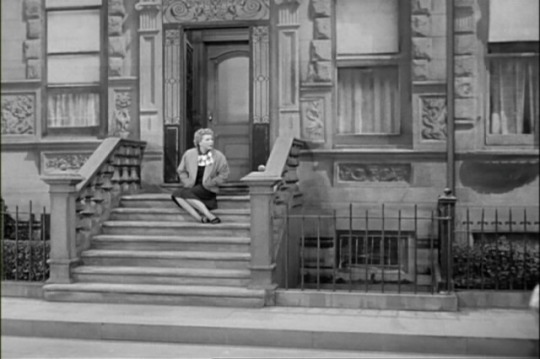
- In reality, there is no such address. West 52nd Street in New York City ends at the the 600s block. This is similar to the Ricardo and Mertz apartment building. 623 East 68th Street, which, if real, would be in the East River!
Kathleen and Galt are supposed to meet at the movies, but he doesn’t show so he goes to his apartment at 8:30. Galt opens the door and reveals that Jardine is dead. Galt was ambushed with and knocked out with ether. He woke up to find Jardine’s body bludgeoned by the fireplace poker. Galt realizes he was set up.

Later, Galt meets Kathleen at her apartment. He couldn’t find Foss and doesn’t know where to look next.
Wickett reminds Mari that they are due at the Kingsley’s that night, but she begs off. He strongly hints that he knows that Mari is stepping out on him and looking to run off.
Galt suddenly realizes that Foss would have to have his white suit cleaned, so he is determined to search all the cleaners for the suit and get his address.
Foss phones Wickett, and the Little Girl is there to overhear his conversation. Foss makes a plan to meet Wickett on the 31st floor of the Grant building.
Galt and Kathleen are about to give up on the search for the suit when a cleaner comes through. They get his address and trace Foss to the rooming house where he lives. His name turns out to be Stauffer, not Foss. The landlady reports that he moved out an hour ago and doesn’t know where he went. But the Little Girl does – and spills the beans for a quarter! Galt and Kathleen head for the Grant Building.

End of Act Two
In the break, Keighley interviews Fox contract player Betty Ann Lynn, who saw filming of Daryl F. Zanuck’s Gentleman’s Agreement starring Gregory Peck and Dorothy McGuire in a “very unusual picture”.

Gentleman’s Agreement premiered on November 11, one day after this broadcast, in both New York City and Chicago. It dealt with anti-Semitism and went on to win three Oscars, including Best Picture. The cast included Lucycom alumni Mike Lally, Shep Houghton, Roy Roberts, and Amzie Strickland in uncredited roles. Betty Ann Lynn says that she also likes to watch the filming of a costume picture like The Foxes of Harrow starring Rex Harrison and Maureen O’Hara, who had 26 costumes made just for her. She notes that O’Hara has a Lux complexion.

- The Foxes of Harrow was released September 13, 1947. “Lux Radio Theater” broadcast a sixty minute radio adaptation of this movie on December 6, 1948, with Maureen O’Hara reprising her movie role. The movie was the screen debut of William Schallert, who did several episodes of “The Lucy Show.” O’Hara and Lucille Ball became lifelong friends after their 1940 film Dance, Girl, Dance. Like Gentleman’s Agreement, The Foxes of Harrow also features Roy Roberts, who went on to play bank president Mr. Cheever on “The Lucy Show.”
ACT THREE

Kathleen and Galt rush to the Grant Building, where Mr. Wickett is about to settle accounts on a remote fire escape. Foss / Stauffer brings proof that Jardine is dead but Wickett throws him from the fire escape to his death.
Galt and Kathleen witness the whole incident from the street, as does the cab driver who was waiting for Foss / Stauffer. Thinking fast, Galt steals the cab which still contains Foss’s luggage. Later, we hear that the bags were only full of clothes. Kathleen urges him to keep thinking.
Kathleen suddenly remembers that the Little Girl mentioned galleries. They put the pieces together and all evidence leads them to the Wickett Galleries. Galt heads there and questions the clerk. Under the guise of buying a painting, Galt inquires about meeting Mr. Wickett, and the clerk departs. Mari comes in the side door, and Galt tells her that Anthony Jardine has been murdered. She faints. Wickett comes in and when Galt tells him the truth, Ralph locks him in the gallery vault. Mari has revived and overhears Ralph’s threats, holding a gun on him. She shoots her husband dead.

Kathleen has tipped off the police, who only want to charge him with stealing a taxi cab. Kathleen asks if he can be booked at another time because they have a date at the City Hall – to get married.
End of Story
As a curtain call, Keighley chats with Lucille Ball and Mark Stevens. He congratulates Ball on the success of her stage show, Dream Girl, a play she says she will do again in San Francisco. When Keighley asks how Lucille’s busy schedule and that of her husband Desi Arnaz’s leave any time for a personal life, Ball says that they will be playing in San Francisco at the same time.

In June 1947, Lucille Ball performed at New Jersey’s McCarter Theatre in Dream Girl, a play by Elmer Rice. It also played Brooklyn, Detroit and Boston.

The San Francisco production opened just a week after this radio telecast. As Ball states, Desi Arnaz was also in San Francisco at the time, playing in the Rose Room of the Palace Hotel, a fact that was advertised in the Dream Girl program. During the Los Angeles engagement in January 1948, Ball fell ill and had to withdraw. Although she love performing on stage, her radio career and then television success did not allow her to return to the footlights until 1960.

Lucy notes that like many other busy stars, she owes her good complexion to Lux Soap!
Turning to Mark Stevens, Lucille notes that he will play an FBI man in his next project at Fox, with Keighley as director.

- Although the film’s title is not mentioned, they are referring to The Street With No Name, which won’t be released until June 1948. Stevens plays Gene Cordell aka George Manley, a covert FBI agent who infiltrates a ruthless gangster mob. “Lux Radio Theater” broadcast a 60-minute radio adaptation of the movie on January 31, 1949 with Mark Stevens reprising his film role.
Keighley notes that next week “Lux Radio Theatre” will present Jane Wyman and Ronald Reagan in Nobody Lives Forever.

- The Warner Brothers picture Nobody Lives Forever was released on November 1, 1946. It originally starred John Garfield and Geraldine Fitzgerald in roles taken on radio by Reagan and Wyman, who were husband and wife at the time. Of course, Reagan left Hollywood for a grander stage, first in California as Governor, then as President of the United States. He bestowed Lucille Ball with The Kennedy Center Honor in 1986.
A public service announcement asks housewives to salvage kitchen fats and turn them in at their local butcher for cash!

- These were used to make supplies for wartime, such as ammunition and weapons.
Announcer Kennedy notes that Mark Stevens appeared through the courtesy of 20th Century Fox, producers of Forever Amber.

- Forever Amber is a 1944 romance novel by Kathleen Winsor set in 17th-century England. It was made into a film in 1947 starring Cornel Wilde, who appeared in “The Star Upstairs” (ILL S4;E25). When “Lucy Writes A Novel” (ILL S3;E24), Ethel jokes about finding Lucy’s hidden manuscript and burning it: “We pulled down the kitchen blind and changed the name of your novel to ‘Forever Ember.’”
‘DARK’ TRIVIA

In a September 1985 episode of “Remington Steele,” a character played by Stephen Dillane has the name Bradford Galt! The stories, however, are not otherwise connected.
In both the film and the radio show, Fred Foss gives his phone number as CH-elsea 4-43510. However, according to the Manhattan phone book for 1946, there were only CH-elsea 2 and CH-elsea 3 exchanges. Real phone numbers were rarely used in film or television.

When television began to supplant radio, “The Lux Video Theatre” was introduced. It was seen from 1950 to 1959. Initially, the show was a thirty-minute weekly show featuring live stage plays, but when it moved to NBC in August 1954, the show was extended to sixty minutes. As on radio, the programs were then primarily adaptations of motion pictures. The host would introduce each act, and would conduct an interview with the stars at the end of the play. Of the cast of this radio version of The Dark Corner:
- William Keighley directed an episode in 1951.
- Mark Stevens did an episode in 1955.
- Dan O’Herlihy did five episodes.
- Joseph Kearns did three episodes.
The character name Ralph Wickett replaced Hardy Cathcart for the radio show. It is likely that they could no longer get legal clearance to use the name Hardy Cathcart, necessitating the change.

The film featured Ellen Corby as a maid, a role not in the radio drama. Corby went on to be seen as Lucy Ricardo’s high school acting teacher and in several small roles on “The Lucy Show” before her best-loved role of Grandma on “The Waltons.”

The film also features background work by Sam Harris, who did 15 films with Lucille Ball, in addition to multiple episodes of “I Love Lucy” and “The Lucy Show” as well as Harold Miller, who did eight films with Lucy and two episodes of “I Love Lucy”.

The film is available on DVD complete with DVD commentary and original trailer.

-
“WHY IT TOOK ME TEN YEARS TO BECOME A MOVIE STAR”
November 7, 1943


Mayme Ober Peak (ghost writer) became the first President of the Hollywood Women’s Press Club, and was cited by the Hollywood Reporter magazine as the “Number One Outstanding Screen Critic” in 1940. Parkinson’s disease slowed her down in the 1940s, but she carried on courageously, before retiring in 1947. She died in her childhood home in Upperville, Virginia, just days before her sixty-sixth birthday.

At this point, Lucille Ball is still asserting that she was from Butte, Montana. She was asked to join the Hollywood Victory Cavalcade to raise money selling US war bonds in September 1943.


On the same date (November 7, 1943), critic Clyde Rowen took a look at Ball’s new film Best Foot Forward.
-
RIP ALEX TREBEK
1940 – 2020

According to The New York Times, Alex Trebek got his job hosting “Jeopardy!” with a little help from Lucille Ball. The actress was friends with famed TV producer Merv Griffin, and encouraged him to hire Trebek.

When Trebek was hosting “High Rollers” in the 1970s, Ball was a fan of the show. She appeared on an episode in 1977, which left her impressed enough with Trebek’s hosting skills to recommend him to Griffin when the job hosting “Jeopardy!” was available.

Although the majority of “High Rollers” have been lost, a couple of very brief clips and photos exist from the set, including a pic of Trebek with Ball, which was shown on CBS Sunday Morning in 2012. While we will probably never know exactly what Ball said to Griffin to convince him to give Trebek a chance, it’s safe to say both Ball and Griffin were likely won over by Trebek’s charm the same way the rest of the world was.


-
KATIE & ROSCOE
November 6, 1948

“Katie & Roscoe” is episode #17 of the radio series MY FAVORITE HUSBAND broadcast on November 6, 1948.
Synopsis ~ Katie, the Cugat’s maid, has been telling her long-distance romance that she was rich. Can Liz convince Roscoe that she’s the maid and Katie is her employer? It all depends on whether or not George finds out!

This script was partially used as the basis for the “I Love Lucy” episode “Mertz and Kurtz” (ILL S1;E32) first aired on October 11, 1954.
Note: This episode of “My Favorite Husband” was aired before the characters names were changed from Cugat to Cooper. It was also before Jell-O came aboard to sponsor the show and before the regular cast featured Bea Benadaret and Gale Gordon as the Atterburys.

“My Favorite Husband” was based on the novels Mr. and Mrs. Cugat, the Record of a Happy Marriage (1940) and Outside Eden (1945) by Isabel Scott Rorick, which had previously been adapted into the film Are Husbands Necessary? (1942). “My Favorite Husband” was first broadcast as a one-time special on July 5, 1948. Lucille Ball and Lee Bowman played the characters of Liz and George Cugat, and a positive response to this broadcast convinced CBS to launch “My Favorite Husband” as a series. Bowman was not available Richard Denning was cast as George. On January 7, 1949, confusion with bandleader Xavier Cugat prompted a name change to Cooper. On this same episode Jell-O became its sponsor. A total of 124 episodes of the program aired from July 23, 1948 through March 31, 1951. After about ten episodes had been written, writers Fox and Davenport departed and three new writers took over – Bob Carroll, Jr., Madelyn Pugh, and head writer/producer Jess Oppenheimer. In March 1949 Gale Gordon took over the existing role of George’s boss, Rudolph Atterbury, and Bea Benaderet was added as his wife, Iris. CBS brought “My Favorite Husband” to television in 1953, starring Joan Caulfield and Barry Nelson as Liz and George Cooper. The television version ran two-and-a-half seasons, from September 1953 through December 1955, running concurrently with “I Love Lucy.” It was produced live at CBS Television City for most of its run, until switching to film for a truncated third season filmed (ironically) at Desilu and recasting Liz Cooper with Vanessa Brown.
MAIN CAST

Lucille Ball (Liz Cugat) was born on August 6, 1911 in Jamestown, New York. She began her screen career in 1933 and was known in Hollywood as ‘Queen of the B’s’ due to her many appearances in ‘B’ movies. “My Favorite Husband” eventually led to the creation of “I Love Lucy,” a television situation comedy in which she co-starred with her real-life husband, Latin bandleader Desi Arnaz. The program was phenomenally successful, allowing the couple to purchase what was once RKO Studios, re-naming it Desilu. When the show ended in 1960 (in an hour-long format known as “The Lucy-Desi Comedy Hour”) so did Lucy and Desi’s marriage. In 1962, hoping to keep Desilu financially solvent, Lucy returned to the sitcom format with “The Lucy Show,” which lasted six seasons. She followed that with a similar sitcom “Here’s Lucy” co-starring with her real-life children, Lucie and Desi Jr., as well as Gale Gordon, who had joined the cast of “The Lucy Show” during season two. Before her death in 1989, Lucy made one more attempt at a sitcom with “Life With Lucy,” also with Gordon.
Richard Denning (George Cugat) was born Louis Albert Heindrich Denninger Jr., in Poughkeepsie, New York. When he was 18 months old, his family moved to Los Angeles. Plans called for him to take over his father’s garment manufacturing business, but he developed an interest in acting. Denning enlisted in the US Navy during World War II. He is best known for his roles in various science fiction and horror films of the 1950s. Although he teamed with Lucille Ball on radio in “My Favorite Husband,” the two never acted together on screen. While “I Love Lucy” was on the air, he was seen on another CBS TV series, “Mr. & Mrs. North.” From 1968 to 1980 he played the Governor on “Hawaii 5-0″, his final role. He died in 1998 at age 84.
Ruth Perrott (Katie, the Maid) was also later seen on “I Love Lucy.” She first played Mrs. Pomerantz, a member of the surprise investigating committee for the Society Matrons League in “Pioneer Women” (ILL S1;E25), as one of the member of the Wednesday Afternoon Fine Arts League in “Lucy and Ethel Buy the Same Dress” (ILL S3;E3), and also played a nurse when “Lucy Goes to the Hospital” (ILL S2;E16). She died in 1996 at the age of 96.
Bob LeMond (Announcer) also served as the announcer for the pilot episode of “I Love Lucy”. When the long-lost pilot was finally discovered in 1990, a few moments of the opening narration were damaged and lost, so LeMond – fifty years later – recreated the narration for the CBS special and subsequent DVD release.
GUEST CAST

Hans Conried (Roscoe Miller) first co-starred with Lucille Ball in The Big Street (1942). He then appeared on “I Love Lucy” as used furniture man Dan Jenkins in “Redecorating” (ILL S2;E8) and later that same season as Percy Livermore in “Lucy Hires an English Tutor” (ILL S2;E13) – both in 1952. The following year he began an association with Disney by voicing Captain Hook in Peter Pan. On “The Lucy Show” he played Professor Gitterman in “Lucy’s Barbershop Quartet” (TLS S1;E19) and in “Lucy Plays Cleopatra” (TLS S2;E1). He was probably best known as Uncle Tonoose on “Make Room for Daddy” starring Danny Thomas, which was filmed on the Desilu lot. He joined Thomas on a season 6 episode of “Here’s Lucy” in 1973. He died in 1982 at age 64.

John Hiestand (Cory Cartwright) served as the announcer for the radio show “Let George Do It” from 1946 to 1950. In 1955 he did an episode of “Our Miss Brooks” opposite Gale Gordon. Cory was a regular character who was eventually written out of the series when the Atterbury’s (Gale Gordon and Bea Bendaret) were introduced.

Bea Benadaret (Lucy, Party Line Gossip) was considered the front-runner to be cast as Ethel Mertz but when “I Love Lucy” was ready to start production she was already playing a similar role on TV’s “The George Burns and Gracie Allen Show” so Vivian Vance was cast instead. On “I Love Lucy” she was cast as Lucy Ricarodo’s spinster neighbor, Miss Lewis, in “Lucy Plays Cupid” (ILL S1;E15) in early 1952. Later, she was a success in her own show, “Petticoat Junction” as Shady Rest Hotel proprietress Kate Bradley. She starred in the series until her death in 1968.

Florence Halop (Bessie, Party Line Gossip) was cast to replace Bea Benadaret in a radio show moving to CBS TV called “Meet Millie” when she was hired to play on of the two women on Lucy Ricardo’s party line in “Redecorating” (ILL S2;E8) also featuring Hans Conried. She wouldn’t work for Lucy again until 1974, when she played a Little Old Lady on a Western-themed episode of “Here’s Lucy.” In 1985, she replaced Selma Diamond (who had died of lung cancer) as the bailiff on “Night Court.” Coincidentally, Halop, also a heavy smoker, died less than a year later of the same disease.

Herb Vigran (Newspaper Collection Man / Bank Telephone Voice) made several appearances on “My Favorite Husband.” He would later play Jule, Ricky’s music union agent on two episodes of “I Love Lucy”. He would go on to play Joe (and Mrs. Trumbull’s nephew), the washing machine repairman in “Never Do Business With Friends” (S2;E31) and Al Sparks, the publicity man who hires Lucy and Ethel to play Martians on top of the Empire State Building in “Lucy is Envious” (S3;E23). Of his 350 screen roles, he also made six appearances on “The Lucy Show.”
THE EPISODE
Liz Cugat is in the kitchen doing dishes when Katie the maid comes in, worried about a boyfriend she hasn’t seen in 15 years: Roscoe Miller, a wealthy man from Kansas she’s been corresponding with. Katie has told him she was wealthy, too. Roscoe is coming to town and now Katie is worried she will be discovered as a maid, not a mistress.
To rescue Katie, Liz will pretend to be the maid, while Katie poses as Lady of the house! To accommodate the deception, Liz loans Katie her wardrobe and perfume. In the process, she tears the dress.
KATIE: “I’m just too fat for your clothes.”
LIZ: “Oh, fiddle-faddle!”
KATIE: “That’s just it. My fiddle’s okay, I’m just too big in the faddle.”
The doorbell rings and Liz goes into action as the maid to answer it. She admits the man, but it is just the newspaper collection man (Herb Vigran). After he goes, the bell rings again. It is Roscoe Miller, who doesn’t match Katie’s description at all.
Katie greets Roscoe, but instinctively doesn’t sit down, forgetting she’s no longer the maid. Roscoe is still single. Katie says she is, too, but Roscoe spots a cigar smoldering in the ashtray. Katie says it is hers! Roscoe also sees a photo of a man (George) inscribed “to my wife”! She says they are her ex-husband.
LIZ: “Pardon me, ma’am. How do you get the cream and sugar into those little tea bags?”
Katie asks Liz to explain about the ex-husband in the photo. Thinking quick, Liz says he left and has never been heard of since, taking the children with him.

LIZ: “And he took her automobile with him.”
ROSCOE: “The cad!”
LIZ: “No, the Buick.”Liz continues her story, saying that he developed amnesia and is wandering the world somewhere. Katie starts to cry. Liz says his name was Adolph Jensen. When Katie starts to chime in on Liz’s story, they tell conflicting tales, confusing Roscoe. They can’t decide where she met him: bank or country club or whether it was 8 or 10 yeas ago.
The doorbell rings. It is Cory Cartwright (John Heistand). Liz enlists his help by telling him the whole story on the porch:
LIZ: “Roscoe Miller is Katie’s old boyfriend who thinks she’s married to Adolph Jensen. Adolph has amnesia because he embezzled the bank and we’ve got to get rid of Roscoe before George comes home and he finds out the truth. Now, is that clear?”
CORY: “Sure. You just condensed the plot of the last three years of ‘Ma Perkins’.”
“Ma Perkins” was a radio soap opera heard on NBC from 1933 to 1949 and on CBS from 1942 to 1960. Between 1942 and 1949, the show was heard simultaneously on both networks. The series is widely credited with giving birth to storytelling and content-based advertising.
Cory agrees to help Liz by taking Roscoe downtown and drop him somewhere.
Later, the phone rings and George asks if he can bring a friend home for dinner – a new acquaintance named Roscoe Miller.
LIZ: “We’ve been held over, Katie. We’ve got to give a repeat show for the West Coast!”
This inside joke refers to the fact that live radio (and later television) shows had to be done twice to account for the time difference. Once for the East Coast and again for the West Coast. Technology would soon make such reprises unnecessary.
Katie urges Liz to call George back and tell him the truth. When she tries, the phone is being used by a party line with Lucy and Bessie gossiping non-stop.

A Party Line is a local loop telephone circuit that is shared by multiple subscribers. Party line systems were used to provide telephone service starting with the first commercial switchboards in 1878. Party lines provided no privacy and were frequently used as a source of entertainment and gossip. Objections about one party monopolizing a line were common and eavesdropping remained an ongoing concern. By the end of the 20th century, party lines had been phased out in the United States. A party line would also be featured in “Redecorating” (ILL S2;E8) where one of the gabby partiers is also played by Florence Halop!
If she can just get through on the phone, Liz will tell George she has lockjaw and can’t entertain guests. When Liz is finally able to get the women to hang up, George has already left the bank.
Cory comes back to say he’s completed his task, but Liz tells him that they’ve met up and he needs to find them and head them off.

When George and Roscoe pull up to the Cugat home, Roscoe realizes George is Adolph Jensen! He tells George that he’s about to be reunited with his long-lost wife! When he opens the door, Liz and Katie both pretend George is Adolph. Roscoe asks about Adolph’s six (or seven, according to Katie) children.
George insists that he’s George Cugat, not Adolph Jensen. Saved by the (door) bell! It is Cory, answering the door Liz the maid has a moment to whisper in his ear to play along.
LIZ: “Why, Adolph! Don’t you recognize him? Your eldest son!”
GEORGE: “Cory! Say something!”
CORY: “Daddy!”Later, George and Liz are relieved that everything ended well. George reports that Roscoe bought a lot of bonds from him. Liz reasons that then he can afford to buy her a new fur coat. He suddenly fiens amnesia. She does too!
LIZ: “I’m not Liz. I’m Mrs. Jensen. Give me a kiss, Adolph.”
End of Episode

-
NATALIE SCHAFER
November 5, 1900

Natalie Schafer was born in 1900 in Red Bank, New Jersey, although some sources say New York City. She is best remembered as Lovey Howell, the millionaire’s wife, on “Gilligan’s Island.”

Schafer began her career as an actress on Broadway appearing in 17 plays between 1927 and 1959 including runs in Lady in the Dark (1941–42, above), The Doughgirls (1942–44), and Romanoff and Juliet (1957–58).

In 1941 she started doing films with The Body Disappears starring Jane Wyman and featuring “Lucy” players Edward Everett Horton and Dick Elliott.

She re-teamed with Horton for her TV debut in 1948 with an episode of the anthology series “Chevrolet Tele-Theatre”.

In 1954, Schafer made her only appearance on “I Love Lucy” in “The Charm School” (ILL S3;E15). Lucy and Ethel visit Phoebe Emerson Charm School for a free Beauty Analysis and CQ (Charm Quotient) check-up. Miss Emerson grades on four points: skin & make-up, hair, voice, and posture.

Lucy and Ethel are then put through an exercise and posture regimen. Sadly, much of the scene was cut in the final edit. Only still photos remain. The week before this episode first aired, Schafer made an appearance on CBS TV’s “Topper” as a character named (coincidentally) Mrs. Vance.

Two years later Schafer co-starred in Lucy and Desi’s film Forever, Darling (1956) as Millie Opdyke. The film also featured her ex-husband, Louis Calhern and another future sitcom star Nancy Kulp, who also played a maid on “I Love Lucy”. Kulp went on to create the role of bank secretary (like Lucille Ball herself) Jane Hathaway on “The Beverley Hillbillies” on CBS.

In April 1964, Schafer re-teamed with Kulp as guest-starred on “The Beverly Hillbillies” playing dress shop owner Madame Renee. The episode also featured Tropicana maître ‘d Maurice Marsac.

In 1960, she was back at Desilu Studios to film an episode of ABC’s “Guestward Ho!”, a series that was originally supposed to star Vivian Vance.

On September 26, 1964, Schafer first played the role she would forever be identified with, Mrs. Howell on “Gilligan’s Island” appearing in all 99 episodes of the original series (including the un-aired pilot), which completed its run on Boxing Day 1966. The character of Ginger, the movie star castaway, was described during casting as a combination of Lucille Ball and Marilyn Monroe. Series creator Sherwood Schwartz was a Lucy fan. His brother Elroy Schwartz actually wrote scripts for Lucille Ball.
Lucille Ball also employed many of the denizens of “Gilligan’s Island”: Alan Hale Jr., Janos Prohaska, Mel Blank, June Foray, Vitto Scotti, Hans Conried, John McGiver, Phil Silvers, Don Rickles, Stanley Adams, Roy Calhoun, Strother Martin, Herb Vigran, John Gabriel, and Sandra Gould.

Schafer returned to the character for each of its future iterations:
- “The New Adventures of Gilligan” (1974)
- “Rescue from Gilligan’s Island” (1978)
- “The Castaways on Gilligan’s Island” (1979)
- “The Harlem Globetrotters on Gilligan’s Island” (1981)
- “Gilligan’s Planet” (1982)

In 1972 she did a guest shot on “Mannix”. The series was originally produced by Desilu. In 1971, “Here’s Lucy” featured Mannix (Mike Connors).

Her final screen appearance was in the TV film I’m Dangerous Tonight, released just months before her death.

Schafer was married to actor Louis Calhern from 1933 to 1942; they had no children. Calhern had worked with Lucille Ball in The Affairs of Cellini (1934) and Forever, Darling (1956).

Although her contract included forbid close-ups, she insisted that her obituary disclose her real age. She said she wanted people to say "she was HOW old?!”
Natalie Schafer died in 2001. She was 90 years old.

-
LUCY v LUCY!
November 5, 1973


Almost six months before it’s premiere, Lucy talks about her upcoming movie musical Mame. Although Lucy says the buzz has been good, she sounds cautious about the hype.

In hindsight, Ball did not re-sign for a seventh season of “Here’s Lucy” choosing to end her sitcom with season six, just like her previous two shows.


Lucy spoke too soon. After “Here’s Lucy” she did a series of specials for CBS:
- “Happy Anniversary and Goodbye” ~ November 19, 1974
- “Lucy Gets Lucky” ~ March 1, 1975
- “Three for Two” ~ December 3, 1975
- “What Now, Catherine Curtis?” ~ March 30, 1976
- “Lucy Calls the President” ~ November 21, 1977
Although a script was written, the Diamond Jim Brady project never came to pass. Gleason did, however, perform with Lucy in “Three for Two”.

Despite her disdain for Las Vegas, Ball did join Shirley MacLaine for “Gypsy in My Soul” on January 10, 1976, although only for the television broadcast, not the full engagement or subsequent tour. Ball doubtless remembered that her run on Broadway in Wildcat (8 performances a week), did irreparable damage to her health in 1961.

Lucille Ball counts “Maude” as one of her favorite shows, primarily due to the fact that it starred her Mame bosom buddy Bea Arthur. In fact, the show was far more topical than Lucille Ball ever dared to be. It was a spin-off of “All in the Family,” a controversial CBS show that Lucy often cited as being the antithesis of her kind of comedy.

“Alistair Cooke’s America” was a 13-part television documentary series based on his best-selling book.

Ball wonders what will be programmed opposite Mame when it comes to television. The film made its TV debut on December 12, 1976, a Saturday night, on NBC.

The film was programmed opposite episodes of “All in the Family” and “Alice” and “The Carol Burnett Show” on CBS; and “Wonder Woman” “Starsky & Hutch” and “Most Wanted” on ABC.


Yours, Mine and Ours (1968) was based on the book Who Gets The Drumstick? by Helen Beardsley.

In addition to facing off with herself on CBS and NBC at 9pm, Lucille Ball also was seen several times throughout the day.

Morning re-run of “I Love Lucy”…

Afternoon movie Sorrowful Jones (1949)…

Evening re-run of “The Lucy Show”…

Evening re-run of “I Love Lucy”…

Capped off with a double dose of Lucy at 9pm. In the days prior to VCR and DVD, this must have created a quandary for inveterate Lucy-lovers!

The episode of “Here’s Lucy” programmed opposite Yours, Mine and Ours was “Lucy and Joan Rivers Do Jury Duty” (HL S6;E9).


-
MOTHER-IN-LAW
November 4, 1949

“Mother-In-Law” (aka “George’s Mother Visits”) is episode #60 of the radio series MY FAVORITE HUSBAND broadcast on November 4, 1949.
Synopsis ~ George gets a letter from his mother that she’s moving to Sheridan Falls. Liz has no doubt that means staying with them! But when will she ever leave?
This was the tenth episode of the second season of MY FAVORITE HUSBAND. There were 43 new episodes, with the season ending on June 25, 1950.
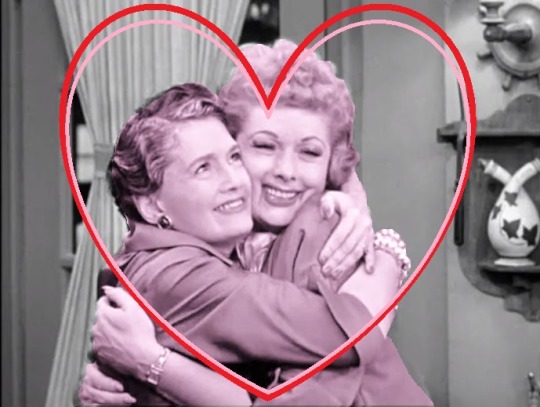
Although similarly titled, this radio episode is not the basis for the “I Love Lucy” episode “Lucy’s Mother-in-Law” (ILL S4;E8) in 1954.

“My Favorite Husband” was based on the novels Mr. and Mrs. Cugat, the Record of a Happy Marriage (1940) and Outside Eden (1945) by Isabel Scott Rorick, which had previously been adapted into the film Are Husbands Necessary? (1942). “My Favorite Husband” was first broadcast as a one-time special on July 5, 1948. Lucille Ball and Lee Bowman played the characters of Liz and George Cugat, and a positive response to this broadcast convinced CBS to launch “My Favorite Husband” as a series. Bowman was not available Richard Denning was cast as George. On January 7, 1949, confusion with bandleader Xavier Cugat prompted a name change to Cooper. On this same episode Jell-O became its sponsor. A total of 124 episodes of the program aired from July 23, 1948 through March 31, 1951. After about ten episodes had been written, writers Fox and Davenport departed and three new writers took over – Bob Carroll, Jr., Madelyn Pugh, and head writer/producer Jess Oppenheimer. In March 1949 Gale Gordon took over the existing role of George’s boss, Rudolph Atterbury, and Bea Benaderet was added as his wife, Iris. CBS brought “My Favorite Husband” to television in 1953, starring Joan Caulfield and Barry Nelson as Liz and George Cooper. The television version ran two-and-a-half seasons, from September 1953 through December 1955, running concurrently with “I Love Lucy.” It was produced live at CBS Television City for most of its run, until switching to film for a truncated third season filmed (ironically) at Desilu and recasting Liz Cooper with Vanessa Brown.
MAIN CAST

Lucille Ball (Liz Cooper) was born on August 6, 1911 in Jamestown, New York. She began her screen career in 1933 and was known in Hollywood as ‘Queen of the B’s’ due to her many appearances in ‘B’ movies. With Richard Denning, she starred in a radio program titled “My Favorite Husband” which eventually led to the creation of “I Love Lucy,” a television situation comedy in which she co-starred with her real-life husband, Latin bandleader Desi Arnaz. The program was phenomenally successful, allowing the couple to purchase what was once RKO Studios, re-naming it Desilu. When the show ended in 1960 (in an hour-long format known as “The Lucy-Desi Comedy Hour”) so did Lucy and Desi’s marriage. In 1962, hoping to keep Desilu financially solvent, Lucy returned to the sitcom format with “The Lucy Show,” which lasted six seasons. She followed that with a similar sitcom “Here’s Lucy” co-starring with her real-life children, Lucie and Desi Jr., as well as Gale Gordon, who had joined the cast of “The Lucy Show” during season two. Before her death in 1989, Lucy made one more attempt at a sitcom with “Life With Lucy,” also with Gordon.
Richard Denning (George Cooper) was born Louis Albert Heindrich Denninger Jr., in Poughkeepsie, New York. When he was 18 months old, his family moved to Los Angeles. Plans called for him to take over his father’s garment manufacturing business, but he developed an interest in acting. Denning enlisted in the US Navy during World War II. He is best known for his roles in various science fiction and horror films of the 1950s. Although he teamed with Lucille Ball on radio in “My Favorite Husband,” the two never acted together on screen. While “I Love Lucy” was on the air, he was seen on another CBS TV series, “Mr. & Mrs. North.” From 1968 to 1980 he played the Governor on “Hawaii 5-0″, his final role. He died in 1998 at age 84.
Ruth Perrott (Katie, the Maid) was also later seen on “I Love Lucy.” She first played Mrs. Pomerantz, a member of the surprise investigating committee for the Society Matrons League in “Pioneer Women” (ILL S1;E25), as one of the member of the Wednesday Afternoon Fine Arts League in “Lucy and Ethel Buy the Same Dress” (ILL S3;E3), and also played a nurse when “Lucy Goes to the Hospital” (ILL S2;E16). She died in 1996 at the age of 96.
Bob LeMond (Announcer) also served as the announcer for the pilot episode of “I Love Lucy”. When the long-lost pilot was finally discovered in 1990, a few moments of the opening narration were damaged and lost, so LeMond – fifty years later – recreated the narration for the CBS special and subsequent DVD release.
Bea Benadaret (Iris) and Gale Gordon (Rudolph) do not appear in this episode.
GUEST CAST

Hans Conried (Mr. Benjamin Wood) first co-starred with Lucille Ball in The Big Street (1942). He then appeared on “I Love Lucy” as used furniture man Dan Jenkins in “Redecorating” (ILL S2;E8) and later that same season as Percy Livermore in “Lucy Hires an English Tutor” (ILL S2;E13) – both in 1952. The following year he began an association with Disney by voicing Captain Hook in Peter Pan. On “The Lucy Show” he played Professor Gitterman in “Lucy’s Barbershop Quartet” (TLS S1;E19) and in “Lucy Plays Cleopatra” (TLS S2;E1). He was probably best known as Uncle Tonoose on “Make Room for Daddy” starring Danny Thomas, which was filmed on the Desilu lot. He joined Thomas on a season 6 episode of “Here’s Lucy” in 1973. He died in 1982 at age 64.
Mr. Wood is the Cooper’s next door neighbor. He has eleven children.

Eleanor Audley (Leaticia Cooper, George’s Mother) previously played this character in “George is Messy” on June 14, 1950. She would later play Eleanor Spalding, owner of the Westport home the Ricardos buy in “Lucy Wants To Move to the Country” (ILL S6;E15) in 1957, as well as one of the Garden Club judges in “Lucy Raises Tulips” (ILL S6;E26).

Peter Leeds (Deliveryman) was born in Bayonne, NJ, was also heard on “My Favorite Husband in “Too Many Television Sets” in October 1949 and “Dance Lessons” in June 1950. He will be seen as the Reporter questioning the Maharincess of Franistan in “The Publicity Agent” (ILL S1;E31). He starred with Lucy in the films The Long, Long Trailer (1953) and The Facts of Life (1960) with Bob Hope. Coincidentally, he also appeared in “Lucy and Bob Hope” (ILL S6;E1) as well as an episode of “Here’s Lucy” in 1971.
EPISODE
ANNOUNCER: “As we look in on Sheridan Falls and the Coopers, Liz is in the living room reading a magazine as Katie the maid dusts around the room.”
Liz asks about the mail, but Katie is light-heartedly singing “April Showers.”

“April Showers” is a popular song written by Louis Silvers and B. G. De Sylva in 1921. It it is one of many popular songs whose lyrics use a “Bluebird of happiness” as a symbol of cheer. The song was introduced in the 1921 Broadway musical Bombo, where it was performed by Al Jolson. That same musical introduced the song “California, Here I Come!” which was famously sung by the cast of “I Love Lucy” in January 1955.
Liz correctly assumes that Katie is so happy because Mr. Negley, the mailman, has flirted with her. Katie says they were “playing post office.”
KATIE: “He’s so creative. He said my mouth was like a postage stamp. Then he canceled me!”
Katie hands her the mail and Liz finds a letter from her mother-in-law.LIZ: “No one else addresses a letter ‘To George Cooper Only’ marked personal all over and then seals it with Scotch tape!”
Liz says that George’s mother does not acknowledge their marriage, let alone address her as Mrs. George Cooper. Liz decides to sneak a peak at what’s inside the envelope.LIZ: “I can just see some of the writing. It says ‘Keep Out Nosy’!”

Lucy Ricardo was adept at secretly opening and reading sealed envelopes. In 1951′s “Drafted” (ILL S1;11) she uses the old fashioned steam method, but by 1960′s “Lucy and the Mustache” (LDCH S3;E3) she’s using knitting needles and holding the envelope up to a lamp.
When George comes home from work, Liz doesn’t even bother with a kiss before giving George the mail. George opens the letter from his mother, which reads “say hello to what’s-her-name.” George’s mother is moving to Sheridan Falls and Liz wants to put her up at the Sheridan Arms (far away) but George proposes the Garden Court (two blocks away).
That night, Liz wants to smooch in case they have to ‘ration their passion’. Liz is sure Mother will want to move in with them. Mother (Eleanor Audley) enters mid-smooch. Despite the clinch, Mother pretends she doesn’t recognize Liz as Mrs. Cooper!
Mother ‘mother smothers’ George, much to Liz’s chagrin. George admits that they haven’t found her an apartment yet. Mother quickly agrees to stay with them – only for a few days.
LIZ: “It sounds longer when she says it.”

A Deliveryman (Peter Leeds) rings the bell to announce that they’ve finished unloading Mother’s things:
LIZ: “Six suitcases, a trunk, an easy chair, a potted plant, a barrel of dishes, two crates of books – just enough for a few days. She’s landed! She’s moved her supplies up and she’s dug in for the winter. You can throw away your calendar, George. From now on, every day is mother’s day with us!”
Two weeks later, Mother is still there and Katie is ready to quit. George’s mother has changed everything in the kitchen around. Liz confides that she’s had no privacy with George.
LIZ: “The three of us have been inseparable ever since she’s been here. I’m beginning to feel like one of the Andrews Sisters. I’d better go in and see how Patty and LaVerne are getting along.”

The Andrews Sisters were a very successful trio of singing sisters during World War II with 19 gold records and sales of nearly 100 million copies. In 1937, the sisters scored their first big hit with “Bei Mir Bist Du Schoen.” In addition to “Boogie Woogie Bugle Boy,” their best-known songs included “Don’t Sit Under the Apple Tree” and “Rum and Coca Cola.” The trio officially broke up after the death of LaVerne in 1967, when a suitable replacement could not be found. Patty Andrews guest starred on “Here’s Lucy” as herself in 1969. The plot had Lucy Carter and her daughter Kim (Lucie Arnaz) stepping in for the other two singers for a charity show. During a poker game in “Be a Pal” (ILL S1;E2), Lucy calls her two queens ‘sisters.’ When Fred looks at his newly-dealt hand he quips “You can tell your two Andrews Sisters not to wait up for LaVerne.”
In the living room, Liz finds Mother and George laughing about old times back home. Mother mentions Betty Johanson, a girl George ‘knew slightly’ a dozen years ago. Mother adds that she ‘hasn’t changed a bit.’
Later, Liz tells George that Katie has quit due to his mother’s meddling. George thinks Liz is out looking for an apartment, when Liz saw going to the movies at the Strand Theatre. At first Mother denies going to a movie, but Liz tricks her.
LIZ: “Well, if you were tired, you should have gone to a show. There’s a good one at the Strand: ‘Tokyo Joe’ with Clark Gable.”
MOTHER: “Gable? No, it was Humphrey Bogart, I….”Mother has been caught in her lie, so she fakes illness and goes to her room.

Tokyo Joe is a crime film directed by Stuart Heisler and starring Humphrey Bogart. It premiered October 26, 1949, a week before this broadcast. At the time, Clark Gable’s film Any Number Can Play was still in theatres.
Liz dissolves into tears at the prospect of her mother-in-law staying forever and runs next door to talk to Mr. Woods (Hans Conried) about it over a cup of tea. Mr. Woods says the same thing happened to him with his mother-in-law.
MR. WOODS: “She moved out after the birth of our eleventh child!”
LIZ: “Is that the only cure?”George comes over to find his wife and Mr. Wood acts as intermediary, shouting at George through the window. They are successful at patching things up. George has told his mother to leave and (unbelievably) she’s graciously agreed to go. Just as she’s about to leave, she gets a spell and faints.

LIZ: “George! Look out! A mouse! Running across the floor right near your mother’s hand!”
Mother jumps up and runs away from the invisible rodent. Liz tricks has tricked her again! But when Mother sprints across the room, she trips and sprains her ankle! Six weeks of recuperation ahead!GEORGE: “How did this happen?”
MOTHER: “I tripped and fell over my suitcase! Someone put it by the front door!”
LIZ: “Oh, no!”
his ending is identical to the play and film The Man Who Came To Dinner by Kaufman and Hart. In it, Sheridan Whiteside is a bombastic houseguest is finally convinced to leave when he slips on the ice and must stay on to recuperate, much to the frustration of his hosts. The 1939 stage play and 1942 film featured Lucille Ball’s friend Mary Wickes as Whiteside’s nurse.

In the bedtime tag, Liz and George are asleep in bed. Liz wakes George to wonder why he’s smiling. He’s dreaming about the most beautiful creature in the world: a rainbow trout!
LIZ: “If I ever find one scale on your lapel I’ll swim upstream to mother. Goodnight, George!”
End of Episode
-
Subscribe
Subscribed
Already have a WordPress.com account? Log in now.
 Papermoon Loves Lucy