-
“Milton Berle Hides Out at the Ricardos”

(LDCH S3;E1 ~ September 29, 1959)
Directed by Desi Arnaz. Written by Bob Schiller and Bob Weiskopf. Produced by Bert Granet. The script was finalized on March 6, 1959.
Synopsis ~ Lucy wants Milton Berle to perform in Little Ricky’s school play so she secretly offers her home for him to finish his latest book in peace. Ricky jumps to the conclusion that Lucy is having an affair!

This is the 11th of the hour-long “I Love Lucy” specials known in syndication as "The Lucy–Desi Comedy Hour.” During seasons 2 and 3 they were sponsored by Westinghouse and presented under the banner of the anthology series “The Westinghouse Desilu Playhouse.”

This episode opens the third and final season. Due to mounting off-screen pressures, this season was cut to three episodes from the previous five.

Desi Arnaz is credited as director of all three remaining episodes. His directing style is marked by more elaborate camera placement than his predecessors. Like most previous episodes, this one features a celebrity guest star and original music. This episode was filmed mostly without a studio audience, although one was brought in for a few of Milton Berle’s scenes, as he was used to playing in front of a live audience on his variety show.

Milton Berle and Lucille Ball were supposed to share the small screen for the first time in 1949 on his “Texaco Star Theatre” two years before Ball first appeared on “I Love Lucy”. However, at the time Berle was ill and was replaced by Walter O’Keefe, delaying the union of “Mr. Television” with the future “Queen of Comedy” for a full decade and this “Lucy-Desi” episode.
Before filming this episode, Lucy and Desi had just returned from a European cruise, a last-ditch attempt to save their failing marriage.

Milton Berle was born Milton Berlinger in New York City on July 12, 1908. He started performing at the age of five. He perfected his comedy in vaudeville, early silent films, and then on radio, before taking his act to the small screen, where he would be proclaimed “Mr. Television” and later “Uncle Miltie.” He hosted "Texaco Star Theater” on NBC from 1948 to 1956. The variety show was re-titled "The Milton Berle Show” in 1954 when Texaco dropped their sponsorship. The program was briefly revived in 1958, but lasted only one season. Berle continued to perform live, in films, and on television specials for the remainder of his career. One of his classic bits was to dress in drag, something he does in this episode. Berle re-teamed with Lucille Ball on three episodes of "The Lucy Show” and two episodes of “Here’s Lucy.” On all but one, he again played himself. He died of colon cancer in 2002.

At the time of the episode, Berle had just published his first (and only) novel, Earthquake written with John Roeburt. He had previously written the joke books Laughingly Yours in 1938 and Out of My Trunk in 1948. He wrote his autobiography in 1974 with help from Haskel Frankel. His last book was a 1987 collection of sketches and reminiscences titled B.S. I Love You.

Lucy is new chair of the Westport PTA entertainment committee. This is not the first nor the last time the group will get involved in a PTA show. In New York, they performed with Little Ricky in “The Enchanted Forest” in “Little Ricky’s School Pageant” (ILL S6;E10). Once in Westport, “Lucy Does the Tango” (ILL S6;E20) for the PTA (hopefully without her pockets full of raw eggs) and Tallulah Bankhead was recruited to be part of the PTA play “The Queen’s Lament” in the second “Comedy Hour” “The Celebrity Next Door” (1957).

The scene in Milton Berle’s office opens on a poster-sized TV Guide cover from January 10, 1959. The cover art is by famed theater artist Al Hirschfeld. It is flanked by Berele’s two 1950 Emmy Awards; one for Most Outstanding Kinescope Personality and the other for Best Kinescope Show.

Elvia Allman (Miss Trent, Berle’s secretary) had performed in three episodes of “I Love Lucy,” but is probably best remembered as the Candy Factory forewoman in “Job Switching” (ILL S2;E1). Previously on the “Comedy Hour” she had played PTA mom and play director Ida Thompson. She also returned for two episodes of “The Lucy Show.”
A construction worker asks Milton Berle to autograph a photo, giving him a list of names for the inscription, the last being “Ruth.” This was the name of Milton Berle’s wife, who appeared with her husband on a 1967 episode of “The Lucy Show.”

Sid Melton (Shorty, a construction worker) had just appeared on the “Comedy Hour” as a bellboy in “Lucy Goes to Alaska” (1958) and as one of the jockeys in “Lucy Wins a Racehorse” (1958). He later played Charley Halper on "Make Room For Daddy” and Alf Monroe on "Green Acres.”
Although he is never called “Shorty” in the episode, Melton lived up to the name at just 5’4” tall. His presence in the office scene allows the introduction of the construction bucket that Lucy will use to gain access to Berle’s office in an extended physical comedy stunt sequence in the show’s second half.
When talking to the two acrobats in his office, Berle mentions the Friars Club. In 1947, Milton Berle founded the Friars Club of Beverly Hills at the old Savoy Hotel on Sunset Boulevard. The Friars is a private show business club famous for its celebrity members and roasts, where a member is mocked by his club friends in good fun.

In the office, there are framed magazine covers featuring Milton Berle. In 1949 he was on the cover of Time and Newsweek (in drag).

On November 21, 1950 Berle and his daughter Vicki were on the cover of Look Magazine, which is also on the office wall.
Frank Mitchell (Tumbler) had appeared with Milton Berle on a 1950 episode of “Texaco Star Theatre.” His short-lived teaming with Jack Durant in vaudeville and Broadway led to minor success in films. Walter Pietela (Tumbler) was an acrobat who made only one more screen appearance. The pair of tumblers are included in the office scene if only to allow Berle to identify them as “Somersault and Maugham,” a pun on the name of British writer W. Somerset Maugham (1874-1965).

Oops! When Lucy is holding Berle’s book in the first scene, it moves positions in her hand between cuts.
When talking with his literary agent, Mr. Watson, Berle makes a joke about Ernest Hemingway fleeing to Cuba. Hemingway had first established a home in Cuba in 1939. A few months after this episode was filmed he returned to Havana for the last time. Fearing appropriation of his property by the Castro regime, he left Cuba in mid-1960 and never returned.

Later, Berle requests that Lucy get him cigars imported from Havana. When Ethel sees Lucy with the cigars, she requests that Lucy smoke one, which she does. This recalls the time when Lucy disguised herself as a cigar roller in Havana in “The Ricardos Visit Cuba” (ILL S6;E9).

Larry Keating (Mr. Watson) is probably best remembered on television as Roger Addison, the nosy neighbor on "Mr. Ed” from 1961 to 1963. The character’s name is Watson if only to allow Berle to use the punchline “Elementary, my dear Watson.” The quote is usually attributed to Sir Arthur Conan Doyle’s character Sherlock Holmes addressing his assistant, Dr. Watson. The exact wording, however, is not found in Doyle’s books, but does turn up in a 1929 film adaptation.

Forced to “get to work” by Lucy, Berle says “I wonder if Carl Sandburg started this way?” Earlier in 1959, the famous American poet Carl Sandburg became the first (and to date only) poet to address a joint session of Congress on the occasion of Abraham Lincoln’s 150th birthday, having already won a 1959 Grammy for his narration of “Lincoln Portrait” with music by Aaron Copeland. At the same time this episode aired, Bette Davis toured with her husband in an unsuccessful play titled The World of Carl Sandburg.

BERLE: “Lindy promised to name a sandwich after me if I gave up my table by the door.”
Lindy’s is a Manhattan deli and restaurant first opened in 1921 by Leo “Lindy” Lindermann, who died in 1957. It is famous for it’s New York style cheesecake and sandwiches named in honor of celebrities. Berle was said to be there nightly when in New York City. Ricky takes everyone to Lindy’s when he hears about getting the part in Don Juan during “Ricky’s Contract” (ILL S4;E10).

When a furious Ricky thinks Lucy is seeing another man, she tells Berle to hide upstairs. In what sounds like an ad-lib, Ethel quickly adds “We hid a horse up there once!” This is a callback to “Lucy Wins a Racehorse,” a 1956 episode of “The Comedy Hour.”

When Ricky mistakenly punches Mr. Watson, thinking he is the man Lucy is fooling around with, former Golden Gloves champion of 1909 Fred Mertz compliments him saying “Nice punching, Rick!” Ricky and Fred spent many hours watching prize fighting on television and at Madison Square Garden.

When Berle dons his famous drag, he goes by the name Mildred Burke, which (perhaps not coincidentally) was also the name of a female professional wrestler who retired in 1956. During the 1950s televised wrestling matches were extremely popular.

While hanging from the construction bucket, Berle says “Let me pay now, I’ll fly later.” This is a paraphrase of a popular airline marketing campaign “Fly Now, Pay Later.” The slogan was also mentioned in “Lucy Goes To Alaska” (S2;E3).
During the stunt on the construction bucket, Berle says that they can get a job on “The Ed Sullivan Show” as ‘The Flying Ricardos’. Ed Sullivan hosted an immensely popular variety show on CBS from 1948 to 1971. Until 1955 it was called “Toast of the Town.” In 1954, Sullivan’s show devoted an entire hour to "I Love Lucy.” Ed Sullivan was mentioned by Ricky in “The Ricardos are Interviewed” (ILL S5;E7) and “The Ricardos Dedicate a Statue” (ILL S6;E27).

A very elaborate stunt sequence involves Lucy, Berle, and Ricky hanging from a construction bucket 20 stories off the ground, although an insert shot of model cars moving along a street makes it look more like seven or eight stories high.

Stunt doubles were used for Berle and Desi, although there were specially filmed close-ups of the actors inter-cut into the scene.

Oops! While Lucy and Berle are hanging from the bucket, the camera catches sight of the wire used to make the bucket sway back and forth. In this scene Lucy is holding the legs of a stunt double.

At one point a pigeon lands on Berle’s head, just like when Lucy was on the ledge in “Lucy and Superman” (ILL S6;E13).

The PTA show is called “Western Frolics” and (for the viewers) consists mostly of the musical number “Them There Days.”
The song was composed by Arthur Hamilton especially for this show. The lyrics reference John Wayne, who guest starred in “Lucy and John Wayne” (ILL S5;E2).

Oops! A gag involving arrows was cut out of the final print, but the arrows still litter the floor in the subsequent shots.

A few publicity stills survive of the arrow gag.

In the number, Lucy plays an Indian squaw, something she previously did in “The Indian Show” (ILL S2;E24).

The gang also staged a western show for their “Home Movies” (ILL S3;E20).

In the original script, there was a scene where the Ricardos and Milton are chasing down the pages from Berle’s manuscript that the wind blew all over Central Park. The scene was cut from the script due to time constraints.
FAST FORWARD!

The Arnazes reciprocated Berle’s appearance on their show by appearing on “The Milton Berle Special,” which aired November 1, 1959 on NBC. The special was set in Las Vegas.

Pretending to be his own drunken brother as research for a role, Lucy Carmichael meets Milton Berle for the first time in “Lucy Saves Milton Berle” (TLS S4;E13) in 1965.

In 1965 Lucy Carmichael dated a construction foreman (Clint Walker) and also spent some precarious moments on a building under construction.

In 1966, Lucille Ball appeared on the premiere of Berle’s new show.
Despite much hype, this new ABC-TV show only lasted seven episodes.

Berle makes a wordless cameo in “Lucy and John Wayne” (TLS S5;E10) in 1966.

Two seasons later, Lucy Carmichael again met Milton Berle (this time with his real-life wife Ruth) in "Lucy Meets the Berles” (TLS S6;E1).

This episode inspired a similar story on a 1968 “Here’s Lucy” starring Eva Gabor as a writer that Lucy invites to her home to finish a book in peace and quiet – only to be embroiled in chaos. Coincidentally, Milton Berle’s name is mentioned in the dialogue!

A bald Berle sold Lucy Carter and her kids a lemon as Cheerful Charlie in “Lucy and the Used Car Dealer” (HL S2;E9) in 1969. This is the only time Berle played a character, rather than himself, on a Lucy-com.

Both Lucille Ball and Milton Berle appeared on “Zenith Presents: A Salute to Television’s 25th Anniversary” (1972).

In December 1973, Lucille Ball joined the Friars Club to celebrate Milton Berle’s 60 years in show business.

“Milton Berle Is the Life of the Party” (HL S6;E19) in a 1974 episode of “Here’s Lucy.”

On 1975′s “The Dean Martin Celebrity Roast: Lucille Ball” Lucy was roasted by Milton Berle, who said, “Lucille Ball has emerged as the sex symbol for men who no longer care.”

In 1976, Milton Berle tributed Lucille Ball standing in front of The Hollywood Brown Derby in “CBS Salutes Lucy: The First 25 Years”.

In 1984, Berle and Ball were among the first to be inducted to the Television Academy Hall of Fame.
1959, Arthur Hamilton, CBS, Desi Arnaz, Drag, Earthquake, Elvia Allman, Ethel Mertz, Frank Mitchell, Fred Mertz, I love lucy, Keith Thibodeaux, Larry Keating, Little Ricky, Lucille Ball, Lucy, Lucy Ricardo, Mildred Burke, Milton Berle, Mr. Ed, Ricky Ricardo, Sid Melton, Stunts, The Lucy-Desi Comedy Hour, tv, TV Guide, Vivian Vance, Walter Pietela, Western, William Frawley -
“Lucy Goes to Alaska”

(LDCH S2;E3 ~ February 9, 1959) Directed by Jerry Thorpe. Written by Bob Schiller and Bob Weiskopf. Filming completed December 19, 1958 at Ren-Mar Studios.
Synopsis ~ The Ricardos and Merztes go to Alaska where Ricky and Fred have bought some land and Ricky is doing a TV show. When Red Skelton’s partner fails to appear, Lucy is recruited to perform with him.

This was the third episode of the second season of hour-long “I Love Lucy” specials known in syndication as "The Lucy–Desi Comedy Hour.” They were part of “The Westinghouse-Desilu Playhouse,” an anthology series that presented new teleplays.

This is the only one of the 13 “Comedy Hours” that does not feature Keith Thibodeaux as Little Ricky. No one mentions where he is or who he might be staying with at home.

Like many other “Comedy Hours,” this episode featured a celebrity guest star (Red Skelton, playing himself), original music, and had the Ricardos and Mertzes away from home, this time in the brand new state of Alaska.
Red Skelton was born Richard Skelton in 1913. He left school after the third grade to join a traveling medicine show and from there entered vaudeville. His first film was Having Wonderful Time in 1938, which is where he first met Lucille Ball. The pair went on to appear together in:
- Du Barry Was a Lady (1943)
- Thousands Cheer (1943)
- Ziegfeld Follies (1945)
- The Fuller Brush Girl (1950)
The son of a circus clown, he always considered himself more clown than comedian. He created the character of Freddy the Freeloader, which he reprises here. He died in 1997 at the age of 84.
Rumor has it that Lucille Ball and Red Skeleton’s work ethics did not mesh on this episode. While Skeleton preferred to ad lib, Ball preferred to rehearse and stick to plan. According to Dann Cahn, Ball showed Skeleton how to do the "Freddie the Freeloader” sketch even though he had been performing the character for years! It was his most popular personality on “The Red Skelton Show.”

On January 3, 1959, Alaska was officially declared a state, although statehood had been approved by Congress on July 7, 1958, and was discussed for many years prior. It was the first non-contiguous state to be admitted to the union, closely followed by Hawaii on August 21,1959.

Secretary of State William H. Seward negotiated the purchase of Alaska from Russia in 1867 for $7.2 million sight unseen (something Ricky mentions in the show’s dialogue), causing it to be known as “Seward’s Folly.” It was officially incorporated as a US territory in 1912. It is the largest of the 50 states but ranks 48th in population.

Although the capital is Juneau, its largest city is Anchorage.This episode, however, is set in Nome.

In 1952’s “Lucy Gets Ricky on the Radio” (S1;E32) Lucy presciently (but incorrectly) answers the question “What was the last state to be admitted to the union?” by saying Alaska. In 1952, Alaska was only a territory working towards statehood. At the time, the correct answer to the question was Arizona, admitted on Valentine’s Day 1912.
Although the action is set in and around Nome, the second unit footage was filmed in Lake Arrowhead, California, about 100 miles from Hollywood outside San Bernadino. The exteriors were done with doubles and none of the regular cast left their newly-purchased Desilu (formerly RKO) Studios.

To get in on the Alaskan land boon, Fred’s friend Charlie Charles sells him 100 acres for $1,000 which he then splits with Ricky. Fred calls it their own little Fort Knox. Fort Knox is a US Army post in Kentucky, home to a large portion of the nation’s official gold reserves. In pop culture, the mention of Fort Knox has become synonymous with wealth.
If we go by the insert shots of the aircraft, the gang travels West on a United DC-7, but then transfers at some point to a smaller Alaska Airlines plane to get to Nome. Some viewers consider this an error, but are not accounting for possible transfers not shown on screen.

In conjunction with this episode Westinghouse published a souvenir Pocket Encyclopedia of Alaska, that included a map of the state and promoted their ‘Westinghouse Lucy-Desi Wonderama’ sales days. Westinghouse created special sales around several “Lucy-Desi” shows. Fred holds the publication in the first scene.
Fred bemoans (probably jokingly) that Ethel caused him to miss out on buying a sand dune in 1927 that became Miami Beach! He refers to it again later in the episode. At the start of the “Equal Rights” (ILL S3;E4) Fred tells a story about some land he bought in Miami that turned out to be a scam. This is never mentioned again, even when the gang head to Florida in season 6.
Sitcom Logic Alert! The Ricardos and Mertzes arrive in Nome a day early but didn’t think to call ahead to the hotel to make sure they had rooms available. Naturally, they don’t – and neither does anyone else!

The Ricardos and the Mertzes sharing one ramshackle hotel room is reminiscent of “First Stop” (ILL S4;E13) where the foursome shares a run-down cabin in Ohio on their way to California.

William Newell (Desk Clerk) had previously appeared with Lucy in Without Love (1945) and A Woman of Distinction (1950). He was born in Millville, New Jersey in 1894.
When Ethel sits on the one bed in the room, its springs creak loudly. She calls it “Alaskan Muzak”! Muzak is a brand of background music played in retail stores and other public establishments like hotels. The original patents extend back to the 1920s, but it has been a registered trademark since 1954. In the 1950s, newspapers reported that Muzak may be a subliminal form of brainwashing. Although debunked, these rumors brought Muzak to the attention of many more Americans (like Ethel!) who previously may not had heard of it.
Ricky and Fred discover their real estate investment is ten minutes from the heart of town – by airplane!
FRED: “If it was two miles farther it’d be in Siberia!”
Siberia is a vast region spanning much of northern Russia that is well known for its harsh winters and barren landscape. It has entered the pop culture lexicon as a synonym for a remote, frozen wasteland. The joke works especially well because Russia is Alaska’s closest neighbor, as Sarah Palin will attest!

Sid Melton (Bellboy) had appeared as one of the jockeys in “Lucy Wins a Racehorse” (1958) and would go on to appear in “Milton Berle Hides at the Ricardos” later in 1959. A recognizable character actor, he played Charley Halper on "Make Room For Daddy” and Alf Monroe on "Green Acres.”

In Nome, Ethel gets the bed with the squeaky springs, Fred gets the sleeping bag on the floor (which he calls “an envelope”), Ricky is on a rickety cot, and Lucy is in an unwieldy hammock, which provides ample opportunity for her to do some physical comedy.
Oops! One of the times Lucy falls off the hammock, she throws the blankets and pillows back on but in the next moment the whole hammock is made up with everything arranged properly.
Fred says that he is going to write his congressman, but didn’t know who he is. At the time this episode aired, Donald J. Irwin would’ve been the Ricardos’ and the Mertzes’ congressman for Westport, Connecticut.

Upset with these sleeping arrangements, Fred says “Before they make Hawaii a state, they’d better make sure they’ve got enough beds to go around.” When Fred gets annoyed at Ricky he says “It’s not bad enough we have 49 states, now we have to hear from Cuba.” Hawaii was made the 50th state on August 21, 1959, just six months after this episode first aired. Like Alaska, it was a long time coming.
Ricky’s cot breaks forcing him to share the bed with Fred. Why Fred and Ethel didn’t share the bed in the first place probably had more to do with Vivian Vance’s disdain of William Frawley than anything else. While they shared the double bed in 1955’s “First Stop,” by 1959 Vance’s long-standing dislike of her co-star had her reading each new episode’s script dreading that she’d have to share anything more intimate than a line of dialogue with Frawley.

When Skelton’s partner can’t make it for the show, he asks Ricky if his harpist (Nancy) can do it. Ricky says she doesn’t know anything about acting. When Lucy eagerly volunteers, Ricky naturally says no and an argument ensues.
RED: “I didn’t want to start another Spanish-American War.”
The Spanish-American War was an armed conflict between Spain and the United States in 1898. Hostilities began in the aftermath of the explosion of USS Maine in Havana harbor in Cuba, leading to US intervention in the Cuban War of Independence.
- Ethel mentioned the war in “The Ricardos Visit Cuba” (ILL S6;E9).
- In “The Marriage License” (ILL S1;E26), Mr. Willoughby (Irving Bacon) is referring to the war when he says about Spain, “We licked ’em in ’98 and we can do it again!”
- When “Lucy Wins a Racehorse” (LDCH S1;E4), Lucy decides not to tell Ricky about her prize, but Fred warns her that if he finds out it will be the “biggest Cuban explosion since the Battleship Maine.”

Jess Kirkpatrick (Show Director, left) had played the Westport train station clerk in “Lucy Misses the Mertzes” (ILL S6;E17). The young man on the right is unidentified and uncredited.

The highlight of the episode is the nine-minute ‘Freddy the Freeloader’ pantomime between Skelton and Lucille Ball, miming a couple of hobos dining at the Ritz. The non-verbal scene (also using sound effects and background music) allows the two finest clowns on television (both redheads, but only one by birth) to do what they did best. In 1952 Skelton won an Emmy for Excellence in Comedy. In his acceptance speech he said “You’ve given this to the wrong redhead. It should go to Lucille Ball.”

The song “Poor Everybody Else” that frames the pantomime was written especially for this episode by Arthur Hamilton, who provided occasional musical numbers for the “Comedy Hours.”

The number is reminiscent of “We’re A Couple of Swells” by Irving Berlin from Easter Parade (1948) in which Judy Garland and Fred Astaire play a couple of tramps envying the lifestyle of the elite (the ‘swells’).

When Ricky and Fred hear that there may be oil on the property they purchased, they change their tunes about being scammed and race to prevent Lucy from selling it to Red Skelton. Striking it rich was also the driving force behind the plot of “Oil Wells” (ILL S3;E18), even though the group never left Manhattan!

When their Jeep gets stuck in a snowbank and they are stranded in the snow , Lucy says that her feet are freezing!
LUCY: “I don’t know how the penguins stand it!”
Oops! Contrary to popular belief, there are no penguins in Alaska. Penguins are only found in the Southern hemisphere…

…or on the set of “Here’s Lucy” in 1973!

Iron Eyes Cody (Eskimo pilot, left) made a career of playing Native American characters despite the fact that he was of Italian ancestry. He first worked with Lucy and Desi in 1940’s Too Many Girls and 1942’s Valley of the Sun.

He played the Medicine Man in a 1969 episode of "Here’s Lucy” but is probably best remembered as the Indian that sheds a single tear in the "Keep America Beautiful” ads that ran from 1971 to the 1980s.
Like Cody, Charles Stevens (Eskimo #2) frequently played Native American characters on screen. Coincidentally, he followed this appearance by playing an Eskimo on the short-lived series “The Alaskans” (1960). Extra Jack Kenny also went on to play Alaskan characters in 1960 with North to Alaska and TV’s "Klondike.”

When Lucy tries to pay the Eskimos to fly them back to Nome, they refuse $100 on the grounds it is unsafe. When Lucy offers them $200, Red reminds her that they only have $100 with them.
LUCY: (To Eskimos) “Fly now, pay later?”
Fly Now, Pay Later was the marketing slogan for many airlines during the 1950s. Facing increased competition, they offered to only take a small down payment for fares booked, in lieu of full payment at a later date.

RED: “What’s that blue stuff?”
ESKIMO PILOT: “Sky.”
LUCY (To Red): “You act as though you’ve never seen sky before.”
RED: “I haven’t. I live in Los Angeles.”This is a joke about Los Angeles smog problem, a subject that will be mentioned several times by name on “Here’s Lucy.” Smog is a type of severe air pollution. The word "smog” was coined in the early 20th century, and is a contraction (portmanteau) of the words smoke and fog to refer to smoky fog. In July 1943 Los Angeles experienced smog so sudden and severe that residents believed the Japanese were attacking them with chemical warfare!

When the pilot gets knocked out, Red must fly the plane!

The tiny Nome airport is decorated with posters from Alaska Airlines.

The man at the airport (who is uncredited and unidentified) must ‘talk’ Red down for a safe landing.

The plane lands safely after crashing into a snowbank! When Ricky tells Red that there’s oil on the property he says he’s going to be “Mr. Standard Oil of Alaska” – but Red reveals that he had to give the property to the Eskimo pilot in return for the flight!
Standard Oil was established in 1870 by John D. Rockefeller and Henry Flagler but was found to be an illegal monopoly and dissolved in 1911. The original Standard Oil Company split into Esso (phonetic spelling of SO), now Exxon; and SOcal, now Chevron.

Providing the voice of the weather announcer heard in the airport scene is Robert Osborne, an alumnus of Lucy’s Desilu Workshop who later went on to great fame as the host of TCM’s movie channel.
Background actor Jack Kelly plays a man in the hotel lobby. Hazel Pierce, Lucille’s camera and lighting stand-in as well as frequent background actor, is also in the busy lobby.
FAST FORWARD! RED ROVERS!

Dell Comics 1961

In the fall of 1962, both Lucy and Red took to the airwaves to promote their new programs on CBS in “CBS Opening Night” with Red reminding viewers that Lucy’s “not the only redhead on CBS”!

Lucy and Red both had character cameos when Jack Benny marked his 20th Anniversary on Television in 1970; he as a messenger boy, she as a maid!

In 1971, Lucy and Red both participated in “Swing Out Sweet Land” a patriotic tribute to America. Lucy voiced the Statue of Liberty and Red played a newspaper printer.

“TV: The Fabulous ‘50s” (March 3, 1978) featured Lucille talking about sitcoms and Skelton talking about comedy. It was rebroadcast in 1980.

On May 29, 1978 both Lucy and Red took the dais at the Kennedy Center for “Happy Birthday, Bob: A Salute to Bob Hope’s 75th Birthday.”

In 1978, Red and Lucy played themselves on the TV special “General Electric’s All-Star Anniversary”.

When CBS marked their 50th Anniversary in 1978 with a week-long tribute, Lucille Ball and Vivian Vance were present to represent Monday nights and Red Skelton was on hand to represent Tuesdays.

In 1979, John Ritter (a favorite of Lucille Ball’s) recreated Lucy’s hammock debacle on his show “Three’s Company.”

In 1988, Vicki Lawrence (whose co-star Carol Burnett was another favorite of Lucille’s) also took a turn (literally) on the make-shift bed on “Mama’s Family.”

The Hamilton Collection issued a collectible plate based on the episode in 1999.
1959, Alaksa, CBS, Charles Stevens, Desi Arnaz, Eskimos, Ethel Mertz, Fred Mertz, Freddy the Freeloader, Hammock, I love lucy, Iron Eyes Cody, Jess Kirkpatrick, Lake Arrowhead, Lucille Ball, Lucy, Lucy Goes To Alaska, Lucy Ricardo, Nome, Red Skelton, Ricky Ricardo, Sid Melton, The Lucy-Desi Comedy Hour, tv, Vivian Vance, Westinghouse, William Frawley, William Newell -
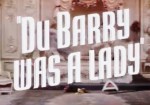
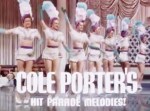
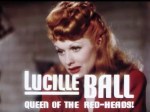
DUBARRY WAS A LADY (1943) starring Lucille Ball, Red Skelton, Gene Kelly, Virginia O’Brien, Rags Ragland, and Zero Mostel.
-
“Lucy’s Summer Vacation”

(LDCH S2;E5 ~ June 8, 1959) Directed by Jerry Thorpe. Written by Bob Schiller and Bob Weiskopf. Script copyright May 5, 1959. Filmed at Desilu Studios, Culver City.
Synopsis ~ Lucy and Ricky go on vacation to Vermont and end up sharing their cabin with Howard Duff and Ida Lupino. When the girls feel they aren’t getting their husband’s full attention, Lucy takes drastic steps!

This was the final installment of the second season of “The Lucy–Desi Comedy Hour,” then part of the “Westinghouse Desilu Playhouse.” This is the first complete episode filmed without a studio audience.

It features guest stars (and real-life celebrity couple) Howard Duff and Ida Lupino playing themselves, although they behave a bit like the characters in their television show "Mr. Adams and Eve,” seen on CBS from 1957 to 1958.

This was the third of four times a real-life Hollywood husband and wife appeared on the “Comedy Hour,” the first being Fred MacMurray and June Haver in “Lucy Hunts Uranium”, the second Betty Grable and Harry James in “Lucy Wins a Racehorse,” and the fourth Ernie Kovacs and Edie Adams in “Lucy Meets the Mustache”. The ultimate in celebrity couples wouldn’t be seen until a 1970 episode of "Here’s Lucy” – Elizabeth Taylor and Richard Burton!

This episode’s lead-in was “The Ann Sothern Show” which was produced by Desi Arnaz. Sothern had guest-starred in the very first “Lucy-Desi Comedy Hour”. This particular episode of “The Ann Sothern Show” featured Richard Reeves, who was seen on nine episodes of “I Love Lucy,” most memorably as jealous husband Bill Foster during season one. Four months later (October 1959), Lucille Ball will play Lucy Ricardo on an episode of “The Ann Sothern Show.”

In the story, Lucy and Ricky have been invited by Ricky’s absent-minded friend Harry Bailey to spend a week at his lodge on (fictional) Lake Wotchasokapoo, Vermont. The show took the Ricardos out of their Connecticut home, but the scenes were not filmed on location in Vermont but inside Desilu Studios. There is one brief establishing shot of a lake.
Interestingly, Lucille Ball’s paternal great-grandfather, Clinton Manross Ball, moved from the state of Vermont to Fredonia, just north of Jamestown in Chautauqua County, New York, in the mid-1800s.

The Ricardos soon find out that Harry has also loaned the remote cabin to Howard Duff and Ida Lupino for the same week! The girls quickly tire of the men going fishing everyday and playing cards every night, so they dress in their swankiest finery to woo the men for a romantic evening. When that fails, Lucy comes up with a scheme to keep them in the cabin and not on the lake.

Ida Lupino was born in 1918 into a theatrical family in London, England. Her uncle was Lupino Lane, the original Bill Snibson in Me and My Girl (1937) popularizing "The Lambeth Walk.” She came to Hollywood in the late 1930s where she described herself as “the poor man’s Bette Davis.” She appeared in 59 films, and directed seven others, becoming only the second female to be admitted to the Directors Guild of America. She was equally at home on television, earning three Emmy nominations. Her third and last husband was Howard Duff, whom she divorced in 1984. She died in August 1994 at the age of 77.
Lupino was known to frequently call people “darling” just like Tallulah Bankhead, another “Comedy Hour” guest star. Like Bankhead, Lupino plays up her movie star persona for the camera.
Howard Duff (1913-90) met Ida Lupino while filming 1950’s Woman in Hiding. They were married the following year. As a couple they worked extensively together on television, even appearing as guest villains on TV’s "Batman” in 1968. Like Lucy, Duff was labeled a communist in the early 1950s, which nearly ruined his career. Many say his marriage to Lupino saved him from total blacklisting. Although he was equally at home on the small screen, he is perhaps best remembered as Dustin Hoffman’s attorney in Kramer vs. Kramer (1979).

According to some reports, tensions ran high during the filming. Lucy became angry when Desi began flirting with Lupino. Lucy also wasn’t getting along with director Jerry Thorpe. She was worried that Lupino wouldn’t be able to handle the comedy in the episode, and confidentially mentioned it to Thorpe, who then turned around and told Lupino of Lucy’s concerns. Allegedly, Lucy was angry about his betrayal of her confidence and walked off the set until Thorpe was replaced. Desi Arnaz ended up directing the remainder of the episode.

In one scene, when the husbands kiss their wives goodnight, Ricky very clearly gives Lucy an “air kiss” while Duff gives Lupino a proper (and noisy) smooch. There is, however, a more heartfelt kiss between the Ricardos at the end of the episode.

Master of noir, cinematographer Nicholas Musuraca, Ida Lupino’s director of photography on The Hitch-Hiker (1953) – which Lupino directed – was the cinematographer for this episode.

Desi Arnaz really enjoyed fishing and it was previously worked into the plot of “I Love Lucy” in “The Camping Trip” (ILL S2;E29). The Ricardos also went “Deep Sea Fishing” (ILL S6;E7) when visiting Miami Beach, Florida.

To dispense with the rest of the regular cast while the Ricardos and Duffs play out their farcical vacation, Little Ricky (Keith Thibodeaux) is sent off to Scout Camp while Fred and Ethel (Vivian Vance and William Frawley) are going to Atlantic City.
One of Ricky’s Tropicana shows was set in Atlantic City, New Jersey, during the Gay ‘90s. In “Breaking the Lease” (ILL S1;E18), Lucy finds a sentimental photo of the Ricardos and Mertzes in Atlantic City.
Little Ricky appears in all but one of the “Lucy-Desi Comedy Hours”. He was never credited by his birth name or his stage name (Richard Keith) but simply as “Little Ricky.”

Naturally, the Ricardos have the latest two-toned Westinghouse refrigerator.
At the start of the episode Lucy is in her kitchen listening to a (fictional) radio soap opera called “Hope Springs Eternal,” complete with dramatic organ music. The announcer is voiced by Carlton Young, who starred in real-life radio dramas including "Our Gal Sunday,” "Portia Faces Life,” and "Stella Dallas.” Young and Lucille Ball had both appeared in 1942’s Valley of the Sun.

The cabin – the calm before the chaos begins!

On the cabin’s kitchen windowsill is a deft-style blue and white ceramic canister set. It is a German ceramic canister by Inge with a Dutch windmill design. The full set included five 8” canisters consisting of the tea, coffee, sugar, oatmeal and barley plus three smaller canisters consisting of pepper, ginger, and cloves.

While Lucy and Ricky are taking a moonlit stroll, Howard Duff gets into the cabin through an unlocked window, a trick he says he learned while playing Sam Spade. Duff played Dashiell Hammett’s famous private eye on radio from 1946 to 1950. Duff and Lupino claim to have been on a personal appearance tour before arriving at the cabin.
Harry Bailey sends the local general store owner (William Fawcett) to tell the couples about the double booking. He recognizes Ricky Ricardo from a $2 bus tour he and his wife took of New York City. He says that she liked the way Ricky sang “Baby-loo.” The moment is reminiscent of when the locksmith from Yonkers, trying to unlock “The Handcuffs” (ILL S2;E2), recognizes Ricky and also comments on his “Bobalink” number.

William Fawcett had appeared with Lucy in the 1951 film The Magic Carpet and had played the grizzled old prospector in “Lucy Hunts Uranium,” a season one “Comedy Hour” episode.

IDA: “I’d have had a better time at the Fulton Fish Market.”

The Fulton Fish Market was the most important wholesale East Coast fish market in the United States. Opened in 1822, it was the destination of fishing boats from across the Atlantic Ocean. By the 1950s, most of the Market’s fish were trucked in rather than offloaded from the docks. In 2005, after 193 years, the Market relocated to a new facility in the Bronx, leaving its historic location near the Brooklyn Bridge in Lower Manhattan.


When Lucy expresses frustration at not being able to reach an island by boat, Lupino says “How do you expect us to get over there, have Alec Guinness build us a bridge?”

This is a reference to the 1958 Academy Award-winning film The Bridge On the River Kwai that starred Guinness and William Holden, the first celebrity Lucy encountered in Hollywood.
When Lucy wants to take a moonlit stroll along the lake, Ricky quips that they should have vacationed at Cape Canaveral. Although it was not then the center of the space program it is today, and the moon landing was more than ten years in the future, in 1958 the government relocated staff and resources devoted to unmanned missions.

This was the second time “Cielito Lindo” was performed on the “Comedy Hour,” having already been heard in “Lucy Takes a Cruise to Havana” (1957). It was sung a total of five times on "I Love Lucy” more than any other song except "Babalu.”

The show also includes a rousing round of “Row, Row, Row Your Boat” an English nursery rhyme and children’s song first published in 1852.

This was the lowest-rated “Comedy Hour” episode to date. Variety called it "the least rewarding” of the specials thus far, and noted that “this one falls flat most of the way.”

Westinghouse introduced a new product during this episode, the Dog-o-matic, which cooked six hot dogs in 90 seconds. It sold for ten dollars.

In front of the show curtain at the end of the episode, Desi Arnaz starts to tell the audience about next week’s show, only to be interrupted by the Fred and Ethel, taking their old refrigerator to a Westinghouse dealer. This led to a commercial for “Westinghouse Opportunity Days” starring Betty Furness.
FAST FORWARD!


The Summer of 1959 the Ricardos weren’t the only ones escaping to a cabin in the woods. In 2018 “The Marvelous Mrs. Maisel” (set in 1959) also took a summer vacation! To revisit the remarkable similarities, click here!

A leaky boat on a lake also plagued Lucy Carmichael and Viv Bagley on a 1963 episode of “The Lucy Show.”

While at a lakeside cabin with her son, Lucy Carmichael decides to join in the card game in “Lucy Becomes a Father” (TLS S3;E9).
1959, Betty Furness, Carlton Young, CBS, Cielito Lindo, Desi Arnaz, Ethel Mertz, fishing, Fred Mertz, Howard Duff, Ida Lupino, Jerry Thorpe, Little Ricky, Lucille Ball, Lucy, Lucy Ricardo, Lucy’s Summer Vacation, Lucy-Desi Comedy Hour, Mr. Adams and Eve, Ricky Ricardo, rowboat, tv, TV Guide, Vermont, Vivian Vance, Westinghouse, William Fawcett, William Frawley -
Happy Holidays to all the readers of Papermoon Loves Lucy!
-
“Lucy Wants a Career”

“I CAN’T BELIEVE IT. LUCY ON TELEVISION!”
(LDCH S2;E4 ~ April 13, 1959) Directed by Jerry Thorpe. Written by Bob Schiller and Bob Weiskopf. Produced by Bert Granet. The script was finalized on March 6, 1959.
This is the fourth episode of the second season of the “The Lucille Ball – Desi Arnaz Show” (known in syndication as
“The Lucy–Desi Comedy Hour”), part of the “Westinghouse Desilu Playhouse” anthology series.
Original writers Bob Carroll Jr. and Madelyn Martin served as script consultants.

This episode does not feature original songs or location shoots as many other "Comedy Hours” do, but does have a celebrity guest star: Paul Douglas, playing (essentially) himself.

Except for a few scenes starring Milton Berle in September 1959, this was the last full episode shot entirely in front of a live studio audience.

Paul Douglas was born in Philadelphia in 1907. After attending Yale, he made his Broadway debut in 1936. A decade later he appeared on the Great White Way in the highly successful Born Yesterday with Judy Holliday, winning both the Theatre World and Clarence Derwent awards. He turned down the opportunity to recreate his role in the 1950 film version of Born Yesterday when he found his part had been severely reduced. He did, however, get to play the role in a 1956 TV film with Mary Martin standing in for Holliday. This is one of Paul Douglas’s last appearances. He died of a heart attack six months after the episode aired.
Early in his career Douglas had worked in radio as a sportscaster and narrated documentary films so having him host a new morning news show was not within the realm of possibility.

A bored and frustrated Lucy calculates that she’s prepared 19,710 meals in her eighteen year marriage. Accounting for meals out, they agree to 19,000. In 1952’s “Pioneer Women” (ILL S1;E25), Lucy figures out that she’s washed 219,000 dishes since being married to Ricky.
LUCY: “Being a housewife is a big bore!”
Lucy flirts with the idea of hiring a housekeeper, forgetting that the last time she took on help (a maid named Mrs. Porter) things didn’t go so smoothly.

Ricky reads in Variety that Danny Kaye is returning to London to give another command performance for Queen Elizabeth. Lucy and Ricky gave their own command performance at the London Palladium in “Lucy Meets the Queen” (ILL S5;E15).
That episode was the last time Kaye’s name was mentioned – by the star-struck bellhop of their London hotel.
Kaye’s 1948 performance was never repeated, so it is likely Ricky is just making up the news item to distract Lucy from her housekeeping woes. Lucille Ball appeared on two Danny Kaye specials in the early 1960s and he returned the favor by appearing on “The Lucy Show” in 1964.
LUCY (mocking Ricky): “I wonder what the Quinn is cooking for Philip tonight?”
On a bet, Lucy Ricardo previously entered the business world in “Job Switching” (ILL S2;E1) where her office ended up being a candy factory. Aside from her show business aspirations, various other episodes of “I Love Lucy” had Lucy briefly employed running a diner, selling salad dressing, or a owning a dress shop.

The audience learns that Little Ricky is a Cub Scout, a fact that will be mentioned again in the next “Comedy Hour” episode, "Lucy’s Summer Vacation.” During “The Lucy Show,” Lucy Carmichael will become a Cub Scout den mother for her son Jerry and scouting will be involved in many episodes.
Little Ricky goes for a sleep-over at Bruce Ramsey’s house. This is one of the few mentions of the Ricardo’s Westport neighbors. They remain unseen throughout all of the “Comedy Hours.” The last time we saw Bruce was in “Housewarming” (ILL S6;E23). Although Keith Thibodeaux appeared in all but one of the “Comedy Hours” the storyline usually found a way of getting him out of the way before the plot cranked into overdrive!

Doris Packer (Miss Massey, Mr. Douglas’s Secretary) returns to Desilu after being seen in the audience at The Most Happy Fella during “Lucy’s Night in Town” (ILL S6;E22). She is probably best remembered as Mrs. Millicent Sohmers on "The George Burns and Gracie Allen Show” (1956).

While waiting to be interviewed by Paul Douglas, Lucy peruses the May 1959 issue of Screen Parade, with Elizabeth Taylor on the cover. On the coffee table in front of her are copies of LIFE and LOOK Magazine from February 1959. Taylor was mentioned on two episodes of “I Love Lucy” an appeared as herself on “Here’s Lucy” in 1970.

Girl Friday is a now-outdated term for a female assistant who does a variety of tasks. In the 1719 novel Robinson Crusoe by Daniel DeFoe, Crusoe calls a man he cannot communicate with Friday because they first meet on that day. The character is the source of the term Man Friday, used to describe a male personal assistant or servant, which later became Girl Friday.
Lucy’s competition to become Douglas’ Girl Friday is fierce. When introducing themselves to the secretary all four actresses use their real names, although the show’s credits have more ‘creative’ descriptions for them: Leg Girl, Leg Girl #2, Low Neck, and Hairdo!

Sue Casey (Miss Leg Girl, left) was a fashion model and actress who appeared in countless films. She appeared in two Best Picture Academy Award winners which were released 48 years apart: An American in Paris (1951) and American Beauty (1999). Casey was also seen in a 1964 episode of “The Lucy Show” featuring Danny Kaye.
Lorrine Crawford (Miss Leg Girl #2, right) had appeared with Lucille Ball in Top Hat in 1935. She continued to do small roles in musicals up until her final appearance in Camelot in 1967.

Joi Lansing (Miss Low Neck) returns to the series after playing one of the Starlets in “Desert Island” (ILL S6;E8, inset). Lansing began posing at 13 and attended MGM’s talent school at age 17. Most TV fans remember her as the wife of Lester Flatt on “The Beverly Hillbillies” from 1965 to 1968. She would later become Lucille Ball’s stand-in on "Life with Lucy.”

Larri Thomas (Miss Hairdo) was born Lida Larrimore Thomas in 1932. She appeared in several popular musical films, including Guys and Dolls (1955), The Pajama Game (1957), South Pacific (1958), The Music Man (1962), and Mary Poppins (1965). She returned to work on a 1965 episode of “The Lucy Show” starring Danny Thomas.
To thin out the pool of potential candidates, Lucy plants rumors that Douglas is a ‘wolf’ (a womanizer). Although this kind of thing wasn’t unusual at time, the advent of the “Me Too” generation makes Lucy’s accusations a bit difficult to laugh at today. Thankfully, Douglas gets wise to her scheme and reads her the riot act.
In real life, Paul Douglas had five wives!

During most of this episode, Lucille Ball does not wear a wig, mainly because of the need to continually re-style her hair during the audition scene.
When Lucy brags that she’s married to Ricky Ricardo, Douglas says he wouldn’t hire her if she were Xavier Cugat’s wife! Since season one of “I Love Lucy,” Cugat’s name has been used as the source of humor. A former employer of Desi Arnaz, the series takes every opportunity to exploit a made-up rivalry between the two Latin-American bandleaders.
When the sponsor (Pierre Watkin) finds out that Lucy is a housewife, he hires her on the spot, much to Douglas’ chagrin.

Pierre Watkin (Mr. Robinson, the sponsor) had appeared in three films with with Lucille Ball between 1936 and 1947. He returns to the series after playing Mr. Dorrance, Lucy’s publisher, in “Lucy Writes a Novel” (ILL S3;E24).
Douglas estimates that the “Early Bird” show has 20 million viewers – despite the fact it hasn’t even premiered yet! This number reflects the number of people who watched “The Academy Awards” telecast that week, but would not be realistic for a national morning show’s debut broadcast.

Louis A. Nicoletti (TV Floor Manager) was a regular background performer and crew member for Desilu.

The first morning news program on television was “Three To Get Ready,” a local show hosted by comedian Ernie Kovacs that aired in Philadelphia from 1950 to 1952. Kovacs would guest star on the final episode of the “Comedy Hour” in 1960. Although it was mostly entertainment-oriented, the program did feature news and weather segments.

Its success prompted NBC to look at producing something similar on a national basis and in January 1952 the "Today Show” premiered. CBS (Lucy’s network) entered the field in 1954, but was never able to match the success of NBC.

In a cooking segment, Lucy can’t bear to boil a lobster alive.

When Douglas accidentally sits on the clawed crustacean, the show grinds to a temporary halt!
Lucy’s first day as a Girl Friday is so disastrous that Douglas fires her! The sponsor, however, discovers that she was a hit with audiences, so Lucy is signed to a three year contract. This is reminiscent of several episodes of “I Love Lucy” where Lucy ends up being a big hit despite making a mess of things: “The Mustache” (ILL S1;E23), “Home Movies” (ILL S3;E2), and “Lucy and the Dummy” (ILL S5;E3), all end with Lucy praised for her tomfoolery.

Lucy says that after signing her new contracts everyone went out to 21. The upscale 21 Club opened in 1922 and is still in business today. It is a restaurant and former prohibition-era speakeasy located at 21 West 52nd Street (hence the name) with an exterior decorated with lawn jockeys.
Lucy and Ethel first said they were going to 21 in “Vacation from Marriage” (ILL S2;E6) then again in “Mr. and Mrs. TV Show” (ILL S4;E24).

With no one left to tell about her exciting day, Lucy talks to a sleeping Fred, whom Ethel dubs “Rip Van Mertz”. The remark is based on the character of Rip Van Winkle from Washington Irving’s 1819 story about a man who falls asleep and wakes up 20 years later.
Once Lucy is a working woman, the episode mirrors real life for the Arnazes in the 1940s. Lucy would meet Desi at the train station as she was leaving for work at a movie studio, while Desi would be headed home after working at a nightclub.

The episode includes some stock footage of the Main Concourse of Grand Central Station. Located at 42nd Street and Park Avenue in Midtown Manhattan, Grand Central opened in 1913 and is the third-busiest train station in North America, after New York Penn Station and Toronto Union Station.
Lucy and Ricky spend a few poignant moments catching up with each other as he arrives (headed for the Club Babalu) and she departs (headed for their Westport home).
After one such brief encounter, Ricky says to Lucy:
RICKY: “I’ll see you tomorrow. Same time, same station.”
Ricky can’t help but smile at his pun on the word ‘station’, but it makes Lucy cry. Early radio and TV programs would sign off with the words “Same Time, Same Station [or Channel]” to remind viewers where and when to tune in. By the 1960′s, TV’s “Batman” was signing off their two-part episodes with the clever “Same Bat Time, Same Bat Channel.”

When a drowsy Fred mistakenly thinks Ethel is going to be a mother, she rips into him with a rare moment of sarcasm. This moment must have been particularly satisfying to Vivian Vance, who never had much affection for her co-star.

Before leaving the station, Douglas is approached by a fan (Sam Hearn) who thinks he knows how to ‘fix’ his television show! Like the other girls in the audition scene, the character is called “Kibitzer” in the credits. A kibitzer is a Yiddish word for someone who offers unwanted advice!
Sam Hearn (Kibitzer) was also a musical comedy performer on Broadway between 1915 to 1929. He played Lucy’s childhood doctor, Doc Peterson, in “The Passports” (ILL S5;E11).

When the sponsor refuses to let Lucy out of her contract, a frustrated Douglas says about TV: “No wonder Ed Murrow’s taken a year off!” CBS commentator and host Edward R. Murrow took a one-year sabbatical from summer 1959 to mid-1960 due to continuing conflicts and stress with the network. His landmark show “Person To Person” was satirized as “Face To Face” on “The Ricardo’s Are Interviewed” (ILL S5;E7) with actor Elliott Reid as Murrow.
Lucy thinks she’s been released from her contract so takes pills to sleep. Unfortunately, the sponsor wants her back the next morning so Ricky and Douglas must rouse a groggy Lucy from bed and into the studio. The scene is reminiscent of when Lucy gets her passport under the influence of too many seasickness pills in “Staten Island Ferry” (ILL S5;E12).

There is a four minute scene that involves Douglas and Ricky trying to get a groggy Lucy into her coat and out the door!

Lucy and Paul Douglas advertise a new breakfast cereal ironically called Wakey Flakies manufactured by the American Cereal Company.

These prop cereal boxes were originally called Krispy Krinkles in
“Lucy Wins a Racehorse” (S1;E4).

They will be refashioned once again into Kiddie Cookies and used many times on “The Lucy Show” (1962-68). Although fictional products, they all have the same landscape box design. In 2008, the Beech Nut Corporation filed a trademark application for a Wakey Flakes (not Flakies) cereal that was never produced.

Wakey Flakies also turned up on the breakfast table in the New Rochelle home of Dick and Laura Petrie on “The Dick Van Dyke Show” (1961-66), another Desilu production.

Wakey Flakies were also sold at Drucker’s General Store in Hooterville on CBS’s “Petticoat Junction” (1963-70). This time in the industrial family size can!

In 1970 Wakey Flakies turned up in the grocery bags on “The Brady Bunch” in an episode that incredibly guest-starred….

…Desi Arnaz Jr. as himself!

This isn’t the first time Lucy has appeared on live TV pitching a product. She previously sold Aunt Martha’s Old Fashioned Salad Dressing and Vitameatavegamin over the air. This mirrored real life. Lucy and Desi frequently did commercials (sometimes in character and on set) for their sponsors. The practice continued on “The Lucy Show,” although Lucille Ball was the only cast member exempt.

This episode most closely resembles “Mr. and Mrs. TV Show” (ILL S4;E24), in which Lucy also appeared on a live morning television program – “Breakfast With Ricky and Lucy.”

At the end of the episode, Desi Arnaz appears in front of the show curtain to announce the premiere of a Desilu Playhouse production based on The Untouchables by Elliott Ness, starring Robert Stack and Keenan Wynn. This two-part episode was the pilot of what would eventually become Desilu’s bit hit series "The Untouchables” (1959).

Desi thanks Paul Douglas and “those wonderful Mertzes”! The final commercial showed John Cameron Swayze flying a helicopter over Desilu Studios to promote the new Westinghouse transistor radios.

NO DOZE FAST FORWARD!

In 1962, Lucy Carmichael had trouble staying awake during a classical music concert in “Lucy the Music Lover” (TLS S1;E8).

When her daughter “Chris Goes Steady” (TLS S2;E16) Lucy stays up all night waiting for her to come home. Can she keep her eyes open long enough to prevent Chris eloping with Mr. Mooney’s son?

In 1965′s “Lucy and the Sleeping Beauty” (TLS S4;E9) it was Lucy’s boyfriend (Clint Walker), not Lucy, who was the one who dozed off!

In 1971′s "Lucy Helps David Frost Go Night-Night” (S4;E12), Lucy Carter can’t stay awake on a TV show, just like in “Lucy Wants A Career”!
1958, Breakfast TV, career, CBS, Desi Arnaz, Doris Packer, Ethel Mertz, Girl Friday, Grand Central Station, I love lucy, Joi Lansing, Keith Thibodeux, Larri Thomas, Little Ricky, Lorrine Crawford, Lucille Ball, Lucy, Lucy Ricardo, Lucy Wants a Career, morning show, Paul Douglas, Pierre Watkin, Richard Keith, Ricky Ricardo, Sam Hearn, Sue Casey, The Lucy-Desi Comedy Hour, tv, Vivian Vance, Westinghouse -

- In a 1952 episode of I LOVE LUCY, Ricky Ricardo lost his pants while performing on stage with Lucy.
- In a 1954 episode of I LOVE LUCY, Ricky Ricardo lost his pants while performing on camera with Lucy.
-


- In a 1952 episode of I LOVE LUCY, Mrs. Willoughby (Elizabeth Patterson) shouted “Weeee!” as she threw rice at Lucy during her wedding ceremony.
- In a 1953 episode of I LOVE LUCY, Mrs. Trumbull (Elizabeth Patterson) shouted “Weeee!” as she threw confetti at Lucy during her birthday party.
-
“The Freezer”

(S1;E29 ~ April 28, 1952) Directed by Marc Daniels. Written by Jess Oppenheimer, Madelyn Pugh and Bob Carroll, Jr. Filmed March 21, 1952 at General Service Studios. Rating: 60.4/87
Synopsis ~ Hoping to save money, Lucy and Ethel purchase a walk-in freezer – as well as the meat to fill it! But how to hide their purchase from the boys?

This episode is partly based on “Selling Dresses” episode #90 of Lucy’s radio show “My Favorite Husband” broadcast January 6, 1950.

This is the first episode to give Desi Arnaz Executive Producer credit.

The episode was repeated on December 28, 1953 as a viewer favorite. The repeat airing featured an audio promo for “Philip Morris Playhouse” a short-lived television version of a popular radio series that ran Thursday nights on CBS from October 8, 1953, until March 4, 1954. Broadcast live from New York, the episodes’ genres varied from comedy to melodrama and starred Eddie Albert, Nina Foch, Franchot Tone, and Vincent Price.

Handwritten emendations to Jess Oppenheimer’s original script indicate that the filming date was moved up a week. It also lists a 3rd delivery man as Joaquin Escaruga, but there is no record of such an actor on IMDB. The role of the Butcher was obviously a last minute casting – or Oppenheimer forgot that it was played by Frank Aldrich. The full script of “The Freezer” is reproduced in Oppenheimer’s 1996 book Laughs, Luck…and Lucy.

In Oppenheimer’s book, he states that newspapers and magazines were full of ads for home freezers at the time, inspiring them to update the radio show’s dress purchases to a freezer. Once they came up with the idea of Lucy getting trapped in the freezer, they had to abandon the home freezer idea for a larger, walk-in model.

Ricky’s response to the idea of buying a freezer is his usual lament: “We can’t afford it!” The subject of economizing is something the series frequently explored. In “Lucy Wants New Furniture” (S2;E28) she resorts to making her own dress and giving herself a home permanent. The subject is perhaps most fully explored in “The Business Manager” (S4;E1).

In this episode we learn that Ethel has an Uncle Oscar (a butcher) and an Aunt Emmy. In “The Ricardos are Interviewed” (S5;E7) we hear about Ethel’s Aunt Martha and Uncle Elmo.

This is the first and only time that Lucy doesn’t successfully catch her toast when the toaster launches it into the air. She simply picks it up off the floor, brushes it off, and eats it. Five second rule!

In the opening breakfast scene, Lucy seems to be salting her grapefruit using her Franciscan Ivy shaker, which matches her dishes. Some sources say Lucy is adding superfine sugar to her breakfast, but as strange as it seems, some people use a sprinkle of salt as a way to neutralize a grapefruit’s bitterness.

After Ricky leaves, the camera shot widens and we get a good look at Lucy’s Hull Apple Cookie Jar, which is often seen in the Ricardo kitchen. Hull pottery Cookie Jars were popular in the 1950’s. It will also be plainly visible when Lucy is trying out her Handy Dandy Kitchen gadget in “Sales Resistance” (S2;E17). That episode also dealt with home appliances, although not freezers!

This is the first of three times that Lucy will wear her iconic Vitameatavegamin dress. Like most of the clothes worn during the first season, the dress was bought off the rack at a local clothing store. Years later, Lucille Ball gave the dress to her friend Marion Strong Van Vlack to sew into doll clothes.

Lucy tells Ricky that bacon costs 75 cents a pound. Lucy and Ethel order two sides of beef (one for each of them) from Johnson’s Meat Company at a cost of 69 cents a pound. The girls end up ordering 700 pounds of meat for a total of $483.

A Red Cross poster decorates the brick wall outside the butcher shop door. Such posters turned up as set decoration throughout the series.

At the butcher shop there is a large wall sign promoting Beef, although the lower left corner of the sign have been covered over for the cameras. This was probably a brand name, trade association, or other company.
At the butcher shop, Lucy and Ethel hide their meat by disguising it as a baby in a pram. Lucy will later disguise a cheese as a baby in “The Homecoming” (S5;E6). Put them all together with the huge loaf of bread baked in “Pioneer Women” (S1;E25) and you’d have one delicious sandwich!

Most viewers remember two things from this episode: Lucy’s frozen face in the freezer window; and her slick spiel while selling the meat in the market:
“Are you interested in some high-class beef? Are you tired of paying high prices? Do you want a bargain? Tell you what I’m gonna do. I got sirloin, tenderloin T-bone, rump, pot roast, chuck roast, oxtail stump.”

From the basement, Lucy and Ethel can hear the boys talking through the furnace pipe, which acted more like an intercom. ‘The snoopers friend’ (as Lucy calls it) was previously used for communication in “Lucy Fakes Illness” (S1;E16) and “The Gossip” (S1;E24). It will again come into play in “The Anniversary Present” (S2;E3).

To stall for time while Lucy moves the 700 pounds of meat out of the freezer, Ethel asks Ricky to sing. “You take care of the ham. I’ll take care of the beef.” He starts with “Mama Inez,” the first and only time the song will be heard on the show. It was written in 1931 and covered by artists such as Xavier Cugat and Maurice Chevalier, both of whom had connections to Desi Arnaz. Ricky then appeases Ethel with “Cielito Lindo,” the first of five times it will be heard on the series, more than any other tune aside from “Babalu.” Impatient Fred, however, would prefer that Ricky sing that dandy little ditty “Let’s Vamoose-o to el Freeze-o.”

Kay Wiley, Barbara Pepper and Hazel Pierce play customers in butcher shop. This is the second of nine episodes to feature character actress Barbara Pepper. Pepper and Lucy were friends from their showgirl days and also appeared in six films together. She was one of Lucy’s top choices to play Ethel Mertz, but her husband died tragically and Pepper took to drink, making it risky to employ her as a regular.

Kay Wiley makes the first of her four series appearances. She is probably best remembered as Martha, the tourist from Kansas on top of the Empire State Building in “Lucy is Envious” (S3;E23). Hazel Pierce was Lucy’s camera and lighting stand-in and was generally the first woman in line for extra work on the show.

Fred Aldrich (Butcher) had first appeared with Lucy in Abbott and Costello in Hollywood (1945). This was the first of his five appearances on the series, playing both cop (“Equal Rights” S3;E4) and crook (“Lucy Cries Wolf” S4;E3). He played a chef in The Long, Long Trailer (1953). Frank Sully (Meat Delivery Man) makes his only appearance on the series but had done four films with Lucille Ball between 1934 and 1943. Bennett Green (Meat Delivery Man) was Desi’s camera and lighting stand-in and was generally the first man in line for extra work.

“I Love Lucy” make-up artist Hal King applies the icicles to frozen Lucy.

FROZEN FAST FORWARD!

In December 1952, the show’s sponsor Philip Morris published a print ad using “The Freezer” as its basis.
The plot of getting locked inside a freezer has been used many times on TV since this episode first aired.

The comedy trope of getting locked in a walk-in freezer would be repeated in the “Car 54, Where are You?” episode “Boom, Boom, Boom” (S1;E14 ~ January 14, 1962). Officer Muldoon (Fred Gwynn) is investigating a crime at a butcher’s shop, when his partner Toody (Joe E. Ross) accidentally closes the door on him.

Like Ball, Gwynn emerges dripping with icicles, and is carried out frozen stiff and by his co-stars.

A butcher’s shop is also a setting of the Christmas 1962 episode of “The Lucy Show.” This time the only thing Lucy and Viv are selling is Christmas spirit.

A November 1988 episode of “Knots Landing” titled “Deserted” (S10;E3) had Johnny Roarke (Peter Reckell) trapped in a van and saying “Didn’t Lucy and Ethel once get locked in a meat locker like this?” The series also had a character named Lucy, played by Charlene Tilton for one episode in 1980.
SELLING ‘THE FREEZER’!


Mongolian postage stamps!

No, Barbie did not produce this doll. It was hand crafted by a talented artist using a Mattel Lucy Barbie Doll and home-made clothing!


Okay, I made up these final ‘frozen treats’!
1952, Barbara Pepper, Beef, Bennett Green, Butcher Shop, CBS, Cielito Lindo, Desi Arnaz, Ethel Mertz, Frank Sully, Fred Aldrich, Fred Mertz, Freezer, Hazel Pierce, I love lucy, Kay Wiley, Lucille Ball, Lucy, Lucy Ricardo, Mama Inez, Meat, Red Cross, Ricky Ricardo, The Freezer, tv, Vivian Vance, William Frawley -
Coming soon to a theater near you!
-
Subscribe
Subscribed
Already have a WordPress.com account? Log in now.
 Papermoon Loves Lucy