-
LIZ LEARNS TO SWIM
June 11, 1950

“Liz Learns To Swim” is episode #92 of the radio series MY FAVORITE HUSBAND broadcast on June 11, 1950 on the CBS Radio Network.
Synopsis ~
George makes a bargain with Liz: If she’ll learn to swim, they can go to the beach with the Atterburys for their vacation.

“My Favorite Husband” was based on the novels Mr. and Mrs. Cugat, the Record of a Happy Marriage (1940) and Outside Eden (1945) by Isabel Scott Rorick, which had previously been adapted into the film Are Husbands Necessary? (1942). “My Favorite Husband” was first broadcast as a one-time special on July 5, 1948. Lucille Ball and Lee Bowman played the characters of Liz and George Cugat, and a positive response to this broadcast convinced CBS to launch “My Favorite Husband” as a series. Bowman was not available Richard Denning was cast as George. On January 7, 1949, confusion with bandleader Xavier Cugat prompted a name change to Cooper. On this same episode Jell-O became its sponsor. A total of 124 episodes of the program aired from July 23, 1948 through March 31, 1951. After about ten episodes had been written, writers Fox and Davenport departed and three new writers took over – Bob Carroll, Jr., Madelyn Pugh, and head writer/producer Jess Oppenheimer. In March 1949 Gale Gordon took over the existing role of George’s boss, Rudolph Atterbury, and Bea Benaderet was added as his wife, Iris. CBS brought “My Favorite Husband” to television in 1953, starring Joan Caulfield and Barry Nelson as Liz and George Cooper. The television version ran two-and-a-half seasons, from September 1953 through December 1955, running concurrently with “I Love Lucy.” It was produced live at CBS Television City for most of its run, until switching to film for a truncated third season filmed (ironically) at Desilu and recasting Liz Cooper with Vanessa Brown.
REGULAR CAST

Lucille Ball (Liz Cooper) was born on August 6, 1911 in Jamestown, New York. She began her screen career in 1933 and was known in Hollywood as ‘Queen of the B’s’ due to her many appearances in ‘B’ movies. With Richard Denning, she starred in a radio program titled “My Favorite Husband” which eventually led to the creation of “I Love Lucy,” a television situation comedy in which she co-starred with her real-life husband, Latin bandleader Desi Arnaz. The program was phenomenally successful, allowing the couple to purchase what was once RKO Studios, re-naming it Desilu. When the show ended in 1960 (in an hour-long format known as “The Lucy-Desi Comedy Hour”) so did Lucy and Desi’s marriage. In 1962, hoping to keep Desilu financially solvent, Lucy returned to the sitcom format with “The Lucy Show,” which lasted six seasons. She followed that with a similar sitcom “Here’s Lucy” co-starring with her real-life children, Lucie and Desi Jr., as well as Gale Gordon, who had joined the cast of “The Lucy Show” during season two. Before her death in 1989, Lucy made one more attempt at a sitcom with “Life With Lucy,” also with Gordon.
Richard Denning (George Cooper) was born as Louis Albert Heindrich Denninger Jr., in Poughkeepsie, New York. When he was 18 months old, his family moved to Los Angeles. Plans called for him to take over his father’s garment manufacturing business, but he developed an interest in acting. Denning enlisted in the US Navy during World War II. He is best known for his roles in various science fiction and horror films of the 1950s. Although he teamed with Lucille Ball on radio in “My Favorite Husband,” the two never acted together on screen. While “I Love Lucy” was on the air, he was seen on another CBS TV series, “Mr. & Mrs. North.” From 1968 to 1980 he played the Governor on “Hawaii 5-0″, his final role. He died in 1998 at age 84.
Bea Benadaret (Iris Atterbury) was considered the front-runner to be cast as Ethel Mertz but when “I Love Lucy” was ready to start production she was already playing a similar role on TV’s “The George Burns and Gracie Allen Show” so Vivian Vance was cast instead. On “I Love Lucy” she was cast as Lucy Ricardo’s spinster neighbor, Miss Lewis, in “Lucy Plays Cupid” (ILL S1;E15) in early 1952. Later, she was a success in her own show, “Petticoat Junction” as Shady Rest Hotel proprietress Kate Bradley. She starred in the series until her death in 1968.
Gale Gordon (Rudy Atterbury) had worked with Lucille Ball on “The Wonder Show” on radio in 1938. One of the front-runners to play Fred Mertz on “I Love Lucy,” he eventually played Alvin Littlefield, owner of the Tropicana, during two episodes in 1952. After playing a Judge in an episode of “The Lucy-Desi Comedy Hour” in 1958, he would re-team with Lucy for all of her subsequent series’: as Theodore J. Mooney in ”The Lucy Show”; as Harrison Otis Carter in “Here’s Lucy”; and as Curtis McGibbon on "Life with Lucy.” Gordon died in 1995 at the age of 89.
Ruth Perrott (Katie, the Maid) was also later seen on “I Love Lucy.” She first played Mrs. Pomerantz (above right), a member of the surprise investigating committee for the Society Matrons League in “Pioneer Women” (ILL S1;E25), as one of the member of the Wednesday Afternoon Fine Arts League in “Lucy and Ethel Buy the Same Dress” (ILL S3;E3), and also played a nurse when “Lucy Goes to the Hospital” (ILL S2;E16). She died in 1996 at the age of 96.
Bob LeMond (Announcer) also served as the announcer for the pilot episode of “I Love Lucy”. When the long-lost pilot was finally discovered in 1990, a few moments of the opening narration were damaged and lost, so LeMond – fifty years later – recreated the narration for the CBS special and subsequent DVD release.
Gale Gordon (Rudolph Atterbury) is not in this episode, but is mentioned by Iris.
GUEST CAST

Hans Conried (Benjamin Wood, Liz’s Swim Instructor) first co-starred with Lucille Ball in The Big Street (1942). He then appeared on “I Love Lucy” as used furniture man Dan Jenkins in “Redecorating” (ILL S2;E8) and later that same season as Percy Livermore in “Lucy Hires an English Tutor” (ILL S2;E13) – both in 1952. The following year he began an association with Disney by voicing Captain Hook in Peter Pan. On “The Lucy Show” he played Professor Gitterman in “Lucy’s Barbershop Quartet” (TLS S1;E19) and in “Lucy Plays Cleopatra” (TLS S2;E1). He was probably best known as Uncle Tonoose on “Make Room for Daddy” starring Danny Thomas, which was filmed on the Desilu lot. He joined Thomas on a season 6 episode of “Here’s Lucy” in 1973. He died in 1982 at age 64.
This begins Conried’s history of playing Lucy’s instructors. Percy Livermore taught her grammar; Professor Gitterman taught her singing and acting.

Herb Vigran (Filling Station Attendant) made his "I Love Lucy” debut as Jule, Ricky’s music agent, in “The Saxophone” (ILL S2;E2) in 1952 and immediately returned in “The Anniversary Present” (ILL S2;E3) to play the same character. He will also play Mrs. Trumbull’s nephew Joe, the washing machine repairman, in “Never Do Business With Friends” (ILL S2;E31) and Al Sparks, the publicist who turns Lucy and Ethel into Martians, in “Lucy is Envious” (ILL S3;E23). Vigran also played the man who sold Lucy and Desi The Long, Long Trailer (1953) and returned to work for Lucy in six episodes of "The Lucy Show” between 1963 and 1966. He died in 1986.
EPISODE TRIVIA

The day before this episode aired, Lucy and Desi were in New York City on their ‘vaudeville tour’ designed to try-out material for “I Love Lucy” and prove to the networks that they had good chemistry together. There they appeared on “The United Cerebral Palsy Telethon” hosted by Milton Berle and aired on NBC.
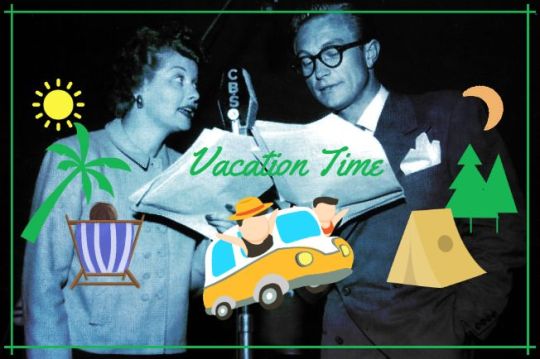
The script for “Liz Learns To Swim” was basically a remake of “Vacation Time” (aka “A Trailer Vacation To Goosegrease Lake” broadcast on April 29, 1949.
Unlike many episodes of “My Favorite Husband,” “Liz Learns To Swim” has no corollary on “I Love Lucy,” although certain situations and dialogue will be familiar to viewers.
EPISODE
ANNOUNCER: “As we look in on the Coopers tonight, summertime is fast approaching and Liz has roused her self from spring fever long enough to go on a shopping spree for some beach clothes.”
As the episode begins, Liz is showing Katie the Maid what she has bought for her summer vacation, including a skimpy swimsuit.
LIZ: “I want to look good for George. He’s going to see a lot of me this summer.”
KATIE: “He’s not the only one!”
In “Off To Florida” (ILL S6;E6) Ricky thinks Lucy’s new skimpy new swimsuit is for Little Ricky!
RICKY: “Hey, look, Ricky! Mommy bought you a bathing suit.”
LUCY: “That’s mine!”
RICKY: “Yours?!”
LUCY: “Relax. It stretches when it’s on.”
RICKY: “See that it does!”Lucy also buys a swimsuit that Ricky feels is too skimpy when shopping for their California trip in “Getting Ready” (ILL S4;E11).
In looking over their daily mail, we learn that the Cooper’s live at 321 Bundy Drive. Liz gets something from Weeping Willow Ranch, where they spent last year’s summer vacation. It is not a place Liz is anxious to revisit.
LIZ: “One week there and you understand why the willows are weeping.”
- In “Vacation Time” from 1949 (the episode upon which this one is based) the resort was named Goosegrease Lake.

Lucy Carmichael visits a dude ranch called Tumbleweed Inn during a 1966 episode of “The Lucy Show.”
Liz wants to go to the beach with the Atterbury’s while George insists on going to the dude ranch. George agrees to go to the beach if Liz will first learn to swim.
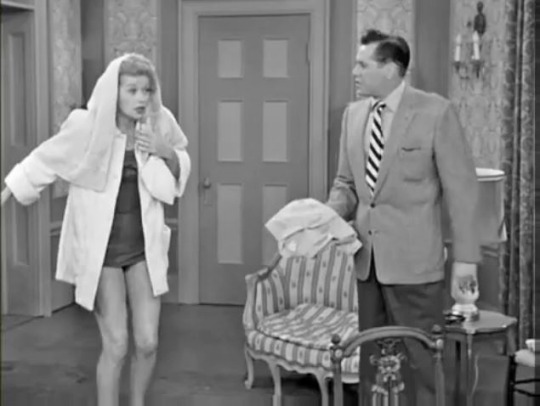
Adventure-Loving Lucy Ricardo swam in the chilly Med before pedaling to Nice in “Lucy’s Bicycle Trip” (ILL S5;E24). Fred calls her “the poor man’s Florence Chadwick” an American swimmer known for long-distance, open water swimming and the first woman to swim the English Channel in both directions, setting a record each time.
Liz’s neighbor, Mr. Wood (Hans Conried), teaches her how to swim – without ever leaving the living room! George is doubtful Liz can learn swimming without getting wet, so they agree to a test at the Country Club pool the next day. That night, Liz ‘swims in her sleep’ – nearly drowning!

At the pool next day, Iris (Bea Benadaret) brings Liz some water wings to wear under her swimsuit and fool George. To inflate them, Iris drags Liz to a Filling Station to use their air pump. But the water wings burst, just like Iris’s plan. Iris thinks of a loophole: Liz never promised George she wouldn’t use help – so
Iris darts home for one of Rudolph’s life jackets.

Life jackets and Lucy Carter’s inability to swim were integral to “Lucy Rides The Rapids” (HL S2;E4), filmed on location on the Colorado River.
Liz puts on the life jacket and dives into the pool. George agrees to take her to the beach – even though Liz failed to inflate Rudolph’s life jacket. She swam without help! As soon as she realizes it, however….HELP!!!
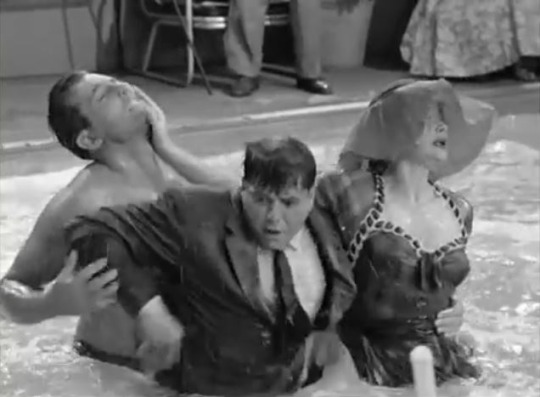
HELP!!! Lucy pretends not to be able to swim so that Ricky can pretend to save her, all to get the attention of gossip columnist Hedda Hopper in “The Hedda Hopper Story” (ILL S4;E21).

Lucy and Anthony Newley tread water in the Thames River in “Lucy in London” (1966).

Lucy and Desi relaxing in their pool at home in the 1940s.
1950, Anthony Newley, Bea Benadaret, Bob LeMond, Colorado River, Dennis James, Desi Arnaz, Desi Arnaz Jr., Dude Ranch, Gabby Hayes, Gale Gordon, Hans Conreid, Hazel Pierce, Herb Vigran, Here’s Lucy, I love lucy, Keith Thibodeaux, Little Ricky, Liz Learns To Swim, Lucie Arnaz, Lucille Ball, My Favorite Husband, Radio, Richard Denning, Richard Keith, Ruth Perrott, Thames River, The Lucy Show, Vivian Vance, Water WIngs -
BOB CUMMINGS
June 9, 1910 – December 2, 1990

Robert “Bob” Cummings was born in Joplin, Missouri. His godfather was the aviation pioneer Wilbur Wright, so naturally he got his pilot’s license and studied aeronautical engineering. After the stock market crash of 1929, he gave up flying to study drama in New York City, making his Broadway debut in 1931. In 1934 he moved to Hollywood and started making films. During World War II he was a captain in the Air Force Reserves. His television career kicked off in 1952, winning an Emmy for
for a TV production of “12 Angry Men.” Starting in 1955, Cummings starred on a successful NBC sitcom, “The Bob Cummings Show” (aka “Love That Bob”), in which he played Bob Collins, an ex–World War II pilot who became a successful photographer. The show ended in July 1959. It was then that he first teamed with Lucille Ball on an episode of “The Lucy-Desi Comedy Hour.” CBS revived “The Bob Cummings Show” in 1961, but it lasted just one season. He reprised the character of Bob Collins on a 1972 episode of "Here’s Lucy” and returned the following season for another episode. Cummings was married five times and fathered seven children. He died in 1990 at the age of 80.

Lucille Ball and Bob Cummings first worked together in the penultimate episode of “The Lucy-Desi Comedy Hour” “The Ricardos Go To Japan” (November 1959).

Cummings played himself in Japan to make a film. In reality, his next film, My Geisha (1962) starring Shirley MacLaine and Yves Montand, actually was filmed in Japan, although “The Ricardos Go To Japan” was filmed entirely in Hollywood.

Lucy and Cummings were just two of the many stars participating in “Hedda Hopper’s Hollywood” (January 10, 1960). Cummings, alone on a soundstage, tells the story of how he was discouraged from pursuing an acting career. Despite this he got an opportunity that turned into the film Three Smart Girls Grow Up (1939). While filming this segment for Hopper, his second TV series “The Bob Cummings Show” had just finished its five season run on CBS.

In a 1972 episode of “Here’s Lucy,” Cummings played Bob Collins, the character he played on his own show “Love That Bob”!

In the episode, Lucy takes a liking to Bob, although her daughter Kim thinks he is an alcoholic womanizer and goes to great lengths to scare him off.

In 1973, Cummings returned to "Here’s Lucy” to play Bob Henning, a deceitful antiques dealer who is after a priceless chair Lucy Carter unknowingly bought. To get it back, he pretends to have a romantic interest in Lucy.

Cummings was in attendance at the “The 38th Primetime Emmy Awards” on September 21, 1986, when Lucille Ball presented the Governor’s Award to Red Skelton.
THE CUMMINGS CONNECTION

While both “I Love Lucy” and “The Bob Cummings Show” were on the air simultaneously, “Bob” was on Sundays on NBC while “Lucy” held down Mondays on CBS. The first “Bob Cummings Show” (later re-titled “Love That Bob” for syndication, lest it be confused by the same-titled second iteration) was a mid-season replacement that featured many of the same performers as “Lucy”:
- Joi Lansing (Shirley Swanson, 24 episodes)
- Nancy Kulp (Pamela Livingstone, 16 episodes)
- Eliva Allman (Mrs. Montague, 7 episodes)
- Marjorie Bennett (Mrs. Neimeyer, 6 episodes)
- with Doris Singleton, Benny Rubin, Robert Carson, Lurene Tuttle, Bea Benadaret, Dick Elliott, Doris Packer, Charles Lane, Ruth Brady, Madge Blake, Parley Baer, Hy Averback, Tyler McVey, Hans Conried, Ellen Corby, Jay Novello, Margie Liszt, and Will Wright.
- In 1955, a year after leaving his role as Jerry the Agent on “I Love Lucy”, Jerry Hausner played a show business agent on the series.
- In 1957, “The Bob Cummings Show” did a crossover episode with “The George Burns and Gracie Allen Show” that featured Bea Benadaret as Blanche Morton.

The second iteration, sometimes referred to as “The New Bob Cummings Show”, ran on CBS for just one season just prior to Lucille Ball launching “The Lucy Show.” Like Ball’s transformation of “The Lucy Show” into “Here’s Lucy,” Cummings played a different character in a new scenario, but it was basically the same show. Some of the “Lucy” character actors crossed over to the new series, including Paul Debov, Dick Elliott, Charles Lane, Norman Leavitt, and Jay Novello.

Cummings’ first time as a regular on a TV series was on the NBC series “My Hero” which only ran one season on NBC (1952-53), concurrently with season two of “I Love Lucy.” The Los Angeles Times thought the show would "rival ‘I Love Lucy’ in popularity.” The New York Times accused it of being a copy of ‘I Love Lucy’ and said "Cummings brought a magnificent terribleness to his part." The show was executive produced and part owned by Don Sharpe, who was also connected with ‘I Love Lucy.’ A few “Lucy” players were seen on the show: Arthur Q. Bryan, Hal March, Will Wright, James Burke, Fritz Feld, Eve Whitney, Nestor Paiva, Richard Reeves, Mario Siletti, Florence Bates, Lawrence Dobkin, and Ellen Corby.

Another one-season series for Robert Cummings was filmed at Desilu, aired on CBS, and ran concurrently with season three of “The Lucy Show”. In “My Living Doll” Cummings played an Air Force psychiatrist in charge of a sexy, naive android (Julie Newmar). “Lucy” actors who were also on “My Living Doll” included Ellen Corby, Joe Mell, Jonathan Hole, Jackie Joseph, Parley Baer, Nestor Paiva, Maurice Marsac, Olan Soule, Tyler McVey, Lurene Tuttle, and Leon Alton.

Just before leaving “My Three Sons” for health reasons in 1965, William Frawley did one episode of “My Living Doll.” A few months later a cameo on “The Lucy Show” would be Frawley’s final TV performance.

Bob Cummings had done three films with William Frawley from 1936 to 1940:
- In 3 Cheers for Love (1936) Cummings and Frawley co-starred with Elizabeth Patterson (Mrs. Trumbull) and Irving Bacon (Will Potter). Patterson and Bacon also played the Willoughbys in “The Marriage License” (ILL S1;E26) in 1952.
- One Night in the Tropics (1940) was the first film appearance of the comedy team of Abbott and Costello. Five years later, Lucille Ball played herself in Abbott and Costello in Hollywood.
- Touchdown, Army (1938) featured an uncredited appearance by Richard Denning, who, ten years later, would play George Cooper, Lucille Ball’s husband on her hit radio series “My Favorite Husband.”

TV People, February 1956. Interestingly, Hal March (host of “The $64,000 Question”) was also a character actor on “I Love Lucy” and “The Lucy Show.” Liberace would guest star as himself on “Here’s Lucy” in 1970. The top of the magazine promises an article about Arthur Godfrey and his singer Janette Davis. Godfrey guest starred as himself on
“The Lucy Show” in 1965. Jack Webb’s series “Dragnet” was second only to “I Love Lucy” in popularity during the 1950s. It served as the model for all other police dramas on television.

“The Lucy Show” and “Love That Bob” can both be found on discount DVD. Many episodes of these series’ are no longer covered by copyright and are in the public domain.
3 Cheers for Love, Bob Cummings, Desi Arnaz, Emmy Awards, Hedda Hopper’s Hollywood, Here’s Lucy, Love That Bob, Lucille Ball, Lucy Goes To Japan, My Hero, My Living Doll, One Night in the Tropics, Robert Cummings, The Bob Cummings Show, The Lucy-Desi Comedy Hour, Touchdown Army, Vivian Vance, William Frawley -
VICTOR BORGE
COMEDY IN MUSIC

I love this poster! First because of its aesthetic appeal. This color teal (it photographed slightly more green) is rarely used in design and it is beautifully offset with burgundy text. The layout is also striking in the use of negative space which dominates the top half, and contrasts with the bottom-heavy composition. The black and white caricature of Victor Borge is by George Wachsteter (1911-2014).
About Victor Borge
Børge Rosenbaum (1909-2000), known professionally as Victor Borge, was a Danish-born comedian, conductor, and pianist who achieved great popularity in radio and television in the United States and Europe. His style was epitomized by his audience interaction, his mash-ups of classical and pop songs, and his comedy bits like “phonetic punctuation” and “inflammatory language”. In addition to his Broadway engagements, he toured extensively performing live world-wide as well as doing television and radio. His blend of music and comedy earned him the nicknames “The Clown Prince of Denmark,“ "The Unmelancholy Dane," and "The Great Dane."
About This Poster
Victor Borge’s “Comedy In Music” is the longest running one-man show on Broadway. Between October 1953 and January 1956 (with two summer breaks) he racked up 849 performances! However… this poster is not from that run.

This poster is actually from Victor Borge’s “Comedy in Music Opus 2″ – a new edition – that played at the same theatre from November 1964 to April 1965. I have no idea why they did not bill it as such, but that is how it is distinguished in record-keeping. He brought the show back yet again in 1977, this time at the Imperial Theatre, for a special engagement that lasted just a month.

This 1964-65 engagement was produced by Alexander H. Cohen, who in 1959 founded something called Nine O’Clock Theatre. The goal was to present first class shows and entertainments on Broadway that started at 9:00pm so that theatre-goers did not have to rush through dinner! The endeavor was launched by showman Cohen by hosting a huge carnival in Shubert Alley – complete with a Ferris Wheel, games, prizes, and celebrities. Lucille Ball was one of the ticket-sellers! The experiment lasted until 1968 and featured shows by Nichols and May, “Beyond the Fringe”, Marlene Dietrich, and Maurice Chevalier.

This time, Borge did his one-man show with help from Leonid Hambro (1920-2006), who was an accomplished American pianist.that performed with Borge from 1961 to 1970, and occasionally throughout the remainder of Borge’s career. As with most of the performers Borge worked with (singers included) their job was to serve the music, and leave the comedy to the maestro.

While in the original, lighting and settings were credited to Borge himself – this time noted scenic designer Ralph Alswang (1916-1979) was hired.
From 1942 to 1977, Alswang produced designs for nearly 100 Broadway productions, and even had his hand in architectural design with the Gershwin Theatre.
Alswang also designed several houses in Westport, Connecticut, where he lived, including the home of Paul Newman. In fact, when “I Love Lucy” writers were looking for a Connecticut town to relocate the Ricardos to in 1956, Alswang and his wife Betty volunteered to give them a guided tour of Westport, pointing out the local points of interest as well as historical past of the town. In return for his kindness, the writers named the Ricardo’s neighbors Ralph and Betty in their honor.

About Me & Borge
In 1997, I got to see Victor Borge perform at Paper Mill Playhouse, where I was working at the time, in a one-night concert. He was booked during our production of “Man of La Mancha” so he actually performed in Don Quixote’s dismal cell, his grand piano looking quite out of place among the cold grey stones. Because it was sold out, I was sitting on the stage, out of sight, hidden in one of the crevices of the cell normally occupied by the prisoners of the Spanish Inquisition! It was a bit awkward but Borge was worth it. I can still remember his “phonetic punctuation” routine and how hard it made me laugh.

Lucy-lovers alert! From my theatre blog comes some deep connections to Lucille Ball and “I Love Lucy.” Proof that “all roads lead to Lucy”!
-
DEAN MARTIN
June 7, 1917

Dean Martin was born Dino Paul Crocetti in Steubenville, Ohio and became one of the most popular and enduring entertainers of the mid-20th century. A singer, actor, and comedian, Martin’s career breakthrough came in 1946 through his partnership with comedian Jerry Lewis, billed as Martin & Lewis. They performed in nightclubs and later had numerous appearances on radio, television and in films.

Lucille Ball’s first appearance with Dean Martin was on his NBC radio show with Jerry Lewis in December 1948. Lucy was then the star of her own radio show, “My Favorite Husband” on CBS.

Following an end to their partnership in 1956, Martin established himself as a notable singer, recording numerous contemporary songs as well as standards from the Great American Songbook. His hit singles, including his signature songs “That’s Amore”, “Everybody Loves Somebody”, “You’re Nobody till Somebody Loves You”, “Ain’t That a Kick in the Head?” and “Volare”.

He became one of the most popular acts in Las Vegas and was known for his friendship with Frank Sinatra and Sammy Davis Jr., who together formed the Rat Pack. Throughout his career, Martin appeared in 85 film and television productions. In the above photo at the Sands Casino, the Rat Pack is joined by Lucy and Danny Thomas (top) and Gary Morton (right).

In “Lucy and Wayne Newton” (HL SS2;E2) the Carters are driving down the Las Vegas strip when Craig notices that Dean Martin is playing at the Riviera. Kim says “He’s one of my favorites!”

“I’d hate to be a teetotaler. Imagine getting up in the morning and knowing that’s as good as you’re going to feel all day.” ~ Dean Martin
Part of Dean’s act involved his affection for alcoholic beverages. Jokes about Dean Martin’s drinking were common, even when Dean was not part of the show.
- In “Lucy the Disc Jockey” (TLS S3;E26) Lucy tries to see the title of the song on a spinning turntable and gets dizzy, she says
“No wonder. It’s a Dean Martin album.”
- In “Lucy the Stockbroker” (TLS S3;E25) Lucy discovers that Mr. Mooney is really hypnotized, not faking. Viv says
“He’s stiffer than Dean Martin.”
- In “Lucy and Lawrence Welk” (HL S2;E18), Viv returns from the Universal Studios Tour and tells Lucy
“I saw…Dean Martin’s bartender.”

Lucille Ball adored working with Martin, despite the fact that their working styles were polar opposites. Ball was committed to rehearsals where Martin preferred to ‘wing it.’ Due to her great affection for him, she put up with it.

The first time Lucille Ball and Dean Martin appeared on the same television show (though not at the same time) came in 1950 on “Show of the Year: Telethon for United Cerebral Palsy” hosted by Milton Berle on NBC. It was broadcast from New York City with remotes from Philadelphia. (Photo, left to right: Gabby Hayes, Roger Clipp, UCP Poster Child, Jane Pickens, and Dennis James.)

Dean Martin never appeared on “I Love Lucy,” but his second wife did! Former Orange Bowl Queen Jeanne Biegger (billed only as Mrs. Dean Martin) appeared as herself wearing a Don Loper dress in 1955’s “The Fashion Show” (ILL S4;E19). The couple divorced in 1973. Martin then married Catherine Hawn, but the unioni lasted only three years. Martin’s first wife was Betty McDonald, who he married in 1941 and divorced in 1949. Martin had eight children.
“The three words you hear most around my house are ‘hello,’ ‘goodbye,’ and ‘I’m pregnant.’“ ~ Dean Martin

Dean Martin was one of the performers at the Friar’s Club Roast of Lucille Ball and Desi Arnaz on November 23, 1958. The event, held at the Beverly Hilton Hotel, was not telecast.

It would be ten years before Lucy and Dean again appeared on the same show (again, not at the same time) with “The Bob Hope Buick Sports Show Awards” in 1961. The show primarily took place in Los Angeles, but Lucille Ball’s segment took place in New York City, where she was appearing in Wildcat.

Two years later, Bob Hope presented the “TV Guide Awards.” Lucille Ball is nominated for Favorite Female Performer, but is not present. A still photo of her is shown instead.

Starting in 1964, Martin was the host of the television variety program “The Dean Martin Show”, which was characterized by his relaxed, easy-going demeanor. Lucille Ball appeared on the show in 1966 along with singer Kate Smith.

In return, four days later Dean appeared on “The Lucy Show,” playing himself and his own stuntman, Eddie Feldman. Lucille Ball said that this was her favorite episode of “The Lucy Show.”

Both Lucy and Dean were part of “Jack Benny’s Carnival Nights” in 1968, although once again they do not share screen time. Martin does a quick cameo playing the Amazing Sleeping Man! The opening of the show was performed on the set of “The Dean Martin Show” complete with fire pole and sexy assistants!

Martin was in attendance at the “20th Annual Primetime Emmy Awards” where Lucille Ball won her fourth (and final) competitive acting Emmy,along with Bill Cosby (”I Spy”) and Don Addams (”Get Smart”).

In 1968, Lucille Ball (and many other stars) makes a cameo appearance on “The Dean Martin Christmas Show” to announce the donation of toys to children in hospitals. The cameos are filmed without Martin present.

A year later, the two were also on the bill for “Ann-Margret: From Hollywood With Love.” Dean Martin and Dean Martin sing a medley of country western songs and then do a sketch where the gender roles are reversed. Lucy, appearing in a separate segment, plays herself and an autograph hound named Celebrity Lu.

Lucille Ball (and dozens of other stars) make guest appearanced on “The Dean Martin Show’s” sixth season opener in September 1970.

In “Jack Benny’s 20th Anniversary Show” (November 1970) Lucy plays Jack’s maid, Janet, while Dean plays himself. Martin knocks on Jack’s dressing room door to wish him a happy anniversary and dance “The Anniversary Waltz” with him. The bit lasts less than 30 seconds.

Later in November 1970, “John Wayne’s Swing Out Sweet Land” featured Dean Martin as Eli Whitney (of cotton gin fame) and Lucille Ball as the voice of Lady Liberty.

In February 1975 “Dean Martin’s Celebrity Roast” was dedicated to Lucille Ball. On the dais, Martin presents Lucille’s friends and colleagues Bob Hope, Gale Gordon, Milton Berle, Henry Fonda, Ginger Rogers, Jack Benny, and Vivian Vance.

A year later it was Lucille doing the roasting, this time of her friend Danny Thomas. Also on Martin’s dais are Orson Welles, Milton Berle, and Gene Kelly.

Two year after that, in 1978, Lucille returned for yet another Dean Martin Roast, this time for her Beverly Hills neighbor, Jimmy Stewart.

In 1975, on of the Lucille Ball CBS Specials was “Lucy Gets Lucky” starring Dean Martin. Ball plays Lucy Collins, who travels to Las Vegas to see her favorite star perform. To get into the sold out show she must work a variety of casino and hotel jobs!

“NBC: The First 50 Years” (1976) was a four and a half hour extravaganza that naturally included clips of Dean Martin (who’s show was on the network) but also included Lucille Ball on “The Danny Kaye Show.”

“CBS Salutes Lucy: The First 25 Years” (1976) includes Dean Martin talking about how much he loves working with Lucille Ball.

At the start of 1980, Lucille Ball and Dean Martin are just two of the many guests in “Sinatra: The First 40 Years” celebrating his 64th birthday and 40th year in show business.

“Bob Hope’s Unrehearsed Antics of the Stars” on September 28, 1984 featured Lucy talking about her audition for Gone With The Wind and Dean Martin in a clip of a sketch with Hope about airline pilots.

In 1984′s “An All-Star Party for Lucille Ball” Dean Martin sings “When You’re Smiling” with special lyrics to suit the occasion: “When you’re Lucy, When you’re Lucy, You’re never off TV.”

Their last on-screen collaboration was to celebrate the opening of the Bob Hope Cultural Center at Palm Springs in “America’s Tribute to Bob Hope” in March 1988. Dozens of friends gather and offer comedy and musical performances to honor the building’s namesake including Lucille Ball, Dean Martin, George Burns, Ann-Margret, Dinah Shore, and Danny Thomas.

A further connection came offscreen when Lucille Ball’s son Desi Aranz joined with Dean Martin’s son Dino and Billy Hinsche to form a rock band known as Dino, Desi and Billy.
“I want to be remembered as a damn good entertainer, nothing spectacular. A good entertainer who made people enjoy themselves and made them laugh a little. I want them to think ‘He was a nice guy. He did pretty good and we loved him.’“ ~ Dean Martin

-
The Marriage That Fooled Hollywood
June 6, 1952

On June 6, 1952, Lucille Ball and Desi Arnaz appeared on the cover of TV Guide. This was 14 months before Ball and newborn Desi Jr. appeared on the first National Edition of TV Guide.

The cover story is “Lucille Ball and Desi Arnaz:
“The Marriage that Fooled Hollywood”
which refers to Lucy and Desi’s overcoming the odds of a culturally-blended couple achieving success in Hollywood, a place notorious for short-lived relationships. The five ‘reasons’ explored:
- Two Careers in One Family – Desi in music; Lucy in acting.
- Conflicting Career Trajectories – Lucille’s star was on the ascendant; Desi was “no Cugat” and his success had leveled off.
- Desi’s Constant Touring – Keeping him away from home (and Lucille) for weeks and months at a time.
- Age Difference – Lucy was six years older than Desi. Lucy was then 29.
- Difference in Backgrounds – Lucy from rural New York; Desi from war-torn Cuba.

At 12:45pm daily, viewers could enjoy “Kovacs Unlimited” starring Ernie Kovacs and his wife Edie Addams. The couple would guest star as themselves in the final “Lucy-Desi Comedy Hour” in April 1960, the last time America saw the Ricardos.
At 1:30 viewers could watch “The Garry Moore Show” a daytime variety show that transferred to primetime in 1958. Lucille Ball appeared on that version in 1960.

The back cover of the New York City edition features an ad for WNBT, the flagship NBC station. The station was founded in 1928 by RCA as W2XBS. In April 1939 it began the first regularly scheduled (but still experimental) television broadcasts in the United States. When FCC-sanctioned commercial television began in July 1941, W2XBS became WNBT, the only station in the country ready for sponsors. In 1954, it became known as WRCA. In 1960 it became known as WNBC, which it still is today. This ad highlights their evening news, a 15 minute telecast featuring Ben Grauer (headlines), Bill Stern (sports), and Tex Antoine and his cartoon sidekick Uncle Wethbee (weather).

At the time, TV Guide was a regional publication, so cover colors and inside layouts varied by region.

The New England edition chose green as their single color. While some regions (like New York) could afford full mulit-colored covers, others only used single color printing. The color covers were generally hand-tinted black and white photography.

TV News, a Bloomington, Indiana publication (not part of the TV Guide regional magazines group), coincidentally – or not – also chose to put Lucille Ball on the cover on June 6, 1952.

This was the third time Lucille Ball and/or “I Love Lucy” was on the cover of Regional TV Guide before it went National. A fourth featured Vivian Vance and William Frawley as Fred and Ethel.

The other article promoted is “IS GODFREY OFF-COLOR?” It refers to Arthur Godfrey, then host of “Talent Scouts,” which was initially “I Love Lucy’s” lead-in on CBS. The term “off-color” was a common expression for something found to be “indecent or in poor taste.” Although when he was on the air Godfrey exuded a warm and convivial presence, off the air he was known to have a volatile temper and openly state his prejudices. This eventually led to him being ostracized by the media and much of the public later in life. Lucille Ball, however, sympathized with Godfrey and had an episode of “The Lucy Show” written for him in 1965.

At the very top of some editions is the tag “How To Score The Fight”.

The fight being referenced is a boxing match between ‘Jersey Joe’ Walcott and Ezzard Charles – with Walcott retaining the world Heavyweight title by a fifteen-round unanimous decision. The televised bout took place in Philadelphia on June 5, 1952. Although the cover date of this issue is a day after the fight, magazines were commonly on available a few days – or, in the case, of monthlies, a month or two – in advance of their official publication date.

Boxing was tremendously popular on television during the 1950s, and “I Love Lucy” has several episodes about it – including the very first aired episode “The Girls Want To Go To A Nightclub” (ILL S1;E1) in October 1951.

On the very same day this issue ‘officially’ hit the newsstands on June 6, 1952, Lucy and Desi were filming “The Saxophone” (ILL S2;E2), although it was not aired until September, as the second episode of season two. The plot parallels real life: Lucy wants to go on the road with Ricky to prevent him from meeting admiring (female) fans. [See #3 above!]

When the issue hit the stands, America had just watched “Ricky Thinks He Is Going Bald” (ILL S1;E34 on June 2, 1952), and were anxiously looking forward to viewing the final episode of season one, “Ricky Asks for a Raise” (ILL S1;E35 on June 9, 1952), which was included in the Monday listings of this TV Guide.
-
HERB VIGRAN
June 5, 1910 – November 29, 1986

Herbert Vigran was a character actor from the 1930s to the 1980s.
Vigran was born in Cincinnati, Ohio, but his family moved to Fort Wayne, Indiana, when he was 16. He married Belle Pasternack in 1952 and they had two sons. Over his 50-year career, he made over 350 television and film appearances, many with Lucille Ball or for Desilu.

Vigran occasionally turned up on Lucille Ball’s radio show, “My Favorite Husband” (1948-50) in various roles.

Vigran also was heard on “Grandby’s Green Acres” a summer replacement series for “My Favorite Husband” which also featured Bea Benadaret and Gale Gordon. It was the radio prototype for the CBS TV sitcom “Green Acres” 15 years later. Ironically, although he appeared on TV’s “The Beverly Hillbillies” and “Petticoat Junction”, which shared characters and locations with “Green Acres,” it was the only series Vigran was not in!

He made his “I Love Lucy” debut as Jule, Ricky’s music agent, in “The Saxophone” (ILL S2;E2) in 1952…

….and immediately returned in “The Anniversary Present” (ILL S2;E3) to play the same character – and wearing the same costume!

In “The Anniversary Present” he co-starred with Gloria Blondell, whom he also appeared with in an episode of “The Life of Riley” in five episodes from 1953 to 1955, although, just like on “I Love Lucy,” the two never shared screen time!

November 1954, Vigran did an episode of Desilu’s “December Bride” as well as three episodes of “Our Miss Brooks” starring Even Arden and Gale Gordon.

He played Pete Wilson on two episodes of “The Ann Sothern Show” in 1959 and 1960. Lucille Ball played Lucy Ricardo on the series for a single episode in 1959.

He also played Mrs. Trumbull’s nephew Joe, the washing machine repairman, in “Never Do Business With Friends” (ILL S2;E31)…

…and Al Sparks, the publicist who turns Lucy and Ethel into Women from Mars, in “Lucy is Envious” (ILL S3;E23).

Vigran played the salesman who sold Lucy and Desi The Long, Long Trailer (1953).

On “The Lucy Show” he played the role of Doctor Jacoby, who was also Danfield’s part-time baseball umpire during season one. He returned to the same role in the more colorful season two.

He played a Danfield Postman in “Lucy and the Lost Stamp” (TLS S3;E14).

Vigran was a Los Angeles veterinarian in “Lucy and the Countess Have a Horse Guest” (TLS S4;E6). He discovers that Lucy and Rosie’s horse is a she, not a he, and that she is expecting! This episode marked William Frawley’s final screen appearance. Vigran had done four films with Frawley from 1947 to 1951.

In 1966′s “Lucy, the Super Woman” (TLS S4;E26), Vigran plays the man who comes to install and demonstrate the heavy computer that Mr. Mooney installs and Lucy later miraculously lifts off her boss’s foot!

Speaking of super powers, Vigran and Lucille Ball both acted opposite the Man of Steel (George Reeves). Vigran did six episodes of “The Adventures of Superman” between 1952 and 1958. In 1957, Superman was the surprise guest at Little Ricky’s birthday party on a season six episode of “I Love Lucy.”

In his final appearance on “The Lucy Show”, he played another doctor, Major Cooper, the doctor who gives Lou C. Carmichael a physical in “Lucy Gets Caught Up in the Draft” (TLS S5;E9). At the end of the episode, Jim Nabors does a cameo as Gomer Pyle.

Shortly afterwards, Vigran made four appearances on “Gomer Pyle USMC,” a spin-off of “The Andy Griffith Show” also filmed by Desilu. Vigran turned up in Mayberry in 1962 and 1965 on “The Andy Griffith Show” and in 1969 and 1970 on “Mayberry RFD”. Both shows were spin-offs of “The Danny Thomas Show” (also filmed by Desilu) on which Vigran appeared six times between 1955 and 1963. Like Lucille Ball he did a single episode of “Make Room For Granddaddy” (1971). Lucy played her “Here’s Lucy” character Lucy Carter. In 1959, “Danny Thomas” did a crossover episode with “The Lucy-Desi Comedy Hour” (and vice versa) where the Williams’ and the Ricardos families meet – meaning that all of Herb Vigran’s characters on these shows are connected by degrees to Lucy Ricardo, Lucy Carmichael and Lucy Carter! Six Degrees of Lucy!
It becomes even more remarkable to learn that the day Vigran died, Monday, November 29, 1986, an episode of “Life With Lucy” was supposed to air, but the series was canceled a few weeks earlier.

Vigran and Larry J. Blake played cops on the beat in “Jack Benny’s Carnival Nights” (1968) featuring Lucille Ball, although they did not share any scenes together. For ten years, Vigran had appeared on 19 episodes of Benny’s television program. He also played a cop when Jack Benny starred in Desilu’s “Shower of Stars” in 1957. Coincidentally, Vigran and Blake also appeared together in a 1956 episode of Desilu’s “Cavalcade of America” where Blake also played a cop.

In 1959, Vigran did an episode each of Desilu-filmed shows “The Texan,” “The Untouchables,” and “Whirlybirds.”

In 1968, Desi Arnaz hired Vigran for an episode of his sitcom “The Mothers-in-Law.” Interestingly, the credits spell his full first name “Herburt” which is also how it was spelled in his Los Angeles Times obituary.

-
GEORGE IS MESSY (aka THE COOPER PIG PEN)
June 4, 1950

“George is Messy” (aka “The Cooper Pig Pen”) is episode #91 of the radio series MY FAVORITE HUSBAND broadcast on June 4, 1950.
Synopsis ~ Liz is fed up with George’s messy habits around the house, so she draws a line down the middle of the living room and divides the house in two -her half and half his.

It served as the basis for “Men Are Messy” (ILL S1;E8) of “I Love Lucy” filmed on October 21, 1951 aired on December 3, 1951 on CBS TV.
Main Cast

Lucille Ball (Liz Cooper)
was born on August 6, 1911 in Jamestown, New York. She began her screen career in 1933 and was known in Hollywood as ‘Queen of the B’s’ due to her many appearances in ‘B’ movies. With Richard Denning, she starred in a radio program titled “My Favorite Husband” which eventually led to the creation of “I Love Lucy,” a television situation comedy in which she co-starred with her real-life husband, Latin bandleader Desi Arnaz. The program was phenomenally successful, allowing the couple to purchase what was once RKO Studios, re-naming it Desilu. When the show ended in 1960 (in an hour-long format known as “The Lucy-Desi Comedy Hour”) so did Lucy and Desi’s marriage. In 1962, hoping to keep Desilu financially solvent, Lucy returned to the sitcom format with “The Lucy Show,” which lasted six seasons. She followed that with a similar sitcom “Here’s Lucy” co-starring with her real-life children, Lucie and Desi Jr., as well as Gale Gordon, who had joined the cast of “The Lucy Show” during season two. Before her death in 1989, Lucy made one more attempt at a sitcom with “Life With Lucy,” also with Gordon.
Richard Denning (George Cooper) was born as Louis Albert Heindrich Denninger Jr., in Poughkeepsie, New York. When he was 18 months old, his family moved to Los Angeles. Plans called for him to take over his father’s garment manufacturing business, but he developed an interest in acting. Denning enlisted in the US Navy during World War II. He is best known for his roles in various science fiction and horror films of the 1950s. Although he teamed with Lucille Ball on radio in “My Favorite Husband,” the two never acted together on screen. While “I Love Lucy” was on the air, he was seen on another CBS TV series, “Mr. & Mrs. North.” From 1968 to 1980 he played the Governor on “Hawaii 5-0″, his final role. He died in 1998 at age 84.
Bea Benadaret (Iris Atterbury) was considered the front-runner to be cast as Ethel Mertz but when “I Love Lucy” was ready to start production she was already playing a similar role on TV’s “The George Burns and Gracie Allen Show” so Vivian Vance was cast instead. On “I Love Lucy” she was cast as Lucy Ricarodo’s spinster neighbor, Miss Lewis, in “Lucy Plays Cupid” (ILL S1;E15) in early 1952. Later, she was a success in her own show, “Petticoat Junction” as Shady Rest Hotel proprietress Kate Bradley. She starred in the series until her death in 1968.
Gale Gordon (Rudy Atterbury) had worked with Lucille Ball on “The Wonder Show” on radio in 1938. One of the front-runners to play Fred Mertz on “I Love Lucy,” he eventually played Alvin Littlefield, owner of the Tropicana, during two episodes in 1952. After playing a Judge in an episode of “The Lucy-Desi Comedy Hour” in 1958, he would re-team with Lucy for all of her subsequent series’: as Theodore J. Mooney in ”The Lucy Show”; as Harrison Otis Carter in “Here’s Lucy”; and as Curtis McGibbon on "Life with Lucy.” Gordon died in 1995 at the age of 89.
Bob LeMond (Announcer) also served as the announcer for the pilot episode of “I Love Lucy”. When the long-lost pilot was finally discovered in 1990, a few moments of the opening narration were damaged and lost, so LeMond – fifty years later – recreated the narration for the CBS special and subsequent DVD release.

Ruth Perrott (Katie, the Maid) was also later seen on “I Love Lucy.” She first played Mrs. Pomerantz (above right), a member of the surprise investigating committee for the Society Matrons League in “Pioneer Women” (ILL S1;E25), as one of the member of the Wednesday Afternoon Fine Arts League in “Lucy and Ethel Buy the Same Dress” (ILL S3;E3), and also played a nurse when “Lucy Goes to the Hospital” (ILL S2;E16). She died in 1996 at the age of 96.
There is also a maid in “Men Are Messy,” but she works at the Tropicana Club. Her name is Maggie and she is played (gloriously) by Hazel Sunny Boyne.
Guest Cast

Eleanor Audley (Leaticia Cooper, George’s Mother) would later play Eleanor Spalding, owner of the Westport home the Ricardos buy in “Lucy Wants To Move to the Country” (ILL S6;E15) in 1957, as well as one of the Garden Club judges in “Lucy Raises Tulips” (ILL S6;E26).

Doris Singleton (Grace Davis, Magazine Writer) created the role of Caroline Appleby on “I Love Lucy,” although she was known as Lillian Appleby in the first of her ten appearances. She made two appearances on “The Lucy Show.” and four appearances on “Here’s Lucy.”
The character’s first name, Grace, was recycled on “I Love Lucy” for Grace Foster and Grace Munson. Her surname, Martin, would be the same as the episode’s writer, Madelyn Pugh, in five years time, when she married Quinn Martin in 1955.

Harry Bartell (A Drunk) made three appearances on “I Love Lucy,” including as the headwaiter at the Hollywood Brown Derby in “Hollywood at Last!” (S4;E16) in 1955.

“My Favorite Husband” was based on the novels Mr. and Mrs. Cugat, the Record of a Happy Marriage (1940) and Outside Eden (1945) by Isabel Scott Rorick, which had previously been adapted into the film Are Husbands Necessary? (1942). “My Favorite Husband” was first broadcast as a one-time special on July 5, 1948. Lucille Ball and Lee Bowman played the characters of Liz and George Cugat, and a positive response to this broadcast convinced CBS to launch “My Favorite Husband” as a series. Bowman was not available Richard Denning was cast as George. On January 7, 1949, confusion with bandleader Xavier Cugat prompted a name change to Cooper. On this same episode Jell-O became its sponsor. A total of 124 episodes of the program aired from July 23, 1948 through March 31, 1951. After about ten episodes had been written, writers Fox and Davenport departed and three new writers took over – Bob Carroll, Jr., Madelyn Pugh, and head writer/producer Jess Oppenheimer. In March 1949 Gale Gordon took over the existing role of George’s boss, Rudolph Atterbury, and Bea Benaderet was added as his wife, Iris.
CBS brought “My Favorite Husband” to television in 1953, starring Joan Caulfield and Barry Nelson as Liz and George Coope. The television version ran two-and-a-half seasons, from September 1953 through December 1955, running concurrently with “I Love Lucy.” It was produced live at CBS Television City for most of its run, until switching to film for a truncated third season filmed (ironically) at Desilu and recasting Liz Cooper with Vanessa Brown.
LIZ: “I might as well give up and admit I’m married to a mess-cat.”
GEORGE: “What’s a ‘mess-cat’?”
LIZ: “I dunno. But if they ever look for one, you’re the large economy size.”
The unusual expression also is mentioned in “Men Are Messy,” but it seems understood that Ricky knows the term.
LUCY: "Men are nothing but a bunch of mess-cats!”
Perhaps a more fitting title for the TV episode might have been “Men are Mess-Cats”? The radio installment is also known as “The Cooper Pig Pen.”
The old axiom “a man’s home is his castle” is used in both scripts. The saying dates back to the writings of Cicero in pre-Christ Rome, and later is found in writings of Briton William Blackstone in 1765: On radio:
MOTHER COOPER: “A man’s home is his castle.”
LIZ: “Well, he ought to learn how to pick up his drawbridge once in a while.”On television:
RICKY: “A man’s home is his castle, and this is my castle.”
LUCY: “Oh, alright, your majesty. I bow to Ricardo the First, King of the Slobs!”George mentions President and Mrs. Truman. Harry and Bess Truman were in the White House from 1947 until 1953. George even mentions their daughter, Margaret, who would have been 26 years old at the time.

Two years later, Harry and Bess will be mentioned by Lucy Ricardo in “Ricky Asks For a Raise” (ILL S1;E35, above) when Lucy plots to fill the Tropicana with guests who will not show up to see Ricky’s replacement, Xavier Valdez:
LUCY: “Harry and Bess Truman got the last table.”
Liz would like to find her home in upscale magazines like Young Homemakers, but she laments that as it is, it would probably only be suitable for Better Homes and Garbage. Liz is punning on the name of Better Homes and Gardens, a real life magazine that started in 1922. The joke was so good that the writers couldn’t resist incorporating it into “Men Are Messy”:
RICKY: “My press agent told me I was going to get the next spread [in Half-Beat Magazine]. It was going to be ‘Ricky Ricardo at Home’.”
LUCY: “What magazine was it supposed to be in? Better Homes and Garbage?”
In “Redecorating the Mertzes Apartment” (ILLS3;E8), Lucy gets the idea for the painting party from the October 1953 edition of Better Homes and Gardens. It gets plenty of airtime here because the writers felt they owed it to the magazine after their ‘Better Homes and Garbage’ joke.
LIZ (to Iris): “We’re spending Sunday afternoon with the Slobbsey Twins.”
Liz is punning on the title of the children’s books, The Bobbsey Twins. There were 72 books in all, the first appearing in 1904 and the last in 1979.

In 1953’s “The Camping Trip” (ILL S2;E29) Ethel referred to Lucy and Ricky as the Bobbsey Twins. In “No More Double Dates” (TLS S1;E21) they are mentioned again.
Liz’s plan to teach George a lesson differs from Lucy’s. Liz will invite her fastidious mother-in-law to dinner, but Lucy’s plan revolves around a magazine photographer. Things don’t go quite how Liz planned.
LIZ: “Apparently blood is thicker than dust.”
While George and Mother Cooper nip out to the train station to pick up magazine writer Grace Davis, Liz makes the living room into a pig sty to teach George a lesson.
LIZ: “Watch out for that long-underwear, I got my head caught once…”

On television, this image is brought to life with the help of Lucy’s partner-in-crime, Ethel Mertz (Vivian Vance).
Liz agrees to Grace writing a story for her magazine, and even taking some photographs.

On radio, Liz describes the clothesline that Grace and Mother Cooper must duck under to enter the room; on TV, Ricky and the photographer (Harry Shannon) just do it!

Lucy has even populated the living room with ashcans and live chickens, things also mentioned on radio.
To Liz’s dismay, it turns out that Grace is editor of Young Homemaker’s Magazine, the very periodical Liz wanted her home to be featured in!

On television, Lucy thought the photographer was from Ricky’s music magazine, Half Beat, when he was from the prestigious national publication, Look!

Curiously, both Young Homemakers and Half Beat are similar (but not exact) titles of real-life magazines: Living For Young Homemakers and Down Beat.
LIVE COMMERCIAL SKETCH

At the time, sponsor General Foods’ Jell-O Puddings only came in three flavors: Vanilla, Chocolate, and Butterscotch. The episode ends with a live Jell-O commercial where Lucy plays a lady scientist and announcer Bob LeMond her assistant. Lucy calls for scientific music from the maestro, Wilbur Hatch, who also did music for “I Love Lucy.” Lucy’s Lady Scientist voice is similar to the one she would adopt as Isabella Klump in the Aunt Martha’s Old Fashioned Salad Dressing TV commercial in “The Million Dollar Idea.”

LADY SCIENTIST: “Many’s the night I burned my Bunson at both ends.”
The scientist is disappointed to learn that her invention, Jello-O puddings, has already been invented.

A final tag between Liz and George in bed, has George suffering from the hiccups and Liz trying to scare him out of them by saying she is going to buy a new mink coat! They say goodnight to each other and us!
Announcer Bob LeMond adds:
“Watch for Lucille Ball in ‘Fancy Pants’ with Bob Hope!”

Fancy Pants was a musical adaptation of Ruggles of Red Gap that premiered on July 19, 1950. It was the second of four films Ball and Hope did together.

A short commercial for Sugar Crisp Cereal (another General Foods product) is followed, for the third time, by the Jell-O jingle:
J – E – L – L – Oh!
The big red letters stand for the JELLO family.
Oh, the big red letters stand for the JELLO family.
That’s JELLO – yum, yum, yum!
JELLO puddings – yum, yum, yum!
JELLO tap – ioca puddings, yes siree!The General Foods Company and Jell-O returned to sponsor “The Lucy Show” in 1962.
Bea Benadaret, Better Homes and Gardens, Bob Hope, Bob LeMond, CBS, Desi Arnaz, Doris Singleton, Down Beat, Eleanor Audley, Fancy Pants, Gale Gordon, George is Messy, Harry Bartell, Harry S. Truman, I love lucy, Jello, Look Magazine, Men Are Messy, My Favorite Husband, Radio, Ruth Perrott, The Bobbsey Twins, The Lucy Show, Vivian Vance, William Frawley -
19th PRIMETIME EMMY AWARDS
June 4, 1967

“The 19th Annual Primetime Emmy Awards” were held at the Century Plaza Hotel, Los Angeles, and broadcast on ABC, on June 4, 1967. The ceremony was hosted by Joey Bishop and Hugh Downs.

The nominees and winners, as they relate to Lucille Ball and Desilu Studios, were:
Outstanding Comedy Series
The winner was “The Monkees”on NBC.

Other nominees included the “The Andy Griffith Show” (filmed at Desilu), “Bewitched”, “Get Smart” and “Hogan’s Heroes”. “The Lucy Show”, which had just completed its fifth season, was not nominated. A year earlier, “The Lucy Show” featured “Hogan’s Heroes” star Bob Crane and John Banner (above), who did a cameo as a Sergeant Schultz-type character uttering his famous line “I know nothing!”
Outstanding Actress in a Leading Role in a Comedy Series
The winner was Lucille Ball as Lucy Carmichael on “The Lucy Show.”

This was Ball’s third acting Emmy, having also won for “I Love Lucy” in 1953 and 1955. She will win again for “The Lucy Show” in 1968, her last competitive acting Emmy.
Ball sat at a table with Gale Gordon and her husband Gary Morton. Clips of the their work are shown as the nominees names are read and Lucy’s brief clip is from “Lucy and the Rina-A-Ding Ring” (TLS S5;E5) with Gale Gordon. As her name was announced by Carl Reiner (co-presenting with Barbara Eden), Ball was stunned, saying “I don’t believe it.” The orchestra played the theme from “The Lucy Show.”
At the podium, she became visibly moved during her acceptance speech. While she mixes up her wins from the 1950s — thinking that her second Emmy came “because I had a baby” when that had been her first — she was clearly grateful for this honor from her peers.
Ball’s 1967 competition included Elizabeth Montgomery and Agnes Moorhead for “Bewitched” and Marlo Thomas for “That Girl”. Montgomery was then married to William Asher, who had directed Ball on “I Love Lucy.” Thomas’s father was Danny Thomas, Ball’s friend and collaborator on numerous projects.
Outstanding Actress in a Supporting Role in a Comedy Series
The winner was Frances Bavier a Aunt Bee on the Desilu-filmed “The Andy Griffith Show.”

Nancy Kulp, who was seen on “I Love Lucy” and “The Lucy Show”, was nominated for “The Beverly Hillbillies”.
Outstanding Actor in a Leading Role in a Comedy Series

The winner was Don Adams as Maxwell Smart on “Get Smart”.

Nominee Bob Crane of “Hogan’s Heroes” guest-starred as himself on “The Lucy Show” in 1966. The episode depicted Lucy and Crane making a war film, not unlike the setting of “Hogan’s Heroes.”
Outstanding Supporting Actor in a Comedy Series
The winner was Don Knotts as Barney Fife on “The Andy Griffith Show,” his fifth Emmy for Supporting Actor in a Comedy, a record that still stands.

In 1973, Knotts guest starred on “Here’s Lucy,” as a cousin of Lucy’s boss and brother-in-law, Harry, played by Gale Gordon. Coincidentally, Gale Gordon was also nominated in this category for playing Mr. Mooney in “The Lucy Show.” Gordon was previously nominated in 1955 for “Our Miss Brooks”. He would be nominated two more times, the last time for “Here’s Lucy,” but never won.
Outstanding Drama Series
“Mission: Impossible” was the winner.

"Mission: Impossible’s” first season was filmed at Desilu and “Here’s Lucy” did a satire of the show titled “Lucy’s Impossible Mission” (HL S1;E6). The series also won for best Dramatic Writing.
Other nominees included Desilu’s “Star Trek”.
Outstanding Lead Actress in a Drama Series
The winner was Barbara Bain as Cinnamon Carter on Desilu’s “Mission: Impossible.”

Bain was the first actress in the history of television to be awarded three consecutive Emmy Awards – 1967, 1968, and 1969 – all for the same role.
Outstanding Lead Actor in a Drama Series
The winner was Bill Cosby as Alexander Scott on “I Spy”.

Martin Landau was nominated for Desilu’s “Mission: Impossible.” David Janssen was nominated for “The Fugitive,” a series alluded to when Lucy Carmichael is pursued by a one-armed fugitive on a 1966 episode of “The Lucy Show.”
Outstanding Variety Series
The winner was “The Andy Williams Show”.

Nominees included “The Dean Martin Show” which Lucille Ball appeared on three times and “The Tonight Show starring Johnny Carson” on which Lucy also appeared several times.
Outstanding Musical Program

The winner was “Brigadoon” a television adaptation of the 1948 Broadway musical by Lerner and Loewe. It starred Robert Goulet, who had just appeared on Broadway in Lerner and Loewe’s Camelot. Goulet played himself (and two doppelgangers) on an October 1966 episode of “The Lucy Show.”
Outstanding Variety Show

The winner was “The Sid Caesar, Imogene Coca, Carl Reiner, Howard Morris Special” on CBS. In 1968, Sid Caesar guest starred as himself and his criminal doppelganger on “The Lucy Show.”
Outstanding Children’s Show

The winner was “Jack and The Beanstalk,” a Hanna-Barbera adaptation featuring the voice of Janet Waldo, who played Peggy on “I Love Lucy” and Lucy’s sister on “The Lucy Show.”
Achievement in Daytime Programming

The winner was “The Mike Douglas Show.” Lucille Ball made a dozen appearances on the talk show, including co-hosting for a week in 1978.
Outstanding Dramatic Program

The winner was “Death of a Salesman”, a television adaptation of the 1949 Pulitzer Prize-winning play by Arthur Miller. The title was alluded to in a 1953 episode of “I Love Lucy.”
Outstanding Directorial Achievement in Comedy
The winner was James Frawley for ”The Monkees”.

Maury Thompson was nominated for “The Lucy Show.” Thompson had directed 49 episodes of the series from 1965 to 1967. This was his only nomination.

In 1967, Emmy winner Lucille Ball had succeeded in making Desilu profitable again. Less than two months after the ceremony, she sold her shares of Desilu to Paramount Studios who renamed it Paramount Television. Lucille Ball formed Lucille Ball Productions (LBP) to produce “Here’s Lucy” while renting studio space from Paramount.

The dress that Lucille Ball wore to the Emmy Awards in 1967 later came up for auction. The custom made, pastel blue, green and pink abstract floral, floor-length gown was ornamented with strings of silver sequins overall. The gown came with a matching clutch.

-
ELLEN CORBY
June 3, 1911 – April 14, 1999

Ellen Hansen Corby was born in Racine, Wisconsin, in 1911, just two months before Lucille Ball. An interest in amateur theater while in high school led her to Atlantic City in 1932, where she briefly worked as a chorus girl. A year later she moved to Hollywood. She spent 11 years as a script clerk and doing extra work. Corby is best remembered for the role of Grandma Walton on the CBS series “The Waltons” (1971-81) for which she won three Emmy Awards. She was also nominated for an Academy Award and won a Golden Globe Award for her performance as Aunt Trina in I Remember Mama (1948). That film also featured “Lucy” performers Florence Bates (Mrs. Pettebone) and Rudy Vallee.
In addition, she appeared in Alfred Hitchcock’s Vertigo (1958), Sabrina (1954) starring William Holden, and the perennial holiday favorite It’s A Wonderful Life (1946) with Lucy character actors Charles Lane and Sheldon Leonard.
Besides being the same age, Corby started film acting in 1933, just like Lucille Ball, and entered television around 1950, just like Lucy. Both became two of the medium’s most cherished female stars.

Lucy-lovers fondly remember Corby as Miss Hanna, Lucy McGillicuddy’s high school drama teacher from Jamestown in “Lucy Meets Orson Welles” (ILL S6;E3) in 1956.

Miss Hanna traveled to New York City just to see Lucy perform Shakespeare with Orson Welles – not knowing that she is merely the assistant in his magic act.
Two years before her Oscar nomination for I Remember Mama, Corby did two films with Lucille Ball.

In The Dark Corner (1946), Corby she played a new maid who meets a nasty ending her first day on the job.

In Lover Come Back (1946), she played Lucille Ball’s secretary. The cast also included Charles Winninger, who played Fred Mertz’s old vaudeville partner, Barney Kurtz.

During the first season of “The Lucy Show” in 1963, Corby played a Woman in the Park (with Benny Rubin), who watches in disbelief as Lucy Carmichael (in her bathrobe and slippers) wildly chases an escaped butterfly, wreaking havoc as she does!

A few months later, Corby returned to “The Lucy Show” at the start of season three (now filmed in color), to play Miss Tanner, Danfield Bank secretary. This episode also marked the debut of Gale Gordon as Mr. Mooney.

Corby and Ball were both in attendance for “The All-Star Party for Carol Burnett” on December 12, 1982. Corby was essentially ‘in the audience’ and did not speak, while Lucille Ball was there as a former honoree and Burnett’s mentor.

When CBS celebrated their 50th Anniversary with a week of specials titled “On The Air” the Sunday night, March 26, 1978, kick-off featured CBS stars from each evening of the week in a grand parade. Naturally, Lucille Ball represented Mondays, while Corby joined the Thursday group representing “The Waltons.”
The Corby Connection!
During her long run on “The Waltons” Corby acted opposite several “Lucy” alumni.

Helen Kleeb played Miss Mamie Baldwin on 47 episodes of “The Waltons” but first she played Mr. Reilly’s MGM secretary in “Ricky Needs an Agent” (ILL S4;E29) in 1955.

John Ritter played the Reverend Fordwick in 18 episodes of “The Waltons” and later played himself on “Life With Lucy” in 1986.

Peggy Rea played Rose Burton on 3 episodes of “The Waltons” but first played a member of the Wednesday Afternoon Fine Arts League in several episodes of “I Love Lucy” and was also a member of Lucy Carter’s Bridge Club on “Here’s Lucy.”

William Schallert played Stanley Perkins on four episodes of “The Waltons” but played Mr. Cresant, Danfield Tigers Little League Manager, on season one of “The Lucy Show.” Like Corby, he also returned for at start of the more colorful season two.

Lucy’s good friend and frequent guest star Mary Wickes played Cousin Octavia in a May 1981 episode of “The Waltons” (opposite Helen Kleeb) but unfortunately Ellen Corby was not in the show that week.

In an even weaker connection to Corby, just after Desi Arnaz Jr. left “Here’s Lucy,” he was in the 1971 film Red Sky at Morning starring future John Boy Walton Richard Thomas. The film also featured “Lucy” character actors Strother Martin (“Off to Florida”) and Richard Crenna (“The Young Fans”). Before marrying Desi Arnaz Jr. in 1980, Linda Purl starred in two episodes of “The Waltons,” one of which featured Corby.

In 1963, Corby did an episode of “The Andy Griffith Show,” filmed on the Desilu backlot, and later did two episodes of its spin-off, “Gomer Pyle USMC” – one in 1964, and another in 1969. “The Andy Griffith Show” was a spin-off of “The Danny Thomas Show” which did a rare TV cross-over with “The Lucy-Desi Comedy Hour” titled “Lucy Makes Room for Danny” in 1957. In return, Lucy and Desi turned up on Thomas’s show as the Ricardos. In 1966, Gomer Pyle (Jim Nabors) made a cameo appearance on “The Lucy Show,” which means that both Lucy Ricardo and Lucy Carmichael both exist in the same world!
“I can’t go anywhere without meeting someone I worked with. When the children on ‘The Waltons’ heard that I worked with Laurel and Hardy, I was in”. ~ Ellen Corby
In 1934, Ellen married Francis Corby, a director / cinematographer who was two decades her senior; they divorced in 1944. The marriage did not produce children and she never remarried. Following a stroke in November 1976, Corby was supported by her partner, Stella Luchetta, whom she met in the 1950s and who lived with her until her death in 1999 at the age of 87.
 Benny Rubin, CBS, Desi Arnaz Jr., Desilu, Ellen Corby, Gomer Pyle USMC, Helen Kleeb, Here’s Lucy, I love lucy, I Remember Mama, John Ritter, Life With Lucy, Lover Come Back, Lucille Ball, Mary Wickes, Peggy Rea, Red Sky at Morning, The Andy Griffith Show, The Danny Thomas Show, The Dark Corner, The Lucy Show, The Waltons, William Shallert
 -
MARILYN MONROE
June 1, 1926 – August 4, 1962

Marilyn Monroe (born Norma Jeane Mortenson) was an actress, model, and singer. Famous for playing comedic “blonde bombshell” characters, she became one of the most popular sex symbols of the 1950s and early 1960s and was emblematic of the era’s changing attitudes towards sexuality. She was a top-billed actress for only a decade, but her films grossed $200 million by the time of her death in 1962. More than half a century later, she continues to be a major popular culture icon.
“When I was five I think, that’s when I started wanting to be an actress. I didn’t like the world around me because it was kind of grim, but I loved to play house. When I heard that this was acting, I said that’s what I want to be. Some of my foster families used to send me to the movies to get me out of the house and there I’d sit all day and way into the night. Up in front, there with the screen so big, a little kid all alone, and I loved it.” ~ Marilyn Monroe,1962

Lucille Ball never worked with Marilyn Monroe, but
meet her in 1953 at Ciro’s Nightclub on Sunset Strip, along with Betty Grable, and Red Skelton.
Monroe’s immense popularity permeated Ball’s work none-the-less.
At the start of “Changing the Boys’ Wardrobe” (ILL S3;E10) the gang is heading to the movies to see “That picture we’ve been trying to get to for weeks with Marilyn Monroe.” The movie is likely Gentlemen Prefer Blondes, which premiered in New York City in July 1953. On November 5, 1953, the same day the episode was filmed, Monroe’s new film How to Marry a Millionaire was released in the US.

The November 1953 cover of TV and Movie Screen Magazine saw Lucy (in “The Camping Trip”) and Marilyn wearing the dress she wore on the May 1953 cover of Life Magazine promoting Gentlemen Prefer Blondes.

Also on November 5, 1953, the town of Monroe, New York (60 miles from New York City) was temporarily renamed Marilyn Monroe.

The film later inspired much of the plot of “Second Honeymoon” (S5;E14), Lucy’s failed attempt to make their transatlantic crossing to Europe more than just a working vacation.

Monroe’s dinner companion turns out to be a seven year-old boy, just like Lucy’s ping pong partner turns out to be young Kenneth Hamilton (Harvey Grant).

Lucy gets stuck in a porthole just as Monroe did, also draping a blanket around her shoulders so passersby wouldn’t know what was really going on.

The idea for the burlap potato sack dresses in “Lucy Wants A Paris Gown” (ILL S5;E20) comes from Monroe’s real life.

In 1951 Marilyn Monroe took a series of high fashion photographs wearing a potato sack as a response to a journalist who said that she might look sexier in a burlap sack than her usual fashion choices.

Lucy first wore burlap at the end of “Mr. and Mrs. TV Show” (ILL S4;E24) as her scary version of a Phipps make-over.

In “Ricky’s Movie Offer” (ILL S4;E5) Lucy and Ethel argue about who looks more like Marilyn Monroe.

While Lucy has the facial features, Ethel has the blonde hair.

Fred (hilariously) settles the argument!

In “Ricky’s Screen Test” (ILL S4;E7) a long list of Hollywood names are dropped in anticipation of hobnobbing with celebrities, including Marilyn Monroe.

In “Lucy and Harpo Marx” (ILL S4;E28) Lucy wonders if Ethel might pass for Monroe to a near-sighted Carolyn Appleby. After Ethel tries to walk like Marilyn Monroe, Lucy decides that “nobody is that near-sighted!” Fred says that he looks more like Marilyn than either of them!

In “Lucy and Superman” (ILL S6;E13), the Appleby’s come over for a social evening that Ethel calls “the bore war” because the couples only talk about their children. As the scene opens, Caroline is in mid-sentence talking about a Marilyn Monroe film.

CAROLINE: “…and he picked up Marilyn Monroe, slung her over his shoulder and carried her off!”
Although the title is never mentioned, the film they are discussing is Bus Stop, starring Marilyn Monroe and Don Murray. It was released in August 1956, two and a half months before this episode was filmed.

When “Lucy Does the Tango” (ILL S6;E20), she stuffs eggs down her blouse and Ethel stashes a some in her back pockets. Lucy tells her, “Whatever you do don’t try to walk like Marilyn Monroe,” but the ‘yolk’ is on Ethel when Fred suddenly enters through the kitchen door!

In “Lucy the Gun Moll” (TLS S4;E25), Lucy plays Lucy Carmichael and Rusty Martin. The name Rusty Martin was probably derived from Lucy’s hair color and the surname of Mary Martin, who introduced the song “My Heart Belongs to Daddy” (music and lyrics by Cole Porter) in the 1938 Broadway musical Leave It to Me. Marilyn Monroe sang it in the 1960 film Let’s Make Love. In that same film, Harry Cheshire, who played Sam Johnson in “Oil Wells” (ILL S3;E18), played Monroe’s father. Jerry Hausner (Jerry, Ricky’s Agent) and Joan Banks (Reporter Eleanor Harris in “Fan Magazine Interview”) played uncredited supporting roles.

Lucy and Marilyn shared a leading man in handsome Keith Andes. Andes was Lucy’s male lead in Wildcat on Broadway, and later played was featured on three episodes of “The Lucy Show.”

In 1952, he played opposite Marilyn in Clash By Night, an RKO picture.

In “Lucy Gets Ricky on the Radio” (1952), the June 3, 1952 of Look Magazine actually had Lucille Ball and Marilyn Monroe on the cover! Monroe was promoting Clash by Night, and Desi had written a feature on his wife for the magazine. So Marilyn actually did appear on “I Love Lucy” – if only in a still photo.

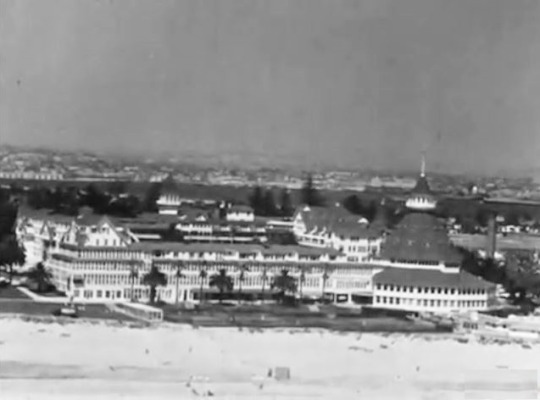
Some Like It Hot (1959) is arguably one of Marilyn Monroe’s most popular films. What does it have in common with Lucille Ball? In 1958, both Lucy and Monroe were depicted at San Diego’s famous Del Coronado Hotel. It is the hotel that the Ricardo’s and Mertzes stay at in “Lucy Goes to Mexico” (LDCH S2;E1) as well as the backdrop for much of the film. Although Desilu filmed establishing footage of the hotel, the cast stayed in Hollywood, while Monroe went on location (as seen above). In “Lucy Goes to a Hollywood Premiere” (TLS S4;E20), Mr. Mooney says he wouldn’t buy a second hand nightie if it had been worn by Jack Lemmon in Some Like It Hot.

The Irving Berlin song “There’s No Business Like Show Business” was sung on “I Love Lucy” and “The Lucy Show.” Although it was originally from the Broadway musical Annie Get Your Gun (1946), it also served as the title and was performed (by Merman) in the Marilyn Monroe film There’s No Business Like Show Business in 1955.

In 1952, Marilyn co-starred by Richard Widmark (”The Tour” ILL S4;E30) in the film noir drama Don’t Bother To Knock. The film also featured “Lucy” players Lurene Tuttle (Fine Arts League President), Verna Felton (Mrs. Porter), Gloria Blondell (Grace Foster), as well as Harry Bartell, Olan Soule, Robert Foulke, and Bess Flowers.

That same year, Monroe starred in We’re Not Married! opposite Lucy’s friend and former co-star Ginger Rogers, as well as Eve Arden (”Hollywood at Last!”), Paul Douglas (”Lucy Wants a Career”) and Eddie Bracken (Too Many Girls).

One of Monroe’s most iconic moments came in March 1962 when she sang “Happy Birthday” as a birthday present to President John F. Kennedy in a public birthday celebration also attended by Lucy’s friends and co-stars Jack Benny, Jimmy Durante, Henry Fonda, Danny Kaye, Shirley MacLaine and Elliott Reid. A year later, Lucy Carmichael also gave Kennedy a present, a sugar cube replica of the White House on “The Lucy Show” with Elliott Reid doing Kennedy’s offstage voice as well as playing a small on-camera role!
"I never quite understood it, this sex symbol. I always thought symbols were those things you clash together! That’s the trouble, a sex symbol becomes a thing. I just hate to be a thing. But if I’m going to be a symbol of something I’d rather have it sex than some other things they’ve got symbols of.” ~ Marilyn Monroe, 1962
Monroe was married (and divorced) three times:
- James Dougherty, Merchant Marine & Policeman (1942-46)
- Joe DiMaggio, Baseball Player (1954-55)
- Arthur Miller, Playwright (1956-61)

In “Lucy is Enceinte” (ILL S2;E10), Fred gives Lucy a signed baseball for his future ‘godson’. When he asks Lucy to read out the signature, she at first says “Spalding,” the ball’s brand name, but then finds it is signed by Joe DiMaggio.

In “Ragtime Band” (ILL S6;E21), Little Ricky asks his Uncle Fred:
LITTLE RICKY: “Who’s Joe ‘Maggio?”
FRED: “’Who’s Joe ‘Maggio?’ You talk more like your father everyday.”
In “Sales Resistance” (ILL S2;E17), Lucy compares herself to Willy Loman, the title character in Death of a Salesman, a Pulitzer Prize-winning play by Arthur Miller first produced on Broadway in 1949 and made into an Oscar-nominated film in 1951.

Speaking of husbands, Desi Arnaz has something in common with Marilyn Monroe, too. Both of their souses were accused of being Communists by the House Un-American Activities Committee during the 1950s. Both Lucille and Arthur Miller were cleared of charges and their careers continued, although that was not true for many celebrities of the time.

Monroe died on August 4, 1962. The toxicology report showed that the cause of death was acute barbiturate poisoning. Empty medicine bottles were found next to her bed. The possibility that Monroe had accidentally overdosed was ruled out because the dosages found in her body were several times over the lethal limit.

The character of Ginger, the movie star castaway on “Gilligan’s Island” (1964-67) was described during casting as a combination of Lucille Ball and Marilyn Monroe. Tina Louise had Lucy’s red (ginger) hair and Monroe’s shapely physique. The series also featured Natalie Schafer (Phoebe Emerson) as Mrs. Howell, and Alan Hale Jr. as the Skipper. Hale performed
on “The Lucy Show” and “Here’s Lucy”.
Series creator Sherwood Schwartz was a Lucy fan. His brother Elroy Schwartz actually wrote scripts for Lucille Ball.

In the 2013 web-series “Ryan & Ruby” both Lucille Ball and Marilyn Monroe are given special thanks for their inspiration. The last name of star and creator Ryan Burton’s character is “Carmichael”, the same as Ball’s character on the “The Lucy Show”. In Ryan’s kitchen there are fridge magnets with photos of both Lucy and Marilyn.

Lucy and Marilyn are street characters at Universal Studios theme parks, their iconic hair and costumes making them instantly recognizable.
The same day Marilyn Monroe was born in 1926, another Hollywood icon with connections to Lucille Ball was also born, Andy Griffith. To read his birthday blog, click here!
Alan Hale Jr., Arthur Miller, Clash By Night, Desi Arnaz, Don’t Bother To Knock, Ethel Merman, Eve Arden, Gilligan’s Island, Ginger Rogers, Hotel Del Coronado, I love lucy, Joe DiMaggio, John F. Kennedy, Keith Andes, Keith Thibodeaux, Look Magazine, Lucille Ball, Marilyn Monroe, Natalie Schafer, Paul Douglas, Richard Widmark, Ryan and Ruby, Some Like It Hot, The Lucy Show, The Seven Year Itch, THere’s NO business Like Show Business, Tina Louise, Verna Felton, vivian vanc, William Frawley
-
Subscribe
Subscribed
Already have a WordPress.com account? Log in now.
 Papermoon Loves Lucy