-
BEHIND THE WHEEL!
Lucy & Cars ~ Part One
In the 1950s, the lure of the open road and the new media of television collided (metaphorically speaking), and “I Love Lucy” was at the forefront of popularizing automobile travel!
“Liz Learns To Drive” (1948) ~ George teaches Liz to drive and she immediately gets in an accident. Through a communications mix-up, George thinks Liz has intentionally run over George’s high school sweetheart, Myra Ponsenby!
LIZ: I’m looking at you through an automobile ad. The new Nash has blue eyes for headlights. And your ears look like both doors are wide open.
“Liz Teaches Iris To Drive” (1950) ~ The Atterburys have bought a new car but Rudolph refuses to teach Iris how to drive. Liz readily volunteers to be Iris’s driving instructor.
LIZ (To Iris, about the rear view mirror): That’s so you can put on lipstick while you’re driving and still keep one hand on the wheel.
“Safe Driving Week” (1950) ~ When Liz gets a traffic ticket on the day George is Safety Week chairman, George decides to lock the car in the garage and hide the key.
- GEORGE: They’re having a big ceremony at the site of the new automobile club. There’s going to be a parade of all the drivers in town who haven’t gotten a ticket in ten years.
- LIZ: Well, that’ll be a short parade.

On “I Love Lucy,” the first time we hear about a car is in “The Marriage License” (1952). Ricky says it is a 125 mile drive to Greenwich (Connecticut), but we never learn where the car they drive comes from. Whether it was rented or owned, it later cost just $3.25 to fully gas up the mystery vehicle. In “The Camping Trip” (1953), Lucy recruits Ethel as her accomplice in besting Ricky. Ethel drives up to the camp site and waits in the (unseen) car for instructions. Here, Ethel knows how to drive and has a car, but but only a year and a half later, she claims she’s never learned.
A magazine ad for 1952 Henry J featured Lucille Ball andDesi Arnaz. They got a HJ Corsair as part payment for their appearance. The Henry J was built by the Kaiser-Frazer Corporation and named after its chairman, Henry J. Kaiser. The car was marketed from 1950 through 1954.
“Getting Ready” (1954) ~ The first time we see a real automobile on the series is when the gang is getting ready to drive to Hollywood.
Although Lucy has her heart set on a blue Cadillac convertible, Fred visits his old friend Al Hergersheimer, a used car salesman from Brooklyn who used to be in vaudeville with the Mertzes. He sells him a dilapidated 1923 blue Cadillac convertible for $300.
Needless to say, Lucy and the gang are disappointed in Fred’s taste in cars.
“Lucy Learns To Drive” (1954) ~ The 1955 Pontiac Star Chief convertible used starting with this episode was part of a product placement deal with General Motors. The script even has Ricky promoting that the car’s 180 horsepower and automatic transmission. Pontiac replaced its straight eight with a new V-8 engine in 1955. In her book Laughing with Lucy, writer Madelyn Pugh says that each of the writers received a new car for two years because of this agreement.
This episode features both the Cadillac and the Pontiac, which – through a convoluted set of circumstances – get locked together!
“California, Here We Come!” (1955) ~ Fred has sold the Cadillac (and is in a daze about the money he’s lost) and the Pontiac takes center stage.
Packing the Pontiac for the road trip was a challenge.
Second unit location footage of the Pontiac (a road-worthy version) is seen departing New York City and crossing the George Washington Bridge. The actors in the location vehicle were doubles for the cast, who remained in Hollywood.
After the Pontiac drives off down 68th Street, the episode employs a mix of studio film and second unit footage of the car driving to the on ramp and over the bridge. Footage shot during that day also is used in rear projection for the driving sequence.
The scene where the Ricardos and Mertzes sing while crossing the bridge is the first process shot ever used on television. According to head editor Dann Cahn:
“I packed up and I met an agency in New York and I went across the George Washington Bridge and made that famous first process shot for television – which was when they went across the bridge singing ‘California Here We Come.’ They were in the Pontiac with the top down, but they were sitting on the sound stage with the audience. And behind them was the what we called a process film plate, which I shot out of the rear end of a station wagon going across the bridge, and it was projected behind them on the screen. And that was the first process photography for television.”

Oops! In the scene playing behind the foursome, you can see the Pontiac driving on the bridge behind them! This was footage shot by the director, still unsure of how it might be used.
“First Stop” (1955) ~ The episode opens with second unit footage of the Pontiac driving through Ohio. A very funny sequence has the gang searching for a place to eat by following roadside signs.
It is intercut with studio-shot film of the actors in the car on the soundstage.
At the end of the episode, Mr. Skinner booby traps the Pontiac after stealing the steering wheel.
“Tennesee Bound” (1955) ~ The Pontiac is seen speeding across a rural bridge. When the on-location scene was filmed, second unit director Jack Aldworth wanted the car to go faster. So he got behind the wheel himself and was promptly pulled over for speeding, just as in the episode! He got the charges dropped when he discovered that the police officer was a huge Lucy fan.

The studio Pontiac pulls into a gasoline station manned by a hayseed played by future producer Aaron Spelling.
“Ethel’s Hometown” (1955) ~ Before arriving in New Mexico, there is second unit footage of the Pontiac at the Texas Ann Hotel in Amarillo, where the gang have an overnight stay.
There is also roadside footage of the Pontiac entering Albuquerque on the famous Route 66.
“L.A. at Last!” (1955) ~ The gang arrive in Hollywood with extensive establishing footage of the Pontiace on the famous Los Angeles freeway.
The Pontiac with the actor doubles drives into frame. Coming alongside is a 1953 Studebaker.
The Pontiac pulls into the entrance of the fictitious Beverly Palms Hotel. This is the last we see or hear of the Pontiac until “Ricky Sells the Car” (1956) at the end of their stay in Tinseltown.
Before pulling into the driveway of the hotel, they pass a 1946 Cadillac Funeral Coach. Ominous!?!
“The Tour” (1955) ~ Background vehicles populate the second unit footage of the tour bus driving through Beverly Hills. Here, a 1950 Chevrolet Styline Special is headed the opposite direction.
In another scene, the tour bus passes a 1950 Pontiac Chieftan.
A 1955 Imperial passes the bus as it approaches Lexington Drive.
“The Homecoming” (1955) ~ The gang pulls up to 623 East 68th Street in a taxi cab. The lighted sign atop the cab says ‘sky-view’ which refers to the fact that the vehicle is equipped with a sunroof so tourists could gawk at the skyscrapers during their trip. The sky-view feature was closely associated with DeSoto cabs. The side of the car says Globe Cab Company. The front end of the cab is different color, indicating it might have been cobbled together from several vehicles.
“Staten Island Ferry” (1956) ~ In second unit location footage, a car pulls out of the entrance / exit of the Staten Island Ferry dock.
“Bon Voyage” (1956) ~ Cars and taxis are seen in the second unit establishing footage in front of New York International Airport where Lucy hires a helicopter to take her to the ship.
“Off To Florida” (1956) ~ When Lucy looses her train tickets, she must hitch a ride to Miami with a suspected hatchet murderess!
For the exterior location footage, a 1949 Dodge Wayfarer was driven.
A 1951 Dodge Coronet was used in the studio shots. Few viewers noticed the difference.
The location footage was likely filmed in Southern California. As usual, the actors never left the studio.
“Lucy and Superman” (1957) ~ Looking down from the ledge, Lucy sees traffic on East 68th Street, including a taxi cab.
“The Ricardos Dedicate a Statue” (1957) ~ While seraching for Fred the dog, viewers catch a glimpse of a 1957 Ford. Ford was the show’s sponsor in the final season. Lucy decapitates the statue by not looking in the rear view mirror!
LUCY: I jumped in the car and forgot all about the trailer and backed right into that elm tree.
This is the only mention of the Ricardos owning a car during the Westport episodes.
“Lucy Takes A Cruise To Havana” (1957) ~ The first of the hour-long episodes features location footage of Ricky and Carlos’ carriage navigating the Havana harbor highways alongside a line of cars. When politcal tensions turned violent, Desi Arnaz told his second unit director and crew to get back to the States immediately.
“The Celebrity Next Door” (1957) ~ New neighbor Tallulah Bankhead’s chauffeur (Richard Deacon) borrows the Ricardos’ paint sprayer, which runs amok ruining her new 1958 Ford Country Sedan.
“Lucy Hunts Uranium” (1958) ~ During the location footage and the extensive automobile chase scenes in the episode’s second half, the Ricardos drive a Custom Cab Ford pickup truck, guest star Fred MacMurray drives a 1957 Ford Thunderbird and the Mertzes are still driving the same 1922 Cadillac roadster that Fred bought for the trip to California in 1955, even though it was supposedly used as a trade-in for the Pontiac!
While shooting in the desert, the crew had difficulty making one of the cars come to a skidding stop to complete the scene. Frustrated, Desi Arnaz finally got into the car himself and performed the stunt perfectly. After receiving applause from the cast and crew, it was discovered that the camera had no film in it! Desi went ballistic while the rest of the crew got hysterical.
One of the Ford commercials aired during the original broadcast of this episode featured three-time “I Love Lucy” guest star Tennessee Ernie Ford (no relation to Henry).
While the series was sponsored by Ford, William Frawley and Vivian Vance promoted the 1957 Ford Fairlane 500.
Lucy and Desi demonstrated the features of the 1957 Ford Fairlane 500 Skyline with retractable roof.
“Lucy Wins a Racehorse” (1958) ~ Establishing footage of the exterior of Roosevelt Raceway is from the POV of a busy car parking lot!
In establishing footage of the racetrack, the starting gates were pulled by a 1948 Chrysler Windsor.
“Lucy Goes To Mexico” (1958) ~ While in San Diego, the gang goes by car to Tijuana, Mexico.
Location footage at the Mexican border shows Lucy, the Mertzes and guest star Maurice Chevalier driving a white 1958 Buick Century convertible.
The car’s trunk is spacious enough to comfortably accommodate a small Mexican boy or an aging French singer!
The episode also utilizes a 1958 Buick Limited Riviera 750.
The episode is comprised of studio filming, second unit footage with actor doubles, and stock footage. The main cast never traveled to Mexico or San Diego.
A Tijuana traffic jam sequence was recreated in studio.
“Lucy Goes To Alaska” (1959) ~ features a 1948 Willys Jeep racing through the bleak landscape.
In addition to second unit footage, the jeep was buried in a snowbank recreated in the studio.
“Lucy Meets the Mustache” (1960) ~ Lucy disguises herself as Ernie Kovacs’ chauffeur driving a 1960 Lincoln Continental Landau four-door hardtop.
Lucille Ball posed in front of the car for this rare publicity still.
- ETHEL: A phone in a car!
- LUCY:That’s what I call luxury!
Coincidentally, during this filming in late 1959, Lucy hired a new driver, Frank Gorey.
-
VALENTINE’S DAY
February 11, 1949

“Valentine’s Day” (aka “Valentine’s Day Mischief”) is episode #30 of the radio series MY FAVORITE HUSBAND broadcast on February 11, 1949 on the CBS radio network.
Synopsis ~ Katie, the Maid, is sweet on Mr. Dabney, the butcher, and Liz offers to help. But when Liz’s Valentine to George gets switched with her check to pay the butcher’s bill, Mr. Dabney gets the wrong idea.
Note: This program was a basis for the “I Love Lucy” episode “Lucy Plays Cupid” (ILL S1;E15) filmed on December 13, 1951 and first aired on January 21, 1952. The titled was changed to reflect the fact that it would not be aired on or around Valentine’s Day. The TV cast included Bea Benadaret, who had already been heard on “My Favorite Husband” and would soon be assigned the regular role of Iris Atterbury. It is ironic that Benadaret was cast as Miss Lewis since she is not heard in the radio version.
“My Favorite Husband” was based on the novels Mr. and Mrs. Cugat, the Record of a Happy Marriage (1940) and Outside Eden (1945) by Isabel Scott Rorick, which had previously been adapted into the film Are Husbands Necessary? (1942). “My Favorite Husband” was first broadcast as a one-time special on July 5, 1948. Lucille Ball and Lee Bowman played the characters of Liz and George Cugat, and a positive response to this broadcast convinced CBS to launch “My Favorite Husband” as a series. Bowman was not available Richard Denning was cast as George. On January 7, 1949, confusion with bandleader Xavier Cugat prompted a name change to Cooper. On this same episode Jell-O became its sponsor. A total of 124 episodes of the program aired from July 23, 1948 through March 31, 1951. After about ten episodes had been written, writers Fox and Davenport departed and three new writers took over – Bob Carroll, Jr., Madelyn Pugh, and head writer/producer Jess Oppenheimer. In March 1949 Gale Gordon took over the existing role of George’s boss, Rudolph Atterbury, and Bea Benadaret was added as his wife, Iris. CBS brought “My Favorite Husband” to television in 1953, starring Joan Caulfield and Barry Nelson as Liz and George Cooper. The television version ran two-and-a-half seasons, from September 1953 through December 1955, running concurrently with “I Love Lucy.” It was produced live at CBS Television City for most of its run, until switching to film for a truncated third season filmed (ironically) at Desilu and recasting Liz Cooper with Vanessa Brown.
REGULAR CAST
Lucille Ball (Liz Cooper) was born on August 6, 1911 in Jamestown, New York. She began her screen career in 1933 and was known in Hollywood as ‘Queen of the B’s’ due to her many appearances in ‘B’ movies. With Richard Denning, she starred in a radio program titled “My Favorite Husband” which eventually led to the creation of “I Love Lucy,” a television situation comedy in which she co-starred with her real-life husband, Latin bandleader Desi Arnaz. The program was phenomenally successful, allowing the couple to purchase what was once RKO Studios, re-naming it Desilu. When the show ended in 1960 (in an hour-long format known as “The Lucy-Desi Comedy Hour”) so did Lucy and Desi’s marriage. In 1962, hoping to keep Desilu financially solvent, Lucy returned to the sitcom format with “The Lucy Show,” which lasted six seasons. She followed that with a similar sitcom “Here’s Lucy” co-starring with her real-life children, Lucie and Desi Jr., as well as Gale Gordon, who had joined the cast of “The Lucy Show” during season two. Before her death in 1989, Lucy made one more attempt at a sitcom with “Life With Lucy,” also with Gordon.
Richard Denning (George Cooper) was born as Louis Albert Heindrich Denninger Jr., in Poughkeepsie, New York. When he was 18 months old, his family moved to Los Angeles. Plans called for him to take over his father’s garment manufacturing business, but he developed an interest in acting. Denning enlisted in the US Navy during World War II. He is best known for his roles in various science fiction and horror films of the 1950s. Although he teamed with Lucille Ball on radio in “My Favorite Husband,” the two never acted together on screen. While “I Love Lucy” was on the air, he was seen on another CBS TV series, “Mr. & Mrs. North.” From 1968 to 1980 he played the Governor on “Hawaii 5-0″, his final role. He died in 1998 at age 84.
Ruth Perrott (Katie, the Maid) was also later seen on “I Love Lucy.” She first played Mrs. Pomerantz (above right), a member of the surprise investigating committee for the Society Matrons League in “Pioneer Women” (ILL S1;E25), as one of the member of the Wednesday Afternoon Fine Arts League in “Lucy and Ethel Buy the Same Dress” (ILL S3;E3), and also played a nurse when “Lucy Goes to the Hospital” (ILL S2;E16). She died in 1996 at the age of 96.
- In this episode we learn that Katie is a redhead, like Liz, and a heavy-set woman.
Bob LeMond (Announcer) also served as the announcer for the pilot episode of “I Love Lucy”. When the long-lost pilot was finally discovered in 1990, a few moments of the opening narration were damaged and lost, so LeMond – fifty years later – recreated the narration for the CBS special and subsequent DVD release.
Gale Gordon (who appears here as the Judge) and Bea Benadaret had not yet joined the cast in the roles of Rudolph and Iris Atterbury.
GUEST CAST

Gale Gordon (Judge Skinner) had worked with Lucille Ball on “The Wonder Show” on radio in 1938. One of the front-runners to play Fred Mertz on “I Love Lucy,” he eventually played Alvin Littlefield, owner of the Tropicana, during two episodes in 1952. After playing a Judge in an episode of “The Lucy-Desi Comedy Hour” in 1958, he would re-team with Lucy for all of her subsequent series’: as Theodore J. Mooney in ”The Lucy Show”; as Harrison Otis Carter in “Here’s Lucy”; and as Curtis McGibbon on “Life with Lucy.” Gordon died in 1995 at the age of 89.
Hans Conried (Mr. Dabney, the Butcher / Weary Mailman) first co-starred with Lucille Ball in The Big Street (1942). He then appeared on “I Love Lucy” as used furniture man Dan Jenkins in “Redecorating” (ILL S2;E8) and later that same season as Percy Livermore in “Lucy Hires an English Tutor” (ILL S2;E13) – both in 1952. The following year he began an association with Disney by voicing Captain Hook in Peter Pan. On “The Lucy Show” he played Professor Gitterman in “Lucy’s Barbershop Quartet” (TLS S1;E19) and in “Lucy Plays Cleopatra” (TLS S2;E1). He was probably best known as Uncle Tonoose on “Make Room for Daddy” starring Danny Thomas, which was filmed on the Desilu lot. He joined Thomas on a season 6 episode of “Here’s Lucy” in 1973. He died in 1982 at age 64.
- On television, the character will be renamed Mr. Ritter and be played by Edward Everett Horton, who had appeared in three movies with Lucille Ball, including 1935’s Top Hat.
EPISODE
ANNOUNCER: “Now let’s look in on the Coopers. It’s three days before Valentine’s Day. Well, she’s been hinting about it all morning, but George doesn’t seem to notice. And now at breakfast, Liz is making one last try – by arranging her toast crusts in the shape of a heart.”
George doesn’t get the message so Liz comes right out and announces that St. Valentine’s Day is coming up. George calls it a racket and cynically tells her the day started with two kindly old gentlemen: a candy maker and a florist.
LIZ: “What’s Valentine’s Day without candy and flowers?”
Much to his surprise, Liz screams her love for George at the top of her lungs! When George warns that they neighbors might hear, they switch to hushed whispering. Katie comes in to serve more coffee and says she has a written a poem for her Valentine – Mr. Dabney the butcher. Liz calls him “old heavy thumbs”.
KATIE: “Some people may have better beef, but his liver’s good. And no one has oxtails and pig’s feet like him!”
Katie is too shy to hand Mr. Dabney the Valentine herself, so Liz volunteers to give it to him when they go shopping. George warns Liz against playing Cupid, but she figures they might get better cuts of meat in the long run.
Later, at the meat market, Katie hands Liz the Valentine, which is soggy with bacon grease. Liz greets Mr. Dabney (Hans Conried) and tells him that one of his customers likes him a lot.
MR. DABNEY: “You know something, Mrs. Cooper. I like you a lot, too!”
Liz tries to correct his misapprehension and hands him the Valentine, which she hopes will clear things up.
MR. DABNEY (sniffing): “How did you know? My favorite aroma! Swift’s Premium!”
Swift & Company was meat-packing company founded in 1855 and based in Chicago from 1875. The majority of their products were pork-based. They perfected vacuum packing and the refrigerated boxcar. Swift was subsumed by Brazilian company JBS in 2007.
He reads the Valentine aloud:
- If you’ll be mine, then I’ll be thyne. You set my heart a-quiver. Say you’ll be my Valentine, And send two pounds of liver.
It is signed “your bashful redhead”. Mr. Dabney is convinced that the Valentine is from Liz, even though Katie is a redhead, too!
MR. DABNEY: “Listen, two houses may have red roofs, but you don’t pick the one with the sagging foundation! Don’t try to fight this thing, my little tenderloin, it’s bigger than both of us!”
LIZ: “Now stop this, Mr. Dabney. What about Katie?”
MR. DABNEY: “She’s bigger than both of us, too! I’ve admired you for years. Each little lamb chop you bought I personally put the pants on!”
Liz storms out and Mr. Dabney chases her down the street. Katie isn’t too bothered. She has a date with the milkman! She’s written him a poem, too! She left it in an empty milk bottle.
I love you, dear, don’t be surprised. Leave two quarts of homogenized!
Liz off-handedly refers to Katie as Edgar Guest.
Edgar Albert Guest (1881-1959) was a British-born American poet who became known as the People’s Poet. His poems often had an inspirational and optimistic view of everyday life. In 1949 he wrote Living the Years.
Liz tells Katie to mail Mr. Dabney a check so she doesn’t have to see him and also pop into the mail a copy of the first Valentine she wrote to George at age 16. She thinks it will be fun for him to get it at the bank.
George comes home in the middle of the afternoon because he has to pack to go out of town to Chicago on bank business and won’t be back before Monday. Liz rushes out to find Katie before she mails the Valentine. She intercepts the weary mailman (Hans Conried, again) as he is about to empty the mailbox.
LIZ: “Are you picking up the mail?”
MAILMAN (sarcastically): “No, I’m a Confederate soldier and these are messages for General Lee.”
Robert Edward Lee (1807-70) was a Confederate general best known as commander of the Confederate States Army during the American Civil War. He commanded the Army of Northern Virginia from 1862 until its surrender in 1865 and earned a reputation as a skilled tactician. Coincidentally in 1949, his face was on a postage stamp commemorating the 200th anniversary of Washington and Lee University in Lexington, Virginia.
Liz wants to retrieve the Valentine, but the mailman won’t allow her to touch the mail without proof of identity. Liz shows him her purse with the monogram L.C. on it, but that isn’t enough for him.
L.C. will also be Lucille Ball’s initials when she plays Lucy Carmichael in “The Lucy Show”, Lucy Carter in “Here’s Lucy” and Lucy Collins in “Lucy Gets Lucky.”
She urges the mailman to peak inside the envelope to confirm that it is just a Valentine to her husband. When he does, he is shocked to find the check to Mr. Dabney, and assumes she is trying to steal from the US Mail! Liz realizes that the check went to George and the Valentine went to Mr. Dabney, who already believes Liz to have a crush on him as it is!
Early the next morning, Liz is at the Meat Market to intercept the Valentine when the mail is delivered. To make it look as if she is there merely shopping, she continually makes purchases.
MR. DABNEY: “Mrs. Cooper, you’ve already bought a roast, two pounds of bacon, three steaks, four lamb chops, five veal cutlets, and some liverwurst! You now have more meat than I do. Why don’t you start selling it back to me?”
She finally asks him when the mailman arrives, but he still thinks she is just staying around to be near him. The mailman arrives and Liz tries to grab the envelope, blurting out that there is a Valentine inside. She grabs the envelope and runs. The postman and the butcher call the police!
At home at last, Liz tells Katie all that has happened, including being dragged in front of a judge! George comes home from work.
GEORGE: “Well, what’s new?”
LIZ: “I am being sent to Alcatraz!”
GEORGE: “Liz! You’ve joined a pyramid club!”
Alcatraz is a maximum security prison located on an island off the coast of San Francisco. It opened in 1934, and closed in 1963. Today, Alcatraz is a public museum and one of San Francisco’s major tourist attractions, attracting some 1.5 million visitors annually.
A pyramid club (aka pyramid scheme) is a fraudulent system of making money based on recruiting an ever-increasing number of “investors.” The initial promoters recruit investors, who in turn recruit more investors, and so on. The scheme is called a “pyramid” because at each level, the number of investors increases. The pyramid club scams hit their peak in 1949 in California, with their Grand Jury handing down indictments just two days before this episode aired!
Liz explains the convoluted story which ends with the fact that the judge will drop the charges if she and George will appear in domestic relations court tomorrow.
LIZ: “The Judge wants to make up his mind or whether I should marry Mr. Dabney.”
Next morning, in the courtroom, Judge Skinner (Gale Gordon) introduces the case with George, Liz, and Mr. Dabney present.
JUDGE: “There is no problem too big to solve. Into every life a little rain must fall. Every cloud must have a silver lining, and it is always darkest before the dawn.”
LIZ: “Well, now that we’ve had the weather report, let’s get on with the case.”
Liz asserts that she’s NOT in love with Mr. Dabney, although he is convinced otherwise. George insists it is all a mix-up. The Judge assumes that she is a bored and frustrated housewife who is bored with her marriage. He directs Mrs. Cooper to read the Valentine in question aloud:
LIZ: “Dear sweetheart, I’m under your spell. I love you more than tongue can tell.”
MR. DABNEY: “Ah ha! Tongue! Fifty nine cents a pound!”
LIZ: “My lover, I have this to say: I care for you in the very worst way.”
MR. DABNEY: “That oughta prove it: Lover worst!”
LIZ: “My love for you is not a phony, this Valentine is…no baloney.”
JUDGE: “I must say she writes a Valentine with a lot of meat in it.”
George strongly objects that after ten years of marriage, no one is going to take her away from him! The Judge bangs his gavel and hands down his ruling, giving custody of Liz to… Mr. Cooper. He summarizes that although Liz may love Mr. Dabney, he must consider the needs of a husband who would be lost without his wife. This judgment brings considerable conversation from both sides. George is glad things didn’t get nasty and leak to the newspapers!
JUDGE: “Quiet! Quiet! You have been listening to your daily radio session in kindly Judge Skinners Domestic Relations Court.”
LIZ: “Oh, no, George! This whole thing’s been on the air!”
End of Episode
-
TRAINSPOTTING!
Lucy and Railway Transportation
Before America was ruled by the automobile, train transportation was the way to go. Lucy makes tracks for the railroad in these unforgettable moments on the (laugh) tracks.
As a young girl, Lucy would take the train from Jamestown to New York City, hoping to fulfill her dreams of becoming a performer. The train station is now part of the National Comedy Museum.
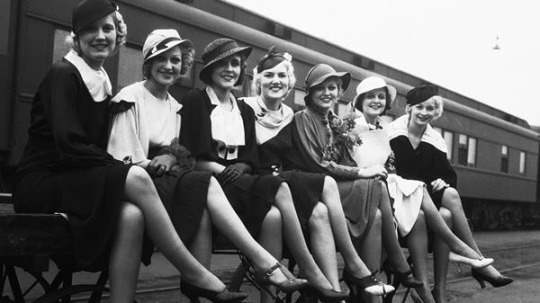
1933 ~ Lucille Ball joined the Goldwyn Girls on a train headed west to Tinseltown. Left to right are Katherine Mauk,Rosalie Fromson, Mary Lange, Vivian Keefer, Barbara Pepper, Theo Phane, and Lucille Ball.
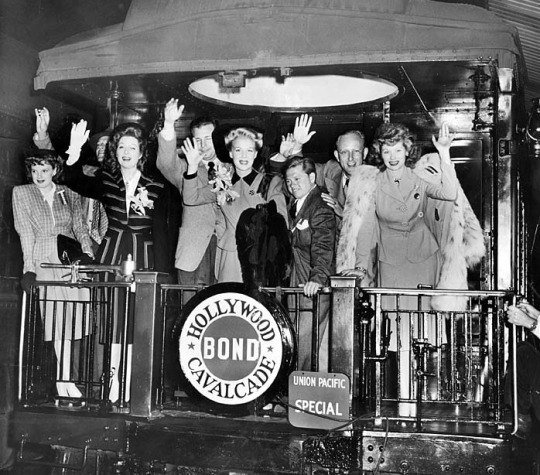
1943 ~ Lucille Ball and other well-known stars set out on a Union Pacific special train to cross America promoting the sale of War Bonds. It began in Washington DC and went through 16 American cities before ending in San Francisco 21 days later.
Fancy Pants (1950) ~ film stars Lucille Ball and Bob Hope pose atop a railroad handcar.
“New Neighbors” (1952) ~ When Ethel is looking through the O’Brien’s belongings, she holds up a bronze of a man on horseback. She deems it “early Pullman.” Pullman refers to railroad sleeping cars that were built and operated by the Pullman Company from 1867 to 1968. The cars were often decorated with inexpensive items that sometimes found their way into travelers’ suitcases!
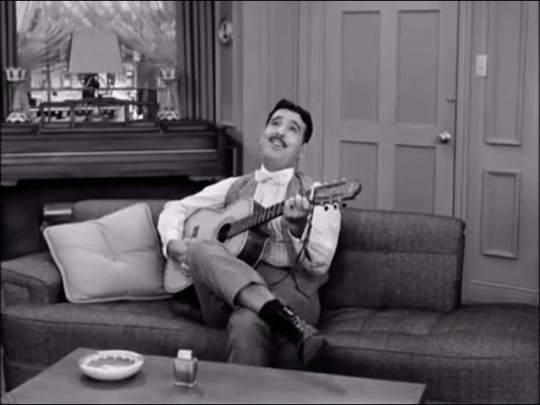
“Tennessee Ernie Visits” & “Tennessee Ernie Hangs On” (1954) ~ In both episodes, Ford sings the train-themed song “The Wabash Cannonball”. The song’s first documented appearance was on sheet music published in 1882, titled “The Great Rock Island Route” and credited to J.A. Roff. A revised version was made famous by Roy Acuff in 1936.
Listen to the jingle, the rumble and the roar
As she glides along the woodland o’er the hills and by the shore.
Hear the mighty rush of the engine hear the lonesome hobo’s call
As you travel across the country on the Wabash Cannonball.

“Getting Ready” (1954) ~ Thinking about how to get to Hollywood, Lucy considers the train. The brochure Lucy reads has the Union Pacific Railroad’s logo redacted. In reality, the Union Pacific did not operate East of the Mississippi, betraying the show’s Southern California roots!
LUCY (to Ricky): You know, on the train, you can see the country you’re passing through. This is little Ricky’s first chance to go across the United States, so don’t you think you ought to get a chance to really see it?
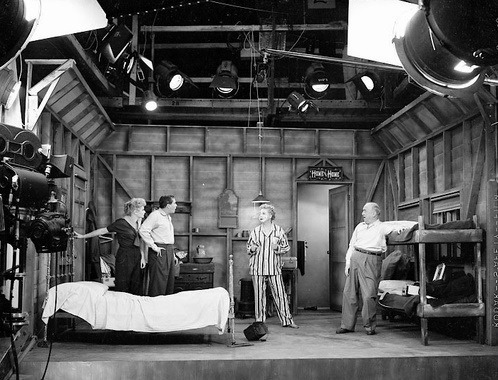
“First Stop” (1955) ~ On their cross-country road trip, the gang takes refuge at One Oak Cafe and Cabins. Their rundown cabin is near an unseen (but loudly heard) railroad – which causes the entire building to shake!

“Ricky Sells The Car” (1955) ~ In this episode we learn that the gang will return to NYC by train on the Union Pacific Railroad’s new Domeliner service on the City of Los Angeles train. A rift develops between the Ricardos and Mertzes when there aren’t enough tickets in the same class. Don Brodie plays the Union Pacific Railroad clerk.
Before he entered show business, William Frawley (Fred Mertz) worked as a stenographer for the Union Pacific Railroad.
Frawley was featured in the 1945 Deanna Durbin film Lady on a Train. The Universal release also featured future “I Love Lucy” cast members Elizabeth Patterson (Mrs. Trumbull), Edward Everett Horton (Mr. Ritter), Allen Jenkins, Fred Aldrich, Joseph Crehan, Mike Lally, Sam Harris, and Sam McDaniel, who played a train porter, just as he would in…
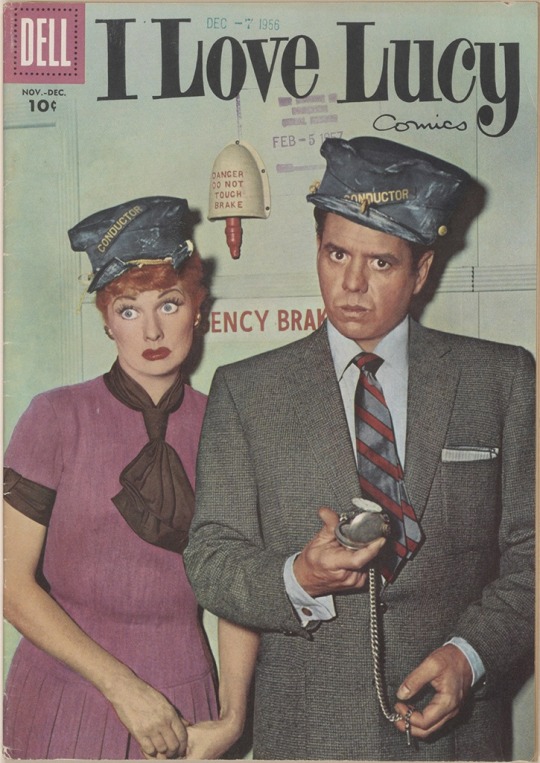
“The Great Train Robbery” (1955) ~ Returning from Hollywood to New York, Lucy wreaks havoc on the City of Los Angeles train.

As set up in the previous episode, Desilu had a partnership with Union Pacific Railroad. The line operated the City of Los Angeles train from 1936 to 1971, when Amtrak took over national train service in the USA. Although it is not mentioned, the train route terminated in Chicago, where, presumably, the foursome got a connecting train to New York City, perhaps the famed 20th Century Limited.
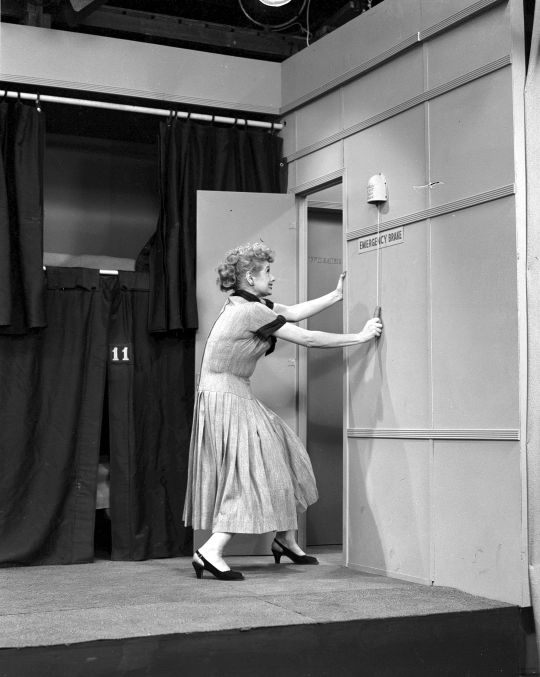
To simulate the emergency braking of a speeding train, Desi wanted more than just actors reacting to a jolting camera, so sets were built on a spring mechanism that was triggered by the emergency brake itself. When Lucy pulled the handle, it caused the entire set to lurch forward in a sudden movement. All this is demonstrated in the special features section of the DVD release.

As part of the partnership with UPR, Desilu was granted permission to film aboard the real Domeliner train. As there was a nearby train station, Vivian Vance, William Frawley, Kathryn Card, Frank Nelson (the conductor) and Sam McDaniel (the porter) were all featured in the location footage on the platform. Lucille Ball and Desi Arnaz, however, do not appear in any of the second unit location footage. This is the only time principal cast members (instead of doubles) went on location during the half-hour series.
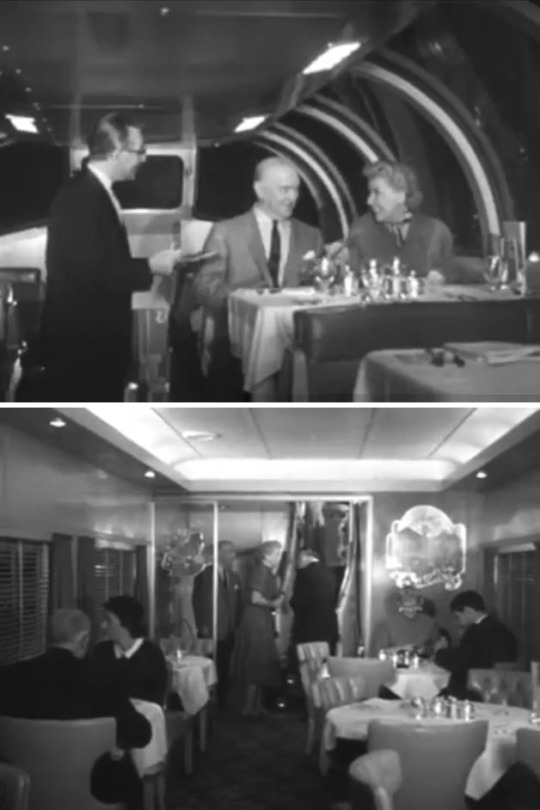
Footage of Fred and Ethel enjoying the Domeliner’s dining car and lounge were cut when it was realized that movement outside the window did not line up with the episode’s continuity. Rare 16mm film footage of the scenes was discovered and the cut scenes were added to the 2005 DVD release.

The lounge car, however, was recreated on the soundstage. The short scene of the Mertzes boarding the train on the platform (complete with sound), assisted by the Porter and the Conductor, was still included in syndicated broadcasts.
“Lucy’s Italian Movie” (1956) ~ Opens in a crowded train compartment headed to Rome. Here Lucy meets a famous film director and thinks this may be her big break.
Band manager Fred failed to secure proper train acommodations for the overnight trip – forcing the gang into some unusual sleeping positions!
“Lucy Hunts Uranium” (1958) ~ The hour-long episode opens in a train car headed to Las Vegas, where Ricky’s band is booked at the Sands Hotel. Establishing footage indicates that they are traveling on the Union Pacific Railroad. In reality, getting to Las Vegas by train from Connecticut would have meant several transfers and route changes.

On the train they meet actor Fred MacMurray, who also gets uranium fever and races the Ricardos and Mertzes across the desert on a railroad handcar.
“Lucy Visits the White House” (1963) ~ Lucy and Viv accompany their scout troop to Washington DC on the train to present President Kennedy with their sugar cube White House. The episode features establishing footage of an actual train and station.
The train makes stops in Greenview, Middlebrook, Flint Ridge, and Scottville. Like Danfield, all are fictional towns along a fictional railroad line.
Frank Nelson reprises his role as the frazzled train conductor, first played in “The Great Train Robbery”.
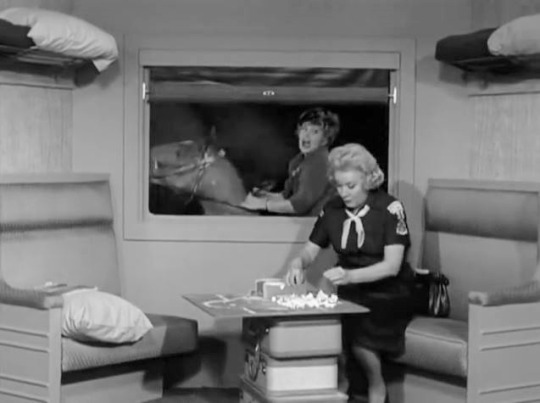
When Lucy misses the train, she tries to catch up on horseback. This sequence was shot on the soundstage using a mechanical horse. Coincidentally, an early literary name for a train was an ‘iron horse’.
THE ‘FOREVER DARLING’ EXPRESS

Lucy and Desi board a special car provided by the Santa Fe Railroad to promote the film Forever Darling in early 1956.

The train was dubbed the Forever Darling Special with stops in Chicago, Detroit, Dallas, Cleveland, Pittsburgh, Philadelphia, New York City, and Ball’s hometown of Jamestown, New York.
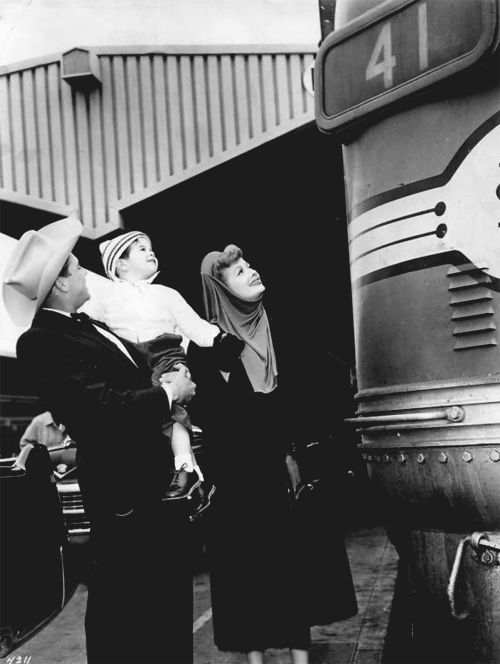
Back in Los Angeles and reunited with their son, they admire the train that served them on their busy promotional tour. Desi is proudly wearing the cowboy hat he’d been given in Fort Worth.
TRAIN DEPOTS
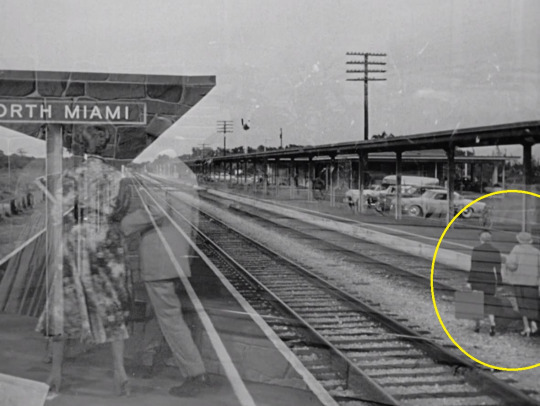
“Off to Florida” (1956) ~ When Lucy misplaces their train tickets to Miami Beach, she and Ethel must share a car ride with Edna Grundy, a woman they suspect might be a hatchet murderess. At the end of the cross-fade between the second unit location footage of the North Miami train station and the studio set of the same location, Lucy and Ethel’s doubles can be briefly glimpsed walking down the tracks.
“Lucy and the Loving Cup” (1957) ~ Unable to tell where she is due to the loving cup on her head, Lucy gets off the subway train at the Flatbush Avenue station.
- LUCY: Pardon me. Can you tell me where the stairs are?
- STRAP-HANGER: Well, you’d better get off the train first.
- LUCY: I am off.
- STRAP-HANGER: You’re telling me.

“Lucy Misses the Mertzes” (1957) ~ The scene at the Westport Train Station is in the best tradition of farce, with both couples narrowly missing one another in the same small depot.
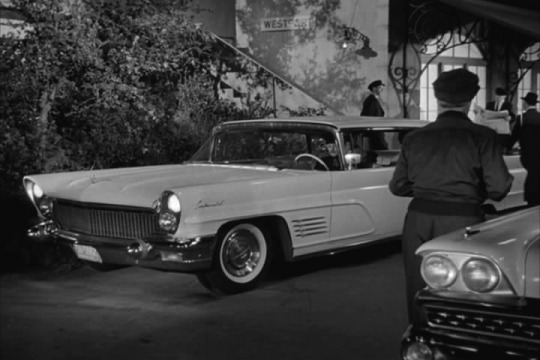
“Lucy and the Mustache” (1960) ~ Disguised as Ernie Kovacs’ chauffeur, Lucy parks outside the Westport train station.

“Lucy Wants a Career” (1959) ~ Now both gainfully employed in New York City, commuters Lucy and Ricky only see each other at Grand Central Station, one of the most famous train stations ever built. There is establishing footage of Grand Central.
“No More Double Dates” (1962) ~ At the Danfield Train Station, couples Lucy and Harry narrowly miss Viv and Eddie when trying to have independent dates. When Lucy and Harry lie about missing their train, Eddie notes that the next one only makes one stop – in New Rochelle. The real-life New York town has already been mentioned several times in the series, establishing that Danfield (and nearby Ridgebury) are similar commuter suburbs of Manhattan.
“Lucy Visits the White House” (1963) ~ Lucy gets off the train at the Greenview Station to hunt down sugar cubes in order to rebuild the cubs’ destroyed sugar cube White House.
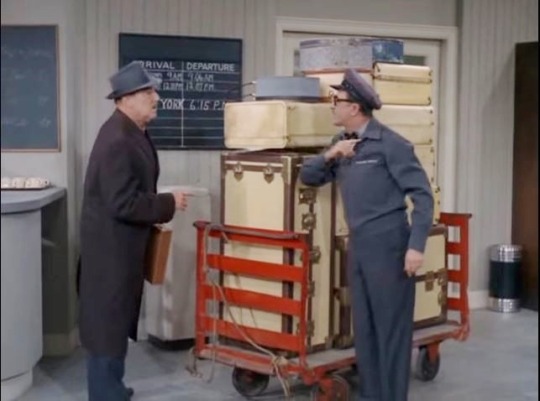
“Lucy is a Process Server” (1964) ~ Charged with serving papers to Mr. Mooney, Lucy tracks him to the Danfield Train Station.
“Main Street U.S.A.” (1967) ~ Lucy and Mr. Mooney arrive in the small town of Bancroft by train.
TOY TRAINS
“The Attic” (1949) ~ An episode of Lucille Ball’s radio series in which George and Liz (Lucille Ball) clean out the attic and get locked in.
- GEORGE: Hey, look at that! My wonderful electric train. Oh, gosh, I haven’t seen this train in years.
- LIZ: Well, you certainly have no use for it now. Out it goes.
- GEORGE: Take your hand off that box! It stays!
- LIZ: Oh, George, don’t be silly!
- GEORGE: Now, who’s being silly? That train doesn’t leave this house.
- LIZ: Now, that’s being practical. There’s nothing as useful as an electric train. In fact, we should get another one for me. We can race them every night before we go to bed!
- GEORGE: Yeah. I guess you’re right. Out it goes.
- LIZ: I’ll let you keep your train if you let me keep my corsage collection.
- GEORGE: It’s a deal!
“The Ricardos Change Apartments” (1953) ~ Lucy fills the apartment with Little Ricky’s toys, including a Lionel Electric Train Set, to convince him they need a larger apartment.
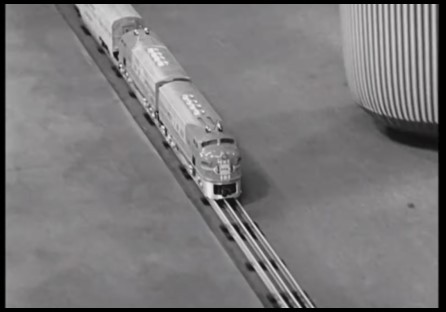
- LUCY: “Woo Woo! Look out for the Super Chief!”
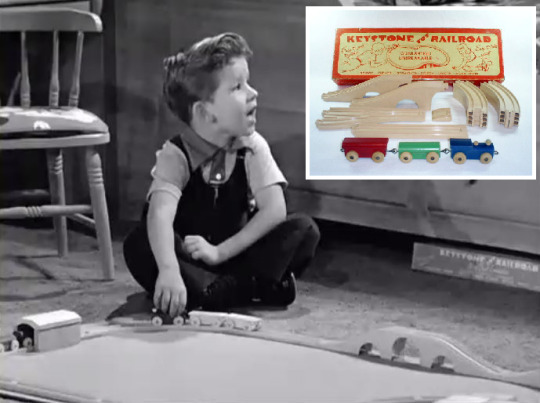
“Little Ricky Gets Stage Fright” (1957) ~ Little Ricky is discovered playing with his Keystone Toy Railroad, a wooden train set made by the Keystone Manufacturing Company. The box is tucked under the bed.

“The ‘I Love Lucy’ Christmas Show” (1956) ~ Lionel Trains are under the Christmas tree for Little Ricky.
“My behind-the-scenes memoris are just the toys on the set. The writers, Madelyn and Bob, gave me a Lionel Train set and that was a real big treat for me as a kid.” ~ Keith Thibodeaux (Little Ricky)
“Lucy and the Efficiency Expert” (1966) ~ Oliver Kasten (Phil Silvers) sits in front of red blow mold locamotives at the Grantland Toy Factory where Lucy is employed on the production line.
THE SUBWAY
“Tennessee Ernie Visits” (1954) ~ Ernie explains the subway.
- ERNIE: I asked a fella how to get to the Rickerdos’. Well, he said, “Take the subway.” Well, he pointed over there to a hole in the ground with some steps a-going down in it. I went down in there, and do you know what I saw? A bunch of people a-standing there looking in a ditch. Well, here come two streetcars hooked up together. All that bunch of people come a-steamin’ up there pushed me through that door, shut it up, and we took off like a scalded gander. Well, sir, we drove and drove and drove and do you know what?
- RICKY: What?
- ERNIE: That driver never got that thing out of that hole.
“Lucy and the Loving Cup” (1957) ~ When Lucy gets a loving cup stuck on her head, she must take the subway to Brooklyn to get it off. The episode features establishing footage of the New York Subway trains, although the footage was reversed.
The subway car was recreated on the Desilu soundstage in Hollywood.
-
SUPER BOWL BALL!
LUCY & THE GRIDIRON
Even the Queen of Comedy was a gridiron groupie! Here’s a pigskin parade of touchdown moments of Lucy and the sport of FOOTBALL!
1934 ~ As a young model and actress, Lucille Ball didn’t just take film jobs. Here she poses in football gear with Billie Seward at Bovard Field in Los Angeles.
“Three Little Pigskins” (1934) ~ A football-themed film starring the Three Stooges and Lucille Ball.
The second half of the film was shot at Gilmore Stadium. The Los Angeles stadium was newly built in 1934 and had a seating capacity of 18,000. Coincidentally, the stadium was later sold to CBS and became the site of Television City.
Too Many Girls (1939) ~ The Broadway production of the musical featured Eddie Bracken and Desi Arnaz as football players. Both would be featured in the film version a year later. Interestingly, it was a football injury that kept Desi Arnaz stateside during World War II.
Too Many Girls (1940) ~ Van Johnson (center) was added for the film version. It was this film that introduced Lucille Ball to Desi Arnaz.
On June 26, 1948, Dorothy Manners’ column reported that Lucille Ball was cast in Interference, a film about pro football starring Victor Mature, to be produced by RKO.
The film was not released until October 1949, by which time its title had been changed to Easy Living. The film features the real-life Los Angeles Rams football team
“The Football Game” (1950) ~ Liz (Lucille Ball) and Iris (Bea Benadaret) are determined to go to the annual State University homecoming football game with their favorite husbands, until the boys tell them they aren’t planning to take them along.
- IRIS: I can hardly wait to get to the game and watch that old quarterback make a home run.
- LIZ: Iris, it’s not a home run, it’s a touchdown. And isn’t a quarterback, it’s a second baseman.
- RUDOLPH: It’s a shame not to take them along, George. Wouldn’t they love to see the jockey run 65 yards to a knockout?
“The Saxophone” (1952) ~ When Lucy finds her saxophone, she mentions to Ethel that she was in the high school marching band in Celoron in order to date a football player.
“The Benefit” (1952) ~ Tap! Tap! Tap!
“Ricky Minds the Baby” (1954) ~ Little Ricky wanders off while Ricky and Fred watch a football game on TV.
“Little Ricky Learns to Play the Drums” (1956) ~ Sports fan Fred is trying to catch up on his reading with a November 1954 copy of Sports Illustrated with San Francisco 49′ers Quarterback Y.A. Tittle, the first professional football player, on the cover.
Tittle will be mentioned again in “Lucy the Fixer” (1969).
February 1956 ~ Lucy returns to Jamestown by helicopter and sees that fans have spelled out a greeting on the snow-covered Jamestown High School football field.
“Lucy and Superman” (1957) ~ Lucy’s make-shift Superman costume features a football helmet!
- ETHEL: I still think the helmet is wrong. Superman doesn’t wear a helmet.
- LUCY: He would if he was trying to cover up his red hair!
“The Bob Hope Buick Sports Award Show” (1961) ~ Lucille Ball is one of the celebrity presenters. Coincidentally, her name in the opening credits is over a football game, although she later presents an award to boxer Floyd Patterson.
“Lucy is a Referee” (1962) ~ Jerry and Sherman’s football game is going to be canceled due to the lack of a referee, so Lucy volunteers.
With the help of her boyfriend Harry (Dick Martin), she learns all the signals, but cannot help interfering on her son’s behalf and clumsily affecting the outcome of the game.
At the start of this episode, Lucy is searching for her son’s lost Johnny Unitas football card. At first, Viv thinks that Frankie Avalon and Ricky Nelson are football players, too. Lucy reads out the sports cards of ‘Red’ Phillips, then a player for the Los Angeles Rams, and Jimmy Brown, of the Cleveland Browns. Divorcee Viv laments that the players’ age and marital status are not given.
Lucy offers to take both teams to a pro football game, but a blizzard strands them all at Lucy’s house, watching the big game on TV.
The Mighty Mites of the Venice Athletic Club was a pee-wee football team from Venice Beach, California, that took the parts of both the home and away teams in this episode.
“Lucy Puts Up a TV Antenna” (1962) ~ Sherman and Jerry are excited that the All-American Football Team is going to be on TV. This continues the boys’ enthusiasm for football, established in “Lucy is a Referee”. Later, when trapped on the roof, Lucy mentions that Chris is having her music lesson and the boys are playing football.
“Lucy the Co-Ed” (1970) ~ Harry’s old flame Gloria is in town to help produce a musical for their college alumni. They resurrect a show Harry wrote in college.
Harry (Gale Gordon) plays ‘Crazy Hips,’ Bullwinkle University’s football star.
As the curtain goes up, the orchestra plays “You Gotta be a Football Hero (To Get Along with the Beautiful Girls)” written by Al Sherman, Buddy Fields and Al Lewis in 1933. It is one of the most widely recorded and performed football anthems of all time.
The song was first sung by Craig (Desi Arnaz Jr.) in “Lucy and Carol Burnett” (1969) to raise money for the school gym.
FUMBLE! The white football Craig tossed away during his solo number is stranded on stage. Desi Jr. must stoop down to scoop it up during his entrance for the finale.
“Lucy the Skydiver” (1970) ~ When Lucy sees her daughter in a motorcycle helmet she asks if she’s playing for the Rams, Los Angeles’ hometown football team. Later, when she has the parachute pack strapped to her back, Lucy says she feels like she’s carrying the Green Bay Packers, yet another football reference in this sports-themed episode that aired (coincidentally) the same day as the premiere of Monday Night Football.
“Lucy and Aladdin’s Lamp” (1971) ~ Craig (Desi Arnaz Jr.) wishes for two tickets to the sold-our Rams Football game. After a dramatic thunder clap, Craig gets a call from his friend Alan who offers him a ticket.
In the same episode, Lucy pulls out a fur-lined jacket she says was worn by Joan Crawford in Mildred Pierce (1945). Craig says that judging by the shoulder pads she could have worn it in The Spirit of Notre Dame, a 1931 football-themed movie starring Lew Ayres.
“Lucy and Joe Namath” (1972) ~ The series brings back the character of Craig for a special appearance by football player turned actor ‘Broadway’ Joe Namath.
Actual clips of Namath on the field for the New York Jets (#12) are featured.
After the show was over, Namath sent Lucille Ball an autographed football.
“Super Comedy Bowl” (1971) ~ In a sketch, Lucille Ball played an ER nurse who ‘manhandles’ football player Joe Namath after an accident. The sketch was written by Arnold Kane, who wrote about it in his book, My Meteoric Rise to Obscurity.
“Super Comedy Bowl” (1972) ~ The next year Lucie Arnaz followed in her mother’s footsteps, appearing on the special with football great Bubba Smith.
“The Big Game” (1973) ~ O.J. Simpson speaks at Harry’s Chamber of Commerce luncheon and passes on a couple of free passes to a sold out football game.
To get into the spirit of the occasion, Mary Jane brags she is wearing her Tommy Trojan pendant. Mary Jane says she learned a lot about football because of her crush on Howard Cosell,one of television’s most famous and enigmatic sportscasters.
The football hanging above the head table falls into the punch bowl – splashing Simpson in the face. Touchdown!
“Lucy Carter Meets Lucille Ball” (1974) ~ The on-screen announcer is played by Tom Kelly, who first called play-by-play for college football. He described the action of five USC national championship football teams, five Heisman Trophy winners, and 92 first team All-American footballers. Kelly previously played himself in “The Big Game” sharing the screen with O.J. Simpson.
-
LEAVE THE DRIVING TO US!
LUCY & BUSSES

Planes, Trains, and Automobiles – but what about busses? When all other forms of transportation failed, there was always reliable bus transportation to rely upon.

In May 1944, the St. Louis (MO) Public Service Company issued bus passes with film promotion for the Lucille Ball motion picture Meet the People co-starring Dick Powell. Such ads on bus passes were not uncommon in larger cities.
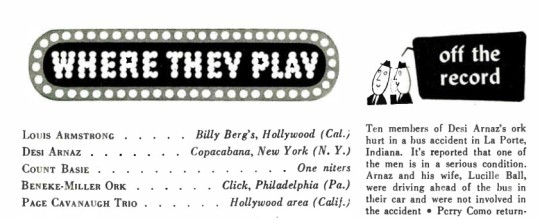
Busses were common forms of transportation for touring theatrical performers, including Desi Arnaz and His Orchestra. In early July 1947 they performed in Milwaukee and Madison, Wisconsin before hitting the road for Akron, Ohio. At the last minute, Arnaz and his brother-in-law, Fred Ball, the band manager, decided to fly to Detroit to see Lucy’s play Dream Girl, while the rest of the orchestra traveled to Akron by bus. Disaster struck as the Checkerway Charter Coach driver James O’Brien fell asleep at the wheel. A westbound truck driver tried to swerve out of the way but couldn’t avoid the out-of-control bus. Nearly everyone inside was hurt – some seriously. The two band members who took Desi’s and Freddy’s regular seats up front were hurt the worst.
THE (BUS) TOUR
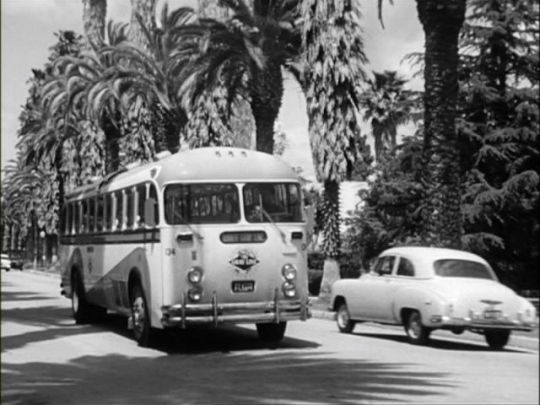
“The Tour” (1955) ~ Possibly the most famous example of Lucy and busses came in this memorable episode of “I Love Lucy” when Lucy and Ethel take a bus tour of Hollywood and Beverly Hills while Ricky has lunch with Richard Widmark. This episode integrated studio-shot footage, second unit location filming of the bus in Beverly Hills, and actor doubles. We see Lucy and Ethel boarding the bus (#134) and later walking towards what is supposed to be Richard Widmark’s house, but was in actuality the Arnaz mansion on Roxbury Drive.
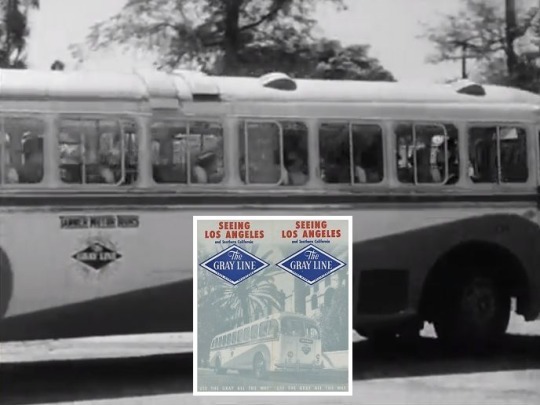
They board a Tanner Gray Line Motor Tour, which was an actual guided tour at the time. The Gray Line still operates sightseeing bus tours to this day.
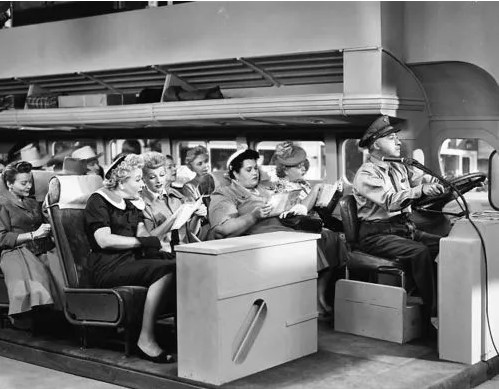
Once aboard, the interior of the bus was recreated in the studio. The tour bus driver was played by Benny Rubin. Other passengers include Barbara Pepper (who takes the seat Lucy wanted), Audrey Bentz (the large woman who sits on Lucy), Vivian’s stand-in Renita Reachi, Desi’s stand-in Bennett Green, and Lucy’s future stand-in Joan Carey are also aboard.
- LUCY: Pardon me, this seat is taken.
- PEPPER (not moving): It sure is, honey.

The tour bus route as it appears today, thanks to Google Earth!

“Lucy Moves To NBC” (1980) ~ The special opens with a tour bus covering the very same route as in “The Tour”. Lucille Ball (playing herself) gets off the bus and we realize she has hitched a ride home!
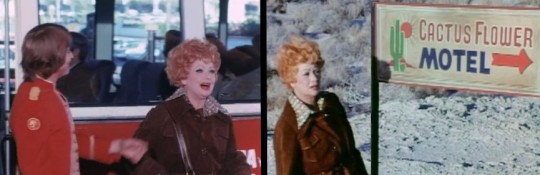
“Lucy Gets Lucky” (1975) ~ Lucy Collins takes the bus to Las Vegas to see her favorite star, Dean Martin. The bus lets her off at the MGM Grand, but Lucy’s budget has her staying at the less glamorous Cactus Flower Motel.
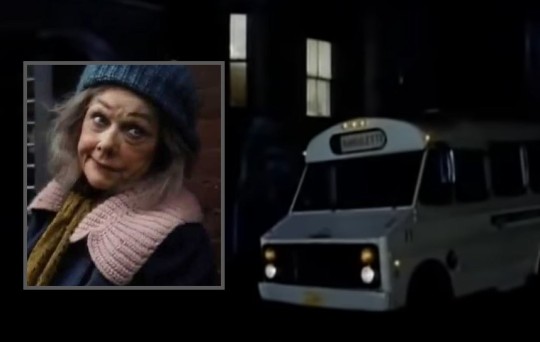
Stone Pillow (1985) ~ When Florabelle is mistakenly herded onto a bus to the Brooklyn shelter, an overweight woman accidentally sits on her. A similar thing happened in “The Tour” in 1955, when Lucy Ricardo was switching seats on a bus tour of the movie stars’ homes.
SPEAKING OF BUSSES…
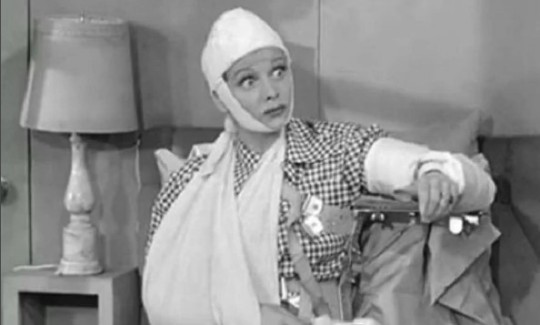
“Fred and Ethel Fight” (1952) ~ While trying to repair the Mertzes’ relationship, Lucy and Ricky fight and Ricky leaves. She schemes how to get him back.
- ETHEL: I’ll call up Ricky and tell him you’ve been run over by a bus.
- LUCY: Run over by a bus? Well, that seems rather drastic.
- ETHEL: Oh, we’ll only pretend. Have you got plenty of adhesive tape and bandages in the house?
- LUCY: Well, that all depends.
- ETHEL: On what?
- LUCY: On what kind of a bus I get hit by, local or express. I hope you got the number of the bus that hit me.
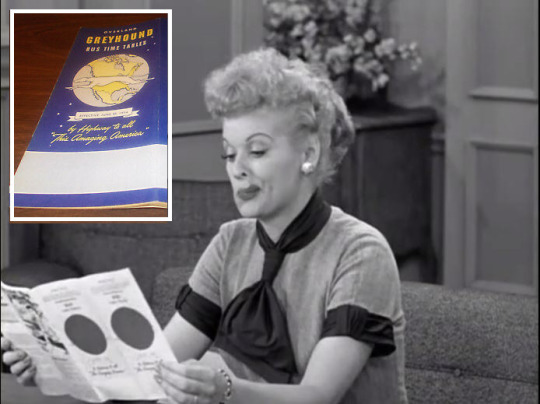
“Getting Ready” (1954) ~ No sooner has Lucy agreed to take the train to Hollywood, she re-considers. She peruses the bus schedule, which has been redacted to obscure the brand name: Greyhound.
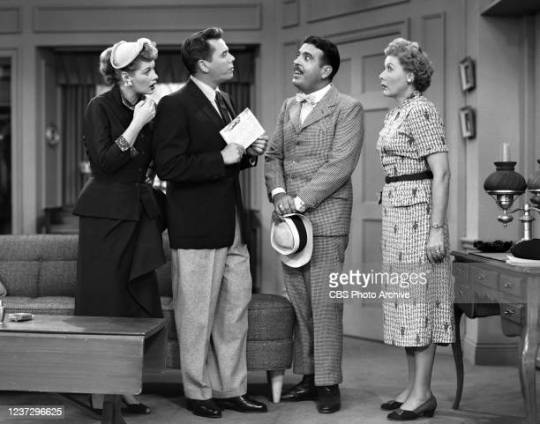
“Tennessee Ernie Hangs On” (1954) ~ When ‘Cousin’ Ernie visits, he refuses to accept a bus ticket home. The episode becomes about how to get Ernie on the bus home without hurting his pride.
- RICKY: Get a load of this.
- LUCY: What is it?
- RICKY: This is a bus ticket to Bent Fork.
- LUCY: He won’t take it.

“California, Here We Come!” (1955) ~ Just before the gang leave for California, Lucy’s mother (Kathryn Card) shows up unexpectedly. How did she get there from Jamestown?
- Mrs. McGillicuddy: I took the bus. It let me off right in front of the door.
- Lucy: Wait a minute. The bus doesn’t come down this street.
- Mrs. McGillicuddy: That’s what the bus driver tried to tell me.

“Visitor from Italy” (1956) ~ Mario (Jay Novello), a Venitian gondolier they met on their trip to Europe, shows up on the Ricardos’ doorstep looking for his brother. He refuses to accept bus fare to San Francisco, where they believe his brother has gone.
- RICKY: (Returning home) Well, that’s that.
- LUCY:You get him on the bus?
- RICKY:Yep. He’s on his way to San Francisco. I stayed there until the bus pulled out.
The doorbell rings. It is Mario’s brother. He’s been visiting a sick friend – Sam Franceso, not in San Francisco. Of course, the episode is best known for Lucy making pizza.

“Lucy and Superman” (1957) ~ Carolyn Appleby (Doris Singleton) tells Lucy and Ricky about the film they saw starring Marilyn Monroe. Although the title is never mentioned, it is clearly a description of Bus Stop, also starring Don Murray. It was released in August 1956, two and a half months before this episode was filmed. The story, from a play by William Inge, takes place primarily at a desolate bus stop cafe.

“Lucy Meets Sheldon Leonard” (1967) ~ Lucy’s excuse for being late to work is that the smog was so thick she couldn’t find the bus.
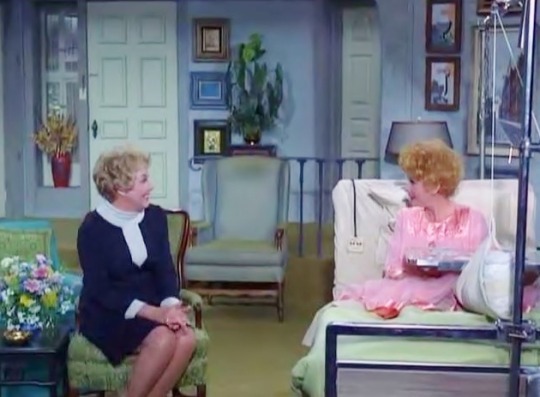
“Lucy and Viv Reminisce” (1968) ~ Instead of flying her out, cheapskate Mr. Mooney sends Viv a bus ticket to travel 3,000 miles to come and nurse Lucy when she breaks her leg.

“Leave The Driving To Us” ~ was the advertising slogan of the Greyhound Bus Company. It was first used in 1956 and appeared for the next 40 years. It was used as a punchline in “Lucy the Laundress” (1970), “Lucy Helps Craig Get a Driver’s License” (1969) and “Lucy and the Used Car Dealer” (1969).
BUS SPOTTING

1940 ~ A New York City bus passes by the Roxy Theatre where Desi Arnaz was performing when he eloped with Lucille Ball.

1955 ~ “Lucy Visits Grauman’s” includes stock footage of a bus passing by Grauman’s Chinese theater, where the Clark Gable / Jane Russell film The Tall Men was premiering.
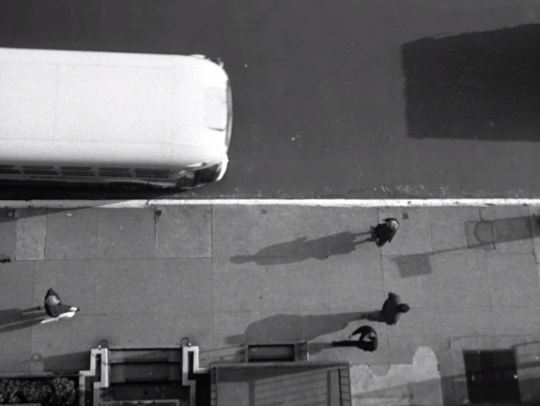
1957 ~ “Lucy and Superman” includes a rare insert shot of the street below the ledge where Lucy intends to ‘crash’ Little Ricky’s birthday party as Superman. This view shows a city bus stopping outside 623 East 68th Street. This disproves Lucy’s assertion to her mother in 1955′s “California Here We Come” that the bus doesn’t come down their street!

1957 ~ In “Lucy Wins a Racehorse” a bus unloads passengers headed into Roosevelt Raceway in this establishing footage.

1958 – Busses in the distance line up to go through customs headed in and out of Tijuana in “Lucy Goes To Mexico”. This second unit footage was shot on location using actor doubles.
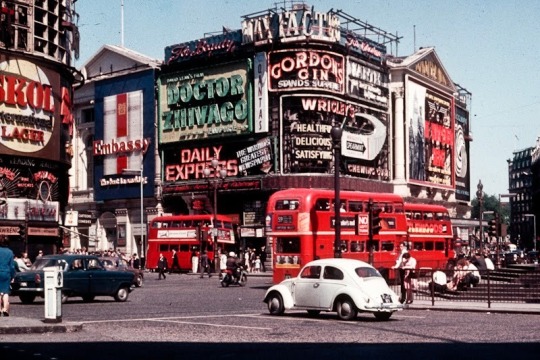
1966 ~ The iconic double-decker busses of London crowd Picadilly Circus in this establishing footage from “Lucy in London”, a special shot on location.
SPECIAL BUS ROUTES
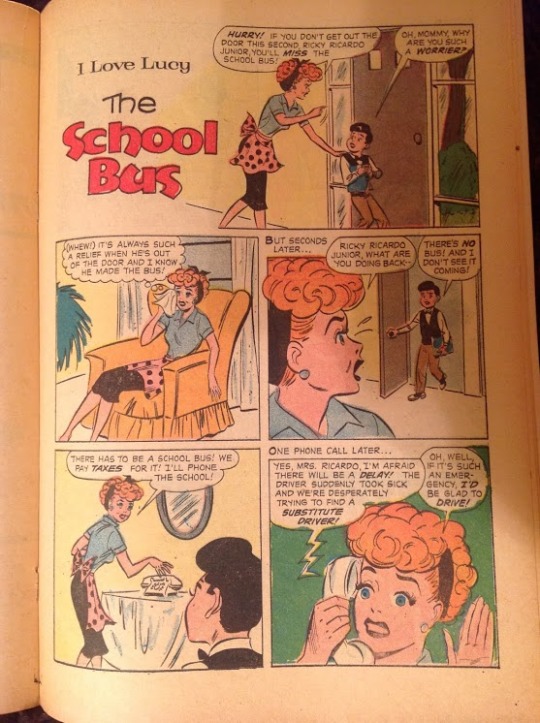
“I Love Lucy Comics” (1961) ~ “The School Bus” has Little Ricky missing the bus!
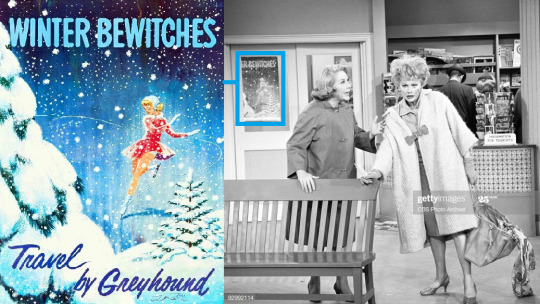
“Lucy is a Process Server” (1964) ~ Tracking Mr. Mooney to the train station, a bedraggled Lucy passes a winter-themed travel poster for Greyhound.

2013 ~ A Toronto sightseeing bus is wrapped with advertising for an “I Love Lucy” stage show.

Busses for the “Lucytown Tours” in Jamestown NY stop at the Lucy-Desi Museum.
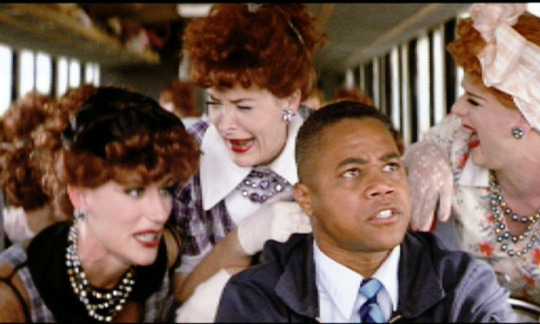
The Rat Race (2011) ~ In the film, Cuba Gooding Jr. drives a tour bus full of Lucy look-a-likes!
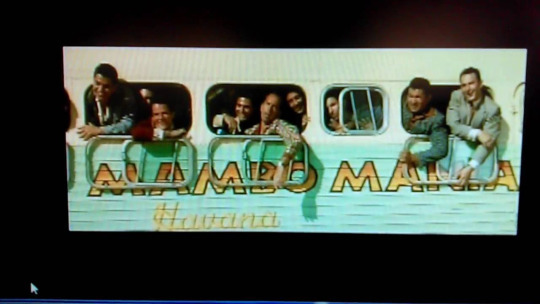
In a scene deleted from the film (but included on the DVD extras), the bus-load of Lucys encounter a tour bus full of Rickys!
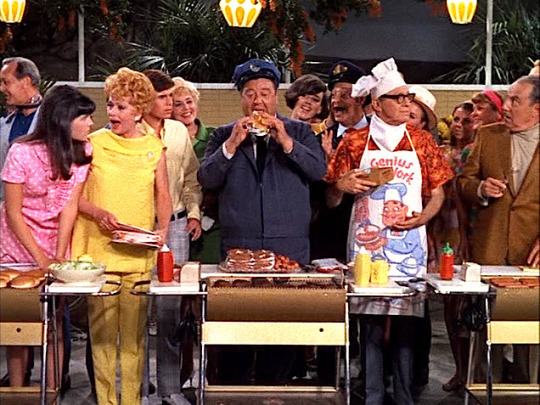
Finally, the most famous bus driver on television, Ralph Kramden (Jackie Gleason) of “The Honeymooners” makes a cameo appearance at the end of “Lucy Visits Jack Benny” (1968). It seems money-hungry Benny charges busses of tourists to tour his Palm Springs home. The tour includes a hamburger or hot dog. Bus driver Kramden opts for a hamburger with dollar bill lettuce!
-
THE WILD BLUE YONDER!
Lucy & Aviation

Thanks to Orville and Wilbur Wright, the world became a smaller place and travel by air become as commonplace as train or car travel. Lucille Ball and her many characters had lots of reasons to take to the ‘friendly skies’.
Orville and Wilbur Wright were inventors and pioneers of aviation. In 1903 the Wright brothers achieved the first powered, sustained and controlled airplane flight; they surpassed their own milestone two years later when they built and flew the first fully practical airplane. The Wrights were mentioned several times in the Lucyverse:
- Olin Howland (Mr. Skinner in “First Stop” 1955) ~ As a young man he learned flying from the Wright Brothers.
- “Speech for a Civic Organization” (1949) ~ Liz (Lucille Ball) intends to speak about the Wright Brothers, despite her favorite husband’s objections.
- “The Good Years” (1962) ~ Orville and Wilbur were mentioned in this TV special starring Lucille Ball and Henry Fonda.
- “Swing Out Sweet Land” (1970) ~ Dan Rowan and Dick Martin played the Wright Brothers and Lucy voiced the Statue of Liberty in John Wayne’s TV special celebrating American history.

As a busy radio, film and television star, Lucille Ball was constantly photographed boarding and disembarking from aircraft. In the early days of air travel, most airplanes were boarded from the tarmac.
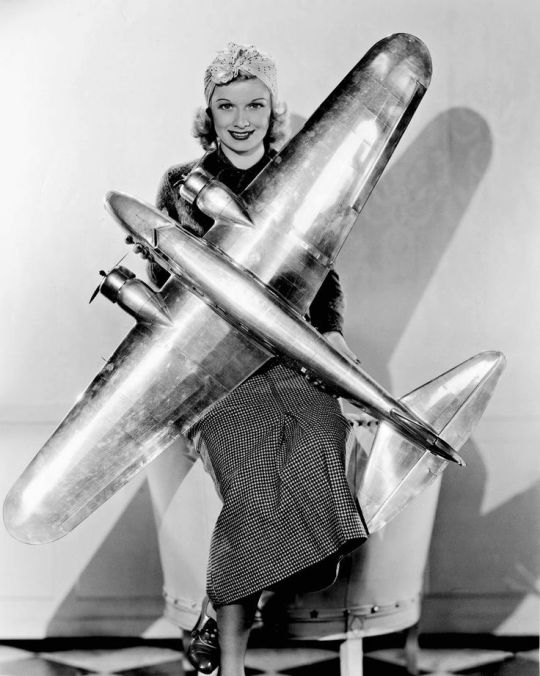
1930′s ~ Young model Lucille Ball holds a model airplane for a photo shoot.
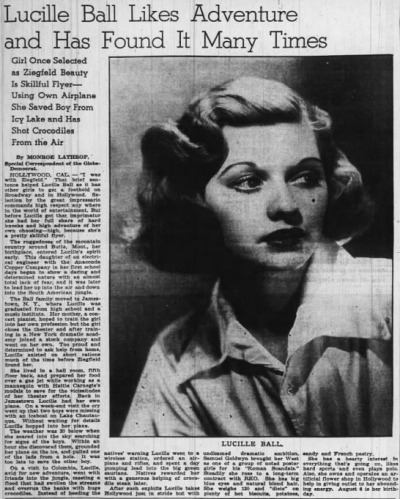
May 1938 ~ Publicists created fascinating and completely untrue backgrounds for Hollywood stars. In this article, correspondent Monroe Lathrop claims that Lucille Ball was a skilled aviatrix who shot crocodiles while flying over a jungle river!
“On a visit to Colombia, Lucille, avid for new adventure, went with friends Into the jungle, meeting a flood that had swollen the streams and overrun the banks with huge crocodiles. Instead of heeding the natives’ warning, Lucille went to wireless station, ordered an airplane and rifles, and spent a day pumping lead into the big green saurians. Natives rewarded her with a generous helping of crocodile steak later.”

Five Came Back (1939) ~ Nine passengers from all walks of life and a crew of three take off from Los Angeles, bound for Panama City, but a sudden storm blows them off course and causes the plane to crash in the Amazon jungle. Lucille Ball played passenger Peggy Nolan. The B film helped Ball launch an A list career.
1940s ~ Lucille Ball poses in a biplane cockpit.
June 1943 – Newspapers reported that actor Jimmy Cagney had christened a B-17 bomber named The Lucille Ball. After it was scrapped due to battle damage, a second bomber was christened The Lucille Ball in 1944.
A Woman of Distinction (1950) ~ Lucille Ball appears in a cameo as herself, a jet-setting movie star, in this Rosalind Russell / Ray Milland film.
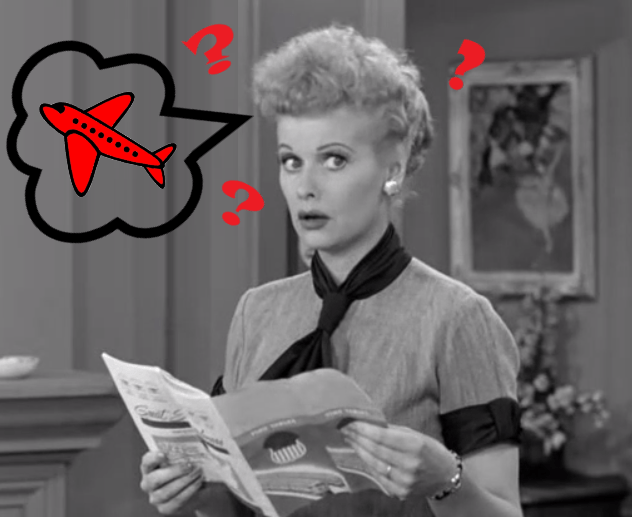
On “I Love Lucy”, the gang twice discussed flying, but changed plans.
In “Getting Ready” (1955), Lucy insists that air travel to Hollywood will be better for the baby, but when the Mertzes are added to the trip, a road trip is substituted. Little Ricky later flies out with his grandmother.
In “Lucy Makes Room for Danny” (1958), Ricky has a job booked on the West Coast and remarks that it is a good thing they aren’t flying due to Lucy’s over-stuffed luggage. The job is canceled, causing Ricky and Danny to work out the living arrangements.
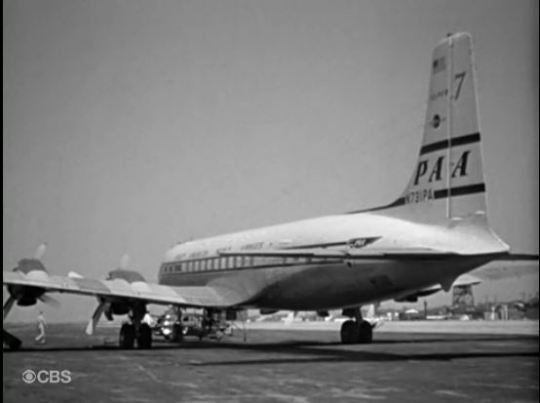
“Return Home From Europe” (1956) ~ To get back to New York in time to play the Roxy, the Ricardos and Mertzes fly home from Europe, rather than go by ship. Unable to whittle down her luggage allowance, Lucy is intent on smuggling a cheese aboard, disguising it as a baby.
There are establishing shots of Pan American World Airways (PAA) President Clipper Service. The Clipper in the insert shot is named Bald Eagle. There are two insert shots of Pan Am aircraft: one taking off, and one in mid-flight. The DC-7C (nicknamed “seven seas”) first entered service for Pan Am in December 1955 and was dubbed “the zenith of piston-engine technology.” Pan Am had 27 DC-7Cs flying during 1956. By 1958, jet travel began to overtake propeller airplanes.
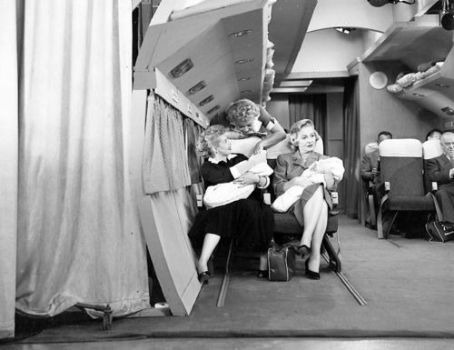
The interior of the aircraft was recreated on the Desilu soundstage. The PAA logo is visible on blankets and tote bags, items provided by Pan Am for the use of their name and images of their aircraft as well as possible other promotional consideration.

“The Ricardos Visit Cuba” (1956) ~ While in Miami, the gang flies to Havana to visit Ricky’s family.
The gang once again flies Pan American Airways, the same carrier they took home from Europe. The airline folded in 1991.
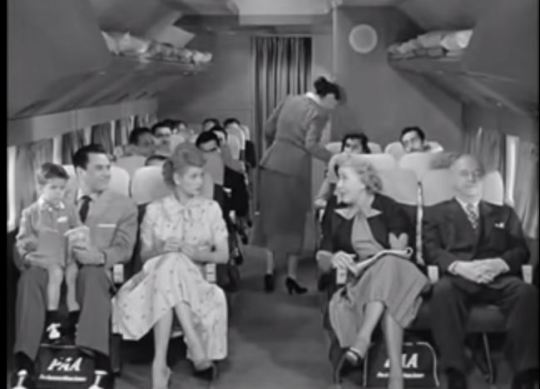
As with their previous flight, there is an establishing shot of the plane in the air and the interior was recreated on the Desilu soundstage. The set is basically the same one used in “Return Home from Europe”. It also features PAA branded promotional items.
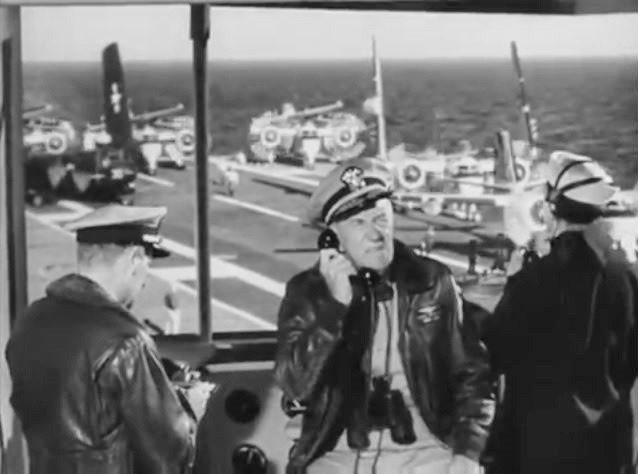
“Lucy Goes To Mexico” (1958) ~ After their exploits in Tijuana, Ricky and Maurice Chevalier perform on the aircraft carrier U.S.S. Yorktown. The background of aircraft landing on the deck was done using a process shot.

“Lucy Goes To Alaska” (1959) ~ The Ricardos and Merztes fly to the brand new state of Alaska, where Ricky and Fred have bought some land and Ricky is doing a TV show with Red Skelton. Although the action is set in and around Nome, the second unit footage was filmed in Lake Arrowhead, California, about 100 miles from Hollywood. The exteriors were done with doubles and none of the regular cast left their newly-purchased Desilu (formerly RKO) Studio.

To get from Westport CT to Nome AK, the gang first flies United Airlines, then transfers to Alaska Airlines. There is establishing footage of both planes in mid-flight.
The set features a couple of travel posters for Alaska Airlines, enticing viewers to visit the 49th state for tourism. In the second half of the hour, a small propeller plane is introduced to rescue Red and Lucy from a blizzard.
- RED: “What’s that blue stuff?”
- ESKIMO PILOT: “Sky.”
- LUCY (To Red): “You act as though you’ve never seen sky before.”
- RED: “I haven’t. I live in Los Angeles.”

The plane is buried in a snowbank. Lucy pays an eskimo pilot $100 to fly her and Red to safety.
While the plane in the snowbank was filmed in the Hollywood studio, the safe landing was done at Lake Arrowhead using actor doubles.

“The Ricardos Go To Japan” (1959) ~ The final time we see the gang airborne is on a trip to Japan. Although there is a poster for Japan Airlines (JAL) in the airport…
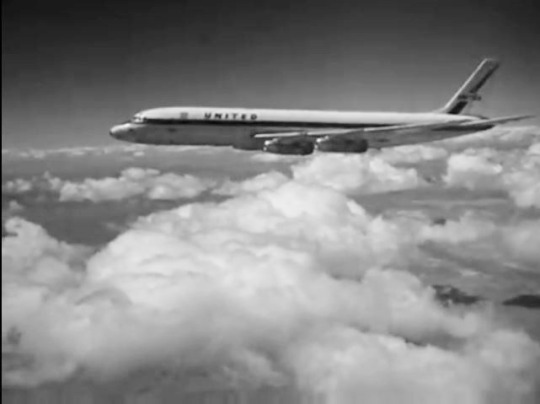
According to the establishing footage of the jet in mid-air, the foursome travels on United Airlines.
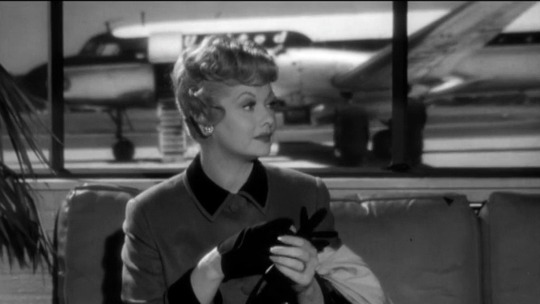
The Facts of Life (1960) ~ The film about two marrieds flirting with infidelity has Kitty Weaver (Lucille Ball) waiting at the airport where a United Airlines jet can be seen on the tarmac in the background.
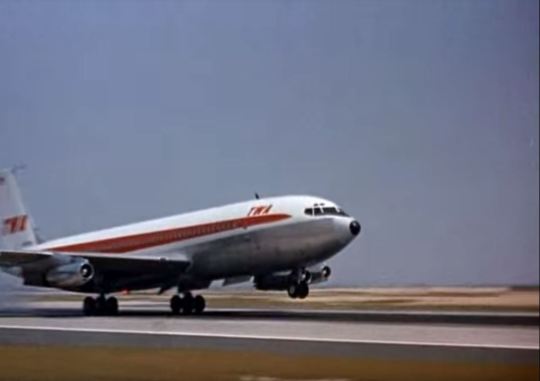
“Mr. & Mrs.” aka “The Lucille Ball Comedy Hour” (1964) ~ A comedy special in which Lucille Ball plays the head of a studio trying to track down Bob Hope to star in a show about husband and wife television stars. The first half concerns Lucy’s tracking the elusive Hope all around the world. In San Francisco, there is establishing footage of a jet landing which was supplied courtesy of TWA, a carrier that went out of business in 2001.
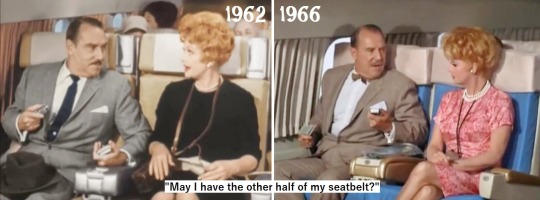
“The Victor Borge Comedy Theatre” (1962) & “Lucy Flies To London” (1966) ~ The unaired pilot for an unsold comedy anthology series hosted by Borge featured a sketch starring Gale Gordon and Lucille Ball as two strangers on a plane.
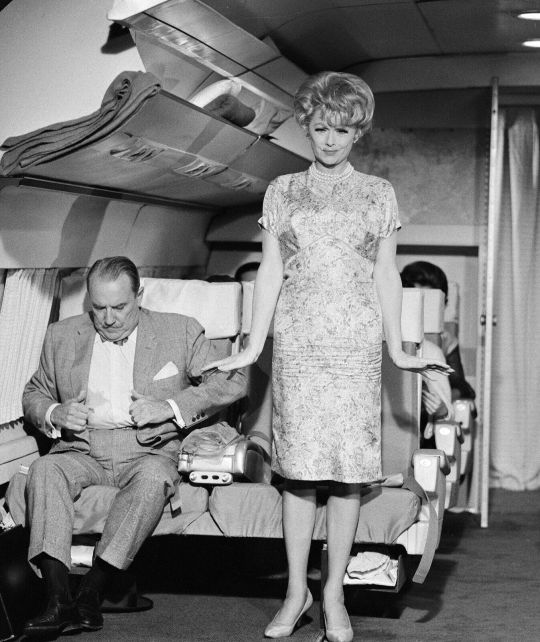
It was filmed before “The Lucy Show” paired the two as a comedy duo. In the pilot, the characters were strangers. Gordon played a businessman and Ball a neurotic first-time flyer.

When it came time for Lucy Carmichael to fly to London for the special “Lucy in London”, the writers realized they could recycle the script from the un-aired pilot for “The Lucy Show” episode. The dialogue is nearly identical, now with the added context that Mr. Mooney and Lucy are boss and secretary.
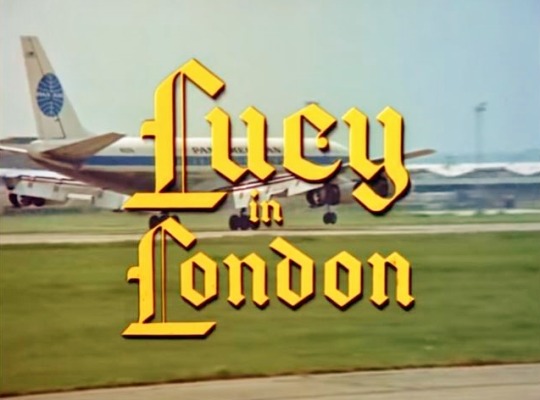
“Lucy in London” (1966) ~ An hour-long special set in England and filmed on location. The sequence involving Lucy de-planing from the Pan Am Clipper Jet had to be accomplished in between flights already on the tarmac at Heathrow. No planes were available to be grounded for a day of shooting. Coincidentally (or perhaps not) Pan Am was also the carrier when Lucy Ricardo flew home from Europe and from Miami to Havana on “I Love Lucy.”
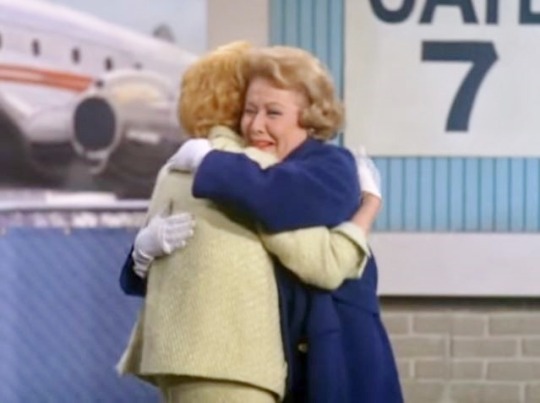
“Viv Visits Lucy” (1967) ~ To greet her old friend, Lucy meets her at the airport, where a backdrop shows jets on the tarmac. Lucy looks up and sees Viv’s flight approaching.
- LUCY: “Oh, look! Someone’s hanging out of the plane. It look like Viv!”
- PILOT: “That’s the landing gear.”
- LUCY: “Oh.”
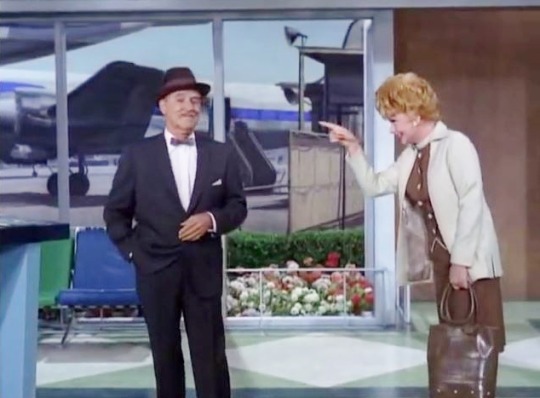
“Little Old Lucy” (1967) ~ When the 90 year-old bank president (Dennis Day) needs an escort to the bank’s banquet, Lucy is volunteered. Lucy and Mr. Mooney meet him at the airport, where jets can be seen in the background.

“Lucy and Carol Burnett: Part 1 & 2″ (1967) ~ Lucy and Carol Tilford (Carol Burnett) sign up to be flight attendants, then put on a variety show celebrating aviation. They are employed by the fictional Globe World Airlines.
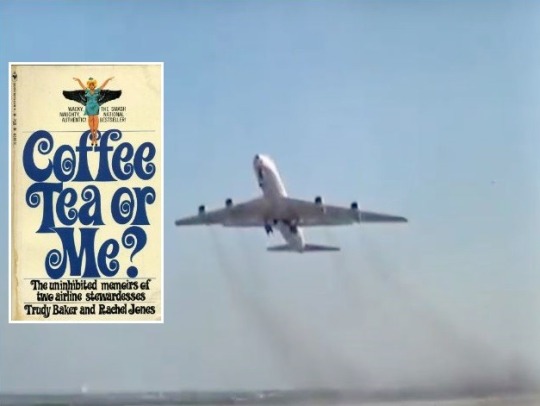
Instead of asking bachlor GWA VP Mr. Brenner if he would like coffee, tea or milk, Lucy says “coffee, tea or me”! Earlier in 1967, the book Coffee Tea or Me? was published. It was the alleged memoirs of two stewardess and their romantic and sexual escapades in the air. The popularity of this book may be the reason for this episode.
Frustrated by Lucy and Carol’s bungling, Mr. Brenner (Rhodes Reason) says “Is this any way to run an airline?” The line gets a huge reaction from the studio audience. In 1963 a National Airlines TV commercial featured a flight attendant asking “Is this any way to run an airline? You bet it is!” In 1966, singer Tom Paxton wrote and recorded a song with the same title.
In Part Two, their musical salute to aviation features Buddy Rogers and Richard Arlen, stars of the very first Academy-Award winning motion picture Wings (1929), a movie about flight. Coincidentally, on the same day this airline-themed episode premiered, the supersonic Concorde was unveiled in France. Also on this date, newspapers announced the crash of a twin-engine plane in Madison, Wisconsin that killed recording star Otis Redding and six others.
The revue ends with “The Army Air Corps Song” with flight attendants and college boys perched on the wings of a bi-plane.
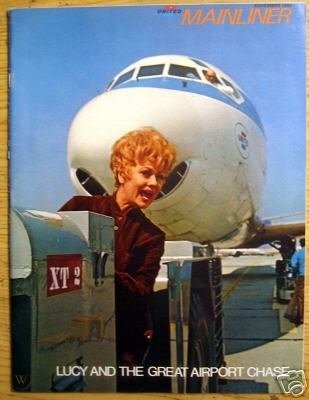
“Lucy and the Great Airport Chase” (1969) ~ Filmed on location at Los Angeles International Airport (LAX), Lucy and Harry get caught up in chasing down spies. Part of the chase takes them onto the tarmac with the jets.
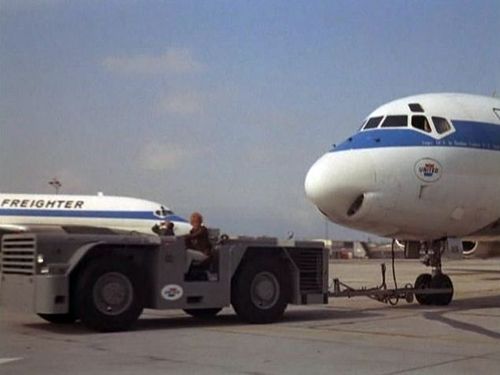
A Douglas DC-8-52 of United Airlines is on the right and Douglas DC-8-54AF Jet Trader of United Airlines Jet Freighter is in the background.

“The Carol Burnett Show” (1969) ~ In a sketch, Lucy and Carol play flight attendents and Harvey Korman plays a mysterious passenger with a Fidel Castro-like beard, cigars tucked in his breast pocket, and a Spanish accent. When this episode was aired, hijackings were in the news.

“Lucy, the Sky Diver” (1970) ~ Trying to show her kids how dangerous their hobbies are, Lucy jumps from a plane! Although there is second unit location footage of the plane and Lucy floating down on her parachute, Lucille Ball remained at the studio and the backlot with a recreation of the aircraft and a simulated parachute.

“Lucy, the Part-Time Wife” (1970) ~ Lucy and Harry go to the airport to meet an old flame of his (Carole Cook). The airport background shows jets on the tarmac.
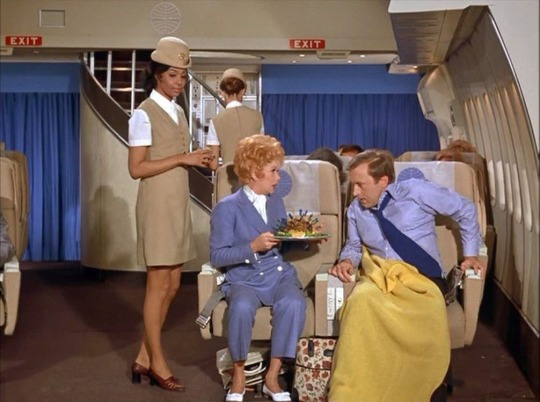
“Lucy Helps David Frost Go Night-Night” (1971) ~ Lucy takes an assignment accompanying David Frost on a transatlantic flight so that he can get some rest. Thanks to Lucy, his flight is anything but restful! The first class section of a 747 was recreated for the episode.

The jet seen in the stock footage of the airport is a Pan Am Boeing 747 with an upper deck first class lounge.
David Frost reckons that he has taken 346 air trips or traveled 1,853,000 miles!
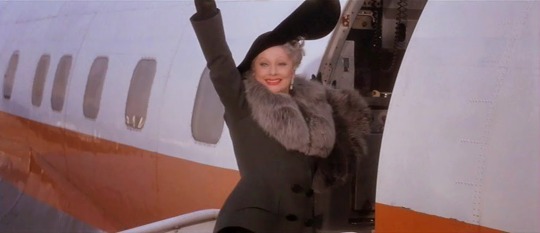
Mame (1974) ~ At the end of the film, Auntie Mame waves goodbye as she flies off to her next adventure.
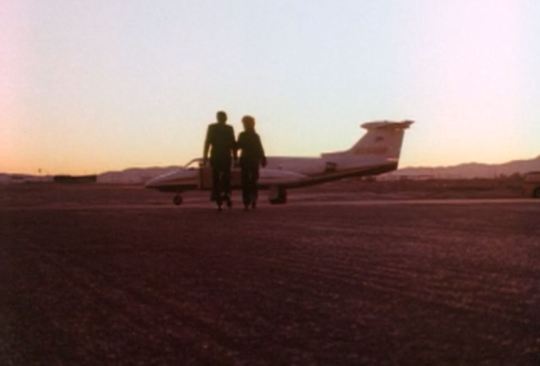
“Lucy Gets Lucky” (1975) ~ Although Lucy Collins takes the bus to Las Vegas to see her favorite star Dean Martin, at the end of the special she flies off into the sunset with him on his private jet. Dreams come true!
-
THE BOUNDING MAIN!
Nautical Lucy ~ Part 2
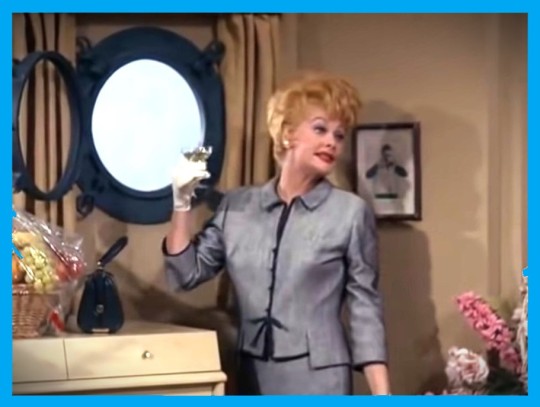
A salute to seafaring Lucy! Grab your life preserver, shiver your timbers, and set sail with part two of this all-new martime blog! All ashore that’s going ashore!
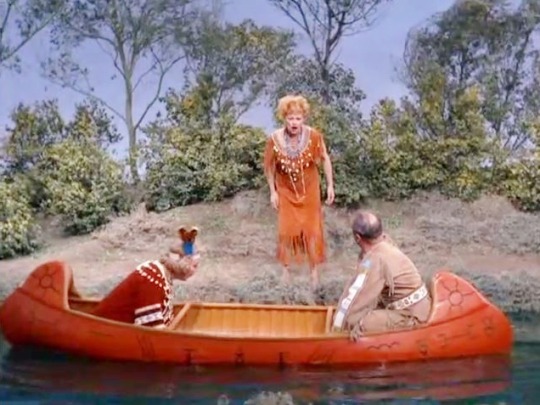
“Lucy and the Scout Trip” (1964) ~ When one of the dads can’t go on the Cub Scout camping trip, Lucy and Viv step in.

Unfortunately, they sink the canoe, topple the tee-pee, and get lost in the wilderness as well!
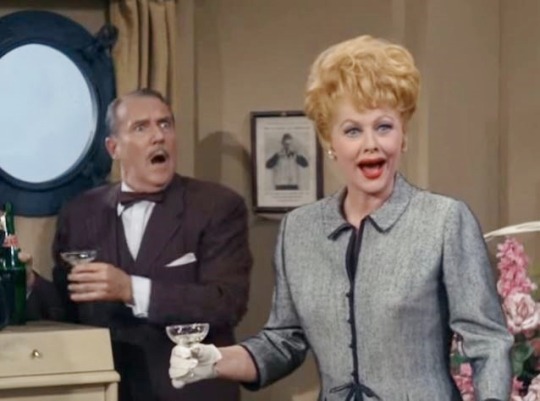
“Lucy is a Process Server” (1964) ~ When Lucy needs money for a summer vacation, she takes a job as a process server. Her first summons must be delivered to none other than Mr. Mooney. She follows him onto a freighter bound for the Caribbean for six weeks. Befre she realizes it, the ship has left the port. So much for “all ashore that’s going ashore”!
“Lucy and Arthur Godfrey” (1965) ~ Lucy recruits Godfrey to star in a play about the founding of Danfield, which is set entirely aboard a riverboat in the South. The setting was undoubtedly influenced by the popular stage and screen musical Show Boat.

“Lucy at Marineland” (1965) ~ To open season four and mark Lucy’s relocation to the West Coast, “The Lucy Show” goes on location to Marineland. Somehow Lucy finds herself in a water tank in a tiny raft being pulled by a trained seal.
“Lucy and the Return of Iron Man” (1965) ~ To pay a debt to Mr. Mooney, Lucy must go back to work doing stunts as Iron Man Carmichael.
This time, the film is set aboard a pirate ship.
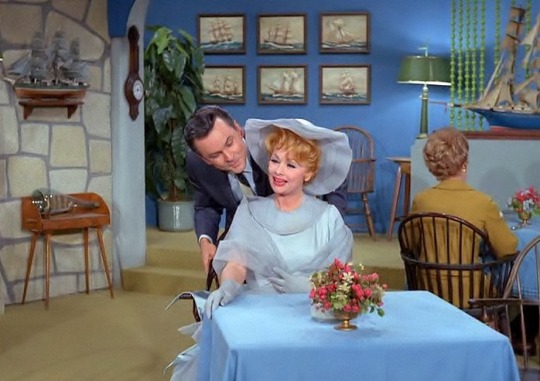
“Lucy and Bob Crane” (1966) ~ Bob takes Lucy on a date to a nautically-themed restaurant with a plethora of paintings and models of ships for decor.

“Lucy and the Submarine” (1966) ~ Mr. Mooney goes on training maneuvers and forgets to sign some important papers. To get his signature, Lucy disguises herself as a sailor and follows him aboard a submarine. She gets trapped inside when the sub takes a dive.
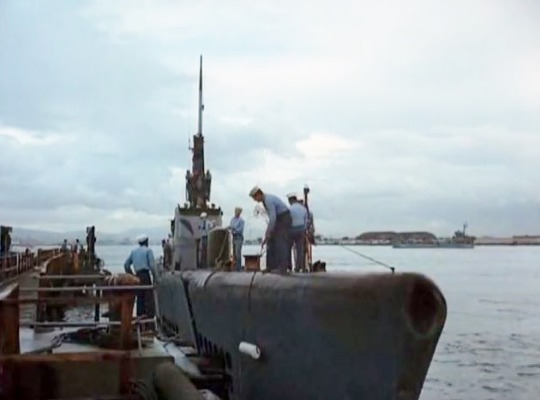
Although the interior scenes of the sub were done in studio, there were a few establishing shots of an actual submarine in port.
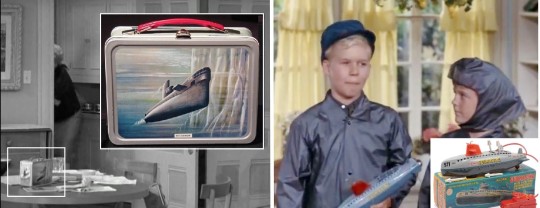
On “The Lucy Show” Jerry and Sherman (Jimmy Garrett and Ralph Hart) were submarine fans, having a sub lunch box and a toy submarine.

“Lucy in London” (1966) ~ Lucy and Anthony Newley go boating on the Thames, but end up sinking when the raft springs a leak. [Note: Despite the above photo, the special was shot and aired in color.]

“Lucy and Eva Gabor” (1968) ~ To finish her latest novel, Eva Von Graunitz (Gabor) hides out at the Carter home. A member of Lucy’s Bridge Club (Gail Bonney) asks her for an autograph – on a copy of The Caine Mutiny, the 1951 Pulitzer Prize–winning novel by Herman Wouk. It was turned into a stage play in 1953 and a film in 1954. It is set aboard a naval shit named the U.S.S. Caine.
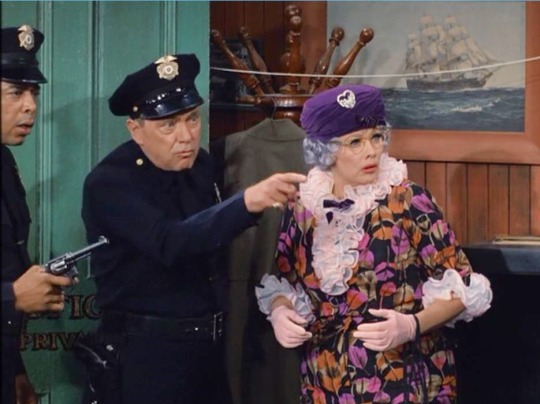
“Lucy and the Ex-Con” (1969) ~ Disguised as old ladies, Lucy and former safe cracker Rocky (Wally Cox) go undercover to catch a crook.

They stake out the Seadrifter Café, a dockside establishment decorated in nautical memorobilia like paintings of ships and boats in bottles.
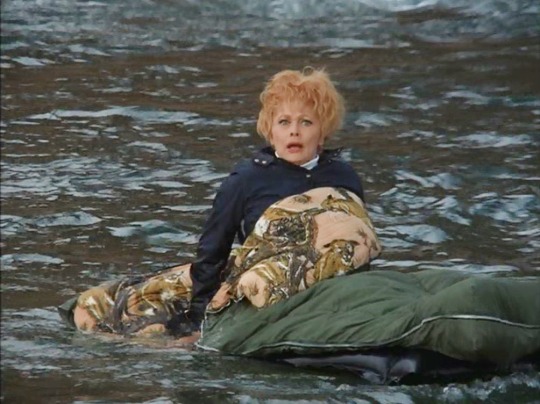
“Lucy Runs the Rapids” (1969) ~ On location at the Colorado River, Lucy navigates the rapids in a sleeping bag!
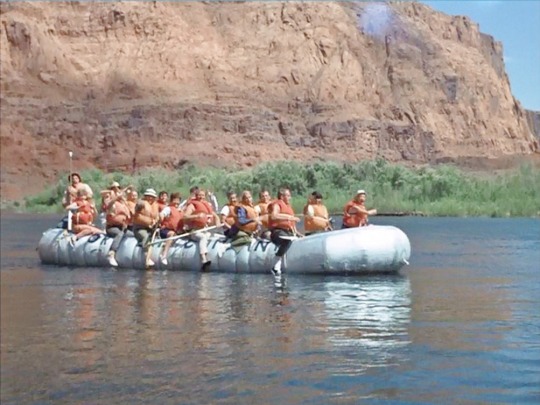
There are scenes on rafts both large…

… and small.
Will the Real Mr. Sellers… (1969) ~ is a 50-minute documentary by British actor Peter Sellers made to promote his film The Magic Christian. Some of the footage was shot on the Cunard ship Queen Elizabeth II.

Peter Sellers invites the viewers into a VIP lounge “to experience a VIP.” Once inside, the VIP is Lucille Ball, who is seen in silent close-ups putting on make-up and having unheard conversations. There is no dialogue and the entire sequence lasts just 15 seconds.

“Lucy Goes Hawaiian: Parts 1 & 2″ (1970) ~ Harry takes a job as a cruise director and recruits Lucy to be his unpaid assistant.
Originally, the two episodes were to be filmed aboard the actual S.S. Lurline. When costs proved prohibitive, Lucille Ball Productions had a three-quarter scale model of the ship built on the Paramount lot. At the time, it was the second largest ship ever built at the studio.

There were, however, establishing shots of the Lurline leaving port in San Francisco that featured cast members.
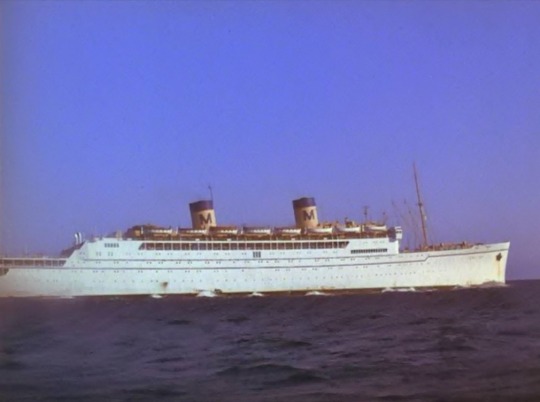
The S.S. Lurline was a real ship sailing from California to Hawaii for the Matson Steamship Line from 1932 to 1963, when it was sold to the Chandris Lines and re-christened the RHMS Ellinis. The Matson Line then brought the Matsonia (first known as the Monterey) out of retirement and re-christened it the Lurline, keeping the historic name alive in their fleet. The Lurline sailed her last voyage under this name in June 1970, before being sold to Chandris and re-christened Britanis. During the 1980s it was briefly the oldest cruise ship in service. The vessel underwent one more name and ownership change before being deliberately sunk in 2000 after nearly 68 years at sea.
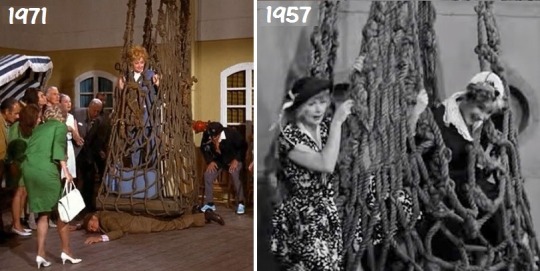
Naturally, Lucy boards the ship in a highly unusual way. Just as she had in 1957′s “Lucy Takes a Cruise To Havana”, she boards via a cargo net after missing the last call at the gangway.
“Lucy and the Astronauts” (1971) ~ Harry takes Lucy along to a NASA splash-down aboard a navy ship, but before the astronauts can be medically cleared, Lucy has kissed them, forcing Lucy and Harry to join the space travelers in isolation.
Establishing shots of an actual NASA spash-down from the deck of a ship were used.

“Lucy’s Houseguest Harry” (1971) ~ Harry is having his house redecorated and needs a place to stay. Naturally, he imposes on Lucy. Harry falls asleep reading Boating, a magazine for boat enthusiasts.

Harry is a boat enthusiast who decorates his home and office with model ships and paintings of vessels.
“Kim Finally Cuts You-Know-Who’s Apron Strings” (1973) ~ When Kim moves out, she relocates to an apartment building in Marina Del Rey, an unincorporated seaside community in Los Angeles County, California. Fisherman’s Village offers a view of Marina del Rey’s dominant feature, the Marina, the world’s largest man-made small craft harbor with eight basins having a capacity for 5,300 boats. The backdrop outside Kim’s window is of the harbor and prominently features the masts of many vessels.

“Lucy and Danny Thomas” (1973) ~ Lucy befriends a gruff painter (Danny Thomas) who says that most artists only sell their work after they die. Harry calls the subject of Danny’s painting a ‘boat’ and Danny corrects him that it is a ‘ship.’

Mame (1974) ~ The movie musical filmed scenes for the “Loving You” song on the Queen Mary. The Queen Mary was actually sailing at the time the film is set, but was in dry dock in Long Beach, California when the filming took place.

“The Love Boat” (1978) ~ Desi Arnaz Jr. appeared in a two-part episode in a segment titled “The Eyes of Love.” He played a blind man who has regained his sight. The series is one of only four one-hour television shows that had a laugh track. “The Lucy-Desi Comedy Hour” (1957) was another.
-
THE BOUNDING MAIN!
Nautical Lucy ~ Part 1
There’s nothing as joyous as being on the open water! Whether it be a lake, a river, or the ocean – Lucy was as funny on the sea as on land. Here are some early maritime escapades!
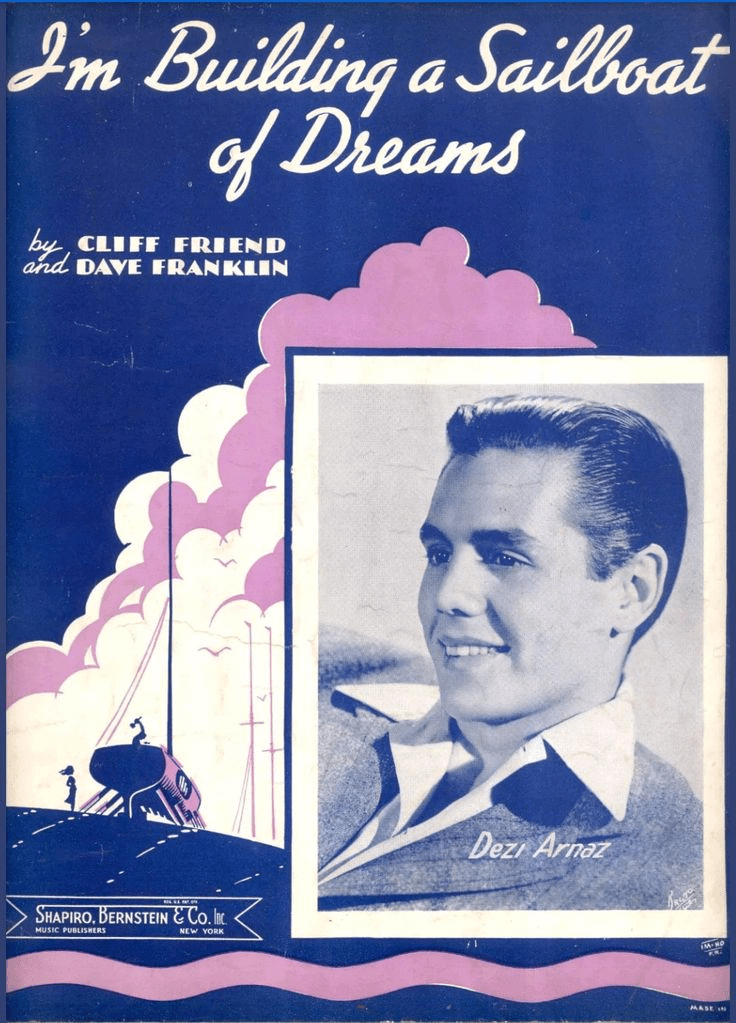
“I’m Building a Sailboat of Dreams” (1939) ~ Sung by Desi Arnaz
In real life, Desi Arnaz loved fishing and owned a boat called the Desilu. Being from Cuba, he had a special affinity for the ocean.
Lucy and Desi leaning over the rail of a motorboat in 1943.
Meet the People (1944) ~ The Commander (Bert Lahr) names his boat after Julie (Lucille Ball). It was formerly the Lana Turner!
“The Quiz Show” (1948) & “Lucy Gets Ricky on the Radio” (1952) ~ To make sure he wins, Lucy steals the answers, but then they change the questions! The same nautical question was first used on “My Favorite Husband.”
- ORIGINAL QUESTION: Why was the steamship Ile de France put in dry dock recently?
- FISHBOWL QUESTION: Why did the French people put Marie Antoinette under the sharp blade of the guillotine?
- LUCY’S ANSWER: To scrape the barnacles off her hull.
“Secretarial School” (1949) ~ An episode of Lucille Ball’s radio show “My Favorite Husband” references “On A Slow Boat to China” a popular song by Frank Loesser, published in 1948. In October and November 1948, it was recorded by no less than five artists: Kay Kyser, Freddy Martin, Benny Goodman, Art Lund, and Larry Clinton.
- GEORGE: Now explain this last shorthand mystery to me: a circle, a ship, and laundry ticket.
- LIZ: That’s the title of a phonograph record I want to buy – ‘A Slow Boat To China’.
“Liz’s Radio Script” (1950) ~ An episode of “My Favorite Husband” references the inventor of the steamboat and the 1929 musical Show Boat. George makes fun of Liz’s radio script.
- LIZ: Go ahead and laugh. They laughed at Robert Fulton, too, you know!
- GEORGE: Robert Fulton? What did he write?
- LIZ: You think I don’t know? ‘Show Boat’?
Show Boat’s most famous song, “Old Man River”, would be referenced on several Lucille Ball sitcom episodes.
On August 9, 1952 Lucy and Desi were featured on the cover of TV Digest, a competitor of TV Guide as part of their inside story “Visiting The Stars on Vacation”.
The cover photo was part of a larger photo shoot of Lucy and Desi in a motorboat.
“Lucy is Envious” (1954) ~ When a wealthy high school chum (Mary Jane Croft) puts the bite on Lucy for a charitable donation, lucy fibs about owning a yacht.
- CYNTHIA: Where do you go in Florida? Miami or West Palm Beach?
- LUCY: Uh, you go West Palm Beach, huh
- CYNTHIA: Miami.
- LUCY: Oh, we go West Palm Beach.
- CYNTHIA: But, darling, the harbor’s so small there. What do you do with your yacht?
- LUCY: To make it fit, we crank down the smokestack and squeeze in the poop deck.
“Nursery School” (1955) ~ The first painting Little Ricky does is interpreted as an elephant sailing a houseboat. Lucy says he will be another “Grandpa Moses”!
Dell’s “I Love Lucy Comics” (1955) ~ published a story about Lucy and Ethel and a cruise ship – very different from the one on the television show.
“Staten Island Ferry” (1956) ~ To make sure Fred won’t get seasick on their transatlantic crossing, Lucy accompanies him on a test sailing on the Staten Island Ferry.
Although the episode was filmed in Hollywood, second unit footage of the real Staten Island Ferry was used. The ferry seen in the episode is named the ‘Gold Star Mother,’ which entered service in 1937.
Full of dramamine, both Lucy and Fred conk out on the deck!
“Bon Voyage” & “Second Honeymoon” (1956) ~ To get the gang to Europe, the show goes by sea on the S.S. Consitution, which was a real life transatlantic liner operated by American Export Lines.
In a last minute deal, the line agreed to supply Desilu with technical support and branded props. This was similar to the deal Desilu made with Pontiac for the trip to California.
- ETHEL: This sea air makes me hungry.
- FRED: We haven’t even left the dock yet.
No actual filming was done on the Consitution. Desi Arnaz recreated the ship on the Desilu soundstage, one of the most expensive sets in television history.
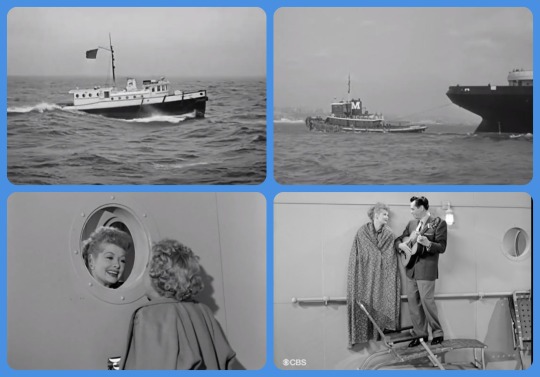
Second unit footage of the actual Constitution in New York Harbor was intercut with studio footage, including aerial footage of the Constitution, the pilot boat, and the tug boat. In “Second Honeymoon” (set entirely on the ship), the plot emulates the film Gentlemen Prefer Blondes, ending with Lucy stuck in a porthole, just like Marilyn Monroe in the film.
- LUCY: Ethel, what’s the name of this boat?
- ETHEL: The S.S. Constitution, why?
- LUCY: From the way everybody’s paired up, I thought maybe it was the S.S. Noah’s Ark!
“Deep Sea Fishing” & “Desert Island” (1955) ~ While vacationing in Miami Beach, the Ricardos and Mertzes make use of a Cruis Along fishing boat. Although Lucy and Desi had actually visited Miami the previous summer, this episode utilizes extensive second unit footage using doubles for the cast.
- FRED: This Cruis Along is a dandy little boat, Rick!
In addition to the logo being clearly visible on the boat, Fred’s line gives the company verbal advertising. At some point, the company became a subsidiary of the Century Boat Company, which is still in business today.
The fishing boat scenes were re-created on a California sound stage using a water tank and rear projection for sea and sky.
“Lucy Takes a Cruise To Havana” (1957) ~ The very first hour-long adventure of the Ricardos and Mertzes tells how Lucy and Ricky met when she took a cruise from New York to Havana with her friend Susie MacNamara (Ann Sothern) in 1940. As usual, the episode combines studio footage and insert shots of the actual ship.
The ship that Lucy and Susie sail on is the R.M.S. Caronia, which was a real-life Cunard Line vessel. However, the ship did not enter service until 1949 and this episode is set in 1940. Cunard was then known as Cunard-White Star Line.
Single Susie calls the ship the S.S. YWCA (Young Women’s Christian Association). Bachelorette Lucy mentions that she heard that this was the ship’s ‘maiden’ voyage – making a pun about the lack of available men on board. Coincidentally, Fred and Ethel Mertz are on the ship as well – on a belated Honeymoon cruise – even though they were married in 1928!
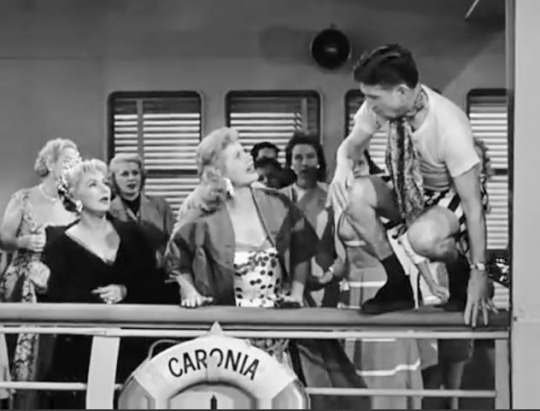
Also sailing is crooner Rudy Vallee, who jumps overboard to escape his female fans.
- CRUISE DIRECTOR: “If Mr. Cunard ever hears about this I’ll be demoted to the Albany Night Boat.”
While filming second unit footage in and around Havana, revolutionary violence broke out. Desi instructed his crew to get out of there fast!
Forever Darling (1957) ~ Lucy and Desi play Susan and Lorenzo Vega. Chemist Lorenzo is developing an insecticide and plans to test it on a camping trip with Susan, but rafting on the lake to collect specimens lands them both in the drink!
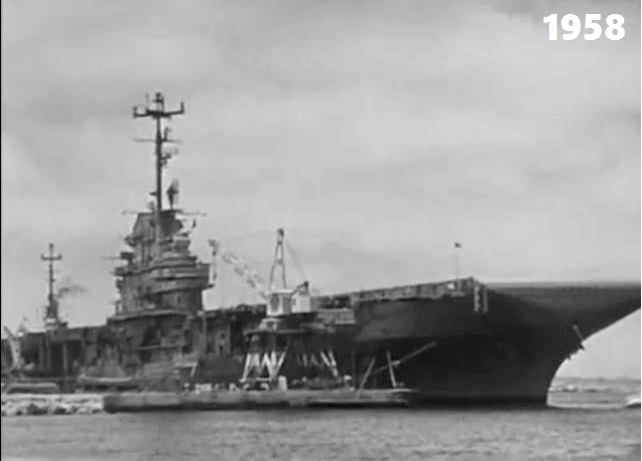
“Lucy Goes To Mexico” (1958) ~ At the end of the episode, the action switches to the USS Yorktown, one of 24 Essex-class aircraft carriers built during World War II for the US Navy.
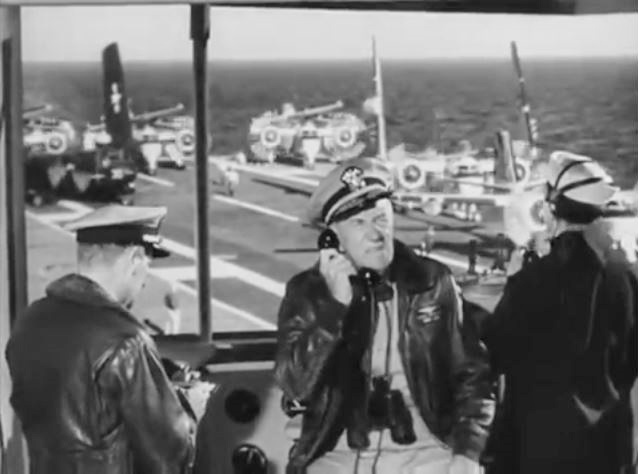
The Admiral of the Yorktown says he’s been leery of actors ever since he saw The Caine Mutiny. The book, play and film were frequently mentioned on Lucy sitcoms.
“Lucy’s Summer Vacation” (1959) ~ Lucy and Ricky escape to a lakeside cabin in Vermont. Unfortunately, it has been double booked – with Howard Duff and Ida Lupino. Howard and Ricky want to do nothing except fishing. Lucy drills holes in the row boat to keep the men in the cabin, not on the lake.
The Arnaz family boarding the French Line’s S.S. Liberté in New York in 1959. Greeted by a line of the ship’s bellhops, one of who holds Lucy’s fur coat for the photo. Liberté was featured prominently in the Jane Russell film The French Line. Liberté made an appearance in the opening credits of the 1953 film How to Marry a Millionaire, as well as the 1954 classic film Sabrina, starring Audrey Hepburn and Humphrey Bogart. She was scrapped in 1962.
Facts of Life (1960) ~ Lucy and Bob Hope play married folks – but not to each other – who are flirting with infidelity. Abandoned by their spouses and a third couple for deep-sea fishing on their Acapulco vacation, Larry and Kitty bond on the high seas.
“Lucy Buys a Boat” (1963) ~ Lucy talks Viv into buying a boat that’s barely seaworthy. When they finally get it on the lake, it slips away from its moorings, trapping a seasick Viv and a bossy Lucy without a sail.
An ad in the Danfield appeals to Lucy, who said when she was a little girl she practically lived on boats.
Answer the call of the seven seas! An unforgettable adventure for your whole family! For sale: 26 foot sailboat, sleeps 5, large galley, complete with trailer, only $100 down.
Lucy says that Viv has brought enough seasickness pills for the Queen Mary. Lucy Ricardo also brought a supply of seasickness pills when sailing on the S.S. Constitution (above).
Then the leaks start springing up!
Nautical Vocabulary!
VIV: “I’m afraid I’m just a landlubber at heart.”
- Landlubber ~ Lubber is an old word (dating from the 14th century) meaning a clumsy or stupid person. The term landlubber refers to an unseasoned sailor.
VIV: “I’ll bet this is the first time anybody’s been shanghaied on a lake.”
- Shanghaied ~ force someone to join a ship lacking a full crew by coercion or other underhanded means.
JERRY (to LUCY): “You’d better give us a rest, or you are going to have your first mutiny.”
- Mutiny ~ an open rebellion against the proper authorities, especially by soldiers or sailors against their officers. The most famous in popular culture was in Mutiny on the Bounty, so Jerry is continuing the analogy of Lucy to Captain Bligh.
VIV (to LUCY): “Oh, go shiver yer timbers.”
- “Shiver Me Timbers” ~ is an exclamation usually attributed to the speech of pirates in works of fiction. The word ‘shiver’ means “to break into small fragments or splinters” while the ‘timbers’ refer to the wooden support frames of old sailing ships. So the saying was most likely alluding to the shock of a large wave or cannonball causing the hull to shudder or split asunder.
LUCY (into telephone): “We’ve been working on her for days and she’s really yar!”
- Yar ~ When a boat is trim, responsive, and in all ways lively in handling. In The Philadelphia Story (1940), Kate Hepburn’s character famously says about a boat “My, she was yar!”
In 1965, Lucy and Gary Morton attend the premiere of the film Ship of Fools, based on the book by Katherine Ann Porter set aboard an ocean liner from Germany from Mexico in 1933. The film was a punchline in “Lucy and the Little Old Lady” (1972).
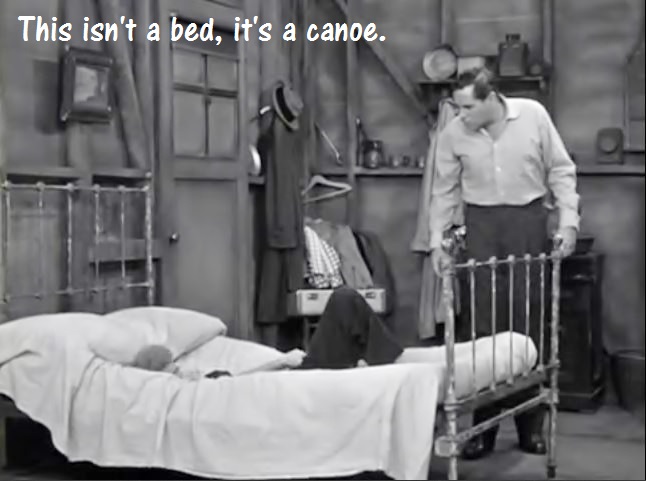
-
THE GREAT OUTDOORS
Part 2 ~ Lucy’s Colorful Outdoor Adventures
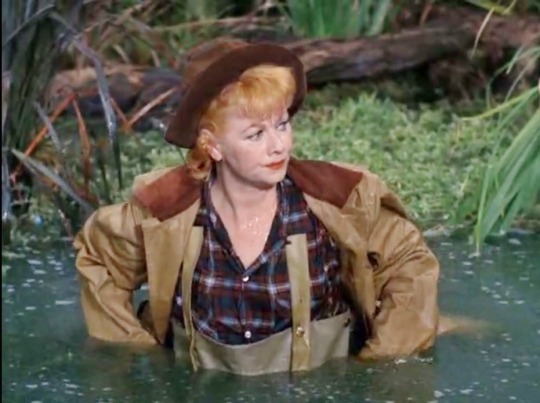
“The Lucy Show” and “Here’s Lucy” were basically indoor sitcoms, with most of the action set at home or the office. But when Lucy communed with nature, things got quite colorful!
THE LUCY SHOW
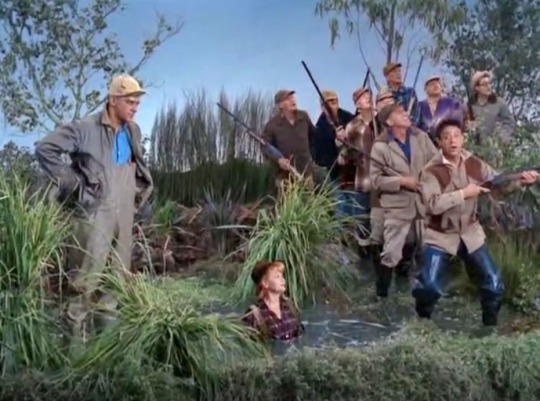
“Lucy Goes Duck Hunting” (1963) ~ To impress her new boyfriend (Keith Andes), Lucy lies that she’s an experienced duck hunter. In the woods and marshes, her fib proves she’s all wet!
“Lucy’s Scout Trip” (1964) ~ When one of the den dads can’t make the scout camping trip, Lucy and Viv volunteer to chaperone.

Naturally, they lose the canoe, topple the tee-pee, and get lost in the wilderness!
“Lucy Becomes a Father” (1964) ~ When Jerry is going on a father / son camping trip, Lucy insists on going along. Mr. Mooney, however, has a plan to make it so tough for Lucy that she’ll go home.
Lucy encounters Brownie the bear, who is played by an actor in a bear suit in some scens and an actual bear in others!
HERE’S LUCY
“Lucy and the Gold Rush” (1968) ~ One of Kim and Craig’s rock specimens turns out to be gold, so Lucy and Harry go prospecting to make their fortune.
To get to the gold, they take the freeway to the Calabasas Ridge turnoff, take the Old Tapanga Canyon Road, and walk 3 miles!
“Lucy’s Safari” (1969) ~ Lucy again visits the Topanga Canyon (which looks more like the African jungle), to track down the rare Gorboona, escaped from the Los Angeles Zoo. Topanga Canyon is located in western Los Angeles County, California, in the Santa Monica Mountains, between Malibu and the city of Los Angeles.
“Lucy Goes to the Airforce Academy ~ Parts 1 and 2″ (1969) ~ Season two of “Here’s Lucy” kicks off with four-episode storyline shot completely on location.
The first two episodes have the Carters visiting the U.S. Air Force Academy in Colorado.
“Lucy and the Indian Chief” (1969) ~ When their camper runs off the road, Lucy wanders off to find water and is discovered by a Native American chief who makes her his bride.
This episode was filmed with the cooperation of the Navajo Nation Council and the state of Arizona.
It was the first and only situation comedy allowed to be filmed on Navajo land using actual tribe members.
“Lucy Runs the Rapids” (1969) ~ Looking for a pleasant place for a picnic, Lucy camps out on the banks of the Colorado River.
Borrowing a raft to do some sightseeing, they are soon being swept down the rapids.
“Lucy and Viv in Tijuana” (1970) ~ Doing some sightseeing in Mexico, Lucy, Viv and Harry get caught up in a smuggling ring. Filmed entirely in the studio, the episode closely resembled a 1958 trip to Mexico by the Ricardos and Mertzes.
“Lucy, the Skydiver” (1970) ~ When Harry sees an opportunity to get publicity for Carter’s Unique Employment Agency, Lucy takes a daring leap. Lucille Ball usually did her own stunts, but the location footage of the sky diving was done by a stunt double. It was combined with studio-shot footage of Lucy and the plane.
“Lucy Goes Hawaiian ~ Parts 1 and 2″ ~ Season three ends with a two-part cruise to Hawaii, a working vacation for Lucy, who volunteers as cruise director.
Although the bulk of the episodes were shot in studio (reminiscent of when “I Love Lucy” recreated the S.S. Constitution on their soundstage), there were a few establishing shots of the S.S. Lurline cating off. Despite the title, the episode never shows the ship arriving in Hawaii!
“Lucy and the Mountain Climber” (1972) ~ Tony Randall plays a health nut who insists that Harry and Lucy join him scaling a mountain!
“Someone’s on the Ski Lift with Dinah” (1972) ~ Lucy crashes Dinah Shore’s ski vacation – to disastrous results.
When the ski lift stalls – Lucy and Dinah have a songfest before jumping to safety in a snowbank. The entire episode was filmed in studio.
“Lucy in the Jungle” (1971) ~ Harry’s doctor says he’s in danger of a nervous breakdown, so Lucy suggests a house swap vacation. Unfortunately, the only home left is a hut in the jungles of Kenya.
The cast includes a donkey, a parrot, two chimps, and a live lion!
“Harry Catches Gold Fever” (1973) ~ Harry figures out that a stream is littered with gold so he and Lucy set out to find it. Despite the outdoor location, the episode was filmed entirely in the studio.
THE END
-
THE GREAT OUTDOORS!
Part 1 ~ The Ricardos & Mertzes Commune with Nature
“I Love Lucy” generally took place indoors – at their East 68th Street apartment or Ricky’s nightclub. As residents of New York City, they had little opportunity to commune with nature – but there were exceptions. In nearly all cases, these outdoorsy moments were staged indoors – in a Hollywood studio.
“The Marriage License” (1952) ~ To correct an error on their original marriage license, Lucy and Ricky travel to Greenwhich, Connecticut to renew their vows. While there, Lucy makes Ricky renact his proposal at the tree bench where it first happened.
- LUCY: “Gee. I don’t remember this seat being so small, do you? I guess the tree grew in a little from each side.”
- RICKY: “Let’s face it, we’ve grown out a little from each side!”
This brush with nature came during the 26th episode filmed and is the very first time Lucy and Ricky have been seen outdoors. The Desilu set designers finally had a chance to use foliage!
“Lucy’s Last Birthday” (1953) ~ Depressed that no one has remembered her birthday, Lucy wanders the city at night, eventually arriving at Central Park – Manhattan’s equivalent of The Great Outdoors.
While sitting alone, the Friends of the Friendless come marching through the trees, stopping to console her. Not used to negotiating the outdoors, FOF extra Barbara Pepper (the only Friendless female) loses her hat on a low-hanging branch!
“The Camping Trip” (1953) ~ Lucy wants to do everything Ricky does – including going on a camping trip to go fishing and duck hunting.
This is by far the most exensive use of greenery in the series. Assessing Lucy’s camping attire, Ethel is typically blunt.
- LUCY: “Well, do I look like I stepped out of ‘Field & Stream’?”
- ETHEL: “You look more like you fell in.”
Although the campsite is located in the woods near a stream, the exact location is never stated. It is must be within driving distance, so likely upstate New York.
“The Fox Hunt” (1956) ~ At an English country manor Lucy goes on a fox hunt, despite never having ridden a horse.
Lucy really gets back to nature by becoming ensared in a bush. Unbeknownst to her, the fox does too!
“Lucy in the Swiss Alps” (1956) ~ After a mistake in booking during their trek through Europe, the Ricardos and Mertzes go mountain climbing in the Swiss Alps.
This establishing shot tells the audience the enivronment that the gang will be dealing with: snow-capped mountains.
The “I Love Lucy” set designers were charged with creating a realistic mountain top, then making it snow!
The Great Outdoors weren’t always green! This sequence was later integrated into the promotion of Paramount+ streaming service, showing various CBS / Paramount characters scaling ‘Mount Paramount’.
“Lucy’s Bicycle Trip” (1956) ~ When leaving Italy for France, Lucy has her heart set on biking along the coast and across the border – until she can’t find her passport!
In the middle of nowhere, she tries everything she can think of to get past the border officials. Before the border, the gang gets in touch with nature by sleeping in a barn!
“Off to Florida” (1956) ~ When Lucy misplaces their train tickets to Miami Beach, she and Ethel must share a car ride to Florida with Edna Grundy (Elsa Lanchester), a woman they suspect might be a hatchet murderess.
Mrs. Grundy insists on driving the backroads from New York City to Florida. Instead of stopping at a roadside cafe, Mrs. Grundy has packed watercress sandwiches, which Lucy calls ‘buttered grass’.
Instead of stopping at a hotel, they simply pull off the road and try to sleep in the car. The ominpresent chirp of crickets keeps them awake.
- LUCY: “Who can sleep with all that noise? Sounds like feeding time in a pet shop.”
“Deep Sea Fishing” & “Desert Island” (1956) ~ While visiting Miami Beach, Lucy and Ethel make a bet with Ricky and Fred that they can catch the bigger fish. Not all nature is green or white – sometimes it is blue, too! The scenes on the ocean were filmed in a water tank in Hollywood, while actor doubles were also filmed off the coast of Miami. The two films were then edited together.
When their boat runs out of gas, the gang is stranded on a lush (what they believe to be) deserted island. The island seen in the second unit footage (above) is not nearly as large or verdant as the one built in the studio.
- RICKY: “Hey! They have caca-nuts here!”
- LUCY: “Caca-nuts? (she looks around) Oh, yeah. A lot of caca-nuts.”
Palm trees and whie sands are usually an idyllic way to commune with nature – except when a giant native (Claude Akins) shows up!
“Lucy Raises Tulips” (1957) ~ In Connecticut, Lucy turns gardener. When she takes charge of the rider mower, the landscape changes for the worse – including the garden! For city folks, nothing says Back to Nature more than gardening.
“Lucy Hunts Uranium” (1958) ~ The third of the hour-long episodes later called “The Lucy-Desi Comedy Hour” takes the gang to Las Vegas, where they hunt for uranium with Fred MacMurray. As with previous episodes, this was a combination of studio shooting and second unit location footage.
Location filming took place in California’s Mojave Desert. This is the first time Lucy and Desi have gone on location as the Ricardos.
During the exterior prospecting scene, the actors actually ‘fall asleep’ on a Hollywood sound stage and ‘wake up’ on location in the desert! Movie magic!
Although the actors went on location, the car chase sequences were filmed using stunt doubles intercut with studio-filmed process shots.
“Lucy Goes To Sun Valley” (1958) ~ The gang travels to Sun Valley, Idaho, where they meet Fernando Lamas.
Sun Valley is a resort city where tourists can enjoy ice skating, golfing, hiking, trail riding, cycling, tennis and (of course) skiing on Bald (“Mount Baldy”) Mountain and Dollar Mountain. It was a favorite vacation spot for the Arnaz family. They spent part of their 1952 summer hiatus from “I Love Lucy” at the resort and later returned in 1959, after Lucy and Desi had separated, staying at Ann Sothern’s home.
As usual, the episode was a combination of studio shooting and location footage of the actors at the resort. This episode, however, featured far more location footage than any previous episode.
Lucille Ball was called upon to really get back to nature by skiing, skating, and even frolicking in the snow with animals!
“Lucy Makes Room for Danny” (1958) ~ Danny Williams (Danny Thomas) and his family sublet the Ricardo home during the winter. Building snowmen and throwing snoballs were part of the show’s plot. Unlike their visit to Sun Valley, this snow was a studio creation. The episode was a clever way to tell viewers that “Make Room for Daddy” (aka “The Danny Thomas Show”) would be taking over “The Lucy-Desi Comedy Hour” time slot!
“Lucy Goes To Alaska” (1959) ~ The gang travel to the nation’s newest state to buy some discount land – but end up out in the cold – literally! Red Skelton guest stars.
Although the action is set in and around Nome, the second unit footage was filmed in Lake Arrowhead, California, about 100 miles from Hollywood.
The exteriors were done with doubles and none of the regular cast left the newly-purchased Desilu (formerly RKO) Studios.
“Lucy’s Summer Vacation” (1959) ~ Lucy and Ricky go on vacation to Vermont and end up sharing their cabin with Howard Duff and Ida Lupino.
In the story, Lucy and Ricky have been invited to spend a week at a cabin on (fictional) Lake Wotchasokapoo, Vermont.
The show took the Ricardos out of their Connecticut home, but the scenes were not filmed on location in Vermont, but inside Desilu Studios. There is one brief establishing shot of a lake.
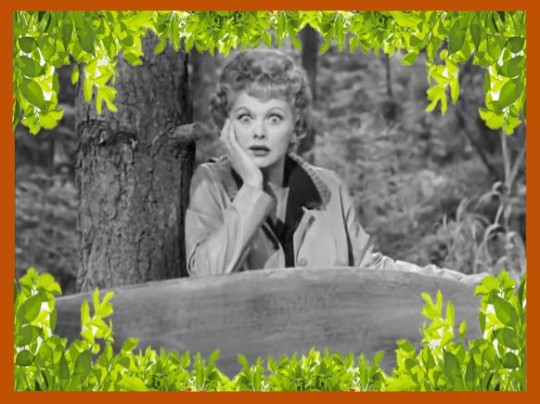


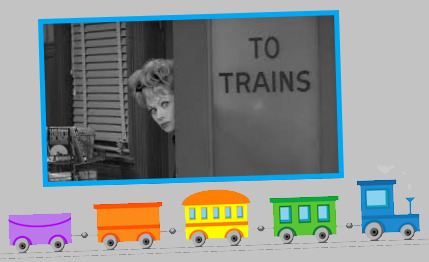

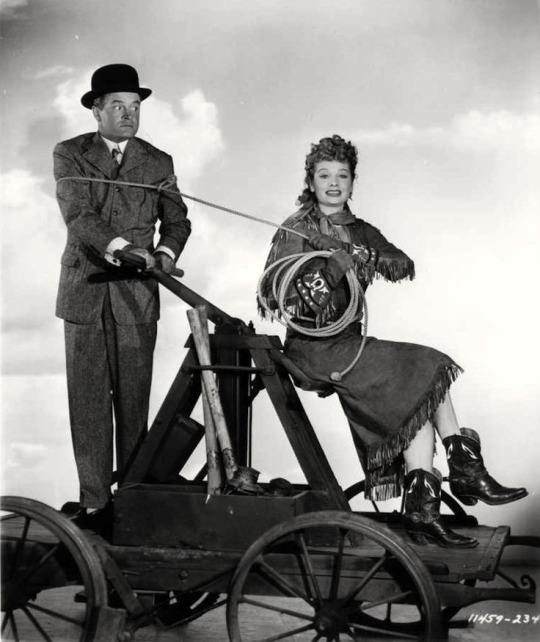
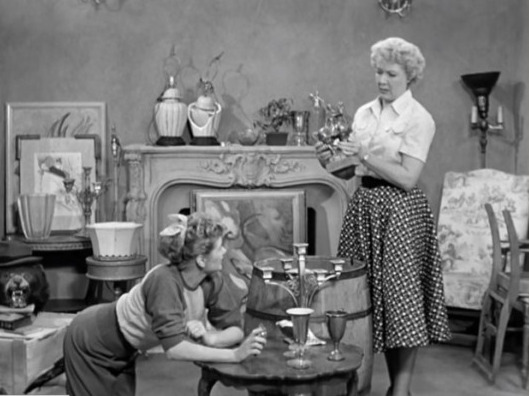
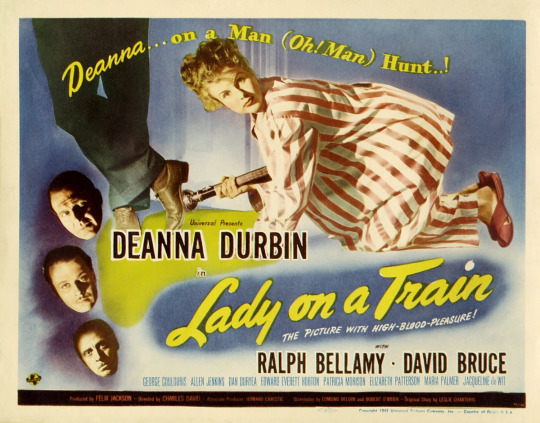


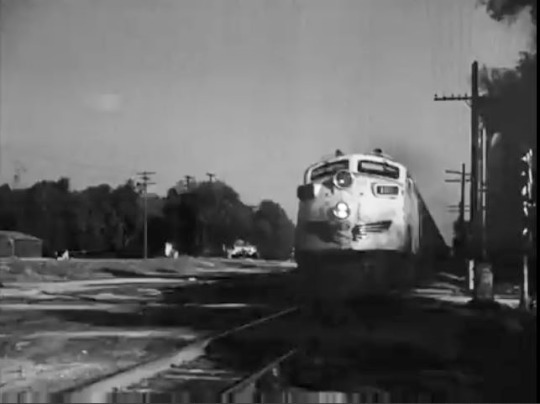


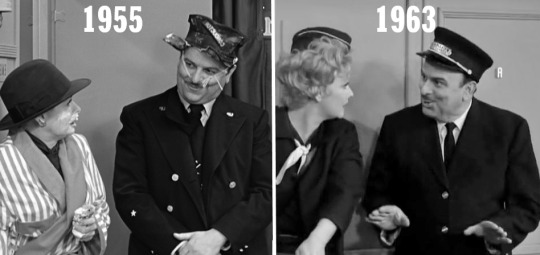

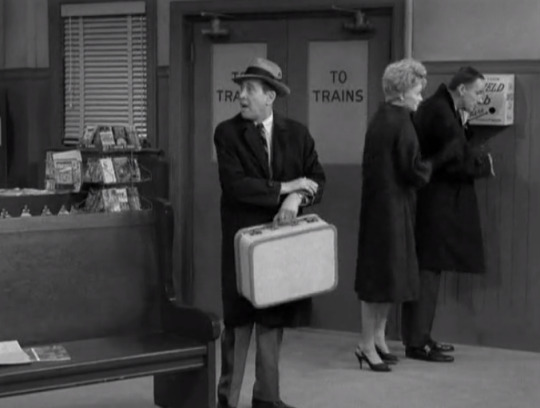


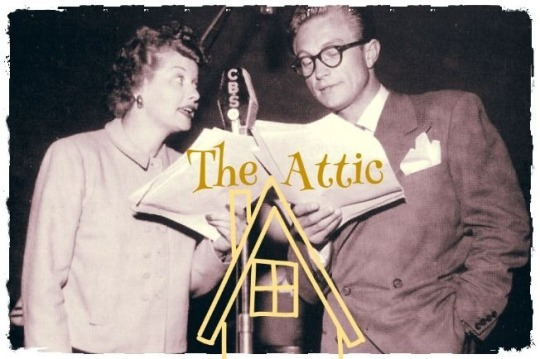
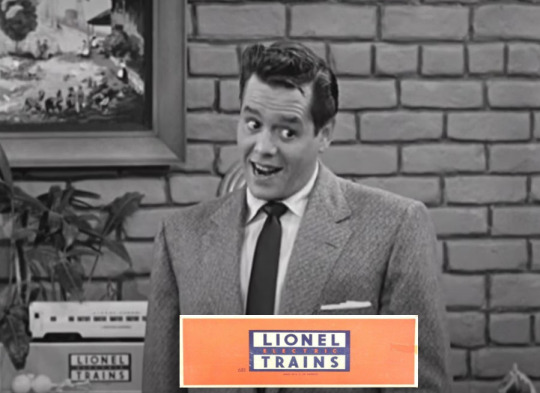
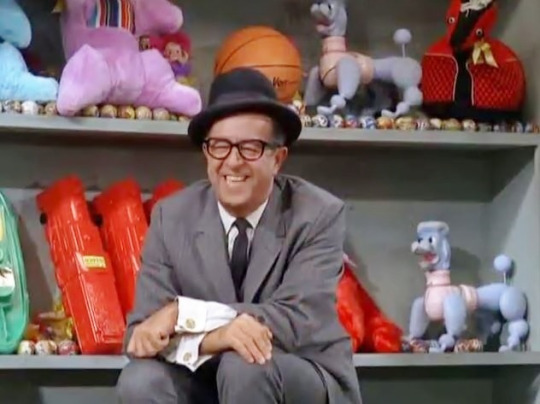

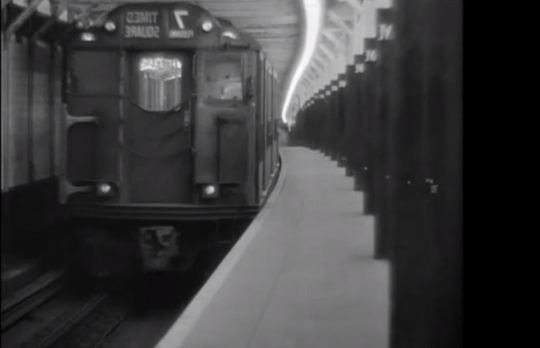
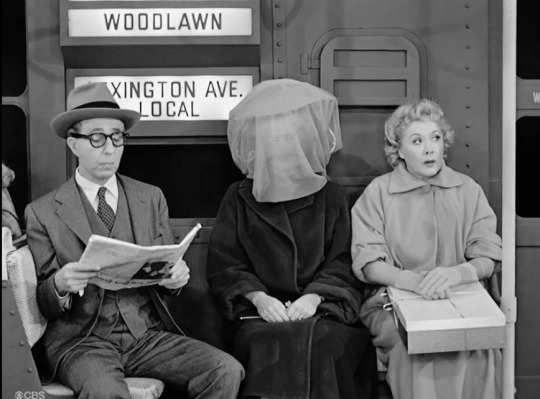
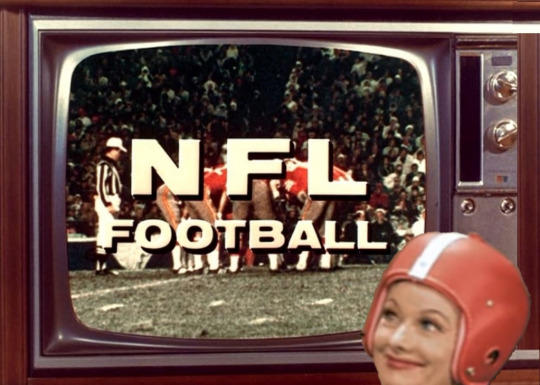

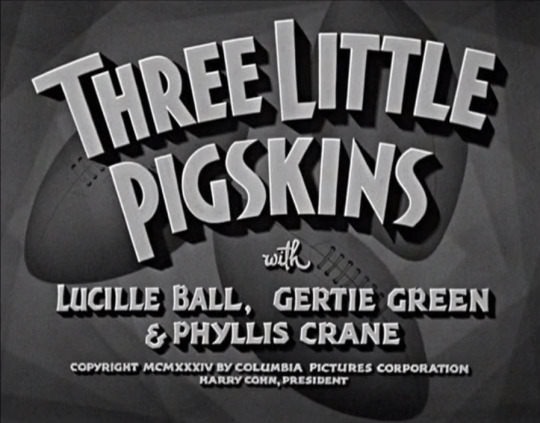
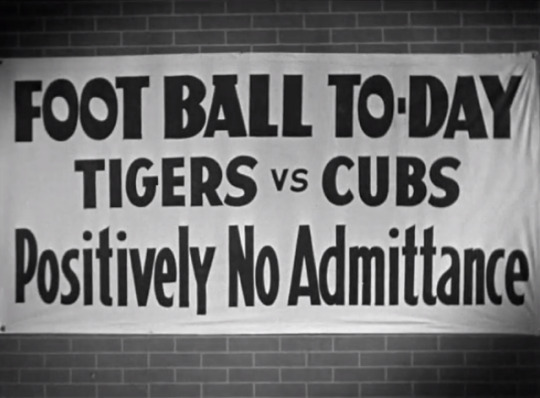
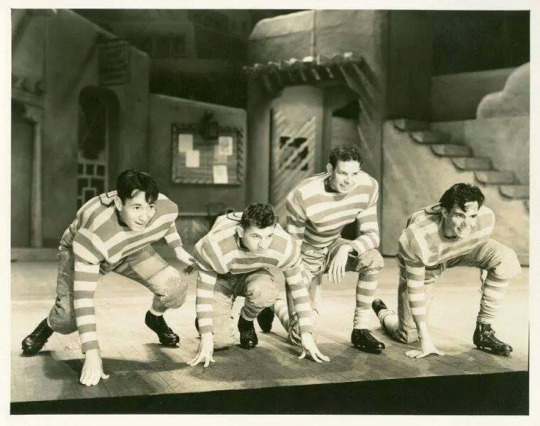
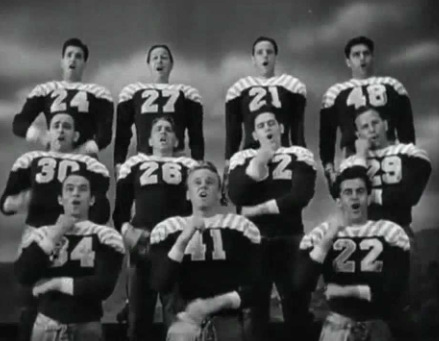
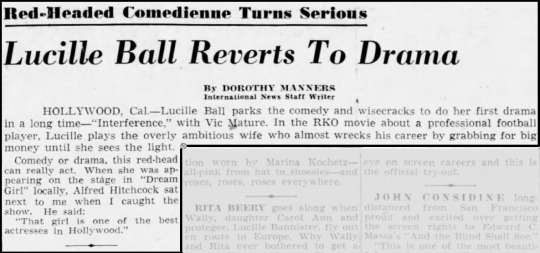
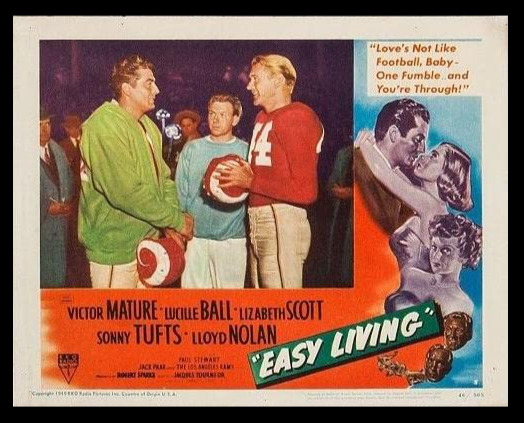
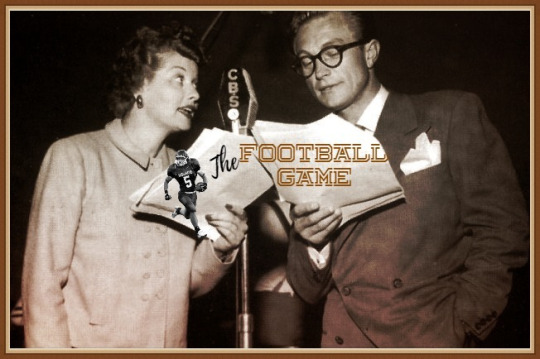
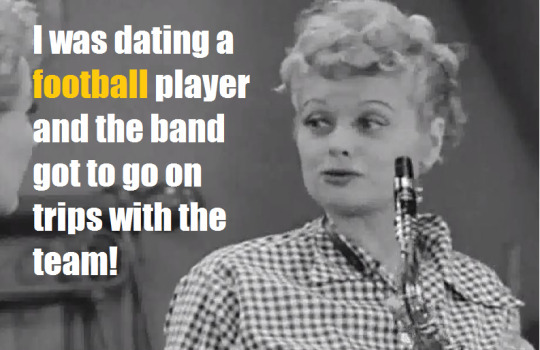
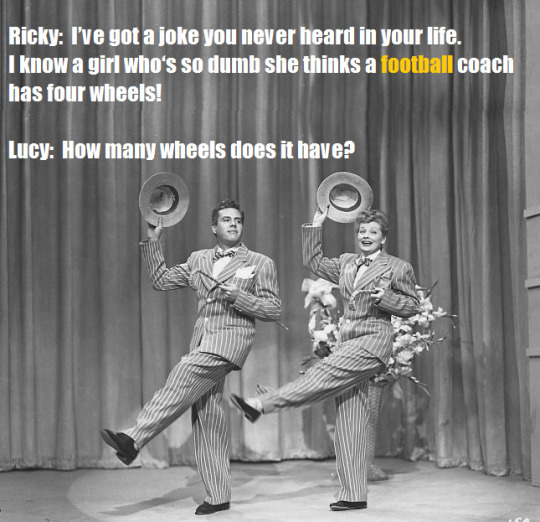
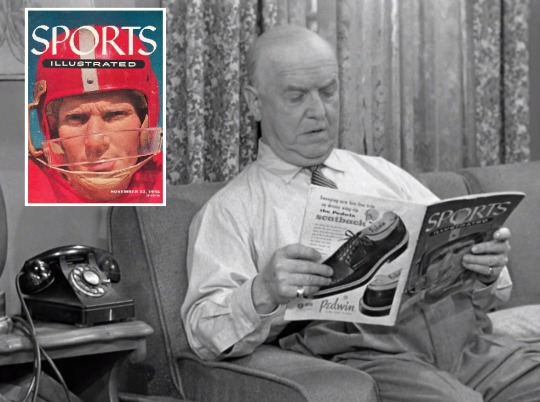
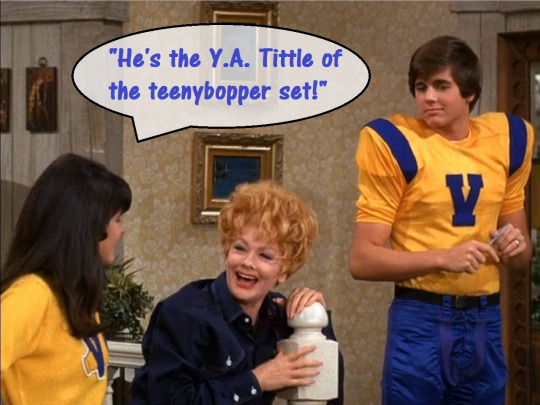
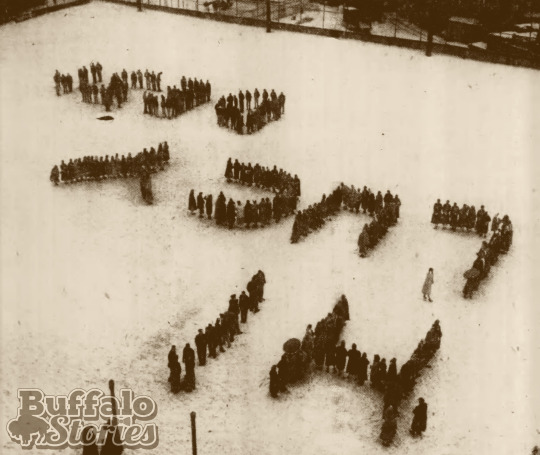
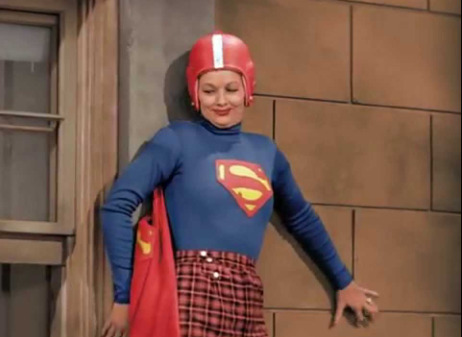
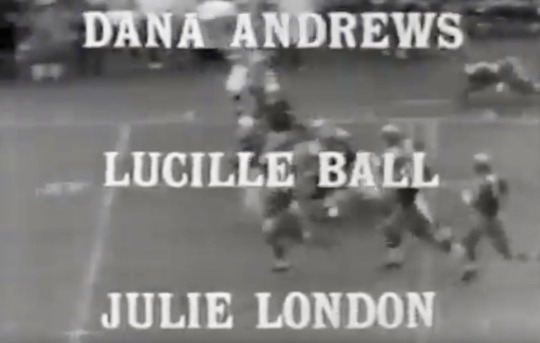
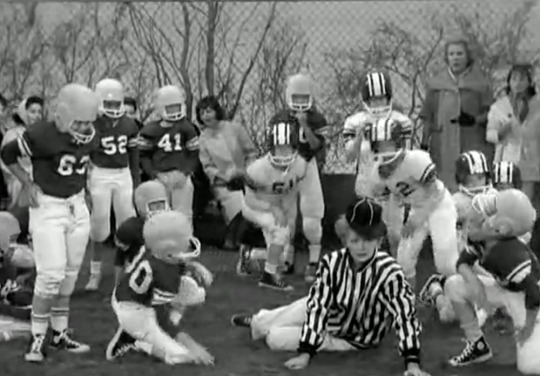
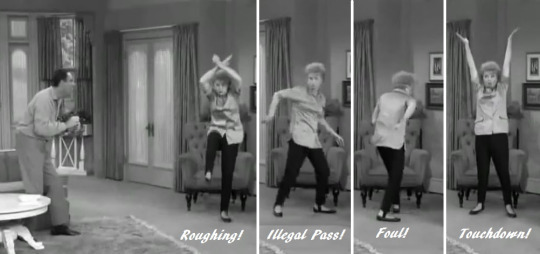
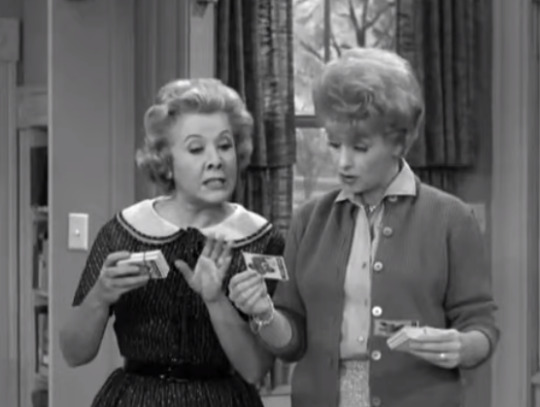
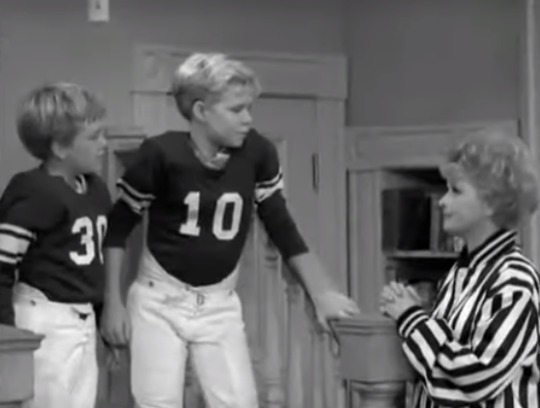
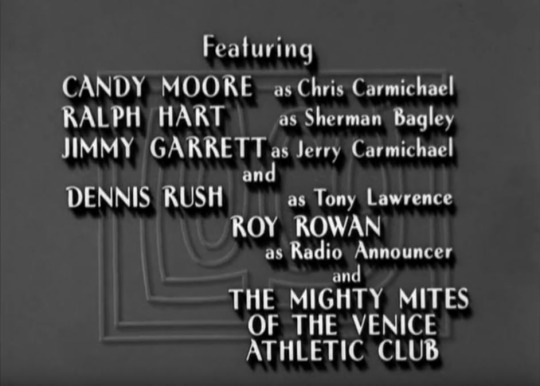
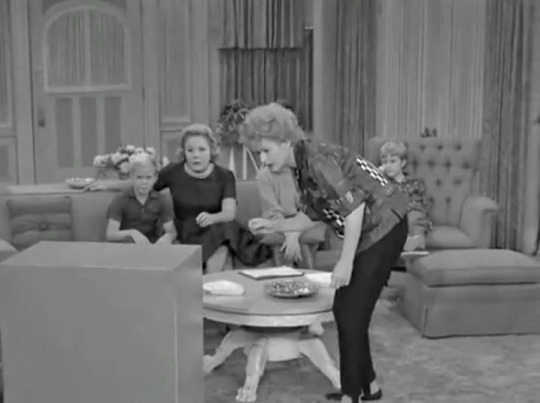
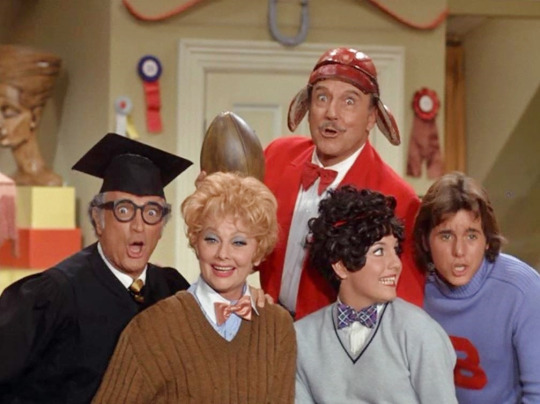

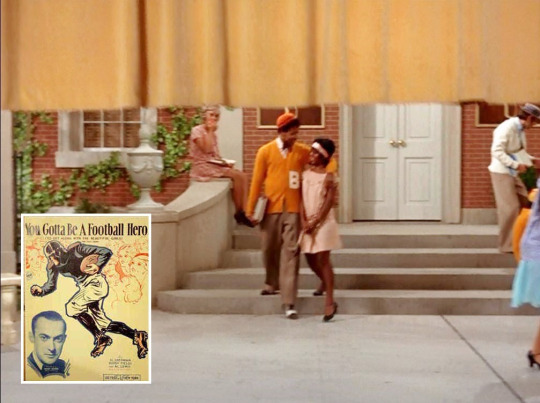
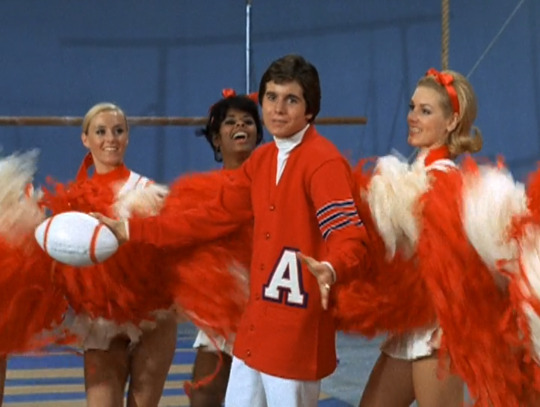
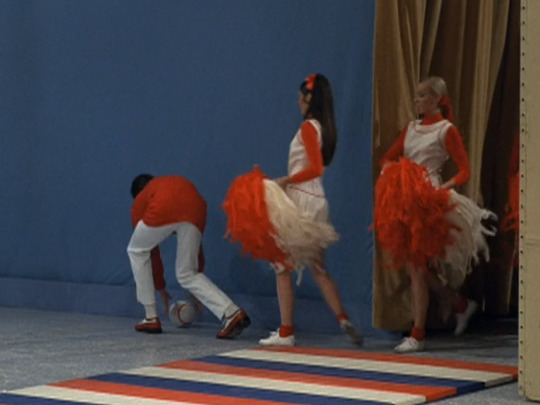
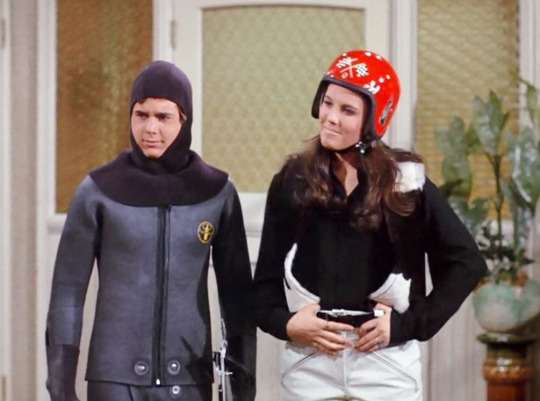
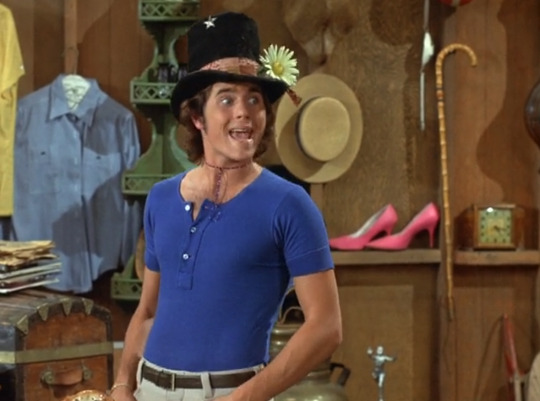
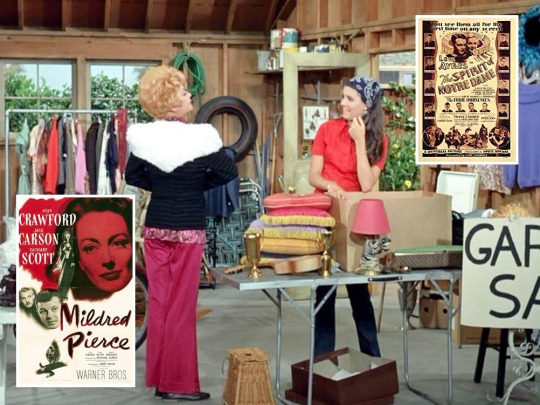
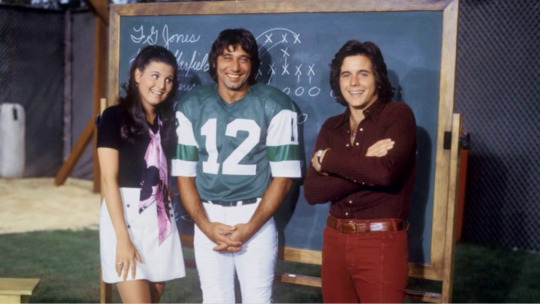
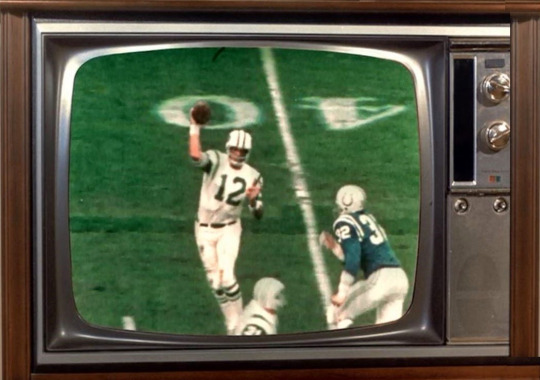
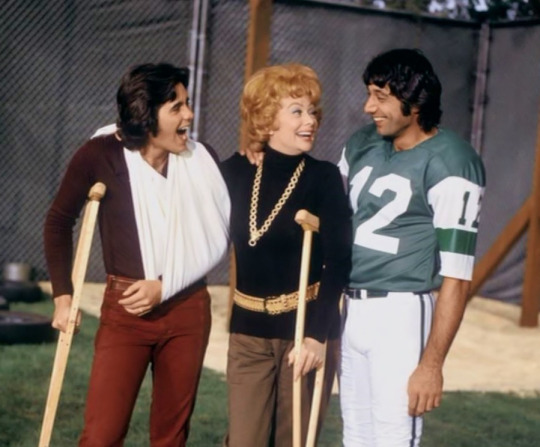
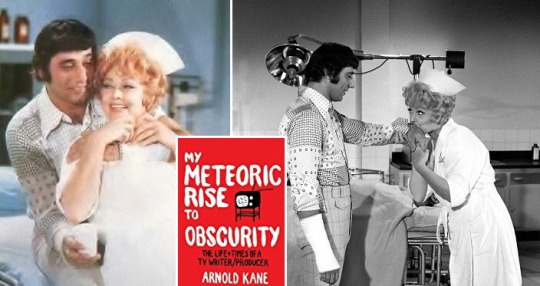
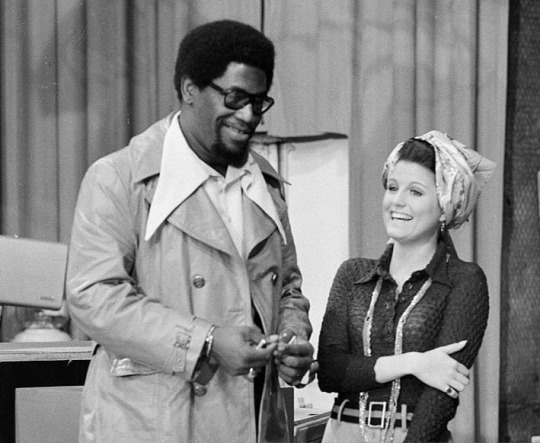
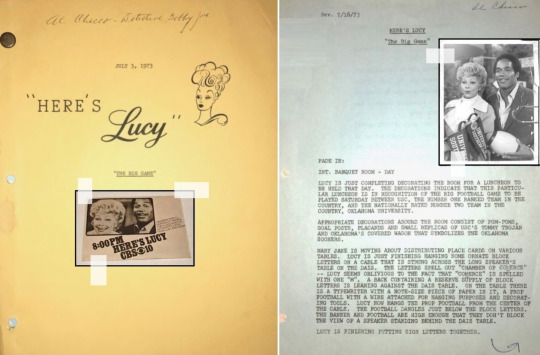
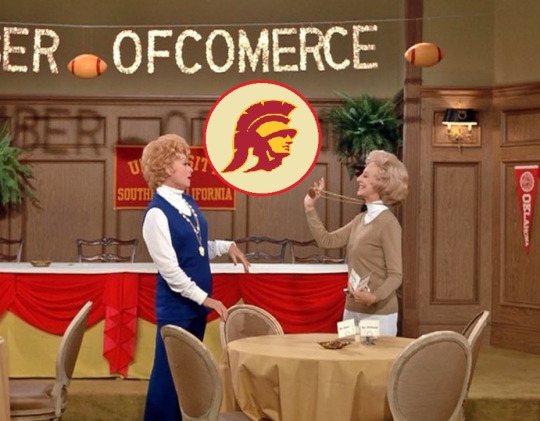
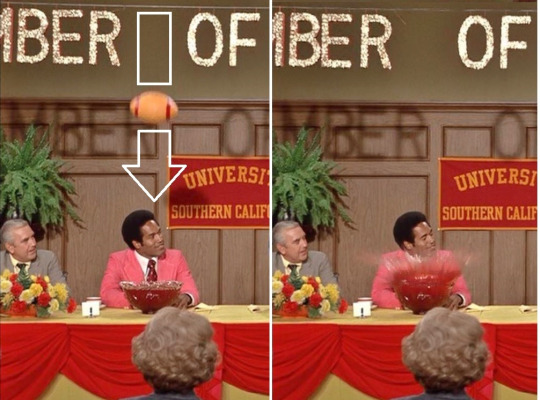
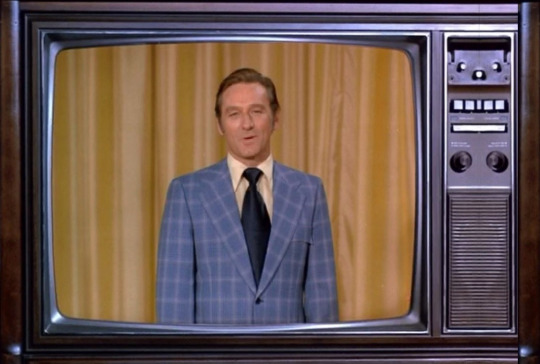
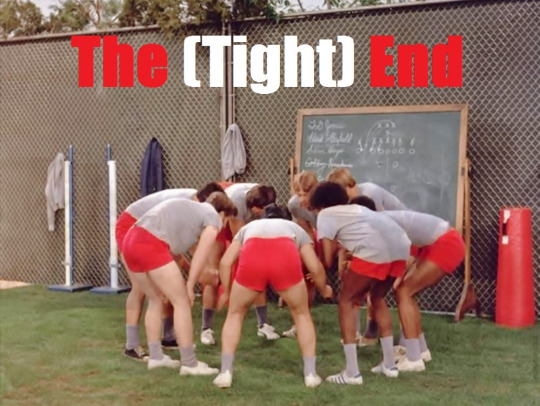
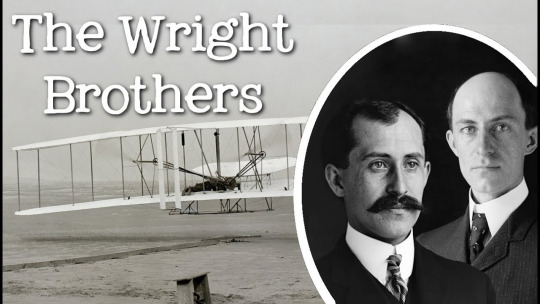
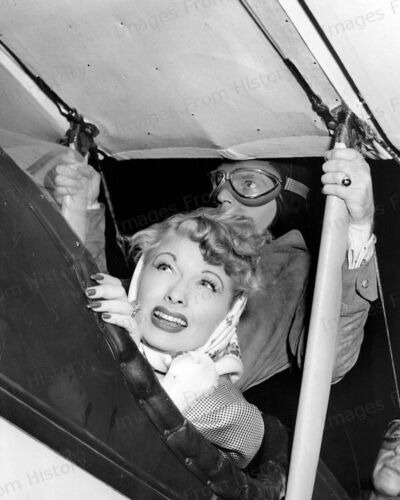
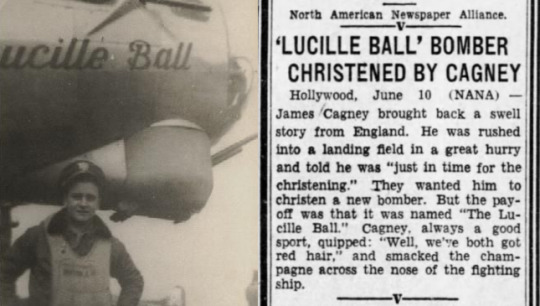

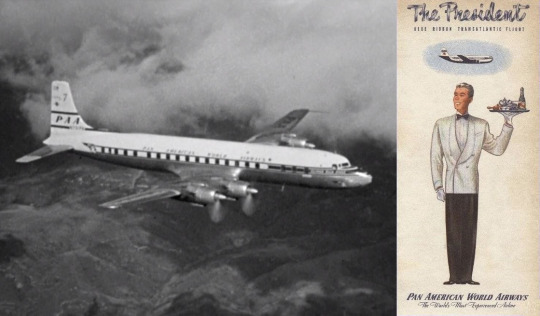
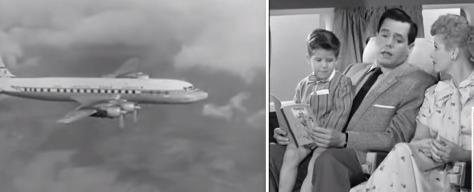
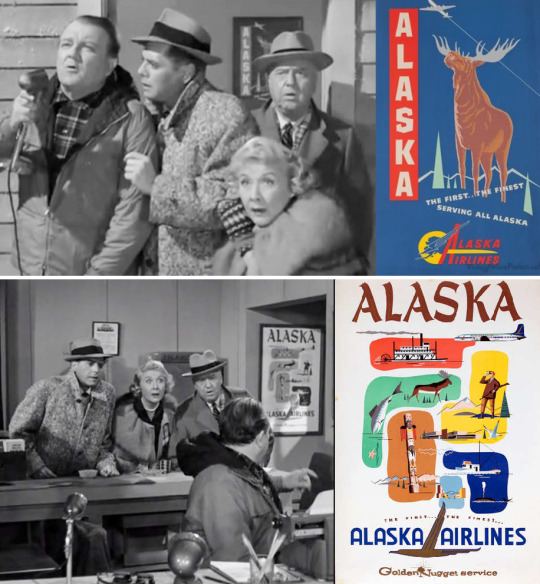

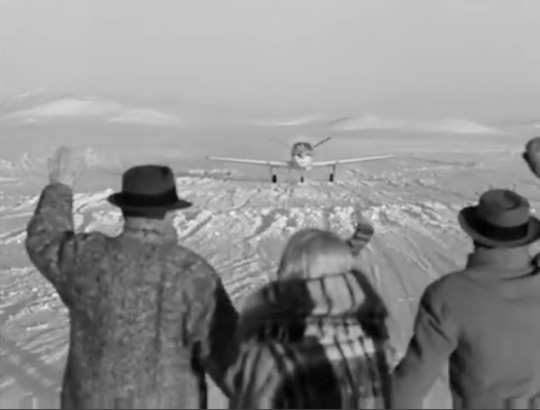
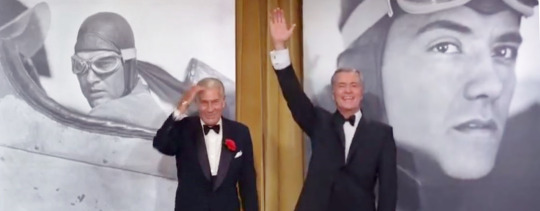
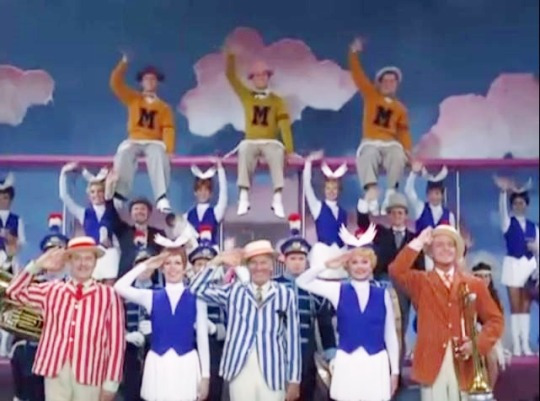
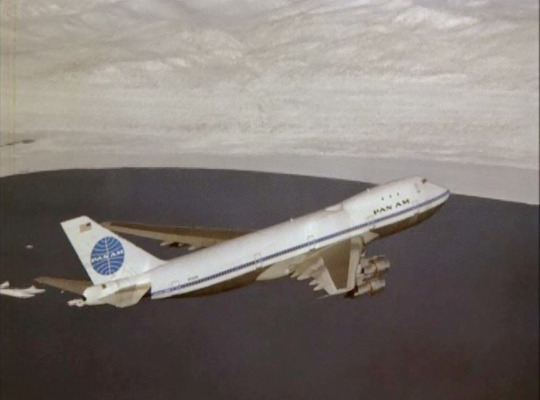
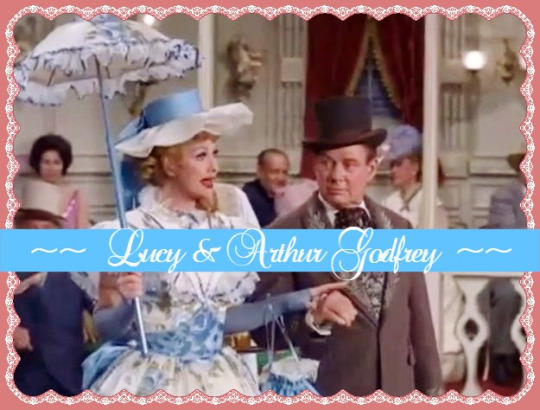
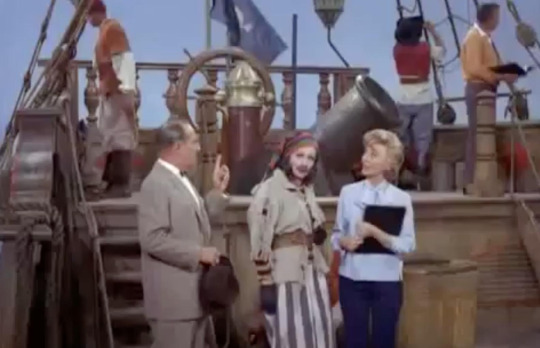

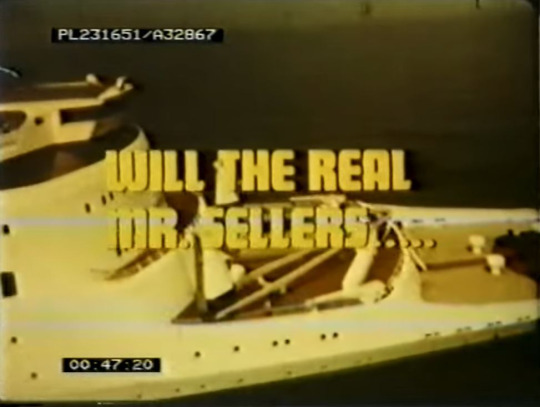
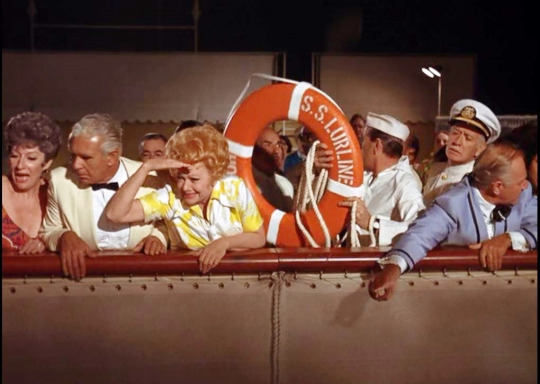

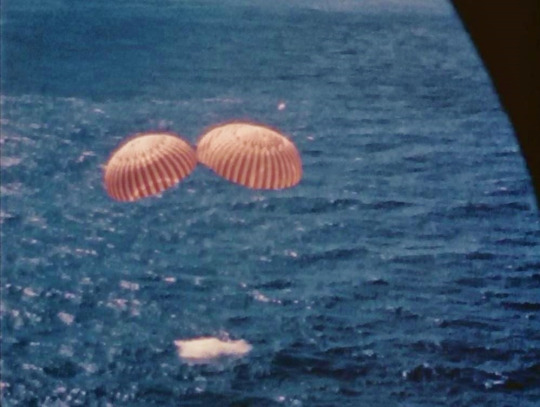
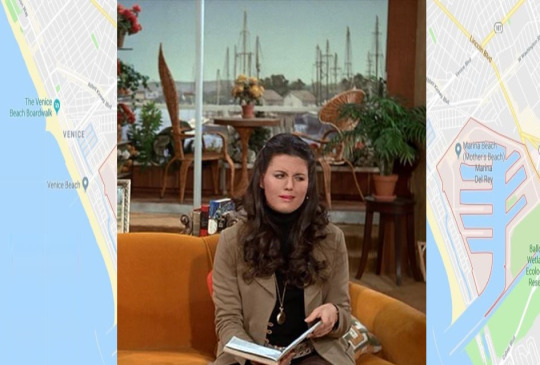

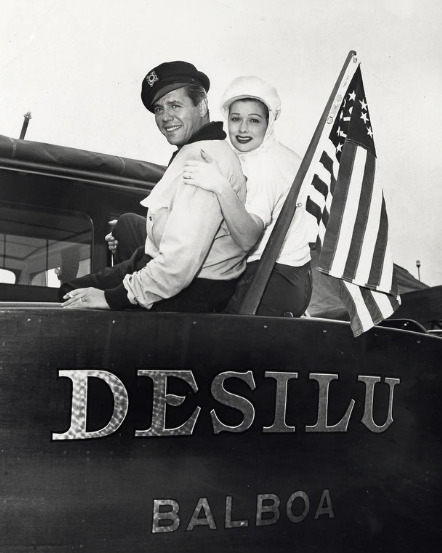
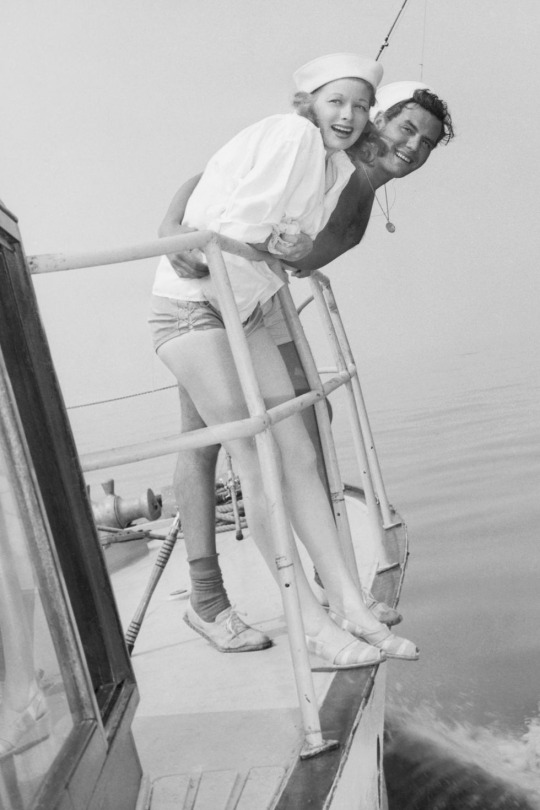
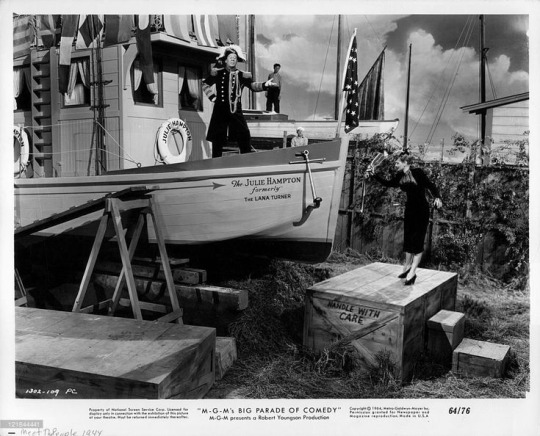
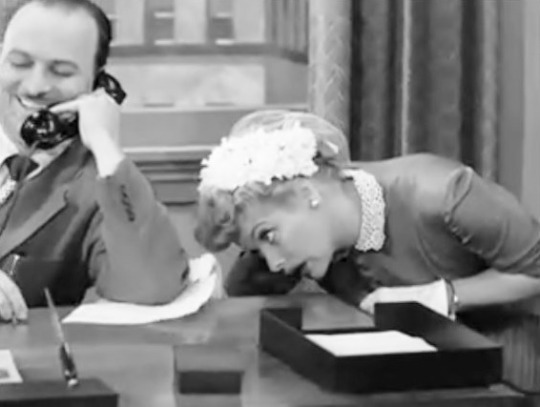
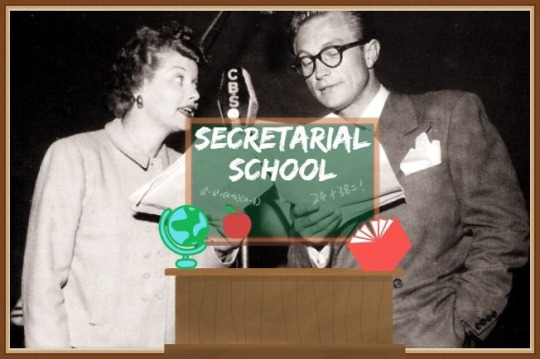
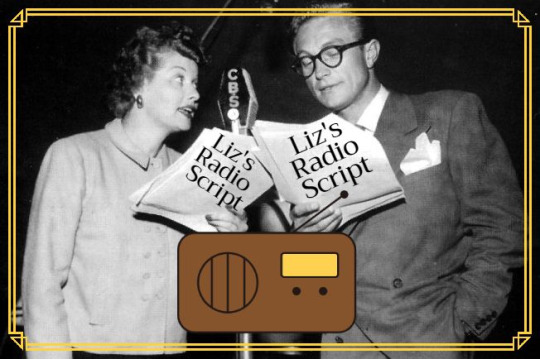
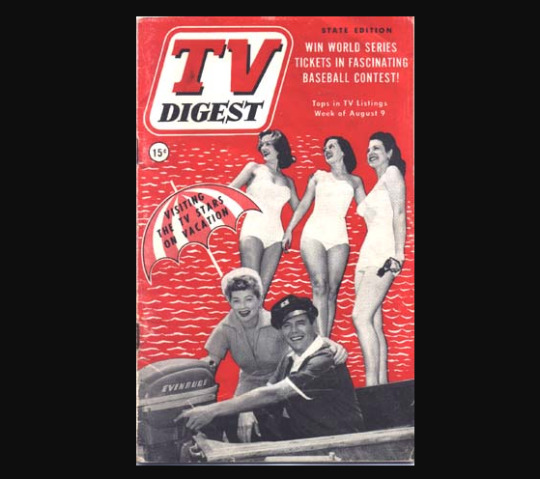


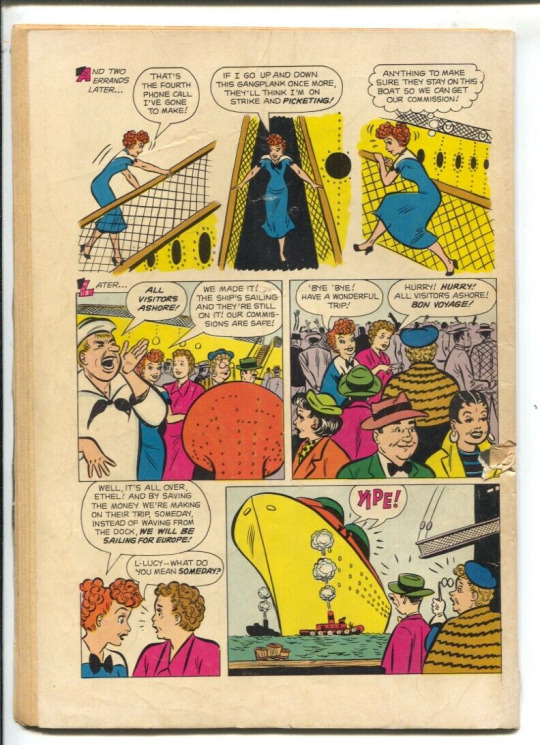
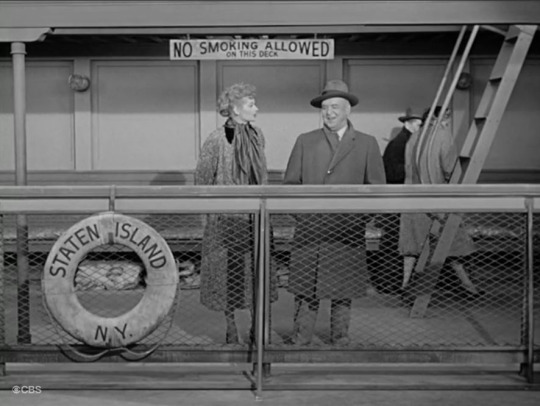
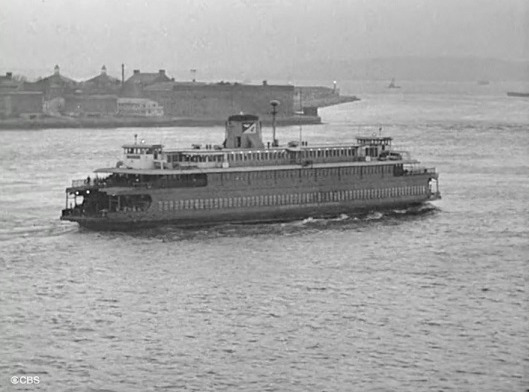

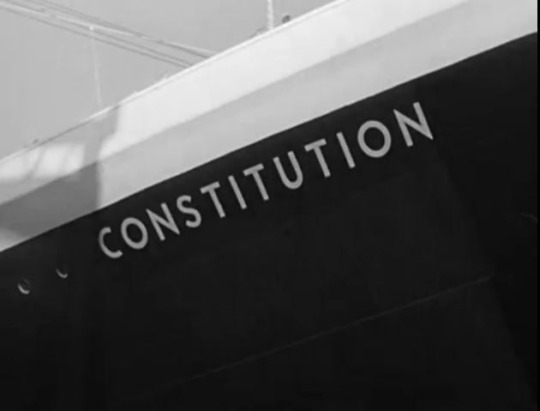
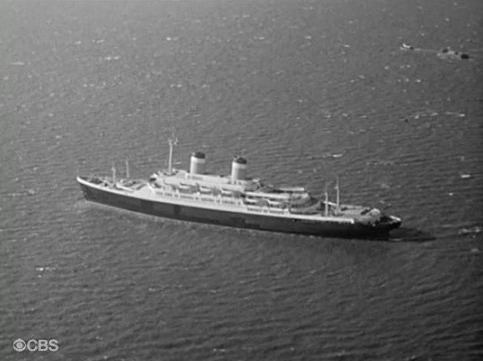
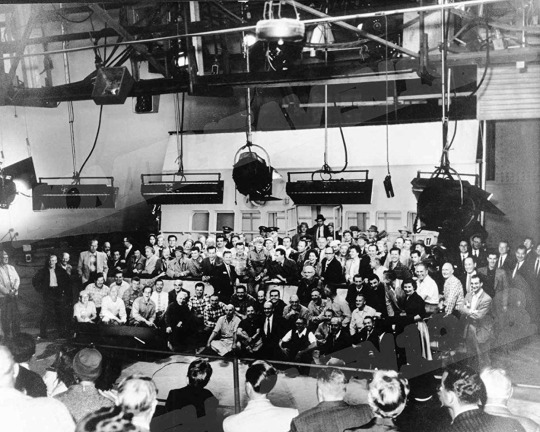
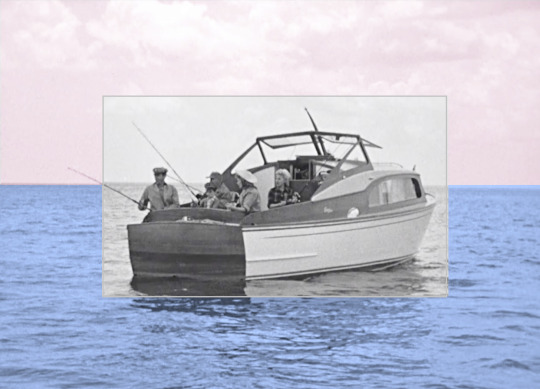
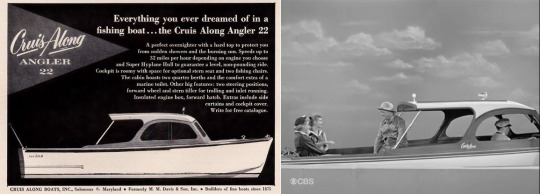
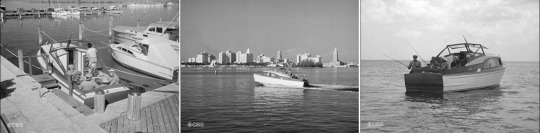
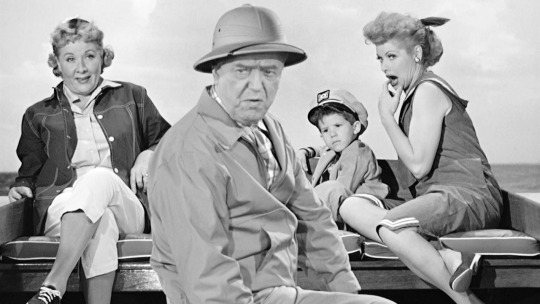

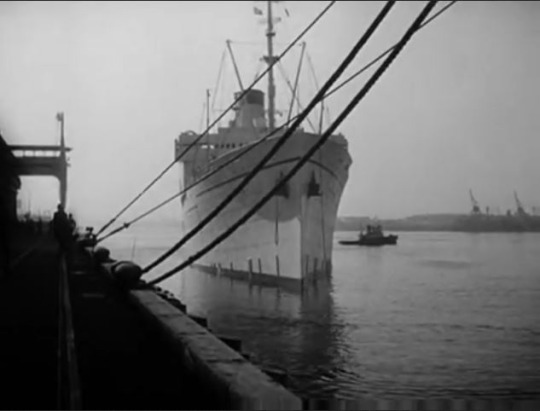
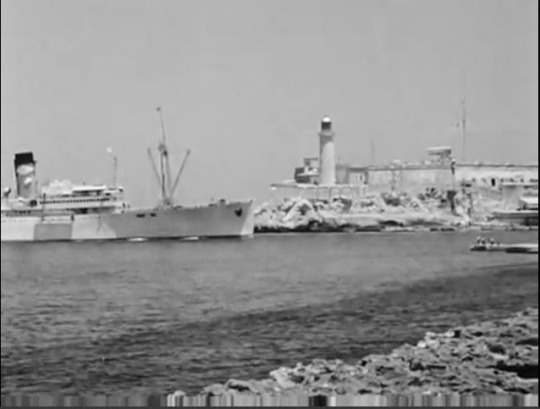
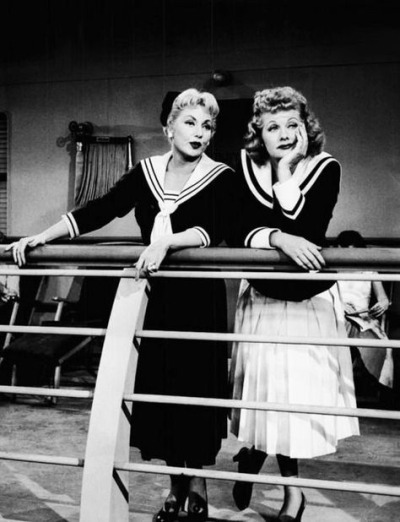
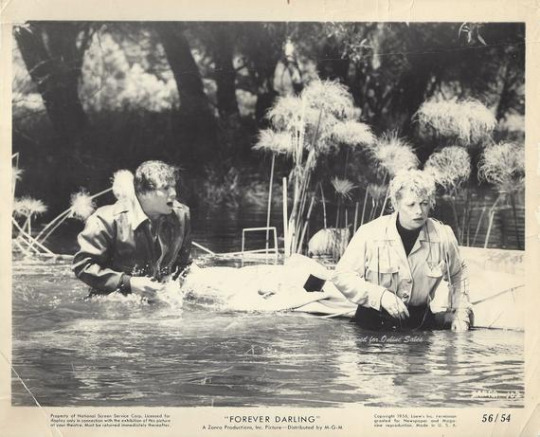
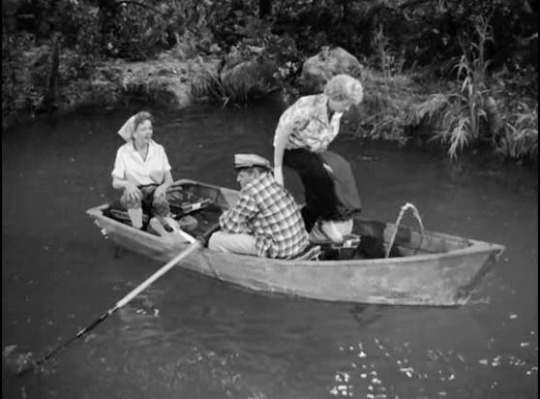
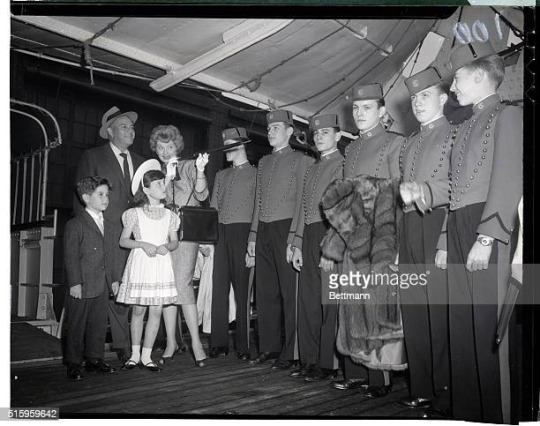
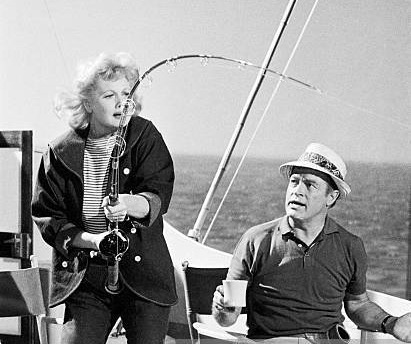

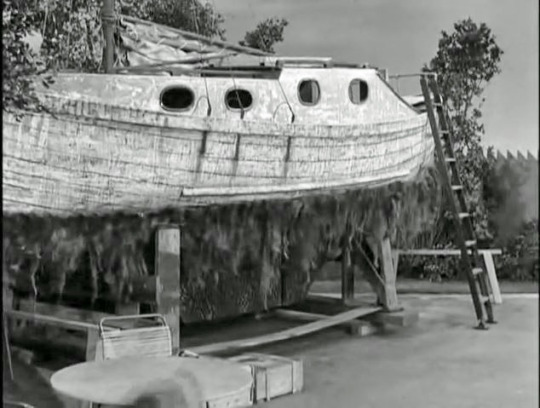
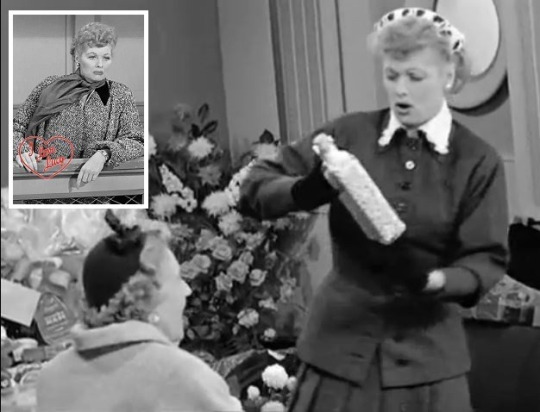


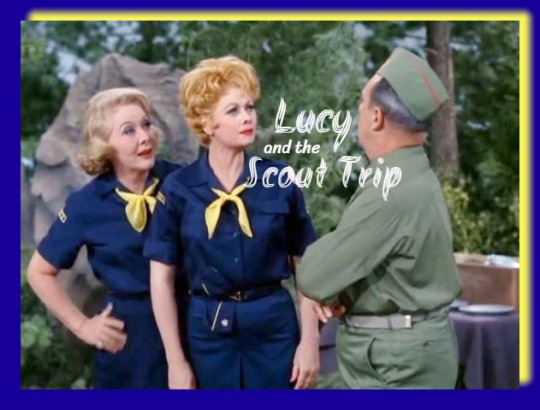
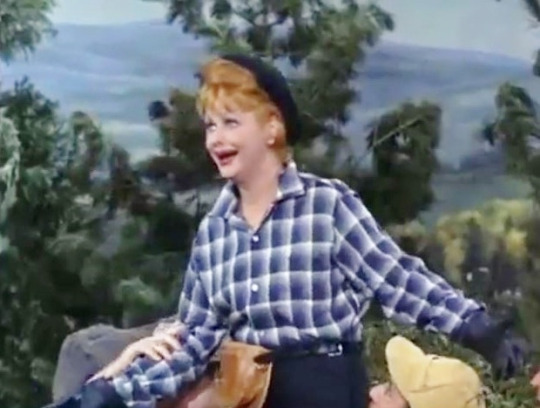
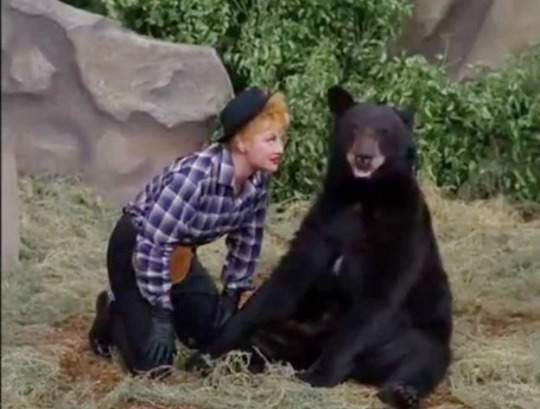
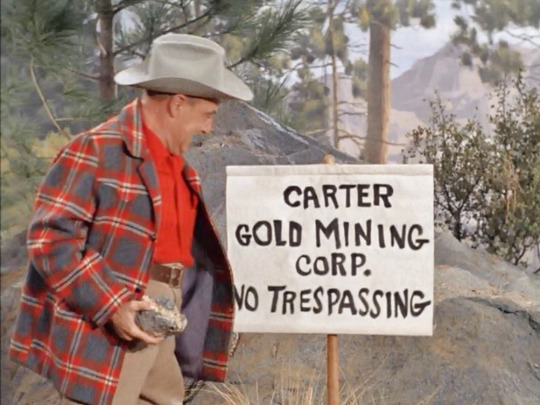
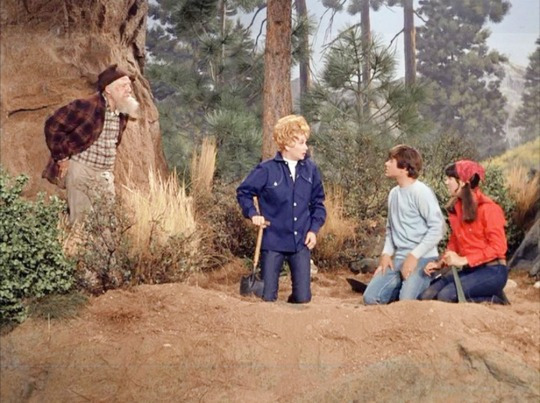




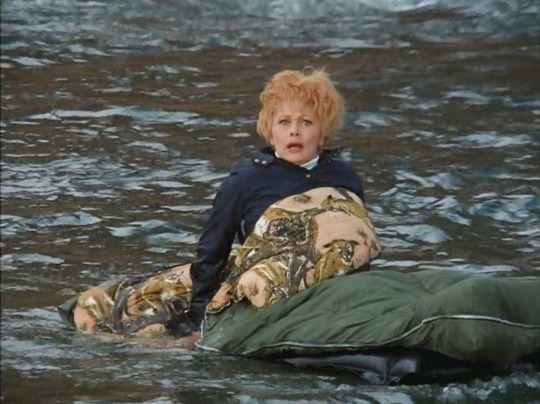
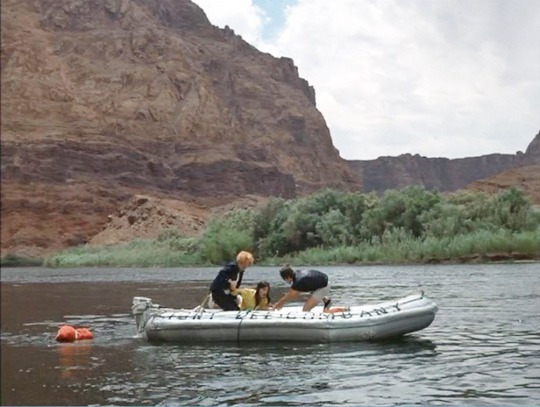
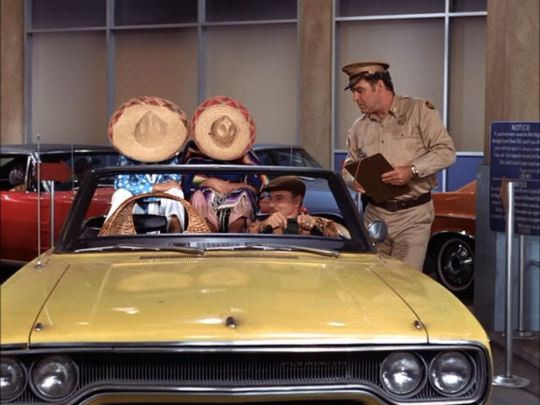
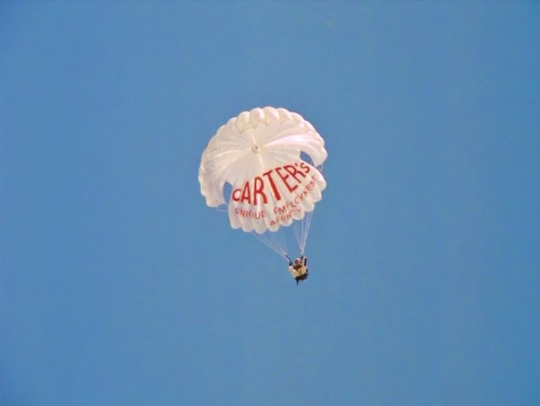


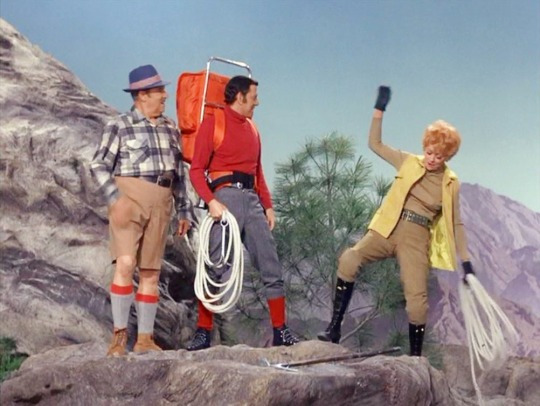

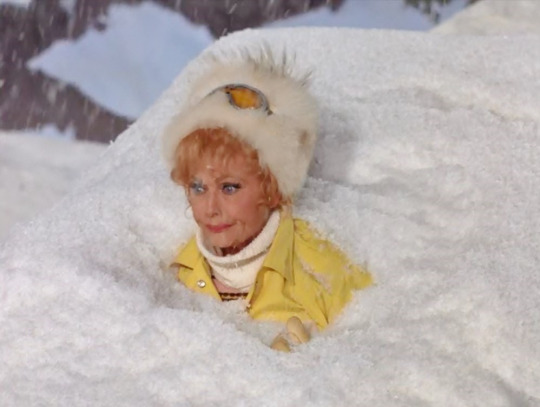
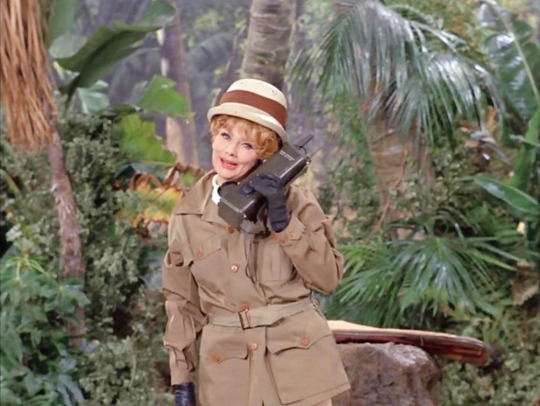
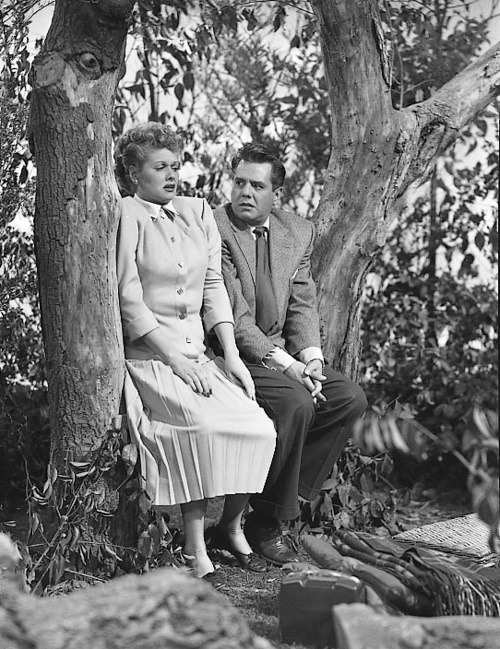


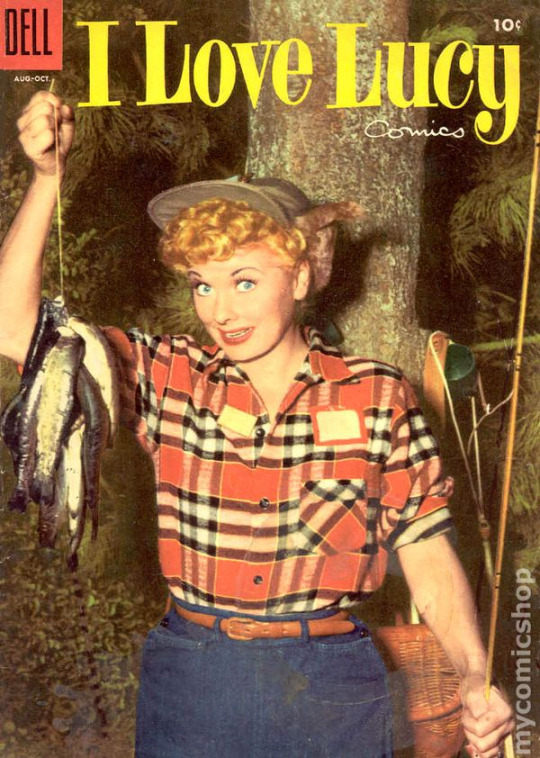

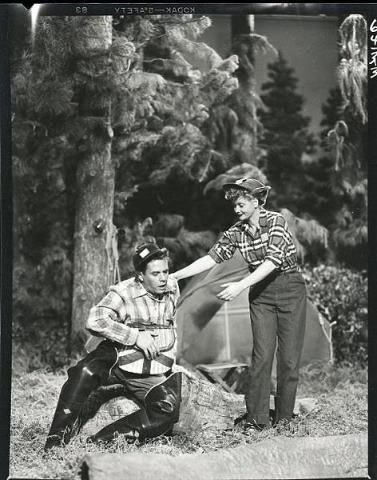


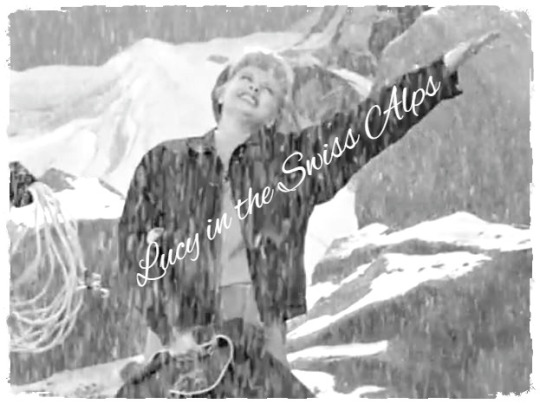
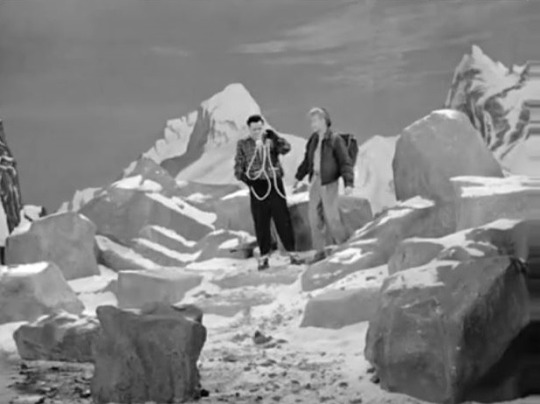
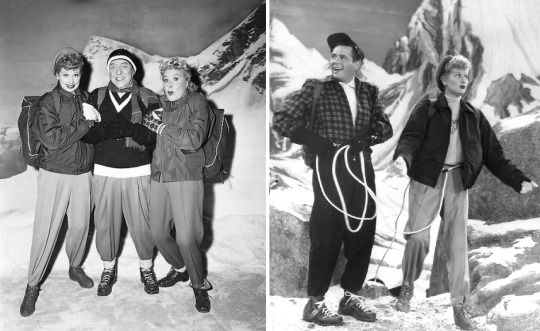

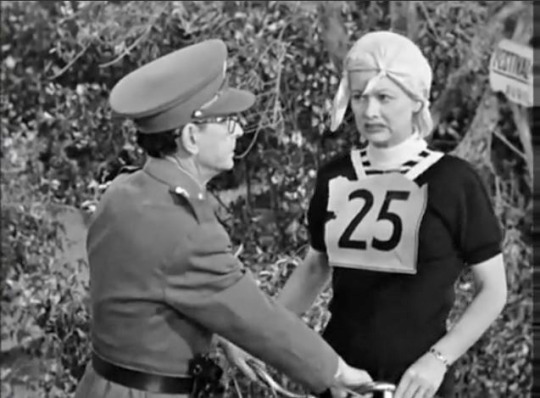
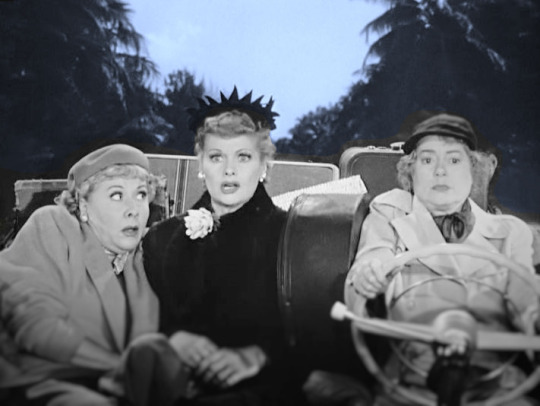
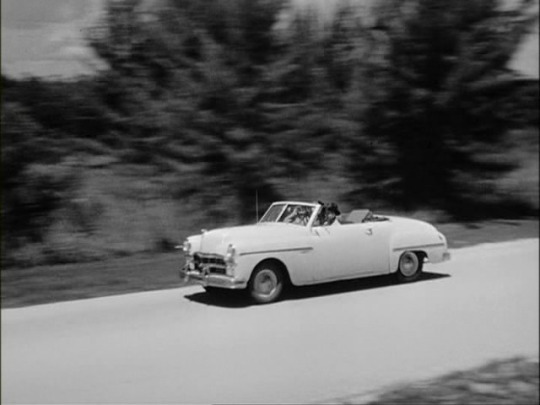

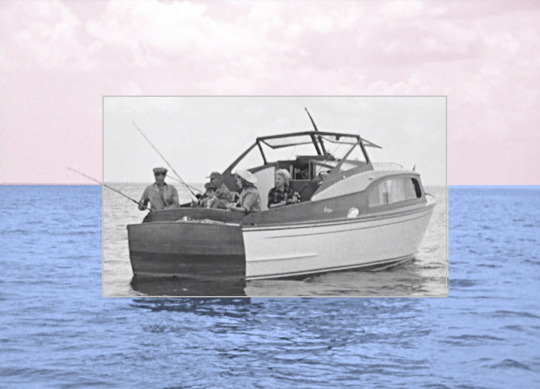

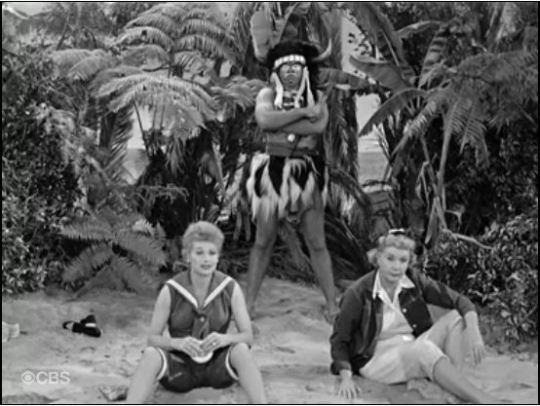
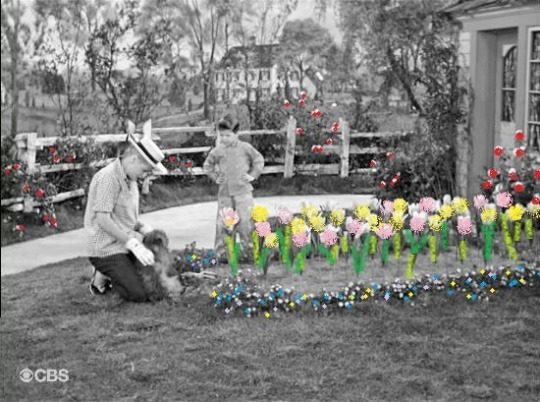

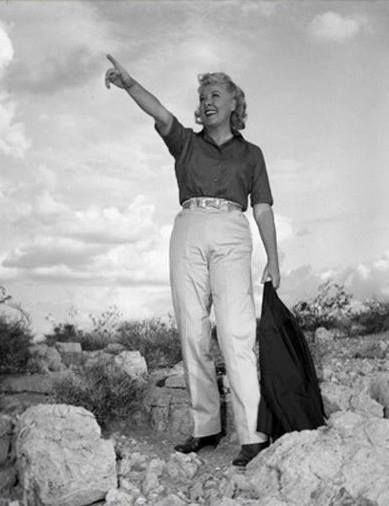

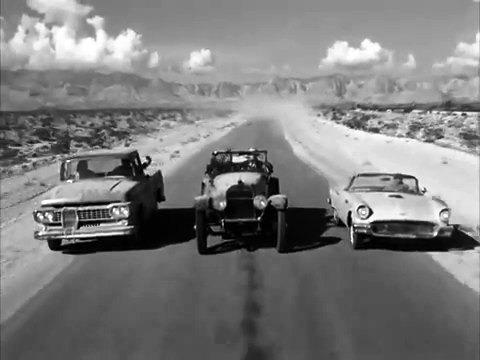


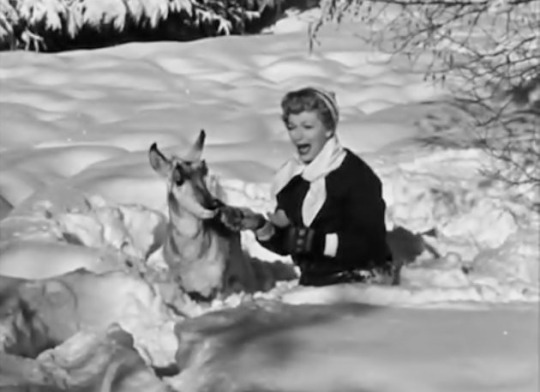
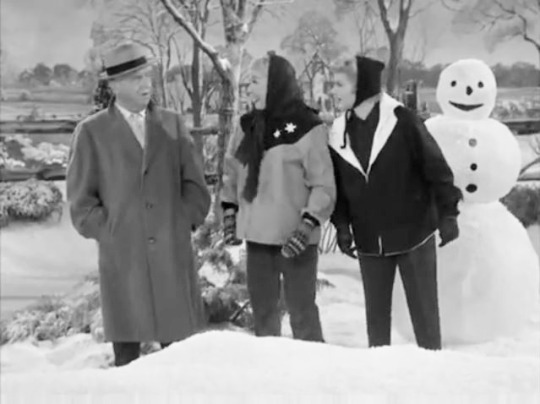
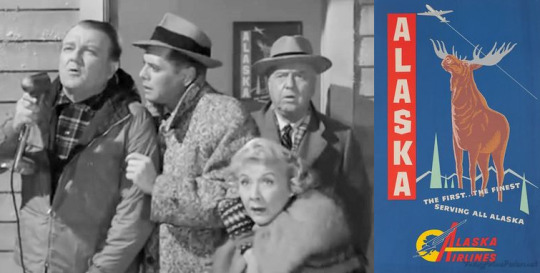
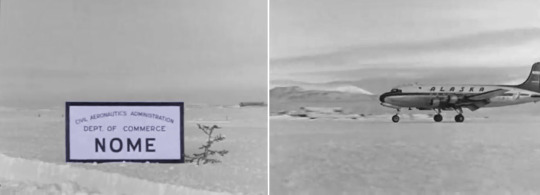



-
Subscribe
Subscribed
Already have a WordPress.com account? Log in now.
 Papermoon Loves Lucy