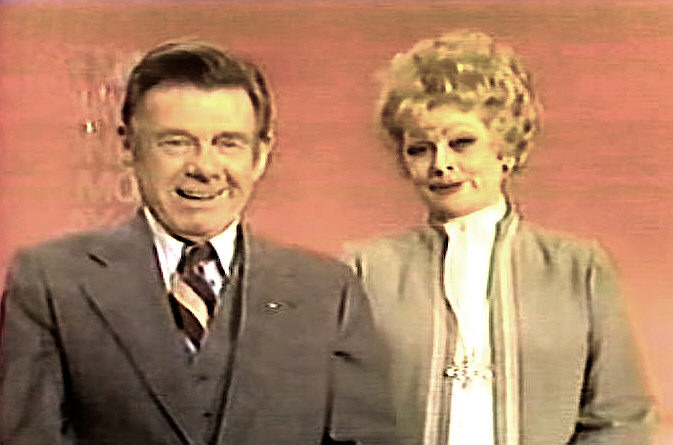
-
Lucy and the Golden Greek
S4;E2
~ September 20, 1965

Synopsis
Lucy’s
new neighbor Mary Jane fixes her up with a lifeguard, a mousy man who
only comes alive when under the spell of Greek music.Regular
CastLucille
Ball (Lucy Carmichael), Gale Gordon (Theodore J. Mooney), Mary Jane
Croft (Mary Jane Lewis)The
is the first appearance of Mary
Jane Croft
as
Mary Jane Lewis. Croft previously played the recurring role of Audrey
Simmons when the show was set in Danfield.
She was married to former “Lucy Show” producer Elliott Lewis
meaning that Mary Jane Lewis is Croft’s legal name as well as her
character name.Guest
Cast
Howard
Morris (Howard Coe) is probably best remembered as Ernest T. Bass
on “The Andy Griffith Show,” which filmed on the Desilu lot. His
last appearance as Bass aired just one week after this episode of
“The Lucy Show” and was the lead in to “Lucy in the Music
World” (S4;E3). From the mid 1960’s Morris was active as a voice
artist for hundreds of cartoon characters. On Broadway, he played
Rosencrantz to Maurice Evans’ Hamlet, as well as appearing in
two musicals. This is his only appearance with Lucille Ball.Howard
is a professional lifeguard who has lived in California sixteen years
and never had a date. His real name is Howard Colansankis and both
his parents are Greek.
Robert
Fortier
(Jim Wells) was
a dancer, actor, sailor and a commercial fisherman. He originated
roles on Broadway in Pal
Joey
(1952) and Me
and Juliet
(1953). Fortier appeared in 47 feature films and TV productions from
1950 to 1985. He frequently worked with director Robert Altman. This
is his only appearance with Lucille Ball.
Joe
DeSantis
(Headwaiter) was a veteran of a dozen Broadway plays from 1932 to
1980 as well as more than 150 screen credits. This
is his only appearance with Lucille Ball.
Sid
Gould
(Waiter) made
more than 45 appearances on “The Lucy Show,” all as background
characters. He also did 40 episodes of “Here’s Lucy.” Gould
(born Sydney Greenfader) was Lucille Ball’s cousin by marriage to
Gary Morton. Gould was married to Vanda Barra, who also appeared on
“The Lucy Show” starting in 1967, as well as on “Here’s
Lucy.”Various
background performers play the customers of the Golden Greek, the
Greek dancers, and the quartet.
The
episode was filmed on June 3, 1965. On that date, American astronaut
Ed White performed the first US spacewalk during the Gemini 4
mission. The
title of the episode refers to a restaurant, not a character.
When
the episode opens, Mary Jane says Lucy has been in Los Angeles about
a month. She also manages to re-cap Lucy’s life since she left
Danfield thanks to the apartment’s thin walls and a gossipy landlady.
This is especially helpful for loyal viewers who may have missed
“Lucy at Marineland” (S4;E1), where pretty much the same
exposition was provided.Lucy has brought her portable transistor radio with her from Danfield. It was featured in all three episodes that ended season three.

The
layout of Lucy’s second floor Los Angeles apartment is not unlike
that of her Danfield home. The only addition is a plant-filled patio
off the kitchen door.
Gale
Gordon pronounces ‘Los Angeles’ with a hard ‘g’ (as in ‘angle-eez’)
something he will do throughout “The Lucy Show” and “Here’s
Lucy.”
Mr.
Mooney equates California to the Statue of Liberty: “Give me
your tired, your poor, your weak, your lunatics, your cuckoo birds –
and they all flock here!” This is a very loose paraphrase of
Emma Lazarus’s 1883 poem “The New Colossus” inscribed at the
pedestal of the Statue of Liberty. While Mr. Mooney is saying these
lines the underscoring is the patriotic song “America.”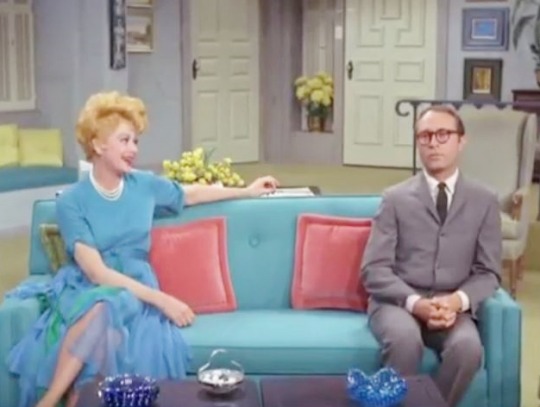
For
her blind date, Lucy wears a blue and green chiffon dress that
perfectly matches her apartment. She also wears a blue satin coat
that gets a few murmers of appreciation from the audience. Mary Jane
told Lucy not to “dress to kill” for the date. Lucy replies that
she’ll just dress to “wound him a little.” Lucille Ball spends
the entire episode dressed in blue, a color that favored her. This
may be a reaction to the fact that CBS is now airing the series in
color.
Handing
the patrons tambourines, the headwaiter says “You can bang alone
with Mitchapopolis.” This is a pun on “Sing Along With
Mitch” (1961-1964), a very successful music TV show hosted by
bandleader Mitch Miller. He was previously mentioned in “Lucy Puts
Up a TV Antenna” (S1;E9).
After
Howard tweaks Lucy cheek relentlessly, she calls him “Zorba the
Tweak,” a pun on the title of the 1964 Oscar-winning film Zorba
the Greek starring Anthony Quinn.
For
the Greek folk dance where the men dance together, all the other
dancers remove their suit coats except Howard and Jim.Callback!

The
sequence where love-crazed Howard chases Lucy around the dance floor
is vaguely reminiscent of when a jealous Lucy Ricardo was pursued
through Ricky’s African dance number in “Cuban Pals” (ILL
S1;E28).Blooper
Alert!Not
unlike her kitchen in Danfield, the layout of Lucy’s Hollywood
kitchen will change from episode to episode, depending on the plot
needs.
“Lucy and the Golden Greek” rates 3 Paper Hearts out of 5

-
Lucy at Marineland
S4;E1
~ September 13, 1965

Synopsis
Lucy
moves to California and enrolls Jerry in Military School. When she
discovers the students are about to go on a field trip to Marineland
for Jimmy Piersall day, Lucy and Mr. Mooney take Jerry along, too.
Jerry’s autographed ball rolls into a pool and Lucy must swim with
dolphins to retrieve it!Regular
CastLucille
Ball (Lucy Carmichael), Gale Gordon (Theodore J. Mooney)Mary
Jane Croft (Mary Jane Lewis) joins the show as a regular cast member
this season, but she does not appear in this episode.Guest
Cast
Harvey
Korman
(Major Grayson) previously
played stockbroker Mr. Phillips in “Lucy the Stockholder”
(S3;E25) and Mr. Slater, the Camp Director in “Lucy,
the Camp Cook” (S3;E6).
Korman is best known as a cast member of “The Carol Burnett Show”
(1967-1977), four episodes of which featured Lucille Ball. He will
make two more appearances on “The Lucy Show.” In 1977 he had his
own show on ABC which lasted just one season. At the time of this
episode he was a regular on “The Danny Kaye Show” (1963-67) which
aired Friday nights on CBS.
Jimmy
Piersall (Himself)
was a professional baseball player. At the time, he was with the Los
Angeles Angels. Piersall
fought a well-publicized battle with bipolar
disorder
that
became the subject of the 1955 book and 1957 film Fear
Strikes Out.
He retired from the game in 1967.
Jimmy
Garrett
(Jerry Carmichael) was part of the original regular cast of “The
Lucy Show” having appeared in 54 episodes. He will make just one
more appearance on the series.
Robert
S. Carson
(Mr. Potter) was
a busy Canadian-born character actor making the third of his six
appearances on the series. He also made five appearances on “Here’s
Lucy.”
Ted
Eccles
(Harold) previously played Mr. Mooney’s son Arnold in “Lucy’s
Contact Lenses” (S3;E10). He began
his show business career at the age of 4 and was 9 years old when he
first appeared on “The Lucy Show.” He will make one more
appearance on the series. His last screen appearance was in 1977 and
is now producing for television.The
military school student shows Lucy and Jerry into Major Grayson’s
office. He is referred to simply as Corporal.
George
Barrows
(Bruiser) played
a gorilla in his very first screen credit, Tarzan
and His Mate (1934).
He donned a gorilla suit 18 more times from 1954 to 1978. His final
simian character was on “The Incredible Hulk.” This is his second
appearance on “The Lucy Show” but his first out of the ape suit.The
character is sitting in the Marineland grandstands with his
girlfriend. He is not called by name.
Larry
Clark
was Marineland’s animal trainer. This is his only screen credit.
Richard
Williams
was Marineland’s announcer.Some
of the spectators at Marineland are played by:
- Lucie
Arnaz is
the real-life 14 year-old daughter of Lucille Ball and Desi Arnaz.
She was born in 1951 just before the premiere of “I Love Lucy.”
Lucie played Chris’s friend Cynthia in several earlier episodes of
the series but she made her first (uncredited) appearance in “Lucy
is a Referee” (S1;E3)
as
one of the spectators at the football game. Lucie also appeared with
her mother and brother Desi Jr. on “Here’s Lucy.”
- Desi
Arnaz Jr. is
the real-life 12 year-old son of Lucille Ball. His birth was worked
into the plot of “I Love Lucy,” although Desi Jr. never played
the role of Little Ricky Ricardo. His first series appearance was as
one of the pee-wee football players in “Lucy
is a Referee (S1;E3)
although
he played Jerry’s friend Billy
Simmons in four episodes. He later appeared with
his mother and sister on “Here’s Lucy.”
- Hans
Moebus was
a German-born actor who appeared as an uncredited background
performer in hundreds of movies and TV shows, including the Lucille
Ball films DuBarry
Was a Lady
(1943),
A
Woman of Distinction
(1950)
and The
Facts of Life (1960).
He was seen on the dock during the “I Love Lucy” episode “Bon
Voyage” (ILL S5;E13).
Moebus was previously part of the riverboat chorus in “Lucy Meets
Arthur Godfrey” (S3;E23).
- Monty
O’Grady was
first seen with Lucille Ball in The
Long, Long Trailer (1953)
and played a passenger on the S.S. Constitution in “Second
Honeymoon” (ILL S5;E14).
He was a traveler at the airport when “The
Ricardos Go to Japan”
(1959).
He made a dozen appearances on the series and a half dozen more on
“Here’s Lucy.”

For
season four the series has a new ‘kaleidoscope’ opening credit
sequence designed
by Howard
Anderson, Jr.,
who was also responsible for the ‘heart’ opening of
“I
Love Lucy.”
As in previous seasons, the
theme music was composed by Wilbur
Hatch,
who was the show’s musical director, a role he also performed on “I
Love Lucy.”
Maury
Thompson takes over as director from Jack Donohue. He will be
director of record for all of seasons four and five. Donohue returns
to direct all but the first episode of season six.
This
is the first episode of “The Lucy Show” to be broadcast by CBS in
color. Seasons two and three were filmed in color, but aired in
black and white.
Lucy
explains that she and Jerry have moved to Southern California to be
closer to Chris, who is attending college there. Vivian Bagley
re-married to a man named Vern Bunson and remained in Danfield. Lucy
says that Sherman is enjoying having a new dad. Mr. Mooney has also
made the move West. He was given a choice between the state of
California and the state of unemployment and chose the former.
Lucy enrolls Jerry at the Los Angeles Military Academy. Although an institution by this name existed at the turn of the 20th century, the name was probably chosen to help reinforce the show’s new location. The last time Jerry was enrolled in military school on the East Coast it was called the Longridge Academy, although students and uniforms were provided by the real-life Page Military Academy in Los Angeles.

Lucy’s trust fund has been
transferred to the Westland Bank in Hollywood, coincidentally the
same bank where Mr. Mooney has been reassigned.
Marineland
on the Pacific was
a public oceanarium
and
tourist
attraction
located
on then Palos
Verdes Peninsula
in
Los
Angeles County,
California.
When
it opened in 1954, one year before Disneyland,
Marineland was the world’s largest oceanarium.
In
1987 it was purchased by the owners of Sea
World, who moved
the popular killer
whales
and
other animals to their San Diego facility and abruptly closed
Marineland.
CBS had previously arranged location shoots at Marineland for “The
Munsters” and “The Beverley Hillbillies.” Coincidentally, Sid
Gould, Gary Morton’s cousin and a bit player in 45 episodes of “The
Lucy Show,” played the Munsters’ Marineland tour guide.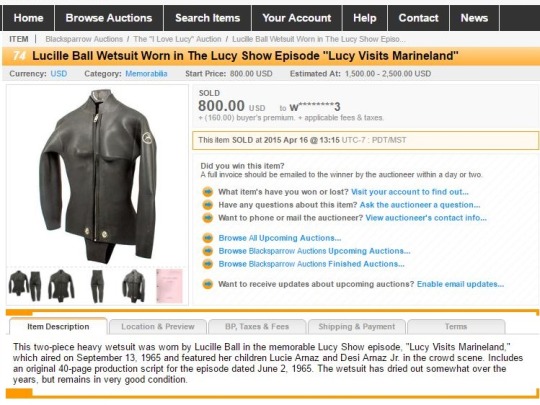
This
is the first time the cast of “The Lucy Show” has left the studio
for location shooting. The weather was unusually cold during the
shoot. For the scenes in the water tank, Lucille Ball wore a wet suit
under her clothes. The wet suit recently came up for auction with a
top bid of $800.
The
Marineland show begins with Bubbles the whale unfurling the American
flag. Bubbles
was the first pilot whale every captured for display.
Lucy
says before marrying and settling down she was a secretary, a
cashier, a telephone operator, a saleslady, a waitress and a
librarian – all during her two week stay in New York City.
Mr.
Mooney agrees to leave work and drive Lucy and Jerry to Marineland in
his light colored Ford Falcon convertible. Mr. Mooney must like Ford
Falcons because in “Lucy, the Camp Cook” (S3;E6) he drives a red
Ford Falcon convertible.
Jimmy
Piersall says about Lucy: “And
they call me a kook!”
This is a brave reference to Piersall’s public battle with bi-polar
disorder.
Lucy
once again does her seal impersonation – this time in the company
of real seals! She previously did it in “Lucy and the Countess
Lose Weight” (S3;E21) but originated it in 1951’s
“The
Audition” (ILL S1;E6).
Lucy
Carmichael adds seals and dolphins to the every-growing list of live
animals she has appeared with on the series.
TV
Guide devoted their August 28, 1965 (vol.
13, no. 35, issue #648)
cover to this episode. In a four page article, Ball
told
TV Guide
she
was scared during filming due to the size of the animals. She was
assured that the dolphins were harmless but was warned the sea lion
had bitten attendants twice.
The cover identifies the dolphin behind Lucy as Splash. This was just
one of Lucille Ball’s 39 TV Guide covers.
In
an appearance on the short-lived “Steve
Lawrence Show” (1965),
which aired after Lucy on Monday nights, Lucille Ball showed outtakes
from this episode. In once scene, she’s accidentally tossed out of
the raft being towed by the seal. She says the closing 30 second shot
where she cries while the porpoises do tricks took 45 minutes to
shoot because the animals were more interested in her than in doing
their stunts.Callback!
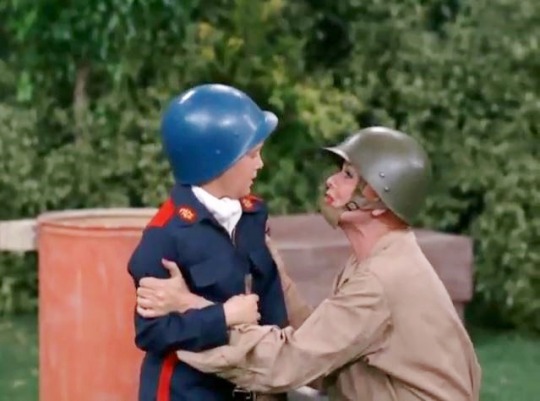
Lucy
previously enrolled Jerry in a Military Academy in “Lucy and the
Military Academy” (S2;E10) but withdrew him almost immediately
because she missed him so much.
While
“Deep Sea Fishing” (ILL S6;E7) in Florida in 1956, Lucy Ricardo
says that Ricky and Fred are at the Miami Seaquariam taking publicity
photos, although no scenes were shot there. The Miami Seaquarium had
only just opened, two years after Marineland in California.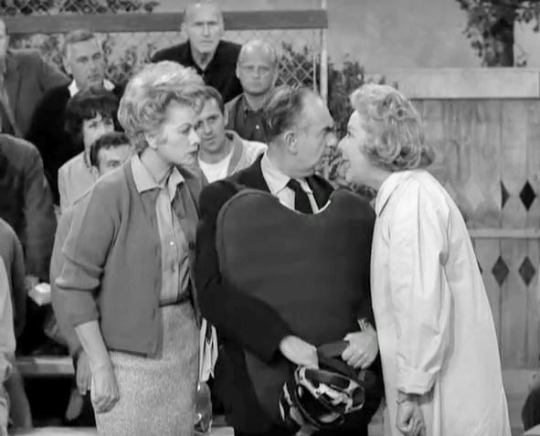
Lucy
brags about Jerry’s little league baseball experience, criticizing
some “bad umpiring.” This is a direct callback to “Lucy and
the Little League” (S1;E28).Blooper
Alert!
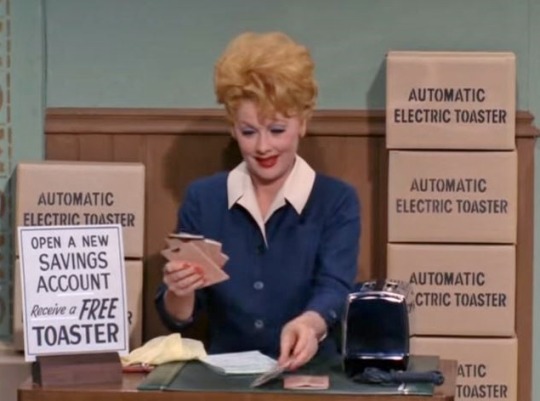
Mr.
Mooney says that banks in California give gifts to customers opening
accounts. He forgets that they also did that in Danfield, when Lucy
gave toasters to those signing up for new accounts in “Lucy Takes a
Job at the Bank” (S2;E21).

“Lucy at Marineland” rates 5 Paper Hearts out of 5
 1965, Bubbles, CBS, Desi Arnaz Jr., Dolphins, Fear Strikes Out, Gale Gordon, George Barrows, Hans Moebus, Harvey Korman, Hollywood, Jimmy Garrett, Jimmy Piersall, Los Angeles, Los Angeles Angels, Lucie Arnaz, Lucille Ball, Lucy at Marineland, Marineland, Marineland of the Pacific, Military Academy, Mont O’Grady, Robert S. Carson, Seals, Splash, Ted Eccles, The Lucy Show, tv, TV Guide, Whales
 - Lucie
-
A Tribute to Danfield

From
1962 to 1965 Lucille Carmichael, Vivian Bagley and their children
lived in the fictional suburb of Danfield, New York. Lucy and
Viv say they’ve been living together for five years, coming together
like a female odd couple after Lucy was widowed and Vivian and her
husband Ralph divorced. The town was also home to banker Theodore J. Mooney
and his family, who appeared on the scene in late 1963 as the
custodian of Lucy’s trust fund. They all lived in
Danfield for 84 episodes over three seasons, although when Lucy finds
a “Vote for Dewey” button under the sofa, it indicates that she could have lived there since at least 1948. All of
the locations listed below were mentioned or depicted on the series.
Those that got camera time (or at least signage) are designated with a star
(*). Locations that took the characters outside of Danfield (ie;
Milroy University, Lucy’s alma mater) were omitted. See if you can
remember the episodes they were featured in!
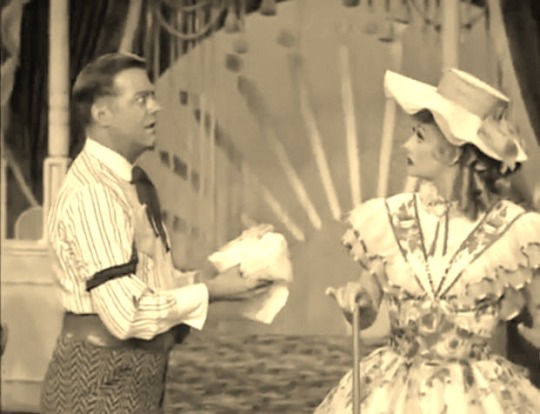
Founders:
Daniel & Lucybelle Field* (1852-1911)Senator:
John R. Dodds (D)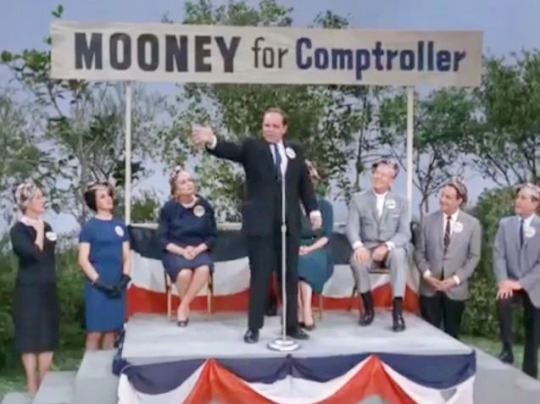
Outlying
DestinationsRidgebury, Brewster*, New Rochelle, Greenview*,
Sandy Cove*, Stone Mountain, Paradise
Grove*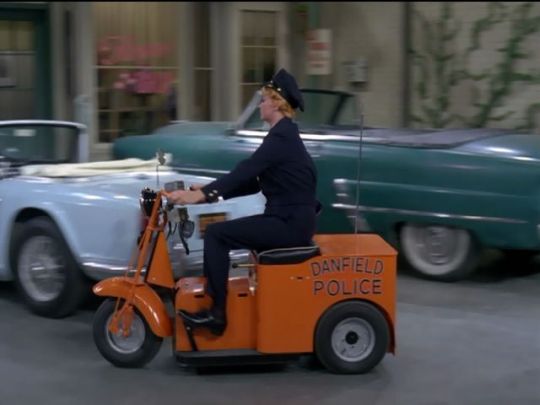
Government
& Education- Danfield
Police Department* - Danfield
Volunteer Women’s Fire Department* - Danfield
US Post Office* - Danfield
Welcome Wagon (Contact V. Bagley) - Danfield
Chamber of Commerce - Danfield
High School – Home of the Bears* - Danfield
Adult School* - Danfield
PTA - Dr.
Gitterman’s Vocal and Dramatic Studio
Civic
- Danfield
Embroidery Club - Danfield
Literary Society - Danfield
Women’s Club - Danfield
Gardening Society - Danfield
Art Society - Danfield
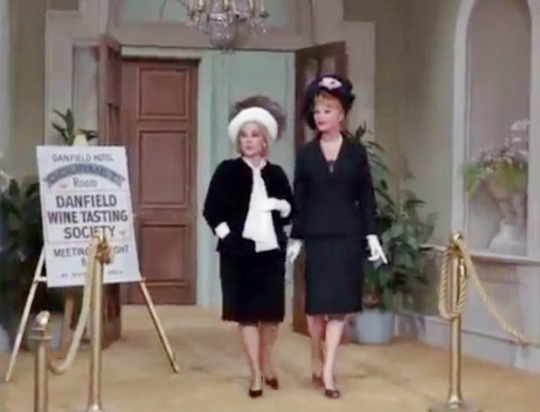
Wine Tasting Society* - Cub
Scout Pack 57* - Starlighters
Charity - Hospital
Helpers*

Lodging
- Elm
Tree Inn* - Danfield
Hotel*
Dining
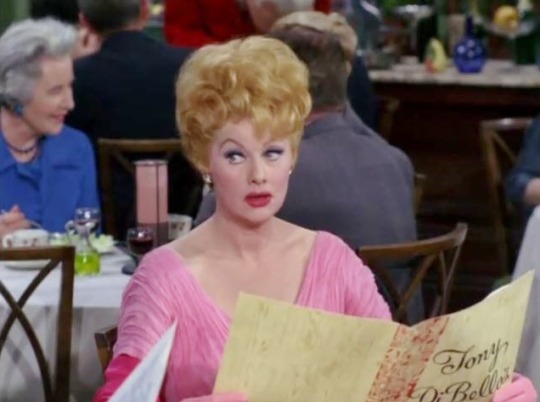
- Tony
DiBello’s Italian Restaurant* - Cafe
Tambourine - The
Pink Pheasant Restaurant - Can-Can-a-Go-Go
- Four
Corners Cafe (CLOSED)* - The
Colonial Inn - The
Gourmet Room at the Danfield Hotel* - The White House Cafeteria
Entertainment
& Culture- The
Ritz Cinema - The
Bijou Theatre - Danfield
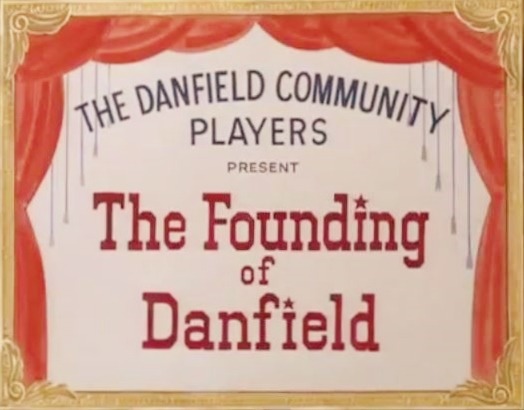
Community Players* - Iris
Theatre* - Ladies Barbershop Quartet*
- Carnival (Summer Only)*
Industry
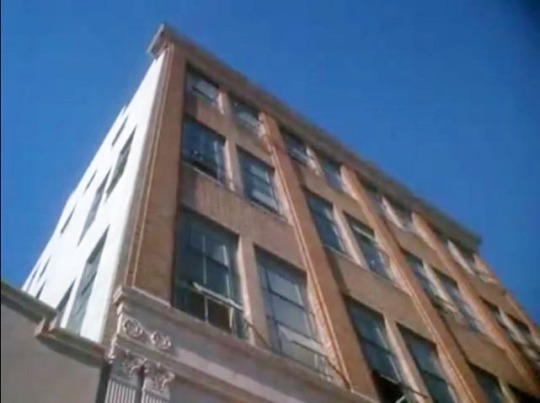
- Curry Office Building (Rooftop Billboard Available)*
- The Danfield Glove Factory
- Handy
Dandy Vacuum Cleaner Sales* - Acme
Employment Agency
Home
Repair- Cresant’s
Hardware* - Peterson
Home Contractors - Paisley
the Plumber LLC - Harry
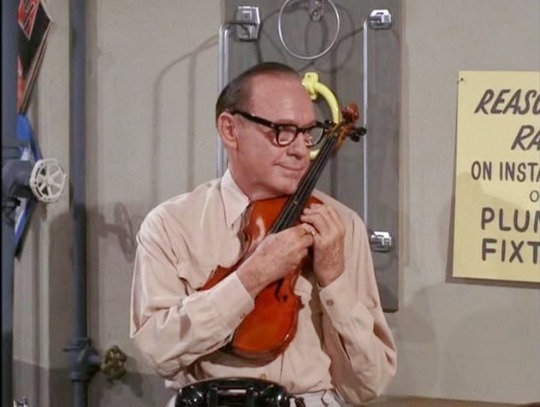
Tuttle Plumbing & Violin Lessons*
Cleaners
- Holly
Cleaners - Oscar’s
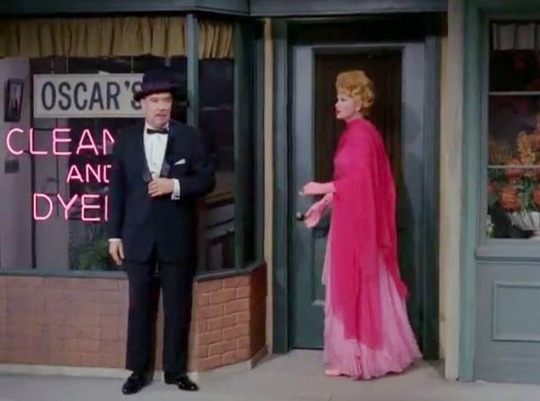
Cleaning and Dying*
Food
Retailers- Friehoffer’s
Bakery - Trumbull’s
Bakery - Barney’s
Catering Service (Delivery) - Old
Man Armstrong’s Candy Shops - Grandma’s
Dandy Candy Shop (Under New Ownership)* - Wilbur’s
Ice Cream Parlor* - Ernie’s
Butcher Shop* - Krause
Butchers - Oscar
the Butcher - Iriving’s
Meat Market
Fashion
& Mercantile- Bigelow’s
Department Store* - Marshall’s
Bedding - Flo’s
Beauty Shop & Nail Salon - Dr.
Fleischer’s Beauty Salon* - Dede’s
Dress Shop - Madame
Fifi’s Fine Furs* - McCullough’s
Gift Shop*
Auto
& Transportation- Danfield
Cab Company* - Friendly
Al Used Car Dealer* - Roy
Long’s Truck Rental* - Turner’s
Coal Delivery - Danfield
Filling Station - Danfield
Train Depot* - Danfield
Lake Marina

Health
& Medical- Doctor
Parker, GP - Doctor
Warren, DDS - Doctor
Jacoby, Optometrist* - Doctor
Kaufman, Glasses & Contact Lenses - Danfield
General Hospital* - Children’s
Hospital - Lazy
Days Health Farm* - Hoffstedder’s
Drugstore (at Oak Street and Long Ridge Road)

Fitness
and Recreation- Riverview
Country Club Golf Course* - Sheldon’s
Judo and Karate Dojo* - Danfield
Little League Tigers* - Oscar’s Tigers Bowling League
- Danfield
Pee Wee Football League* - Danfield
Women’s Softball Team* - YMCA*
Misc.
Retail- Herb’s
TV Repair* - Rudy’s
Record Store* - Harold’s
Stationery and Art Store* - Meryl’s
Flower Shop* - Danfield
Sporting Goods* - Sam’s
Pet Shop*
Legal
- Donohue
Pomerantz Lombardy & McClay - Danfield
Attorney Service *
Financial
- The
Danfield Bank* - Phillips
Stockbrokers*
Media
- The Danfield
Tribune* - Danfield
TV News* - “The
Talent Discoverers Show”* - WLDJ
Radio*
For
Sale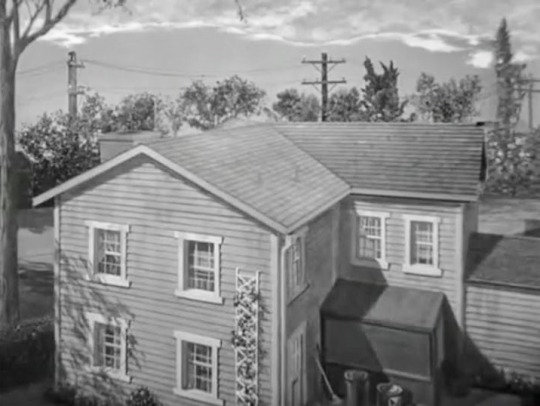
- 3
Bedroom Split Level Home at 123 Post Road* (extensively remodeled in November 1963) – Contact Lucille
Carmichael
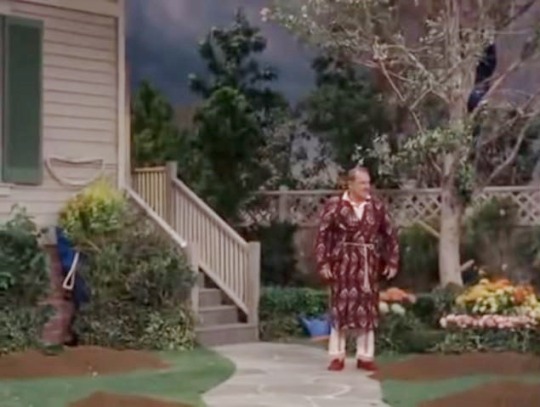
- 4
Bedroom with Large Yard at 429 Elm Street* – Contact Theodore J.
Mooney
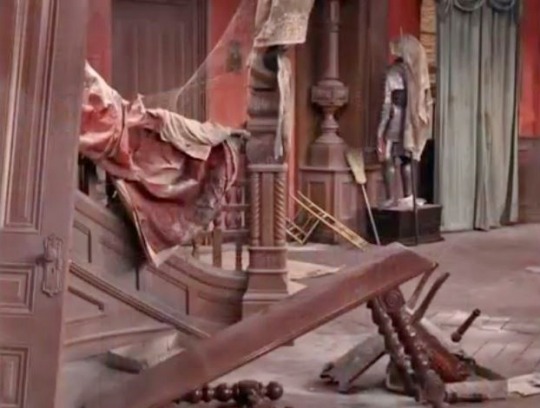
- The
Bellingham Estate* – Contact the Danfield Bank
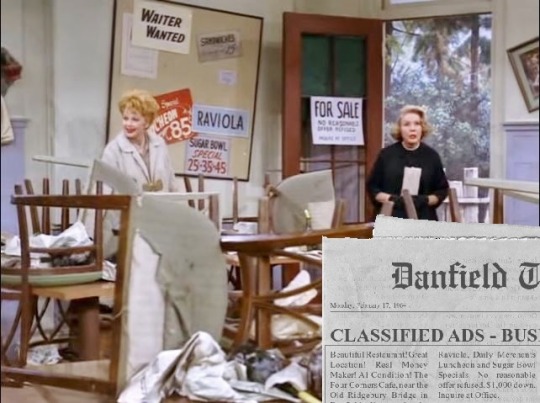
- Four
Corners Cafe* – Contact Vivian Bagley
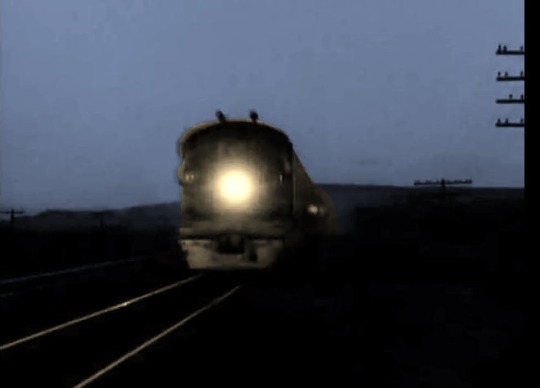
Farewell Danfield! Next stop, California!
- Danfield
-
Lucy the Disc Jockey
S3;E26
~ April 12, 1965
Synopsis
Lucy
wins a mystery sound contest on the radio, winning $25 and the chance
to be disc jockey for a day. Naturally, things don’t go smoothly
when she takes over the studio.Regular
Cast
Lucille
Ball (Lucy Carmichael), Vivian Vance (Vivian Bagley), Gale Gordon
(Theodore J. Mooney)Guest
Cast
Pat
Harrington
(Gordon Felson) is probably best remembered as Schneider on the 1975
sitcom “One Day at a Time.” Between 1959 and 1960 he played the
recurring role of Pat Hannigan in “Make Room for Daddy” also shot
at Desilu. He
died on January 6, 2016
at age 86.His nickname is “Fair Felson”.
Variations
on the title of this episode include “Lucy and the Disc Jockey”
and “Lucy is a Disc Jockey.”This
episode was not intended to be the season finale, “Lucy the
Stockholder” (S3;E25) was. It was shot in late 1964 and
was supposed to air on March 15, 1965 but it kept getting pre-empted
so it ended up being the season three finale.
This episode employs dozens of sound effects, many more than a usual “Lucy Show” episode. Sound Engineer Eldon E. Campbell and Glen Glen Sound Company deserve credit for their creativity.
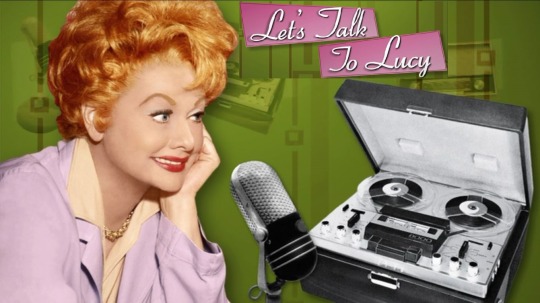
From September 1964 to August 1965 (from shoot date to air date) Lucille Ball had her own daily radio show “Let’s Talk To Lucy” on CBS Radio. Although she did not play music, she talked to celebrities as herself, not in character, about a variety of subjects.

Viv
stayed up watching “The Late Late Show” on TV. They were airing
the James Cagney movie where he push the grapefruit into his
girlfriend’s face. Viv is referring to The Public Enemy
(1931). The film featured Sam McDaniel (Hattie’s brother) who was
the first African American face on “I Love Lucy” in “The Great
Train Robbery” (ILL S5;E5).
After
playing the mystery sound, Felson announces the return to “the
swing sounds of Jan Garber.” Jan Garber (1894-1977) was
born in Morristown, New Jersey, and became a bandleader known for ‘sweet’ and ‘swing’ jazz. His nickname was “The Idol of
the Air Lanes.”
There couldn’t be a show about radio without Lucy’s trusty red transistor radio. It turns up in every season of “The Lucy Show” – even when Lucy moves to California.

Listening
to the hourglass (egg timer) a sleepy Viv makes a joke about hearing
Lawrence of Arabia calling
for help. Lawrence
of Arabia
is
a 1962 epic
historical film based
on the life of T.E. Lawrence and
taking place mostly in the
desert.
It won seven Oscars including Best Picture.
Lucy
once again has trouble with the kitchen sink garbage disposal unit
just as she did in “Lucy, the Coin Collector” (S3;E13, right). Before
Lucy turns it on to hear what sound it makes, Viv asks her if the
plumber fixed it. These two episodes would have been aired closer
together had “Lucy the Disc Jockey” not been pre-empted so often.
Mr.
Mooney says that the ‘Name the Sound’ contest is the silliest thing
since Mrs. Hush. The Mrs. Hush contest was a feature of “Truth or Consequences” radio show in 1947. The quiz show had
already sponsored a Mr. Hush contest, where listeners had to
identify the voice of a person of note from whispered clues. After
more than two and a half months of guessing, Mrs. Hush turned out to
be Clara Bow. The winner received a new car,
private plane, home appliances, a mink coat, diamond ring and other
assorted prizes totaling $23,000 in value.
When
Mr. Mooney hears the cacophony of Lucy and Viv trying out different
sounds on various household objects, he calls it a “Housewives
Hootenanny.” “Hootenanny” was a television variety show
featuring folk music acts that aired on ABC from 1963 to 1964.
Lucy’s daughter Chris mentioned the show in “Chris Goes Steady”
(S2;E16) aired in January 1964.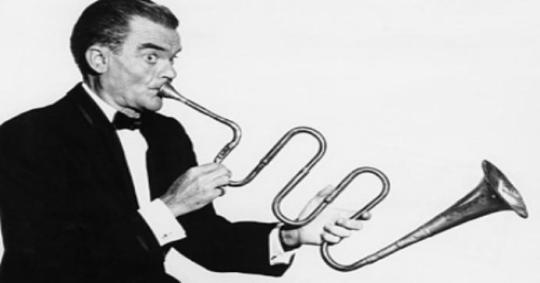
Mr.
Mooney compares the noise in Mrs. Carmichael’s kitchen to a Spike
Jones rehearsal. Lindley
Armstrong ‘Spike’ Jones
(1911–65) was an American musician and bandleader specializing in
satirical arrangements of popular songs and classical music. Songs
receiving the Jones treatment were punctuated with gunshots,
whistles, cowbells and outlandish and comedic vocals. Jones was born
four months after Lucille Ball and died two weeks after this episode
finally aired.
Angry
that Mr. Mooney has also entered (and won) the contest after he said
it was silly, Lucy calls him a “banking Benedict Arnold.” Benedict Arnold (1741-1801) was an American soldier in the
revolutionary war who defected to fight for the British. His name
has become synonymous with a traitor ever since.Lucy asks why Mrs. Mooney wasn’t the one defrosting the fridge. Mr. Mooney replies that she was out chopping wood, contributing to the series’ verbal depiction of Mrs. (Irma) Mooney as a sturdy woman.

Mr.
Mooney deems any voice contest between him and Lucy like comparing
Walter Cronkite to Donald Duck. Walter Cronkite (1916-2009)
was the voice and face of CBS News for nearly fifty years. He
reported on some of the most dramatic events of the 20th century, such as the Kennedy Assassination, the Vietnam War, and the
space program. He was considered to be “the most trusted man in
America.” Donald Duck is one of Walt Disney’s most enduring
cartoon creations. He first appeared in 1934 and his squawking raspy
voice was provided by Clarence Nash.For
the contest, Mr. Mooney is prepared to recite the Gettysburg
Address, Hamlet’s Soliloquy, and Edgar Allen Poe’s “The Raven.”
Lucy is prepared to recite Twinkle Twinkle Little Star, Little Bo
Peep, and Tubby the Tuba.
Instead,
Mr. Felson asks them to do traditional tongue-twisters. They first
are asked to say “Big Black Rubber Baby Buggy Bumpers” and then
(after Mr. Mooney loses to Lucy and threatens to examine the radio
station’s mortgage) “Red Leather Yellow Leather,” each three
times, fast and clear. Lucy wins again and receives applause from
the studio audience for her performance.The
call letters of the radio station are WLDJ representing the first
letter of each word in the episode’s title: “Lucy the Disc Jockey.”
WLDJ
is a one-man radio station with one sponsor: Spangle Soda Pop. Gordon
Felson says he hasn’t had a day off in nine years. Although the name Spangle Soda Pop is fictional, there was a chew-able candy in England names Spangles.
This is one of the rare episodes in which a character actually speaks the title of the episode in the dialogue!
While
reading a sports report on the air, Lucy announces that Maury
Thompson is at bat. Maury was the camera coordinator for this
episode as well as on “I Love Lucy.” In “Drafted” (ILL
S1;E11) Ricky receives a letter from the War Department signed by
Maurice A. Thompson.
When
Lucy tries to see the title of the song on the spinning turntable and
gets dizzy, she says “No wonder. It’s a Dean Martin album.”
This is a joke about Martin’s drinking. She also made a joke about
Dean Martin and his proclivity for alcohol in “Lucy the
Stockbroker” (S3;E25). A year later, Lucy Carmichael dates Dean Martin. His stuntman is named Eddie Feldman, which sounds similar to Eddie Felson, the radio host played by Pat Harrington.Lucy gets a phone request to play a song dedication to:
Hilda and Babs and Jan and Ella and Molly and Dotty and Roselle and Mimi (like Eisenhower) and Mildred and Doris and Nora and Emma and Maryann and Evelyn and Sadie and Emma (a redhead) and SueEllen (one name) and Gertrude and Estelle and Joan and Connie and Sylvia.

The man wants her to play “You’re
the One for Me.” The song was sung by Freddie Rose in 1927, so it is no surprise Lucy can’t find the record. Instead, she plays “Bing
Crosby Sings Stephen Foster.” The Crosby album was released in 1946.For the ‘record’ (no pun intended), President Johnson’s wife was named Mamie, not Mimi.
When Lucy puts the needle down on the record, a voice sounding very much like Crosby’s sings to the tune of “Camptown Races”:
“Bum bum bum bum bum bum bum
Stephen
Foster.”And then suddenly stops!

With
the studio covered in the white foam from the fire extinguisher, Lucy
sings a bit of “White Christmas” as the episode (and season
three) fade out. “White
Christmas”
is a 1942
Irving
Berlin song.The Bing Crosby version is the best-selling single of all time. In
1965 The Supremes recorded it for their Christmas album.
SIGNING OFF!
- This is the last episode featuring Vivian Vance as a
regular co-star. She will return for guest-star appearances in 3
future episodes.
- This
is the last new episode to be broadcast by CBS in black and white.
When season four begins, viewers will finally see Lucy’s hair in
color!
- This
is the last time Lucy and Mr. Mooney will live in Danfield, NY. The
pair relocate to California at the start of season four.
Some
insiders say that Vivian Vance had decided to leave the show unless
she got more creative control. Ball’s advisers tell her Vance wanted
a partnership, which wasn’t true. It was decided not to meet Vivian’s
demands, and Vance leaves the series. Lucille felt hurt and betrayed.
This is a decision Ball regrets for the rest of her life. Without
Vivian, Lucille toys with the idea of ending the series. Vivian
wanted to have the stories revolve more around her if she was going
to keep commuting to the set from Connecticut. She was exhausted and
her marriage to John Dodds was deteriorating because he was bisexual
and seeing other men when she wasn’t around. Vivian also felt that
Lucille let her down.
The closing scene for this episode (Lucy crying amid the radio station destruction) was featured in the season four kaleidoscope opening credit sequence.

“The
Lucy Show” was replaced for the summer (June-September) by
“Vacation Playhouse,” an anthology series of unsold TV pilots.Callbacks!


Lucy
Ricardo was on the radio twice, both times on a quiz show hosted by
Freddy Fillmore (Frank Nelson): “The
Quiz Show” (ILL S1;E5) and “Lucy Gets Ricky on the Radio” (ILL
S1;E32).
Both of those episodes featured an illuminated “ON THE AIR” sign, just like “Lucy the Disc Jockey.”

When Lucy flips an unlabeled switch on the console, it turns on a fan that blows away all her note cards. In “Redecorating the Mertzes Apartment” (ILL S3;E8) a fan mistakenly activated blows feathers from the recently disemboweled armchair all over the room, ruining all their hard work.
Blooper
Alerts!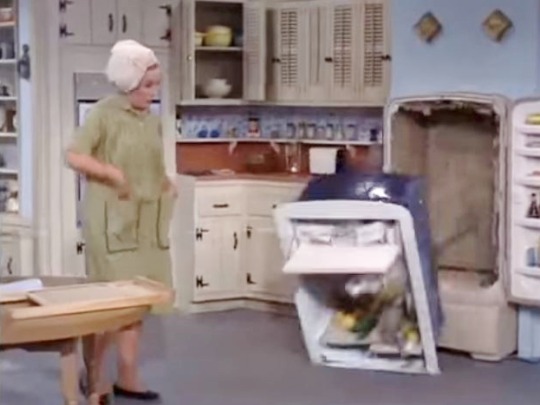
Ice Box Inconsistency! For
this episode, Lucy’s modern refrigerator has been replaced by an
older model in order to facilitate the stunt of pulling the guts out
of it. The refrigerator has also moved locations to make the gag
physically possible.
Sitcom Logic Alert! Why would there be a switch for a free-standing oscillating fan on the console of a radio station control board?
Laugh Track! When the shelf of records comes crashing to the floor, Gary Morton’s loud guffaw can be heard on the soundtrack.
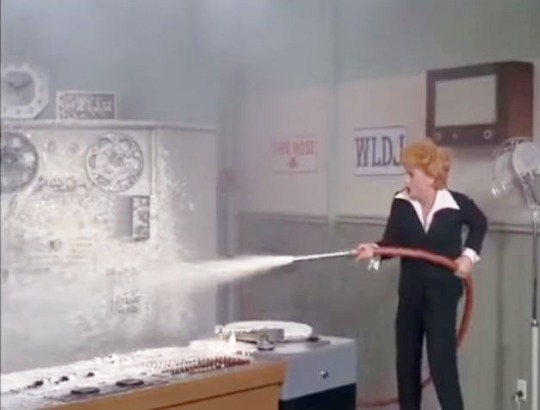
Hoser! Instead of plain water, the fire hose emits soapy suds, likely to imitate the foam that comes from a hand-held extinguisher. A fire hose would only produce plain water, not foam.
Name Game! When taking a song request, a caller gives a long list of women’s names. Repeating them as she jots them down, Lucy says the name “Emma” twice and adds “That the same Emma you mentioned? Oh, a redhead.” This may be a scripted line, but it sounds very much like an ad lib by Ball to cover herself after repeating the name.

“Lucy the Disc Jockey” rates 3 Paper Hearts out of 5
 1965, Benedict Arnold, Bing Crosby, CBS, Dean Martin, Donald Duck, Gale Gordon, Hootenanny, Jan Garber, Jimmy Cagney, Lawrence of Arabia, Lucille Ball, Lucy the Disc Jockey, Maury Thompson, Mrs. Hush, mystery sound, Pat Harrington, Radio Station, refrigerator, Spike Jones, Stephen Foster, The Lucy Show, The Public Enemy, Truth or Consequences, tv, Vivian Vance, Walter Cronkite, White Christmas
 - This is the last episode featuring Vivian Vance as a
-
Lucy the Stockholder
S3;E25~
March 29, 1965

Synopsis
When
Lucy gets a small refund on her taxes, she intends to become a
stockholder in Mr. Mooney’s bank. As a new ‘owner’ she helps to get
the account of a wealthy eccentric doctor but mistakenly becomes
involved in one of his hypnotic regression experiments.Regular
Cast
Lucille
Ball (Lucy Carmichael), Vivian Vance (Vivian Bagley), Gale Gordon
(Theodore J. Mooney)Guest
Cast
Harvey
Korman (Mr.
Phillips, Stockbroker) previously played Mr. Slater, the Camp
Director in “Lucy, the Camp Cook” (S3;E6). Korman is
best known as a cast member of “The Carol Burnett Show”
(1967-77), four episodes of which featured Lucille Ball. He will
make two more appearances on “The Lucy Show.” In 1977 he had his
own show on ABC which lasted just one season. At the time of this
episode he was a regular on “The Danny Kaye Show” (1963-67) which
aired Friday nights on CBS. Lucille Ball guest starred on the episode
aired on Saturday, October 24, 1964, the night before her show, which
generally aired on Mondays.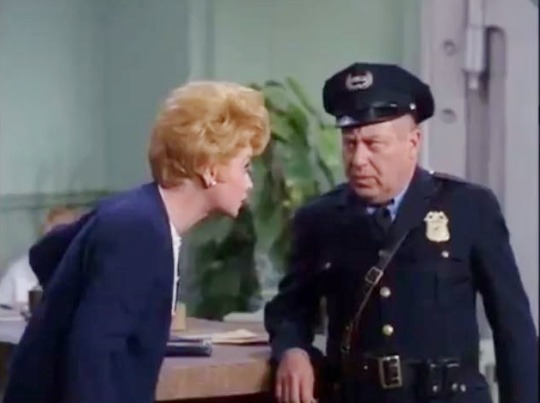
Joseph
Mell (George,
Bank Guard) previously
played Bailiffs in “Lucy the Meter Maid” (S3;E7) and “Lucy
is Her Own Lawyer” (S2;E23).
His first role on the series was
as
a Butcher in “Together
for Christmas” (S1;E13).
Mell also appeared in a 1969 episode of “Here’s Lucy.” In 1964
he appeared in the TV special “Mr. and Mrs.” (aka “The Lucille
Ball Comedy Hour”), which featured many of the Desilu regulars and
was directed by Jack Donohue, who also directed this episode. In
1971, he was a Taxi Driver on “Lucy and the Lecher,” a cross-over
episode of Danny Thomas’s “Make Room for Granddaddy” in which
Lucille Ball played Lucy Carter, her character from “Here’s
Lucy.”
Elliott
Reid
(Dr. Oscar Kurtzman) had previously appeared on the series in “Lucy
Visits the White House” (S1;E25) and had
played Edward Warren, a parody of Edward R. Murrow, in “The
Ricardos Are Interviewed” (ILL S5;E7).
He also made two appearances on “Here’s Lucy.”Dr.
Kurtzman represents a million dollar research foundation.
Lynne
Allen (Miss
Thompson, Dr. Kurtzman’s Assistant) had only seven screen credits to
her name, this being her last.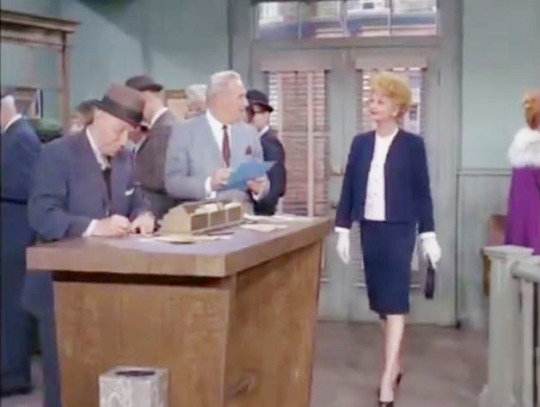
James
Gonzales (Bank
Teller) was
a popular Hollywood extra who first acted with Lucille Ball in the
1953 film The
Long, Long Trailer.
He was previously seen on the series as Stan Williams in “Lucy
Digs Up a Date” (S1;E2).
He was seen in more than 20 episodes of “The Lucy Show” and 3
episodes of “Here’s Lucy.”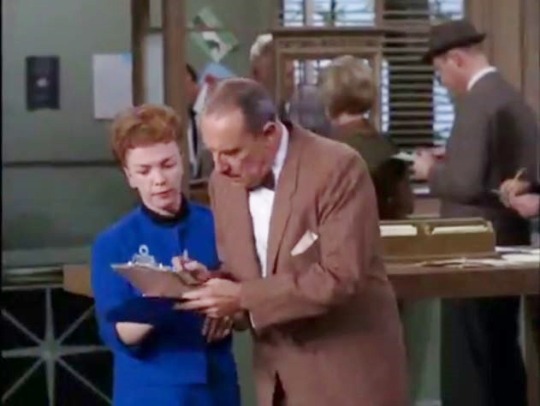
Betty
Lou Barto (Bank
Teller) makes her one and only appearance on screen, according to
IMDB.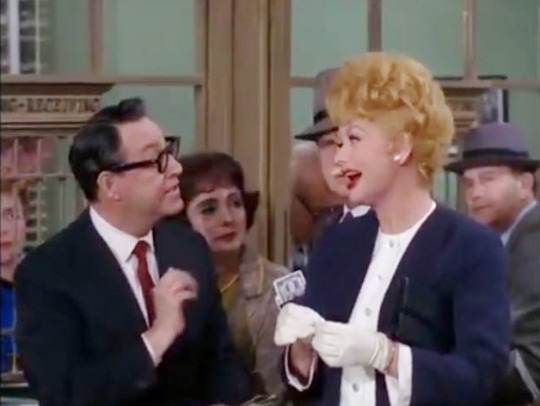
Sid
Gould (Mr.
Sommers, Bank Customer) made
more than 45 appearances on “The Lucy Show,” all as background
characters. He also did 40 episodes of “Here’s Lucy.” Gould
(born Sydney Greenfader) was Lucille Ball’s cousin by marriage to
Gary Morton. Gould was married to Vanda Barra, who also appeared on
“The Lucy Show” starting in 1967, as well as on “Here’s
Lucy.”
Carole
Cook
(Mrs. Valance, Bank Customer) makes her third appearance as Mrs.
Valance. She was
also seen as Lucy’s neighbor Thelma Green in four episodes. She was
a protege of Lucille Ball’s during the Desilu Playhouse years.
Although born as Mildred Cook, Ball suggested she take the name
Carole, in honor of Lucy’s great friend, Carole Lombard. Cook also
went on to appear in five episodes of “Here’s Lucy.”Hal Taggart (Mr. Williams, Bank Customer, uncredited) makes his fifth and final appearance on “The Lucy Show” after having been seen in the Lucille Ball film The Facts of Life (1960).
George DeNormand (Bank Customer, uncredited) had appeared in three films with Lucille Ball from 1937 to 1963. This is the just one of his many appearances on “The Lucy Show” and “Here’s Lucy.”
Hazel Pierce (Bank Customer, uncredited) was Lucille Ball’s camera and lighting stand-in throughout “I Love Lucy.” She also made frequent appearances on the show. Of her many on-camera appearances on “The Lucy Show” only once was she given a character name and credited, in “Lucy Plays Cleopatra” (S1;E1). She was also an uncredited extra in the film Forever Darling (1956).
Alberto Morin (Bank Customer, uncredited) was born in Puerto Rico, and appeared in some of Hollywood’s most cherished films: Gone with the Wind (1939), Casablanca (1943), and Key Largo (1948). He was Carlos, one of Ricky’s “Cuban Pals” (ILL S1;E28) and the Robert DuBois in “The French Revue” (ILL S3;E7). His many background appearances on “The Lucy Show” and “Here’s Lucy” were all uncredited.
Douglas
Deane (Radio
Announcer, voice over) was previously glimpsed as a hotel guest in “Lucy Goes
to Vegas” (S3;E17). Between 1945 and 1955 he starred in four
Broadway musicals, including the original cast of Guys
and Dolls.An
uncredited voice plays Mr. Phillips’ secretary Miss Rose. Other
background actors play additional customers and clerks at the bank.
This episode was intended to be the season 3 finale, but due to constant pre-emptions by the network, it turned out to be the second to last instead. It was filmed in color, but originally aired by CBS in black and white.

The episode opens with Lucy listening to an exercise program on her trusty transistor radio. The prop turns up on many other episodes and even makes the trip to California with Lucy!

Trying to do exercises while making breakfast, Lucy breaks a few eggs. Raw eggs were responsible for the longest laugh on “I Love Lucy” in “Lucy Does the Tango” (ILL S6;E20) as well as for comic effect in “Men Are Messy” (ILL S1;E8), “Ricky Thinks He’s Going Bald” (ILL S1;E34), “Ricky’s Hawaiian Vacation” (ILL S3;E22), “Lucy, the Camp Cook” (S3;E6), and “Lucy The Robot” (S4;E23).

Lucy
gets a letter from the Internal Revenue which turns out to be an
income tax refund of $38.23. That would be the equivalent (adjusting
for inflation) of more than $300 today. Lucy decides to invest it all in the stock market and pays a visit to a nervous broker (Harvey Korman). When he finally hears that she has just $38.23 he nearly has a nervous breakdown.LUCY: “Are you sure you feel alright, Mr. Philips?”
PHILLIPS: “Oh, fine. I haven’t felt this way since 1929.”Mr. Phillips is referring to the stock market crash of October 1929 that plunged the United States into the Great Depression.

After buying a single share of the Danfield Bank for $32, Lucy the stockholder pays the bank a visit. She warns the lackadaisical guard (Joe Mell) that she has a nine year-old nephew who is quicker on the draw than him. Lucy Carmichael only ever mentioned one sibling, Marge, who was seen in “Lucy’s Sister Pays a Visit” (S1;E15) in 1963. In that episode she eloped, and no child was ever mentioned – certainly none that could be 8 years old in 1965. Of course, power hungry Lucy may be fibbing to the Guard to scare him into keeping his job!

Lucy is so grateful for her refund that
she wants to send “Lyndon” a thank you note. To further extend
the joke, there is a large framed portrait of President Johnson over
Mr. Mooney’s desk. Lyndon Baines Johnson was the 36th President of the United States, assuming office from the Vice
Presidency after the assassination of John F. Kennedy. He was
re-elected in November 1964 by an overwhelming majority. Two weeks
earlier, “The Lucy Show” was pre-empted for his televised address
to Congress.We
learn that Mr. Bainbridge is Chairman of the Board of the Danfield
Bank.Viv unfavorably compares Mr. Mooney to her ex-husband (Ralph), although she does not use his name.

In return, Mr.
Mooney calls Lucy “The Lady Wolf of Wall Street” and Viv “Typhoid
Mary.” Real-life financier Bernard Baruch (1870-1965) was known as
“The Lone Wolf of Wall Street.” Mary Mallon (1869-1938)
was a cook known as “Typhoid Mary” because she was an
asymptomatic carrier of the typhoid virus. She is said to have
infected 22 people, three of whom died. Mr. Mooney’s analogy of Lucy
with Baruch is obvious given her new-found ownership in the bank, but
equating Viv with Mallon seems to indicate that she is not a welcome
person to have around.To land the account of a wealthy but eccentric doctor (Elliott Reid), Lucy and Viv pay him a visit – only to be mistaken for volunteers for his experiment. Lucy and Viv play along to get the account.

This
is not Lucy’s first brush with hypnosis. In “Lucy Conducts the
Symphony” (S2;E13) she remembers that Harvey Simmons hypnotized a
man during a party so she then does the same thing to hypnotize Wally
Cox. In season five, Lucy will have an encounter with Pat Collins
“the hip hypnotist,” a real-life
nightclub performer.
A publicity image of Lucy and Viv riding the large hobby horse during the age regression experiment was used on the Season 3 DVD cover.
VIV (child-like): “My name’s Vivian. I take dancing lessons. I can kick over my head.”
LUCY (child-like): “Okay. Kick it over here and I’ll kick it back.”
When
pretending to be hypnotized, Lucy walks on stilts, something she
previously did in “Lucy’s and her Electric Mattress” (S1;E12) and
will do again in “Lucy
Bags a Bargain” (S4;E17).
Naturally, the studio audience rewards her skills with applause.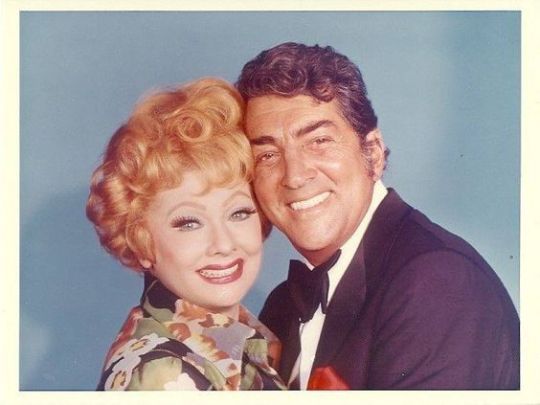
Discovering
that Mr. Mooney is really hypnotized, not faking, Viv says “He’s
stiffer than Dean Martin.” Dean Martin was a well-known
singer and actor who had a reputation for drinking (getting ‘stiff’). He will play
himself on an episode of “The Lucy Show” in season four. In 1975
he appeared with Lucille Ball in a TV movie titled “Lucy Gets
Lucky.”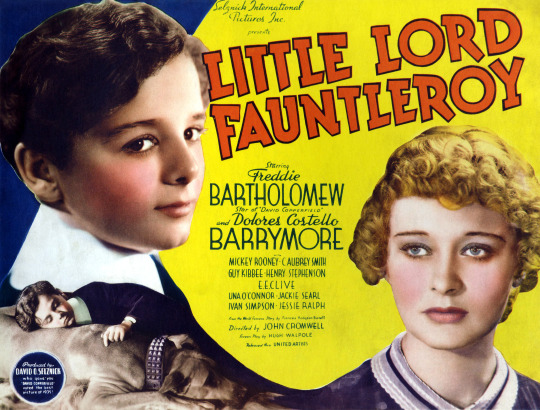
Lucy
calls Mr. Mooney out for being dressed like Little
Lord Fauntleroy.
This is the name of a novel by Frances Hodgson Burnett (The
Secret Garden).
The
Fauntleroy suit (also
known as the Buster
Brown suit),
created a fad for formal dress for American middle-class children. This look was widely parodied in both film and television. The book was filmed in 1936 (above).Callback!

Fred Mertz dressed like Little Lord Fauntleroy in “Lucy Hires an English Tutor” (ILL S2;E13). In “Changing the Boys’ Wardrobe” (ILL S3;E10) Fred calls Ricky Little Lord Fauntleroy. Ricky responds saying,
RICKY: “Nobody’s gonna call me little Fontle-roo-ey"!”
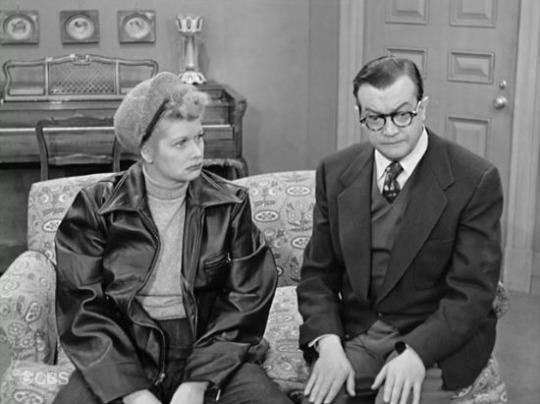
In
“The
Kleptomaniac” (ILL S1;E27) Lucy
Ricardo is hypnotized by a psychiatrist (Joseph Kerns) and regresses back to her childhood.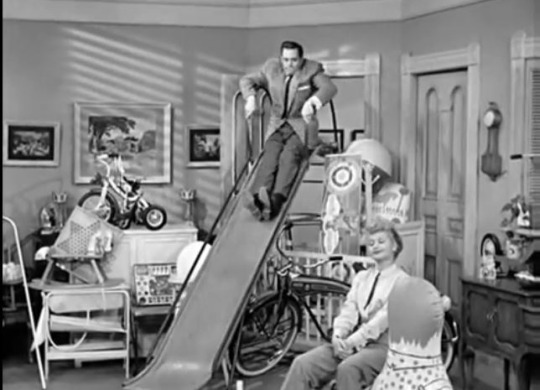
Lucy
Ricardo acts childish by filling the apartment with kids toys in “The
Ricardos Change Apartments” (ILL S2;E26).
In “The Business Manager” (ILL S4;E1) Ricky thought Lucy was playing the stock market, but she was actually just buying groceries from the corner market! He confuses Lucy’s purchase of a can of All Pet for Mrs. Trumbull’s cat with a listed stock!

Desilu was a publicly traded company and as such sold stock. Above is a sample stock certificate for 100 shares of Desilu signed by Lucille Ball and Edwin Holly.
Blooper
Alert!Giggle! When
the Doctor is undoing the hypnotic spell, one single studio audience
member loudly chuckles, despite the fact that it is not a funny line.
“Lucy the Stockholder” rates 2 Paper Hearts out of 5
1965, Betty Lou Barto, Carole Cook, CBS, Dean Martin, Douglas Deane, Elliott Reid, Gale Gordon, George DeNormand, Hal Taggart, Harvey Korman, Hypnosis, Income Tax Refund, James Gonzales, Joseph Mell, LBJ, Little Lord Fauntleroy, Lucille Ball, Lucy the Stockholder, Lynne Allen, Sid Gould, Stock Market, The Lucy Show, tv, Vivian Vance -
Lucy and the Beauty Doctor
S3;E24~
March 22, 1965

Synopsis
When
Lucy hears about a $25 beauty treatment, she tells Mr. Mooney the
money is for a doctor. When the treatment turns out to be a hidden
camera show, Lucy must do whatever she can to stop it from airing and
revealing her secret to Mr. Mooney.Regular
Cast
Lucille
Ball (Lucy Carmichael), Vivian Vance (Vivian Bagley), Gale Gordon
(Theodore J. Mooney)Guest
Cast
Dick Patterson (Himself)
made
his
Broadway debut in David
Merrick’s
Vintage
‘60 and
served as a replacement for Dick Van Dyke in the original cast of Bye
Bye Birdie.
He went on to appear opposite Carol
Burnett
in
Fade
Out, Fade In
(1964) and his last musical was Smile
(1986),
a spoof of beauty pageants. He was in the film musicals Can’t
Stop the Music
(1980), Grease
(1978), and
Grease
2
(1982). In September 1966, Patterson and his wife Gita were seen on
“Lucy Week” of the game show “Password” along with other
“Lucy Show” performers. Patterson will appear once more on “The
Lucy Show” and in four episodes of “Here’s Lucy” – all in
character roles. He died in 1999 at the age of 70.As usual in cases like this, Patterson was not really playing himself, just using his own name and aspects of his personality. He was never the host of a hidden camera show.

Tommy
Farrell (Pete
Murdock) appeared with Dick Patterson in a 1961 episode of “The
Roaring 20’s” on ABC. He was on Broadway in three plays between
1942 and 1947. Farrell will
appear once more on “The Lucy Show” and in six episodes of
“Here’s Lucy.”Pete
is never referred to by his surname Murdock, it only appears in the end credits.
Steve
Geray (Dr.
Hugo Fleisher) was
born Istvan
Gyergyay in 1904 in the former Austro-Hungarian empire. He acted
with Lucille Ball in the 1940 film
Meet the People.
This is his only TV appearance with Ball.The
doctor is from Vienna where Fleischer (spelled in the credits as ‘Fleisher’) is a common German and Yiddish
family name. Its literal meaning is “butcher” although
“fleish” means “flesh” which would correspond to a
beautician. The name “Hugo” means “intelligent.”Sid
Gould (voice
of the Radio Announcer) made
more than 45 appearances on “The Lucy Show,” all as background
characters. He also did 40 episodes of “Here’s Lucy.” Gould
(born Sydney Greenfader) was Lucille Ball’s cousin by marriage to
Gary Morton. Gould was married to Vanda Barra, who also appeared on
“The Lucy Show” starting in 1967, as well as on “Here’s
Lucy.”Carole
Cook
(voice of Lady Cynthia) was
seen as Lucy’s neighbor Thelma Green in four episodes. She was a
protege of Lucille Ball’s during the Desilu Playhouse years.
Although she was born as Mildred Cook, Ball suggested she take the
name Carole, in honor of Lucy’s great friend, Carole Lombard. Cook
also went on to appear in five episodes of “Here’s Lucy.”This
is the first time Gould and Cook are heard, but not seen. The name Cynthia had already been used on the series as one of Chris’s friends, played by Lucie Arnaz. A snooty Cynthia Harcourt was played by Mary Jane Croft on “I Love Lucy.”Bennett
Green (Bennett, a Cameraman) was Desi Arnaz’s stand-in during “I
Love Lucy” and does occasional background work on “The Lucy
Show.”Patterson calls Green by his first name. There is a second
cameraman who is not identified. Neither is credited.
This episode was shot in color but first aired in black and white.

The
previous week (March 15, 1965) “The Lucy Show” was pre-empted for
President Lyndon B. Johnson’s address to a joint session of Congress
calling for new legislation to guarantee every American the right to
vote.
An
hour before this episode first aired, Vivian Vance appeared on the
CBS quiz show “I’ve
Got a Secret”
just as Lucille Ball had done two weeks earlier. Vivian purposely
talked very fast because her secret was that everything they said was
being written down in short-hand backstage. Carol Channing
(appearing on Broadway at the time in Hello,
Dolly!)
was one of the panelists.LADY CYNTHIA (voice on radio): “Good morning, ladies. How would you like to have your biggest beauty problem behind you?”
VIV (listening to radio): “That’s where mine is now.”
Lucy and Viv listen to the radio show “Morning Magazine of the Air” which
presents Lady Cynthia’s Beauty Tips. It is from this broadcast that
Lucy hears about a $25 beauty treatment by Dr. Fleischer.
Lucy’s red transistor radio will turn up many times on “The Lucy Show”, even after Lucy moves to Los Angeles.
Gale
Gordon gets exit applause after calling Lucy stupid! Lucy then says
he has a good heart – without a trace of irony.
The
treatment turns out to be a hidden camera show gag for a (fictional)
TV show called “Boiling Point.” The show is modeled loosely on
“Candid Camera,” a TV show that started in 1948 and continues (in
some form) to this day. Its heyday was from 1960 to 1967, when it
was a ratings winner for CBS on Sundays at 10pm.
When
Patterson impersonates Dr. Fleischer and Pete his assistant Hans,
their fake beauty treatment consists off applications of tomato
paste, grated provolone cheese, tuna fish, peaches and whipped cream!
The prize (for Lucy reaching her ‘boiling point’) is a five year
supply of fly paper.
When
Lucy realizes she is on television, she waves into the camera, saying
hello to Viv, Jerry, Chris and Sh– (she stops short before saying
“Sherman”). With the exception of Jerry, the children had their
last appearance in “Lucy and the Old Mansion” (S3;E22), two
episodes earlier.
After getting a beauty treatment from the real Dr. Fleisher, Lucy’s black hair bow is reminiscent of Rose Marie (inset), who played Sally Rogers on “The Dick Van Dyke Show” (1961-66), also filmed at Desilu. After the death of her husband in May 1964, Rose Marie’s bow was always black.

The painting in Patterson’s office that slides aside hiding the camera is called “The Knockout” and was painted by French artist Luc-Albert Moreau (1882-1948) in 1927.

As the painting slides to the side, the laugh track uses the famous “I Love Lucy” “Uh, oh!” which indicates that the insert shot was probably not done in front of a studio audience, or at the very least, it was “sweetened” to heighten the reveal of the hidden camera.

Viv disguises herself as a male window washer to photograph them in a clutch. Patterson pops a cigar into her mouth and brags that they are imported and cost $50 a box.
PATTERSON: “Cigar smoking is about the only thing women haven’t taken up yet.”

I guess he hasn’t been watching “Lucy”!

To
blackmail Dick Patterson, Lucy disguises herself with a dark wig and
French accent as a dancer from the Can-Can-a-Go-Go, where Patterson
dined the previous evening.
When
Lucy opens the door, another door in the hallway reads “Doris Grau,
Inc. Public Relations.” Doris
Grau
was a Hollywood script supervisor. She was later the voice of Doris
the Lunch Lady on “The Simpsons,” a show she also worked on as
script supervisor. She
will also be named as the recipient of one of Mooney’s gifts in
“Lucy the Choirmaster” (S4;E13).
Disguised
as a can-can dancer named Gigi, Lucy croons a bit of “C’est
Magnifique,” a
song written by Cole Porter for his 1953 musical Can-Can.
The play was made into a film in 1960 and the song sung by Frank
Sinatra and Shirley MacLaine. “Lucy Show” actors Leon Belasco,
George DeNormand, and Sam Harris were all seen in the film. Lucy’s
fake name was also the title of a French-themed musical film; Gigi
won
the Best Picture Oscar of 1959.
Callbacks!

Lucy’s
culinary-inspired fake beauty treatment is quite similar to Lucy
Ricardo’s extreme hair-growth treatment when “Ricky Thinks He is
Going Bald” (ILL S1;E34). In 1952, Lucy used oil, eggs, and
vinegar – a concoction Ricky likens to a Caesar salad. In 1965,
Lucy Carmichael wonders if the treatment will include oil.
Lucy
first disguised herself as a can-can dancer in “The French Revue”
(ILL S3;E7). In that same episode, Vivian Vance went undercover as a
man with a mustache, just as she does here!
Lucy
Ricardo also wore a “Black Wig” (ILL S3;E26) and went
unrecognized, trying to get her husband into a compromising position,
just as she does here with Mr. Patterson.Fast Forward!

The can-can costume Lucy wears is the same one that will be worn (lengthened a bit) by Joan Blondell in “Lucy, the Stunt Man” (S4;E5).

In 1970′s “Lucy, the American Mother” (HL S3;E7), Craig places a hidden camera in the Carter living room to capture footage of Lucy for his student film.

In December 1971, Lucy Carter appeared on a hidden camera show (or so she thought) – the original “Candid Camera”! Alan Funt, who originated the show and hosted, was the guest star.

On “Jack Benny’s 20th Anniversary Special” (1970) Janet the Maid (Lucille Ball) reveals that Mary Livingstone’s been on TV the whole time because Jack has hidden a camera behind a painting of Betsy Ross.
Blooper
Alerts!State of the Art? The
TV camera that “Boiling Point” uses is actually an old fashioned
film movie camera.Sitcom Logic Alert! It’s hard to believe that Lucy does not see the huge hole in the wall with the camera in it while stealing back her agreement.
Reflections on Redacting! When
Lucy is looking at herself in the hand mirror after the beauty
treatment, viewers can see that the reflective side of the mirror has
been grayed out to avoid reflecting the studio lights. During this
scene Viv is reading a magazine which, as usual, has the masthead
taped over.
“Lucy and the Beauty Doctor” rates 4 Paper Hearts out of 5
1965, Beauty Salon, Bennett Green, C’est Magnifique, Can-Can, Carole Cook, CBS, Dick Patterson, Doris Grau, Gale Gordon, hidden camera, I’ve Got A Secret, Joan Blondell, LBJ, Lucille Ball, Lucy and the Beauty Doctor, Lunch Lady, Sid Gould, Steve Garay, The Lucy Show, Tommy Farrell, tv, Vivian Vance, Window Washer -
Lucy and Arthur Godfrey
S3;E23~
March 8, 1965
Synopsis
Lucy
and Viv land Arthur Godfrey for their benefit show about the founding
of Danfield.Regular
Cast
Lucille
Ball (Lucy Carmichael / Lucybelle)
Gale Gordon (Theodore J. Mooney / Conrad P. Field), Vivian Vance (Vivian Bagley / Bessie)
Guest
Cast
Arthur
Godfrey
(Himself / Daddy) was
born in New York City in 1903. He was a radio and TV host and had
his own television show “Arthur Godfrey and His Friends (later known as “The Arthur Godfrey Show” on
CBS, which was consistently in the top of the ratings, along with “I
Love Lucy.” He was concurrently the host of “Arthur Godfrey’s Talent Scouts” (later known as “Talent Scouts”) which showcased such performers as Ken Berry, Wally Cox, Don Knotts, and Steve Lawrence, all of whom went on to appear with Lucille Ball.
His career was marred by his on air firing of Julius
LaRosa. CBS historian Robert Metz, in CBS: Reflections in a Bloodshot Eye, quoted Godfrey as having once told cast and staffers, “Remember that many of you are here over the bodies I have personally slain. I have done it before and I can do it again.”Despite his ability to bring in profits, CBS executives who respected Godfrey professionally disliked him personally. This included CBS chairman William S. Paley. His career was also plagued by accusations of anti-antisemitism. He appeared in the movies 4 for Texas (1963), The Glass Bottom Boat (1966), and Where Angels Go Trouble Follows (1968). He briefly co-hosted “Candid Camera” with creator Allen Funt, but that relationship, like so many others, ended abruptly and acrimoniously. Arthur Godfrey died in 1983.
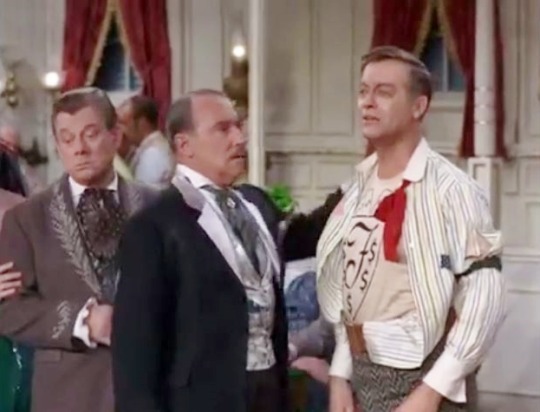
Max
Showalter
(Vinnie / Honest-But-Poor Piano Player) previously played Vinnie in “Lucy Gets
Amnesia” (S3;E4). He was
born in Kansas (like Vivian Vance) in 1917. He got the acting bug as
a toddler when mother took him to the local theater where she played
piano for silent movies. He acted in 92 shows at the Pasadena
Playhouse between 1935 and 1938 and made his Broadway debut in
Knights
of Song. On
Broadway, he played the role of Horace Vandergelder in Hello,
Dolly!
more
than 3,000 times opposite such luminaries as Carol Channing, Betty
Grable, and Ginger Rogers. Showalter made more than a thousand TV and
film appearances. Toward the end of his life he lived in Connecticut
(again, like Vivian Vance) and died there in 2000.Showalter
is never referred to as Vinnie. He is the author of the benefit show where he plays the poor-but-honest piano player with a mysterious background.
Carole
Cook
(Mrs. Baldwin) was
seen as Lucy’s neighbor Thelma Green in four episodes. Cook was a
protege of Lucille Ball’s during the Desilu Playhouse years.
Although she was born as Mildred Cook, Ball suggested she take the
name Carole, in honor of Lucy’s great friend, Carole Lombard. Cook
also went on to appear in five episodes of “Here’s Lucy.”Cook
is never referred to as Mrs. Baldwin. In the benefit show she sits
at a cafe table as part of the chorus.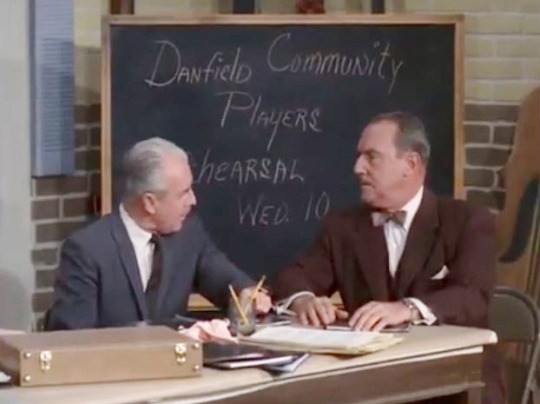
Stanley
Farrar
(Mr. Gilbert) was
seen on “I Love Lucy” in “Home
Movies” (ILL S3;E20)
and
“Staten
Island Ferry” (ILL S5;E12).
He previously appeared in another celebrity-themed episode “Lucy
Meets Danny Kaye” (S3;E15).Farrar
is never referred to as Mr. Gilbert.
Clyde
Howdy (Wilby, the Groom) was mostly seen in Westerns, except for the musical
films Bye Bye Birdie (1963) and My Fair Lady (1964).
This is his only credit with Lucille Ball.Fury (uncredited) is one of three live horses used in the episode. The horse is likely named in order to sound more intimidating to Lucy. The horse Viv mounts goes unnamed.
Sid Gould (Riverboat Bartender, uncredited) made more than 45 appearances on “The Lucy Show,” and nearly as many on “Here’s Lucy.” Gould (born Sydney Greenfader) was Lucille Ball’s cousin by marriage to Gary Morton. He usually played delivery men and waiters.
Bennett Green (Riverboat Waiter, uncredited) was Desi Arnaz’s camera and lighting standby during “I Love Lucy”. He often does background work on “The Lucy Show” and also appeared on “Here’s Lucy.”
Some
of the Riverboat Patrons are played by:- George
DeNormand
had
appeared in three films with Lucille Ball from 1937 to 1963. This is
the fourth of his many appearances on “The Lucy Show” and “Here’s
Lucy.” - William
Meader
had
appeared as an airport extra in “The
Ricardos Go to Japan,”
a
1959 episode of “The Lucy-Desi Comedy Hour.” He made many
appearances on “The Lucy Show,” most times as a clerk in Mr.
Mooney’s bank. -
Alberto Morin was born in Puerto Rico, and appeared in some of Hollywood’s most cherished films: Gone with the Wind (1939), Casablanca (1943), and Key Largo (1948). He was Carlos, one of Ricky’s “Cuban Pals” (ILL S1;E28) and the Robert DuBois in “The French Revue” (ILL S3;E7). His many background appearances on “The Lucy Show” and “Here’s Lucy” were all uncredited.
- Judith
Woodbury
makes
the fifth of her many uncredited appearances on “The Lucy
Show.” She also appeared on “Here’s Lucy.” - Hans
Moebus was a German-born actor who appeared as an uncredited
background performer in hundreds of films and TV shows, including the
Lucille Ball films DuBarry Was a Lady (1943), A Woman of
Distinction (1950) and The Facts of Life (1960). He was
on the dock during the “I Love Lucy” episode “Bon Voyage”
(ILL S5;E13). Moebus returned for one more episode of “The Lucy
Show.”
More
men and women singers round out the Riverboat chorus.
Unusually, this episode has no scenes taking place at the Bank or Lucy and Viv’s home, both regular locations for the series.

Danfield is a fictional town established to be in New York state, although its exact location is never established, except that it is a commuter city of Manhattan located near the train lines. For everything you ever wanted to know about Danfield, click here! The name Danfield may have been created by combining the names of two Fairfield County, Connecticut, towns: Danbury and Ridgefield.
“The human mind is like a cave. Beyond the light are dark passageways and mysterious recesses. I, Doctor Daniel Danfield, have explored those unknown retreats and know their secrets”

The name might also have been borrowed from the tremendously popular radio show “Danger, Dr. Danfield” heard on ABC radio from 1946 to 1947 and then in syndication. It starred Stephen Dunne as Dr. Danfield. Dunne had a small role in Miss Grant Takes Richmond (1949) with Lucille Ball and was in several episodes of the short-lived TV series “My Favorite Husband” based on Lucille Ball’s radio series. One of the show’s regular performers was Jay Novello, who also shows up on “I Love Lucy” and “The Lucy Show.” Other “Lucy” actors on the program included Herb Vigran, Howard McNear, Parley Baer, and Lurene Tuttle.

The songs for the show-within-the-show were written by Max Showalter (Vinnie), Bob Lees, and Peter Walker.
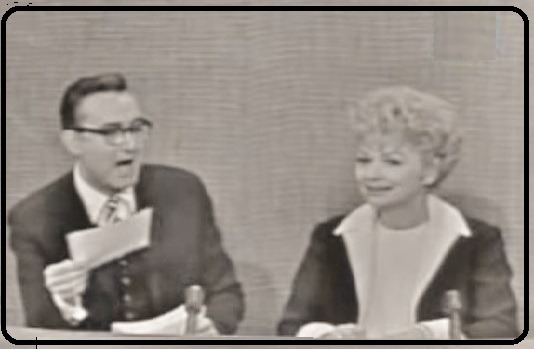
At
8pm on March 8, 1965, a half hour before this episode first aired,
Lucille Ball appeared on the CBS quiz show “I’ve Got a Secret”
hosted by Steve Allen. Gary Morton, Lucy’s husband, was one of the
panelists.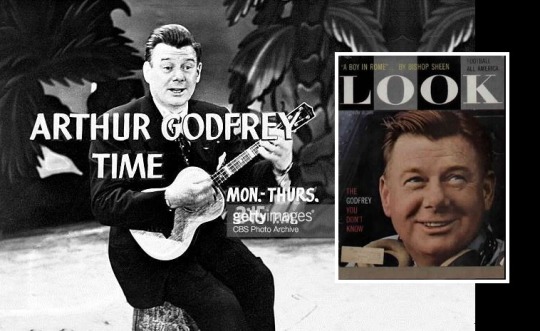
Arthur
Godfrey had been a huge television star in the 1950s, but by this
time was semi-retired. He was a very influential entertainer and
celebrity who made (and ended) many entertainers’ careers. His arrogance,
combined with rumors of strong anti-Semitism, made him almost
non-entity in show business by this time. Lucille Ball didn’t care.
She liked him, and thought that his work was solid.
The
Danfield Community Players previously staged a production of
Cleopatra starring Lucy and Viv at the start of season two.
The
show is to benefit the children’s wing of the hospital. Lucy and Viv
were helping fund the children’s hospital as far back as “Lucy the
Music Lover” (S1;E8, above).
At
the stable, Godfrey talks to Fury the horse using his famous
greeting: “How
are ya how are ya how are ya?” something
he started saying on radio. He then launches into one of his famous
on-camera commercial pitches – also to the horse – about sugar
cubes.Arthur Godfrey tells Lucy his secretary Mary Ann is very protective of him. In real life, Mary Ann Van was Godfrey’s private secretary.

Godfrey describes himself as a “Virginia Ham”, a pun that plays upon the fact that he is a performer who (although born in New York) made his home at an estate in
Paeonian Springs, Virginia, outside Washington DC. This is likely where the scene with the horses is set and why Lucy tells Godfrey to visit “Danfield, New York. Lovely country. You’ll enjoy the trip up there.” In show business slang, a ‘ham’ is a performer who craves the spotlight and/or performs in an exaggerated style. Virginia Ham (the meat) is dry cured and sent through a process of slow smoking and aging that adds a notable rich flavor.
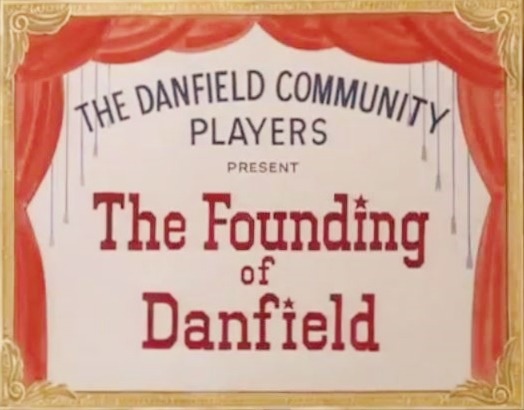
“The
Founding of Danfield” is
a two-act musical melodrama set on a riverboat in the south.Lucybelle (Lucy) and her father (Godfrey) are broke and looking to
marry her off to wealthy Yankee Conrad P. Field (Mr. Mooney) in order to save their plantation, Southern Moon. She attempts to get his attentions by dropping her hankie.
LUCYBELLE: “You want me to play hankie-panky with a Yankee?”
But Field is tempted away by the allures of the vamp Steamboat Bessie (Viv).
Lucybelle, meanwhile, is smitten with the riverboat’s honest-but-poor piano player
(Vinnie).
To compete with Bessie, Lucybelle transforms
herself into Dixie Lucy doing a striptease in the process. We discover that the piano player is the long-lost son of Mr. Field. All ends
happily (naturally) and Lucybelle and the piano player state their
life-long dream: to settle down and found a town. Discovering her (now) rich -but-honest piano player husband-to-be is named Dan Field, she resolves that it will also be the name of their new town.
The
musical melodrama features original songs written (in the context of
the script) by the character of Vinnie and sung by Arthur Godfrey
(who also plays the banjo), Lucy, and Viv. This mirrors real life as Max Showalter wrote the songs for the episode.During the show, Gale Gordon does one of his famous cartwheels, the second of his eight cartwheels on a Lucycom.
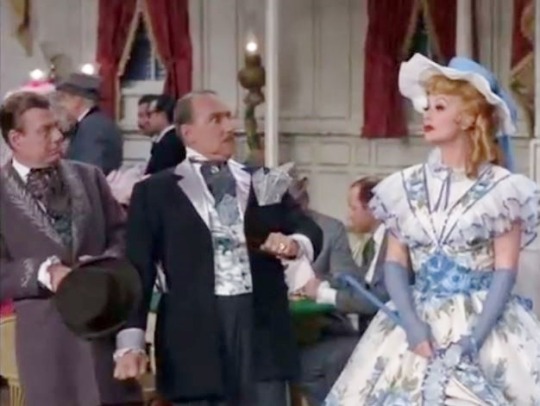
Lucy
gets to play a very Scarlet O’Hara-like character in a broad comic
style. Lucille Ball was considered for the role of Scarlet in
1939’s Gone With
the Wind.
“Founding of Danfield” chorus member Hal Moebus was an extra in
the Oscar-winning film.
To express his thanks for being on the show, Godfrey sent Lucy and Gary this brass seashell-shaped plate engraved “Lucy / Gary / With Love / Arthur Godfrey." It came up for auction in 2010.
Callback!

TV aristocracy according to a June 1952 local TV Guide.

In December 1952, this local TV Guide cover featured Godfrey (and his wife Mary Bourke) and promoted an inside article about “Lucy’s Baby”, several months before the birth.

In 1953, Lucille Ball and Arthur Godfrey were atop the TV totem pole on the cover of TV Guide, the 3rd national edition and the second to feature Lucille Ball! The caricature also featured Milton Berle, Imogene Coca, and Sid Caesar. Note that Lucy is holding Little Ricky and a pack of Philip Morris cigarettes while Godfrey plays the ukulele. Lucille Ball appeared on the cover of TV Guide 39 times while Godfrey scored 16 covers.

That same year, Godfrey and Ball graced the cover of TV Fan Magazine. Inside articles on the stars were titled “How TV Saved Lucy’s Marriage” and “The Other Side of Arthur Godfrey.”

On the news stands at the very same time was an issue of TV Show Magazine with Godfrey on the cover and an inside article titled “Lucy’s Baby” by ‘Ethel Mertz’!

A sampling of magazine covers featuring and / or mentioning Godfrey and Ball during the 1950s, when both were at the height of their popularity.
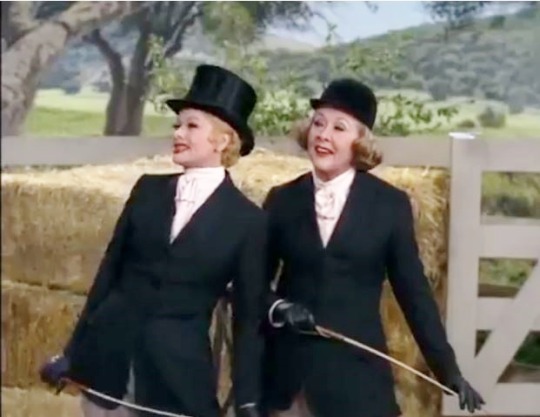
Disguising
themselves as fox hunters dressed in full riding regalia, Lucy
repeats some of the same language and comic business she first did on
“The Fox Hunt” (ILL S5;E16). As in 1956, Lucy mounts the horse
backwards. She also “rode to hounds” in the movies Annabel
Takes a Tour (1938) and Mame (1974).
These January 1959 ads brag that “Arthur Godfrey Time” and “I Love Lucy” are ‘tops’ in weekday morning syndication. These CBS affiliates ran them back-to-back.

In 1964, Godfrey and Ball both had weekday radio programs on the CBS Radio Network.

The character of Vinnie played by Max Showalter was first seen in “Lucy Gets Amnesia” (S3;E4). In that episode his surname is Meyers and he is said to be from the Jamestown branch of Mr. Mooney’s bank in order to account for him knowing Lucy from their childhood.
Fast Forward!

On May 1, 1966, Lucille Ball and Arthur Godfrey participated in a CBS documentary titled “The Magic of Broadcasting” which was produced by Lee Mendelson.

The antebellum dress worn by Lucille Ball as Lucybelle would be briefly seen again in "The Hollywood Unemployment Follies” (HL S3;E22)…

…and worn (with comic embellishments) by Lucy Carter as Scarlet O’Hara in “Lucy and Flip Go Legit” (HL S4;E1).

On March 13, 1978, Lucille Ball made a guest appearance on “Gene Kelly…An American in Pasadena”. Her entrance had her standing up in the audience shouting for Godfrey, who wasn’t there. Perhaps she was thinking of…

On March 27, 1978, Lucille Ball and Arthur Godfrey both participated in “CBS On The Air” representing Monday nights in the week-long celebration of their first five decades.
Blooper
Alert!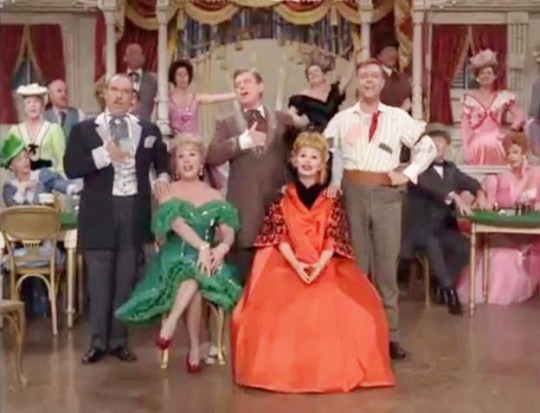
Although
“The Founding of Danfield” runs for 15 minutes screen time, only
the last minute hints at the founding of the town. Lucy Carmichael
and Mr. Mooney will only live in Danfield for three more episodes
until moving to California at the start of season 4.
“Lucy and Arthur Godfrey” rates 2 Paper Hearts out of 5
- George
-
Lucy and the Old Mansion
S3;E22~
March 1, 1965

Synopsis
When
Viv returns to Danfield, the Countess must find another place to live
– especially after she hears she’s expecting a visit from English
nobility. Lucy and Viv help her renovate a run-down mansion, but
everything that can go wrong, does!Regular
Cast
Lucille
Ball (Lucy Carmichael), Vivian Vance (Vivian Bagley), Gale Gordon
(Theodore J. Mooney), Jimmy
Garrett (Jerry Carmichael), Ralph Hart (Sherman Bagley), Candy Moore
(Chris Carmichael)This
is the last time that the main cast is together. This is the final
episode for Candy Moore (after 39 episodes) and Ralph Hart (after 44
episodes). Jimmy Garrett will make 3 more appearances in season 4
and Vivian Vance will return for 7 more episodes through the end of
the series.Guest
Cast
Ann
Sothern (Rosita “Rosie” Harrigan, the Countess Framboise)
makes the fourth of her seven appearances as a countess down on her
luck. Sothern had appeared in the
first “Lucy-Desi
Comedy Hour”
“Lucy
Takes a Cruise to Havana”
(1957) as Susie MacNamara, the same character she played on her show
“Private Secretary” from 1953 to 1957. In return, Lucille Ball
played Lucy Ricardo on her show in 1959. Sothern appeared with Ball
in five films between 1933 and 1943. She was nominated for an Oscar
for her final screen appearance in The
Whales of August
in 1987. She is buried near her home in Sun Valley, Idaho, a place
also dear to Lucy and Desi.The
Countess will return in season 4 for three additional episodes.Lester
Matthews (Lord Bertie Van Cleve) was born in England in 1900. He
played Mr. Bartley in three 1959 episodes of Desilu’s “The Ann Southern
Show.” This is his only appearances with Lucille Ball.
Maida
Severn
(Lady Violet Van Cleve) was
born in 1902 in New York City as May Harriett Shatt.
She appeared on a 1963 episode of “Dennis the Menace” with Gale
Gordon. This is her only appearance with Lucille Ball.

“The
Lucy Show” was preempted the previous week (February 22, 1965) for
the CBS special “Cinderella” by Rodgers and Hammerstein starring
Lesley Ann Warren. Lucille Ball’s friend and movie co-star Ginger Rogers played the Queen.
This
was the last episode filmed for the 1964-65 season, and the last
episode filmed featuring Vivian Vance as a regular cast member. Ann
Sothern recalled that there was tension on the set that week due to
Vivian’s departure.
Four episodes starring Vance were already filmed and will fill the
remainder of season 3.
This
is the only time Vivian Vance and Ann Sothern are on screen together
on “The Lucy Show.” The two had appeared in “Lucy Takes a
Cruise to Havana” in 1957 and “The Desilu Revue” in 1959.
The
day after this episode first aired (March 2, 1965) the film
adaptation of The
Sound of Music
premiered in New York City. It featured “Lucy” alumni Norma
Varden (above with Julie Andrews), Leoda Richards (above with Christopher Plummer), Bert Stevens, and
Sam Harris.
The stacks of luggage from “Lucy and the Countess” (S3;E20) have returned. As in that episode, when Ann Sothern appears from behind them, she is greeted with entrance applause from the studio audience. Vivian Vance, absent for several weeks, is also greeted with entrance applause.
A wrong number on the telephone is trying to reach Irving’s Meat Market. Although we have met three different butchers in Danfield, this is the first mention of Irving’s Meat Market.

When Lucy gets the idea to ask Mr. Mooney about the bank’s real estate holdings for Rosie to host the visiting royals, the writers go to great for a joke that infers the (then) profane word “hell”.
LUCY: “Maybe Mr. Mooney will tell us where to go.”
VIV: “Oh, he’ll tell you where to go, alright. I’m afraid it might be a little warm to entertain though.”When the scene at the bank begins, Mr. Mooney is on the phone to someone he calls “J.D.” – although who that might be is never discovered.
The running gag of Rosie calling Gale Gordon’s character “Mr. Money” instead of “Mr. Mooney” continues here. His wife, Irma, is mentioned. Another running gag is that we will never meet Mrs. Mooney.

The dilapidated mansion that Mr. Mooney offers the Countess is called the Bellingham Estate.

Wanting
to speak French like the Countess, Lucy says to Mr. Mooney
“Mademoiselle
from Armetiers parlez vous.”
These are lyrics from the song “Mademoiselle from Armetiers”
which was particularly popular during World
War I.
On
“I
Love Lucy”
Fred
Mertz
(a
veteran of that war), sang the song in the episodes “Equal Rights”
(ILL S3;E4)
and
“The Passports” (ILL S5;E11).
Despite
Rosie, Lucy and Viv refurbishing the old mansion, when Lord and Lady
Van Cleve arrive, it disintegrates before their eyes:- Lord Van Cleve’s recently painted chair sticks to his bottom
- Table
legs collapse under the weight of Lord Van Cleve’s hat - The
handles come off the tea cart - The
door comes off its hinges - The
sofa springs pop through the cushions - Lady
Van Cleve’s chair collapses - The floor starts to sink beneath the Van Cleve’s feet
-
The wallpaper begins to peel off the walls

Callbacks!

Countess: “How could anyone paper over a window?”
Viv: “If you’re Lucy, it’s easy.”In
“Redecorating” (ILL S2;E8) Lucy and Ethel also
wallpaper over a window…
…and a door! On the radio series “My Favorite Husband” Liz Cooper (Lucille Ball) also wallpapered over a door.

This episode is often confused with “Lucy and the Monsters” (S3;E18) which also has Lucy and Viv (wearing blue) exploring a dilapidated old mansion.
Blooper
Alerts!
Jagged Little Edge! Before
Lord and Lady Van Cleve come into the room through the wallpapered
door, the pre-cut jagged line of the doorway can be seen.
Fruit Football! When the wax fruit falls from the collapsing table, a stray orange rolls across the stage and stays near the sofa for the rest of the scene. During the business with the collapsing and sticky chairs, it gets kicked around like a football!

Look Before You Sink! Just as Gale Gordon enters, Maida Severn (Lady Van Cleve) looks down at the floor to make sure she’s on her mark for the collapsing floor gag that ends the episode.

“Lucy and the Old Mansion” rates 2 Paper Hearts out of 5

-
Lucy and the Countess Lose Weight
S3;E21~
February 15, 1965

Synopsis
When
banker Mooney fears a health farm may default on a loan he made, he
sends Lucy and the Countess there to keep an eye on things. Starving
and exhausted, they prove poor spies.Regular
Cast
Lucille
Ball (Lucy Carmichael), Gale Gordon (Theodore J. Mooney)Vivian
Vance (Vivian Bagley), Jimmy Garrett (Jerry Carmichael), Ralph Hart
(Sherman Bagley), and Candy Moore (Chris Carmichael) do not appear in
this episode.Guest
Cast
Ann
Sothern (Rosita “Rosie” Harrigan, the Countess Framboise)
makes the third of her seven appearances as a countess down on her
luck. Sothern had appeared in the
first “Lucy-Desi
Comedy Hour”
“Lucy
Takes a Cruise to Havana”
(1957) as Susie MacNamara, the same character she played on her show
“Private Secretary” from 1953 to 1957. In return Lucille Ball
played Lucy Ricardo on her show in 1959. Sothern appeared with Ball
in five films between 1933 and 1943. She was nominated for an Oscar
for her final screen appearance in The
Whales of August
in 1987. She is buried near her home in Sun Valley, Idaho, a place
also dear to Lucy and Desi.
Norman
Leavitt
(Farmer Johnson) appeared with Lucille Ball in the 1950 film A
Woman of Distinction as
well as The
Long, Long Trailer (1953).
The character actor also appeared on three episodes of “The
Lucy-Desi Comedy Hour.” He was previously seen on the series in
“Lucy is a Kangaroo for a Day” (S1;E7).
The
women at the Lazy Days Health Farm are played by:Carole
Cook
was seen
as Lucy’s neighbor Thelma Green in four episodes. She was a protege
of Lucille Ball’s during the Desilu Playhouse years. Although she
was born as Mildred Cook, Ball suggested she take the name Carole, in
honor of Lucy’s great friend, Carole Lombard. Cook also went on to
appear in five episodes of “Here’s Lucy.”This
is the first time Cook has appeared without a character name or any
dialogue.Cordy
Clark made her first appearances on screen in a 1961 episode of
“Make Room for Daddy” filmed at Desilu. This is her only
appearance opposite Lucille Ball.Mary
Foran
was
born on November 21, 1919 in Tenafly, New Jersey, as Mary Miller
Bullen.
This
is her only appearance opposite Lucille Ball.Jenie
Jackson makes her third of nine screen appearances with this
episode. In 1969 she played the uncredited role of Brunhilde in
Hello, Dolly!

In
“Lucy
and the Countess” (S3;E19),
Lucy says Viv’s been out of town for a week and will be gone for
two more. As Vivian Vance started to phase out her involvement on
“The Lucy Show” in order to spend more time with her husband on
the East Coast, Lucille Ball was looking to introduce a new character
to fill the ‘second banana’ role. The Countess will appear in seven
episodes through November 1965, the start of season 4. For episodes
featuring Ann Sothern, Vivian Vance’s opening title sequence credit
is eliminated. Instead of the freeze frame of Viv as the flapper in
the silent movie sketch (and the screen title “co-starring Vivian
Vance”), the freeze frame is on Lucy as Charlie Chaplin.
Mr.
Mooney takes on the role of the physical fitness instructor at Lazy
Days, saying that in college he was an all-around athlete. In the
previous episode, he claimed that he was supposed to go to the
Olympics.
The
Countess calls Mr. Mooney “the
Simon Legree of the concentration camps.”
This is a reference to the evil slave owner featured in the
Harriet Beecher Stowe story “Uncle
Tom’s Cabin”
(1852). The book was previously alluded to in “Lucy is Her Own
Lawyer” (S2;E23).
Lunch
at the Health Farm consists of a bag containing:- a
lettuce leaf - a
curl of carrot - a
sprig of parsley - a
yogurt wafer
The Countess calls it a “No Care Package.”

To
calm Bossie the cow while Lucy milks her, the Countess hums “The
Blue Danube,”
a waltz by Johann Strauss II composed in 1866. Lucy punctuates the
downbeat with squirts from the cow’s udder. The piece was
prominently used in Stanley Kubrick’s 1968 film 2001:
A Space Odyssey
and was previously heard in “Lucy and the Good Skate” (S3;E1).
Bossie
joins a long line of live animals already featured on the series:
sheep, a horse, an elephant, many dogs, birds, mice, and a trained
bear.Callbacks!

In
1951, Lucy Ricardo slimmed down in “The Diet” (ILL S1;E3) by also
watching what she ate and doing exercise.
The
routine of Lucy milking the farmer’s cow is pretty much the same as
when Lucy Ricardo did it in “Lucy’s Bicycle Trip” (ILL S5;E24).
Although
Lucille Ball owned a cow at her Chatsworth ranch, she claimed she had
never milked a cow before.
While
begging Mr. Mooney for food, Lucy does her classic seal imitation.
Lucille Ball first did this in 1951’s “The Audition” (ILL S1;E6).
Blooper
Alert!
Where the Grass Ends! When
the camera pulls back in the exterior scene, where the stage floor
meets the ‘grass’ is seen.
“Lucy and the Countess Lose Weight” rates 2 Paper Hearts out of 5

- a
-
Gillian Anderson as Lucille Ball – 1997 & 2017
-
Subscribe
Subscribed
Already have a WordPress.com account? Log in now.
 Papermoon Loves Lucy