-
LUCY RUNS THE RAPIDS
S2;E4
~ October 13, 1969

Directed
by George Marshall ~ Written by Gene ThompsonSynopsis
Looking
for a pleasant place for a picnic during their roadtrip, Lucy and the
Carters camp out on the banks of the Colorado River. Borrowing a
raft to do some sightseeing, they are soon being swept down the
rapids.Regular
CastLucille
Ball (Lucy
Carter), Gale
Gordon (Harrison
Otis Carter), Lucie
Arnaz (Kim
Carter), Desi
Arnaz Jr. (Craig
Carter)Guest
Cast
Robert
L. Hughes
(Guide) was mainly a theatre artist with only a dozen screen
appearances, including one more episode of “Here’s Lucy.” Hughes
left show business in the 1980s to pursue a business career.
George
Marshall
(Sheriff George) was also the director of this episode. Marshall has
less than a dozen screen acting credits, but directed 195 films
dating from the silents of 1916 to television in 1972. He directed
Lucille Ball in the films Valley
of the Sun (1942)
and Fancy
Pants (1950).
He will directed the five more episodes of season two of “Here’s
Lucy.” According to DVD extras, Marshall was quite a drinker.
Other
river rafters are played by uncredited local performers.

This
episode was shot on location on the Colorado River.
This
is the final segment of the four-part ‘road trip’ opening season 2.
As usual, Lucille Ball does almost all of her own stunts Because
she is required to spend a lot of time submerged in the freezing
waters of the Colorado River, she wears a wet suit under her clothes.
Lucille Ball previously wore a wet suit when she spent hours in the
water in “Lucy at Marineland” (TLS S4;E1). On the DVD extras,
Lucie Arnaz notes that she was not given a wet suit and that the
water was very, very cold!
This
episode opens the same way as the first episode of season two, with
the camper driving through western landscape to the strains of
“Breezin’ Along with the Breeze,” a song written
by Haven Gillespie, Seymour Simons and Richard A. Whiting and used as
the theme music for Lucille Ball and Desi Arnaz’s 1953 film The
Long, Long Trailer.
The original lyrics are about sailing, not driving.
Unlike
studio filming, only one camera was used on location, although
Lucille Ball was insistent on her usual studio lighting instruments,
despite their great weight and bulk. When director George Marshall
told Lucy that he couldn’t risk mounting the heavy instruments on the
rafts (lest they fall into the water and be lost), Lucy relented and
allowed smaller, less intense lighting instruments to be used. But
only on the water – on dry land she still insisted on the
behemoths.The
Carters travel in a Travco
motor home. The company’s RV’s were originally built on Dodge
chassis. Travco was in business from 1964 until the late 1980s.
Even
before they get to the Colorado River, Harry gets drenched when
driver Lucy makes a sudden stop and Lucie spills a pitcher of water
on her Uncle. He remarks that she gets more like her mother every
day! Yet another example of how Harry and water frequently meet on
“Here’s Lucy.”
Lee’s
Ferry Arizona is a real place, although the huge sign may have
been placed their by Desilu. Another sign in the background looks
like it was removed for the shoot, but the posts still remain.
Sheriff
George reads a police bulletin: “Wanted:
one overweight, over-aged playboy and his red headed, light-headed
secretary. Also missing with them is a large blue and white camper.
$500 reward for the return of the camper. You can do what you want
with the odd couple.”
Lucy
says she used to do a lot of canoeing on Chautauqua Lake. This would
mean that Lucy Carter, Lucy Carmichael, and Lucy Ricardo were all
from upstate New York, just like Lucille Ball. Chautauqua Lake was
mentioned by Lucy Ricardo in “The Saxophone” (ILL S2;E2).
Sitcom
Logic Alert! When setting up camp for the night, Craig casually
remarks how well equipped for emergencies the raft is! This is
doubtless to try to rationalize to viewers why they have four air
mattresses, a bulky air compression pump, and four sleeping bags
when they had only planned on a picnic when they ‘borrowed’ the raft!

Lucy
sinking in a vessel that she punctured herself also happened during
“Lucy’s Summer Vacation,” a 1959 episode of “The Lucy-Desi
Comedy Hour.” In that episode a leaky rowboat on a lake holds Lucy
Ricardo, Ricky Ricardo, Howard Duff, and Ida Lupino.
After
popping up from the water and gripping the sides of the raft, Lucy
Carter does a spit take. Lucy Carmichael also did this in “Lucy at
Marineland” (TLS S4;E1). Coincidentally, that episode also
featured Gale Gordon, Lucie Arnaz, and Desi Arnaz Jr.
The
camper has the same California license plate number (WHM-560) as
Lucy’s car seen in “Lucy Helps Craig Get a Driver’s License”
(S1;E24).Even
after seeing the sign ‘Lee’s Ferry Arizona’, Craig and Lucy believe the
fully inflated and tied-up raft labeled FORT LEE COMPANY (in huge
letters) is an Army surplus item, and not the property of a rafting
company. The Fort Lee Company was a real river rafting company that
operated until 1983, when Wilderness River Adventures took over.
Lucy
throws one of the life vests overboard to Kim, but it floats away.
Somehow, however, there are still enough life vests on the raft for
everyone later on.Lucy
punctures the raft which then deflates but the next morning it is
miraculously patched and fully inflated again!
“Lucy Runs the Rapids” rates 3 Paper Hearts out of 5
Lucille
Ball once said “I’m not funny, I’m brave” which is clearly
demonstrated by her willingness to do the stunts seen here. The show
is long on scenery and short on plot, but still interesting to watch. 1969, Arizona, Breezin’ along with the Breez, camper, CBS, Chautauqua, Colorado River, Desi Arnaz Jr., Fort Lee Company, Gale Gordon, Gene Thompson, George Marshall, Glen Canyon, Glen Canyon Dam, Here’s Lucy, Lee’s Ferry, Lucie Arnaz, Lucille Ball, Marble Canyon, rafting, roadtrip, Robert L. Hughes, RV, The Long Long Trailer, tv
 -


RIP Hugh Hefner (1926-2017)
-
LUCY AND THE INDIAN CHIEF
S2;E3
~ October 6, 1969

Directed
by George Marshall ~ Written by Gene ThompsonSynopsis
When
their camper runs off the road, Lucy wanders off to find water and is
discovered by a Native American chief who makes her his bride. Her
wedding gift? The state of Utah!Regular
CastLucille
Ball (Lucy
Carter), Gale
Gordon (Harrison
Otis Carter), Lucie
Arnaz (Kim
Carter), Desi
Arnaz Jr. (Craig
Carter)Guest
Cast
Paul
Fix
(Sitting Buffalo, Navajo Chief) was a busy New York-born character
actor who played Marshal Micah Torrance on the TV series “The
Rifleman”
(1958).
Although he specialized in westerns, he rarely played in redface.
He was also seen in the film Winterset
(1936) with Lucille Ball.The
Guide guesses Sitting Buffalo is 85 years old. Fix was actually 68
at the time.
Mickey
Manners
(Running Water, Navajo Guide) was born Solomon Shapiro in New York.
He was a great friend of Jerry Lewis and appeared with him on screen
several times. He was last seen in “Lucy Helps Danny Thomas” (TLS
S4;E7).
Iron
Eyes Cody
(Navajo
Medicine Man, right) made
a career of playing Native American characters despite the fact that
he was of Italian ancestry. He first worked with Lucy and Desi in
1940’s Too
Many Girls
and
1942’s Valley
of the Sun
(also directed by George Marshall) both as an Indian character. He
played an Eskimo in a 1959 episode of “The Lucy-Desi Comedy
Hour,” but is probably best remembered as the Indian that sheds a
single tear in the ‘Keep America Beautiful’ ads that ran from 1971 to
the 1980s.
The
men and women at the reservation are played by actual Navajo tribe
members.

This
episode is the third of a four-part on-location story arc created
with the cooperation of the Navajo
Nation Council
and the state of Arizona. It was the first and only situation comedy
filmed on Navajo land using actual tribe members.
When
Desilu set construction recreated a Navajo hogan (hut), tribe members
involved in the shooting refused to enter it because the door was
facing the wrong direction. The crew rotated the hogan to face east
(to greet the rising sun) and comply with tradition. The
Nation Council approved of the reversal of the direction of a sacred
ceremonial dance, but only after Lucille Ball convinced them that it
would not bring bad luck and would look better on television!
As
was usual with films and TV shows of the time, the principal Native
American characters were played by Caucasians. The script also
indulges in humor derived from stereotypical speech patterns of
Native Americans.
Unlike
studio filming, only one camera was used on location, although
Lucille Ball was insistent on her studio lighting instruments,
despite their weight and bulk.
At
the start of the episode, Harry summarizes the reason they are on the
road, recapping the first episode of season 2. However, there is no
mention of the Air Force Academy they’ve just visited, just that they
are 2,000 miles off course (Harry’s exaggeration).
The
Carters travel in a Travco
motor home. The company’s RV’s were originally built on Dodge
chassis. Travco was in business from 1964 until the late 1980s.
The
episode integrates location footage with studio process shots for the
driving scenes.
Harry
gets a lap full of water due to the off-kilter slant of the camper,
proving the old “Here’s Lucy” tradition that if there’s water –
Gale Gordon will be wet!
Standing
on the edge of Lake Powell, Lucy recites a verse from Henry Wadsworth
Longfellow’s 1855 poem “The
Song of Hiawatha.”
This is the same portion of the poem she recited on “I Love Lucy.”
Fleeing
the reservation, Lucy utters Jackie Gleason’s famous line “And
away we go”
as well as his hitch-shouldered exit pose. Lucille Ball did this
frequently on “The Lucy Show.”
Lucy
finds a Navajo bride for Harry named Pocahontas, or, as Harry calls
her, “Pokey.”

This
is not the first time Lucille Ball has used Native Americans as the
source for storylines. In “The
Indian Show” (ILL S2;E24) Ricky’s
act was built around an Indian theme. As she does here, she recites
a verse of “The Song of Hiawatha.” In
“Lucy
and the Scout Trip” (TLS S2;E26)
Lucy Carmichael dresses as a Native American to give her son an
authentic scouting experience.
In
“Lucy, the Rain Goddess” (TLS S4;E15), Mrs. Carmichael trails Mr. Mooney
to a dude ranch adjacent to a reservation, where she is hailed as a
rain goddess due to her resemblance to a totem pole.

Lucy
Carmichael also mixed with lots of sheep in “Lucy Buys a Sheep”
(TLS S1;E5) to keep her lawn trim.

The
camper has the same California license plate number (WMO-526) as
Lucy’s car seen in “Lucy Helps Craig Get a Driver’s License”
(S1;E24).
“Lucy and the Indian Chief” rates 3 Paper Hearts out of 5
The
scenery here is beautiful, and it is quite remarkable that Lucille
Ball was able to get the cooperation of the Navajo tribe. 1969, Arizona, CBS, Desi Arnaz Jr., Gale Gordon, Gene Thompson, George Marshall, Glen Canyon Dam, Here’s Lucy, Hogan, Indian Chief, Iron Eyes Cody, Jackie Gleason, Lucie Arnaz, Lucille Ball, Mickey Manners, Native Americans, Navajo, Paul Fix, Pocahontas, sheep, The Song of Hiawatha, Travco, tv, Utah
 -
LUCY GOES TO THE AIR FORCE ACADEMY: PART 2
S2;E2 ~
September 29, 1969
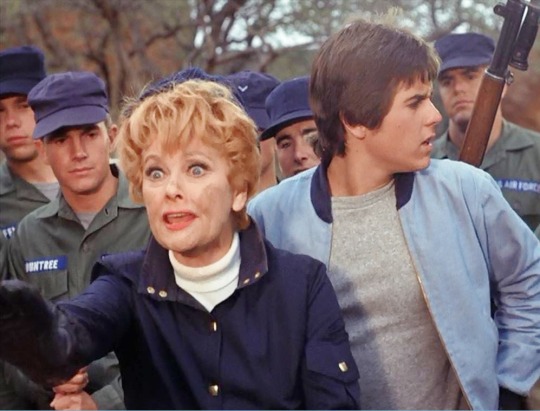
Directed
by George Marshall ~ Written by Gene ThompsonSynopsis
Visiting
the U.S. Air Force Academy, Lucy takes a tour and mistakes the
General in charge for a janitor!Regular
CastLucille
Ball (Lucy
Carter), Gale
Gordon (Harrison
Otis Carter), Lucie
Arnaz (Kim
Carter), Desi
Arnaz Jr. (Craig
Carter)Guest
Cast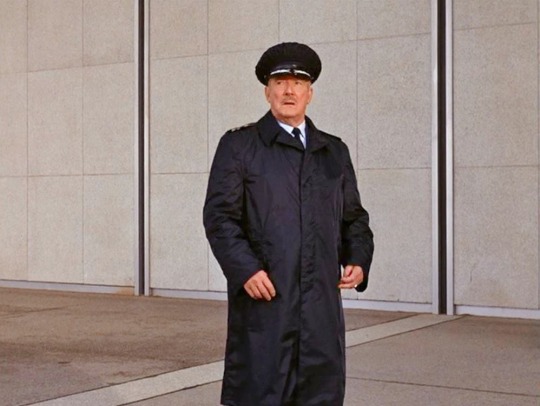
Roy
Roberts
(Superintendent) was
born Roy Barnes Jones in Tampa, Florida in 1906. His early career
was on the Broadway stage, gracing such plays as Old
Man Murphy
(1931),
Twentieth
Century (1932),
The
Body Beautiful
(1935)
and My
Sister Eileen
(1942).
In Hollywood, the veteran character actor clocked over 900 screen
performances in his 40 year career, most of which were authority
figures. He and Lucille Ball appeared together in Miss
Grant Takes Richmond
(1949).
On “The Lucy Show” he first appeared as a Navy Admiral in “Lucy
and the Submarine” (S5;E2)
before
creating the role of Mr. Cheever,
a recurring
character he played through the end of the series. This is the first
of his 5 episodes of “Here’s Lucy.” Roberts died in 1975 at age
69.Roy
Roberts played the same character in “Lucy
Goes to the Air Force Academy: Part 1” (S2;E1).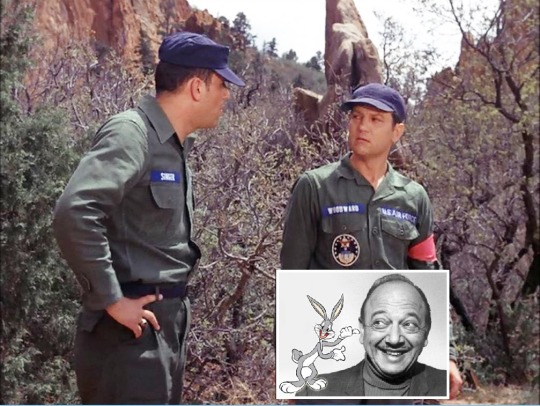
Mel
Blanc (Red Squad Radio voice / Woodward voice, uncredited) is
best known as the voice of Bugs Bunny and other Warner Brothers
characters, but had acted with Lucille Ball on radio and in the 1950
film The Fuller Brush Girl.I’d
be curious to know how Lucy convinced her old friend Mel Blanc to
come to the ADR (automated dialogue replacement) session and do these
two voices. Possibly he was in the studio that day anyway. It would
also be interesting to learn how the uncredited actor/cadet playing
Woodward reacted to being dubbed by the great Mel Blanc!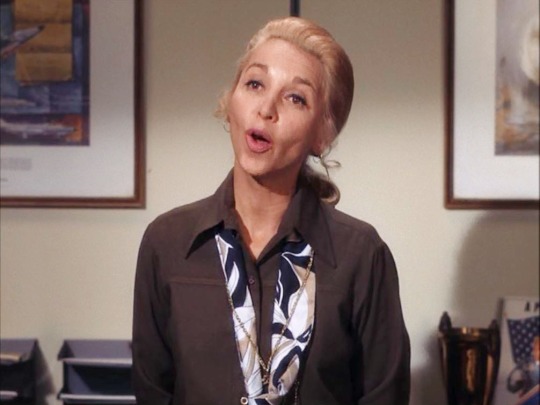
Beverley
Garland (Secretary, uncredited) is best remembered as Barbara,
Fred MacMurray’s new wife on “My Three Sons.” Roy Roberts
(Superintendent) played a dentist on a 1970 episode of the show.
This is her only appearance with Lucille Ball. She died in 2008.Antonio
Garcia Tony (Kid on Field Trip, uncredited) makes his screen
debut with this episode. He continued to play uncredited background
characters and also became a casting director.John Erwin (Narrator, uncredited) was a voice-over artist primarily known for voicing Reggie on the “Archie” cartoons. Erwin’s voice over comes at the start of the episode to tell the audience what happened in part 1.
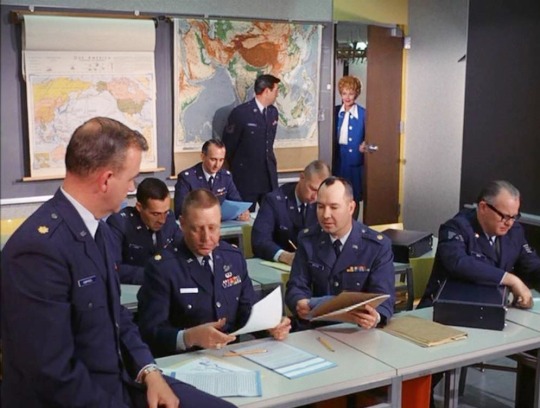
Actual
Air Force Academy students and staff play themselves.
This
episode is the second of a four-part on-location story arc created
with the cooperation of the Air Force and the state of Colorado. At
the Academy, filming was done right in the dormitories and
administrative buildings. The Air Force viewed this as a sort of TV
commercial at a time when the public was very down on the military
due to its involvement in the Vietnam War.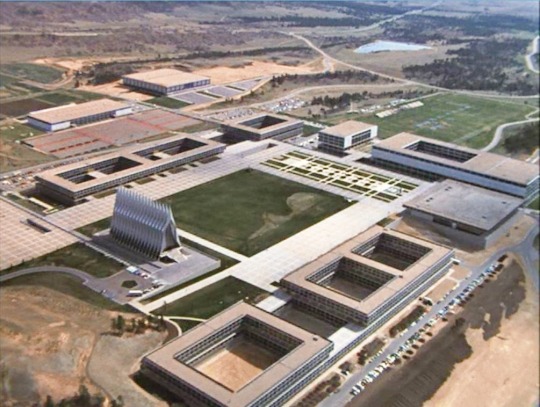
Unlike
studio filming, only one camera was used on location, although
Lucille Ball insisted on her studio lighting instruments,
despite their great weight and bulk.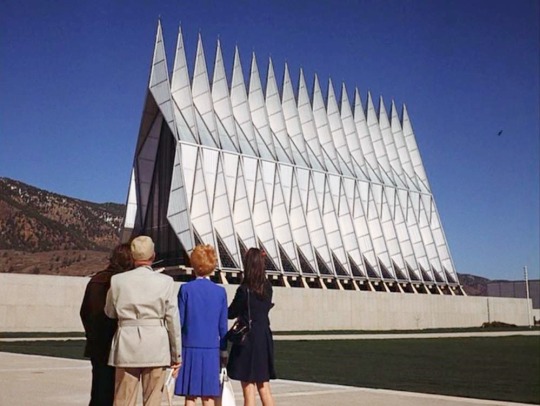
The
US Air Force Academy was founded in 1954. The
buildings were designed in a modernist style and make extensive use
of aluminum on building exteriors, suggesting the outer skin of
aircraft or spacecraft.
The
most controversial aspect of the design was the Cadet
Chapel,
designed by architect
Walter Netsch.
It is currently the most
visited man-made tourist attraction in Colorado.
It features 17 spires that shoot 150 feet into the sky. On the tour,
Lucy understandably mistakes the Chapel for a large aircraft. This
scene is underscored by the Air Force Academy choir singing a hymn.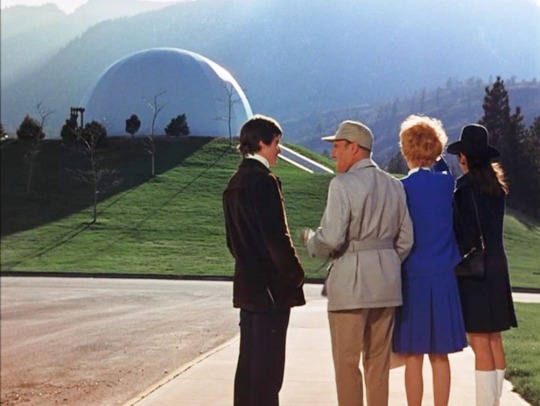
Harry
mistakes the domed planetarium
building for a UFO. The site used to be open to the public, but is now used exclusively for cadet training.The choir
switches to “Air Force Blue” an unofficial
Air Force song composed during 1956 by Marilyn Scott and Keith
Textor.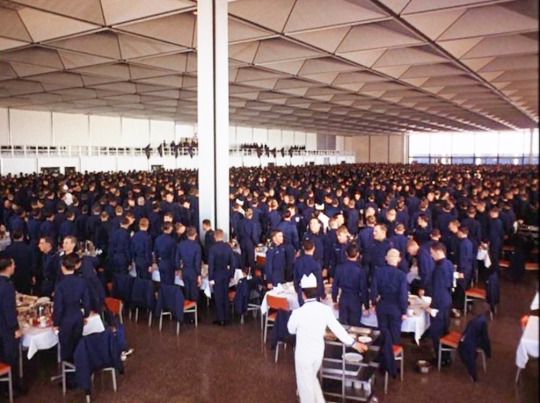
They
look through the windows at Mitchell
Hall,
the cadet dining hall, which is named in honor of Brigadier General
William Mitchell. This three and a half story structure sits on 1.7
acres and has the capability of serving the entire Cadet Wing (more
than 4,000 people) simultaneously in less than 30 minutes. During
this scene the choir sings a song based on the poem “The
Coming American” by Samuel
Walter Foss.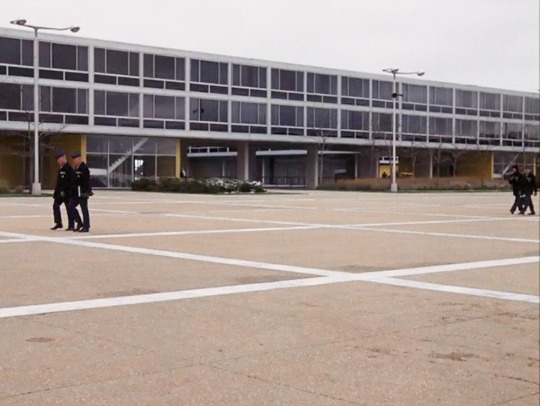
They
next see Vandenburg
Hall,
a quarter mile long dormitory. Vandenberg
Hall is the second-largest university dormitory in the country, after
the United States Naval Academy’s Mitchell Hall. The dorms are
named after General Hoyt S. Vandenberg, the second Air Force chief of
staff. The
main buildings in the Cadet Area surround a large pavilion known as
The
Terrazzo,
designed by landscape architect Dan Kiley. The name comes from the
walkway’s terrazzo tiles that are set among a checkerboard of
marble strips.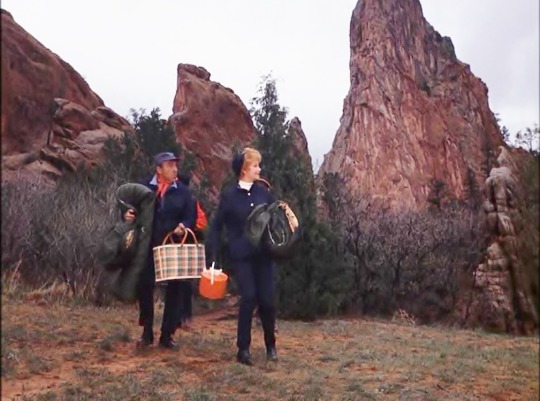
The
scene where Lucy is dragged by a floor polisher through the hallways
of one of the buildings is accomplished by Lucille herself without a
stunt double. A special dolly is placed under her body to glide her
along, and the film was sped up so she appears to be moving much
faster than she actually was.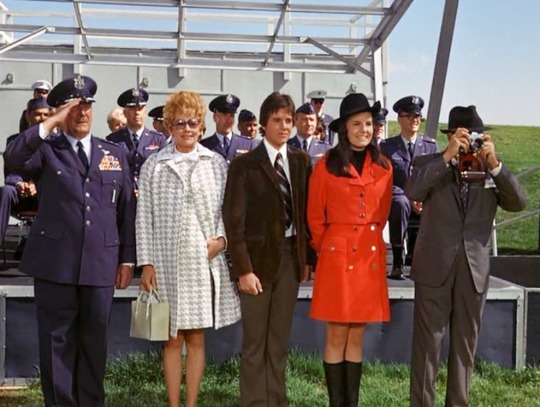
When
Lucy and the Carters are guests at the grand parade, Lucille Ball
wears the prescription
sunglasses
she wore in real life. Lucy Carter never wore glasses on the series,
so it momentarily reminds us that these cadets are all parading for
the real-life celebrity Lucille Ball.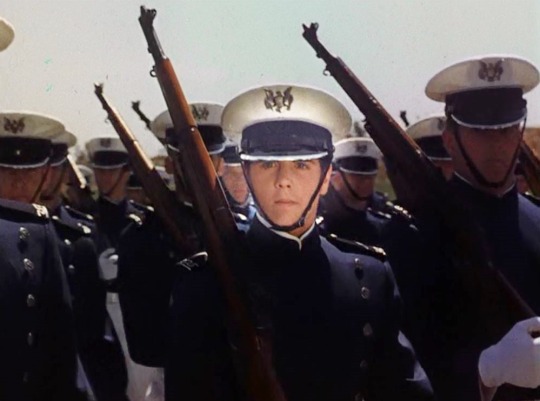
As
the parade of cadets passes, the show takes a surreal turn when Lucy,
with Craig standing beside her watching the men march by, sees the
face of her son in the formation. The camera irises in and focuses
on Craig in full military inform. The march is accompanied by “El
Capitan” (1896) by John Philip Sousa.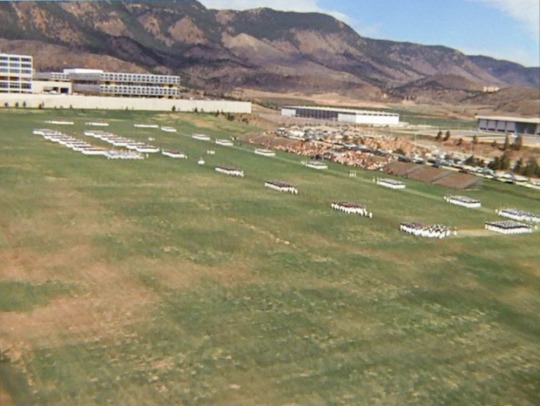
The
episode ends with a helicopter shot of the parade and the Academy
campus to the strains of “Off We Go, Into the Wild Blue Yonder”
(aka “The U.S. Air Force Song” written in 1938 by Robert
MacArthur Crawford).
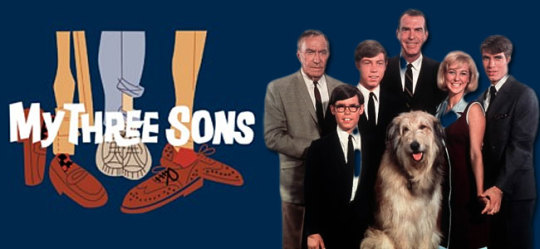
In
addition to Beverly Garland and Roy Roberts, Lucy shows and “My
Three Sons” have a lot of actors in common. First and foremost
William Frawley (Fred Mertz on “I Love Lucy”) who played Uncle
Charlie. Star Fred MacMurray played himself on a 1958 episode of “The
Lucy-Desi Comedy Hour.” In early episodes of “The Lucy Show”
Barry Livingston (Ernie, youngest of the three sons) played Mr.
Mooney’s son Arnold on two episodes. Don Grady (Robbie, eldest of
the three sons) also did an episode of “The Lucy Show” as one of
Lucy’s daughter’s friends. Candy Moore and Jimmy Garrett, who played
Lucy Carmichael’s children on “The Lucy Show,” each did one
episode. Doris Singleton, who played Caroline Appleby on “I Love
Lucy” and characters on each of Lucy’s shows, also played two
characters on eight episodes of “My Three Sons.”Other shared
character actors include Maurice Marsac (Tropicana Maitre D’), Reta
Shaw, Jerry Hausner (Jerry the Agent), Maxine Semon, Lou Krugman, Ted
Eccles (who also played Arnold Mooney), Richard Reeves, Ed Begley,
Gail Bonney, Jay North (Wendell Mooney), Rolfe Sedan, Tyler McVey,
Sandra Gould, Richard Deacon, Eve Arden, Mabel Albertson, Joan
Blondell (Joan Brennan), Elvia Allman, Herb Vigran, Dayton Lummis,
Mary Wickes, Lurene Tuttle, Dick Patterson, Jamie Farr, Tol Avery,
Robert Carson, Amzie Strickland, Barbara Morrison, Louis Nicoletti,
Eddie Quillan, Barbara Pepper, Dub Taylor, Kathleen Freeman, Ray
Kellogg, Stafford Repp, Jay Novello, William Meader, Arthur Tovey,
Bess Flowers (”Queen of the Extras”), Ed Haskett, Hans Moebus, Bert Stevens, James Gonzales,
Steve Carruthers, Norman Stevans, and George DeNormand.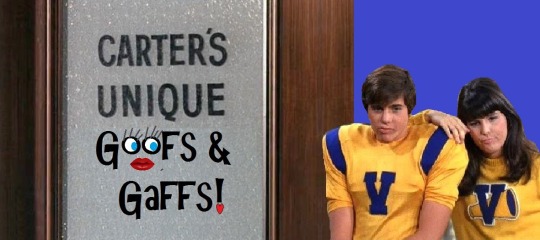
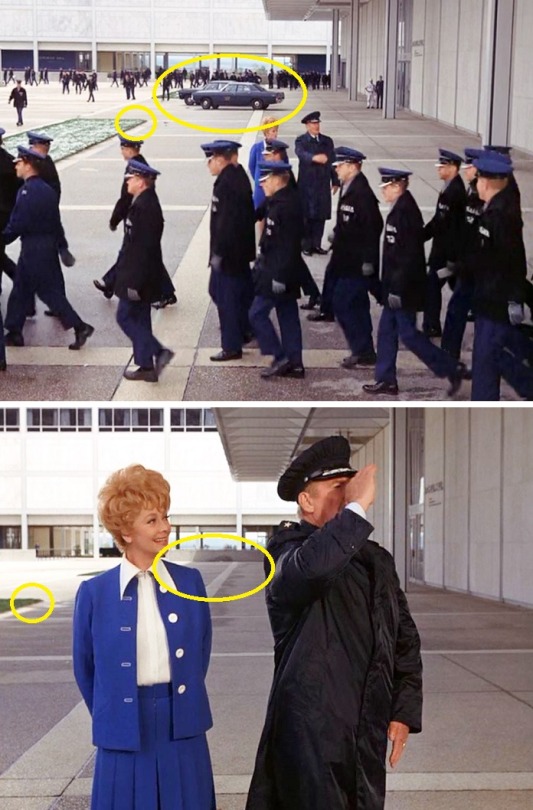
During
the saluting scene, cars disappear and reappear; They’re present in
the long shots and gone in the close-ups.
Same
for the snow (small circle); there is snow on the grass in the long
shots and none in the close-ups.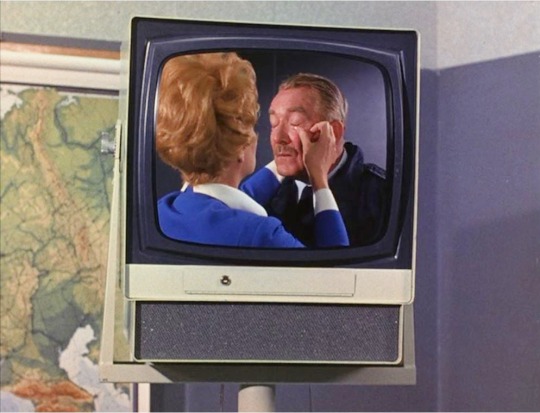
Lucy
mistakes the Superintendent (Roy Roberts) for a janitor despite the fact that he’s
wearing a military hat!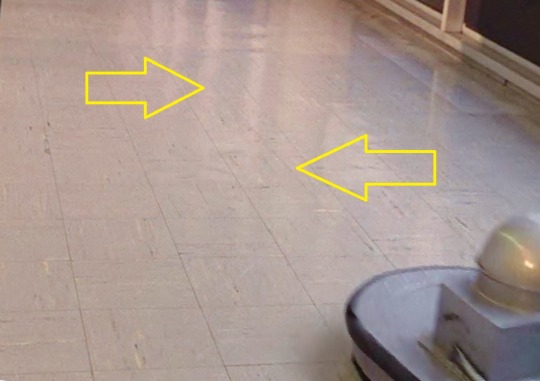
The
wire pulling the runaway floor polisher down the hallway can be
clearly seen in one shot, although it is difficult to see in the
still photos.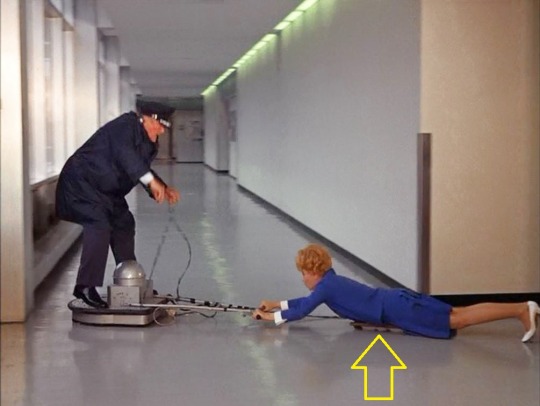
In another shot you can see the dolly underneath Lucy.
“Lucy Goes to the Air Force Academy: Part 2” rates 3 Paper Hearts out of 5
These
two episodes feel more complete if viewed as one. Lucy’s display of
physical comedy is truly memorable. The tour of the Academy is
basically a recruitment video for cadets. The military pageantry of
the ending, combined with Lucy’s hallucination of Craig in uniform,
is a bit odd.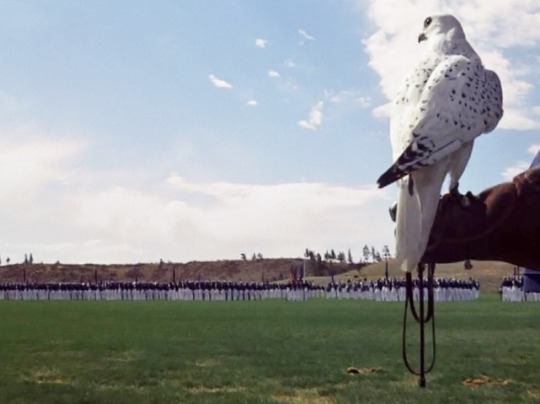 1969, Antonio Garcia Tony, Beverly Garland, Cadet Chapel, CBS, Colorado, Colorado Springs, Desi Arnaz Jr., Gale Gordon, Gene Thompson, George Marshall, Here’s Lucy, John Erwin, Lucie Arnaz, Lucille Ball, Mel Blanc, Mitchell Hall, My Three Sons, Planetarium, Roy Roberts, tv, US Air Force Academy, Vandenberg Hall
 -
LUCY GOES TO THE AIR FORCE ACADEMY: PART 1
S2;E1
~ September 22, 1969

Directed
by George Marshall ~ Written by Gene ThompsonSynopsis
Delivering
a camper from Los Angeles to San Francisco, Lucy decides to take a
detour to Colorado to show Craig the Air Force Academy.Regular
CastLucille
Ball (Lucy
Carter), Gale
Gordon (Harrison
Otis Carter), Lucie
Arnaz (Kim
Carter), Desi
Arnaz Jr. (Craig
Carter)Guest
Cast
Roy
Roberts
(Superintendent) was
born Roy Barnes Jones in Tampa, Florida in 1906. His early career
was on the Broadway stage, gracing such plays as Old
Man Murphy
(1931),
Twentieth
Century (1932),
The
Body Beautiful
(1935)
and My
Sister Eileen
(1942).
In Hollywood, the veteran character actor clocked over 900 screen
performances in his 40 year career, most of which were authority
figures. He and Lucille Ball appeared together in Miss
Grant Takes Richmond
(1949).
On “The Lucy Show” he first appeared as a Navy Admiral in “Lucy
and the Submarine” (S5;E2)
before
creating the role of Mr. Cheever,
a recurring
character he played through the end of the series. This is the first
of his 5 episodes of “Here’s Lucy.” Roberts died in 1975 at age
69.Roy
Roberts will play the same character in “Lucy
Goes to the Air Force Academy: Part 2” (S2;E2).
Frank
Marth
(Registrar) was
a regular on “The
Honeymooners”
(1955)
playing police officers, photographers, newsmen, and various
neighbors and passersby. This is his only
appearance with Lucille Ball.John
Erwin (Narrator, uncredited) was a voice-over artist primarily
known for voicing Reggie on the “Archie” cartoons. Erwin’s voice
over comes at the end of the episode to tell the audience to tune in
next week for part two.Actual
Air Force Academy students and staff play themselves.

This
is the first episode to be directed by George Marshall, who directed
Lucille Ball in the films Valley of the Sun (1942) and Fancy
Pants (1950). He will direct the first eleven episodes of
season two of the “Here’s Lucy.” According to DVD extras,
Marshall was quite a drinker. This is the first of four episodes to
be written by Gene Thompson.
A
few weeks before this episode aired, CBS staged a press event at the
Air Force Academy which Lucy attended. It resulted in publicity (like the above article) for
the new season.
Oops! Interestingly, the Chicago area CBS affiliate took
out ad space adjacent to their feature article on the event.
Unfortunately, they mis-identified Craig as Ricky, continuing the
confusion that Desi Arnaz Jr. and Little Ricky Ricardo were one and
the same person. This confusion was further compounded by the fact
that Lucy Ricardo gave birth on TV on the very same day (January 19, 1953) that Lucille
Ball gave birth to Desi Jr.
This
episode is the first of a four-part on-location story arc that came
about due to the success of location filming at LAX during the first
season. Created with the cooperation of the Air Force and the states
of Colorado and Arizona, practically the entire Air Force Academy
appears as extras. Filming was done right in the dormitories and
administrative buildings. The Air Force viewed this as a sort of TV
commercial at a time when the public was very down on the military
due to its involvement in the Vietnam War.
The
episode uses a Travco
motor home. The company’s RV’s were originally built on a Dodge
chassis. Travco was in business from 1964 until the late 1980s.
The
US Air Force Academy was founded in 1954. The
most controversial aspect of the Academy was its chapel,
designed by architect
Walter Netsch, who at one point was prepared to abandon the design;
but
the accordion-like structure is now acknowledged as an iconic symbol
of the Academy campus.
Like
previous location shoots, the episode was supplemented with studio
shots using rear projection for driving scenes. Unlike
studio filming, only one camera was used on location, although
Lucille Ball was insistent on her studio lighting instruments,
despite their weight and bulk.

Seeing
Lucy in an RV (camper) recalls the 1953 film she made with Desi Arnaz
Sr. The
Long, Long Trailer.
The episode even opens with the same theme music, “Breezin’ Along
With the Breeze” written by Haven
Gillespie, Seymour Simons, and Richard
A. Whiting.
At one point, due to the sudden movement of the vehicle, Craig gets
covered in food, just the way Lucy was in the film.
This is not the first time a Lucy character enrolled her son in a military academy. On “The Lucy Show” Lucy Carmichael shipped her son Jerry (Jimmy Garrett) off to military school not once, but twice!


As noted on the DVD, continuity was affected by the weather. An early snow covered the ground overnight and it became impossible to match exterior shots of the Academy campus.

Lucy
Goes to the Air Force Academy: Part 1 rates 3 Paper Hearts out of 5More location shooting shows that Lucy is feeling the show’s keen identity crisis and trying to keep things fresh and interesting for herself and viewers. Who is running the Unique Employment Agency while they are all out on their adventure? This two-parter might have worked better as an hour-long special. The negotiation scene with the Registrar feels a bit static and too long. Although Lucy in a shortie nightgown running through the Air Force Academy is a treat!
-
LUCY HELPS CRAIG GET A DRIVER’S LICENSE
S1;E24
~ March 17, 1969
Directed
by Jack Donohue ~ Written by Milt Josefsberg and Ray SingerSynopsis
When
Craig turns 16, naturally he wants to get his driver’s license. Much
to the dismay of the nervous driving inspector (Jack Gilford), Lucy
insists on playing back seat driver during the road test!Regular
CastLucille
Ball (Lucy
Carter), Gale
Gordon (Harrison
Otis Carter), Lucie
Arnaz (Kim
Carter), Desi
Arnaz Jr. (Craig
Carter)Guest
Cast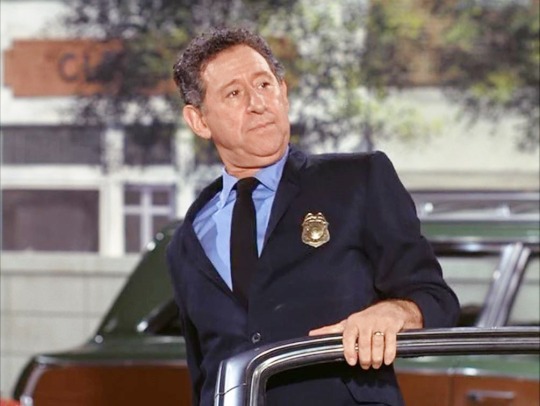
Jack
Gilford
(Wilbur Hurlow) began
his career in the Amateur Nights of the 1930s moving on to nightclubs
doing satire and pantomime.
He
was nominated for Tony awards for best supporting actor in the
musical A
Funny Thing Happened on the Way to the Forum (1962)
and
Cabaret
(1966).He
was nominated for an Academy Award for Best Supporting Actor for the
film Save
the Tiger
(1973).
He
is perhaps best remembered as the guy on the Cracker Jack commercials
from 1960-1972.
This is his only appearance opposite Lucille Ball. Gilford died in
1990.The surname ‘Hurlow’ will be used as the name of a policeman (Robert Carson” in “A Home is Not an Office” (S5;E4) and
a nurse (Mary Wickes) in “Lucy and Harry’s Tonsils” (S2;E5). Wickes also played a secretary named Hurlow in “Lucy and Robert Goulet” (TLS S6;E8).
Wilburn Hurlow’s mother is obviously deceased. He addresses her frequently by looking heavenward!

Herkie
Styles
(First Clerk) was a veteran nightclub comedian making his final
screen appearance.
Sid
Gould
(Second Clerk) made
more than 45 appearances on “The Lucy Show,” all as background
characters. This is one of his 40 episodes of “Here’s Lucy.”
Gould (born Sydney Greenfader) was Lucille Ball’s cousin by
marriage to Gary Morton.
Joseph
Mell
(Third Clerk) was seen in five episodes of “The Lucy Show.”
In 1964 he appeared in the TV special “Mr. and Mrs.” (aka “The
Lucille Ball Comedy Hour”), which featured many of the Desilu
regulars. In 1971, he was a Taxi Driver on “Lucy and the Lecher,”
a cross-over episode of Danny Thomas’s “Make Room for Granddaddy”
in which Lucille Ball played Lucy Carter, her character from “Here’s
Lucy.”
This is his only appearance on the series.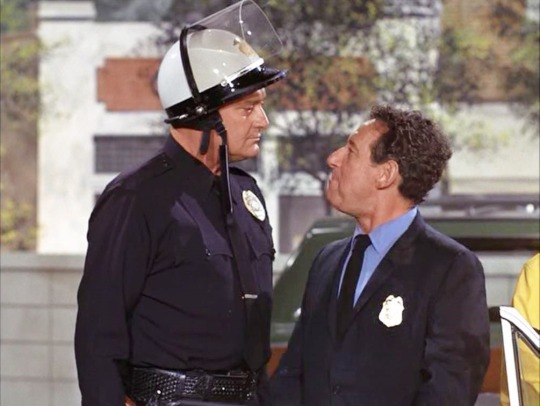
Ray
Kellogg
(Policeman) played
the barking Assistant Director (“Roll
‘em!”)
in “Ricky’s
Screen Test” (ILL S4;E6)
and later appeared in “Bullfight
Dance” (ILL S4;E22).
He was seen on 7 episodes of “The Lucy Show.” This is the second
of his two episodes of “Here’s Lucy.”Murray
Pollack (DMV Clerk,
uncredited) was
seen as one of the party guests in “Country
Club Dance” (ILL S6;E25),
the episode that introduced Barbara Eden. Coincidentally, he later
appeared on half a dozen episodes of “I Dream of Jeannie.” He was
at the airport when “The
Ricardos Go to Japan”
(1959).
He was seen in the 1963 movie Critic’s
Choice with
Lucille Ball. He made two appearances on “The Lucy Show.” This is
the second of his three episodes of “Here’s Lucy.”David Elam (DMV Clerk, uncredited) started doing background work in 1957. He made two appearances on Desilu’s “The Untouchables”. Elam was at the wedding of Mike and Carol Brady in 1969. This is his only appearance with Lucille Ball.
Alberto Morin (DMV Clerk, uncredited) was born in Puerto Rico, and appeared in some of Hollywood’s most cherished films: Gone with the Wind (1939), Casablanca (1943), and Key Largo (1948). He was Carlos, one of Ricky’s “Cuban Pals” (ILL S1;E28) and the Robert DuBois in “The French Revue” (ILL S3;E7). His many background appearances on “The Lucy Show” and “Here’s Lucy” were all uncredited.
Clarence Landry (Man at DMV, uncredited) made at least half a dozen appearances on the series. This was the first. Landry and Vernord Bradley were a tap dance duo who appeared in in the Vitaphone 1941 short Minstrel Days. Like his fellow extra Frieda Rentie, he was also seen in the 1958 film South Pacific.
Frieda Rentie (Woman at DMV, uncredited) makes the first of at least four appearances on the series. Rentie was in the original 1958 film of South Pacific and in 1972’s The Poseidon Adventure.
Others
at the Motor Vehicle Bureau are played by uncredited background
performers.
This episode’s title is also sometimes listed as “Lucy Helps Craig Get HIS Driver’s License.”

This episode was aired on St. Patrick’s Day 1969, although there is no mention of it in the dialogue. Lucy does, however, wear a green blouse and skirt!
This
is the last show of the first season, and the last installment for
long-time employee, producer Tommy
Thompson.
Lucille Ball brings in her cousin Cleo Smith to produce the rest of
the series.The first season ended at number 9 in the ratings with a 23.8
share. The first DVD release was on August 25, 2009.
Craig
is marking his 16th birthday. His age was mentioned two weeks earlier in “Lucy’s Safari”
(S1;E22, above). As the world knows, Desi Arnaz Jr.’s actual birthdate is January 19th.
He, like Craig, also turned 16 in 1969.
Craig
can’t wait to to go to a drive-in movie with Steve, Peggy and
Barbara. Steve probably refers to Steve March, the son of Mel Torme and the adopted son of Arnaz family friend, Hal March. Steve will appear in “Lucy and the Bogie Affair” (S2;E13, above), “Lucy the Crusader” (S2;E13), and “Lucy and Sammy Davis Jr.” (S3;E3). He also will write the song “Country Magic” for “Lucy and Ann-Margret” (S2;E20).
Peggy and Barbara are new to a list of Craig’s gal pals that includes Carol and Susie and Doreen… and Eileen and
Josephine… and Betty and Annie… and Lori and Elsie!
A few months later, the show presents “Lucy at the Drive-In Movie” (S2;E8, above), although it is Kim with a date at the ‘passion pit’, not Craig.

For
his birthday, Uncle Harry gives Craig his favorite book when he was
16: Tom
Swift and His Electric Rifle, a
young
adult novel
written
by the Stratemeyer
Syndicate
writers
using the pen name Victor
Appleton.
It is volume 10 in the original Tom
Swift
novel
series first published
in 1911. Uncle Harry puts a check for $50 inside. He promises he’ll
sign it when Craig turns 21.
Lucy
gives her son a wallet with a ten dollar bill tucked inside. Kim
gives her brother a turtle neck sweater she knit herself. It turns
out to be short on turtle and long on neck!
Craig’s vision is so good he can see the tiny fine print on the eye chart: “Made by the Acme Printing Company.”

To help her son pass the eye test, Lucy gets a closer look at the chart, much to the chagrin of the clerk (Sid Gould). “Lucy Has Her Eyes Examined” (ILL S3;E11) also used the Snellen Eye Chart, named after Dutch ophthalmologist Herman Snellen, who developed it in 1862. Note that between 1953 and 1969, the chart has not changed. Now, however, eye doctors use an improved chart known as the LogMAR chart.

Lucy questions the clerk (Joe Mell) as to why Craig has to have his photograph taken in profile, while the man before him was photographed facing the camera. Craig correctly sites California law enacted in 1965 that those under 21 be photographed in profile for quicker identification by law enforcement officials.
California law now requires teens be subject to “provisional license restrictions” and full face photos are required for facial recognition software.
Lucy embarrasses Craig by telling the clerks that Craig has an identifying mole on his backside!

When
Lucy objects to her son being fingerprinted like a common criminal,
the clerk notes that the only two people to object to being
fingerprinted were Bonnie and Clyde. Bonnie
Parker (1910–34)
and Clyde
Barrow
(1909–34)
were notorious criminals who traveled with their gang during the Great
Depression, robbing people and killing when cornered or confronted. A
popular film about their lives was released in August 1967 (above)
winning two Academy Awards. The film was mentioned several times on
“The Lucy Show.”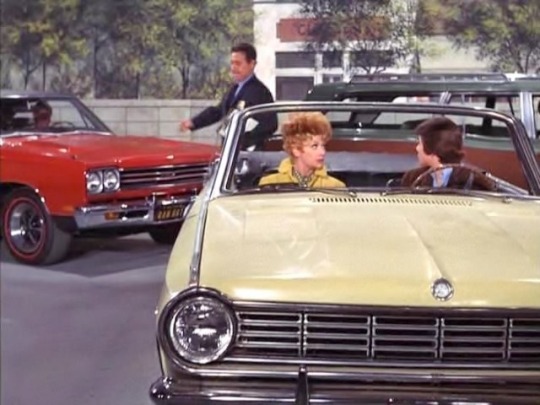
Craig takes his road test in Lucy’s car, a 1965 yellow convertible Dodge Dart In the parking log there are also a red 1969 Plymouth GTX and a blue station wagon waiting to take the road test.

The car turns up again in “Lucy at the Drive-In Movie” (S2;E8), although with a different license plate.

It was also driven by Sergeant Carter on Desilu’s “Gomer Pyle U.S.M.C” (above) in 1965.

The car’s license plate (WHO-526) will appear again on the camper that the Carters drive in the on location episodes that open season two of the series.

As Inspector Hurlow (Jack Gilford) comes toward the car, Lucy and Desi Jr. indulge in some silly ad lib muttering they probably didn’t expect to be heard on microphone.
CRAIG: “That’s him!”
LUCY: “Really? How do you know?”
CRAIG: “They all have curly hair.”
The
episode uses actual location footage of the road test through the
streets of Los Angeles, which was matched in the studio with a rear
projection process shot. This technique was previously seen in “Lucy
and the Great Airport Chase” (S1;E18) and was done for the first
time on television in “California,
Here We Come!” (ILL S4;E12). Due to the distance and the speed of the car, it is not possible to tell if the occupants of the vehicle are actually Ball, Arnaz, and Gilford, or actor doubles, as was done during location filming for the trip to California on “I Love Lucy.”
In the first shot, the vehicle is driving toward the camera with Hollywood headquarters of World Opportunities Inc. in the background and the Hollywood Hills in the distance. A General Tire location is on the right.

The
background footage then shows the RCA building (now the Hollywood Film School) in the
background, which means the car was traveling south on Sunset Boulevard in Hollywood, the same street that Paramount (formerly
Desilu) studios is on. Ironically, RCA was the parent company of NBC
and “Here’s Lucy” was a CBS show! By the look of the cars on the street in the process shots, the background footage was not recent when it was used on “Here’s Lucy.”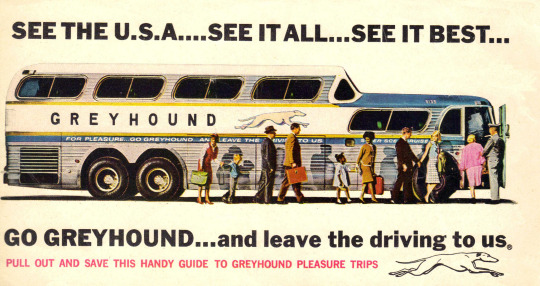
At one point Mr. Hurlow tells Lucy that if she wants to help she should “take the bus and leave the driving to us.” This was the popular slogan of Greyhound Bus Lines. The slogan will be quoted again in “Lucy the Laundress” (S2;E17) and “Lucy and the Used Car Dealer” (S2;E9).

Mr.
Hurlow passes Craig on his road test, noting that if he can drive
with Lucy in the back seat, he can drive at the
Indianapolis Speedway.
This is a reference to the motor raceway that
is
home of the Indianapolis
500
and
formerly the home of the United
States Grand Prix.
It is located six miles west of Downtown
Indianapolis,
Indiana. The name has become synonymous with fast driving, especially in jokes.
Lucy
lets it slip that she has a New York State driver license that she
got five or six years ago and tells Mr. Hurlow she’s only lived in
California for three years. This sounds very much like the back
story of Lucy Carmichael of “The Lucy Show.” It is also revealed
that in New York Lucille Carter was a brunette. Craig helpfully says the
California sun bleached it.
Hurlow
is secretly thrilled that Lucy has an invalid license and sings to
himself “Every
cloudy day, has a silver lining.”
He adds that after he’s through with her she’ll be lucky to drive a
tricycle in Griffith Park. Griffith
Park
is
a large municipal
park
at
the eastern end of the Santa
Monica Mountains
in Los
Angeles,
California.
The park covers 4,310 acres, making it one of the largest urban
parks
in
North
America.
It
is the second-largest city park in California. It is named for
Griffith J. Griffith, a land developer who bought the land in 1882.
Lucy
calls Mr. Hurlow “a
nervous wreck.”
That same description fits Hysterium, the role Jack Gilford
originated in A
Funny Thing Happened on the Way to the Forum.
In the show, Hysterium sings the song “Calm” by Stephen Sondheim
in which he’s anything but!
Mr. Hurlow loses his cool and runs
off singing “Happy Days Are Here Again,” a
song by Jack
Yellen and
Milton
Ager. The
song was featured in the 1930 film Chasing
Rainbows. The song title was mentioned by Ethel Mertz in “Fan Magazine Interview” (ILL S3;E17). Lucy is worried about Ricky’s fidelity:LUCY: “If some woman was trying to take Fred away from you, you’d sing another tune.”
ETHEL: “Yeah, ‘Happy Days Are Here Again’.”Note: Viewers watching the episode on Amazon Prime will notice that the song is absent from Jack Gilford’s screen exit. It is likely that the music royalty fee was not deemed worth paying for such a quick moment and it was excised.

Lucy
Ricardo also wreaked havoc on the roads in “Lucy Learns to Drive”
(ILL S4;E11). Her patient teacher was her husband, short-tempered
Ricky. Lucy then acted as driving instructor for her gal pal Ethel.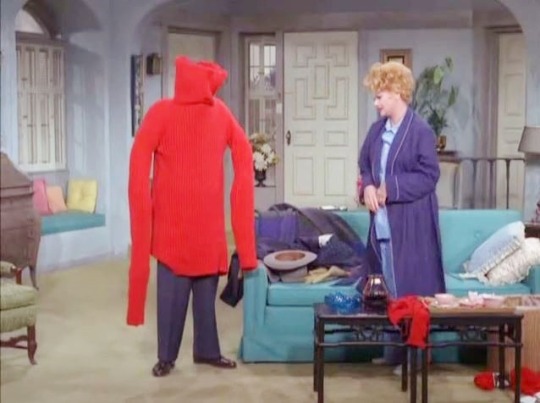
An ill-fitting turtle neck sweater was featured in “Lucy and Clint Walker” (TLS S4;E24). The sweater was also knit as a birthday present.
Fast Forward!

“Here’s the Story…” In 1974 “The Brady Bunch” also tackled a teenager getting a driver license when Marcia Brady took the test with Herb Vigran as her instructor. Vigran had appeared several times on “I Love Lucy” and “The Lucy Show”. Wisely, Carol Brady (Florence Henderson) was not in the back seat as Lucy was with Craig. Coincidentally, the following year Marcia’s secret crush was Desi Arnaz Jr., who appeared on the show in 1970 as himself. Eve Plumb, who played Marcia’s sister Jan, played Craig Carter’s cousin Patricia Carter, on a 1972 episode of “Here’s Lucy.” “The Brady Bunch” and “Here’s Lucy” both finished their runs in 1974 and were both filmed at Paramount!


Deja View! Like
many rear projection shots on TV, the car goes by the same landmarks
a couple of times. It was also noticeable in“California, Here We Come!” (ILL S4;E14) and will be again in the Las Vegas strip sequence of “Lucy Meets Wayne Newton” (S2;E22).
I’m Not a Lawyer, But… Craig incorrectly advises his mother that she doesn’t have to show her license to the police officer (Ray Kellogg) if she isn’t actually driving a car. Police officers have the right to ask for identification such as driver’s licence even when a vehicle is stationary or parked.

“Lucy Helps Craig Get a Driver’s License” rates 3 Paper Hearts out of 5
This
is a good ‘Bachelor Mother’ episode with Lucy playing the helicopter
mother. Unfortunately, it isn’t really lough out loud funny. The
road test scene seems to hold the possibility for Lucy’s trademark
physical comedy, but all we get are a few pointed barbs. Perhaps it
is because the tone of the episodes this season has varied so wildly
– from out-and-out farce to music hall revue – we don’t know what
to expect from “Here’s Lucy.” 1969, A Funny Thing Happened on the Way to the Forum, Bonnie and Clyde, CBS, Cleo Smith, Desi Arnaz Jr., Driver’s License, Gale Gordon, Griffith Park, Happy Days are Here Again, Here’s Lucy, Herkie Styles, Indianappolis Speedway, Jack Donohue, jack gilford, Joseph Mell, Lucie Arnaz, Lucille Ball, Milt Josefsberg, Murray Pollack, Ray Kellogg, Ray Singer, Road Test, Sid Gould, Tommy Thompson, tv
 -
LUCY AND TENNESSEE ERNIE’S FUN FARM
S1;E23
~ March 10, 1969

Directed
by Jack Donohue ~ Written by Bob O’BrienSynopsis
A
farmer (Ernie Ford) wanders into the Unique Employment Agency in need
of farmhands. Instead, Lucy proposes they turn his farm into a
vacation spot for city folks. They start with a TV commercial to get
the word out!Regular
CastLucille
Ball (Lucy
Carter), Gale
Gordon (Harrison
Otis Carter), Lucie
Arnaz (Kim
Carter), Desi
Arnaz Jr. (Craig
Carter)Guest
Cast
Tennessee
Ernie Ford
(Ernie Epperson) was
the first and only celebrity to make three guest star appearances
(playing a variation on himself) on “I Love Lucy.” A popular
country singer of the 1950s, “I Love Lucy” was his first credited ‘acting’
job, before his big hit with the song “Sixteen Tons” in 1955.
Ford was first mentioned on season in “Lucy
Writes a Play” (ILL S1;E17),
when playwright Lucy mistakenly dubs herself the next Tennessee
Ernie, instead of Tennessee Williams. He then appeared (also as a
variation on himself) on “The Lucy Show.” This is his fifth and
final appearance on a Lucille Ball sitcom. Ford was fond of
alliterative character names. In addition to Ernie Epperson, he
played Homer Higgins on “The Lucy Show,” Loser Lumpkin on "The
Red Skelton Show,” and Kentucky Cal on the Desilu-produced "Make
Room For Daddy.” He died in 1991.Epperson
owns the Broken Plow Farm in the ‘sue-burb’ of Calabasas.
The
Back Porch Majority
(Themselves) was
a folk music group founded by Randy Sparks in 1963. It was intended
to be a rehearsal space for The New Christy Minstrels, another group
Sparks had established in 1961, but it ended up becoming successful
on its own. The group released six albums and was chosen to provide
entertainment at the White House in 1965. They previously backed up
Ernie Ford on “The Lucy Show.”The members of the group are Rusty Richards, Jet Sharon, Kathy Beaudine, Kittie McCue, and Kyra Carleton.
Larry
Billman
(Dancer, uncredited) was seen on Broadway in the short-lived musical
revue Vintage
‘60
(1960). He has less than ten screen credits and made his career in
charge of live entertainment for Disney theme parks. He died in May
2017.The revue features a live cow, a donkey, and two horses. Other singers, dancers, and musicians appear uncredited.


Two days after this episode was first aired (March 12, 1969) Lucie Arnaz made the first of her three appearances on NBC’s “The Kraft Music Hall”, hosted by Wayne Newton and featuring Judy Carne and Tim Conway. Lucille Ball does not appear.
All
the singing and instrumentals are prerecorded, although naturally
Desi Jr. played his drum solos live. Lucille Ball has only one brief
line of solo singing during “Heavenly Music” and it does not
sound like her voice. It is very likely Carole Cook, who has been
Lucy’s ghost singer on two previous occasions. Gale Gordon is also
dubbed in that song.
When
Lucy asks the overalls-wearing Ernie if he is a farmer, Ernie replies
“Well,
I ain’t that Omar Shareef on his way home from a square dance!”
Actor Omar
Sharif
was nominated for a 1963 Oscar for Lawrence
of Arabia
and had won a Golden Globe in 1966 for Doctor
Zhivago.
There is a slight resemblance between Ford and Sharif because they
both wore mustaches for most of their public lives.
Lucy
and Ernie joke about Los Angeles’ smog problem. The word smog
is a
portmanteau
of
the words smoke
and
fog.
The problem was particularly acute in Los Angeles during the latter
half of the 20th century. So much so that the word smog became synonymous with Los
Angeles to many. Smog was the source of several jokes on “The Lucy
Show” after Lucy Carmichael re-located to Southern California, one of them during Ernie Ford’s last appearance in “Lucy and Tennessee Ernie Ford” (TLS S5;E21).
Ernie
says he drives a Model-T. The Ford Motor Company manufactured the
Model-T
between 1908 and 1927, and it is considered the first affordable car.
The
commercial that Lucy and Harry do for Ernie’s Fun Farm gives us a
glimpse of them as a dysfunctional married couple, complete with two teenage kids!
As
the bickering couple, Lucy calls her husband (Sheldon) Porky Pig and
the Jolly Green Giant. He calls her the Bride of Frankenstein.
Porky Pig
was one of the characters in the Warner Brothers cartoons voiced by
Mel Blanc. Blanc had appeared with Lucille Ball on radio, films, and
TV. The Jolly
Green Giant was
the mascot of a frozen vegetable company of the same name frequently
seen in television ads. “The
Bride of Frankenstein”
(1935) was a film sequel to 1931’s “Frankenstein” based on the
novel by Mary Shelley. Coincidentally, the Bride was played by Elsa
Lanchester, who guest starred on “I Love Lucy,” and an upcoming episode of “Here’s Lucy.”
Amidst the clutter of the living room is a bath towel stolen from the Commodore Hotel, a historic building in downtown Los Angeles that has recently been converted to apartments. The Commodore of Hollywood opened in 1927 and has been home to countless celebrities as they launched their careers.

One of the knickknacks on the coffee table is a glass bunch of grapes. If it looks familiar, it previously appeared in “Guess Who Owes Lucy $23.50?” (S1;E11) where there were two of them. After this appearance they became part of the living room set on “The Brady Bunch” which also filmed at Paramount. The recent reality show “A Very Brady Renovation” mentioned tracking them down.
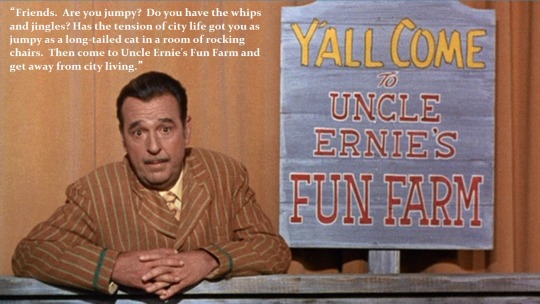
Ernie
pays the bickering couple a quick visit to bid them come to his Fun
Farm, singing this a capella jingle:“We’re
only 45 minutes from L.A.
People
all breathing fresh air.
Even a hog smells better than smog
When
you’re 45 minutes from there.”
The tune Ford uses is inspired by “45 Minutes from Broadway” by George M. Cohan, written in 1906 for a musical of the same name. The title refers to the length of time to travel by train from New Rochelle NY to Manhattan.
The
commercial turns into a fully-staged musical revue. Although a lot
of standards and show tunes are used, special lyrics to suit the plot
were written by Bob O’Brien.
The
orchestra plays “Oh,
What a Beautiful Morning”
from Oklahoma!
written by Rodgers and Hammerstein in 1943. A film version was
released in 1955. Lucy Ricardo once lied that she was in Oklahoma –
then confessed she spent two weeks in Tulsa once. Rodgers and
Hammerstein (aka Dick and Oscar) were names frequently dropped on “I
Love Lucy.”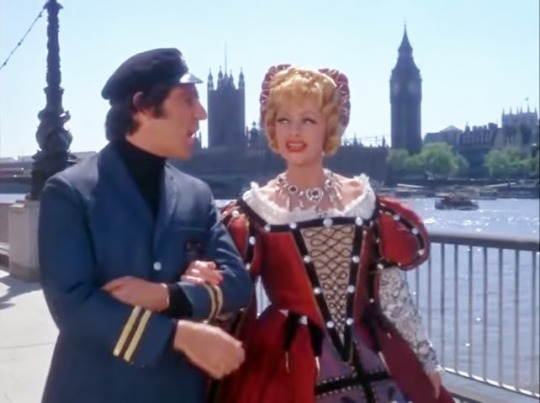
The
Back Porch Majority sings “On
a Wonderful Day Like Today”
from the 1965 musical The
Roar of the Greasepaint – The Smell of the Crowd
by Leslie Bricusse and Anthony Newley, who also sang it in “Lucy in
London” (1966, above).
Ernie
sings “Zip-a-Dee-Doo-Dah”
a song written by Allie Wrubel and Ray Gilbert for the 1946 Disney
film Song
of the South.
It won an Oscar for Best Song.
Ernie
and the Carter Family sing “Heavenly
Music”
from the 1950 film Summer
Stock
written by Saul Chaplin and originally performed by Gene Kelly and
Phil Silvers wearing similar costumes.
Ernie
and the Back Porch Majority sing “Y’all
Come”
written by Arlie Duff in 1953. It was sung by Ernie Ford in
“Tennessee Ernie Hangs On” (ILL S3;E29). Coincidentally, in that
episode he was also on television, doing a (fictional) show called
“Millikan’s Chicken-Mash Hour.” Both times there were specially
written lyrics to suit the episode’s plot.
Kim
does a specialty dance backed up by the male ensemble – all wearing
sombreros. The choreography was by Jack Baker, with assistance from Anita Mann.
Lucy
and Harry do an unusual combination of a square dance and the Mexican
hat dance.
Craig
(also wearing a sombrero) does a drum solo using a variety of
instruments.
In
a spotlight, Ernie sings a quiet version of ”Little
Green Apples“
backed up by the Back Porch Majority. The song was written by Bobby
Russell
for
Roger
Miller
in
1968, becoming a Top 40 hit.
The episode ends with a
reprise of “Y’all Come” and a hoe down, natur’lly.

Lucy
Ricardo did a TV commercial to sell Aunt Martha’s Old Fashioned Salad
Dressing in “The Million Dollar Idea” (ILL S3;E13) where she also
played a bumpkin character.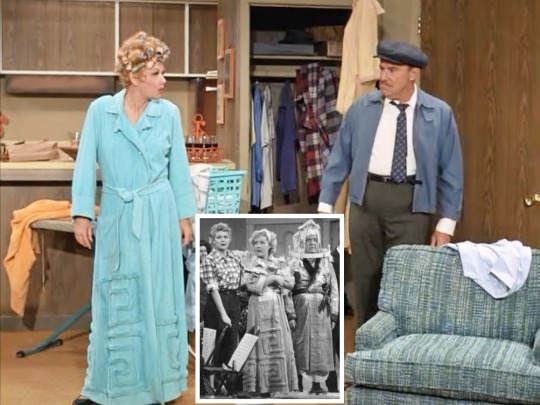
In
the commercial, Lucy wears a blue chenille bathrobe that looks very
similar to the one that Vivian Vance wore in 1952’s “Breaking the
Lease” (ILL S1;E18) and other episodes. It is possible that it
could be the same robe from the Desilu wardrobe racks! It was also worn by Ann-Margret on a 1970 episode of “Here’s Lucy.”
At
the start of the musical revue, Lucy Carter is milking a cow,
something that both Lucy Ricardo and Lucy Carmichael also did! In
real-life, Lucille Ball owned a cow she called Duchess of Devonshire
when she lived with Desi at Chatsworth Ranch.
The
last time viewers saw Ernie Ford on “I Love Lucy” he was calling
a square dance.
This was also true of his “The Lucy Show” appearance. Here, the last time Lucy and Ford perform together,
he does the same thing. He even repeats a few of the same calls in
both episodes:“Grab
yer partner, pat her on the head.
If
she don’t like biscuits, feed her corn bread!”
In November 1968, Lucille Ball appeared on “The Tennessee Ernie Ford Special” where she blacked out her teeth for comic effect.
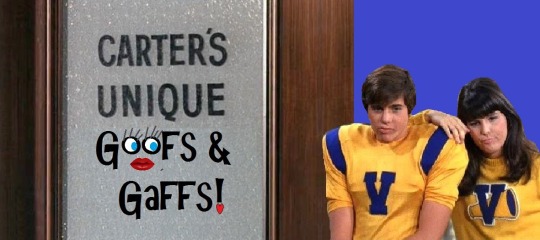
Get the Door! During
the TV commercial, when Harry (as Sheldon) slams the front door, the
suction causes the closet door to swing wider open, momentarily
distracting Gale Gordon who quickly turns to see what is moving
behind him.
Fashion Magazine? In the commercial, ‘Craig’ browses through Fashions magazine, an unlikely choice for a teenage boy. Perhaps this iteration of Craig is destined to become a fashion designer?
Loose Lips! Although
Harry’s comical yodeling during “Heavenly Music” is obviously not
Gale Gordon’s voice, there are times he gets more involved with the
wayward daisy in Lucy’s hat than the lip synching.
“Lucy and Tennessee Ernie’s Fun Farm” rates 3 Paper Hearts out of 5
This
episode is like a cross between “Hee Haw” and “The Grand Old
Opry” but very short on plot. After a few lines of Ernie’s
homespun wisdom, there is a very funny TV commercial which imagines
Lucy and Gale Gordon as a bickering married couple. The rest is a
straight up musical revue.1969, Bob O’Brien, Bride of Frankenstein, CBS, Desi Arnaz Jr., Gale Gordon, Here’s Lucy, Jack Donohue, Jolly Green Giant, Larry Billman, Little Green Apples, Lucie Arnaz, Lucille Ball, Model-T, Oklahoma!, Omar Sharif, Porky Pig, Roar of the Greasepaint Smell of the Crowd, Smog, Sombreros, Song of the South, Summer Stock, Tennessee Ernie Ford, The Back Porch Majority, tv, TV Commercial, Y’All Come -
LUCY’S SAFARI
S1;E22
~ March 3, 1969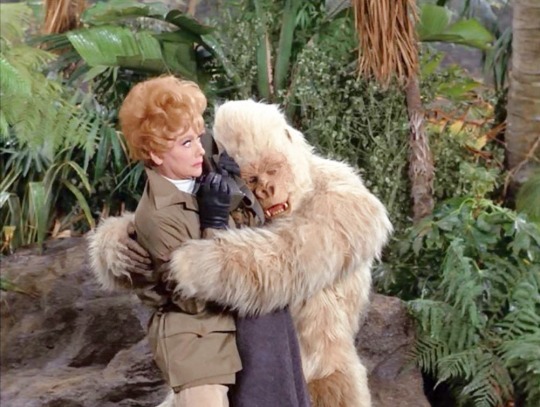
Directed
by Jack Donohue ~ Written by Milt Josefsberg and Ray SingerSynopsis
When
a rare Gorboona escapes from the zoo, Lucy, Harry and the kids help a
big game hunter (Howard Keel) trap him!Regular
CastLucille
Ball (Lucy
Carter), Gale
Gordon (Harrison
Otis Carter), Lucie
Arnaz (Kim
Carter), Desi
Arnaz Jr. (Craig
Carter)Guest
Cast
Howard
Keel
(Stanley Livingston, a Big Game Hunter) was discovered by Oscar
Hammerstein II during auditions for John Raitt’s replacement in
Broadway’s Carousel
in 1946. After that, he also went on to play Curly in Oklahoma!
He is probably best remembered for his role in MGM’s Seven
Brides for Seven Brothers
(1954), a film that was mentioned on “I Love Lucy.” On TV he
played Clayton Farlow on “Dallas” (1981-91). This is his only
appearance with Lucille Ball. Keel died in 2004.According
to the Unique Employment Agency’s file card on Livingston, he is 6’4”
tall, 220 lbs, dark hair, blue eyes, and single. He has spent many
years living in Africa.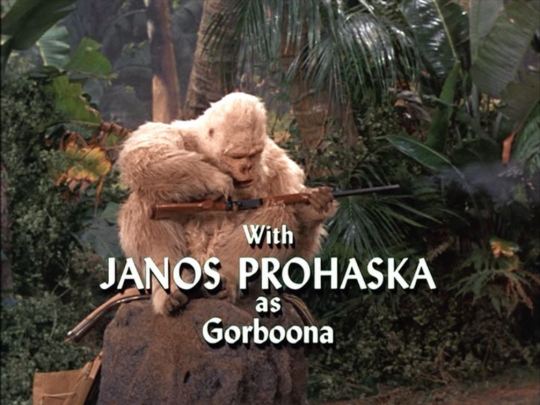
Janos
Prohaska (Gorboona)
was an actor, stunt man, and animal imitator who is probably best
remembered as the talking cookie-mad bear on “The Andy Williams
Show” (1969) although due to his thick Hungarian accent, his voice
was dubbed. He first played a simian on “Lucy and the Monkey”
(TLS S5;E12). This is the first of three times playing animals on
“Here’s Lucy.” Prohaska died in a plane crash in 1974.The
Gorboona escaped from the Topanga Zoo. A Gorboona is a rare, nearly
extinct, cross between a GORilla and a baBOON.

Lucy, Desi Jr., and Lucie were on the cover of TV Guide the week this show premiered.
Lucille
Ball was so hoarse from rehearsing the jungle mating call that she
nearly lost her voice. This show is not a favorite of anyone involved
in the episode. Not to mention many who weren’t!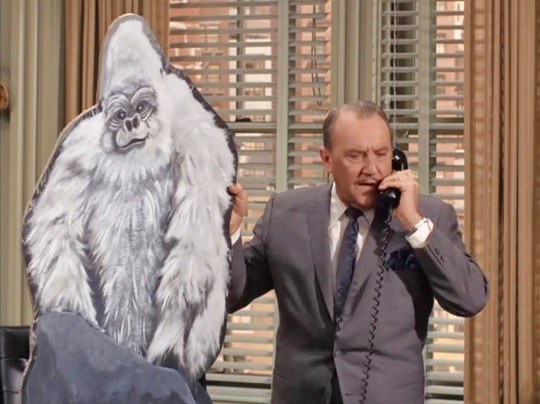
Howard
Keel’s character is named Stanley Livingston so that Lucy (and later
Harry) can say the iconic line “Mr.
Livingston, I presume”
a paraphrase of “Dr.
Livingstone, I presume.” Doctor
David Livingstone
was a 17th century missionary and explorer in central Africa, the first European
to see Victoria Falls. When reporter H.M.
Stanley
finally found him in 1871, he supposedly greeted him with “Dr.
Livingstone, I presume?”
In 1939, a film called Stanley
and Livingstone was
released, starring Spencer Tracy as Stanley and Cedric Hardwicke as
Livingstone. The quote was included in the film and is majorly
responsible for its continued use today.
Livingston
tells Lucy that back in Africa he was enamored of an athletic (though
feminine) woman named Rachel Weatherby, who could single-handedly skin and quarter a
buffalo.Lucy
reluctantly tells the handsome and eligible Mr. Livingston that Kim
is 16 and Craig is 15.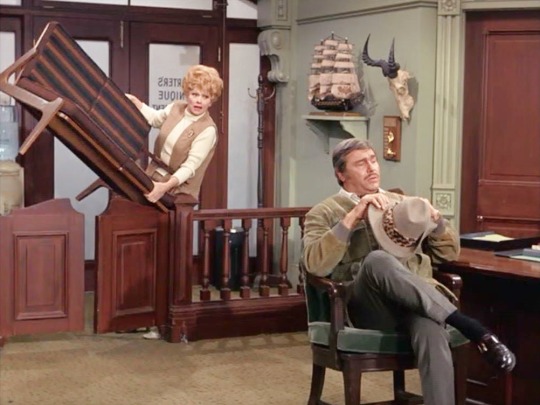
Lucy
tells Mr. Livingston that back home she used to work for a blacksmith
– handing him the horses! She is likely bragging to impress Mr.
Livingston and vanquish his memories of Miss Weatherby. [A
blacksmith? In this episode it could very well be true!]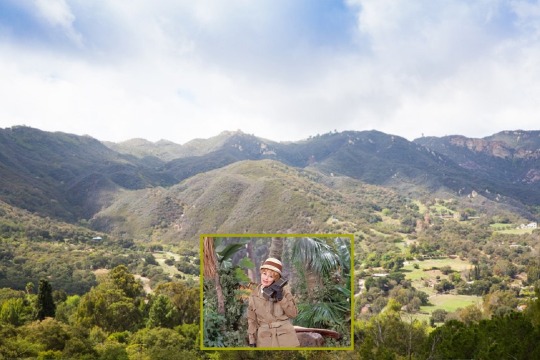
There
is a $10,000 reward for the safe return of the Gorboona. It was last
seen in the Topanga Canyon. Topanga Canyon is located in
western Los
Angeles County,
California,
in the Santa
Monica Mountains,
between Malibu
and
the city
of Los Angeles.
Lucy calls Mr. Livingston “bwana,” an East African word for boss or master. In 1963 Bob Hope starred in the safari movie Call Me Bwana.

Livingston
demonstrates the mating call of the Gorboona, which in reality has
the same melody as “Indian
Love Call,” from Oscar Hammerstein II and Otto Harbach’s
operetta Rose
Marie. Lucy
echos him (off key) and says “That
is pretty.” Not
coincidentally, Howard Keel starred in the 1954 film version.
The
Jungle Dance was choreographed by Jack Baker and Anita Mann. In
the DVD introduction to the episode, Desi Arnaz Jr. says that the
dance sequence had him wearing “some of the worst clothes of the
entire series.” At least Kim and Craig get to show off what they
do best: Craig drums and Kim does a dance solo. As usual, Lucy
turns the dance into an ad lib free-for-all that features a
Charleston! When the Garboona appears, Lucy and the creature Tango
together.
Harry’s
dance steps conjure up a rain storm that only falls on him – not
once but twice. The rule on “Here’s Lucy” is that where there’s water,
Harry will get wet. Earlier in the episode, he was the only one to
fall in the creek when swinging across it on a vine.

“Dr.
Livingston, I presume”
was first uttered by Lucy Ricardo in “Never Do Business With
Friends” (ILL S2;E31) when Lucy ‘discovers’ Ricky through the
laundry lines before begging him for a new washing machine.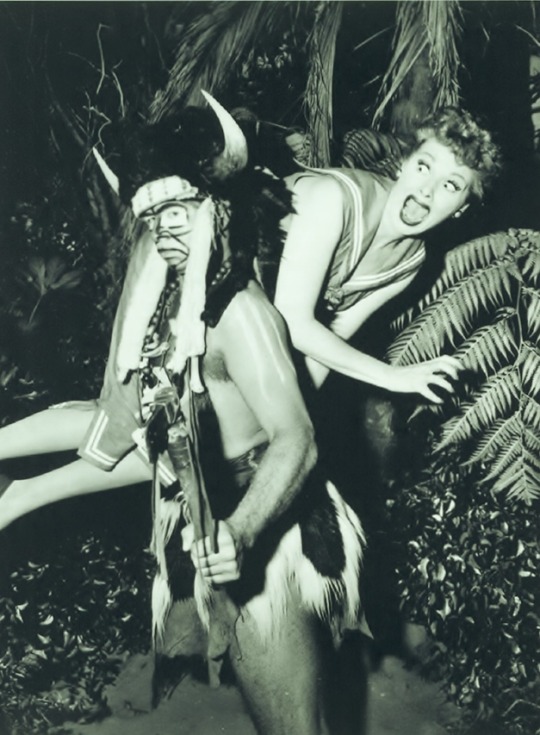
The
costumes for the dance are reminiscent of what Claude Akins wore as
the Giant Native in “Desert Island” (ILL S6;E8). When Harry is
told to look for footprints but only discovers those of Livingston,
it is very similar to when Lucy tracked the footprints of a Giant
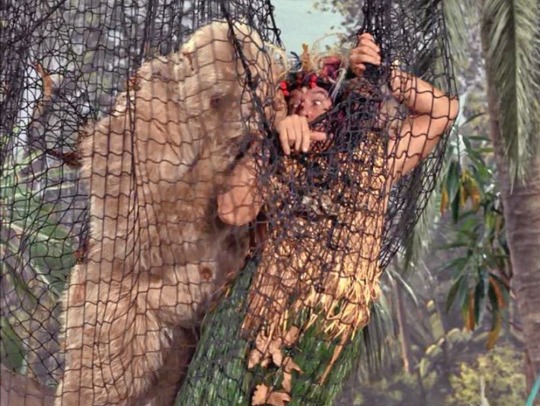
Native only to discover they were Ethel’s!
The
Topanga Canyon area is verdant, but it is not a jungle!
After
being shot with the tranquilizer gun, Lucille Ball does a slow motion
run from the Gorboona, including a slow motion swing on a vine. Why
would the vine also be in slow motion? Was it also affected by the
tranquilizer? Just one of many unanswered questions in this fantasy
fiasco of an episode!
“Lucy’s Safari” rates 1 Paper Heart out of 5
This
episode is more like a live action Saturday morning kids show than a
primetime sitcom. The premise is unbelievable, silly, and (worst of
all) rarely funny. With all the show’s musical episodes, it is a shame that
Lucille Ball wasted singer Howard Keel’s only appearance in a
non-musical episode.
 1968, Anita Mann, Ape, Big Game Hunter, Call Me Bwana, CBS, Desi Arnaz Jr., Dr. David Livingstone, Gale Gordon, Gorboona, H.M. Stanley, Here’s Lucy, Howard Keel, Indian Love Call, Jack Baker, Jack Donohue, Janos Prohaska, Lucie Arnaz, Lucille Ball, Lucy’s Safari, Milt Josefsberg, Rain Dance, Ray Singer, Rose Marie, Safari, Stanley and Livingstone, Topanga Canyon, tv
 -
LUCY GETS HER MAN
S1;E21
~ February 24, 1969
Directed
by Jack Donohue ~ Written by Fred S. Fox and Seaman JacobsSynopsis
Harry’s
old Army buddy is working in Counter-Intelligence and needs a
stenographer to help get the goods on a suspected spy (Victor Buono).
Naturally, Lucy gets the assignment.Regular
CastLucille
Ball (Lucy
Carter), Gale
Gordon (Harrison
Otis Carter), Lucie
Arnaz (Kim
Carter), Desi
Arnaz Jr. (Craig
Carter)Guest
Cast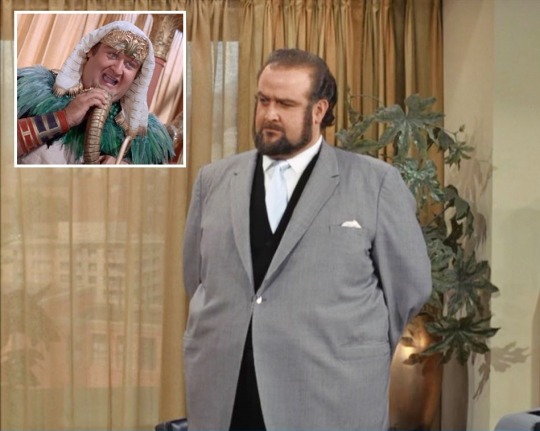
Victor
Buono
(Arthur Vermillion) was a character actor whose screen
career began in 1959. He was nominated for a 1963 Oscar for his
portrayal of Edwin Flagg in
Whatever Happened To Baby Jane,
which he quickly followed up with Hush,
Hush Sweet Charlotte,
both starring Bette Davis. He is perhaps best remembered for
playing arch-villain King Tut on “Batman” (inset). Buono died in 1982 at
the age of 43.Buono
uses a thick middle-European accent as Vermillion. According to the dictionary, ‘vermillion’ (or ‘vermilion’), describes a deep, brilliant shade of red. ‘Red’ is slang for a communist, based on the color of the communist flag, which ties into the spy theme of the episode.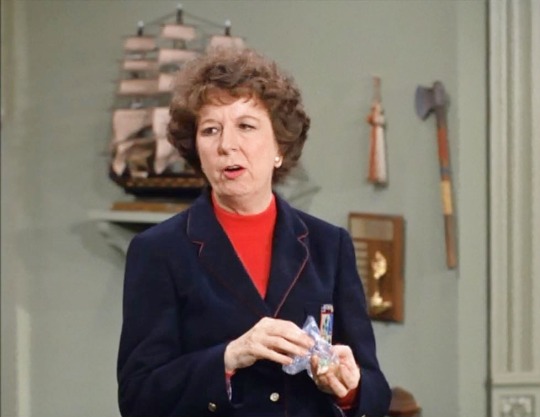
Mary
Wickes (Isabel)
was one of Lucille Ball’s closest friends and at one time, a
neighbor. She made a memorable appearances on “I Love Lucy” as
ballet mistress Madame Lamond in “The
Ballet” (ILL S1;E19). In
her initial “Lucy Show” appearances her characters name was
Frances, but she then made four more as a variety of characters for a
total of 8 episodes. This is the first of her 9 appearances on
“Here’s Lucy.” She also played Isabel in “Lucy Goes on
Strike” (S1;E16). Their final collaboration on screen was “Lucy
Calls the President” in 1977.Wickes
only has 40 seconds of screen time at the very start of the episode. Before Mary Jane Croft joined the show, the character of Isabel was intended to be a secretary friend of Lucy Carter’s who works in her building. Wickes only played the character twice before moving into different characters for the rest of the series.
Robert
Carson
(Buzzy Brock) was a busy Canadian-born character actor who appeared
on six episodes of “The Lucy Show.” This is the second of his
five appearances on “Here’s Lucy.”Buzzy
was an Army Colonel at the Pentagon during World War II. He got a
Purple Heart when his desk collapsed! He is currently working with
‘Counter-Intelligence’.
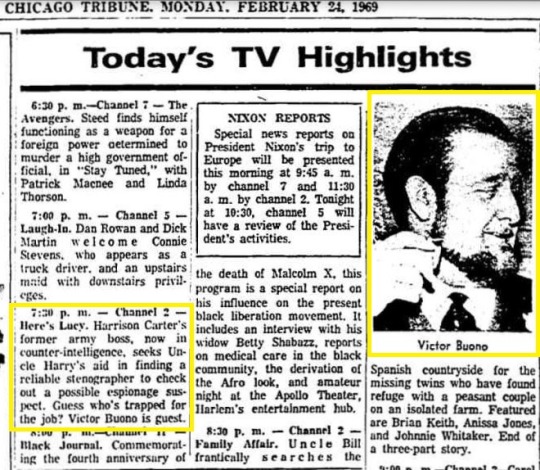
Chicago Tribune, February 24, 1969

This is the third spy story on “Here’s Lucy” in just five months, preceded by “Lucy’s Impossible Mission” (S1;6) and “Lucy and the Great Airport Chase” (S1;E18). Spy series’ such as “Get Smart” and “Mission: Impossible” were tremendously popular at the time. Craig mentions a show called “Spy Mission” and Kim talks about “Counter Agent,” both made-up TV spy programs.

Lucille Ball and Victor Buono were both featured in “Like Hep!”, a Dinah Shore special that aired a few months after this episode. In it, Ball did a variety of sketches, including one set in a speakeasy with Buono as a mob boss.

Upon arriving at work, Lucy off-handedly says “another day behind the iron curtain.” The Iron Curtain was the name for the imaginary boundary dividing Europe into two separate areas from the end of World War II in 1945 until the end of the Cold War in 1991. The use of the term contributes to the spy nature of the story, but seems a bit precipitous considering the plot has yet to be revealed!

Isabel
calls Harry Jack
the Ripper,
comparing him to the famous London serial killer. There was also a character named Jack D. Ripper in the 1964 iron curtain comedy Dr. Strangelove. Could this be another vague and precipitous reference to the episode’s theme?
After
Isabel and Harry continually bump into one another going
out the door (doing a sort of ‘after you’ dance) Harry calls her St. Vitus. Saint
Vitus
(290-303 AD) was
a child
saint
from
Sicily.
In
the late Middle
Ages,
people
celebrated
the feast of Vitus by dancing before his statue. The name “Saint
Vitus Dance” was given to neurological
disorders like epilepsy.
It also led to Vitus being considered the patron saint of dancers.We learn that Harry
was an Army major during World War II and worked at the Pentagon.
Buzzy
calls Harry ‘Foamy’ because he wore out twelve foam rubber cushions
on his swivel chair. Clearly Buzzy and ‘Foamy’ (aka Harry) were desk
jockeys during the war. The script doesn’t specify, however, why Buzzy is
named Buzzy.
When Kim comes home from school, she asks her mother if Jerry called. Presumably, Jerry is her boyfriend. Jerry was also the name of Lucy Carmichael’s son on “The Lucy Show.” She uses her childrens’ questions as a memory test for her upcoming spy assignment.
Kim says her birthday is the 17th of next month. In real life, Lucie Arnaz’s birthday is the 17th of July.
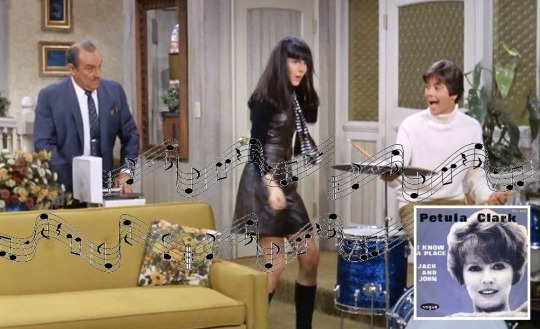
The song Kim and Craig play for Uncle Harry, to show him what life with teenagers in the house might be like, is a jazzy version of “I Know A Place” by Tony Hatch. The song was recorded in 1965 by Petula Clark. It is here performed without lyrics with Kim dancing and Craig playing the drums. Lucy danced to the song in “Mod, Mod Lucy” (S1;E1). Clark will do a guest appearance on the series in season 5, although she will not sing “I Know A Place.”

When Lucille Ball enters Vermillion’s hotel suite at the (fictional) Crescent Palms Hotel wearing a black wig, she gets a round of applause from the studio audience.

If the horse statue in Vermillion’s hotel room looks familiar, it is likely the same horse used later that year on the set of “The Brady Bunch” (1969-74). Both shows were filmed at Paramount Studios. Similar horses also turned up on “Bewitched” (1964-72) and in the film Bell, Book and Candle (1958) starring Ernie Kovacs. This iteration of the horse statue has its saddle and reigns painted black, but they are otherwise identical. Equine statuary was quite common in mid-century decorating.
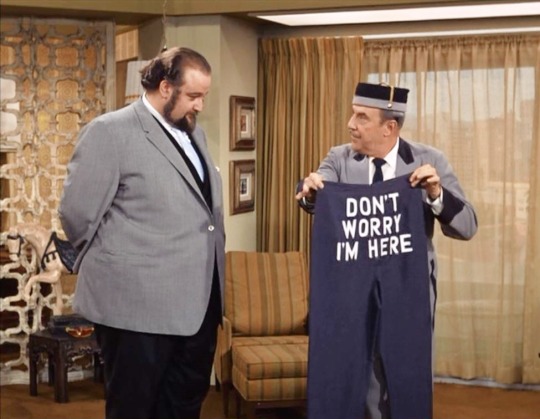
Vermillion, under the guise of a greeting card writer, dictates correspondence to
Gregory Schmidt, General Delivery, St. Louis,
Miseryand another to
Igor Shaffsky, Hotel Scimitar, Istanbul
He eats his notes. Is he really a spy or just really hungry?

When
Vermillion looks around the room to see that they he and Lucy are
alone, the soundtrack plays “Mission: Impossible” style music.
The TV score by Lalo Schifrin was extensively used in “Lucy’s
Impossible Mission” (S1;E6).

Victor Buono is best known for his role in the Bette Davis / Joan Crawford 1962 horror film What Ever Happened to Baby Jane, a movie that was mentioned on “No More Double Dates” (TLS S1;E21). Lucy Carmichael rejected the film for date night as “too scary”. Coincidentally, both shows were the 21st aired episodes aired in their first seasons!

This is not the first time Lucy has mined humor from being sat on by a larger actor. She was underneath a tubby tourist (Audrey Bentz) in “The Tour” (ILL S4;E30) and a girthy granny (Reta Shaw) in “Lucy Misplaces $2,000″ (TLS S1;E4).
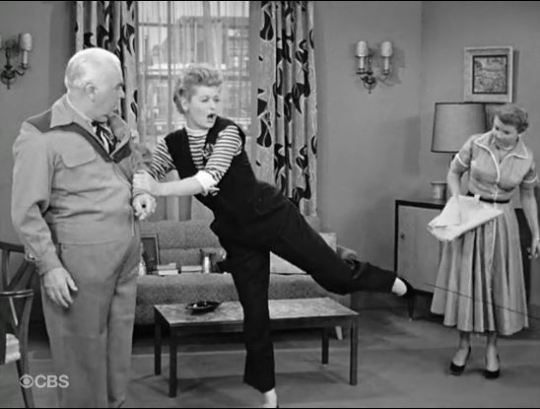
Lucy
Ricardo also “wore a wire” when trying to record a confession by who
she thought was a Texas oil swindler in “Oil Wells” (ILL S3;E18). Both times her urge to be wired for sound was misguided.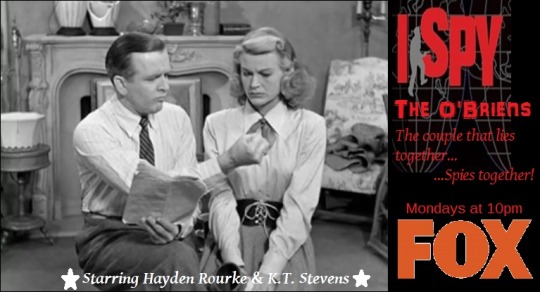
Thinking
they were enemy agents, Lucy Ricardo also spied on the “New
Neighbors” (ILL S1;E21). Like Vermillion, the O’Briens were not
who Lucy first assumed they were but they sure talked a good game!
This is not the first, nor the last, time Gale Gordon will get into unconvincing drag without shaving off his mustache!
FAST FORWARD!

On August 16, 1971, Victor Buono and Lucille Ball were both guests on “The Tonight Show with Johnny Carson”. Kaye Ballard was the musical guest.
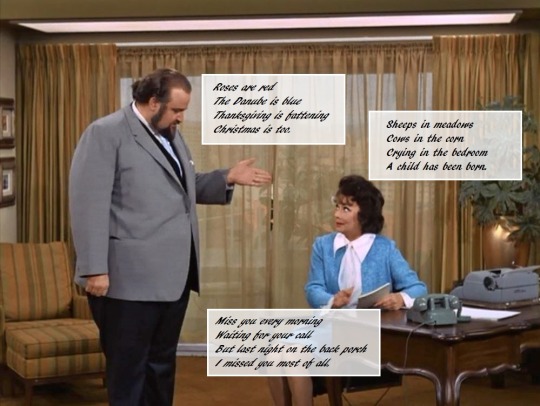
Vermillion is not the last character to be a writer of greeting card verses…

It would also be the occupation of Ben Fletcher (Don Knotts) when “Lucy Goes on Her Last Blind Date” (S5;E16).
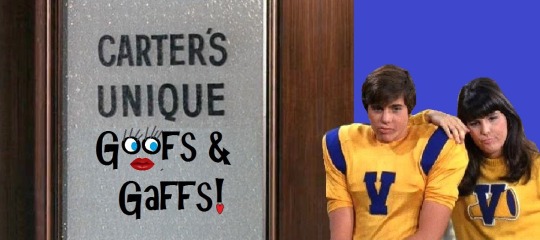
Sitcom
Logic Alert! Craig just
happens to own a pocket-sized miniature tape recorder. Doesn’t every teenager in 1969?
Color Blind! Vermillion tells Harry (as the Bellboy) that he “never wears blue” yet he is clearly wearing a powder blue tie. Is he just trying to get rid of Harry through intimidation?

Product Dis-Placement! The brand name of Craig’s drum set is partly taped over. The top loop of the ‘R’ reveals that it is made by Rogers. Founded in 1849 in Farmingdale, NJ, by Joseph Rogers, the company went out of business in 2006.
Where the Floor Ends! In the lower right corner of the above screen shot, viewers get a glimpse of where the Carter’s wall-to-wall carpet ends and meets the cement stage floor!

“Lucy Gets Her Man” rates 3 Paper Hearts out of 5
A nearly five minute scene without Lucille Ball,
when
Kim and Craig convince their Uncle Harry to keep an eye on their
mother, is a bit
awkward and too long. Mary Wickes is given virtually nothing to do
in this episode. Her lines could just as well have been spoken by an uncredited day player. Lucille Ball’s scene with
Victor Buono, however, is quite good and Gale Gordon in maid drag
(with his trademark mustache) is well worth the wait. The surprise
ending actually makes sense and is very funny, if a bit abrupt.
“Ja. Yust like mama!”
-
LUCY, THE SHOPPING EXPERT
S1;E20
~ February 17, 1969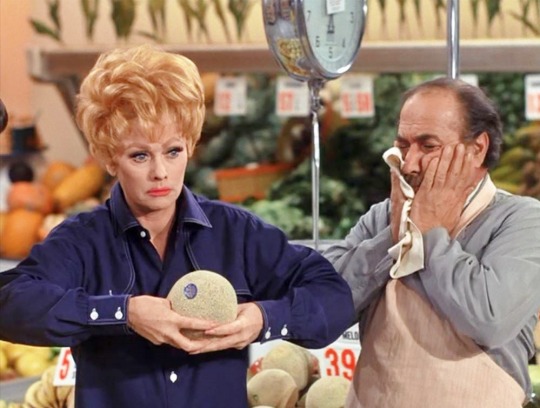
Directed
by Jack Donohue ~ Written by Milt Josefsberg and Al SchwartzSynopsis
Craig
gets a part-time job in a supermarket to earn money to buy a
surfboard. At the same time, Lucy is giving Kim some valuable
lessons in smart shopping. When the two accidentally converge, chaos ensues – naturally!Regular
CastLucille
Ball (Lucy
Carter), Gale
Gordon (Harrison
Otis Carter), Lucie
Arnaz (Kim
Carter), Desi
Arnaz Jr. (Craig
Carter)Guest
Cast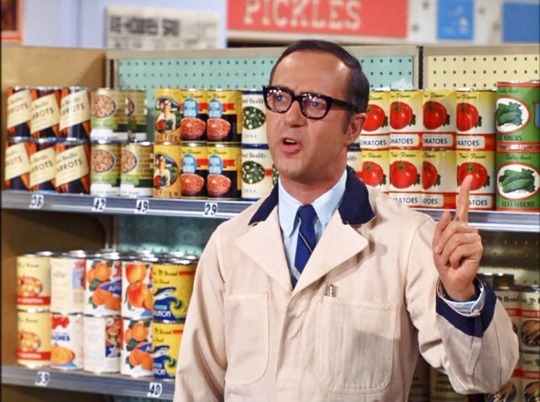
William
Lanteau
(Mr. Sherwood, Supermarket Manager) first appeared with Lucille Ball
in The
Facts of Life (1960).
In addition to an episode of “The Lucy Show,” Lanteau did four
episodes of “Here’s Lucy.” He is best remembered for playing
Charlie the Mailman in the play and the film On
Golden Pond (1981).Mr.
Sherwood is the winner of the Golden Can Award for his shelf
arrangements.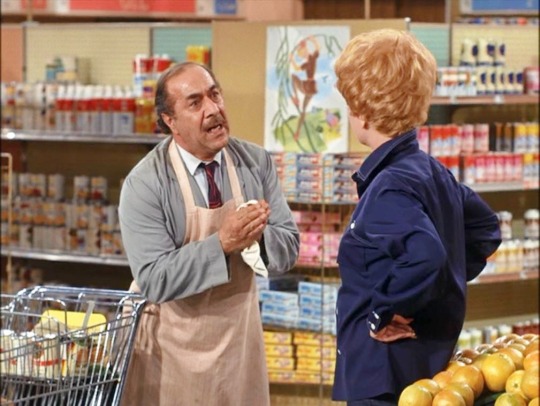
Ernest
Sarracino
(Mr. Nicoletti, Produce Manager) played the Judge in “Lucy and the
Runaway Butterfly” (TLS S1;E29), also directed by Jack Donohue.
This is the first of his two episodes of “Here’s Lucy.” His
screen acting credits span from 1939 to 1994.Although
never actually referred to as Mr. Nicoletti, the character is
credited in honor of Louis Nicoletti, a long-time member of the
Desilu family who was the assistant director of “Here’s Lucy”
from 1968 to 1969, including this episode. In addition to making on
camera appearances on “I Love Lucy” and “The Lucy Show,”
there were two characters named after him on “I Love Lucy.” Here
the character is played as a stereotypical Italian fruit vendor and speaks in Italian to Lucy: “You
make-a da dent? Dat’s-a 39 cents!”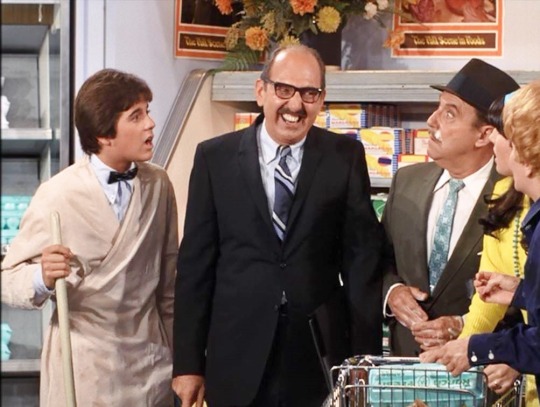
Irwin
Charone
(Mr. Garfield, of the Nippy Whippy Whipped Cream Company) made five
appearances on “The Lucy Show.” The expressive character actor
also did an equal number of “Here’s Lucy” episodes. He died in
January 2016 in Maplewood, New Jersey, at the age of 93.The
restaurant patrons and supermarket shoppers are played by uncredited
background players.

At
the start of the episode Kim brings home ethnic foods because the
grocer Mr. Goldapper recommended them. This is an inside joke as
Goldapper is Gary Morton’s real last name. Gary
Morton’s loud guffaw can be distinctly heard on the soundtrack
throughout the episode.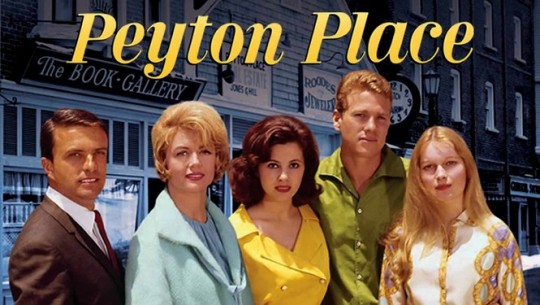
Craig
says he knows all about the facts of life since he was seven because
he watched “Peyton Place.” Based on a 1956 novel, “Peyton
Place” was
a primetime soap opera that aired on ABC from 1964 to 1969. The title
has become synonymous with the personal problems and scandals of
small-town life. It was mentioned several times on “The Lucy Show”
including in “Lucy and Joan” (TLS S4;E4) which also took place in
a supermarket.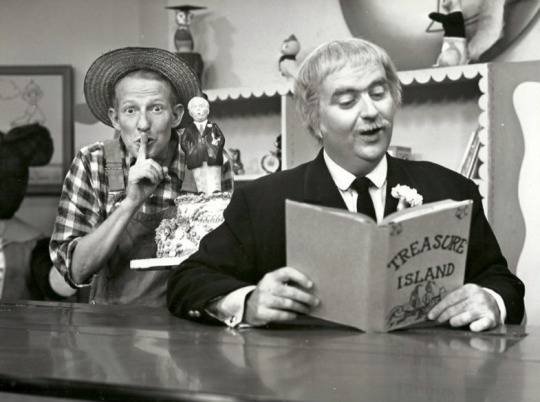
Instead
of “Peyton Place,” Harry says he regrets wasting his time
watching “Captain Kangaroo.” “Captain
Kangaroo” was
a children’s television series that aired weekday mornings on CBS
from October 1955 to December 1984. The Captain (Bob Keeshan, above right) would
tell stories, meet guests, and indulge in silly stunts with regular
characters, both humans and puppets. Captain Kangaroo was previously
mentioned on several episodes of “The Lucy Show.”
Gale
Gordon’s monologue about the birds and the bees is nearly four
minutes long and gets a round of applause from the studio audience.
It is highly unlikely that teenage Craig would let him go on so long
when all he wants is $100!There
is a poster in the supermarket featuring pumpkins and pilgrims so
this episode was likely filmed in November 1968.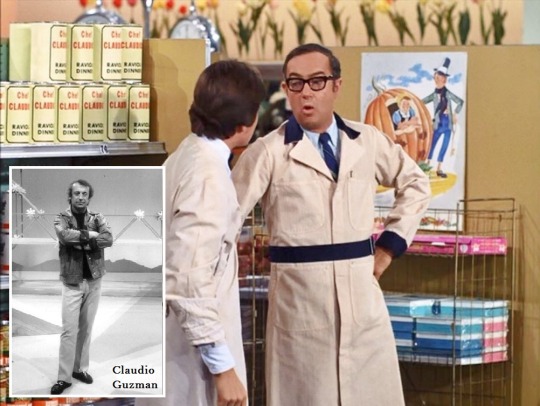
While
most of the prop canned goods look like actual products, the cans of
Chef
Claudio’s Ravioli Dinner
look like something contrived by the Desilu prop department. It is
likely a tribute to director Claudio Guzman, who started with the
company in 1958 and directed 15 episodes of “The Lucy Show.” He
was best known for his association with “I Dream of Jeannie”
(1966-70). Curiously, although they are visible on camera, they are
never referred to in the dialogue – or at least it didn’t make the
final cut.Some
sample 1969 supermarket prices:- Cantaloupe Melons are 39 cents
each. - Strawberries
are 50 cents a pint basket. - Medium
Eggs are 53 cents a dozen.

Lucy
says the store puts the nicest looking strawberries on top of the
basket, but underneath “things
can be as rotten as the Harper Valley PTA”! “Harper
Valley PTA“
is a country
song written
by Tom
T. Hall that
was a hit single for
Jeannie
C. Riley in
1968. Riley’s record sold over six million copies. The song lyrics
tell the story of a woman who is accused of immorality by her
daughter’s junior high PTA and how she gets her revenge on her
hypocritical accusers. The song later gave life to a film (starring
Barbara Eden) and a failed television series.
When
Lucy is sloshing the cans to hear how full they are, the clerk asks
if she expects to hear Lawrence Welk. Lawrence
Welk (1903-92, above)
was a musician, accordionist, bandleader, and television impresario,
who hosted TV’s “The Lawrence Welk Show” from
1951 to 1982. Welk was mentioned several times on “The Lucy Show”
and also on “Lucy’s Birthday” (S1;E8). Welk will play himself on
a 1970 episode of “Here’s Lucy” (above, with Vivian Vance).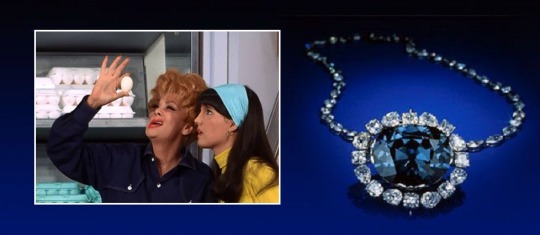
Later,
when Lucy is holding up the eggs to the light, he tells her they are
eggs, “not
the Hope Diamond.”
The Hope
Diamond is
one of the most famous jewels in the world, dating back almost four
centuries. It is housed in the Smithsonian Institute.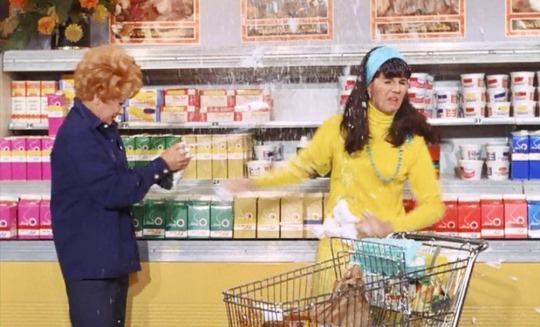
Lucy
is never able to control nozzles and hoses – even on the tip of a
can of whipped cream. The end of the episode is actually a good
excuse for a cream pie fight – without the pies!

A banner in the supermarket advertises a “Storyland Sale” – whatever that may be! The same banner was used in a supermarket in “Lucy and Joan” (TLS S4;E4).

Lucy
Carmichael also hangs around several different
supermarkets to buy a lot of cans of Bailey’s Beans for her
get-rich-quick scheme in “Lucy the Bean Queen” (TLS S5;E3).
In this episode, Kim says about her Uncle Harry: “Compared
to him, Jack Benny is a regular Diamond Jim Brady.”On
“The Lucy Show,” Lucy Carmichael says to Mr. Mooney: “Compared
to you, Jack Benny is Diamond Jim Brady.”Comedian
Jack Benny (1894-1974, inset right) was a frequent guest star on both shows. His
comic persona was that of a skinflint who had every penny he ever
made. The same evening this episode first aired, Lucille Ball appeared on Benny’s birthday special on NBC. James
Buchanan Brady (1856-1917, inset left)
was a real-life millionaire and philanthropist who was fond of jewels
(hence the nickname). Brady was first mentioned in “The
Business Manager” (ILL S4;E1).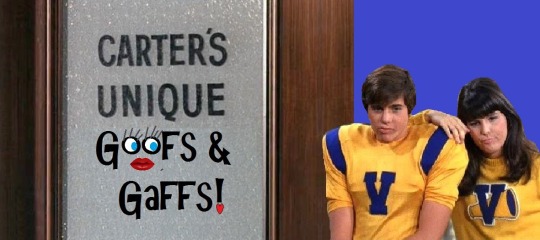
Craig
says he learned the facts of life at age seven while watching “Petyon
Place.” If Desi Arnaz Jr. and Craig are the same age (15 or 16),
he would have to have turned 7 in 1960. “Peyton Place” didn’t
start airing until 1964. If this were true, the character of Craig
Carter would be just 11 or 12 years old!
Craig
asks his mother for $100 for a surfboard which Lucy decides against
as an unnecessary luxury. However, in “Lucy Visits Jack Benny”
(S1;E2), Craig packs his surfboard (much to Lucy’s dismay)
for his weekend in Palm Springs.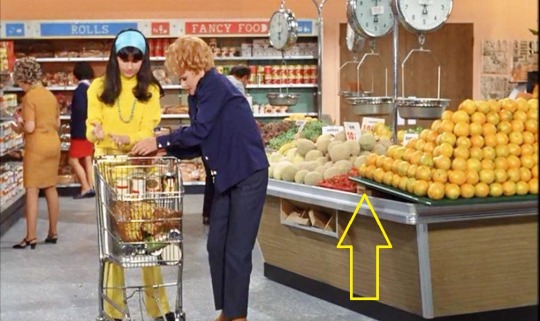
The
precariously stacked display of oranges is built on a slanted surface
to allow the oranges to more easily tumble to the floor. The gag
works by the collapsing the structure on which the oranges are
arranged on cue – probably a by a stagehand hidden under the table.
Most
of the items in the dairy case have their brand name labels
conspicuously taped over. Conveniently, the brand name labels on the canned
goods are too small for the camera to pick up, so they aren’t obscured.
When
the whipped cream spray lands on the end of Mr. Sherwood’s nose,
Craig takes a cloth and wipes it off. Irwin Charone ad libs the line
“Never
mind my nose.”
“Lucy, The Shopping Expert” rates 3 Paper Hearts out of 5
This is a very colorful episode full of lots of physical gags and some broad acting from the supporting cast. In the middle of the chaos, Gale Gordon delivers a meandering 4 minute monologue about the birds and the bees – literally. A contrived ending feels forced.
1969, Al Schwartz, Captain Kangaroo, CBS, Claudio Guzman, Desi Arnaz Jr., Diamond Jim Brady, Ernest Sarracino, Gale Gordon, groceries, Harper Valley PTA, Here’s Lucy, Hope Diamond, Irwin Charone, Jack Benny, Jack Donohue, Lawrence Welk, Lucie Arnaz, Lucille Ball, Lucy the Expert Shopper, Milt Josefsberg, Peyton Place, Shopping, supermarket, Surfboard, tv, William Lanteau - Cantaloupe Melons are 39 cents
-
Subscribe
Subscribed
Already have a WordPress.com account? Log in now.
 Papermoon Loves Lucy