-
ANN SOTHERN
January 22, 1911

Ann Sothern was born Harriette Arlene Lake in Valley City, North Dakota, but was raised in Minneapolis, Minnesota. When her parents divorced in 1927, Sothern moved with her father to Seattle, where she attended the University of Washington, dropping out after one year.
While visiting her mother in California, she won a role in the Warner Brothers revue The Show of Shows.

She did a screen test for MGM and signed a six-month contract. When MGM decided not to pick up her option, she moved to New York City to appear on Broadway. Returning to Hollywood, she appeared with Lucille Ball in bit parts in a series of films:
- Broadway Through A Keyhole (1933)
- Kid Millions (1934)
- Hooray for Love (1935)
- There Goes My Love (1937)
- Thousands Cheer (1943)
Although she was announced for Du Barry Was a Lady (1943), the role was eventually played by Lucille Ball.

In 1953, Sothern landed her own TV series “Private Secretary” (1953-57) appearing as Susie McNamara on all 104 episodes. Sothern played the first working woman on an American sitcom.
When Sothern had creative differences with the producers, Desilu came to the rescue, producing a new version of the show with basically the same cast. To avoid confusion, when “Private Secretary” was syndicated it became known as “Susie”.

Before the launch of the new show, Sothern joined Lucille Ball in the very first episode of “The Lucy-Desi Comedy Hour” playing the character she had just left behind, private secretary Susie McNamara. The episode was the story of how Lucy McGillicuddy (Susie’s girlfriend and fellow secretary) met her husband Ricky in Havana.

“The Ann Sothern Show” (1958-61) featured Sothern as Katie O’Connor, manager of a hotel. It ran for 93 episodes. On October 5, 1959, Lucille Ball played Lucy Ricardo on the series two opener.
“Lucy used to complain that she got all the parts I turned down. Now I produce the show, and she owns the studio. I guess that settles that.” ~ Ann Sothern
When Vivian Vance decided to leave “The Lucy Show” after its third season, Lucille Ball employed Sothern as the recurring character of her old friend Rosie Harrigan, the Countess Frambois. She was featured in seven 1965 episodes.

“Lucy and the Countess” (TLS S3;E19) aired February 1, 1965

“My Fair Lucy” (TLS S3;E20) aired on February 8, 1965

“Lucy and the Countess Lose Weight” (TLS S3;E21) aired on February 15, 1965

“Lucy and the Old Mansion” (TLS S3;E22) aired on March 1, 1965. This was the only time Vivian Vance and Sothern shared the screen.

“Lucy and the Countess Have a Horse Guest” (TLS S4;E6) aired October 25, 1965. This was the only time Sothern shared the screen with William Frawley, in his final screen appearance. In September 1965, Sothern began doing the voice of Gladys Crabtree (the car) on “My Mother the Car” (1965-66).

“Lucy Helps the Countess” (TLS S4;E8) aired on November 8, 1965. The countess gets her real estate license.

“Lucy and the Undercover Agent” (TLS S4;E10) aired on November 22, 1965
“I love Lucille (Ball), and I know she loves me. Furthermore, I’m one of the few people who call her Lucille. I understand her. A lot people think she is tough. But that’s just her way. She’s soft inside.” ~ Ann Sothern
In September 1936 Sothern married actor Roger Pryor. They divorced in May 1943. A week later she married Robert Sterling, had one child together (Patricia), and divorced in 1949.

Her final screen role in The Whales of August (1987) earned her an Oscar nomination
but she lost out to Olympia Dukakis for Moonstruck. Sothern played
Letitia Benson-Doughty in a film with Bette Davis and Lilian Gish.
From 1987 to 2001, she lived in quiet retirement near Sun Valley, Idaho, a place also dear to Lucille Ball. She died at 92.
She was interred at Ketchum Cemetery in Idaho.
“Good night…and stay happy.” ~ Ann Sothern

-
THE MARRIAGE LICENSE ERROR
January 21, 1949

“Marriage License Error” (aka “Marriage License”) is episode #27 of the radio series MY FAVORITE HUSBAND broadcast on January 21, 1949 over the Armed Forces Radio Network (AFN).
Synopsis ~ Liz and George find their marriage license and discover that instead of “George H. Cooper,” it says “George C. Hooper.” Now Liz is convinced that she and George aren’t legally married!

Portions of this radio show served as the basis for “The Marriage License” (ILL S1;E26) filmed on February 28, 1952 and aired on April 7, 1952, on CBS-TV. On television, the Ricardo’s marriage license mistakenly read “Bicardi” instead of “Ricardo”.

“My Favorite Husband” was based on the novels Mr. and Mrs. Cugat, the Record of a Happy Marriage (1940) and Outside Eden (1945) by Isabel Scott Rorick, which had previously been adapted into the film Are Husbands Necessary? (1942). “My Favorite Husband” was first broadcast as a one-time special on July 5, 1948. Lucille Ball and Lee Bowman played the characters of Liz and George Cugat, and a positive response to this broadcast convinced CBS to launch “My Favorite Husband” as a series. Bowman was not available Richard Denning was cast as George. On January 7, 1949, confusion with bandleader Xavier Cugat prompted a name change to Cooper. On this same episode Jell-O became its sponsor. A total of 124 episodes of the program aired from July 23, 1948 through March 31, 1951. After about ten episodes had been written, writers Fox and Davenport departed and three new writers took over – Bob Carroll, Jr., Madelyn Pugh, and head writer/producer Jess Oppenheimer. In March 1949 Gale Gordon took over the existing role of George’s boss, Rudolph Atterbury, and Bea Benadaret was added as his wife, Iris. CBS brought “My Favorite Husband” to television in 1953, starring Joan Caulfield and Barry Nelson as Liz and George Cooper. The television version ran two-and-a-half seasons, from September 1953 through December 1955, running concurrently with “I Love Lucy.” It was produced live at CBS Television City for most of its run, until switching to film for a truncated third season filmed (ironically) at Desilu and recasting Liz Cooper with Vanessa Brown.
REGULAR CAST

Lucille Ball (Liz Cooper) was born on August 6, 1911 in Jamestown, New York. She began her screen career in 1933 and was known in Hollywood as ‘Queen of the B’s’ due to her many appearances in ‘B’ movies. With Richard Denning, she starred in a radio program titled “My Favorite Husband” which eventually led to the creation of “I Love Lucy,” a television situation comedy in which she co-starred with her real-life husband, Latin bandleader Desi Arnaz. The program was phenomenally successful, allowing the couple to purchase what was once RKO Studios, re-naming it Desilu. When the show ended in 1960 (in an hour-long format known as “The Lucy-Desi Comedy Hour”) so did Lucy and Desi’s marriage. In 1962, hoping to keep Desilu financially solvent, Lucy returned to the sitcom format with “The Lucy Show,” which lasted six seasons. She followed that with a similar sitcom “Here’s Lucy” co-starring with her real-life children, Lucie and Desi Jr., as well as Gale Gordon, who had joined the cast of “The Lucy Show” during season two. Before her death in 1989, Lucy made one more attempt at a sitcom with “Life With Lucy,” also with Gordon.
Richard Denning (George Cooper) was born as Louis Albert Heindrich Denninger Jr., in Poughkeepsie, New York. When he was 18 months old, his family moved to Los Angeles. Plans called for him to take over his father’s garment manufacturing business, but he developed an interest in acting. Denning enlisted in the US Navy during World War II. He is best known for his roles in various science fiction and horror films of the 1950s. Although he teamed with Lucille Ball on radio in “My Favorite Husband,” the two never acted together on screen. While “I Love Lucy” was on the air, he was seen on another CBS TV series, “Mr. & Mrs. North.” From 1968 to 1980 he played the Governor on “Hawaii 5-0″, his final role. He died in 1998 at age 84.
Ruth Perrott (Katie, the Maid) was also later seen on “I Love Lucy.” She first played Mrs. Pomerantz (above right), a member of the surprise investigating committee for the Society Matrons League in “Pioneer Women” (ILL S1;E25), as one of the member of the Wednesday Afternoon Fine Arts League in “Lucy and Ethel Buy the Same Dress” (ILL S3;E3), and also played a nurse when “Lucy Goes to the Hospital” (ILL S2;E16). She died in 1996 at the age of 96.
Announcer Bob LeMond is not heard in this episode as it is part of the American Forces Network and has a different announcer.
Gale Gordon (Rudolph Atterbury) and Bea Benadaret (Iris Atterbury) had not yet joined the cast as regular characters.
GUEST CAST

Frank Nelson (Joe Ridgley) was born on May 6, 1911 (three months before Lucille Ball) in Colorado Springs, Colorado. He started working as a radio announcer at the age of 15. He later appeared on such popular radio shows as “The Great Gildersleeve,” “Burns and Allen,” and “Fibber McGee & Molly”. This is one of his 11 performances on “My Favorite Husband.” On “I Love Lucy” he holds the distinction of being the only actor to play two recurring roles: Freddie Fillmore and Ralph Ramsey, as well as six one-off characters, including the frazzled train conductor in “The Great Train Robbery” (ILL S5;E5), a character he repeated on “The Lucy Show.” Aside from Lucille Ball, Nelson is perhaps most associated with Jack Benny and was a fifteen-year regular on his radio and television programs.

Doris Singleton (Hotel Biltmore Telephone Operator) created the role of Caroline Appleby on “I Love Lucy,” although she was known as Lillian Appleby in the first of her ten appearances. She made two appearances on “The Lucy Show.”
Singleton played a secretary in the first episode of “Here’s Lucy” and was meant to be a series regular, but her role was written out to concentrate on Lucy Carter’s family life. She did two more episodes of the series.

Ted de Corsia (Police Officer) was an actor in touring companies and on radio before making a memorable film debut as the killer in The Lady from Shanghai (1947). De Corsia’s New York street demeanor and gravelly voice assured him steady work playing street thugs, gang leaders or organized-crime bosses. On radio he starred in the CBS series “Pursuit” (1949-50). Two years after this episode of “My Favorite Husband,” he appeared with Lucille Ball on the radio show “The Golden Touch.”
The actor voicing the role of Paul Buchanan is not credited and has not been identified.

EPISODE
The Coopers are spending the evening in the living room reading the newspapers. Liz is doing the crossword puzzle, while George scans the headlines.GEORGE: “Well, it looks like the inauguration came off alright.”

George is referring to the second inauguration of incumbent President Harry S. Truman, which happened in Washington DC the previous day. It ushered in Truman’s second term in office. It was the first televised U.S. presidential inauguration and the first with an air parade.
Liz insists that crosswords build her vocabulary. George quizzes her on current events.
GEORGE: “Where did the President take his oath of office?”
LIZ: “On a special platform built in front of the capitol building.
GEORGE: “How did you happen to know that?”
LIZ: “It showed through the hole when I cut out the crossword puzzle.”
GEORGE: “Try this: who administered the oath?”
LIZ: “What?”
The familiar trope of husbands being engrossed in the morning papers to the dismay of their wives takes a slightly different spin here, but was continued well into “I Love Lucy.” The answer that George is looking for is that Chief Justice Fred M. Vinson administered the presidential oath of office that day in 1949.
Through the hole, Liz recognizes the name of Paul Buchanan, who is in the paper because he was elected president at the jewelers convention. Liz recalls dating him in high school. He played tuba in the school band. Liz says she might have married but for his tuba playing.
Liz says that if she had married Paul she might have gotten an engagement ring. Instead, George couldn’t afford a ring and gave her a sweat shirt with his initials on it. George says the initials actually stood for Gym Class!
LIZ: “I was lovely! I was engaged! I was dressed like Maxie Rosenbloom!”

Max Everitt Rosenbloom (1907-76) was a professional boxer, actor, and television personality. In 1948 he played a truck driver in the Paulette Goddard film Hazard.
Nicknamed “Slapsie Maxie”, he had appeared in the film Muss ‘Em Up (1936) in which a blonde Lucille Ball was a background performer. She posed with him for the above publicity shot, helping him apply his make-up!
Liz senses that George is still upset about the ring, so she sits on his lap and they cuddle and kiss. Liz opens their scrapbook, looking at their wedding photos. She sees her marriage license.
LIZ: “On this date, Elizabeth Elliott was married to George C. Hooper!”
Liz panics thinking that their license may be invalid – and they might not even be legally married! As soon as the Sheridan Falls City Hall opens, Liz intends to go down there personally and find out for sure!
Unbeknownst to Liz, George calls his friend at the license bureau, Joe Ridgley (Frank Nelson). He tells Joe that he wants him to play a joke on Liz, and tell her that they are not really married! Joe agrees.
Liz arrives at the bureau and explains to Mr. Ridgley about the error. He tells Liz that it does indeed matter. He refers to her as “Miss Elliott” and confirms that she hasn’t been married to George for ten years!
Liz returns home. When George goes to kiss her – she says that she is no longer his to touch!
LIZ: “The man at the license bureau put the padlock on our wedlock.”
Liz insists they go right down to the license bureau and get re-married. George – having some fun at her expense – hesitates. Liz is as upset as she is angry! Just then, Katie the Maid takes Liz aside into the kitchen to tell her that it’s all a joke between George and Joe. Liz decides to get revenge for his prank.Liz goes back into the living room and George suddenly confesses to his joke – but when he describes Joe Ridgley, Liz says that he is not describing the man she spoke to at all! Which means that they really aren’t married after all! George wants to go right down to City Hall and re-marry, but Liz (teasing him along even further) says not so fast – she wants to be single a little longer!Liz picks up the phone to call Paul Buchanan to ask him out on a date. She reminds him that she was called “Queen of the Rumble Seat”!

A rumble seat was an additional padded passenger seat that popped up from the rear of the vehicle, usually just big enough for two. This led it to becoming synonymous with romantic trysts!
Liz knows that George can’t hear Paul on the other end as he protests that he is married with six kids! He abruptly hangs up, but Liz continues her staged phone conversation with the hotel operator (Doris Singleton). Liz says that she will meet him at the Flamingo Room of the Biltmore.
In the kitchen, Liz tells Katie that while George thinks she is on a date with Paul Buchanan at the Biltmore, she and Katie will actually be watching Humphrey Bogart at the Strand movie theater.

In January 1949, Bogart’s most recent film would have been Key Largo, released in mid-summer 1948. It went on to win an Oscar for Claire Trevor.
Humphrey Bogart never appeared on screen with Lucille Ball. However, in “Ricky’s Movie Offer” (ILL S4;E5) Desi Arnaz does an impression of Bogart and in “Lucy and the Andrews Sisters” (HL S2;E6) Lucy blows a kiss to a large poster of Bogart from the movie Casablanca.
Coming out of the Strand later that evening, Liz and Katie notice a crowd in front of the Biltmore Hotel. Katie thinks it might be a wreck!
LIZ: “When you see a crowd in front of a window these days, it isn’t a wreck, it’s television!”
KATIE: “Oh, well maybe they’re showing a wrestling match!”
Before television sets became affordable to the general public, it was not uncommon to find people gathered on the sidewalk in front of a store window to view it from the street.
LIZ: “Katie it is wrestling! There’s gorgeous George!”

Liz is referring to her husband, George but wrestling matches were very popular on early television, producing such colorful wrestlers as Gorgeous George. George Raymond Wagner (1915–63), was known as Gorgeous George because of his long blonde hair. He was mentioned on “I Love Lucy” in “Pioneer Women” (ILL S1;E25) and “Ricky’s Movie Offer” (ILL S4;E6). In 1949, Republic Pictures released a film starring Gorgeous George.
A Policeman (Ted de Corsia) is breaking up a brawl between George Cooper and Paul Buchanan. Paul is nothing like Liz remembered: bald, fat and with a black eye. Paul remembers George from school. Liz is delighted having two men fighting over her. George spots Liz in the crowd. When George insists Liz is his wife, Liz claims she never saw him before.
When the cop wants to arrest George, Liz pretends to be from Brooklyn (Myrtle Avenue) to talk him out of it. She insists that George buy her an engagement ring (from Paul) to get out of going to jail. The office gladly agrees – if George will properly propose on one knee first! Liz insists he use her ‘pet’ name.
GEORGE: “Will you marry me… toodly-woodly-ums!”
COP: “When you gonna get married?”
LIZ: “Ten years ago!”
COP: “Why that’s impossible!”
LIZ: “Who cares! I’ve got back my favorite husband!”
In the bedtime tag, Liz asks George to get up and get her a glass of warm milk. After bickering about it for a moment, George reluctantly agrees, stubbing his toe on the chair. By the time he finds his slippers, Liz is snoring, fast asleep.
GEORGE: “How do you like that? Goodnight, Liz.”

-
LIZ & THE GREEN WIG
January 20, 1950

“Liz & The Green Wig” is episode #72 of the radio series MY FAVORITE HUSBAND broadcast on January 20, 1950.
Synopsis ~ George goes over Liz’s accounts and discovers that she has listed $180 for miscellaneous expenses! George decides she can eliminate the $10 a week she’s spending on her hair. Liz buys a green wig to show George what might happen if she dyed her hair at home.
This was the 21st episode of the second season of MY FAVORITE HUSBAND, the second of the new year and of the new decade (1950). There were 43 new episodes, with the season ending on June 25, 1950.

“My Favorite Husband” was based on the novels Mr. and Mrs. Cugat, the Record of a Happy Marriage (1940) and Outside Eden (1945) by Isabel Scott Rorick, which had previously been adapted into the film Are Husbands Necessary? (1942). “My Favorite Husband” was first broadcast as a one-time special on July 5, 1948. Lucille Ball and Lee Bowman played the characters of Liz and George Cugat, and a positive response to this broadcast convinced CBS to launch “My Favorite Husband” as a series. Bowman was not available Richard Denning was cast as George. On January 7, 1949, confusion with bandleader Xavier Cugat prompted a name change to Cooper. On this same episode Jell-O became its sponsor. A total of 124 episodes of the program aired from July 23, 1948 through March 31, 1951. After about ten episodes had been written, writers Fox and Davenport departed and three new writers took over – Bob Carroll, Jr., Madelyn Pugh, and head writer/producer Jess Oppenheimer. In March 1949 Gale Gordon took over the existing role of George’s boss, Rudolph Atterbury, and Bea Benaderet was added as his wife, Iris. CBS brought “My Favorite Husband” to television in 1953, starring Joan Caulfield and Barry Nelson as Liz and George Cooper. The television version ran two-and-a-half seasons, from September 1953 through December 1955, running concurrently with “I Love Lucy.” It was produced live at CBS Television City for most of its run, until switching to film for a truncated third season filmed (ironically) at Desilu and recasting Liz Cooper with Vanessa Brown.
MAIN CAST

Lucille Ball (Liz Cooper) was born on August 6, 1911 in Jamestown, New York. She began her screen career in 1933 and was known in Hollywood as ‘Queen of the B’s’ due to her many appearances in ‘B’ movies. With Richard Denning, she starred in a radio program titled “My Favorite Husband” which eventually led to the creation of “I Love Lucy,” a television situation comedy in which she co-starred with her real-life husband, Latin bandleader Desi Arnaz. The program was phenomenally successful, allowing the couple to purchase what was once RKO Studios, re-naming it Desilu. When the show ended in 1960 (in an hour-long format known as “The Lucy-Desi Comedy Hour”) so did Lucy and Desi’s marriage. In 1962, hoping to keep Desilu financially solvent, Lucy returned to the sitcom format with “The Lucy Show,” which lasted six seasons. She followed that with a similar sitcom “Here’s Lucy” co-starring with her real-life children, Lucie and Desi Jr., as well as Gale Gordon, who had joined the cast of “The Lucy Show” during season two. Before her death in 1989, Lucy made one more attempt at a sitcom with “Life With Lucy,” also with Gordon.
Richard Denning (George Cooper) was born Louis Albert Heindrich Denninger Jr., in Poughkeepsie, New York. When he was 18 months old, his family moved to Los Angeles. Plans called for him to take over his father’s garment manufacturing business, but he developed an interest in acting. Denning enlisted in the US Navy during World War II. He is best known for his roles in various science fiction and horror films of the 1950s. Although he teamed with Lucille Ball on radio in “My Favorite Husband,” the two never acted together on screen. While “I Love Lucy” was on the air, he was seen on another CBS TV series, “Mr. & Mrs. North.” From 1968 to 1980 he played the Governor on “Hawaii 5-0″, his final role. He died in 1998 at age 84.
Gale Gordon (Rudolph Atterbury) had worked with Lucille Ball on “The Wonder Show” on radio in 1938. One of the front-runners to play Fred Mertz on “I Love Lucy,” he eventually played Alvin Littlefield, owner of the Tropicana, during two episodes in 1952. After playing a Judge in an episode of “The Lucy-Desi Comedy Hour” in 1958, he would re-team with Lucy for all of her subsequent series’: as Theodore J. Mooney in ”The Lucy Show”; as Harrison Otis Carter in “Here’s Lucy”; and as Curtis McGibbon on “Life with Lucy.” Gordon died in 1995 at the age of 89.
Bea Benadaret (Sally, the Beautician / Miss Finley, the Librarian) was considered the front-runner to be cast as Ethel Mertz but when “I Love Lucy” was ready to start production she was already playing a similar role on TV’s “The George Burns and Gracie Allen Show” so Vivian Vance was cast instead. On “I Love Lucy” she was cast as Lucy Ricardo’s spinster neighbor, Miss Lewis, in “Lucy Plays Cupid” (ILL S1;E15) in early 1952. Later, she was a success in her own show, “Petticoat Junction” as Shady Rest Hotel proprietress Kate Bradley. She starred in the series until her death in 1968.
Bea Benadaret generally plays Iris Atterbury, but the character does not appear in this episode
Ruth Perrott (Katie, the Maid) was also later seen on “I Love Lucy.” She first played Mrs. Pomerantz, a member of the surprise investigating committee for the Society Matrons League in “Pioneer Women” (ILL S1;E25), as one of the member of the Wednesday Afternoon Fine Arts League in “Lucy and Ethel Buy the Same Dress” (ILL S3;E3), and also played a nurse when “Lucy Goes to the Hospital” (ILL S2;E16). She died in 1996 at the age of 96.
Bob LeMond (Announcer) also served as the announcer for the pilot episode of “I Love Lucy”. When the long-lost pilot was finally discovered in 1990, a few moments of the opening narration were damaged and lost, so LeMond – fifty years later – recreated the narration for the CBS special and subsequent DVD release.
GUEST CAST

Hal March (Wig Store Clerk) first appeared on the “I Love Lucy” in “Lucy Fakes Illness” (ILL S1;E16) using his own name to play an actor posing as the doctor who diagnoses Lucy with ‘golbloots.’ March got his first big break when he was cast as Harry Morton on “The George Burns and Gracie Allen Show” in 1950. He eventually lost the part to Fred Clark who producers felt was better paired with Bea Benaderet, who played Blanche, and here plays Iris Atterbury. He stayed with the show in other roles, the last airing just two weeks before his appearance as Eddie Grant in “Lucy is Matchmaker” (ILL S2;E27). In 1966 he was seen on “The Lucy Show.”

Sam Hearn (Mr. Lefty) was a musical comedy performer on Broadway between 1915 to 1929.
Was a semi-regular character on Jack Benny’s radio program, normally playing Schlepperman.
He played Lucy’s childhood doctor, Doc Peterson, in “The Passports” (ILL S5;E11) and a ‘Kibitzer’ at Grand Central Station in “Lucy Wants A Career” (LDCH S2;E4). He died in 1964.
THE EPISODE
ANNOUNCER: “As we look in on the Cooper household this morning, George Cooper is seated at the breakfast table, Katie the maid is in the kitchen singing happily, and Liz has just tiptoed downstairs and into the kitchen.”
KATIE (singing): “Oh, what a beautiful morning! Oh, what a beautiful day. I’ve got a beautiful feeling, everything’s going my way.”
LIZ: “Shhhh!”
KATIE: “Oh, Mrs. Cooper. It’s you! I thought my lungs had sprung a leak!”
Katie is singing the opening number from the Broadway musical Oklahoma! by Richard Rodgers and Oscar Hammerstein 2nd. The original Broadway production opened on March 31, 1943 and ran for 2,212 performances, finally closing on May 29, 1948. A film version was made in 1955. The musical was mentioned on “I Love Lucy” in “Lucy Tells The Truth” (ILL S3;E6) in 1953 and on “Here’s Lucy” in “The Big Game” (HL S6;E2) in 1973.
Liz is tells Katie that it is time for George to review her household accounts for the previous year (1949) for the income tax people, and she knows she hasn’t managed to save any money.
KATIE: “Well, maybe he’s forgotten.”
LIZ: “Not George. He has the memory of an elephant.”
GEORGE (from the other room): “Liz, is that you? Come on in the breakfast room.”
LIZ: “There’s Dumbo now.”
Dumbo is a 1941 animated film by Walt Disney Productions. The main character is Jumbo Jr., an elephant who is cruelly nicknamed "Dumbo”. Verna Felton (Mrs. Porter, Lucy Ricardo’s maid) was one of the voice artists on the film. The old adage “an elephant never forgets” may be a bit of a generalization, but science has shown that they do have remarkable memories.
George wants to review the little black budget book he gave her a year ago. When she shows it to him, it is blank except for one week in January 1949! She says he should just multiply the week by the number of weeks in a year – which she guesses are 65. 56? 24? George finds that entries of January 8, 1949:
- newsboy – 50 cents
- cleaning – 1 dollar
- toothpaste – 39 cents
- G.T.L. – 10 dollars
- miscellaneous – 180 dollars
Under miscellaneous she has included rent, food, telephone, gas and electric.
Liz explains that G.T.L. is her beauty parlor bill and that G.T.L. stands for ‘Gilding the Lily’.

To adorn unnecessarily something that is already beautiful or perfect was known as gilding the lily. In 1935, Paramount released a film titled The Gilded Lily starring Claudette Colbert and Fred MacMurray.
George reasons they could save $520 a year if Liz did her beauty treatments at home, instead of the beauty parlor. Liz warns that her red hair is not natural and that she needs to have it professionally done!
LIZ: “Or this glorious sunset will fade and night will fall on my scalp!”

When “Lucy Wants New Furniture” (ILL S2;E28) in 1953, Lucy Ricardo decides to do her own hair as a money-saving tactic. She ends up looking like a cross between Little Orphan Annie and a chrysanthemum.
Since neither one of them can remember her original color, George agrees she should cancel her appointment at Sally’s Beauty Parlor and let her hair revert to its original color. To do his part, George has cancelled his membership at the athletic club.
Later, Liz is with Katie when she suddenly remembers that that her hair’s original color was ‘light brown muckledidun’ – a name her grandmother gave to any hair color without the guts to be brown! Liz decides she MUST keep her appointment at Sally’s, despite her promise to George.At Sally’s Beauty Salon, George arrives before Liz and arranges to hide while Liz has her hair done. Sally (Bea Benadaret) tips Liz off that George is there! George is disappointed to find Liz has broken her promise. He insists that he will handle all their money from now on – including her charg-a-plate!End of Part One
Announcer Bob LeMond does a live Jell-O commercial – the perfect dessert for those on a budget.
Part Two opens three days later with Liz searching through the sofa cushions for change. She finds three bobby pins, a nail file, a thimble, and a half a peanut butter and lint sandwich.

Searching through sofa cushions for money was a common trope on Lucycoms. In “Ricky’s European Booking” (ILL S5;E10), Lucy Ricardo tried to find enough money to join her husband in Europe. She finds exactly $9.73 but needs $3,000! Using the same search method, all Lucy Carmichael found was a ‘Vote for Dewey’ button in “Lucy Gets the Bird” (TLS S3;E12). During “Lucy and the Used Car Dealer” (HL S2;E9), Kim is looking for enough cash to buy a used car, but only finds a ‘Win With Willkie’ button.
Liz decides to take a different tact: she will buy a green wig and tell George that it is her own hair after trying to dye it at home! But first, she is going to make George sorry he took control of their finances. She heads down to the bank.

Although it is never directly stated, the idea for the episode may have been inspired by the 1948 RKO film The Boy With Green Hair, an allegorical war story in Technicolor produced by Dore Schary.
At the bank, Mr. Atterbury laments to George that he has a headache and his eyes are jumpy. He has a television hangover from watching six hours of TV!
MR. ATTERBURY: “You sit down to watch Ed Wynn and six hours later you find yourself sending in for a Hopalong Cassidy hat.”

“The Ed Wynn Show” was a variety show broadcast from September 22,1949 to July 4, 1950 on the CBS Television Network. Comedian and former vaudevillian Ed Wynn was the star of the program. Lucille Ball and Desi Arnaz made their television debut as a couple on the show on Christmas Eve 1949, just a few weeks after this episode of “My Favorite Husband”. “Hopalong Cassidy” made the leap from books and movies to the small screen on June 24, 1949, kicking off the legacy of the Western on television. These were not new, but simply cut-down versions of the feature films that were in cinemas from 1935 to 1948.
Liz comes into the office with Miss Finley (Bea Benadaret again), the librarian. Liz owes her 16 cents for an over-due book and needs George to pay the fine for her.
Liz returns some time later with Mr. Lefty, the news agent (Sam Hearn), who calls George “Coopie” and Mr. Atterbury “Attababy”! Liz owes him some money and she’s come to collect.
MR. ATTERBURY: “Well, there’s Kukla and Fran. Where’s Ollie?”

“Kukla, Fran and Ollie” was an early television show using puppets. It was created for children, but soon watched by more adults than children. It was broadcast from Chicago between 1947 to 1957. Comedienne Fran Allison starred, interacting with puppets, Kukla and Ollie whose puppeteer was the show’s creator, Burr Tillstrom.
After paying Mr. Lefty he leaves. [Sam Hearn earns a rare round of applause from the studio audience for his brief appearance.] George threatens Liz not to return with any more silly bills. Liz tells him that she is going home to dye her own hair!
Liz goes to the wig store where the clerk (Hal March) is surprised that she wants a green wig!
CLERK: “Do you mind if it has a false nose attached to it?”
The clerk wants to know her size and assumes that Liz’s red hair is a wig! Liz tries on a green wig.
LIZ: “With this green hair and this green dress, I look like I’m peaking out of a pickle.”

Little did she know then that in a 1973 episode of “Here’s Lucy” she literally would be “peaking out of a pickle”!
Liz returns to the bank to show George her newly greenified hair! Mr. Atterbury thinks he is seeing things thanks to his TV hangover. Liz says she didn’t have any henna so she used Easter egg dye!

Lucille Ball actually donned a green wig after Lucy Carmichael fell into a vat of of green dye in “Lucy Meets a Millionaire” (TLS S2;E24). She comes close again with a feathery green head covering in “Lucy Goes to Vegas” (TLS S3;E17).
Mr. Atterbury is cracking up. He believes himself to be Hopalong Cassidy’s horse! George escorts him home, leaving Liz to do the sums they neglected due to her distractions.
End of Episode

In the live Jell-O commercial Bob LeMond plays an archeologist discovering ancient Egyptian hieroglyphics. Lucille Ball plays the ghost of an ancient Egyptian, for which she adopts a Mexican accent because “who knows what an Egyptian sounds like!” Lucille tells Wilbur Hatch to play Egyptian music like “My Mummy Done Tole Me.”

“Blues in the Night” (aka “My Mama Done Tole Me”) is a blues song written by Harold Arlen, with lyrics by Johnny Mercer, for the 1941 film Blues in the Night. It became a standard and was covered by many artists. Eddie “Rochester” Anderson, would occasionally sing the beginning of the song on the Jack Benny radio program.
LUCY / GHOST: “My father was King Tut and my grandfather was King Tut-Tut.”

Lucy / Ghost reads the hieroglyphics depicted by the little box and big red letters.
LUCY / GHOST: “Straw-berry, rasp-berry, che-herry, and or-ange, and le-mon. I can’t read the next word.”
BOB / ARCHEOLOGIST: “Is it obliterated?”
LUCY / GHOST: “No, I think it is lime.”
BOB / ARCHEOLOGIST: “That’s amazing!”
LUCY / GHOST: “No, I think it’s lime. Two thousand years ago we liked all six delicious flavors: straw-berry, rasp-berry, che-herry, or-ange, le-mon, and amazing.”
BOB / ARCHEOLOGIST: “No!”
LUCY / GHOST: “Obliterated?”
BOB / ARCHEOLOGIST: “No!!”
LUCY / GHOST: “I’m only kidding. I knew it all the lime! Goodnight!”Bea Benadaret, Blues in the Night, Bob LeMond, CBS, Dumbo, Ed Wynn, Gale Gordon, Gilded Lily, Hal March, Here’s Lucy, Hopalong Cassidy, I love lucy, Jello, Kukla Fran & Ollie, Lucille Ball, My Favorite Husband, Oklahoma!, Radio, Richard Denning, Ruth Perrott, Sam Hearn, The Boy With Green Hair, The Lucy Show -
READERS POLL 1953!
January 20, 1953


A good natured, talented redhead from Butte, Mont.(**), has achieved greatness in the motion picture world, and greater stature in the world of television, walked off high awards in the Third Annual San Mateo Times TV Poll. By this time there should be little doubt as to referring. She is Lucille Ball, “Lucy” of “I Love Lucy,” won a resounding victory in the Favorite Female (network) division, and walked off with the top honors you viewers chose her as “Star of the Year.” On the tally sheets Lucille had so many votes that it was not even necessary to count the total number to see that she had won.
NETWORK MOST OUTSTANDING SHOW
(1) YOUR SHOW OF SHOWS (NBC-TV)
(2) I Love Lucy (CBS-TV)
(3) Victory at Sea (NBC-TV)
(4) Jackie Gleason Show (CBS-TV)
(5) Your Hit Parade (XBC-TV)Rest in the order of finish: What’s My Line, This Is Your Life, Dragnet, Arthur Godfrey and his Friends, Toast of the Town. All-Star Revue, Omnibus, Super Circus, Harry Owens, Robert Montgomery Presents, Studio One, Kukla Fran and Ollie, Mr. Peepers, Burns and Allen, I Married Joan, Lone Ranger, Milton Berle Show, Ozzie and Harriet and Our Miss Brooks.
FAVORITE FEMALE PERSONALITY
(1) LUCILLE BALL
(2) Imogene Coca
(3) Kate Smith
(4) Joan Davis
(5) Eve ArdenRest in the order of finish: Gracie Allen, Dorothy Collins, Arlene Francis, Tallulah Bankhead, Jane Froman, Marie Wilson, Peggy Lee, Betty Furness, Martha Raye, Irene Dunne, Rosalind Russell, Bess Myerson, Dorothy Killgallen, Faye Emerson, Laraine Day, Joan Alexander, Peggy Wood, Marian Marlowe, June Vallie, Fran Allison, Gale Storm, Julie Bishop and Margaret Piazza.
FAVORITE MALE PERSONALITY
(1) JACKIE GLEASON
(2) Bishop Fulton J. Sheen
(3) Sid Caesar
(4) Arthur Godfrey,
(5) Jack WebbRest in the order of finish: Groucho Marx, Wally Cox, Desi Arnaz, Herb Shriner, Ralph Edwards, Jimmy Durante, Jerry Lewis, Donald O’Connor, Art Linkletter, Gary Moore, Julius La Rosa, Bob Hope, John Daly, Victor Borge, Robert Cummings, Tommy Bartlett, Edward R. Murrow and Eddie Cantor.
STAR OF THE YEAR
(1) LUCILLE BALL
(2) Jackie Gleason
(3) Bishop Fulton J. Sheen
(4) Sid Caesar
(5) Rusty Draper
(6) Arthur Godfrey
(7) Groucho Marx
(8) Wally Cox, Lou Hurley, and Larry StorchThere they are: you picked and did a pretty good job at that.
In addition to the above lists names there were a number of votes cast for President Eisenhower, Adlai Stevenson, Mr. Roman! (GOP convention), the Puerto Rican delegate, and the mayor Oakland, Cliff Rashell.
Tomorrow and during the week we’ll go into an analysis of the poll and some of your kindly presented comments on shows.
(**) = Interestingly, Lucille Ball is still said to hale from Butte, Montana, instead of Jamestown, New York. Lucy began fibbing about her birthplace early in her career and it took many years to correct the record.

This announcement was made on Tuesday, January 20, 1953, just one day after Lucille Ball and Lucy Ricardo gave birth to sons, making television history and setting viewing records. Perhaps the timing was coincidental, but unlikely.

Such reader polls were not uncommon. In fact, during January 1953, the San Francisco Examiner, just 30 miles from San Mateo, also ran a TV / Radio readers poll.

The results, announced January 29, 1953, were unsurprising. “I Love Lucy” was best-loved – even above “Your Show of Shows” which had placed tops in San Mateo, but here only came in third, behind Groucho Marx.
-
LIZ EXAGGERATES
January 20, 1951

“Liz Exaggerates” (aka “Liz Stretches the Truth”) is episode #115 of the radio series MY FAVORITE HUSBAND broadcast on January 20, 1951.
This was the 17th episode of the third season of MY FAVORITE HUSBAND. There were 31 new episodes, with the season ending on March 31, 1951.
Synopsis ~ Liz’s exaggerations become so bad that George cuts off her allowance until she can prove that she can consistently tell nothing but the truth. George finds her promise is kept, not wisely, but too well.

TRIVIA: In order not to be confused with the earlier episode “The Absolute Truth” (January 28, 1949), the script never uses the word “lie” – just “exaggerate”. Both of these episodes were combined for “Lucy Tells The Truth” (ILL S3;E6) filmed on October 8, 1953, and first aired on November 9, 1953. Both featured Shirley Mitchell.

“My Favorite Husband” was based on the novels Mr. and Mrs. Cugat, the Record of a Happy Marriage (1940) and Outside Eden (1945) by Isabel Scott Rorick, which had previously been adapted into the film Are Husbands Necessary? (1942). “My Favorite Husband” was first broadcast as a one-time special on July 5, 1948. Lucille Ball and Lee Bowman played the characters of Liz and George Cugat, and a positive response to this broadcast convinced CBS to launch “My Favorite Husband” as a series. Bowman was not available Richard Denning was cast as George. On January 7, 1949, confusion with bandleader Xavier Cugat prompted a name change to Cooper. On this same episode Jell-O became its sponsor. A total of 124 episodes of the program aired from July 23, 1948 through March 31, 1951. After about ten episodes had been written, writers Fox and Davenport departed and three new writers took over – Bob Carroll, Jr., Madelyn Pugh, and head writer/producer Jess Oppenheimer. In March 1949 Gale Gordon took over the existing role of George’s boss, Rudolph Atterbury, and Bea Benaderet was added as his wife, Iris. CBS brought “My Favorite Husband” to television in 1953, starring Joan Caulfield and Barry Nelson as Liz and George Cooper. The television version ran two-and-a-half seasons, from September 1953 through December 1955, running concurrently with “I Love Lucy.” It was produced live at CBS Television City for most of its run, until switching to film for a truncated third season filmed (ironically) at Desilu and recasting Liz Cooper with Vanessa Brown.
MAIN CAST

Lucille Ball (Liz Cooper) was born on August 6, 1911 in Jamestown, New York. She began her screen career in 1933 and was known in Hollywood as ‘Queen of the B’s’ due to her many appearances in ‘B’ movies. With Richard Denning, she starred in a radio program titled “My Favorite Husband” which eventually led to the creation of “I Love Lucy,” a television situation comedy in which she co-starred with her real-life husband, Latin bandleader Desi Arnaz. The program was phenomenally successful, allowing the couple to purchase what was once RKO Studios, re-naming it Desilu. When the show ended in 1960 (in an hour-long format known as “The Lucy-Desi Comedy Hour”) so did Lucy and Desi’s marriage. In 1962, hoping to keep Desilu financially solvent, Lucy returned to the sitcom format with “The Lucy Show,” which lasted six seasons. She followed that with a similar sitcom “Here’s Lucy” co-starring with her real-life children, Lucie and Desi Jr., as well as Gale Gordon, who had joined the cast of “The Lucy Show” during season two. Before her death in 1989, Lucy made one more attempt at a sitcom with “Life With Lucy,” also with Gordon.
Richard Denning (George Cooper) was born Louis Albert Heindrich Denninger Jr., in Poughkeepsie, New York. When he was 18 months old, his family moved to Los Angeles. Plans called for him to take over his father’s garment manufacturing business, but he developed an interest in acting. Denning enlisted in the US Navy during World War II. He is best known for his roles in various science fiction and horror films of the 1950s. Although he teamed with Lucille Ball on radio in “My Favorite Husband,” the two never acted together on screen. While “I Love Lucy” was on the air, he was seen on another CBS TV series, “Mr. & Mrs. North.” From 1968 to 1980 he played the Governor on “Hawaii 5-0″, his final role. He died in 1998 at age 84.
Gale Gordon (Rudolph Atterbury) had worked with Lucille Ball on “The Wonder Show” on radio in 1938. One of the front-runners to play Fred Mertz on “I Love Lucy,” he eventually played Alvin Littlefield, owner of the Tropicana, during two episodes in 1952. After playing a Judge in an episode of “The Lucy-Desi Comedy Hour” in 1958, he would re-team with Lucy for all of her subsequent series’: as Theodore J. Mooney in ”The Lucy Show”; as Harrison Otis Carter in “Here’s Lucy”; and as Curtis McGibbon on “Life with Lucy.” Gordon died in 1995 at the age of 89.
Bea Benadaret (Iris Atterbury) was considered the front-runner to be cast as Ethel Mertz but when “I Love Lucy” was ready to start production she was already playing a similar role on TV’s “The George Burns and Gracie Allen Show” so Vivian Vance was cast instead. On “I Love Lucy” she was cast as Lucy Ricardo’s spinster neighbor, Miss Lewis, in “Lucy Plays Cupid” (ILL S1;E15) in early 1952. Later, she was a success in her own show, “Petticoat Junction” as Shady Rest Hotel proprietress Kate Bradley. She starred in the series until her death in 1968.
Ruth Perrott (Katie, the Maid) does not appear in this episode.
Curiously, when Liz talks to Imogene about having domestic help, she never mentions Katie.
Bob LeMond (Announcer) also served as the announcer for the pilot episode of “I Love Lucy”. When the long-lost pilot was finally discovered in 1990, a few moments of the opening narration were damaged and lost, so LeMond – fifty years later – recreated the narration for the CBS special and subsequent DVD release.
GUEST CAST

Shirley Mitchell (Imogene Abbott) was born in Toledo, Ohio, on November 4, 1919. She started her acting career on radio in Chicago but soon moved to Los Angeles. Mitchell was a regular on radio in series such as “Fibber McGee and Molly” and “The Great Gildersleeve”. She became friends with Lucille Ball in the late 1940s when she was featured in four episodes of “My Favorite Husband.”
Mitchell reunited with Lucille Ball on “I Love Lucy” playing Marion Strong, a member of the Wednesday Afternoon Fine Arts League in “Lucy and Ethel Buy the Same Dress” (ILL S3;E3), “Lucy Tells the Truth” (ILL S3;E6) and “Lucy’s Club Dance” (ILL S3;E25).
Shirley Mitchell died of heart failure on November 11, 2013, seven days after her 94th birthday.
In 1953, the surname ‘Abbott’ was given to the art store clerk in “Lucy Becomes A Sculptress” (ILL S2;E15).

Alan Reed (David Jerome Abbott) is probably best remembered as the voice of Fred Flintstone. He started his acting career in 1937. He played a cafe owner in “Lucy Visits the White House” (TLS S1;E25) first aired on March 25, 1963. In 1967, he made an appearance on the Desi Arnaz series “The Mothers-in-Law”. He died in 1977 at the age of 69.
Bea Benadaret (Iris) played Betty Rubble on “The Flintstones” with Reed. Although not in this episode, Jean Vander Pyl was the voice of Wilma Flintstone and also appeared several times on “My Favorite Husband.”
THE EPISODE
ANNOUNCER: “As we look in on the Coopers. It is evening and George and Liz are entertaining the Atterburys.”
Rudolph alerts the Coopers that an important business client is coming to town; the President of the Abbott Chemical Company and his wife, D.J. (David Jerome) Abbott. Liz recognizes the name. She went to college with him and even dated him a few times. Liz says he was tall, handsome and captain of the football team – although George remembers him very differently.
George looks him up in their college yearbook and finds he was correct, comparing him to a pig or a frog, instead! Liz was exaggerating, as usual.
LIZ: “I’m just looking at my old boyfriends through rose colored glasses, is all.”
Liz says that she was Junior Prom Queen, but George doesn’t recall it – so he looks it up in the yearbook. George has caught Liz exaggerating again!
Even Iris says Liz exaggerates too much. She reminds Liz about the time she claimed that she claimed a chair belonging to George Washington – but Iris saw the label: Sears & Roebuck.

22 years later, Lucy Carter will buy a chair that an antiques dealer (Robert Cummings) claims belonged to George Washington in a 1973 episode of “Here’s Lucy.” Coincidentally, Lucille Ball supposedly is a distant relative of George Washington’s.
Mr. Atterbury adds he never believed Liz swam the English Channel!

In “Lucy’s Bicycle Trip” (ILL S5;E24) in 1956, after Lucy’s icy dip in the Mediterranean, Fred calls her “the poor man’s Florence Chadwick.” Chadwick (1918-95) was the first woman to swim the English Channel in both directions, setting a record each time. In 1951 she appeared on the CBS variety show "Faye Emerson’s Wonderful Town.”
George tells Liz to stop exaggerating – now!

Liz is visited by Imogene Abbott (Shirley Mitchell) who tests Liz’s ability to stay truthful. Imogene insists that Liz must have been to Paris. Betraying her oath to George, she says that she has.
IMOGENE: “How did you find London?”
LIZ: “Oh, I just looked under London Bridge and there it was!”Imogene wants to know how many servants Liz has. Liz says she only has eight!
IMOGENE: “How on earth do you manage?”
LIZ: “I doubled up. I taught the downstairs maid how to walk upstairs. Her ears pop but she loves it.”Imogene is going to tea with Iris, but is surprised to learn that George is only third Vice President. Liz says that Mr. Atterbury is a mere figurehead and that George is the brains behind the bank.
At the bank, a furious Mr. Atterbury calls George into his office and tells him he’s had a call from Iris to report that Imogene heard from Liz that Mr. Atterbury is “a fat dummy sitting on George’s lap”. George promises to deal with her.
An angry George barrels through the front door to confront Liz about her exaggerations. George takes drastic measures: he’s canceling her charge accounts and stopping her allowance until she proves she can tell the truth – starting at the Atterbury’s dinner party with the Abbotts tonight!
At the dinner, Liz lives up to her end of the bargain by telling Iris her roast was lousy. Liz admits that she also exaggerated to Imogene during tea that afternoon.
LIZ: “The closest I’ve ever gotten to Paris is buying George a pair of garters.”

From 1908, Paris was a manufacturer of belts, suspenders and men’s sock garters. Despite their name, Paris was made in the USA by A. Stein & Company. Sock garters are no longer manufactured due to the creation of synthetic fabrics that cling to the leg, keeping the sock from falling.
Rudolph serves a rare, imported sherry, but Liz points out that Iris told her he pours cheap cooking sherry into expensive bottles.
MR. ABBOTT (laughing): “Oh, Liz! You and I had some good times together, didn’t we?”
LIZ (flatly): “No. Oh brother, were you dull.”Iris tries to make up for Liz’s ‘hard truths’, but Liz reminds everyone that Liz called him a pig and Rudolph called him a frog!
IMOGENE (laughing): “I never noticed before, but you really do look like a frog!”
MR. ABBOTT (angry): “Well, you’re no Betty Grable, you know!”
Betty Grable (1916-73) was one of Hollywood’s biggest starlets, known for her shapely legs. She would appear with her second husband Harry James on “The Lucy-Desi Comedy Hour” In 1958.
Thanks to Liz’s truth-telling, everyone is angry at everyone! Imogene spills the beans that the Abbott Chemical Company is nothing but a scam and that her husband is a con artist! They leave in a hurry!
Naturally, Liz takes the credit for exposing the crooks.
LIZ: “You had to know sooner or later. For some time now I’ve been working for the FBI!”
End of Episode
At the end of the broadcast, Lucille Ball promotes Desi’s Arnaz’s new radio series, "Your Tropical Trip”, which premiered the next day.

-
GEORGE BURNS
January 20, 1896

George Burns was born Nathan Birnbaum on January 20, 1896 in New York City, the ninth of 12 children born to Jewish immigrants from Poland. He was one of the few entertainers whose career successfully spanned vaudeville, radio, film, and television. His arched eyebrow and cigar-smoke punctuation became familiar trademarks for over three-quarters of a century.
He got started in show business with the Pee-Wee Quartet singing on ferryboats, in saloons, in brothels, and on street corners. He formed a vaudeville act specializing in comedy, songs and dances with his first wife, Hannah Siegel. The marriage lasted twenty-six weeks.
Burns’ second wife and famous partner in their entertainment routines was Gracie Allen.
“I remember looking down at her, looking right into her green eye and her blue eye, and thinking what a pretty little girl she is. I was hoping she’d work with me.” ~ George Burns

The pair had great success on radio and translated that success to film with a series of shorts for Vitaphone. The first was “Lambchops” in 1929.

Their first foray into television brought their radio show to the small screen with “The George Burns and Gracie Allen Show” (1950-58) completing 292 episodes on CBS TV, running concurrently with “I Love Lucy.” The show co-starred Bea Benadaret, who had played Iris Atterbury on Lucille Ball’s radio show “My Favorite Husband.” Lucy and Desi offered her the role of Ethel Mertz, but Benadaret had already committed to Burns and Allen, so could only manage a single appearance, as Miss Lewis in “Lucy Plays Cupid.”

In November 1952, George Burns and Lucille Ball appeared on the same show with “Stars in the Eye” a special celebrating the opening of CBS’s Television City. The two did not share any scenes together.
Lucy and George also appeared on the same bill for two television birthday shows: “The Jackie Gleason Show: At 65” (1957) and “A Tribute to Eleanor Roosevelt on Her Diamond Jubilee” (1959).
In August 1964 Burns’ life was shaken when Gracie Allen died of a heart attack at age 64.

Lucille Ball opened the fifth season of “The Lucy Show” with a guest appearance by George Burns, playing himself. Burns wants to open an account at the bank, if Lucy will do an act with him!

On March 20, 1968, George Burns did a one-line cameo in “Jack Benny’s Carnival Nights” a special which also featured Lucille Ball, although the two did not share the screen. Burns played Martine the Bearded Lady. He says that Mary [Livingstone, Jack’s wife] was supposed to do it, but he is Jack’s best friend. He corrects himself: was his best friend.

In “Jack Benny’s New Look” (1969), the roles were reversed and it was Lucille Ball who did the uncredited cameo, with Burns joining Benny and Gregory Peck (center) in a song and dance routine.

In addition, the two were also billed together (though did not interact) in the documentary film All About People (1967) and “The Dean Martin Christmas Special” (1968).

In November 16, 1970, Lucy and George joined “The Bob Hope Show: Bringing Back Vaudeville” on NBC.
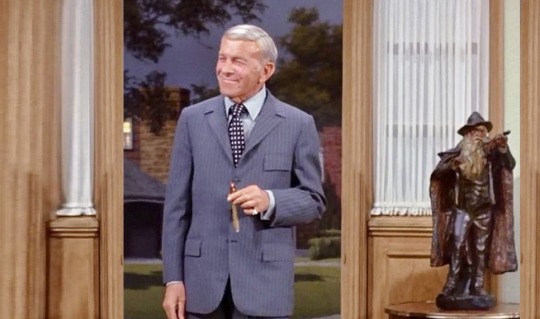
A week later, Burns will did a cameo appearance on “Here’s Lucy”. Burns is only on screen for a minute in an episode that concentrates on guest star (and Burns’ pal) Jack Benny.

And the week after that, they both (again without sharing any screen time) appeared on “Swing Out Sweet Land”, a patriotic special in which Ball voiced The Statue of Liberty and Burns did a cameo as himself.

George, Lucy, and Carol Burnett were all in the interview chair on a February 23, 1971 installment of “The David Frost Show.”

In March, Burns and Ball were back with Benny on “Everything You Wanted to Know About Jack Benny But Were Afraid to Ask” aired March 10, 1971. Lucy plays a young starlet who climbs to the top of the show business food chain. Burns and Benny track their friendship began – although it is highly fictionalized!

On “Circus of The Stars II” Lucille Ball was the ringmaster and George Burns performed magic, although once again, they were never on screen at the same time.

Ball and Burns finally sat down together on screen in “CBS: On The Air” a celebration of fifty years of the network on March 26 & 27, 1978.

On May 10, 1978, Ball and Burns took the dais for “The Dean Martin Celebrity Roast: Jimmy Stewart”.

For the next ten years, George Burns an Lucille Ball appeared together (but not always together) on various Bob Hope specials, and tribute show, including
- “Happy Birthday, Bob” (1978)
- “Bob Hope’s 30th Anniversary Special” (1981)
- “Bob Hope’s Road to Hollywood” (1983)
- “Happy Birthday, Bob!” (1983)
- “Bob Hope’s Who Makes the World Laugh? Part II” (1984)
- “Bob Hope’s Unrehearsed Antics of the Stars” (1984)
- “Bob Hope Buys NBC?” (1985)
- “America’s Tribute to Bob Hope” (1988)
- “Happy Birthday, Bob: 50 Stars Salute 50 Years with NBC” (1988)

In 1976 George burns career had a re-birth when he won an Oscar for playing one of The Sunshine Boys. He was also introduced to a new generation playing the title role in Oh, God! (1978) and its 1984 sequel Oh, God! You Devil.
He died at the age of 100.
“If you live to the age of 100, you have it made, because very few people die past the age of 100.” ~ George Burns

-
WHO DOESN’T LOVE LUCY?
January 19, 1953

Lucille Ball was on the cover of Newsweek on January 19, 1953 (volume XLI, #3). The inside article was titled “Lucille Ball: Who Doesn’t Love Lucy?” This was her only appearance on Newsweek’s cover.

Newsweek was founded in 1933. As of this writing it is still published and maintains an online edition.

A photo of the “I Love Lucy” filming depicts the crew huddled closely around the cast wearing their Desilu jackets.

According to the article, “The Operetta” (ILL S2;E5) was the first episode Lucie Arnaz was allowed to stay up and watch. She would have been just 14 months old at the time.

The issue was published on the very same day that Lucille Ball and her TV counterpart Lucy Ricardo gave birth to sons, setting television records for viewership. The episode was titled “Lucy Goes To The Hospital” (ILL S2;E16).

In 2017, Newsweek published a special edition dedicated to “America’s Favorite Comedy Queen.”
-
CHICK CHANDLER
January 18, 1905

Chick Chandler was born Fehmer Christy Chandler in Kingston, New York. By the age of 12, he was appearing as a dancer and entertainer in local stage shows. At 16, although he was being groomed for a military career, he dropped out to work in vaudeville and to study dance. Chandler maintained a successful career throughout the 1920s as a dancer and comedian in vaudeville and burlesque. In 1932, he landed a role in the Broadway play The Great Magoo. Spotting him, David O. Selznick signed him to a film contract at RKO, telling the press that Chandler was “a cross between Lee Tracy and James Cagney.”

Although he did a low budge western in 1925, his first RKO feature was Sweepings (1932) starring Lionel Barrymore, although he remained uncredited.

The following year he was credited in Blood Money (1933) which also starred a young RKO background performer named Lucille Ball.
Chandler’s first television experience was doing two episodes of “The Bigelow Theatre”, a CBS anthology series that also featured William Frawley in three episodes just prior to “I Love Lucy.”

Lucy-lovers will best remember Chandler as Billy Hackett, Albuquerque newspaper reporter in “Ethel’s Hometown” (ILL S4;E16). The episode was filmed on November 25, 1954 and first aired on January 31, 1955. This was his one and only appearance with Lucy on television.
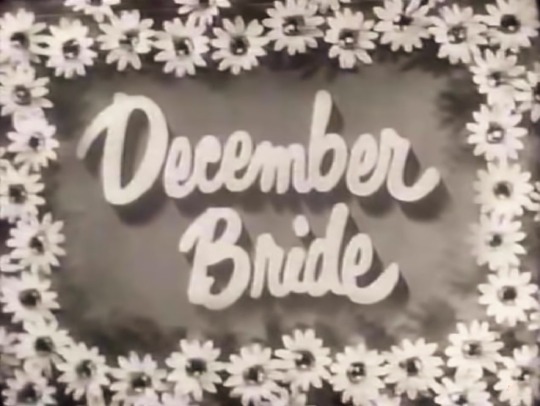
In 1957, he returned to Desilu to film an episode of “December Bride” titled “The Piano Show.” Producer Desi Arnaz made an appearance on the series as himself in February 1960.

In November 1960, he did an episode of Desilu’s “The Real McCoys” titled “Father and Son Day.”

On the very same evening he made an appearance on Desilu’s “The Ann Sothern Show” in “Go-Go Gordon”.

A month later, in December 1960, he did the second of his two episodes of “The Danny Thomas Show”, the first one had been in 1958. She show was filmed at Desilu Studios. “Lucy Makes Room for Danny” (LDCH S2;E2) was a cross-over episode with “The Danny Thomas Show” (formerly “Make Room for Daddy”) to mark their move to CBS from ABC. In return, the Aranz’s played The Ricardos in a January 6, 1959 episode titled “Lucy Upsets the Williams Household.”

In 1963, Chandler did an episode of Desilu’s one-season wonder “Angel” featuring Keith Andes and Harvey Korman. The series was created by Jess Oppenheimer.

In February 1966, he was seen in an episode of “Gomer Pyle USMC” filmed at Desilu Studios titled “Gomer and the Phone Company”. The episode featured Parley Baer and Olan Soule. In November 1966, Gomer Pyle showed up on an episode of “The Lucy Show.”

Chandler’s final screen appearance was in a 1971 episode of “Bonanza”, his sixth of the series.
In February 1925, Chandler became engaged to Ziegfeld performer, beauty contestant winner, and model Dorothy Knapp. Knapp broke off the engagement to pursue her career and Chandler then became involved with 17-year-old Sallie Sharon. The pair formed a vaudeville team, but never married. On April 4, 1931, Chandler married Eugenia “Jean” Frontai, a former performer with David Belasco’s theatrical company. They were married 57 years, until Chandler’s death from a heart attack on September 30, 1988. Jean Chandler followed her husband in death the very next day in the same hospital. They had no children.
-
DANNY KAYE
January 18, 1911

Danny Kaye was born David Daniel Kaminsky in Brooklyn, New York, in 1911, although he would later claim 1913. A multi-talented performer, he was an actor, singer, dancer, comedian, and musician. A high school drop-out,
Kaye’s first break came in 1933 when he joined a vaudeville dance act that toured the United States and Asia.

Kaye’s film debut came in 1937 with a series of low-budget shorts. The series ended when the studio shut down in 1938.

On Broadway, Kaye appeared in The Straw Hat Revue (1939), Lady in the Dark (1941, above center), and Let’s Face It! (1941).

After a significant absence, Kaye returned to Broadway in 1970 to play Noah in the musical Two By Two. When he broke his leg, he performed the role in a cast using a crutch!

Kaye’s first time on television was also his first time appearing with Lucille Ball: “The 24th Annual Academy Awards.”

Some of Kaye’s best-loved motion pictures include White Christmas (1954), The Court Jester (1955), and On the Riviera (1951). In 1955, he was given an honorary Oscar for “his unique talents, his service to the Academy, the motion picture industry, and the American people.” In 1980, he was the recipient of the Academy’s Jean Hersholt Humanitarian Award.

Although Kaye never appeared on “I Love Lucy” he was mentioned in the dialogue. “Lucy Meets the Queen” (ILL S5;E15) was doubtless inspired by Danny Kaye’s November 1948 Command performance for King George and Princess Elizabeth at the Palladium Theatre.
Lucy (to the Bellboy): Have you ever seen the Queen?
Bellhop: No, ma’am. But I came frightful close during the coronation. I just missed her. But I did catch a glimpse of him.
Lucy: Philip?
Bellhop: No, ma’am. Danny Kaye.
In a 1959 episode of “The Lucy–Desi Comedy Hour” Lucy complains about how many meals she’s cooked as a housewife:
Ricky (reading Variety): It says here that Danny Kaye is going to London to give another command performance for Queen Elizabeth.
Lucy: I wonder what the Queen is cooking for Phil tonight?
In 1960, Kaye signed a $1.5 million contract for three annual specials that would set the pattern for his later series. Lucille Ball joined him for “The Danny Kaye Show” on November 11, 1962.
Because it was the first television teaming of the two famous redheads, the special was hailed as “A Television First” and was also Lucille Ball’s first appearance in color.

Lucille Ball sang, danced the Twist, and did imitations of Judy Garland, Carol Channing, and Marlene Dietrich. The highlight of the special was undoubtedly their three-part sketch about the trend of internationally themed restaurants.

Two years later, on November 4, 1964, Ball made a second appearance on the program.
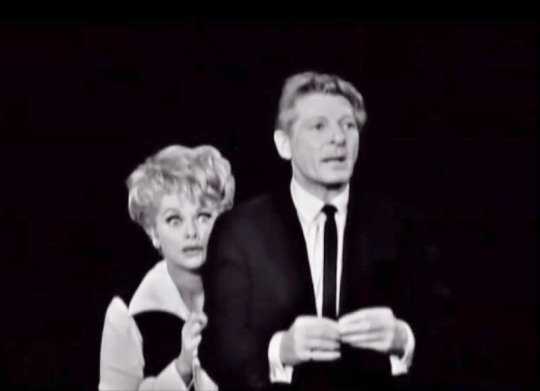
Without the use of costumes or scenery, Kaye and Lucille Ball performed a sketch about a married couple forced to fire a maid who is monopolizing the care of their baby.

Danny Kaye and Lucille Ball performed “The Balloonists,” which included making playful noises with the balloons as they sing and dance, ultimately popping every balloon on the stage.

The next sketch imagines what would happen if a snowstorm kept all but two actors in a traveling troupe from arriving at the theatre to perform a Victorian melodrama. It turns into a quick change act for the two actors.
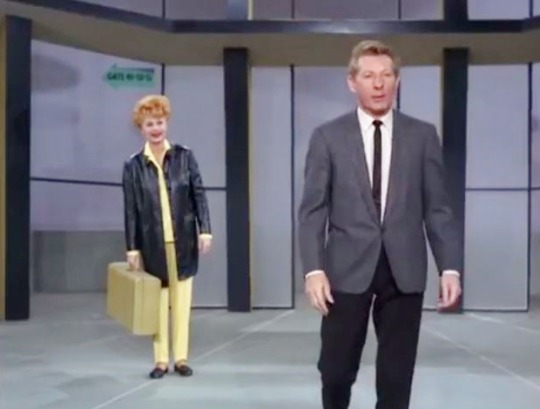
On December 28, 1964, Kaye repaid the favor by appearing on “The Lucy Show” in “Lucy Meets Danny Kaye” (S3;E15). Kaye played himself, and Lucy Carmichael was her usual star-struck self!

In November 1965, Lucy and Danny were two of the performers on tap for a “Salute To Stan Laurel” who had died earlier in the year. The two have no scenes together.

In November 1976, Kaye contributed to “CBS Salutes Lucy: The First 25 Years”.
Kaye talks about Lucy’s skill at physical comedy.Kaye: “Calling Lucille Ball ‘just’ a comedian is like calling Margot Fonteyne ‘just’ a dancer.”
In 1985, Lucy and Danny were two of the celebrities in “Night of 100 Stars II” at Radio City Music Hall.

In February 1986, Kaye made his final screen appearance as a Dentist on “The Cosby Show”. The role got him nominated for an Emmy Award, although he lost to Roscoe Lee Brown for a guest shot on the same series. Coincidentally, Lucille Ball was a presenter at “The 38th Annual Primetime Emmy Awards”.
Kaye married Sylvia Fine in January 1940. They had one child (Dena) and were together until he died of heart failure on March 3, 1987, aged 76.
“Life is a great big canvas; throw all the paint you can at it.” ~ Danny Kaye

-
THE GOLDEN TOUCH
January 17, 1951

“The Golden Touch" is a modern re-telling of the King Midas story with Jack Benny and his friends as King Midas and his court. It was directed by Robert F. Mansfield, written by Robert Hugh O’Sullivan and with Harry Zimmerman as the composer / conductor.

“Family Theater” was a weekly half-hour dramatic anthology radio program which aired on the Mutual Broadcasting System (MBS) from February 13, 1947, to September 11, 1957. The show was produced by Family Theater Productions, a film and radio studio extension of the Family Rosary Crusade founded by Father Patrick Peyton as a way to promote family prayer. The motto of the the Holy Cross Family Ministries is, “The family that prays together, stays together."
Although the program had no commercial sponsor, Father Peyton arranged for many of Hollywood’s biggest stars to appear including James Stewart, Bob Hope, Lucille Ball, Raymond Burr, Jane Wyatt, Charlton Heston, Bing Crosby, Jack Benny, Gene Kelly, William Shatner, and Chuck Connors.
A total of 540 episodes were produced. The program featured not only religious stories but half-hour adaptations of literary works such as A Tale of Two Cities, Moby-Dick and Don Quixote.

Synopsis ~ Lucille Ball is the hostess and Jack Benny stars as the King obsessed with his gold and counting it. The Queen and her daughter get a Genie to sort the King out. The Genie grants the King one wish and the King tells the Genie that he can always use more gold and asks that everything he touches will turn to gold. Of course this seems exciting at first until he turns the Queen and his daughter in to solid gold.

The program was repeated on May 23, 1951.

King Midas is popularly remembered in Greek mythology for his ability to turn everything he touched into gold. This came to be called the golden touch, or the Midas touch.
CAST

Jack Benny (King Midas)
was born on Valentine’s Day 1894. He had a successful vaudeville career, and an even greater career on radio with “The Jack Benny Program” which also became a successful television show. His screen persona was known for being a penny-pincher and playing the violin. Benny was a Beverly Hills neighbor of Lucille Ball’s and the two were off-screen friends. Benny appeared on “The Lucy Show” as Harry Tuttle (a Jack Benny doppelganger) in “Lucy and the Plumber” (TLS S3;E2), later did a voice over cameo as himself in “Lucy With George Burns” (TLS S5;E1), and played himself in “Lucy Gets Jack Benny’s Account” (TLS S6;E6). He was seen in four episodes of “Here’s Lucy.” Benny and Ball appeared on many TV variety and award shows together. He died in 1974, a few weeks after taping “An All-Star Party for Lucille Ball.”
Lucille Ball (Hostess) was concurrently starring in her own radio comedy “My Favorite Husband” having starred in films from 1933. In the fall of 1951, Ball and her husband Desi Arnaz launched their iconic television series, “I Love Lucy.” After her divorce from Arnaz in 1960, Ball starred in two subsequent television series’ – “The Lucy Show” and “Here’s Lucy.” After a series of TV specials, she did one more series in 1986, which was not successful. She died in 1989.
Ted de Corsia (Harvey Benson, Reporter from The Daily Telegram) was an actor in touring companies and on radio before making a memorable film debut as the killer in The Lady from Shanghai (1947). De Corsia’s New York street demeanor and gravelly voice assured him steady work playing street thugs, gang leaders or organized-crime bosses. On radio he starred in the CBS series "Pursuit” (1949-50). Two years before he was heard on an episode of “My Favorite Husband” with Lucille Ball.
Barbara Eiler (Princess Imogene) started acting as a teenager and appeared regularly on the radio programs “The Life of Riley,” “A Day in the Life of Dennis Day,” “The Fabulous Dr. Tweedy” and “Glamor Manor.“ She did a 1948 episode of “My Favorite Husband” with Lucille Ball.
Eleanor Audley (Queen Midas) played Lucille Ball’s mother-in-law on “My Favorite Husband.” She would later play Eleanor Spalding, owner of the Westport home the Ricardos buy in “Lucy Wants To Move to the Country” (ILL S6;E15) in 1957, as well as one of the Garden Club judges in “Lucy Raises Tulips” (ILL S6;E26).
Alan Reed (Matthew the Butler / Tony the Cook) is probably best remembered as the voice of Fred Flintstone. He started his acting career in 1937. He acted opposite Lucille Ball in a 1963 episode of “The Lucy Show” (ILL S1;E25). In 1967, he made an appearance on the Desi Arnaz series “The Mothers-in-Law”. He died in 1977 at the age of 69.
Reed uses an English accent as Matthew and an Italian accent as Tony.
Verna Felton (Molly, Kitchen Help) received two Emmy nominations for her role in the Desilu series “December Bride,” playing Hilda Crocker from 1955 to 1959. She did two episodes of “I Love Lucy,” including playing Lucy’s stern maid, Mrs. Porter. Felton voiced many characters for Disney.
Felton uses an Irish accent as Molly.
Howard McNear (Ipsuda, Magician)
played Mr. Crawford, Little Ricky’s music teacher on “I Love Lucy.” McNear went on to play Floyd the Barber on “The Andy Griffith Show” from 1961 to 1967, filmed on the Desilu backlot. He was also seen in Lucy and Desi’s 1953 film The Long, Long Trailer.Frank Nelson (Genie / Mr. Gene Blue) was born on May 6, 1911 (three months before Lucille Ball) in Colorado Springs, Colorado. He started working as a radio announcer at the age of 15. He later appeared on such popular radio shows as “The Great Gildersleeve,” “Burns and Allen,” and “Fibber McGee & Molly”. This is one of his 11 performances on “My Favorite Husband.” On “I Love Lucy” he holds the distinction of being the only actor to play two recurring roles: Freddie Fillmore and Ralph Ramsey, as well as six one-off characters, including the frazzled train conductor in “The Great Train Robbery” (ILL S5;E5), a character he repeated on “The Lucy Show.” Aside from Lucille Ball, Nelson is perhaps most associated with Jack Benny and was a fifteen-year regular on his radio and television programs.
Howard Culver (Jake Workman, Ice Man) was best known as hotel clerk Howie Uzzell during the entire run of TV’s “Gunsmoke.” On radio he starred in the title role of the Western adventure series “Straight Arrow” which aired on Mutual from 1948 to 1951.
Tony La Frano (Announcer) was the regular announcer for “Music Depreciation” (1945) and every episode of “Family Theatre” (1947-1957).
EPISODE

Hostess Lucille Ball introduces the show, which was broadcast in front of a live audience. Lucille urges listeners to pray together as a family. She then introduces Jack Benny as the King, to great fanfare.
Instead of Benny, the show opens with Imogene on the telephone of a busy office in the Kingdom of Midas. Harvey Benson, an American reporter, arrives to see the Queen, who thinks he is there for money, but he wants the story of something that happened there recently. She tells the story in flashback…
A month ago, King Midas is at breakfast with his family. Imogene complains about having cornmeal mush for breakfast again, but Midas reasons that they have a 752 pounds of corn (thanks to the foresight of his father), so they must eat it!
Matthew, King Midas’ butler, suddenly quits after 32 years! He is tired of carrying the King’s gold. He is also tired of the mush. Because of an ancient decree, the help must eat whatever the King eats.
Imogene and the Queen insist King Midas counts his money too much – 80 million dollars a day! Once the King is gone, the Queen sends Imogene on a mission to see a magician named Ipusda to buy a genie.
At Ipsuda’s shop, Imogene has her pick of genies – even ones vacuum packed in cans (only for tourists)! She buys the blue bottle special for 5 gold pieces – plus a small deposit on the bottle!
Imogene brings the magic blue bottle back to the Queen, who says the magic words: “Genie out and at attention! Do the chores which I will mention!” The giggling Genie immediately appears, talking in rhyme, very amused at his own cleverness. They promise the Genie his freedom if he does as bid. The Queen whispers the orders to the Genie, without letting Imogene know.
Next morning, Imogene and the Queen introduce Midas to his new servant – the Genie! At their bidding, he conjures up bacon and eggs. Midas hates the Genie’s rhyming. He asks Midas what one wish he wants more than anything else in the world. Naturally, he wants more gold.
The Genie grants him with the skill to turn everything he touches to gold! The Genie pops back into the bottle. Imogene notices his utensils have turned to gold – then his eggs – then his coffee.

Before he can stop himself, he turns his own daughter to gold! Midas demands the Queen bring the Genie back, but she refuses and storms off.
Midas hears the kitchen servants Tony and Molly arguing in the next room. Tony goes to shake his hand, but he turns to gold! He touches Molly and she, too, turns to gold.
The ice man arrives and sees the two golden servants. Signing for the ice, the King tries to give him the golden pencil as a tip! Midas explains his problem – everything he touches turns to gold. Jake is about to phone his brother-in-law, Ipsuda, but when he learns that it was the work of a genie, he hangs up. All they can do is wait for the Queen to return to get the Genie out of the bottle!
Time passes and Jake reveals that the King is not as highly regarded in the Kingdom as he thinks. The King admits to being money mad. Midas decides to start giving his money away – starting now!
The Queen arrives and she Midas admits that he never wants to see gold again as long as he lives. After accidentally turning Jake to gold during a hug, the Queen summons the Genie to change the King back – in return for his freedom and a good job. The Genie removes the curse.
Flash forward to the Queen’s interview with newspaper reporter Harvey Benson. Mr. Gene Blue, the president of the relief organization, enters. He makes a joke about his name sounding like “Benson Burners.” He laughs hysterically as the music swells.
Lucille Ball closes the show by asking if the audience knows how Hedda Hopper makes a hat, comparing it to how scientists make a concoction out of ordinary things to create something incredible: jewels out of sawdust, perfume out of coal tar, medicine out of weeds or mold. She says the power of prayer, just like the ordinary things that create something magical, are there all the time, but must be used to get benefits: the jewel of a happy home life, the perfume of uplifted hearts, medicine for a sick world.

LUCILLE BALL: “The family that prays together, stays together.”
Announcer Tony Lo Frano reads the credits and says that next week’s program Walter Brennan and Bette Lynn in “A Star for Helen” with the honorable Frank Walker as host.
 1951, Alan Reed, Barbara Eiler, Eleanor Audley, Family Theatre, Frank Nelson, Howard Culver, Howard McNear, Jack Benny, King Midas, Lucille Ball, Midas, Mutual Broadcasting System, Robert F. Mansfield, Robert Hugh O’Sullivan, Ted De Corsia, The Golden Touch, Tony Lo Frano, Verna Felton, Vintage Radio
-
Subscribe
Subscribed
Already have a WordPress.com account? Log in now.
 Papermoon Loves Lucy