-
MAURICE MARSAC
March 23, 1915

Maurice Marsac was born on March 23, 1915 in Croix, Nord, France.

He made his screen debut (appropriately) as a French policeman in Paris After Dark (1945), a film that employed many French World War II immigrants. He also appeared in two 1952 Paris-set films: Assignment: Paris and April in Paris. Later he did the Parisian musicals Gigi (1958) and Can-Can (1960).

He made his television debut in a May 1950 episode of NBC’s “Fireside Theatre” (aka “Jane Wyman Presents”) titled “Man Without A Country.”

In 1952, Marsac was in “Ricky Asks for a Raise” (ILL S1;E35) as the exasperated Maurice, the Tropicana Maitre d’. He earned a spontaneous round of applause from the studio audience after his skillfully juggling of the Tropicana’s two-line reservation system.

Announcer Roy Rowan’s voice-over credits state that “the role William was played by Maurice Marsac.“ According to the original script, the character was actually supposed to be named ‘William’ but during the episode Mr. Littlefield (Gale Gordon) addressed him as ‘Maurice’.

In 1953 he made four appearance on “Our Miss Brooks” filmed at Desilu Studios, all playing Maurice La Blanche. His first episode was titled “Monsieur La Blanche.”

Maurice returned to “I Love Lucy” in 1956 to play the café waiter who serves Lucy snails (and a bottle of Paul Masson California wine) in “Paris at Last” (ILL S5;E18).

He has to deal with the outraged chef (Rolfe Sedan) when Lucy wants to put ketchup on her snails!

In December 1959, he was in an episode of “The Westinghouse Desilu Playhouse” titled “Murder in Gratitude” introduced by Desi Arnaz.

In January 1960, he played Gustav the Maître d’ on an episode of “The Danny Thomas Show” filmed at Desilu Studios. In October 1960, he played Mr. Martand, the grocer, on an episode of “Angel” titled “The French Touch,” also filmed at Desilu Studios.

In March 1963, he played Pierre on Desilu’s “The Real McCoys” in an episode titled “Aunt Win Steps In” starring Joan Blondell. A week later, he appeared in an episode of “Fair Exchange” (filmed at Desilu Studios) titled “Neville, the Pearlie.” In December of that same year, he did an episode of Desilu’s “Glynis” titled “Crime After a Fashion”.

From 1963 to 1970, Marsac did three episodes of “My Three Sons,” filmed at Desilu / Parmamount Studios. His first appearance also featured William Frawley.

In March 1965, he was in “A Paris Original,” an episode of “My Living Doll” filmed at Desilu Studios. In the early 1970s, Marsac did several episodes of “Mission Impossible” and “Mannix” two series fostered by Lucille Ball and Desilu.

His final screen role (fittingly) was playing a French Maître d’ in the 1987 feature film reboot of Dragnet.
He retired from acting and died on May 6, 2007 at age 92. He died less than three weeks after the passing of his wife of 55 years, Melanie.

-
CONSERVATION IN THE KITCHEN
March 22, 1942

by Susan Thrift
ONE war ago there was a fighting slogan: “Food Will Win the War."
Food DID help to win that war and it can help to win this one. Which brings the battle front right into our kitchens.
That extra crust of bread, end of meat, bunch of vegetables, multiplied by millions can balance the scales toward victory. Today it is a "must” for every woman to learn what food to buy for health and efficiency; how to avoid waste; when to buy for economy. This goes for any size budget.
Lay the groundwork for the present emergency by reading government reports on the buying of food und planning of meals. Here is essentially what you will learn.
For efficiency and economy, plan your meals a week ahead. Buy – in one shopping trip on Saturday – staples such as flour, canned goods, coffee, cereals for the entire week. At the same time, buy as much of your meat and vegetables as practical.

From government reports you will learn that food for each member of the family, to ensure needed vitamins, must each day include the following:
- 1 pint milk for each adult (1 quart for each child).
- 1 serving lean meat, poultry or fish.
- 3 to 4 eggs a week for each adult (1 per day for each child).
- 2 servings fruit (one must be citrus fruit, tomatoes or tomato juice).
- 2 servings vegetable (must be yellow or green).
- 2 servings cereals or (one bread, whole or enriched grains.
- Butter with Vitamin A.
- 6 glasses water.
Corners may be filled with “budget” cuts of meat. You learn the food value of cheese, the value of evaporated milk and vegetable, margarine for cooking, how to buy fruits and vegetables so none spoil, and how to cook extras to save them.
After trial and error, you come out at the end of the week with a perfect pattern of meals, with proper vitamins and the budget intact. So sit yourself down in a sunny corner of your kitchen and plan your menus for the week. First list your needed staples, then rough out the week’s menus and figure amounts and costs.

Armed with this list, go to market from clerks who know you and know you can’t be fooled. If you have a freezing unit in your refrigerator, you can buy meat for the week. You’ve probably learned that you can depend much on a reliable butcher and standard brands. For the rest, remember what your mother taught you about the purchase of meat:
Any variety, any cut of meat, should have clear, white, firm edges of fat. Thin usually means well-fed, healthy young animals.
Beef, to be tender, must be hung and aged. Such beef is a clear, dark red.
Buy poultry with clear yellow skin so thin It may even break, legs must be without tough tendons. In a young fowl, breast bone is soft gristle, not bone.
Buy roasts with a thought to the use of leftovers, to save money – and even more important now – to save food. If you start the week with a roast, balance the budget later with cheaper cuts pot roasts, ragouts, stews cooked long and flavored well.

After choosing your meat, select fruits, vegetables. In modern refrigerators, vegetables may be kept a week; with less efficient equipment it is more economical to buy oftener. In choosing fruits and vegetables, these are the rules to remember:
Fresh, young vegetables look fresh, their leaves crisp, never wilted and brown. Young vegetables crack open; old ones are limp, wrinkled, dry.
Pods of fresh peas are slick, shiny.
As a rule, the smaller the kernels, the younger the corn.
Heads of lettuce and cabbage must be firm, solid, heavy. Never choose one that seems spongy.
Choose oranges and grapefruit by weight – the heavier the better. But remember that some have thicker skins.
Always avoid all bruised fruit.
Buying fresh vegetables is particularly important now and in the future because the housewife will need to utilize them constantly. The abundance of canned goods will be sharply cut because of tin priorities.
The staples such as cabbage, carrots, dried beans and fruits will become vital parts of our diet, for the tenderer, more tasty vegetables just won’t be available.
When you are home from the market put your food away promptly. Learn to use your refrigerator for maximum efficiency, for half use or misuse of refrigeration costs time, food and ice. Here are a few simple rules:
Remove tops from vegetables to save space, ice.
Place vegetables in cellophane bags or hydrator.
Wrap uncooked meat in waxed paper.
All foods fruits, vegetables, meats cooked or raw, should be kept covered.
You can save much time and some cooking cost if you prepare Yin “ V s C more than one day’s supply of food at a time. Store It in covered glass dishes use as needed. (Good thought for the career girl.)

If your refrigerator has a compartment for freezing meat, be sure to remove meat from this pan two hours before cooking, so it may reach room temperature. Frozen meat put directly on the fire is tough.
Rule Number One for all housewives is DON’T HOARD.
There is no food shortage. Panicky over-buying depletes stocks unnecessarily, causes waste and occasions hardships for those who buy properly.
Wise housewives always have kept a certain basic supply of food on their shelves against a rainy day, unexpected guests, emergency.
In this current emergency, the powers that be tell you that the following supply is ample for four people for at least four emergency days. Here’s the official list, in case you want to devote certain cupboard space to this supply, replacing foodstuffs as used:
- 16 cans evaporated milk.
- 4 5-ounce jars cheese. ½ pound dried peas, or 4 cans baked beans.
- 1 pound jar peanut butter.
- 8 cans vegetables (1 can peas, 1 can beans, 1 can sauerkraut, 4 cans tomatoes).
- 4 cans grapefruit juice.
- 1 pound dried prunes (or apricots).
- ½ pound raisins.
- 4 or 5 pounds canned meat, fish (such as corned beef, salmon, etc.)
- 2 packages prepared cereals.
- 1 pound cereal to be cooked.
- 2 packages whole wheat crackers.
- 2 packages of soda crackers.
- 16 chocolate bars (1 1/2 to 2 ½ ounces).
- 1 pound can cocoa or chocolate.
- 1 pound sugar.
- 1 pound jar jam.
- ½ pound coffee.
- ¼ pound tea.
Note that there is included a proper amount of canned food for your dog – putting even Mother Hubbard to shame! All items of this basic stock must be in containers to prevent spoilage and should be stored in a cool dry place.

-
Lucille Ball Scrapbook
March 22nd ~1936 to 1950

~ MARCH 22, 1936 ~

~ MARCH 22, 1939 ~

~ MARCH 22, 1941 ~

~ MARCH 22, 1941 ~


~ MARCH 22, 1942 ~

~ MARCH 22, 1943 ~

~ MARCH 22, 1943 ~

~ MARCH 22, 1943 ~

~ MARCH 22, 1945 ~

~ MARCH 22, 1945 ~

~ MARCH 22, 1946 ~

~ MARCH 22, 1950 ~

-
I’LL LOVE YOU ALWAYS
March 20, 1935
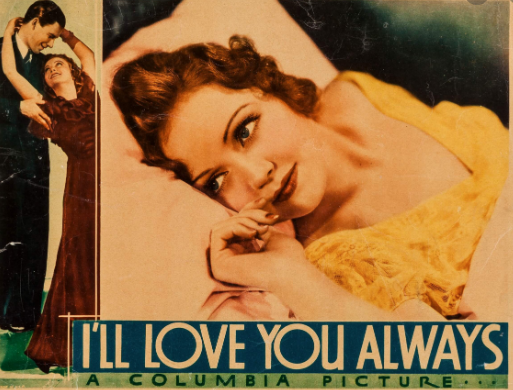
- Directed by Leo Bulgakov
- Writers: Lawrence Hazard (story), Vera Caspary, Sidney Buchman
- Produced by Everett Riskin for Columbia Pictures
Synopsis ~ Actress Nora Clegg marries Carl Brent, an unemployed young engineer, whose estimation of his worth and ability keeps him from getting a job. He finally acquires a position that will require him to go to Russia for a period of time, while Nora goes back to the stage during his absence. But he loses out on the job at the last minute, and rather than tell Nora he has failed again, he steals money from his prospective employer to lavish on Nora before his ‘supposed’ departure. His goes to jail and hides the truth from Nora by having an acquaintance mail his letters from Russia. He then finds out that Nora is pregnant.
PRINCIPAL CAST

Nancy Carroll (Nora Clegg) was nominated for an Oscar in 1930 for The Devil’s Holiday. She also appeared with Lucille Ball in Jealousy (1934).
George Murphy (Carl Brent) appeared with Lucille Ball in Jealousy and Kid Millions, both in 1934. They also were in A Girl, A Guy, and a Gob in 1941, as well as two radio adaptations of the film. In 1959, Murphy served as guest host of “The Westinghouse Desilu Playhouse” when Desi Arnaz took a role in his own anthology series. He was also a performer in “The Desilu Revue” aired in December 1959. As the host of “MGM Parade”, he interviewed Lucy and Desi in February 1956.
Raymond Walburn (Charlie) previously appeared with Lucille Ball in Broadway Bill (1934), Jealousy (1934), and Lover Come Back (1946).
Arthur Hohl (Jergens) previously appeared with Lucille Ball in Bulldog Drummond Strikes Back (1934), Jealousy (1934), and The Whole Town’s Talking (1935).
Jean Dixon (Mae Waters) would also appear with Lucille Ball in Joy of Living (1938).
Robert Allen (Joe) previously appeared with Lucille Ball in Broadway Bill (1934) and Jealousy (1934).
Harry Beresford (Mr. Clegg) would appear with Lucille Ball in Follow The Fleet (1936).
Paul Harvey (Sandstone) appeared in seven films with Lucille Ball. He played the art critic in “Lucy the Sculptress” (ILL S2;E15).

UNCREDITED CAST
- Lucille Ball (Lucille) appears in her 20th feature film since coming to Hollywood in 1933.
- Eadie Adams…Singer
- Irving Bacon (Theater Manager) did seven films with Lucille Ball before playing Mr. Willoughby in in “The Marriage License” (1952) and Will Potter in “Ethel’s Hometown” (1955).
- Eddie Baker…Doorman
- Elaine Baker…Sandstone’s Secretary
- John Beck…Ghost
- Yvonne Bertrand…Operator
- Stanley Blystone…Bill Collector
- Sven Hugo Borg…Hamlet
- Lynton Brent…Laertes
- Helen Brown…Worker
- Steve Clark…Bill Collector
- Claudia Coleman…Francine
- Gino Corrado…Waiter
- D’Arcy Corrigan…Waiter
- Pearl Eaton…Gertrude
- Vessie Farrell…Jenny
- Budd Fine…Furniture Man
- Sam Flint…First Business Man
- Mary Foy…Kitty
- Frankie Genardi…Shoeshine Boy
- Adda Gleason…Manager
- Grace Goodall…Sarah
- Roger Gray…Foreman
- Howard Hickman…Dean
- Samuel E. Hines…Bank Teller
- Alfred P. James…Canby
- Ethan Laidlaw…Cab Driver
- W.E. Lawrence…Furniture Salesman
- Edward LeSaint…Minister
- Otto Malde…Steward
- Frank Marlowe…Bellhop
- Adrian Morris…Pigface
- Bruce Randall…Waiter
- Jack Richardson…Bartender
- Billie Van Every…Mary
-
John Paul Jones, Moselle Kimbler, Lon Poff, Bert Starkey, Charles Marsh, Elaine Waters, Gay Waters
“LOVE” TRIVIA

All but three of the principal cast members also appeared with Lucille Ball in Jealousy in 1934.

During her brief period at Columbia, Lucille Ball logged in miniscule roles in eight feature films and three shorts. It is fair to say that Columbia and her torch got more screen time than Lucille!

Irving Bacon (Theatre Manager) and Paul Harvey (Sandstone) were the only two cast members to later appear on “I Love Lucy”.

This is just one of 13 films (including three shorts) featuring Lucille Ball to be released in 1935. All except I Dream Too Much were uncredited:
- Behind the Evidence (Secretary)
- Carnival (Nurse)
- Hooray For Love (Chorine)
- The Whole Town’s Talking (Bank Employee)
- Roberta (Fashion Model)
- I’ll Love You Always (Lucille)
- Old Man Rhythm (College Girl)
- Top Hat (Flower Clerk)
- The Three Musketeers (Extra)
- Foolish Heart – short (Hat Check Girl)
- His Old Flame – short
- A Night At The Biltmore Ball – short (Lucille Ball)
- I Dream Too Much (Gwendolyn Dilley) – Lucille Ball’s first on screen credit

-
TV GUIDE: LUCY’S NEIGHBORS
March 20, 1953

William Frawley and Vivian Vance appeared on the cover of the pre-National TV Guide (volume VI, #f12) for March 20 to 26, 1953. This was the penultimate issue of the regional Guide before it went national.

The inside article is titled “Lucy’s Neighbors” with the subtitled “Don’t Be So Sure The Mertzes are Just Play-Acting”.


Different regions of the publication used different background colors on the cover. This green cover was for New England.
-
ROY ROBERTS
March 19, 1906

Roy Roberts was born Roy Barnes Jones
in Dade City, near Tampa, Florida. He began his acting career on the stage, first appearing on Broadway in May 1931 before making his motion picture debut in Gold Bricks, a 1936 two-reel comedy short released by 20th Century-Fox.

He appeared in numerous films in secondary parts and returned to perform on Broadway in such productions as Twentieth Century, My Sister Eileen, and Carnival in Flanders until he began making guest appearances on television series, becoming one of the most recognizable faces on TV.

His first time with Lucille Ball was in an uncredited role in Miss Grant Takes Richmond (1949).

His TV debut came in a 1952 episode of the anthology series “Suspense” titled “The Invisible Killer.”

He first worked for Desilu in a 1955 episode of “December Bride” called “The Shoplifter.” He was also seen in episodes of “The Danny Thomas Show,” “The Dick Van Dyke Show,” “My Three Sons” and “The Andy Griffith Show,” all filmed on the Desilu Studios backlot.

Roberts joined the cast of “The Lucy Show” at the start of season five, but not as the role he would become known for, bank president Mr. Cheever, but as the Admiral in “Lucy and the Submarine” (TLS S5;E2) in September 1966.

In “Lucy’s Substitute Secretary” (TLS S5;E19) he becomes a recurring character on the show as Harrison Cheever, Mr. Mooney’s boss, doing 14 episodes through the end of the series.

″Lucy and Tennessee Ernie Ford” (TLS S5;E21) ~ February 27, 1967.
Roberts also did six episodes of “The Beverly Hillbillies” as Bank President John Cushing, a rival of banker Mr. Drysdale. It is very likely that “The Lucy Show” cast Roberts as the much-anticipated Mr. Cheever after seeing him play Cushing. He also appeared on CBS’s other two rural sitcoms, “Green Acres” and “Petticoat Junction,” all as different characters.“Lucy Gets Trapped” (TLS S6;E2) ~ September 18, 1967
“Lucy and the French Movie Star” (TLS S6;E3) ~ September 25, 1967 (starring
Jacques Bergerac)

“Lucy and the Starmaker” (TLS S6;E4) ~ October 2, 1967 (starring Frankie Avalon)
“Lucy Gets Jack Benny’s Account” (TLS S6;E6) ~ October 16, 1967
“Little Old Lucy” (TLS S6;E7) ~ October 23, 1967

“Lucy Gets Mooney Fired” (TLS S6;E9) ~ November 6, 1967
“Lucy, the Philanthropist” (TLS S6;E11) ~ November 20, 1967
“Lucy Gets Involved” (TLS S6;E17) ~ January 15, 1968
“Mooney’s Other Wife” (TLS S6;E18) ~ January 22, 1968
“Lucy and the Stolen Stole” (TLS S6;E19) ~ January 29, 1968
“Lucy Helps Ken Berry” (TLS S6;E21) ~ February 19, 1968

“Lucy and the ‘Boss of the Year’ Award” (TLS S6;E24) ~ March 11, 1968
This is Roberts’ final appearance as well as the series finale.
Roberts returned to Lucille Ball Productions for five episodes of “Here’s Lucy,” staring with the on-location episodes that opened season two, “Lucy Goes To The Air Force Academy: Part One” (HL S2;E1) ~ September 22, 1969 and “Lucy Goes To The Air Force Academy: Part 2″ (HL S2;E2) ~ September 29, 1969

In “Lucy and the Astronauts” (HL S4;E5) S4;E5 ~ October 11, 1971. Roberts played Dr. Jamison.

“Lucy Goes To Prison” (HL S5;E18 ~ January 22, 1973. Roberts played Warden Maginetti.

“Lucy is N.G. as an R.N.” (HL S6;E17 ~ January 21, 1974. Roberts played Dr. Hunnicutt.
The same evening this episode originally aired, Roberts also appeared on “Gunsmoke,” “Here’s Lucy’s” lead-in on CBS. Roberts played Mr. Bodkin in 19 episodes of the long-running Western. Like his character of Mr. Cheever on “The Lucy Show,” Mr. Bodkin was a banker. These two back-to-back episodes are Roberts’ last television appearances before his death a year later. In that year, he also starred in two feature films: Chinatown (1974) and The Strongest Man in the World (1975).
Roy Roberts died on May 28, 1975 a age 69. He was married to Lillian Moore from 1947 to his passing.

-
THE WILLS
March 19, 1950
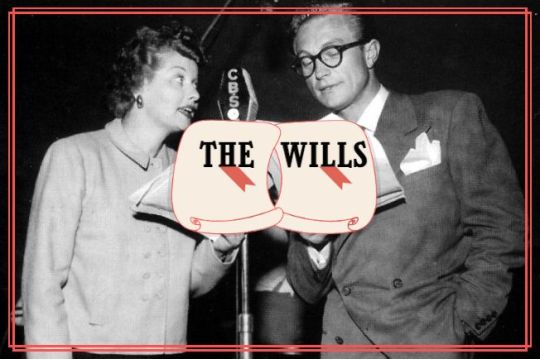
“The Wills” (aka “The Coopers Make Their Wills”) is episode #80 of the radio series MY FAVORITE HUSBAND broadcast on March 19, 1950.
Synopsis ~
After Liz and George make out their wills, Liz is convinced that George intends to do away with her. Liz is startled to find a receipt for some arsenic and rope in his pocket, but is shocked when George suggests a trip to the country – with a one-way ticket for Liz!
Starting with this episode, “My Favorite Husband” moved from Thursday nights, to Sunday nights.

Note: This program was used as a basis for a scene in “I Love Lucy” episode “Lucy Thinks Ricky Is Trying to Murder Her” (ILL S1;E4) filmed on September 8, 1951 and first aired November 5, 1951. For various reasons, it was the first episode of the series filmed, but the fourth aired.

“My Favorite Husband” was based on the novels Mr. and Mrs. Cugat, the Record of a Happy Marriage (1940) and Outside Eden (1945) by Isabel Scott Rorick, which had previously been adapted into the film Are Husbands Necessary? (1942). “My Favorite Husband” was first broadcast as a one-time special on July 5, 1948. Lucille Ball and Lee Bowman played the characters of Liz and George Cugat, and a positive response to this broadcast convinced CBS to launch “My Favorite Husband” as a series. Bowman was not available Richard Denning was cast as George. On January 7, 1949, confusion with bandleader Xavier Cugat prompted a name change to Cooper. On this same episode Jell-O became its sponsor. A total of 124 episodes of the program aired from July 23, 1948 through March 31, 1951. After about ten episodes had been written, writers Fox and Davenport departed and three new writers took over – Bob Carroll, Jr., Madelyn Pugh, and head writer/producer Jess Oppenheimer. In March 1949 Gale Gordon took over the existing role of George’s boss, Rudolph Atterbury, and Bea Benadaret was added as his wife, Iris. CBS brought “My Favorite Husband” to television in 1953, starring Joan Caulfield and Barry Nelson as Liz and George Cooper. The television version ran two-and-a-half seasons, from September 1953 through December 1955, running concurrently with “I Love Lucy.” It was produced live at CBS Television City for most of its run, until switching to film for a truncated third season filmed (ironically) at Desilu and recasting Liz Cooper with Vanessa Brown.
MAIN CAST

Lucille Ball (Liz Cooper) was born on August 6, 1911 in Jamestown, New York. She began her screen career in 1933 and was known in Hollywood as ‘Queen of the B’s’ due to her many appearances in ‘B’ movies. With Richard Denning, she starred in a radio program titled “My Favorite Husband” which eventually led to the creation of “I Love Lucy,” a television situation comedy in which she co-starred with her real-life husband, Latin bandleader Desi Arnaz. The program was phenomenally successful, allowing the couple to purchase what was once RKO Studios, re-naming it Desilu. When the show ended in 1960 (in an hour-long format known as “The Lucy-Desi Comedy Hour”) so did Lucy and Desi’s marriage. In 1962, hoping to keep Desilu financially solvent, Lucy returned to the sitcom format with “The Lucy Show,” which lasted six seasons. She followed that with a similar sitcom “Here’s Lucy” co-starring with her real-life children, Lucie and Desi Jr., as well as Gale Gordon, who had joined the cast of “The Lucy Show” during season two. Before her death in 1989, Lucy made one more attempt at a sitcom with “Life With Lucy,” also with Gordon.
Richard Denning (George Cooper) was born Louis Albert Heindrich Denninger Jr., in Poughkeepsie, New York. When he was 18 months old, his family moved to Los Angeles. Plans called for him to take over his father’s garment manufacturing business, but he developed an interest in acting. Denning enlisted in the US Navy during World War II. He is best known for his roles in various science fiction and horror films of the 1950s. Although he teamed with Lucille Ball on radio in “My Favorite Husband,” the two never acted together on screen. While “I Love Lucy” was on the air, he was seen on another CBS TV series, “Mr. & Mrs. North.” From 1968 to 1980 he played the Governor on “Hawaii 5-0″, his final role. He died in 1998 at age 84.
Gale Gordon (Rudolph Atterbury) had worked with Lucille Ball on “The Wonder Show” on radio in 1938. One of the front-runners to play Fred Mertz on “I Love Lucy,” he eventually played Alvin Littlefield, owner of the Tropicana, during two episodes in 1952. After playing a Judge in an episode of “The Lucy-Desi Comedy Hour” in 1958, he would re-team with Lucy for all of her subsequent series’: as Theodore J. Mooney in ”The Lucy Show”; as Harrison Otis Carter in “Here’s Lucy”; and as Curtis McGibbon on “Life with Lucy.” Gordon died in 1995 at the age of 89.
Bea Benadaret (Iris Atterbury) does not appear in this episode.
Ruth Perrott (Katie, the Maid) was also later seen on “I Love Lucy.” She first played Mrs. Pomerantz (above right), a member of the surprise investigating committee for the Society Matrons League in “Pioneer Women” (ILL S1;E25), as one of the member of the Wednesday Afternoon Fine Arts League in “Lucy and Ethel Buy the Same Dress” (ILL S3;E3), and also played a nurse when “Lucy Goes to the Hospital” (ILL S2;E16). She died in 1996 at the age of 96.
Bob LeMond (Announcer) also served as the announcer for the pilot episode of “I Love Lucy”. When the long-lost pilot was finally discovered in 1990, a few moments of the opening narration were damaged and lost, so LeMond – fifty years later – recreated the narration for the CBS special and subsequent DVD release.
GUEST CAST

Herb Vigran (Doctor Stephens) made several appearances on “My Favorite Husband.” He would later play Jule, Ricky’s music union agent on two episodes of “I Love Lucy”. He would go on to play Joe (and Mrs. Trumbull’s nephew), the washing machine repairman in “Never Do Business With Friends” (S2;E31) and Al Sparks, the publicity man who hires Lucy and Ethel to play Martians on top of the Empire State Building in “Lucy is Envious” (S3;E23). Of his 350 screen roles, he also made six appearances on “The Lucy Show.”
EPISODE
ANNOUNCER: “As we look in on the Coopers tonight, it’s just after dinner, and we find Liz and George settling down to a normal evening’s conversation.”
George has something he needs to talk to Liz about. Liz immediately thinks it is something to do with her household budget, but George wants to talk about their wills. The subject immediately upsets Liz. The idea of living without George sends Liz into gales of tears. George wants her to read it, and threatens to leave everything to his mother if she doesn’t. Liz snatches the will from him. George then tells her that he has had her will drawn up as well.

LIZ: “What for? You’re the one who’s going! What are you trying to do, push me ahead of you in line?”
George reminds her of the three acres of Florida beachfront property that her father left her, which she calls ‘Sunken Acres.’ George always assumed it was oil land.
LIZ: “If there’s any oil down there, it’s still in a whale. Oh! I see it all now, George! You want me to sign a will leaving everything to you, and then you’ll bump me off! You want to get your dirty fishhooks on my oil holdings!
Liz agrees to read and sign the will as the scene fades out. At the bank the next day, Mr. Atterbury notices that George seems tired. George admits he was up late talking to Liz about their wills. Mr. Atterbury proposes that the Coopers join him and Iris at their mountain lodge for the weekend, flying up, and then leaving the girls there for the week while they fly back for work. The following weekend they will drive up to get them in Mr. Atterbury’s new car.

Mr. Atterbury has already bought the airline tickets and asks George to go to the hardware store for a few items.
MR. ATTERBERRY: “I need poison for those horrible little gophers up there. And some rope for a clothesline, and a couple of sacks of cement. Iris wants a patio so she can sunbathe. Come to think of it, that ought to keep the gophers away.”
GEORGE: “Let me make a list on the back of this envelope. Now, poison, ropes, cement…”
MR. ATTERBERRY: “Oh, and I need an axe, too.”Mr. Atterbury tells George that they should tell their wives that they are just going for a weekend, so that they don’t rush out to buy a week’s worth of new clothes.
At the Cooper home, Katie the Maid is preparing dinner. George comes home and tells Liz the good news that they’ll be going to the Atterbury’s lodge this weekend, and he’s got the airline tickets in his pocket. As George goes upstairs to prepare for dinner, Katie reminds Liz that she has a beauty shop appointment on Saturday. Liz wonders what time the plane leaves, and fishes in George’s jacket pocket to check the tickets. She notices that one tickets is round trip, and the other is one way!
Liz immediately assumes one of them isn’t coming back, and reminds Katie that George asked her to sign her will! She notices some writing on the envelope that looks like a shopping list.
LIZ: “Poison! He’s going to take me out in the woods and poison me! Look, at the next item – rope. If the poison doesn’t work, he’s gonna hang me! Cement. If I live through the poison and the rope, he’s gonna put my feet in cement and dump me in the lake! Look what’s next – axe! If I able to hold my breath, he’s gonna swim in the water and chop me to pieces!”
KATIE: “Oh, how can Mr. Cooper do such a thing?”
LIZ: “With that list of weapons, how can he miss?“Liz realizes why George might want to do away with her – they’ve finally struck oil on Sunken Acres!
End of Part One
Announcer Bob LeMond reads a live Jell-O commercial.
ANNOUNCCER: “As we return to the Coopers, we find Liz in a state of nervous apprehension. After years of having George under her thumb, she’s suddenly discovered that he’s bout to put the finger on her. Or at least she thinks he is. But right now it’s after dinner, and Liz, the intended victim, is in the living room, reading. While George, the killer, is slowly stalking up behind her.”
George kisses Liz on the back of the neck. She screams! Liz nervously says that she’d rather not go to the Atterbury’s lodge this weekend.
GEORGE: “What? Why, Liz, you love the lodge. You always say that’s your idea of living.”
LIZ: “Well, I want to keep it that way.”George says that he has a big surprise for her up there. Liz suggests he take his mother and give HER the big surprise!
GEORGE: “Now, don’t be silly! You just wait: When you wake up Monday morning, you’ll be very pleasantly surprised.”
LIZ: “If I wake up Monday morning, I’ll be surprised.”Liz wonders if George is having money problems. She asks him why he made her sign her will last night. George says that if it bothers her so much, he’ll tear it up – as soon as they get back from the lodge.

Liz runs to her bedroom and locks the door! George telephones Dr. Stephens (Herb Vigran) to report that Liz is acting peculiar.
DOCTOR: “Peculiar for Liz, or peculiar for normal people?”
RICKY RICARDO: “Lucy is acting crazy!”
FRED MERTZ: “Crazy for Lucy or crazy for ordinary people?”This joke was adapted for Lucy Ricardo in “Lucy Thinks Ricky Is Trying To Do Murder Her” with Fred Mertz taking the Doctor’s line.
Doctor Stephens cannot make a house call because he’s got an appointment with his psychoanalyst, but he tells George to give Liz a sedative until he can get there.

Liz comes in for a glass of water. George tells her that he’s had Katie prepare them some hot milk. In the kitchen, Katie tells Liz that she saw Mr. Cooper pour a powder into one of the glasses. Liz says she’ll just switch the glasses so that George drinks the one with the powder in it.
In the living room she distracts George just long enough to switch the glasses. But when George lifts his glass to drink, Liz dashes it from his hand. She says she couldn’t do it to him, even if he could do it to her.
LIZ: “You put something in my glass, didn’t you, George? Well, I fooled you! I switched glasses!”
GEORGE: “I had a hunch that’s why Katie called you, so I switched them again while you were out of the room.”
Liz starts to gag as if she’s been poisoned! Liz falls to the floor, convinced she is going to die, trying to make peace with George in her final moments.
LIZ: “If I had my life to live over again, I want you to know I’d do better. I could stay within the budget, if I tried. (coughs) And I’d never buy clothes I need. (coughs) I’d throw away my charge-a-plate.”
The doorbell rings. It is Mr. Atterbury, come to make the ‘final arrangements.’ Liz tells George that she saw the one way ticket, and the shopping list for poison and the axe. The men dissolve in laughter. Mr. Atterbury explains that those were supplies for the lodge. Liz is angry that she’s been tricked, and refuses to keep the promises she made in her ‘final moments’.
LIZ: “I didn’t know what I was saying! I was under the influence of warm milk!”

End of Episode
In the live Jell-O commercial, Lucille Ball plays a Mexican spy, and Bob LeMond is interviewing her for a job.

In the bedtime tag, it is five in the morning and George is reading a suspenseful magazine story. Liz begs him to turn out the light, but then can’t sleep until he knows the outcome of the story. Liz grabs the magazine and reads the last lines.
LIZ: “The huge, shapeless thing crept slowly up behind Mildred, and before she could scream it slipped its bony hands around her – Oh, no!!!”
GEORGE: “What does it say, Liz? Around her what?”
LIZ: “Around her continued next week! Good night!”ANNOUNCER: “You have been listening to ‘My Favorite Husband’ starring Lucille Ball, with Richard Denning, and based on characters created by Isobel Scott Rorick. Tonight’s transcribed program was produced and directed by Jess Oppenheimer, who wrote the script with Madelyn Pugh and Bob Carroll, Jr. Be sure to get the April Issue of ‘Radio Mirror Magazine’ with the big picture of Lucille Ball on the cover. That’s the April issue of ‘Radio Mirror Magazine.’ Original music was composed by Marlin Skyles and conducted by Wilbur Hatch. Bob LeMond speaking.”

-
TRIB TV: CAROL + 2
March 19, 1966

BURNETT, BALL, AND MOSTEL – how do you get a comedic triple threat like that on the same TV show? If you’re Carol Burnett, you ask Zero to lunch and say: “Hey, wouldn’t it be fun to do a show together?”
Then, even tho everybody says, “Forget it, you’ll never get her,” you call Lucy and she says: “I hear you’re doing a show with Zero…I can’t wait to see it."
And you say: "How’d ya’ like to see it up close?"

“Carol + Two” [Tuesday at 7:30 p.m. on channel 2] is "just the three of us, and it’s split pretty evenly three ways,” Carol told us at a lunch date just before the show’s taping.
“Each of us does sketches with one another, and the three of us do a musical number together,” she said. “I don’t want to tip you off to too much because we want to preserve an element of surprise in the sketches.”
She did reveal that she plays a seamstress in a bunny club. "A little something that occurred to me while I was going to sleep the other night,” she said.
Carol considers snagging Lucille Ball for the show a real coup.
“I’ve wanted to work with her for years, but it never came off because of schedule difficulties,” she said. “I met Lucy the second night I was doing "Once Upon a Mattress” [off-Broadway in 1959]. She was in the audience, and boy, was I nervous! She’s my favorite comedienne, the best there is."
REMINDED SHE HAD OFTEN been compared with Lucy, Carol did a double-take equal to any she’s ever done on stage.
"Oh, my word, I didn’t know that,” she exclaimed. “To be compared with her is an honor. To me she can do no wrong. She’s wise in what she does, and no matter how good the material is she rises above it."
Could Carol foresee any friction among three such high-powered performers?
"Oh, I think it’s a phony thing, you know, when someone says, ‘I don’t want a singer on my show because I’m a singer, or I don’t want a comic on my show because I’m a comic,’” she said with a shrug. “It’s simply insecurity if you can’t work with someone. You are you, and you have your space in life, and you do what you’re supposed to do.”
"Two people like Zero and Lucy, who are willing to work, that’s a hard thing to find. They still like their profession, they like to work, they like to rehearse. They’re two pluses – How can you get a minus?"
Carol glanced down at a photograph of Zero and herself in one of the show’s sketches and sighed: "Ah, there we are, the Dick and Liz of CBS."

-
EDWARD EVERETT HORTON
March 18, 1886

Edward Everett Horton was born in Brooklyn, New York. He began his stage career in 1906, singing and dancing and playing small parts in vaudeville and in Broadway productions. In 1919, he moved to Los Angeles, California, where he began acting in Hollywood films.
During his long career, he was in five Oscar Best Picture nominees: The Front Page (1931), The Gay Divorcee (1934), Top Hat (1935), Lost Horizon (1937) and Here Comes Mr. Jordan (1941).

His first role was in the silent comedy Too Much Business (1922).

He made his television debut playing Sheridan Whiteside in a 1949 CBS TV production of “The Man Who Came To Dinner” as part of “Ford Theatre Hour.” Lucy’s friend Mary Wickes reprised the role of Nurse Preen, a role she originated on stage and also played in the film version.

His first collaboration with Lucille Ball was Top Hat in 1935. Horton played Horace Hardwick while Ball was uncredited as a flower seller.

They also did the 1939 Kay Kayser film That’s Right – You’re Wrong, in which Horton played screenwriter Tom Village and Ball played Sandra Sand.

Their last feature film together was Her Husband’s Affairs in 1949. Horton played J.B. Cruikshank, and Ball was Margaret Weldon.

Ball asked Horton to appear opposite Bea Benadaret on the “I Love Lucy” episode “Lucy Plays Cupid”
(ILL S1;E15 ) filmed on December 13, 1951 and first aired on January 21, 1952.

Lucy plays matchmaker between an elderly spinster (Benadaret) and Mr. Ritter, the butcher, who thinks that it is Lucy who is romantically interested in him!

In 1965 he played the recurring role of Chief Roaring Chicken on “F Troop” and the following year played Chief Screaming Chicken on "Batman.” He is probably best remembered as the narrator of Rocky and Bullwinkle’s "Fractured Fairy Tales” (1959-61).

Horton’s final screen appearance was posthumously in the film Cold Turkey in 1971, released posthumously. Horton died on September 29, 1970 at at 84.

-
TV TIMES CARNIVAL!
March 17, 1968

Lucille Ball and Jack Benny appeared on the cover of TV Times, a supplement section of the Los Angeles Times, on March 17, 1968. The photo promotes Benny’s special “Jack Benny’s Carnival Nights” airing on March 20, 1968.


Also on Sunday, March 17, Lucille Ball appeared on “The Ed Sullivan Show”. She introduces a clip from her new movie Yours, Mine & Ours (which co-stars Henry Fonda). Following the clip, the kids from the film sing the movie’s theme song.

On Monday, March 18, 1968, CBS aired a repeat of “The Lucy Show” – “Lucy and the Starmaker” (TLS S6;E4), first aired on October 2, 1967.

At 11:30pm on March 20, 1968, the CBS affiliate aired When Lovers Meet (aka Lover Come Back), a 1946 film starring Lucille Ball and George Brent.
Channel 11 showed reruns of “I Love Lucy” every evening at 7:00pm, although the listings did not always specify which episode would air.

Tuesday, March 19 ~ “The Girls Go Into Business” (ILL S3;E2) first aired on October 12, 1953.

Thursday, March 21 ~ “Home Movies” (ILL S3;E20) first aired on March 1, 1954.

Saturday, March 23 ~ “The Sublease” (ILL S3;E31) first aired on May 24, 1954.
-
Subscribe
Subscribed
Already have a WordPress.com account? Log in now.
 Papermoon Loves Lucy