-
SAM EDWARDS
May 26, 1915

Sam George Edwards was born in Macon, Georgia, into a show business family. His first role was as a baby in his mother’s arms. He appeared on radio in the 1930s in the Adventures of Sonny and Buddy, one of the first radio serials ever syndicated, and later in The Edwards Family, a series based on the life of Sam, brother Jack, sister Florida, and his parents. Sam was also an early cast member of one of the first radio soap operas, One Man’s Family.

During World War II, Sam was inducted into the Army and ended up serving as part of the morale-building entertainment corps. He enlisted August 6, 1942 and was discharged November 15, 1945.

He made his screen debut in 1937 as Buddy Edwards in Top Hat. In 1942 he was the voice of adult Thumper in Disney’s Bambi.

His first encounter with Lucille Ball was on her radio show “My Favorite Husband” in the February 3, 1950 episode titled “The Country Club Dance”.

His first television role was on a 1952 episode of “Space Patrol”.

He made one appearance on “I Love Lucy” in “Lucy Meets the Queen” (ILL S5;E15) filmed on December 15, 1955 and first aired on January 30, 1956). The Georgia-born actor played the Bellhop at the (fictional) Wimbelshire Hotel, near Buckingham Palace in London. Although he’s never seen the Queen, he did catch a glimpse of Danny Kaye!

Two years later he was back at Desilu for an episode of their helicopter series “Whirlybirds”. In 1960, he did an episode of Desilu’s “The Texan.”

From 1960 to 1966, he made six appearances playing a variety of characters on “The Andy Griffith Show”, filmed on the Desilu back lot.

His final role was Bill Anderson in “Little House on the Prairie” from 1979 to 1983. He was in seven episodes.
He retired from screen acting and died on July 28, 2004 at age 89 in Durango, Colorado. He was married and had three step-children.
-
A GUIDE FOR THE MARRIED MAN
May 25, 1967

-
Gene Kelly (Director)
- Frank McCarthy (Producer for 20th Century Fox)
- Frank Tarloff (Writer, Based on His Book)

Synopsis ~ Paul Manning discovers that his friend and neighbor Ed Stander has been cheating on his wife. Curious, he asks Ed about it, and is given the history and tactics of men who have successfully committed adultery. With each new story, Paul cannot help noticing the attractive blonde, Irma Johnson, who lives nearby.
PRINCIPAL CAST

- Walter Matthau (Paul Manning)
- Inger Stevens (Ruth Manning)
- Robert Morse (Ed Stander)
-
Claire Kelly (Harriet Stander)
- Sue Ane Langdon (Mrs. Irma Johnson)
- Linda Harrison (Miss Stardust)
- Elaine Devry (Jocelyn Montgomery
- Jason Wingreen (Mr. Johnson)

CAMEOS (follow the hyperlinks of underlined text to find out more about the actors’ shared credits with Lucille Ball)

Lucille Ball (Technical Adviser, Mrs. Joe X) is in her 81st film.

Art Carney (Technical Adviser, Mr. Joe X)

Joey Bishop (Technical Adviser, Charlie)

Sid Caesar (Technical Adviser, Man at Romanoff’s)

Jayne Mansfield (Technical Adviser, Girl with Harold)

Phil Silvers (Technical Adviser, Realtor)

Terry-Thomas (Technical Adviser, Harold ‘Tiger’)

Polly Bergen (Clara Brown)

Hal March (Technical Adviser, Man Who Loses Coat)

Louis Nye (Technical Adviser, Irving the House Buyer)

Carl Reiner (Technical Adviser, Rance G)

Wally Cox (Technical Adviser, Man Married 14 Years)

Ben Blue (Technical Adviser, Shoeless)

Jack Benny (Ollie ‘Sweet Lips’)
Jeffrey Hunter (Technical Adviser, Mountain Climber)
Marty Ingels (Technical Adviser, Meat Eater)
Sam Jaffe (Technical Advisor, Shrink)OTHERS

- Aline Towne (Mrs. Mousey Man)
-
Ann Morgan Guilbert (Charlie’s Wife)
- George Neise (Man in Bed)
- Julie Tate (Woman in Bed)
- Virginia Wood (Bubbles)
- Dale Van Sickel (Stunt Driver)
- Robert Patten, Pat Becker, Dee Carroll, Jackie Joseph, Fred Hollyday, Ray Montgomery
(Party Guests) - Gene Kelly (Narrator / TV Voice)
- Eddie Quillan (Cologne Salesman)
- Patricia Sides (Patricia Sides)
- Jackie Russell (Miss Harris)
- Warrene Ott (Woman with Gun)
- Heather Young (Girl with Megaphone)
- Jimmy Cross (Mr. Brown)
- Heather Carroll (Mrs. Miller)
- Nancy de Carl (Woman with Baby)
- Mickey Deems (Waiter)
- Karen Arthur (Lady Dinner Partner)
- Majel Barrett (Mrs. Fred V.)
- Eve Brent (Joe X’s Blowzy Blonde)
- Evelyn King (Female Plaintiff)
- Damian London (Lone Male Diner)
- Pat McCaffrie (Motel Clerk)
- Tommy Farrell (Rance G’s Hanger-on)
- Chanin Hale (Miss Crenshaw)
- Tim Herbert (Shoe Clerk)
- Sharyn Hillyer (Girl in Bed)
- Michael Romanoff (Romanoff’s Maitre’d)
A GUIDE TO TRIVIA!

Each celebrity who did a cameo was paid $10,000 for two days work (including The Turtles, who sang the title song). If anyone was required to work for more than two days, they were to receive an extra $10,000. No one went overtime.
The theme song was sung by The Turtles.

Lucille Ball and Art Carney, who cameoed as technical advisers Mr. and Mrs. Joe X, later appeared as a long-married couple in the TV movie “Happy Anniversary and Goodbye” (1974) and again teamed up in the TV movie “What Now, Catherine Curtis?“ (1976).

The marketing campaign used the original poster art with critics’ quotes!

This ad features artwork by Mad Magazine’s Mort Drucker.

The film inspired a made-for-TV movie called “A Guide for the Married Woman” (1978) starring Cybil Shepard, which utilized the same premise of a philandering best friend teaching a newbie the ropes of marital infidelity. 20th Century-Fox had produced the theatrical film, and saw the ratings potential of a distaff remake. Like the original film, the TV version mined much of its humor from a parade of familiar faces in cameo appearances. It was directed by Hy Averback, who had played Charlie Appleby and Charlie Pomerantz on “I Love Lucy.” “Lucy” alumni who appeared in the TV movie included Eve Arden, Peter Marshall, and Bernie Kopell.

The day this film opened (May 25, 1967) Sheilah Graham reported that Lucille Ball paid $8,000 for the late Hedda Hopper’s Rolls Royce.

It was also reported on May 25, 1967, that “Lucy” director Jack Donohue attended a reception for 1967 Primetime Emmy nominees, which included Lucille Ball. Apparently, there was a rumor that CBS wanted to replace Lucy with Doris Day – and Lucy knew it!

The film was in production from October to December 1966, when Lucille Ball was also in production for season 5 of “The Lucy Show.” Coincidentally, the last episode aired during the production period also featured Phil Silvers, who plays the Realtor in this film.

This was the final screen appearance of Jayne Mansfield, who was killed in a car accident a month later at age 34.
-
-
BILL STERN’S SPORTS NEWSREEL
May 24, 1946

“Bill Stern’s Sports Newsreel” was heard on NBC radio from 1937 to 1953, and CBS radio from 1953 to 1956. Until 1951, the fifteen-minute show was known as the Colgate Sports Newsreel. There were many guest stars and each show shared a story.
The broadcast was heard under several different titles over the years including “The Bill Stern Sports Review”, “The Colgate Sports Newsreel”, and “Bill Stern Sports”.
Bill Stern (1907-71) was hailed as one of the greatest sportscaster that ever lived, Bill Stern knew how to captivate his audience. With a strong background in theater and vaudeville, Stern used techniques rarely heard on a radio sportscast. Stern eulogized the obscure, the near-great, and the great. Stern would tell fantastic tales about the oddest characters that have ever played professional sports. Stern would punctuate his extraordinary legends with long, overstated pauses, soap-opera-like vocal emotion, relentless repetition, and major exaggerated words in every sentence. As a performer, he was also seen and heard in films, including We’ve Never Been Licked (1943) with sports fan William Frawley.

[Sung to the tune of “Mademoiselle from Armentières" (aka ‘Hinky Dinky Parlez-vous’):
Bill Stern the Colgate Shave Cream man is on the air!
Bill Stern the Colgate Shave Cream man with stories rare!
Take his advice and you’ll look nice,
Your face will feel as cool as ice,
With Colgate shaves you’ll be a fan!EPISODE
“Bill Stern brings you the 342nd edition of the Colgate Shave Cream Sports Newsreel, featuring strange and fantastic stories, some legends others mere hearsay but all so interesting. Special guest tonight is one of the most famous movie stars in Hollywood Miss Lucille Ball.”
Reel One:

Chicago Cubs third baseman Stan Hack uses Colgate Brushless Shave Cream. A recorded testimonial is played. Stern offers a double-your-money-back guarantee.
Real Two: Profile of Great Athletes Who Are Not Famous as Athletes

His first story is about a pitcher who broke his arm and had to adapt by using his other arm and found he could draw. Believe it or not – it was Bob Ripley!

Second, a cricket player who was so badly injured playing that was reduced to bedrest for twelve years. Strange as it is, he started to write and today is known as H.G. Wells.

Third, the story of Charles Dodgson, who raced sailing boats. During a storm, he told stories to children aboard the boat to calm them. He later put them down on paper. Those stories became “Alice in Wonderland” and the sailor was known as Lewis Carroll.

He tells the story of a writer who became an athlete – a race car driver. The driver hit an oil patch and crashed into a concrete wall doing 90 miles an hour. A newsreel producer saw the grisly footage of the accident and offered the driver a screen test that led to a Hollywood film contract. That driver’s name was Lucille Ball. [*1*] Stern introduces MGM’s Lucille Ball.
Lucy says that after the accident she was told she would never walk again. She says that she enjoys swimming, tennis, horseback riding, badminton, and riding in an aqua-plane! She flips the script on Stern, and asks him to verify the stories he told about Bob Ripley and Lewis Carroll, which he does. He then asks her the name of her latest picture.

LUCILLE BALL: “It’s called ‘Easy To Wed’ and I think I enjoyed making it more than any picture I ever made.”
She says she enjoyed it because it’s a comedy in Technicolor, and because of her co-star Van Johnson (”Hubba-hubba-hubba!”).
Stern tells viewers that Lucille has been decorated four times for her service during the war and reads the inscription on one of her medals: “To Lucille Ball, who gave her time with unselfish devotion in the entertainment of our troops.” Lucille reminds listeners that our veterans are still in need of our help. Lucille says thank you and goodnight.
Real Three:

Charles F. McCarthy does a commercial for Colgate Brushless – Shave Cream of Champions.
Reel Four: Profile of the 24th of May
May 24th in history, during World War One, Jack Judge, Felix Powell and Ivor Novello sat at Wimbledon watching the tennis when it was discovered that they were all song writers. They wager one thousand pounds if they can write a war song and get it published. They vow to meet a year later.

Jack Judge wrote “It’s A Long Way To Tipperary” – although Judge could not march himself – he was crippled.

Felix Powell wrote “Pack Up Your Troubles in Your Old Kit-Bag and Smile, Smile, Smile” – although Powell himself could not smile. In fact, he was so depressed he took his own life.

Ivor Novello wrote “Keep the Home-Fires Burning (Till The Boys Come Home)” – although ironically, Novello’s own home burned to the ground during World War Two. Novello came to the US in 1917 to entertain the troops, singing the songs. At one camp, he met an America soldier who wrote a song he considered a failure. Novello listened to it and declared it the greatest war song he’d ever heard. That song was “God Bless America” and the soldier was Irving Berlin.
Stern says that next Friday night he’ll be broadcasting from Chicago with special guest Jimmy Dorsey.
Bill Stern the Colgate Shave Cream man is on his way!
Bill Stern the Colgate Shave Cream man has lots to say!
He told you tales of sports heroes!
The inside dope he really knows,
So listen in next Friday night!
C-O-L-G-A-T-E!Lucille Ball appeared courtesy of MGM. The show was broadcast from New York City.
FOOTNOTE from the Future
[*1*] This story is almost completely untrue. Yes – Lucille Ball was told she may never walk again – after being diagnosed with rheumatoid arthritis in her twenties. She was never a writer or a race car driver, although she posed as one for photographs. It is ironic that she asks Stern to verify the other stories, but allows this outrageous tale to be told on national radio. She had launched her career saying she was from Butte, Montana, and that her father was a mining executive. She also was said to have been a skilled aviatrix who shot crocodiles flying over the jungles of Columbia. Ball never doubles down on Stern’s dramatic story, but doesn’t disabuse it either.

For the real take on Lucille Ball and sports, click and read Lucy The Sports Fan!
-
LUCY LIKES ADVENTURE!
May 23, 1938

Girl Once Selected as Ziegfeld Beauty Is Skillful Flyer – Using Own Airplane She Saved Boy From Icy Lake and Has Shot Crocodiles From the Air

By MONROE LATHROP, Special Correspondent of the St. Louis (MO) Globe-Democrat
HOLLYWOOD, CAL. – “I was with Ziegfeld.” That brief sentence helped Lucille Ball as it has other girls to get a foothold on Broadway and in Hollywood. Selection by the great , impresario commands high, respect any where in the world of entertainment. But before Lucille got that imprimatur she had her full share of hard knocks and high adventure of her own choosing high – because she’s a pretty skillful flyer.
The ruggedness of the mountain country around Butte, Mont., her birthplace, entered Lucille’s spirit early. This daughter of an electrical engineer with the Anaconda Copper Company in her first school days began to show a daring and determined nature with an almost total lack of fear; and it was later to lead her up into the air and down into the South American jungle. (1)
The Ball family moved to Jamestown, N.Y. where Lucille was graduated from high school and a music institute. Her mother, a concert pianist, hoped to train the girl into her own profession but the girl chose the theater and after training in a New York dramatic academy joined a stock company and went on her own. Too proud and determined to ask help from home, Lucille existed on short rations much of the time before Ziegfeld found her.
She lived in a hall room, fifth floor back, and prepared her food over a gas jet while working as a mannequin with Hattie Carnegie’s models to save for the vicissitudes of her theater efforts! Back in Jamestown, Lucille had her own plane. On a week-end visit the cry went up that two boys were missing with an iceboat on Lake Chautauqua. Without waiting for details Lucille hopped into her plane. (2)
The weather was 20 below when she soared into the sky, searching for signs of the boys. Within an hour she discovered them, grounded her plane on the ice, and pulled one of the lads from a hole. It was too late to save the other boy. (3)
On a visit to Colombia, Lucille, avid for new adventure, went with friends Into the jungle, meeting a flood that had swollen the streams and overrun the banks with huge crocodiles. Instead of heeding the natives’ warning, Lucille went to wireless station, ordered an airplane and rifles, and spent a day pumping lead into the big green saurians. Natives rewarded her with a generous helping of crocodile steak later. (4)
After such exploits Lucille takes Hollywood just in stride but with undimmed dramatic ambition. Samuel Goldwyn brought her West as one of a group of noted poster girls for his "Roman Scandals.” Steadily she rose to a long-term contract with RKO. She has big blue eyes and natural blond hair. She weighs 120 and “diets” on plenty of hot biscuits, potatoes, candy and French pastry. (5) She has a hearty interest In everything that’s going on, likes hard sports and even plays polo. Also, she owns and operates an artificial flower shop in Hollywood to help in giving outlet to her abounding energy. August 6 is her birthday. (6)
EDITOR’S FOOTNOTES
Just about everything in this article was the product of a publicists’ imagination. It would almost be easier to note the kernels of truth than to separate the fiction.

(1) Lucille was not born in Butte, Montana, although her father did briefly work in Colorado – as a lineman for the Bell Telephone company, not as an electrical engineer with the Anaconda Copper Company. In other early biographies, it was said he was an ‘executive’ of a Copper Company.

(2) Lucille did not own a plane – nor was she a qualified aviatrix. She was an actress and a model.

(3) The story about her rescuing a boy from Lake Chautauqua, while one died, is unsubstantiated by local reports.

(4) The story about Lucy going to Columbia to fill ‘saurians’ (crocodiles) with lead (bullets) is the stuff of adventure films. It never happened. Crocodile steak? Hmmm.

(5) It is highly unlikely that Ball lived on a diet of starches and sweets and maintained her movie-star figure.

(6) Yes, she played polo – on donkeys – for charity – and publicity. She was not a traditional polo player. But her birthday really is August 6th!
-
THEY STILL LOVE LUCY
May 23, 1977


[The article below is reprinted verbatim. Photos and Footnotes have been added for editorial enhancement.]
There has already been some moaning at the bar that when Dinah Shore’s blithe talk show moves to Channel 5 in July, it will be on 3:30 in the afternoon instead of 6:30 p.m. I have letters from viewers who lament “Now we’ll never see it.” I’m with them. It was nicely placed in the wake oi Cronkite, some easy chatter and gossip after the somber events of the day, like turning from the front page to the feature section of a newspaper. Moreover, Dinah does her interviewing very well, much less obtrusively than the assorted Mikes and Mervs of TV. She actually makes you believe she’s more interested in the answer than the question.
Sometimes the answers are hard to come by. The other evening Lucille Ball was much more interested in clowning than answering serious questions about her comedy. Flanked by Jim Coburn and James Garner, Lucy was much more intent on giving a performance and it was great fun. Anyway, Lucy saves her serious answers about comedy these days for the seminar she’s conducting at a professional school in Hollywood.

I asked the great redhead the other day what she told her students “Whatever they ask me,” she said. “I just answer questions. If they’re not interested enough to ask questions, the hell with ‘em.” That’s basic to Lucille Ball. In her philosophy, you push forward, you ask, you try things. She used to tell her daughter Lucie: “Don’t turn things down. No matter how lowly it seems at the time, you’ll find you learn from everything you do it’s worth it."

Years ago, Eddie Cantor told me that during the filming of Roman Scandals with the Goldwyn Girls, director Busby Berkeley worked out a sight gag wherein someone threw a glob of mud at Eddie who bent over at that moment and the mud sailed over him and caught some beautiful girl square in her pretty face. He asked for volunteers among the girls. All of them shrank back except one a redhead who stepped forward. "I knew,” said Eddie, “that she was the one who would make it. Lucy Ball."
Too Much Lucy?
In case you are one of those who will miss Dinah! because you don’t watch daytime TV, you may be unaware that Lucille Ball’s fourth and last Lucy series. Here’s Lucy, is now rerunning on CBS every morning at 9 on Channel 2. This is the six-year series in which her children grew up Lucie and Desi Arnaz Jr. with Gale Gordon as Uncle Harry.

There are six years of those shows and even spun off daily they should be around quite awhile. Not surprisingly, they’re on opposite I Love Lucy which Channel 11 shows in the mornings at 9. Lucy shrugs at the schedule. At one time, there were Lucy shows on various channels seven times during a day "That bothered me,” she said. “Every time you turned on the tap. you got me. There can be too much of anything."
To an historian of this windblown diversion, it’s interesting two versions of the same basic Lucy character 20 years or so apart, still equally delighting audiences. Lucy, the character, must be the most durable creation of the television age, unsinkable, unstoppable, largely changeless. I have had the feeling at times that Lucille Ball feels Lucy rides her instead of vice versa. When she was doing Wildcat on Broadway, she said: "I thought they wanted something different, but they don’t So in the show, I’m doing Lucy."
The other day the comedienne said: "I’m having a recurrence of that In the last couple of years, I’ve been doing specials that were different kinds of comedy dramas than the Lucy shows. I did a couple with Carney, I did that show with Gleason trying to play my age, trying to do something they would believe and buy. Well, they didn’t buy it not really. What the people seemed to want was Lucy again. Now I’m faced with doing two more specials for next season, and I thought: ‘Oh. God, not that again.’ Then I decided the hell with anything different I’ll do a Lucy show."
Old Friends on Hand
She’ll be back in her own arena the three-camera TV technique created for her by Desi Arnaz; Madelyn Davis and Bob Carroll Jr., who wrote most of the Lucy shows over a quarter century, are doing the script; Gale Gordon will be on hand and perhaps Mary Wickes and Mary Jane Croft but not the kids: Desi is making a Robert Altman movie in Chicago; Lucie is on the summer musical circuit. The topper the show will be directed by Marc Daniels, who directed the first season ever of I Love Lucy. They’ll film it in August for a probable November showing. (1)
There are other roles Lucille Ball itches to play a legless legend of a woman who has been a patron saint of the ghetto kids of Baltimore, for one. (2) She turns down constant requests to direct. (3) She likes teaching, working with kids. There’s very little comedy on television she can watch. "I keep seeing rip-offs of my writers. They’re doing our old scripts. Laverne & Shirley they’re doing the shows Vivian Vance and I did years ago.” (4)
# # #

Cecil Smith (author) began his Times career as a reporter and feature writer in 1947 and became an entertainment writer in 1953. He was the entertainment editor and a drama critic in the 1960s, and in 1969 he became the paper’s television critic and a columnist for The Times’ syndicate. Smith served as a captain in the Army Air Forces during World War II and as a pilot flew a B-24 Liberator in the South Pacific. After the war, he wrote radio plays and television scripts before getting involved in journalism. He was related to Lucille Ball by marriage. Cecil’s wife Cleo was Lucille’s first cousin. He had a cameo (with other journalists) in “Lucy Meets the Burtons” (HL S3;E1) in 1970. He died in 2009.
FOOTNOTES from the Future

(1) “Lucy Calls the President” aired November 21, 1977 featuring Gale Gordon, Mary WIckes, Mary Jane Croft, and although she is not mentioned in the article due to her health issues, Vivian Vance. Desi Jr. was filming A Wedding, and Lucie was appearing as the lead in Annie Get Your Gun.

(2) This refers to ‘Aunt’ Mary Dobkin, a little league baseball coach and children’s welfare advocate. The role eventually went to Jean Stapleton and the film was aired on “The Hallmark Hall of Fame” in 1979.

(3) In 1980, Lucille Ball signed with NBC, and finally gave in. She directed a pilot for a half-hour sitcom called “Bungle Abbey,” starring Gale Gordon. The pilot was not picked up and that was her only solo directing credit, although she had co-directed a few episodes of her series. Many directors would say that despite who got the credit, Lucy was also directing! In fact, that was nothing new.

Exactly 40 years earlier, to the day, the above item appeared in Erskine Johnson’s “Behind The Make-Up” syndicated column!

(4) It was not secret that “Laverne and Shirley” was heavily influenced by the antics of Lucy and Ethel. The show’s creator Garry Marshall was one of Lucille Ball’s writers at one time, and readily admitted how much he admired her.
-
THEY CALLED HER MOUSEY
May 22, 1947

- Directed by Mark Sloan
- Music Composed by Jack Miller
- Dramatized by Robert Sloan from the story “They Called Her Mousey” as it appeared in Reader’s Digest
Radio Reader’s Digest was a compilation of short stories for radio, much like the print edition was to books. It began on CBS in 1942 sponsored by Campbell Soup. In January 1946 it began being sponsored by Hallmark, the greeting card manufacturer. On June 6, 1946, Lucille Ball appeared in a story titled “Ariella”. In June 1948, the show officially became known as the Hallmark Playhouse, the predecessor to the Hallmark Hall of Fame that still airs today. Some of the many stars who appeared on Radio Reader’s Digest included: Orson Welles, Charles Boyer, Tallulah Bankhead, Ann Sothern, Joan Blondell, and Bob Hope, all of whom would later guest-star on Lucille Ball’s television shows.
CAST
Lucille Ball (Crystal Laverne aka Mousey) was about to premiere her 68th film Lured (1947). Easy To Wed (film #63) was in cinemas when this radio broadcast aired.
Richard Kollmar (Host) was a Broadway actor and producer. The 1954 “I Love Lucy” episode “Mr. and Mrs. TV Show” was inspired by radio’s “Breakfast with Dorothy and Dick” (1945-63), which featured Kollmar and his wife Dorothy Kilgallen.
Larry Haines (Eddie) was a radio star who found success on television in daytime dramas. First Lady Patricia Nixon called him her favorite soap star.
Howard Smith (Mr. Eganspan) was a heavy-set character actor who specialized in judges, police officers, corporate bigwigs and assorted choleric authoritarians. A frequent guest star on the sitcom “Hazel” (1961).
Tom Shirley (Announcer)
EPISODE
Before the story begins, Dick Kollmar calls out Lucille Ball to talk about her role. Lucille say that her first job on Broadway wasn’t in the theatre, but as a soda jerk on the corner. After a string of jobs including modeling, she finally made it into the theatre. [Lucille was probably referring to her brief time rehearsing for the road company of Rio Rita, a job she lost before the tour started.] Kollmar calls her the ‘Queen of Comedy’ and she says that there’s a little ‘Mousey’ in all of us.
Lucille talks about the value of Hallmark cards, and recalls something she read in Reader’s Digest, which she reduces to “Or as my pop used to say, ‘Get in there and pitch!” [Since her father died when she was four years old, it is unlikely that Lucille actually remembers her father using a baseball analogy.]
The story begins… A switchboard operator gets a call for Crystal Laverne aka Mousey.
MOUSEY (Brooklyn accent; to us): “I’m Mousey. At least that’s what the girls at the office call me: Mousey. A timid little rose who just sits at the typewriter all day and pounds out legal words for Norton, Shindwell, and Eganspan. I don’t understand what I write. I just draw up thousand dollar contracts, million dollar lawsuits, and billion dollar mergers, and all I get is twenty two fifty.”
Mousey takes the call, even though it is against the rules. It is her boyfriend Eddie. He wants to take her out to dinner. She’s afraid he’s spending too much money on her, but agrees to meet her that night for Chinese food.

Just as Mousey is trying to finish up her work, her typewriter breaks down. She’ll never make her date on time. Belle, her co-worker, tells her to tell Mr. Eganspan that she needs a new typewriter. Mousey clams up every time she sees him. Belle tells her to leave at six o’clock whether she’s done or not! Mousey reluctantly agrees – until Mr. Eganspan bursts in asking for her to finish up before she leaves.
MOUSEY (To us): “It took me a whole hour to do those five pages. And if I hadn’t used aother typewriter, I’d be there yet. As it was I didn’t get to Lin Chow’s till ten after seven. By that time the place was so crowded I couldn’t even find Eddie.”
The waiter tells Mousey that Eddie left ten minutes ago – and that he was mad.
MOUSEY (To us): “I walked around to the Empire Arena – and slid in the side door. I knew he’d be working there. I had to speak to him, so…”
Eddie says he’s disgusted that every time he makes a date with her it’s the same old story. Mousey says the broken typewriter hangs over her like a phobia. She vows she’ll get rid of it tomorrow. Turn over a new leaf. He says that he was gonna ask her to marry him. He even picked out the ring and everything.
Next day, with Belle’s encouragement, Mousey practices telling Mr. Eganspan about the typewriter, although her heart is not in it. When she sees that he is a bad mood, she changes her mind. The typewriter causes her to misses her lunch date with Eddie. Eddie comes to her office and demands he speak to him about the typewriter if she wants to keep him! Mr. Eganspan barks at her “Another time, Mousey!” and she retreats. Eddie leaves the office – and her life.
End of Act One

Dick Kollmar does a commercial for Hallmark’s Mr. Bluebird Cards, based on song “Zip-a-Dee-Doo-Dah” from the 1946 live action / animated Disney film Song of the South. In the film, Mr. Bluebird was voiced by Clarence Nash, best known as the voice of Donald Duck. Nash also provided the voice of Donald Duck for Lucille Ball’s 1938 film Joy of Living.
Act Two
MOUSEY (To us): “By the time I got downstairs, Eddie was gone. I called up his hotel room, but there wasn’t any answer, so I went over to the arena to find out if any of the boys knew where he was. They were all pretty busy moving the circus in to town.”
They tell her he isn’t there, but he might be at the luncheonette down the street. Mousey looks there, but he isn’t there. She decides to sit at the counter and wait for him. The waiter wants her to order something or leave. She orders some coffee and macaroons and decides to wait.

They both hear a lion’s roar and they realize that a lion’s gotten loose from the circus. The lion comes right up to Mousey and eats the macaroon off her plate! She calls him Fido and scratches him behind the ear. His trainer finally shows up. The lion’s name is Caesar. The trainer says he’s a killer! Mousey faints.
After coming to, the press surrounds Mousey to ask her about braving the lion in the luncheonette. She does her best to answer the onslaught of questions but is late for work. She rushes back to the office. Mr. Eganspan says she smells like she’s been to the circus. She starts typing…but….

MOUSEY (To us): “Ya know, I think I’d be at that darned old typewriter yet if it hadn’t been for Caesar. The keys kept jammin’ just as they always had and Belle kept egging me on to speak to Mr. Eganspan, but when I got to his office that old mousey feelin’ came right back to me. Only this time I noticed a bit of tawny fur that Caesar’ had left on my knee, and right away my blood began to boil. I don’t know if it was the lion in me or the mouse, but before I knew it I had thrown open Mr. Eganspan’s door and was scowlin’ at him just as hard as he was scowlin’ me!”
She draws the line and tells him she will do no more work until he replaces her typewriter. She tells him not to call her Mousey. It’s not her name! Mr. Eganspan is totally taken aback. He backs down and meekly tells her he’s tired and discouraged. She gives him advice not to be afraid.
Later, Eddie telephones and starts asking her questions about what has happened. She thinks he’s talking about her showdown with Mr. Eganspan, but he has heard about her encounter with the lion! She tells Eddie that the lion was nothing compared to Mr. Eganspan. He’s even bought her a new typewriter!
EDDIE: “How did you get a new typewriter out of old Eganspan?”
MOUSEY: “I just scratched him behind the ear!”End of Episode
Dick Kollmar reminds viewers that next week’s show will feature Claude Raines.
Lucille Ball appeared courtesy of MGM, producers of High Barbaree starring Van Johnson and June Allyson.

-
HER HUSBAND’S AFFAIRS
May 22, 1949

Screen Directors Playhouse was a radio anthology series which brought leading Hollywood actors to the NBC microphones beginning in 1949. The radio program broadcast adaptations of films, and original directors of the films were sometimes involved, although their participation was usually limited to introducing the radio adaptations, and a brief “curtain call” with the cast and host at the end of the program. The series later had a brief run on television.
The radio version ran for 122 episodes and aired on NBC from January 9, 1949 to September 28, 1951 under several different titles: NBC Theater, Screen Director’s Guild Assignment, Screen Director’s Assignment and, as of July 1, 1949, Screen Director’s Playhouse.This radio version was adapted from the original screenplay by Richard Allen Simmons. Original music by Henry Russell. Produced by Howard Wiley.

Her Husband’s Affairs is a comedy from Columbia Pictures released on November 12, 1947. It was directed by S. Sylvan Simon, produced by Raphael Hakim, and written by Ben Hecht and Charles Lederer. It starred Lucille Ball and Franchot Tone.
The film featured future “Lucy” cast members Frank Wilcox (Mr. Spaulding), Mabel Paige (Mrs. Hansen), Edward Everett Horton (Mr. Ritter), Pierre Watkin (Mr. Dorrance), and Harry Cheshire (Sam Johnson). Except for the role played by Horton (Mr. Cruikshank), the characters these actors played in the film do not appear in the radio version.
Synopsis ~ Harebrained schemes keep interrupting the honeymoon plans of newlyweds Bill and Margaret Weldon. The schemes are his: Bill constantly backs an eccentric inventor who comes up with a magical hair-growing formula and one that turns flowers into stone. Circumstances conspire to make it appear that Bill has murdered the inventor, but in the courtroom he spends more time promoting his wild ideas than he does defending his life. Margaret’s testimony saves her husband, after which he continues to demand that she quit meddling in his affairs.
CAST

Lucille Ball (Margaret Weldon) was then heard weekly on CBS’s “My Favorite Husband” as Liz Cooper. She could also be heard on Bob Hope’s radio program. On screen, she was about to premiere Sorrowful Jones with Bob Hope. She will return for “Miss Grant Takes Richmond” (May 19, 1950) in the role she played on film, “A Foreign Affair” (March 1, 1951) in the role originated by Jean Arthur, and “Bachelor Mother” (March 8, 1951), taking the role originated by her friend Ginger Rogers. Her Husband’s Affairs was Ball’s 69th motion picture.
Ball recreates the role she played in the 1947 film.

MARGARET: “You could put my brains in a thimble and have enough room to cook an egg in it.”
Elliott Lewis (William Weldon) famously played Frankie Remley, Phil Harris’ sidekick in the long-running radio show “The Phil Harris-Alice Faye Show.”
As the 1950s went on, he moved away from acting to concentrate on the writing, producing and directing end of the business. After the “Golden Age of Radio” ended, Lewis moved to TV as a producer of such shows as Lucille Ball’s “The Lucy Show” (1962) and Desi Arnaz’s “The Mothers-In-Law” (1967). In 1950, he married “Lucy” co-star Mary Jane Croft.
Lewis plays the role originated on screen by Franchot Tone.
WILLIAM: “You can wrap this marriage up and send it to the cleaners!”

Ken Christy (Doctor) will play Ken, the Private Detective, in “Oil Wells” (ILL S3;E18) as well as the dock agent who directs Lucy to the helicopter that lowers her onto the deck of the S.S. Constitution in “Bon Voyage” (ILL S5;E13).
On screen, the role was played by Paul Stanton. Although not heard here, the Doctor’s surname is Frazee.

Hans Conried (Professor Glinka) first co-starred with Lucille Ball in The Big Street (1942). He then appeared on “I Love Lucy” as used furniture man Dan Jenkins in “Redecorating” (ILL S2;E8) and later that same season as Percy Livermore in “Lucy Hires an English Tutor” (ILL S2;E13) – both in 1952. The following year he began an association with Disney by voicing Captain Hook in Peter Pan. On “The Lucy Show” he played Professor Gitterman in “Lucy’s Barbershop Quartet” (TLS S1;E19) and in “Lucy Plays Cleopatra” (TLS S2;E1). He was probably best known as Uncle Tonoose on “Make Room for Daddy” starring Danny Thomas, which was filmed on the Desilu lot. He joined Thomas on a season 6 episode of “Here’s Lucy” in 1973. He died in 1982 at age 64.
On screen, the role had been played by Mikhail Rasumny.

Jay Novello was frequently heard on “My Favorite Husband” as Mr. Negly, the mailman. On TV, he appeared as superstitious Mr. Merriweather in “The Seance” (ILL S1;E7), nervous Mr. Beecher in“The Sublease” (ILL S3;E31) and would return as Mario in “The Visitor from Italy” (ILL S6;E5). He also appeared on two episodes of “The Lucy Show,” but dapper Novello is probably best remembered for playing Mayor Lugatto on “McHale’s Navy” in 1965.
Wilms Herbert was one of the busiest actors in the history of radio. In addition to acting, he also had a skill for bird sounds. He was regularly heard on on “Richard Diamond, Private Detective” doubling as the voice of a bumbling sergeant, and a butler.
Herb Lytton will play one of the passengers on the SS Constitution in “Second Honeymoon” (ILL S5;E14). He also appeared on Desilu’s “The Sheriff of Cochise” (1956), “Whirlybirds” (1959), an episode of “The Westinghouse-Desilu Playhouse” (1959) hosted by Desi Arnaz, and Desilu’s “The Untouchables” (1962).
Dan Riss was mainly known for appearing in westerns including Desilu’s “The Sheriff of Cochise” and an episode of Desilu’s “Cavalcade of America” both in 1957.
S. Sylvan Simon (Original Film Director) had directed Ball in Abbott and Costello in Hollywood (1945) and produced her films Miss Grant Takes Richmond (1949) and The Fuller Brush Girl (1950).
Frank Barton (announcer)
EPISODES
Director S. Sylvan Simon is introduced. He talks about directing comedy, and specifically Her Husband’s Affairs. The story begins…
The alarm clock goes off and Margaret wakes up Bill so that he can go off to work at Cruikshank Advertising Agency. Bill thinks old man Cruikshank hates him because she left the agency to marry Bill. They’ve been married a year and have not been able to take a honeymoon. Bill has old professor Glinka in the garage trying to make rubber out of banana peels. He pitches her several slogans for the hat account that Cruikshank has promised fifty thousand dollar bonus!
At the agency, Mr. Cruikshank likes the slogan – if Margaret wrote it! He gives her the bonus check. Bill is angry that Liz got all the credit.
BILL: “Why can’t you let your husband handle his own affairs?”
Professor Glinka (Hans Conried) rushes up to the Weldon’s with a new invention: embalming fluid! His special fluid will turn people into glass – in any position. He wants more money to further his research. But Margaret wants to use the bonus for a honeymoon to Bermuda. Glinka gives Bill a jar of something that he has worked on to remove hair – no more shaving! Bill decides to use the money on selling it.
At the Agency, the Weldons brainstorm with Cruikshank on how to roll out their new product called Off Again! They will hold a big party with celebrities and the Governor in attendance! Everyone will get a jar of Off Again!

After the big roll out banquet, the Weldons are home in bed basking in their success. He promises he wont’ let success change him. Margaret starts to cry. She is sad that their lives will become so complex that they will lose one another in the many bedrooms they will have.
Next morning, the phone rings. It is Cruikshank telling him her that all last night’s guests have beards a foot long – and still growing! The Governor is going to put Bill in jail!
End of Act One
As Act Two begins, the angry Governor is with his Doctor (Ken Christy) in Cruikshank’s office. Margaret breezes in and announces a new name for Off Again. On Again! It isn’t a hair remover, it is a hair restorer. Balding Mr. Cruikshank and the doctor give it a try. They have suddenly realized what a genius Bill is after all.
Bill secretly meets with Professor Glinka in the garage, after hiding out in the sewer! Glinka says that by product of his invention may have unfortunate side-effects, although his main concern is the embalming fluid.
Meanwhile at the Weldon home, Mr. Cruikshank shows Margaret that his head has grown hair – like a blossoming flower. Bill is nowhere to be found.
CRUIKSHANK: “He hasn’t gone off again with Off Again, has he?”
Bill tries to sneak into the house and is confronted by Cruikshank, who wants to praise him for his invention. Bill thinks On Again is a stupid idea, and is angry at Margaret for re-inventing his invention.

The Doctor calls from the Governor’s bedside. On Again has turned his scalp into glass! The Governor tells Margaret that Bill is going to jail.

Behind bars, Margaret tries to appeal to Bill, but he is still angry. She says that Glinka has fixed the Governor’s head. She promises never to meddle in his affairs again. Professor Glinka visits to report a discovery. His embalming fluid has turned a flower to steel – and it still has its perfume. Bill is excited by the prospect of developing it! He convinces Margaret to help him develop “Forever Flower”! The honeymoon can wait. There’ll always be a Bermuda.

End of Act Two
The announcer introduces the stars and director Sylvan Simon. Lucille Ball and Elliott Lewis talk about to him about the differences between a directors and producer; hitting your head against a wall. They bid the audience goodnight.
CREDITS

“Her Husband’s Affairs” was presented courtesy of Columbia Pictures, who’s latest production is Lust For Gold starring Paul Ford and Ida Lupino.

S. Sylvan Simon’s current production is Columbia’s Miss Grant Takes Richmond starring Lucille Ball, who will also be seen in the upcoming Paramount film Sorrowful Jones.

Next week on Screen Directors’ Playhouse will be Trade Winds directed by Tay Garnet starring Frederic March.
-
MRS. COOPER THINKS LIZ IS PREGNANT
May 21, 1950

“Mrs. Cooper Thinks Liz is Pregnant” is episode #89 of the radio series MY FAVORITE HUSBAND broadcast on May 21, 1950.
Synopsis ~ Liz tells George’s mother that she’s ill so the older Mrs. Cooper won’t try to come to Liz’s bridge game, but George’s Mother thinks Liz is really pregnant, and tells all of Liz’s friends what she thinks.
Note: Despite the word ‘pregnant’ being in the title, it is never spoken aloud in the episode. This was also true of the “I Love Lucy” episode, “Pregnant Women are Unpredictable” (ILL S2;E11). CBS censors found the word distasteful, but titles were originally used only for internal use. Unlike Lucy Ricardo, Liz Cooper never had children – that we know of!

“My Favorite Husband” was based on the novels Mr. and Mrs. Cugat, the Record of a Happy Marriage (1940) and Outside Eden (1945) by Isabel Scott Rorick, which had previously been adapted into the film Are Husbands Necessary? (1942). “My Favorite Husband” was first broadcast as a one-time special on July 5, 1948. Lucille Ball and Lee Bowman played the characters of Liz and George Cugat, and a positive response to this broadcast convinced CBS to launch “My Favorite Husband” as a series. Bowman was not available Richard Denning was cast as George. On January 7, 1949, confusion with bandleader Xavier Cugat prompted a name change to Cooper. On this same episode Jell-O became its sponsor. A total of 124 episodes of the program aired from July 23, 1948 through March 31, 1951. After about ten episodes had been written, writers Fox and Davenport departed and three new writers took over – Bob Carroll, Jr., Madelyn Pugh, and head writer/producer Jess Oppenheimer. In March 1949 Gale Gordon took over the existing role of George’s boss, Rudolph Atterbury, and Bea Benadaret was added as his wife, Iris. CBS brought “My Favorite Husband” to television in 1953, starring Joan Caulfield and Barry Nelson as Liz and George Cooper. The television version ran two-and-a-half seasons, from September 1953 through December 1955, running concurrently with “I Love Lucy.” It was produced live at CBS Television City for most of its run, until switching to film for a truncated third season filmed (ironically) at Desilu and recasting Liz Cooper with Vanessa Brown.
MAIN CAST

Lucille Ball (Liz Cooper) was born on August 6, 1911 in Jamestown, New York. She began her screen career in 1933 and was known in Hollywood as ‘Queen of the B’s’ due to her many appearances in ‘B’ movies. With Richard Denning, she starred in a radio program titled “My Favorite Husband” which eventually led to the creation of “I Love Lucy,” a television situation comedy in which she co-starred with her real-life husband, Latin bandleader Desi Arnaz. The program was phenomenally successful, allowing the couple to purchase what was once RKO Studios, re-naming it Desilu. When the show ended in 1960 (in an hour-long format known as “The Lucy-Desi Comedy Hour”) so did Lucy and Desi’s marriage. In 1962, hoping to keep Desilu financially solvent, Lucy returned to the sitcom format with “The Lucy Show,” which lasted six seasons. She followed that with a similar sitcom “Here’s Lucy” co-starring with her real-life children, Lucie and Desi Jr., as well as Gale Gordon, who had joined the cast of “The Lucy Show” during season two. Before her death in 1989, Lucy made one more attempt at a sitcom with “Life With Lucy,” also with Gordon.
Richard Denning (George Cooper) was born Louis Albert Heindrich Denninger Jr., in Poughkeepsie, New York. When he was 18 months old, his family moved to Los Angeles. Plans called for him to take over his father’s garment manufacturing business, but he developed an interest in acting. Denning enlisted in the US Navy during World War II. He is best known for his roles in various science fiction and horror films of the 1950s. Although he teamed with Lucille Ball on radio in “My Favorite Husband,” the two never acted together on screen. While “I Love Lucy” was on the air, he was seen on another CBS TV series, “Mr. & Mrs. North.” From 1968 to 1980 he played the Governor on “Hawaii 5-0″, his final role. He died in 1998 at age 84.
Gale Gordon (Rudolph Atterbury) had worked with Lucille Ball on “The Wonder Show” on radio in 1938. One of the front-runners to play Fred Mertz on “I Love Lucy,” he eventually played Alvin Littlefield, owner of the Tropicana, during two episodes in 1952. After playing a Judge in an episode of “The Lucy-Desi Comedy Hour” in 1958, he would re-team with Lucy for all of her subsequent series’: as Theodore J. Mooney in ”The Lucy Show”; as Harrison Otis Carter in “Here’s Lucy”; and as Curtis McGibbon on “Life with Lucy.” Gordon died in 1995 at the age of 89.
Bea Benadaret (Iris Atterbury) was considered the front-runner to be cast as Ethel Mertz but when “I Love Lucy” was ready to start production she was already playing a similar role on TV’s “The George Burns and Gracie Allen Show” so Vivian Vance was cast instead. On “I Love Lucy” she was cast as Lucy Ricardo’s spinster neighbor, Miss Lewis, in “Lucy Plays Cupid” (ILL S1;E15) in early 1952. Later, she was a success in her own show, “Petticoat Junction” as Shady Rest Hotel proprietress Kate Bradley. She starred in the series until her death in 1968.
Ruth Perrott (Katie, the Maid) was also later seen on “I Love Lucy.” She first played Mrs. Pomerantz (above right), a member of the surprise investigating committee for the Society Matrons League in “Pioneer Women” (ILL S1;E25), as one of the member of the Wednesday Afternoon Fine Arts League in “Lucy and Ethel Buy the Same Dress” (ILL S3;E3), and also played a nurse when “Lucy Goes to the Hospital” (ILL S2;E16). She died in 1996 at the age of 96.
Bob LeMond (Announcer) also served as the announcer for the pilot episode of “I Love Lucy”. When the long-lost pilot was finally discovered in 1990, a few moments of the opening narration were damaged and lost, so LeMond – fifty years later – recreated the narration for the CBS special and subsequent DVD release.
GUEST CAST

Eleanor Audley (Letitia Cooper, George’s Mother) was born Eleanor Zellman in Newark, New Jersey. Audley was a New York born actress who performed in eight Broadway plays between 1926 and 1944. On radio, she appeared in several episodes of Lucille Ball’s “My Favorite Husband,” such as “The Mother-in-Law” (1949), “George is Messy” (1950), “Dinner for 12″ (1950), and “The Two Mothers-in-Law” (1951), in which she plays George’s mother, Letitia Cooper.
Audley was first seen with Lucille Ball as Mrs. Spaulding, the first owner of the Ricardo’s Westport home in “Lucy Wants to Move to the Country” (ILL S6;E15).
She returned to “I Love Lucy” to play one of the garden club judges in “Lucy Raises Tulips” (ILL S6;E26) in April 1957.
Audley appeared one last time with Lucille Ball in a “Lucy Saves Milton Berle” (TLS S4;E13) in 1965. She played a society reporter named Eleanor.
She is probably best known, however, as the voice of two of Disney’s most memorable animated villainesses: Lady Tremaine, the wicked stepmother in Cinderella (1950); and the evil Maleficent in Sleeping Beauty (1959). She served as the physical model for both characters.
EPISODE
ANNOUNCER: “As we look in on the Coopers today, its late afternoon, and George Cooper is just coming home from the bank.”
George greets Liz with a kiss. He tells her that he had lunch with his mother. She wants Liz to go shopping with her tomorrow afternoon. Liz has a bridge luncheon. Now that mother Cooper knows about it, she’s sure to want to attend. Liz says she always describes herself as a ‘spare’ if anyone drops out. Liz complains that she picks all the pecans out of the mixed nuts.
LIZ: “If she brings any more of that cheese spread she makes, we’ll all drop out.”
Liz is having two tables of bridge and nine would be a crowd. Just then Mother Cooper (Elizabeth Audley) telephones.
LIZ: “Well, the pecan picker didn’t waste any time.”

Mother tells George she wants to speak to Liz. The conversation is awkward. Mother isn’t asking, and Liz isn’t offering. Mother coyly asks Liz what she’s doing tomorrow.
LIZ: “Two o’clock and bring your own pecans.”
Mother has already made the cheese spread. They hang up the phone.
LIz tells Katie that tomorrow she will be too sick to have breakfast. And too sick to have the bridge luncheon. Katie is concerned but Liz says it is all a ruse to get George’s mother not to attend her bridge party. Katie wonders what ailment she she have? Liz suggests something with a Camille-like cough.

Camille is a 1936 MGM film based on the 1848 novel and 1852 play La Dame aux Camélias by Alexandre Dumas, fils, is about a woman (Greta Garbo in the film) dying from consumption, a wasting disease that caused the coughing up of blood. The film starred Greta Garbo, Robert Taylor, and Lionel Barrymore. In “The Dancing Star” (ILL S4;E27) during the song “How About You?” Van Johnson sings about “Greta Garbo’s looks” to which Lucy ad libs “Did you see ‘Camille’?” In “Lucy Gets Into Pictures” (ILL S4;E19), Ricky tells the director “She thinks she’s playing Camille. She’s been practicing dying all day long!”
George is alarmed that Liz is ill on the day of her bridge luncheon. George agrees to phone his mother and tell her it’s off. Liz celebrates her award-winning performance by telling Katie to fix her a big breakfast. George returns with good news: Mother Cooper is coming over to be her nurse!
LIZ: “Aaaargh! I just had a relapse!”
End of Part One

Announcer Bob LeMond provides a recipe for Raspberry Snow, using Raspberry Jell-O, a warm-weather dessert!
ANNOUNCER: “As we return to the Coopers, we find that Liz’s pretended illness has hit a snag. A snag called Mother Cooper. George is just leaving for the bank.”
When George is finally gone, Katie serves Liz the big breakfast she ordered. She says the toast and warm milk George insisted she eat was terrible.
KATIE: “I’ve never had warm milk and toast. How does it taste?”
LIZ: “Like hot cotton and white shoe polish.”Before she can even tuck in the doorbell rings. Katie admits Mother Cooper. Liz wants her not to worry – just to go home, but Mother Cooper insists on nursing Liz back to health.

It becomes clear that Mother Cooper is on to Liz’s deception; strange pains and queasy in the morning. She reminds Liz that she was a mother once herself and takes to calling herself Grandma. Liz insists it is not what Mother Cooper thinks it is.
The phone rings and Mother answers it – it is Iris Atterbury. Mother can’t keep it to herself and tells Iris that the Cooper house is soon to hear the patter of little feet! Iris won’t believe Liz’s story about a cold.
IRIS: “What do you want? A boy cold or a girl cold? I know how much you and George have always wanted a cold.”
Liz asks her to tell all the girls that the bridge party is off. Iris promises she will tell all the girls but doesn’t say about what. After she hangs up with Iris, Mother Cooper promises to keep her well fed
MOTHER: “After all, you’re eating for two now!”
LIZ: “Two? I haven’t even been able to eat for one!”Mother Cooper rushes off to prepare her a big breakfast – of toast and warm milk.

At the bank, Mr. Atterbury calls George into his office and offers him a cigar.
MR. ATTERBURY: “Congratulations, boy! It isn’t every day you become a father.”
He says that Liz told Iris a few moments ago. George is astonished!
GEORGE: “I’d better call Liz.”
MR. ATTERBURY: “She knows about it.”George is completely flustered by the news. Mr. Atterbury says that a raise might be in store. He says that they are going to take the afternoon off and go see Liz. On the way, they’ll stop and get the ‘boy’ some toys: A baseball bat, some boxing gloves, an air rifle, and a chemistry set.
Back at the Cooper home, Liz begs mother to go home – she’ll be fine.
MOTHER COOPER: “What are you going to call the baby?”
LIZ: “Virus.”Mother Cooper implies that she might name a girl after her, but Liz says she’d never name a child Budinsky Cooper. Iris bursts in just as Liz is about to tell Mother Cooper the truth. George and Mr. Atterbury burst in as well, both congratulating Liz.
LIZ: “What did they put this in? Skywriting?”
When Liz hears about the raise – she bursts into tears. Mr. Atterbury decides to raise it to $100 a month! More tears!
MOTHER COOPER: “I’m going to be a Grandmother!”
MR. ATTERBURY: “I’m going to be a Godfather!”
IRIS: “I’m going to be a Godmother!”
GEORGE: “I’m going to be a Father!”
LIZ: “I’ll pass.”Liz tells them they will have a long time to wait. Mr. Atterbury is going to put the $100 in the bank under the baby’s name. George says his baby will be worth hundreds! Liz says it might be thousands!
LIZ: “In fact George, don’t be surprised if I give birth to a millionaire!”
End of Episode
In the Jell-O tag, Lucille is Honest Abe Foghorn, a blustery politician, and Bob LeMond is a reporter interviewing him. Foghorn promises a chicken in every pot and a box of Jell-O in every cupboard!

Herbert Hoover’s 1928 campaign slogan “A Chicken in Every Pot and a Car in Every Garage” was satirized in “Lucy Goes Into Politics” (TLS S2;E25) in March 1964 when Mr. Mooney runs for Danfield Comptroller as “A Chicken in Every Pot and a Mooney in Every Garage!”
Foghorn tells everyone to go to the polls and vote for Jell-O pudding.
-
YOU CAN’T FOOL YOUR WIFE
May 21, 1940
-
Director: Ray McCarey
- Producer: Lee S. Marcus and Cliff Reid for RKO Radio Pictures
- Writers: Jerome Cady, based on a story by Richard Carroll and Ray McCarey
Synopsis ~ Feeling neglected by her husband Andrew (James Ellison), drab housewife Clara Hinklin (Lucille Ball) walks out on him, much to the delight of her busybody mother-in-law (Emma Dunn). Realizing that she’s still in love with her husband, Clara undergoes a glamour treatment, re-emerging in the guise of Latin American charmer Mercedes Vasquez. Reunited with her husband at a masquerade party, Clara tries to win him back by continuing her pose as the alluring Mercedes. Does Andrew fall back in love with Clara, or is he merely smitten by her seductive alter ego?
CAST
Lucille Ball (Clara Fields Hinklin / Mercedes Vasquez) makes her 49th film since coming to Hollywood in 1933.

James Ellison (Andrew ‘Hinkie’ Hinklin) appeared with Lucille Ball in Next Time I Marry (1938) and Best Foot Forward (1943).
Robert Coote (‘Batty’ Battincourt) appeared with Lucille Ball in Lured (1947). He was best know for playing Colonel Pickering in the 1956 Broadway musical My Fair Lady.
William Halligan (J.R. Gillespie, Sr.) appeared with Lucille Ball in The Big Street (1942).
Emma Dunn (Mother Fields) appeared with Lucille Ball in Dance, Girl, Dance (1940).
Virginia Vale (Sally) makes her only appearance with Lucille Ball.
Rosina Galli (Mama Brentoni) was an Italian-born actress making her only appearance with Lucille Ball.
According to the Hollywood Reporter, Rosina Galli replaced Ferike Boros in the role when a scheduling conflict prevented Boros from appearing in the film.

Charles Lane (Salesman) appeared in six other films with Lucille Ball between 1933 and 1949: The Bowery (1933), Broadway Through a Keyhole (1933), Broadway Bill (1934), Joy of Living (1938), Look Who’s Laughing (1941), and Miss Grant Takes Richmond (1949). On “I Love Lucy,” Lane later went on to create memorable characters like Mr. Hickox in “The Business Manager” (ILL S4;E1) as well as the clock-watching passport office clerk in “Staten Island Ferry” (ILL S5;E12). He made a total of four appearances on “I Love Lucy” and two more on “The Lucy–Desi Comedy Hour.” In 1962, Lucille Ball cast him as banker Barnsdahl in the first season of “The Lucy Show.” He died at the ripe old age of 102.
Oscar O’Shea (Dr. Emery, Colony College Chaplain) makes his only appearance with Lucille Ball.
Norman Mayes (Porter at Dock) is making his only screen appearance with Lucille ball.
Patsy O’Byrne (Hotel Maid) appears with Lucille Ball in 1949′s Sorrowful Jones.
Charlie Hall (Ritz Amsterdam Bellboy) appeared with Lucille Ball in Kid Millions (1934), Top Hat (1935), Five Came Back (1939), The Big Street (1942), and Seven Days’ Leave (1942).
Dell Henderson (Ritz Amsterdam Manager) appeared with Lucille Ball in Bottoms Up (1934), Look Who’s Laughing (1941), Du Barry Was A Lady (1943), Meet the People (1944), and Abbott and Costello in Hollywood (1945).
Minerva Urecal (Mrs. Doolittle) appeared with Lucille Ball in The Dark Corner (1946).
Leo Cleary (Mr. Doolittle) also appeared with Lucille Ball in Dance, Girl, Dance (1940).
Harrison Greene (Sullivan, the House Detective) makes his final appearance with Lucille Ball after being in Kid Millions (1934), Broadway Bill (1934), Foolish Hearts (1935), and The Farmer in the Dell (1936).
Max Wagner (Burglar) appeared with Lucille Ball in Chatterbox (1936), Follow the Fleet (1936), There Goes My Girl (1937), Stage Door (1937), Room Service (1938), and Seven Days Leave (1942).
Hobart Cavanaugh (Potts, GBG & P Vice President) makes his final appearance with Lucille Ball after being in Broadway Thru a Keyhole (1933), Moulin Rouge (1934), and That’s Right – You’re Wrong (1939).
Walter Sande (Mr. Gillespie, Jr.) also appeared with Lucille Ball in A Woman of Distinction (1950).
Walter Fenner (Walker) makes his only appearance with Lucille Ball.

Irving Bacon (Lippincott, GBG & P Clerk) was in six other films with Lucille Ball: The Bowery (1933), Broadway Bill (1934), I’ll Love You Always (1935), There Goes My Girl (1937), A Girl, a Guy and a Gob (1941), and Look Who’s Laughing (1941). He appeared in three Best Picture Oscar winners: It Happened One Night (1934), You Can’t Take It With You (1938), and Gone With The Wind (1939). On “I Love Lucy” he appeared as Mr. Willoughby in “The Marriage License” (ILL S1;E26) and played Ethel’s father Will Potter in “Ethel’s Hometown” (ILL S4;E16).
Elaine Shepard (Peggy) also appeared with Lucille Ball in Ziegfeld Follies (1945).
Ronald R. Rondell (Battincourt’s Friend at Party) appeared in six other films with Lucille Ball between 1934 and 1942.
Mike Tellegen (Henchman) also appeared with Lucille Ball in Roberta (1935).
‘YOU CAN’T FOOL’ TRIVIA

John Farrow (Mia’s father) briefly took over direction during the shoot when director McCarey fell ill. Farrow had directed Ball in 1939′s Five Came Back.

Some scenes were shot on location at Royce Hall on the campus of UCLA in Westwood, Los Angeles. Later in her career Lucille Ball lectured at UCLA on the subject of comedy and her career.

You Can’t Fool Your Wife was generally considered a ‘B’ picture and for the most part was the second feature on a double bill. The New York Daily News gave the film two and a half (out of five) stars.

The working title of this film was "The Romantic Mr. Hinklin”. It was based on an original story of the same name by Richard Carroll and Ray McCarey.

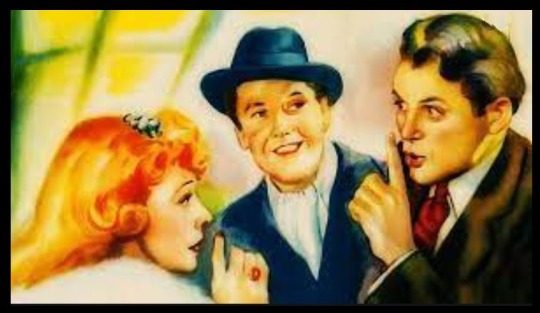
The Danish movie poster.

The idea of a wife disguising herself to woo her husband was later explored on “I Love Lucy” in “The Black Wig” (ILL S3;E26) aired on April 19, 1954.

The Des Moines (IA) Register

There was a silent film, also titled You Can’t Fool Your Wife, which is now considered lost. It is not related to the 1940 film.
-
-


-
Subscribe
Subscribed
Already have a WordPress.com account? Log in now.
 Papermoon Loves Lucy