-
LUCY vs TIME
June 22, 1973


The publicity photos, from the movie set of Mame were unrecognizable. Unrecognizable! Why, they were unbelievable. Either somebody had shot them through six layers of soft-focus gauze – or a time machine.
Who was this frisky redhead hoofer kicking up her heels on the distant reaches of some resplendent soundstage, cannily avoiding a camera close-up?
Who was this svelte eyed lady fluttering from beneath a fringed rug of false lashes, not a wrinkle, sag or bag, not to mention even an expression line, sporting her famous face?
Well, clearly the lady was a star. And as star of Warner Brothers’ new $8 million musical version of Mame, Lucille Ball had veto rights over all still photographs.
The trouble was that obviously nobody had had the nerve to tell her that if she could order reality rubbed out of a picture with a wave of the retoucher’s brush, she couldn’t pull the gauze over the eyes of an interviewer ushered into the Mame set to confront the living flesh, unretouched.
Time has not been unkind to Lucille Ball. No, beneath a billowing wine velvet and cream satin lounge suit, the svelte one-time chorus-girl’s curves are still obvious. Despite a badly broken right leg from a skiing accident that had left the shooting of Mame stalled and the star in a cast for nearly a year, the shapely former showgirl’s gams had now already carried her through a dozen dance routines up on top of pianos and down banisters that would have taxed a tap-dancer half her age.
At 61, Lucille Ball could pass for a dozen years younger. But only a dozen years.
The outrageous, outsize eyelashes now stick like pine spikes out of a swamp of tucks, puckers and bags etched around her shrewd big baby-blues. Her plastic face is a relief map of over-made-up wrinkles, the big bright red Cupid’s-bow mouth lipsticked in a smile outside her own spidery upline.
But you don’t survive 22 years on TV in the top ratings, get renewed once again this season when all about Bridgets and Bernies and Dean Martins (1) are falling to the network’s chop, practically bear a baby and outlast a broken real-life marriage on the TV tube, take over a foundering corporation and build it into the single most powerful independent TV production house, without it showing in your face.
One look at Lucille Ball’s face and you don’t doubt it for a minute when Hal, her make-up man for 32 years, says she used to limp on to the Mame set in excruciating pain. Then, the minute the cameras clicked on, burst into a dazzling and seemingly effortless song-and-dance.
Not that the lady would admit it for a minute. “It was excruciating pain,” she dismisses the subject airily.
But then these days she’s not admitting much. It was a lesson learned the hard way. One recent fateful February day, over perhaps one too many Pouilly-Fuisses on the rocks, she was admitting so much so freely to the New York Times that the story read like a Hedda Hopper monologue.
On Desi Arnaz Sr., the Cuban bongo (2) player-bandleader she met and married out of a chorus line in 1940 and divorced 22 years later after a marriage that was even stormier off -screen than on: “He drank too much and he couldn’t stand success.”
On Desi Arnaz Jr., their 20-year-old son and his much-publicized romance with actress Patty Duke: “I had my doubts if the baby was Desi’s at all. I said to him, "You feel responsible? Boy, you’re all of 16 ½ years old and you want to spend the rest of your life with this neurotic person?’"
On Liza Minnelli, then Desi’s current fiancée: "They took her for over a million and a quarter more than her mother’s debt. Just for beginners…"
One mention of the story now is enough to send sparks flying. "Why, that man should be…” she sputters over the reporter, “…spanked!"
It’s a first burst of spontaneity from a lady who, once burned, is now so careful that she sounds at times as if he’s dictating to the Library of Congress.
"I never thought I’d get this far, do so much, have such beautiful children,” she says, chain-smoking in her dressing-room, all the wide-eyed telephone lineman’s daughter from upstate New York. She knocks on wood.
“All I ever wanted was to get to vaudeville and I never made it."
When she hit New York to take acting classes at 16, the school sent back her mother’s money, saying. "No talent.” And now, refund in hand, 81-year-old DeeDee Ball, as the whole family calls her, sits in a front-row seat for every “Here’s Lucy” show, just as she has done non-stop for the last 22 years.
Still it wasn’t till 1951, when the Amazes dreamed up the “I Love Lucy” show, patterned after their own lives, as a way of keeping their marriage together and bandleader Desi home from the road, that success came.
But when it came, it was she who stole the show.
By two years later, 68 per cent of TV viewers in America were tuned in to see her show-by-show birth to Desi Arnaz Jr., whose arrival vied with the U.S. presidential election results for front-page space under the headline, “Lucy’s $50 million baby."
Everybody, it seemed, loved Lucy except perhaps Desi Arnaz. Despite her insistence that "the series was happy there was no fighting. It was the greatest time of my life,” she admits, “the trouble came much later. Only the last five years were hard."
Which means that the greatest time of her life lasted only a scant six years. When their marriage broke up officially in 1962 (3), friends introduced her to a stand-up comic named Gary Morton, now her producer, vice-president of Lucille Ball Productions, Inc., official show warm-up man and for 11 years now, Mr. Lucille Ball.
As her daughter Lucie, 22, and still a performer on the show, puts it. "She may be the king of stage 12, but at home she’s queen Gary’s the king!"
She indulges his passion for golf and a garage full of classic cars, but with the warning: "If he ever looks at another woman, I’ll kill him.”
She says she never makes a business move without him, but when she was left to head up the giant Desilu Corporation after her marriage break-up, it was she who was known as the woman shrewd enough to snap up “Mannix”, “Mission Impossible” and “Star Trek” when they were apparently doomed pilots, a comedienne who was not so comical in the executive suite.
But as for her much-vaunted business acumen, she is all denials and femininity.
“Me? No way. Desi did the whole thing. He was a fantastic businessman. I only took it over to build it up and sell it. I mean, there was a certain amount of building up to do."
When she took it over from Arnaz in 1961, Desilu had lost over $600,000. When she sold it seven years later, for $17 million in Gulf and Western stock, making her the conglomerate’s largest stockholder and, some say, the wealthiest woman in Hollywood, the company had grossed $30-million and made a profit of ever $800,000.
"But everyone in the know knew I wasn’t tough,” she says. “No, the men I surrounded myself with were."
Still there a flinty glint behind the false lashes, a shrewd imperious purse to the painted lips, a ring to the wise-cracking whisky voice that’s used to being heard. She moves around the Mame soundstage in queenly command, dispensing Norman Vincent Peal-doms, part star, part super-mother.
When it comes time for a scene featuring co-star Bea Arthur, she practically takes over directing from Gene Saks, Miss Arthur’s husband. "Now did you tell her what side of the camera to be on?” she asks Saks, who looks like he might explode. “Now honey, toe your mark,” she fusses over Bea, who grows quiet, explaining later:
“Lucy’s really a dear. But sometimes it can get a little overpowering."
She doesn’t talk to people without picking lint off their clothes, and straightening their collars, a habit that comes naturally enough to a woman who has her whole retinue, hairdresser, secretary, make-up man and driver of the last two decades – even her little picket-fenced French-provincial dressing-room trailer, with its false shutters and plastic ivy – picked up and transplanted wherever she strays from Lucy Lane where she presides at Universal Studios, year after year.
With her kids, she was, as daughter Lucie says, "Strict – and you want to believe it. We were the only kids we knew who had to work around the house for whatever money we’d get.” Lucie still gets paid only scale for her mother’s show.
But Desi Jr. wasn’t exactly a natural. “He’d be asleep on the sidelines and I’d be ready to smack him,” Lucy says, “When he said he was interested in serious acting, I said, ‘Oh, really?’ But he got out and worked. He surprised me. He surprised everybody. He even surprised himself."
Still, for all her talk about the joys of getting away to her Colorado ski lodge where she does "the cooking, the washing, the socks, the things I miss – not to mention the leg breaking – there’s not much chance that Lucille Ball is going to be sitting the next round out, wallowing in domesticity, In the old rocking chair.
# # #
FOOTNOTES FROM THE FUTURE

(1) “Bridget Loves Bernie” was a 1972 sitcom about a mixed marriage between a Jewish man and a Catholic woman. Like Lucy and Desi, stars Meredith Baxter and David Birney were also married in real life. Despite excellent ratings (it was the highest-rated new show of the 1972-73 season) the show was cancelled after only one season. The official reason for its cancellation was that it was scheduled between two mega-hits, “All in the Family” and “The Mary Tyler Moore Show”, and its ratings weren’t strong enough considering its choice position in the line-up.

Also, that same season, the long-running “The Dean Martin Show” (1965-1974) was cancelled. Lucille Ball had made three appearances on the show, and he also appeared on hers.

(2) Conga drums, not bongos. It is slightly dismissive to call Desi Arnaz a bongo player.
(3) The editor makes the error of assuming that Lucy divorced Desi and Married Gary Morton the same year. She divorced Desi in April 1960, and married Gary in November 1961, a year and a half later.

This article was published in the Leisure section of The Vancouver (BC) Sun on June 22, 1973. The article was written by Marci McDonald and illustrated by David Annesley.
-
ALMOST EVERYONE LOVES LUCY
June 21, 1981

Lucille Ball appeared on the cover of the Cincinnati Enquirer’s TV Magazine and listings for the week of June 21 – 27, 1981. The inside article is by Matt Rousch.

BY Matt Roush, Enquirer Contributor
Loving Lucy.
Millions will attest it was their favorite pastime on Monday evenings through the ‘50s (diehards still talk of PTA meetings canceled in the wake of the dizzy redhead, her Cuban-bandleader hubby and her frumpish landlord-neighbors, the Mertzes), and intermittently up to the ’70s.
Even more fans remain devoted today to the world’s most popular funny ladies through endless reruns of her various shows, with “I love Lucy” (broadcast locally at 5 p.m. weekdays on Channel 64) the clear favorite.
But few if any can claim as devout an allegiance to the “Ball Hall of Fame” as can Bart Andrews, a prolific TV historian from Los Angeles. Loving Lucy is his obsession, and he delights in sharing it with an eager public first several years ago with a history of the “I Love Lucy” show titled Lucy and Ricky and Fred and Ethel, and now with a coffee table-sized, lush picture biography of Lucille Ball titled Loving Lucy (St. Martin’s Press, $15).
According to Andrews, in a recent phone interview from his TV-trivia-cluttered home, he had a ball writing and putting the book together.
But then he should. Any man who drives a car with an “I LV LCY” license plate and who has been called an “ ‘I Love Lucy’ junkie” by Tom Brokaw of “Today” can only thank his lucky stars (one in particular) that he is able to satiate his obsession.
And satiate it he does. When asked if the “junkie” moniker is deserved, he affirmed, “Absolutely. Without a doubt.” He is more than happy to recall the year 1950, when he was about 6 years old and his family got its first TV. “I was hooked. And a year after that (when ‘Lucy’ premiered), my mother tells me she decided she would let us stay up on Mondays to watch Lucy. And I’ve watched it all those years."
Through adolescence, through college, it was Lucy. Through his writing career, which has encompassed many TV comedy scripts and 16 books including The TV Addict’s Handbook, TV or not TV and The Worst TV Shows Ever, it was Lucy. Nary a day passes that Andrews doesn’t watch at least one episode of Lucy’s adventures on a relic of a black-and-white TV, be she a Ricardo (nee MacGillicuddy), a Carmichael or a Carter. And with her 70th birthday coming Aug. 6 and the 30th anniversary of "I Love Lucy” on Oct. 15, there seems to be no end in sight. Next?
“Would you believe an ‘I Love Lucy’ quiz book coming out on Oct. 15?"
Believe it or not, Andrews said that’s the next "Lucy” project emanating from his pen. It will consist of 1,001 questions, including such timeless queries as “What was Ethel Mertz’s middle name?” (For those who don’t know, it changed as often as the Flintstones’ address and was variously Louise, Roberta and May.)
In the meantime, Andrews is content to relax with his famous collection of Lucy memorabilia in what he calls his “Lucy room.” A quick inventory came up with these peerless items: Lucy and Desi cufflinks, a “little Ricky” doll (one of 1 million sold in 1953) that squeaks when you squeeze it, a record of Desi Arnaz singing “Babalu” (“How can you do without such things in life?” Andrews mocked), comic books, cut-out dolls, recipe books and so on.
Oh, yes, and a red couch, of course.
Andrews said he is pleased with the considerable success of Loving Lucy, although he admitted it was a hard book to get off the ground: “I had a terrible time getting the book sold. No one had faith that another book on Lucy would sell well."
But he swore there was a market, because his first Lucy book covered only a 10-year period, and letters had poured in, asking for more pictures.
And pictures he found, in Brooklyn’s Melvin Frank Archives, which had recently acquired an immense collection of Lucy photographs. (The book sports about 400 rare stills.)

"The pictures are what started the ball rolling,” Andrews punned.
“Lucy doesn’t even have some of these shots, and does she ever want them.”
Finally, St. Martin’s Press showed interest in the project, and the result is a visually pleasing light biography of a woman with more than 50 years in show business most obviously with TV, but also as an actress in more than 70 films and a hit for a time on Broadway.
In fact, part of the success of Loving Lucy may be due to its unfolding of a largely unknown career: Lucy, the discouraged drop-out drama student in New York; Lucy, the successful fashion model and Broadway chorine; Lucy, the platinum blonde heading to Hollywood as a Goldwyn girl in 1933 to be in an Eddie Cantor picture; Lucy, the starlet moving from Goldwyn to RKO where she used to pal around with Ginger Rogers; Lucy, the hard-working comedy and romantic lead of scores of films, and finally Lucy, the wife of Desi and undying star of TV.
Although Andrews is about to release his third book on the lady, he’s only met Lucille Ball once. “It was while I was doing research on my first book on her in 1975,” he said. “Let me tell you, it was a shock to meet her, because I was expecting Lucy Ricardo with several of her teeth blacked out. Instead, I met a serious person with little sense of humor, really."
Not much of a memory, either: "The meeting wasn’t fruitful; but it was fun, don’t get me wrong. It’s just that her information was totally wrong. I ended up having to do all the research on my own."
But the research has enabled him to enjoy a unique perspective on Lucille Ball, her career and her appeal. Andrews has also been researching a book on situation comedies he tentatively titles Funny Business; his work with that project has convinced him that ” ‘I Love Lucy’ is the grandmother of the situation comedy. So many came after, with types and styles that obviously didn’t succeed, and you can see a return to many of the basic stock slapstick situations time and time again,“ he said.
"Even as a fan of Lucy, though, I doubt the show would go over so big today. The storylines would be too old-fashioned to carry today’s more sophisticated audience, I imagine. But I can watch and thousands of others like me and know it was made in 1954 and keep that in mind. You get the gist of it and it’s still funny."
Andrews said she is probably most often watched now by the very young. "Lucy claims she has babysat for four generations, and you can’t deny that kids get so intent watching her that you can’t pull them away. And they remember everything,” he added, mentioning that his nieces match him question for question when it comes to Lucy trivia.
“Kids can identify with her silly and childlike behavior,” he said, “but at the same time adults can find her funny because she can still maintain her dignity and beauty beneath it all.
"Lucy has a universal appeal because of the way she did things others might do like, say, getting an extra job in a candy factory. Now, that’s a very fine situation, but only at the end do they get caught up in the manic slapstick on the speeding conveyor. It’s a classic episode, because the writers (a fine crew who never won an Emmy, although the show and star won many) were very careful about writing logically."
Whatever the appeal, it’s undeniable, as is evidenced by the ever-growing membership in a worldwide "We Love Lucy” fan club, whose president, Thomas J. Watson, co-authored Loving Lucy. (Watson’s license plate reads “LUCY FAN.”)
Andrews estimates the club’s membership includes 500-600 Lucyphiles, who receive a bimonthly newsletter and get a button, membership card and magazine upon joining.
The organization’s enthusiasm is understandable. It’s not every run-of-the-mill entertainer who has been around since the TV-pioneer days of Hollywood and also has a pilot on the burner at NBC (it hasn’t been picked up yet, Andrews said).
But then, that’s Lucy. Hard-working, funny and silly, yet still more than a shade glamorous.
Loving Lucy is contagious. It’s hard to imagine anyone who hasn’t caught the bug.
-
PERSEVERENCE
June 20, 1943


THE FEMININE STAR of the big musical, “Du Barry Was a Lady,” is a girl who survived the acid test of repeated hard sledding.
Theatrical success didn’t come to Lucille Ball the way it arrives for lots of fictional heroines of Hollywood movies. She battled every inch of the way, hanging on in the face of discouragements that would have sent the vast percentage of young hopefuls back home.
Home in Miss Ball’s case was Jamestown, N.Y. She was born in Butte, Mont., where her father was an electrical engineer, but the family moved to central New York when Lucille and her brother Fred were in their early school years. (1)
Mrs. Ball was a concert pianist and hoped that Lucille might follow a musical career, Lucille, however, was fascinated by the stage.
After a year and a half of dramatic school in New York, she found a job with a traveling stock troupe. This was good experience and led, indirectly, to an audition with Florenz Ziegfeld, who was casting for “Rio Rita."
A friend of Ziegfeld had seen the vivacious and shapely Miss Ball in a small stock role and recommended her for the new show. Ziegfeld approved. The new part was just a chorus job but at least it meant Broadway.
After “Rio Rita” Miss Ball found herself up against a long hard pull. She admits that for weeks on end she skipped more meals than she obtained.
Twice she got chances with new shows, but no salaries were paid till after five weeks of rehearsals and she just couldn’t hold out that length of time.
Then she would get a job as a model and when she had saved up a little, money she would make the rounds of the producers’ offices again. She had a hall room, fifth floor back, and cooked over a gas jet while keeping a wary eye open for the landlady.
But a diet of canned soup soon lost Its appeal and after repeating this routine several limes she decided to confine herself to modelling and really learn the business.
She became one of Hattie Carnegie’s star models, then her career seemed definitely finished through a blow delivered by fate. A car in which she was riding skidded on icy pavement and she was thrown to the street.
HER BACK WAS INJURED AND DOCTORS SAID SHE WOULD NEVER WALK AGAIN.
Later they said she might regain the use of her limbs in six years but through sheer, dogged determination she shortened this time to a little more than three and one-half years. After many months of hospitalization her mother took her home to Jamestown.
"I think my most vivid recollection of the experience,” Lucille says, “was the dread I had of being taken through Grand Central station in a wheelchair when I was taken home. I didn’t want people to pity me."
Many months of faithful attention to exercising and therapeutic treatments followed. Lucille was determined to walk again. Even now her mother tells of healing Lucille get out of her wheelchair in her upstairs bedroom, attempt to walk and fall to the floor with a heart-breaking crash. BUT HER GRIT WON OUT.
Resuming work as a Carnegie model, she posed for many of the country’s leading commercial photographers on the side. She attracted widespread attention as the girl on a cigarette ad.
One day she was feeling rather glum after a disagreement with her boyfriend when she encountered an agent she knew. The agent asked if she would like to go to Hollywood and she immediately sold yes.
That was in 1933 and Lucille has been in pictures ever since, with the exception of eight weeks in 1938 when she played a featured role in "Hey Diddle Diddle” on Broadway.
RETURNING TO HOLLYWOOD following her success in this musical (2), she found herself definitely established as a clever comedienne in “Stage Door."
During the filming of "Too Many Girls,” in which both appeared, Lucille met Desi Arnaz, then a young Cuban band leader and singer.
They were married in Greenwich, Conn., on November 30, 1940.
# # #
FOOTNOTES FROM THE FUTURE
(1) Again, the timeline of Lucille’s birth has been altered to insist that she was born in Butte. After being born in Jamestown, the Ball family did hit the road for parts west, including Montana, but young Lucille and her mother did not return to Jamestown until after the death of Lucy’s father. Her brother Fred was born after their return to New York.

(2) Ball was cast in the Broadway-bound play (it was not a musical) Hey Diddle Diddle in early 1937 (not 1938). It opened in Princeton NJ and played a couple of other out-of-town engagements before it was to open in New York, but the play never got to Broadway due to the serious illness of its leading man, Conway Tearle. It would take Ball until December 1960 to perform on Broadway with the musical Wildcat.

On the very same page as this article about Lucille Ball, was an item about the film Hi Diddle Diddle (not Hey Diddle Diddle) starring Pola Negri. The 1943 film was not associated with Lucille Ball’s failed Broadway-bound play. The film also featured future “I Love Lucy” players Chick Chandler (Billy Hackett), Byron Foulger (Friend of the Friendless), and background players Bess Flowers, Jack Chefe, Don Brody, Mike Lally, Hans Moebus, and Harold Miller.
-
TROUBLE WITH NAMES
June 19, 1973


Los Angeles – Like Jack Paar, Lucille Ball has trouble with names. At a party at her home, a lawn bash catered by Chasen’s and attended by more television editors than you’ll every see in one place, she was mentioning some of the stars who will appear in her show this year, among them John Davis, better known to the public and Miss Ball, when she gets it straight, as John Davidson.
Miss Ball, looking much better in person than she did on the Jack Paar show where she was lighted by Jack the Ripper, did as she usually does, fraternized with her guests before dinner then stood at the microphone where she answered questions from her guests.
One of the first, not surprisingly, was about Watergate; because so many performers have become politically vociferous, they are being asked to give their opinions on the matter.
“What the hell do I know about Watergate?” said Miss Ball, who then went on to say that she did feel television was giving the hearing good coverage.
“People can stop saying that television is no good for anything. I don’t mind missing some of the other programming while it is on,” she said.
Not too easy with the question, Miss Ball was pleased when someone said he hoped she didn’t mind if he changed the subject. “I’m glad you did,” said Miss Ball, who then discussed her film version of “Mame,” saying the same things she did on the Paar show, that she hopes the people who see her on television will go see the film, that the dancing she does in the film has helped strengthen the leg she broke while skiing and that it is absolutely not true that she did not want Bea Arthur to play Vera.
It is true, however, that Miss Arthur was omitted from the photographic displays Miss Ball had arranged in her garden, pictures showing Miss Ball dancing, Miss Ball with Robert Preston and Miss Ball looking marvelously young, like no more than 45.
The actress’ children did not attend the party. Lucy, Jr. was doing “Cabaret” in Flint, Mich., and Desi, Jr. was in parts unknown to his mother, maybe on a date with Joan Crawford.
A New York columnist asked if Liza Minnelli had coached Lucy, Jr., in preparation for the “Cabaret” production, and Miss Ball said no, she did not, that Lucy would have been overwhelmed by the experience.
Most Important Question
Then came the most important question of the evening, was Miss Ball surprised when her son and Miss Minnelli ended their relationship?
“I wasn’t,” she said. “I’ve known Liza since she was a little girl and you know you can’t domesticate a dynamo.
"Desi was shocked, though. In fact, he was devastated. Then he got a date one night, and I haven’t seen him since."
Someone asked the name of the girl and before Miss Ball could answer, someone said it was Merle Oberon, some one else said it was Gloria Swanson, and someone else, more playful than the rest, suggested Dame Edith Evans.
Miss Ball didn’t hear any of this, or pretended not to and said she always seemed to get custody of the dogs involved in the romantic affairs of her children.
She now has seven, she said. Liza left Emaline, and Pooky is Desi’s dog, and when the visitors recorded that information, Miss Ball said, ‘Does that make a story?"
Not really. Not the story Miss Ball is. She has been on television for 22 years now, consecutive years, and is seemingly indestructible. In 10 years, she will probably be announcing the stars who will do her show, among them, no doubt, Merle Oberon.
# # #
FOOTNOTES FROM THE FUTURE

Lucille Ball was then getting ready to premiere her sixth and final season of “Here’s Lucy” on CBS. Although not specified here, some of the guest cast Lucy might have announced at the party were Danny Thomas, Ed McMahon, Jackie Coogan, Andy Griffith, Joan Rivers, Foster Brooks, O.J. Simson, Steve Lawrence, Eydie Gorme, Eddie Albert, Frankie Avalon, Chuck Connors, Milton Berle and Phil Harris. The final season of the series was a rotating roster of celebrities, most playing themselves – or something close.

“Jack Paar Tonight” (1973) is not to be confused with “The Tonight Show” on NBC, a program he hosted in 1957. This was an ABC TV late night talk show that was supposed to rival his successor, Johnny Carson. It failed to do so and was gone by Christmas. Judging by this June 1973 article, Ball must have appeared on the show in its early days, although records are unclear.

The press seems intent on trivializing Desi Arnaz Jr.’s recent break-up with singer Liza Minnelli. Arnaz previously dated actress Patty Duke when he was 17 and she was 23. He accompanied Duke to the 1970 Emmy Awards ceremony where she won the Emmy for Outstanding Single Performance. The relationship became tabloid news and his mother did not approve of them together. Arnaz was subsequently involved with Liza Minnelli, seven years his senior. Arnaz accompanied Minnelli to the Academy Awards ceremony in March 1973 when she won the Oscar for Best Actress for Cabaret. The reporters joke about Desi dating such senior celebs as Merle Oberon (born in 1911, same as Lucille), Joan Crawford (born in 1904), Gloria Swanson (born in 1899), and Dame Edith Evans (born in 1888).

Speaking of Cabaret, Lucie Arnaz was then playing the plum role of Sally Bowles on stage in Flint, Michigan. With Minnelli winning the Golden Statuette just a few months earlier, one can certainly see why having your brother’s Oscar-winning ex-girlfriend coach you might be an “overwhelming experience”. This would not be the first time Lucie would play Bowles. She also did the role closer to home in 1972.

Liza’s father, Vincente Minnelli, directed Lucy and Desi in MGM’s The Long, Long Trailer in 1953. Liza was seven years old at the time.

Meryl Oberon died in 1979 – without ever guest-starring on a Lucille Ball sitcom. A year before her death, in March 1978, however, Oberon and Ball were both in attendance at “The American Film Institute Salute to Henry Fonda” – as close as they ever got.
-
MRS. LUCILLE CRAWFORD?
June 19, 1936

In 1936 Lucille Ball was engaged to be married to actor Broderick Crawford.

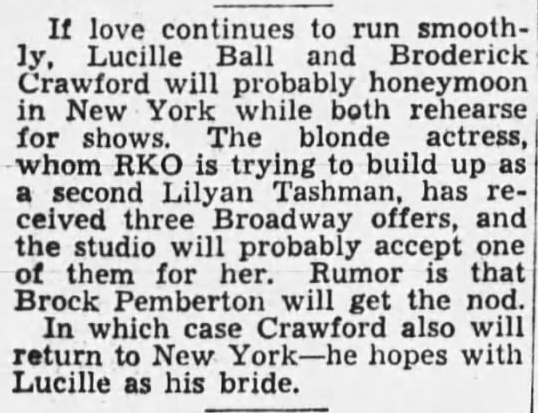

Broderick Crawford and Lucille Ball were both the same age (and died just a few years apart) and took similar roads to success.
William Broderick Crawford (1911 – 1986) was a stage, film, radio, and television actor, often cast in tough-guy roles. Until filming his Oscar and Golden Globe Award-winning performance in All the King’s Men (1949), Crawford’s career had been largely limited to “B films” in supporting or character roles. He realized he did not fit the role of a handsome leading man. Like Ball, he was seen on a hit television series “Highway Patrol"(1955–59).

The article compares blonde Lucille to Lilyan Tashman, and there are also numerous similarities in their career paths.
Lilyan Tashman (1896 – 1934) was a vaudeville, Broadway, and film actress best known for her supporting roles as tongue-in-cheek villainesses and the vindictive “other woman.” She made 66 films over the course of her Hollywood career and although she never obtained superstar status, her cinematic performances are described as “sharp, clever and have aged little over the decades.” Tall, blonde, and slender with fox-like features and a throaty voice, Tashman freelanced as a fashion and artist’s model in New York City. By 1914, she was an experienced vaudevillian, appearing in Ziegfeld Follies between 1916 and 1918. In 1921 Tashman made her film debut and over the next decade and a half she appeared in numerous silent films. She easily navigated the transition to sound film.

The article mentions that of the three Broadway show offers made to Lucille Ball, it looked likely she would do a show for Brock Pemberton.
Brock Pemberton (1885 – 1950) was a theatrical producer, director and founder of the Tony Awards. He was the professional partner of Antoinette Perry, co-founder of the American Theatre Wing, and he was also a member of the Algonquin Round Table. However, Pemberton did not produce a play on Broadway in 1936. His next project wasn’t until March 1937.
Broderick Crawford had spent much of 1935 in New York in two plays on Broadway, and returned in 1937 for Of Mice and Men. In 1940, he married Kay Griffith, his first of three wives.

Interestingly, if Ball had married Crawford, she would have (legally) been Lucille Crawford. Broderick was no relation to Joan Crawford, whose birth name was Lucille!
Crawford and Ball never acted together, but in August 1971 they were both guests on “The Tonight Show with Johnny Carson.”
Needless to say, Ball did not marry Crawford or go to Broadway to do a play. She stayed in Hollywood and met Alexander Hall. They got engaged to be married in 1938, but that’s another story!
-
THE ELVES
September 2, 1949

“The Elves” is episode #52 of the radio series MY FAVORITE HUSBAND broadcast on September 2, 1949.
This was the first episode of the second season of MY FAVORITE HUSBAND which concluded on June 25, 1950.
Synopsis ~ Liz and George arrive home from vacation to find that someone has been ordering strawberry ice cream from the milkman every day, and the pink trail leads to the doorstep of their new neighbors, Mr. and Mrs. Wood, and their ten children.

“My Favorite Husband” was based on the novels Mr. and Mrs. Cugat, the Record of a Happy Marriage (1940) and Outside Eden (1945) by Isabel Scott Rorick, which had previously been adapted into the film Are Husbands Necessary? (1942). “My Favorite Husband” was first broadcast as a one-time special on July 5, 1948. Lucille Ball and Lee Bowman played the characters of Liz and George Cugat, and a positive response to this broadcast convinced CBS to launch “My Favorite Husband” as a series. Bowman was not available Richard Denning was cast as George. On January 7, 1949, confusion with bandleader Xavier Cugat prompted a name change to Cooper. On this same episode Jell-O became its sponsor. A total of 124 episodes of the program aired from July 23, 1948 through March 31, 1951. After about ten episodes had been written, writers Fox and Davenport departed and three new writers took over – Bob Carroll, Jr., Madelyn Pugh, and head writer/producer Jess Oppenheimer. In March 1949 Gale Gordon took over the existing role of George’s boss, Rudolph Atterbury, and Bea Benaderet was added as his wife, Iris. CBS brought “My Favorite Husband” to television in 1953, starring Joan Caulfield and Barry Nelson as Liz and George Cooper. The television version ran two-and-a-half seasons, from September 1953 through December 1955, running concurrently with “I Love Lucy.” It was produced live at CBS Television City for most of its run, until switching to film for a truncated third season filmed (ironically) at Desilu and recasting Liz Cooper with Vanessa Brown.
MAIN CAST

Lucille Ball (Liz Cooper) was born on August 6, 1911 in Jamestown, New York. She began her screen career in 1933 and was known in Hollywood as ‘Queen of the B’s’ due to her many appearances in ‘B’ movies. With Richard Denning, she starred in a radio program titled “My Favorite Husband” which eventually led to the creation of “I Love Lucy,” a television situation comedy in which she co-starred with her real-life husband, Latin bandleader Desi Arnaz. The program was phenomenally successful, allowing the couple to purchase what was once RKO Studios, re-naming it Desilu. When the show ended in 1960 (in an hour-long format known as “The Lucy-Desi Comedy Hour”) so did Lucy and Desi’s marriage. In 1962, hoping to keep Desilu financially solvent, Lucy returned to the sitcom format with “The Lucy Show,” which lasted six seasons. She followed that with a similar sitcom “Here’s Lucy” co-starring with her real-life children, Lucie and Desi Jr., as well as Gale Gordon, who had joined the cast of “The Lucy Show” during season two. Before her death in 1989, Lucy made one more attempt at a sitcom with “Life With Lucy,” also with Gordon.
Richard Denning (George Cooper) was born Louis Albert Heindrich Denninger Jr., in Poughkeepsie, New York. When he was 18 months old, his family moved to Los Angeles. Plans called for him to take over his father’s garment manufacturing business, but he developed an interest in acting. Denning enlisted in the US Navy during World War II. He is best known for his roles in various science fiction and horror films of the 1950s. Although he teamed with Lucille Ball on radio in “My Favorite Husband,” the two never acted together on screen. While “I Love Lucy” was on the air, he was seen on another CBS TV series, “Mr. & Mrs. North.” From 1968 to 1980 he played the Governor on “Hawaii 5-0″, his final role. He died in 1998 at age 84.
Bea Benadaret (Iris Atterbury, Liz’s Best Friend) was considered the front-runner to be cast as Ethel Mertz but when “I Love Lucy” was ready to start production she was already playing a similar role on TV’s “The George Burns and Gracie Allen Show” so Vivian Vance was cast instead. On “I Love Lucy” she was cast as Lucy Ricardo’s spinster neighbor, Miss Lewis, in “Lucy Plays Cupid” (ILL S1;E15) in early 1952. Later, she was a success in her own show, “Petticoat Junction” as Shady Rest Hotel proprietress Kate Bradley. She starred in the series until her death in 1968.
Gale Gordon (Rudolph Atterbury, George’s Boss) had worked with Lucille Ball on “The Wonder Show” on radio in 1938. One of the front-runners to play Fred Mertz on “I Love Lucy,” he eventually played Alvin Littlefield, owner of the Tropicana, during two episodes in 1952. After playing a Judge in an episode of “The Lucy-Desi Comedy Hour” in 1958, he would re-team with Lucy for all of her subsequent series’: as Theodore J. Mooney in ”The Lucy Show”; as Harrison Otis Carter in “Here’s Lucy”; and as Curtis McGibbon on “Life with Lucy.” Gordon died in 1995 at the age of 89.
Ruth Perrott (Katie, the Maid) does not appear in this episode
Bob LeMond (Announcer) also served as the announcer for the pilot episode of “I Love Lucy”. When the long-lost pilot was finally discovered in 1990, a few moments of the opening narration were damaged and lost, so LeMond – fifty years later – recreated the narration for the CBS special and subsequent DVD release.
GUEST CAST

Hans Conried (Mr. Wood, New Neighbor) first co-starred with Lucille Ball in The Big Street (1942). He then appeared on “I Love Lucy” as used furniture man Dan Jenkins in “Redecorating” (ILL S2;E8) and later that same season as Percy Livermore in “Lucy Hires an English Tutor” (ILL S2;E13) – both in 1952. The following year he began an association with Disney by voicing Captain Hook in Peter Pan. On “The Lucy Show” he played Professor Gitterman in “Lucy’s Barbershop Quartet” (TLS S1;E19) and in “Lucy Plays Cleopatra” (TLS S2;E1). He was probably best known as Uncle Tonoose on “Make Room for Daddy” starring Danny Thomas, which was filmed on the Desilu lot. He joined Thomas on a season 6 episode of “Here’s Lucy” in 1973. He died in 1982 at age 64.
Conried plays Mr. Wood in several other episodes. His first name is Benjamin, and his wife – who we never meet – is named Gertrude. They were both only children and want to make up for it by having a large family.

Frank Nelson (Mr. Stevens) was born on May 6, 1911 (three months before Lucille Ball) in Colorado Springs, Colorado. He started working as a radio announcer at the age of 15. He later appeared on such popular radio shows as “The Great Gildersleeve,” “Burns and Allen,” and “Fibber McGee & Molly”. Aside from Lucille Ball, Nelson is perhaps most associated with Jack Benny and was a fifteen-year regular on his radio and television programs. His trademark was playing clerks and other working stiffs, suddenly turning to Benny with a drawn out “Yeeeeeeeeees?” Nelson appeared in 11 episodes of “I Love Lucy”, including three as quiz master Freddy Fillmore, and two as Ralph Ramsey, plus appearance on “The Lucy-Desi Comedy Hour” – making him the only actor to play two different recurring roles on “I Love Lucy.” Nelson returned to the role of the frazzled Train Conductor for an episode of “The Lucy Show” in 1963. This marked his final appearance on a Lucille Ball sitcom.

Anne Whitfield (Joanne Wood, Nearly 7) is best remembered for her signature role as the younger daughter of Phil Harris and Alice Faye on their hit radio show. Although she never appeared on screen with Lucille Ball, she did a 1962 episode of Desilu’s “The Untouchables.” She is best known for playing Susan in the 1954 film White Christmas. She was 11 years old in 1949 when this episode of “My Favorite Husband” was broadcast. As of this writing she is 82 years old and living in Washington state.
Joanne Wood is one of the many children of the Coopers neighbors Mr. and Mrs. Benjamin Wood. She will also appear as Joanne Wood, without Conried, but with Nelson, in “Liz’s Superstitions” in October 1949.
THE EPISODE
ANNOUNCER: “As we look in on lazy little Sheridan Falls, the hometown of the Coopers, we find many signs that summer is over. The leaves are turning red, the Coopers are turning their faces toward home after summer vacation, and Liz is hoping that all her friends will turn green when they see how she’s turned brown. Let’s pick them up as their drive into town…”
Liz is anxious for people to see her summer tan. She spots the Atterburys and wants to stop the car to talk. They also just got back from vacation at Moosehead Lodge. Every time Liz tries to talk about her sunny stay, Iris and Rudolph interrupt about their Lodge at the lake. Liz and Iris tug at her blouses and slacks to reveal their tans.
Mr. Atterbury tells George that he may be getting a promotion. They say their goodbyes.
LIZ: “Goodbye, Paleface!”
IRIS: “See you later, Snow White!”
The Paleface was a Bob Hope / Jane Russell film released at the very end of 1948 and still in cinemas at the time of the broadcast. The Paramount western also featured future “Lucy” cast members Iris Adrian, Iron Eyes Cody, Olin Howland, Nestor Paiva, George Chandler, Fred Aldrich, Oliver Blake, George Bruggerman, Dick Elliott, and Bert Stevens.

Snow White and the Seven Dwarfs was a 1937 animated Disney film based on the classic fairy tale. It featured the voices of future “Lucy” cast member Pinto Colvig and Moroni Olsen.
Upon arriving home, the Coopers notice that their porch has been painted white. Upon closer inspection, they realize it isn’t paint – but milk. Their ‘milk card’ has been tampered with to order strawberry ice cream while they were away – yet none is found.

During the early part of the twentieth century, dairy products were usually delivered to homes, rather than shopped in a market. The milkman was part of daily life. Housewives would leave notes (or cards, as above) to request items outside their standing delivery order: Milk, eggs, yogurt, butter, and ice cream, were all offered. It was not uncommon to see back porches with milk boxes and or empty bottles ready to be returned to the dairy. This service has all but disappeared in favor of supermarkets.
Liz and George turn into amateur sleuths to track down the trail of strawberry ice cream drippings which lead directly to… the empty house next door. Liz notices laundry on the line and surmises that the new neighbors moved in while they were away.
George angrily knocks on the door, which is opened by Mr. Wood (Hans Conried). He explains that one of his children has brought home strawberry ice cream. The elves gave it to her. Mr. Wood goes to find his daughter to explain.
LIZ (to George): “I think Mr. Wood has snapped his twig!”
Mr. Wood returns, assured that Joanna, his daughter, isn’t listening. Mr. Wood explains that he has ten children and one on the way. Liz is shocked to find out Mrs. Wood is still alive!
GEORGE: “Well, Mr. Wood, you’ve certainly got a lot of little splinters.”
The rest of the children stay with relatives in the summer. Mr. Wood calls for Joanne, who he thought was buying the ice cream from her allowance. Joanne is an imaginative child who thinks she’s a fairy queen, comes in. She has been feeding her pet dragon, Charlie, the ice cream. Liz tells her that dragons don’t eat so much ice cream, but Joanne insists that Charlie’s just a small dragon – a dragon-ette.
LIZ: “Yes. I’ve heard of her sister – Jessica.”

Jessica Dragonette (1900-80) was a singer who became popular on American radio and was active in the World War II effort. She was voted best female singer of the country 1942 and 1943.
Much to Liz and George’s chagrin, Mr. Wood let’s her daughter off without any punishment or admonishment for her ice cream thievery. Mr. Wood offers to pay their milk bill as compensation.
End of Part One
Bob LeMond gives listeners a Jell-O ‘dreamy’ recipe for a fluffy orange tart.
As the second half opens, Mr. Wood has rung the Cooper’s doorbell to report that little Joanne overheard them say that their were no such things as elves. Mr. Wood wants them to pretend to be elves to console her. Liz and George are reluctant, but agree when they see her awash in tears.
The Coopers will pretend to find Joanne’s lost dragon, Charlie. To prove that they are really elves, Joanne insists that Liz transform into a troll and George into a Brownie Princess. On the way out, Joanne picks up the Coopers telephone and it is Mr. Atterbury, who is bringing over an important client, Mr. Stevens. Joanne refuses to tell Liz and George who was on the phone – claiming it was the King of the Elves.
As Joanne waits outside for their transformation, Liz and George plan their outrageous outfits. As a brownie princess, George will wear his brown shoes, socks, and garters, a dried grass-skirt, water-wings, and a brown bathing cap. As a troll, Liz will wear a stocking over her face hanging down like an elephant’s trunk, red rubber gloves on her hands and feet, and will walk on all fours.
Meanwhile, Mr. Atterbury drives up with Mr. Stevens (Frank Nelson), describing Mr. Cooper as a “dignified, sober, and conservative”. On the porch is Joanne, who identifies herself as the Fairy Queen. From inside, Liz bids them open the door and come in. Liz is hopping about on all fours, spouting gibberish. Joanne describes the men as ogres “one uglier than the other.”

In retrospect, this storyline might have inspired the TV series “Bewitched” (1964-72), in which Darrin Stephens’ boss, Larry Tate, was usually bringing home an important client, describing Darrin to him in glowing terms, and then finding Darrin transformed due to a spell, sometimes involving his own daughter, Tabitha. Even the names Stevens / Stephens is the same!
Liz straightens up immediately when she sees them. Liz realizes that the ‘Brownie Princess’ is still upstairs, waiting to make his entrance. Too late! George dances on looking for his lily pad! Mr. Atterbury fires George on the spot. Mr. Stevens wants to hear George’s explanation. George stands up for himself – he was simply preserving the fantasy life of a child. Mr. Stevens takes George’s side and Mr. Atterbury immediately grants George his promotion to third vice president!
End of Episode
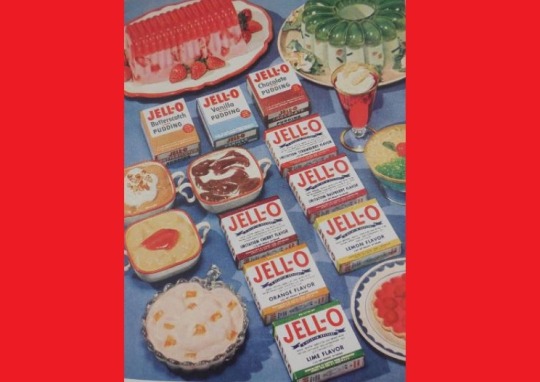
In the live Jell-O commercial that ends the show, Bob LeMond is singing “I’ve been working on the railroad…J-E-L-L-O!” Lucy thinks he is talking about having to take a job on the railroad, telling him that radio is a tough business and television is the future. They both sing the song with lyrics about Jell-O.
-
ROSS ELLIOTT
June 18, 1917

Ross Elliott was born Elliott Blum in the Bronx, New York. While at City College of New York, he participated in the college’s dramatic society, causing him to abandon his original plan to become a lawyer. He did four Broadway shows between 1938 and 1946.
After serving in World War II (where he appeared in 1943′s This Is The Army), he moved to Hollywood and appeared in The Burning Cross in 1946, which also starred “Lucy” character actor Herb Vigran in a story about the Ku Klux Klan. From the Klan to Christ, his first TV appearance was as Elam in a 1951 episode of “The Living Christ Series”.

On May 5, 1952, he made his first appearance opposite Lucille Ball. Elliott played the director of Lucy Ricardo’s Vitameatavegamin commercial in “Lucy Does a TV Commercial” (ILL S1;E30). The now classic episodes was filmed on March 28, 1952. From 1961 to 1964 he played another TV director on “The Jack Benny Program.”

Ross Elliott returned to the series as Ricky’s Publicity Agent (named Ross) in “Don Juan and the Starlets” (ILL S4;E17) which first aired on February 14, 1955 and was filmed on December 9, 1954. He would play Ross in two more Hollywood-set episodes.
Although using his own name for the character, Elliott was an actor playing a publicist, not a publicist appearing as himself.

Ross returned five weeks later for “Bullfight Dance” (ILL S4;E22) filmed on February 17, 1955, the same week as the first airing of “Starlets”.

Ross appeared for the final time in the next episode, “Hollywood Anniversary” (ILL S4;E23) filmed on February 24, 1955 and first aired on April 4, 1955.

In the summer of 1958, Desilu created a sales film (only meant to be shown internally) for Westinghouse employees. It was informally titled “Lucy Buys Westinghouse.”

It featured a tour of Desilu Studios for a (fictional) Westinghouse Executive named Mr. Hayden (Ross Elliott), led by Desi. All the while Lucy is trying to submit her requests for Westinghouse appliances to furnish her dressing room! The film was never broadcast, but released on home video, and was colorized in some releases.

Elliott played a film director in “Lucy and the Return of Iron Man” (TLS S4;E11) in late November 1965. In the story, Lucy needs some fast cash to pay bills, so she returns to her alter-ego, stuntman Iron Man Carmichael working on a pirate film directed by Elliott.

His final appearance with Lucille Ball was “Lucy, The Sheriff” (HL S6;E18) in 1974. Elliott plays Chuck Stewart, the Mayor of Cartridge Belt, Montana, where Lucy Carter has been named honorary Sheriff. The name Chuck Stewart was the same name adopted by the psychiatrist (Gerald Mohr) treating Lucy Ricardo in “The Inferiority Complex” (ILL S2;E18). This appearance means Elliott was one of the few actors to appear in all three (to date) of Lucille Ball’s sitcoms.

While appearing with Lucille Ball, he also appeared in shows produced by Desilu, or at Desilu Studios:
- Desilu’s “Cavalcade of America” ~ 4 episodes from 1954 to 1957
- Desilu’s “The Adventures of Jim Bowie” ~ 2 episodes in 1956
- “The Westinghouse-Desilu Playhouse” ~ 1 episode in 1958
- Desilu’s “The Ann Sothern Show” ~ 1 episode in 1960
- Desilu’s “The Untouchables” ~ 1 episode in 1961
- “Gomer Pyle USMC” (filmed at Desilu Studios) ~ 1 episode in 1964
- “The Dick Van Dyke Show” (filmed at Desilu Studios) ~ 2 episodes in 1964 and 1965
- “The Andy Griffith Show” (filmed at Desilu Studios) ~ 2 episodes in 1961 and 1965
His career waned in the 1970s and he turned to real estate. His last film was a small role in Scorpion (1986). He died of cancer at age 82 on August 12, 1999,
He was married to Esther Susan Melling from December 1954 until his death.

-
MY FAVORITE HUSBAND: Season 3
September 2, 1950 – March 31, 1951

“My Favorite Husband” ~ Season three aired on CBS Radio from September 2, 1950 to March 31, 1951. There were 29 half hour episodes sponsored by Jell-O. Episodes were also aired on Armed Forces Radio & Television Service (AFTRS) without advertising.
Regular Cast: Lucille Ball as Elizabeth ‘Liz’ Cooper, Richard Denning as George Cooper, Gale Gordon as Rudolph Atterbury, Bea Benadaret as Iris Atterbury (and others), Ruth Perrott as Katie the Maid, and Bob LeMond, Announcer.
Season 3 Guest Cast: Frank Nelson (7 episodes), Gege Pearson (6 episodes), Jerry Hausner (5 episodes), Hans Conried (4 episodes), Shirley Mitchell (3 episodes), Eleanor Audley (2 episodes), Elvia Allman (2 episodes), Shimen Ruskin (2 episodes), Sandra Gould (2 episodes), Sarah Selby (2 episodes), Alan Reed (2 episodes), Bobby Jellison (2 episodes), Richard Crenna, Sheldon Leonard, Jack Moyles, Leone Ledoux, Jay Novello, Wally Maher, Mary Shipp, Herb Vigran, June Foray, Ken Christy, Lester Jay, Viola Vonn, Janet Waldo, Frances Cheney, and Cliff Arquette.
To Experience the Full Episode Blogs – for both “My Favorite Husband” and “I Love Lucy” – simply click on the hyperlinked (underlined) text.
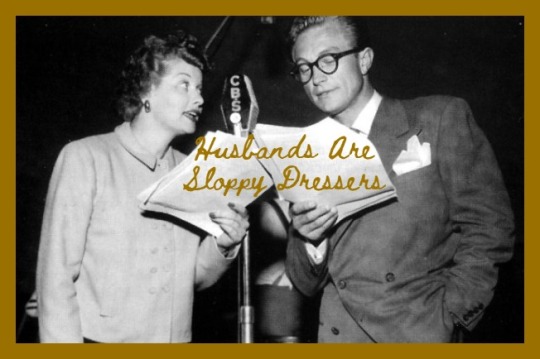
“Husbands Are Sloppy Dressers” ~ September 2, 1950
Synopsis ~ Liz and Iris are embarrassed by the sloppy clothes that George and Rudolph wear at home, so they sell the boys’ old clothes to the junkman. They attempt to reform their husbands’ dress habits.
-
Basis for: “Changing The Boys’ Wardrobe” (ILL S3;E10) of “I Love Lucy”
“Gossip”* ~ September 9, 1950
-
This episode is often confused with “Hair Dyed” (June 10, 1949). Basis for the “I Love Lucy” episode “The Gossip” (ILL S1;E24)
“Movies”* ~ September 16, 1950
“Fuller Brush Show”* ~ September 23, 1950
- Inspired by the motion picture The Fuller Brush Girl, in which Lucille Ball was starring at the time this show aired.

“Liz Becomes a Sculptress” ~ October 7, 1950
Synopsis ~ Liz decides that she needs a hobby, and the proprietor of the local arts and crafts store convinces her she’s a natural artistic genius when it comes to sculpting clay.
- Basis for “Lucy Becomes a Sculptress” (ILL S2;E15) of “I Love Lucy”
“Dinner for Twelve” ~ October 14, 1950
Synopsis ~ George has invited ten dinner guests on the maid’s day off and Liz is determined to prove to George’s mother that she can prepare a dinner for twelve without any help.
- This episode was fully animated and can be found on Vimeo. It was created by Wayne Wilson in 2012.
“Safe Driving Week” ~ October 21, 1950
Synopsis ~ When Liz gets a traffic ticket on the day George is Safety Week chairman, George decides to lock the car in the garage and hide the key.

“The Football Game” ~ October 28, 1950
Synopsis ~ Liz and Iris are determined not to go to the annual State University homecoming football game with the boys, until the boys tell them they aren’t planning to take them along this time.
-
The plot bears some similarities to 1954′s “The Golf Game” (ILL S3;E30), in which Lucy and Ethel are tired of being left out of the boys’ sporting pursuits.

“The Two Mrs. Coopers” ~ November 4, 1950
Synopsis ~ It’s Liz’s birthday and she wants to forget all about it but she doesn’t want George to forget it! George mistakenly thinks that it is his mother’s birthday and buys her present which Liz thinks is for her. But then he realizes that he has invited his mother’s friends over for a surprise party!
[On all known sources, this episode and “Liz’s Birthday” (November 25, 1950) are the same program. It is likely that one or the other has been lost. Because the titles might fit both programs, there is no consensus on which is lost and which is extant!]
“Vacation from Marriage”* ~ November 11, 1950
- Basis for “Vacation from Marriage” (ILL S2;E6) of “I Love Lucy”
“Liz Goes to Night School” ~ November 18, 1950
Synopsis ~ Liz’s arithmetic skills are so bad, George sends her to night school where she somehow winds up in a math contest.
“Liz’s Birthday” ~ November 25, 1950
[This episode and “The Two Mrs. Coopers” are often listed as the same program. It is likely that one or the other has been lost. Because the titles might fit both programs, there is no consensus on which is lost and which is extant!]

“Marrying Off Peggy Martin” ~ December 2, 1950
Synopsis ~ Liz tries to play matchmaker for Peggy Martin with one of George’s clients, but both the client and George think that Liz is going after the guy for herself.
- Basis for the “I Love Lucy” episode “Lucy Is Matchmaker” (ILL S3;E27)

“Trying To Cash The Prize Check”~ December 9, 1950
Synopsis ~ Liz goes on the radio quiz show and wins a check for $500, but she only gets to keep it if she can cash it within 25 minutes, and the banks are all closed!

“The Christmas Cards” ~ December 16, 1950
Synopsis ~ Liz and George have their pictures taken for their Christmas cards, but then can’t agree on which shot to use.

“The Christmas Stag” ~ December 23, 1950
Synopsis ~ George says he is attending a holiday fundraiser, but Liz suspects it is nothing more than an excuse for a stag party. To discover the truth, Liz disguises herself as Santa Claus and infiltrates the party.

“Liz Has The Flimjabs” ~ December 30, 1950
Synopsis ~ Liz wants a mink coat from George, so she pretends to be sick in order to get his sympathy – and the coat! George is on to her tactics, and decides to give her the scare of her life – literally!
- Basis for the “I Love Lucy” episode “Lucy Fakes Illness” (ILL S1;E16)

“Liz Substitutes in a Club Play” ~ January 6, 1951
Synopsis ~ Liz is determined to play the lead in the women’s club play, even if she has to keep the leading lady from showing up. There’s only one problem: Liz has learned the lines for the wrong play!
- In part, the basis for the “I Love Lucy” episode “Lucy Writes A Play” (ILL S1;E17)

“The Cuckoo Clock Conspiracy” ~ January 13, 1951
Synopsis ~ Liz bought George’s Christmas present, a cuckoo clock, with a rubber check, and now she needs to figure out a way to make good on it so the store owner won’t repossess the clock.
- In part, basis for “The Kleptomaniac” (ILL S1;E27)

“Liz Exaggerates” ~ January 20, 1951
Synopsis ~ Liz’s exaggerations become so bad that George cuts off her allowance until she can prove that she can consistently tell nothing but the truth. George finds her promise is kept, not wisely, but too well.
- In order not to be confused with the earlier episode “The Absolute Truth” (January 28, 1949), the script never uses the word “lie” – just “exaggerate”. Both of these episodes were combined for “Lucy Tells The Truth” (ILL S3;E6)

“George is Drafted – Liz’s Baby” ~ January 27, 1951
Synopsis ~ George gets a letter asking him to serve on the local draft board, and Liz thinks he’s been drafted. George thinks Liz’s emotional state is because she is having a baby!
- Basis for the “I Love Lucy” episode “Drafted” (ILL S1;E11)

“Liz’s Inferiority Complex” ~ February 3, 1951
Synopsis ~ After messing up a joke, bombing at bridge, and lousing up George’s breakfast, Liz develops an inferiority complex.
- Basis for the “I Love Lucy” episode “The Inferiority Complex” (ILL S2;E18)

“The Misunderstanding of the Black Eye” ~ February 10, 1951
Synopsis ~ When the Atterburys ask how Liz got her black eye, Liz jokingly answers “Oh, George slugged me,” and now they won’t believe any other explanation.
- Basis for the “I Love Lucy” TV episode “The Black Eye” (ILL S2;E20)
“Renewal of the Driver’s License”* ~ February 17, 1951
“The Two Mothers-in-Law”* ~ February 24, 1951

“The Passports” ~ March 3, 1951
Synopsis ~ Liz is all set to get her passport and join George on a trip to Paris, until she discovers that the Hall of Records has no record of her birth!
- Basis for the “I Love Lucy” episode “The Passports” (ILL S5;E11)

“The Surprise Party” ~ March 10, 1951
Synopsis ~ Iris lets slip that one of Liz’s friends is throwing a party Saturday night, and Liz and George aren’t invited. But which friend is it?
“Liz Hires a New Secretary for George”* ~ March 17, 1951

”Liz and Iris’s Easter” ~ March 24, 1951
Synopsis ~ The boys make a deal with the girls, if Liz and Iris can slim down to the same dress size they wore ten years ago, George and Rudolph will buy each of them a whole new Easter outfit.
- Basis for the “I Love Lucy” episode “The Diet” (ILL S1;E3)
“The April Fool Joke”* ~ March 31, 1951
* = Episodes not available for preview. May be lost.
-
-
SEATTLE
June 17, 1944


As is noted in Sheridan and Monush’s book, Gable’s return to film was in Adventure (1945). The cancellation of Seattle freed up Lucille Ball to do Without Love and Ziegfeld Follies. After not getting the role of Scarlett in Gone With The Wind (1939), it looked like Ball and Gable were not fated to be mated on screen. The pairing never came to be. Ball had already worked with Myrna Loy when she first got to Hollywood in Broadway Bill (1934). Not much is known about Seattle. It was a pet project of John Considine Jr., the son of a vaudeville impresario whose checkered past was intrinsically tied to the Seattle city. Considine and Norman Taurog (who was to direct Seattle), had previously collaborated on A Yank at Eton (1942) starring Mickey Rooney. Their most famous collaboration was the Oscar-nominated film Boys Town (1938). Like Lucy, Taurog also worked on Ziegfeld Follies. He was director of the Prologue and re-takes.
-
LUCY – WHAT I AM IS BRAVE
June 16, 1983

By Lynne Hirschberg, Rolling Stone Magazine. Reprinted in the Dayton (OH) Journal-Herald
Lucille Ball is not Lucille Ball. She is Lucy.
In Los Angeles, everyone knows where Lucy lives. The mansion is a big, white affair in Beverly Hills. Fans pose for photos in front of it, and they dig up Lucy’s front lawn.
Inside the mansion, the visitor is led through a series of spacious rooms to what appears to be a large den. The predominant color is orange. Dark-green carpeting with upholstered , orange chairs. Lots of orange and lots of plants. One wall is completely glass and overlooks a large yard, also filled with plants. Lucy, you are told, loves to garden.
Lucy enters from the yard. She has just taken a singing lesson. She is wearing big pastel sunglasses, a black V-neck sweater and matching slacks. Her hair is a strange shade of reddish pink. She adjusts her sunglasses. Takes them off and cleans them. Her eyes are very blue. She puts her glasses back on and extends her hand. “I’m glad to meet you,” Lucy says. “My name Is Lucille Ball."
As we speak, she begins to smoke, and smoke. "I smoke a lot,” she says, “but I never inhale."
The smoking seems to elicit questions. Lucille Ball likes to ask questions. She likes an honest response. She asks questions like, "Do you ever dye your hair? Do you believe in astrology? Do you want a grilled cheese sandwich?” These questions give way to statements. Statements like, “You should dye your hair. Have a grilled cheese sandwich.” And, then: “I believe in astrology."
Lucille Ball explains. She is 71 years old, born Aug. 6 and a Leo. Leos are, she says, vain, proud and forthright. She is startlingly forthright. "Leos know what they’re about,” Ball says. Leos are also, she adds, accident-prone. “We break a lot of bones.” She has broken this very leg. She even suffered from rheumatoid arthritis. “They told me I’d never walk again,” Ball says, “But I want you to just feel this leg."
She points to her leg. The leg is truly beautiful, a showgirl’s leg. I feel it gingerly. "THAT’S NOT THE WAY YOU FEEL A LEG,” Ball screams. “My God – don’t you even know how to feel a person’s leg?” She grabs my hand and then, hand in tow, grabs her leg around the calf. The leg, In fact, appears to be quite sturdy. “Years ago, that leg was completely weak. But that was years ago. Today Is another story."
Today is another story, and "years ago” was New York. Lucille Ball was not Lucille Ball then. “I was known as Diane Belmont,” Ball says, after fixing herself the much-discussed grilled cheese sandwich. “You have to understand, I am from a suburb of Jamestown, New York.
"When I was four, my father, who was an electrician, died. I was always what you would call stage-struck. I would recite speeches at the drop of a… anything. I’d sing, I’d dance, I’d perform all the time. But I was always interested in being of the business. Of the business. Any part of, it: makeup, costumes… anything and everything. My mother finally sent me to the John Murray Anderson-Robert Milton Dramatic School in New York City. Bette Davis was their star pupil. After one semester, they sent my mother a letter saying she was wasting her money. They said I’d never learn to talk, never learn to walk across a stage. That left a helluva mark on me. I had very little, if any, self-confidence after that. I didn’t change until I was a model for a while."
Diane Belmont was born several years later. "To this day,” Ball says, “people say, ‘Why did you change your name to Lucille Ball?’ Can you imagine anyone changing her name to Lucille Ball? My real name is Lucille Ball. Diane Belmont was a much classier name. I came up with it in the car. I always loved the name Diane, and I was driving past the Belmont race track, and the names seemed to fit together: Diane Belmont. It was such a glamorous name. A real model’s name."
Belmont was successful. She became a Chesterfield cigarettes poster girl, a hat model and a dress model. But BelmontBall hated New York. "I didn’t have any friends. No girlfriends and no boyfriends. I didn’t have big dreams about where I was going or with whom. I didn’t go out. I was never boy crazy or man crazy or car crazy or anything crazy, but New York was a lonely place. I never even felt pretty. I was clearly a lesser beauty. I had a very dull existence."
When she was 17 Belmont/Ball’s career was interrupted by a debilitating disease rheumatoid arthritis. "One day it just struck me,” Ball recalls. “I was working too hard and not taking care of myself. I was laid up for three years. I had to work pretty hard to walk again, but I was lucky. Since I had no money, my boss sent me to her doctor, and he sent me to see this specialist. I became a guinea pig, and this doctor would experiment on me. The guinea pig experiments worked. In three years, I was v modeling again.” Not for long.
“I seldom use the word luck” says Lucille Ball. “But in 1933, when I became a Goldwyn girl – that was pure luck. I was just walking down the street. It was unbearably hot and someone – I don’t remember exactly who – came up to me and said, ‘How’d you like to go to California?’ This was New York, so you had to be careful when anyone asked you anything, but this was a woman asking me, so I figured I was safe. She told me that the girl they had already found for Goldwyn couldn’t make the trip. They wanted poster gals for the film Roman Scandals, and since I was the Chesterfield Girl, I fit the bill. They said the job was for six weeks. I said, ‘I’d go anyplace to get out of this heat.’ I went out to Hollywood and” – Ball smiles – “I never came back."
"My hair,” Lucille Ball Is saying “has always been the bane of my existence.” Ball fluffs up her curls. Her hair goes straight up about six inches. “I have never known what to do with my hair,” she says. “It was just never chic.” A natural brunette, Ball has tried several different hair colors. Blonde. Platinum. Red. Pink. Orange. Diane Belmont was a blonde, and when she arrived in Hollywood and retrieved her own name, Lucille Bail was a Jean Harlow platinum. “You had to be a platinum blonde then,” says Ball, almost apologetically, still fussing with her hair. “They wanted you to be a platinum blonde, so I was a platinum blonde.”
There were other accommodations. “We had to line up for Mr. Goldwyn when we first went out there,” Ball recalls. “You had to have on the inevitable bathing suit. Mr. Goldwyn and 40 other men would walk by and stare at you. We were all self-conscious, but those who were Ziegfeld girls and Shubert girls were very well stacked. They were less nervous. They had it, you see. I didn’t have it."
Ball points to her breasts.
"So I made fun of myself. I put toilet paper and gloves and socks and anything I could find in the bust of my bathing suit. Some of the toilet paper was still trailing out of the top when Mr. Goldwyn came by.” Bail pauses. “If nothing else, they certainly noticed me.
"I think the one virtue that helped me was I didn’t mind doing anything. Nothing was beneath me. I’d scream; I’d yell; I’d run through the set; I’d wear strange clothes. To me it was just getting your foot in the door."
She went from Goldwyn to Columbia to RKO, where because of her less than magnificent films, she became knows as "Queen of the B’s.” But Bail did make some widely praised films. Stage Door (1937), The Big Street (1942) and the Cole Porter musical DuBarry Was a Lady (1942) all met with a critical positive response.
The latter film marked the beginning of her red-headed days of Technicolor Tessie, a name given her by Life magazine.
“Red was a happy color. It was good with my eyes, and it photographed well. It turned out to be a successful color. There’s nothing more to it than that,” she says.
Ball says she fell in love with Desi Arnaz at first sight.
“That was real love. We met on the set. We were making a movie called Too Many Girls. I played the ingenue lead.” “I asked her if she knew how to rumba,” Arnaz has said. “And when she said no, I offered to teach her."
Arnaz, in 1940, was the chief rumba proponent in America. A native Cuban, he and his mother had fled their country following the 1933 Batista revolution. The 16-year-old Arnaz drove a cab, worked as a bookkeeper and cleaned out bird cages until, in 1937, he became a member of the Siboney Septet, a swanky hotel band. While performing with this group, he was spotted by Xavier Cugat, who hired the young singer. A year later, Arnaz started his own ensemble. He became a sensation in New York and Arnaz landed the lead role in Too Many Girls. He came to Hollywood, fell in love and within six months, he and Lucille Ball were married.
"Our marriage,” Bail says, “was rough. We had a rough go. For the first nine years, it seemed like we were only together a few weeks.” First work kept them apart, then he was drafted, and after the war he toured with ins band for five years. “It was very successful for him but disastrous for our marriage. You can’t have a marriage over the phone. We were on our ninth year, and we’d spent something like eight and a half of them apart. We decided that we wanted to be together."
During this period, Ball, fed up with movies, starred in a radio program titled “My Favorite Husband” (l947-1951) (1). She played Liz, the zany wife of a staid banker. CBS wanted to transfer the concept to television and Bail said OK, providing Desi play her husband. The studio objected, but Bail and Arnaz were steadfast. They put together an act, created their own company, Desilu Productions, and hit the road. The public response was terrific. CBS took notice and finally relented. Their show was “I Love Lucy”. The rest is history.
“I am not funny,” says Lucille Ball, sounding very funny. “My writers were funny. My direction was funny. The situations were funny. But I am not funny. What I am is brave. I have never been scared. And there was a lot to be scared about. We were innovators.
"At the beginning of Love Lucy, they gave us a choice of five, six, seven scripts and asked us what we wanted our characters to be like. No one had ever done that before.
"I… didn’t want us to be a ‘typical Hollywood couple,’ whatever that is. I wanted our characters to have problems. Economic problems. Ail kinds of problems. I wanted to be an average housewife. A very nosy, but very average housewife.” Ball pauses. “And I wanted my husband to love me.”
By the beginning of the second season, the show was the biggest hit In TV history. But not everyone was happy. Vivian Vance, for Instance. Despite her rather matronly appearance, Vance was actually one year younger than Ball (who was 41 when she became Lucy). And to guarantee Ethel Mertz’ dowdy image, it was stipulated in Vance’s contract that the actress always remain 20 pounds overweight. This agreement caused some friction. (2)
But Lucy was positively gleeful about the show. It was her family. Her second child, Desi Jr., was born to much fanfare the very same night Lucy Ricardo gave birth to her baby, Little Ricky, on national TV. An estimated 44 million viewers watched.
"Things were wonderful then,” Ball says, almost dreamily. “Things were just wonderful."
But there was still trouble in her marriage. She thought the show would turn things around. But Desi Arnaz, apparently, was not Ricky Ricardo. "He was like Jekyll and Hyde,” Ball says now. “He drank and he gambled and he went around with other women. I was always hoping things would change. But Desi’s nature is destructive. When he builds something, the bigger he builds it, the more he wants to break it down."
In 1957, "I Love Lucy” ceased weekly production. The show’s format changed Ricky Ricardo bought Club Babalu. Guest stars began popping in for nightcaps. And “I Love Lucy” reappeared as hour-long specials that aired roughly once a month.
In 1960, Lucille Ball filed for divorce. The divorce was uncontested. She was awarded half of Desilu Productions, the Beverly Hills house, two station wagons and a cemetery plot at Forest Lawn.
Gary Morton is Lucille Ball’s second husband. She met him in New York while she was starring on Broadway in the Desllu-financed musical Wildcat. Morton was a stand-up comic. Now his office at the Twentieth Century-Fox studios is papered with framed Lucy photos.
"We are very compatible,” Morton says. “We even sing in the same octave.” Morton runs Lucille Ball Productions, an outgrowth of Desilu Productions. Desi Arnaz, who ran Desilu after the divorce, had built the company into a multimillion-dollar business. Not only did it produce love Lucy, the company also produced 60 other prime-time series, including “The Untouchables” and “Our Miss Brooks.”
Lucille Ball looks sad when she talks about Lucy. She isn’t Lucy, you see. “Lucy, for me,” she says, “is like a memory. I am nostalgic about Lucy. I could still be playing that part. Before I quit working in 1974, my ratings were high, and they wanted me to sign on for another five years of “Here’s Lucy.” I said, That’s ridiculous.’ The Lucy character is too old to run around like an idiot. (3) I’d probably still be playing Lucy if I’d signed that contract, but it was silly to keep playing the same thing."
Ball pauses.
"But now I miss her. I miss my arena. I miss getting up and going to work every day. I have my charities, and I’m getting my house in order, but it’s not the same.”
# # #
FOOTNOTES FROM THE FUTURE

This article is a reprint of an article that appeared in Rolling Stone Magazine on June 23, 1983. Magazines were usually post-dated, so this issue of Rolling Stone was already on the newsstand on June 16, 1983.

(1) “My Favorite Husband” aired a pilot episode on July 5, 1948, not 1947 as is stated here. However, the source material naturally pre-dates the radio series.

(2) The controversial contract that kept Vivian Vance frumpy was discussed on “Dinah!” on December 1, 1975. Vivian has brought a long a copy of the ‘contract’, which she describes as a gag, never to be taken seriously. Whether Vance is now covering for Ball’s initial misgiving’s about her casting, or the contract was indeed a joke, we will never know.

(3) Perhaps Lucille Ball forgot about this fact when tempted back onto television in 1986 for “Life With Lucy.” Most of the critics remarked that it was not funny to see a woman of Ball’s advanced age doing pratfalls and stunts.


This same article was published two days later in The Ottawa (CAN) Citizen. The photographs, artwork, and headline were different, but the text remained essentially the same.
-
Subscribe
Subscribed
Already have a WordPress.com account? Log in now.
 Papermoon Loves Lucy