-
LUCY and the BEVERLY HILLBILLIES
Part One ~ The Cast(s)
Although thematically the shows created by Lucille Ball were worlds apart from the down-home humor at the Clampett Mansion, there were artistic and creative commonalities that are worth discussing.
“The Beverly Hillbillies” ran from 1962 to 1971, while “The Lucy Show” ran from 1962 to 1968, both on CBS TV. Interiors were filmed at General Service Studios, where “I Love Lucy” began filming until it moved to larger quarters.
Like Jed Clampett, Lucy Carmichael and Lucy Carter are single parents, raising teenage girls, a popular trope of the 1960s and ’70s.
The Desilu sitcoms “I Love Lucy,” “Make Room for Daddy,” “The Andy Griffith Show,” and “Gomer Pyle USMC” are all related shows with characters in common much in the same way the Henning sitcoms, “The Beverly Hillbillies,” “Petticoat Junction” and “Green Acres” were related. Interestingly, “The Beverly Hillbillies” was mentioned during two episodes of “The Danny Thomas Show”, in 1963 and 1964.
Jed Clampett’s fortune is made from striking oil. In the 1960 Broadway musical, Lucille Ball played a wildcatter looking to find black gold. On “I Love Lucy,” new neighbors the O’Briens move from Texas, where they made their fortune in oil. Soon the Ricardos and Mertzes have dreams of riches from Texas tea.
Animal trainers Frank and Juanita Inn worked on both shows, as well as on “Here’s Lucy.”
Both shows went from black and white to color in October 1965. Although “The Lucy Show” had filmed its second season in color (1963-1964), CBS declined to air it in color.
Editor Dann Cahn (1963 to 1964), was also an editor for “I Love Lucy” and many Desilu shows.
Shared Casting
Their “Petticoat Junction” characters are in parentheses, followed by their Lucycom / Desilu credits.
Irene Ryan (Granny Moses) performed with Lucille Ball on a May 3, 1949 episode of “The Bob Hope Radio Show.” In 1963, Ryan and Ball both appeared on CBS specials featuring their TV shows.
Buddy Ebsen (Jed Clampett) appeared in a 1958 episode of “The Westinghouse-Desilu Playhouse” introduced by Desi Arnaz. He appeared with Lucille Ball on several CBS specials and numerous award shows.
Donna Douglas (Ellie Mae Clampett) performed in a 1960 episode of Desilu’s helicopter series “Whirlybirds.” She was seen with Lucille Ball on a 1963 CBS special “The Stars’ Address”.
Max Baer Jr. (Jethro Clampett) was seen with Lucille Ball on a 1963 CBS special “The Stars’ Address”.
Raymond Bailey (Millburn Drysdale) never acted opposite Lucille Ball, but was seen in episodes of Desilu’s “The Whirlybirds,” “The Untouchables,” “The Ann Sothern Show” and “Westinghouse-Desilu Playhouse” introduced by Desi Arnaz.
The bankers of “The Lucy Show” (Theodore J. Mooney) and “The Beverly Hillbillies” (Millburn Drysdale) were remarkably similar: loud, quick-tempered, miserly, abusive to their secretaries, and willing to grovel and sacrifice their dignity to land a big account.
Stretch (Duke) the Clampett’s lethargic bulldog, also played Thunderbolt on “Kiddie Parties, Inc.” (1963) on “The Lucy Show.” Stretch was one of Frank Inn’s biggest stars.
Nancy Kulp (Miss Jane Hathaway) played the Cockney maid who teaches Lucy Ricardo ow to curtsy in “Lucy Meets the Queen” (1955). She also appeared in the Lucille Ball and Desi Arnaz film Forever Darling, again playing a maid. Kulp returned to Desilu for a 1959 special with Milton Berle and Lucille Ball and a 1962 episode of “The Lucy Show” where she played Navy Officer Jane Corey.
Miss Jane’s relationship to Mr. Drysdale was not dissimilar to Lucy Carmichael’s relationship to her banker boss, Mr. Mooney.
Bea Benadaret (Cousin Pearl Bodine) first starred with Lucille Ball on her radio series “My Favorite Husband” (1948-1951), primarily as best friend Iris Atterbury. Benadaret was Ball’s first choice to play Ethel Mertz on “I Love Lucy,” but she was already contracted to play Blanche Morton on “The George Burns and Gracie Allen Show”, another best friend character. Ball still managed to cast her as a one-off character, Miss Lewis, an elderly spinster, on season one of “I Love Lucy.”
Frank Wilcox (John Brewster) appeared with Lucille Ball in the films Her Husband’s Affairs (1947) and The Fuller Brush Girl (1950). He played Frank Spaulding, owner of the Connecticut house in “Lucy Wants To Move To The Country” (1957).
Elvia Allman (Elverna Bradshaw) was heard with Lucille Ball on “My Favorite Husband” before playing the strident Candy Factory Forewoman on “I Love Lucy.” Allman returned to the show as one of Minnie Finch’s neighbors in “Fan Magazine Interview” (1954) and prim magazine reporter Nancy Graham in “The Homecoming” (1955). She made two appearances on “The Lucy–Desi Comedy Hour“ – first as Ida Thompson, Westfield’s PTA director, then as Milton Berle’s private secretary. Allman would also be seen on two episodes of “The Lucy Show” as a customer in a department store and the manager of an employment agency. Allman’s final screen appearance with Lucille Ball reunited her with Bob Hope: “Bringing Back Vaudeville” in 1971. For Desilu, Allman was seen on “December Bride” (1954-59), and “The Ann Sothern Show” (1958).
Milton Frome (Lawrence Chapman) played Sam, who Lucy Ricardo tried to fix up with Dorothy, in “The Matchmaker” (1954). He played Milton Berle’s agent in a “Lucy Saves Milton Berle” (1965). He also played a waiter in a 1972 episode of “Here’s Lucy” starring Donny Osmond.
Ray Kellogg (Gate Guard / Police Officer) played the barking Assistant Director (“Roll ‘em!”) in “Ricky’s Screen Test” (1954) and later appeared in “Bullfight Dance” (1955). He was seen on 7 episodes of “The Lucy Show” and two episodes of “Here’s Lucy.” In many of his appearances he played policemen or guards, just as he does here.
Charles Lane (Foster Phinney / Homer Bedloe / Billy Hacker) appeared in 7 films with Lucille Ball between 1933 and 1949. He was also heard on her radio show “My Favorite Husband”. On “I Love Lucy,” he played 4 characters and 2 more on “The Lucy-Desi Comedy Hour.” He was cast as banker Barnsdahl on “The Lucy Show,” but was released after 4 episodes so that Ball could hire Gale Gordon. He went from Desilu to Hooterville with his role of Homer Bedloe on “Petticoat Junction,” which he also plays on “The Beverly Hillbillies”.
Phil Silvers (Shifty Shafer aka Honest John) gave Lucille Ball a cameo on his show “Sergeant Bilko” in 1959. In 1963, Ball and Silvers performed the classic ‘Slowly I Turn’ sketch for “CBS Opening Night.” In December 1966, Silvers guest-starred as Oliver Kasten in “Lucy and the Efficiency Expert”. A year later Ball and Silvers both had bit parts in the film A Guide for the Married Man (1967).
Roy Roberts (John Cushing / Judge) appeared with Lucille Ball in Miss Grant Takes Richmond (1949). On “The Lucy Show” he first appeared as a Navy Admiral in “Lucy and the Submarine” before creating the role of Mr. Cheever, the president of Mr. Mooney’s bank, a recurring character he played through the end of the series. On “Here’s Lucy” he played the Superintendent of the Air Force Academy in season two’s two-part opener. He also played doctors in “Lucy and the Astronauts” (1971) and in “Lucy is N.G. as an R.N.” (1973).
Shirley Mitchell (Opal Clampett) became friends with Lucille Ball in the late 1940s when she was featured in 4 episodes of “My Favorite Husband.” Mitchell reunited with Lucille Ball on “I Love Lucy” playing Marion Strong, member of the Wednesday Afternoon Fine Arts League. She also played Mae Belle Jennings on “Petticoat Junction.”
Joi Lansing (Gladys Flatt) first worked with Lucille Ball on “I Love Lucy” in “Desert Island” (1956) and returned to play Miss Long Neck in “Lucy Wants a Career” (1959). She did an episode of Desilu’s “The Untouchables” and appeared for Desi Arnaz on an episode of “The Mothers-in-Law”.
Alan Reed Jr. (Sheldon Epps / Buddy) is probably best remembered as the voice of Fred Flintstone, acting opposite Bea Benadaret (Cousin Pearl). He was heard with Lucille Ball on “My Favorite Husband” (1949). In 1963 he played a café owner in “Lucy Visits the White House”. In 1967, he made an appearance on the Desi Arnaz series “The Mothers-in-Law”.
Most of the principal cast of “The Flintstones” (1960-1966) appeared on “The Beverly Hillbillies”: Bea Benadaret (Betty), Alan Reed Jr. (Fred), and Mel Blanc (Barney) all appeared on the show. Jean Vander Pyl did not act on “The Beverly Hillbillies,” but did appear on its sister show “Petticoat Junction” and voiced Maw on the cartoon “The Hillbilly Bears” (1966). All four also worked with Lucille Ball on radio and/or television. There was also an episode of “The Flintstones” titled “The Bedrock Hillbillies” (above) featuring animated characters named Granny and Jethro Hatrock with voice talent Howard Morris, John Stephenson, and June Foray, all of whom also worked with Lucille Ball.
Richard Deacon (Dr. Klinger / Mr. Brubaker) made two guest star appearances on Desilu’s “December Bride” in 1956 in one of which he played Desi Arnaz’s butler. It’s not surprising that he was cast as Tallulah Bankhead’s butler Winslow in “The Celebrity Next Door,” a 1957 episode of “The Lucy-Desi Comedy Hour.” In 1963 he played Harvey Rittenhouse in the Ball / Hope film Critic’s Choice. In October 1964, Deacon and Lucille Ball both played themselves on “Bob Hope Presents The Chrysler Theatre: Have Girls, Will Travel”. He was employed again by Desi Sr. as a regular on “The Mothers-in-Law” (1968-69). He was seen on two episodes of “Here’s Lucy.”
Paul Winchell (Grandpa Winch) was just 40 years old when he donned old age make-up to play Grandpa Winch in “Home for Christmas” (S1;E13). Four years later he was aged again to play Doc Porter on a two-part episode of “The Lucy Show” set in a the small town of Bancroft.
Mary Wickes (Adaline Ashley) was one of Lucille Ball’s best friends of screen. She appeared on “I Love Lucy,” “The Lucy Show,” and “Here’s Lucy,” in addition to many other TV specials alongside Ball. The 1967 episode of “The Beverly Hillbillies” Wickes appeared on was aired between two of her “Lucy Show” appearances and featured Gail Bonney, who was seen on “I Love Lucy” and “The Lucy Show.”
Eddie Albert and Eva Gabor (Oliver and Lisa Douglas) ~ were visitors to Beverly Hills from Hooterville, but both stars were also favorites of Lucille Ball. Gabor appeared in two episodes of “Here’s Lucy”, one as herself, and Albert played himself in a 1973 episode. In 1950, he co-starred with Lucille Ball in The Fuller Brush Girl.
Star Casting
John Wayne made a cameo appearance on “The Beverly Hillbillies”. When asked how he wanted to be paid, he is best remembered answering back with: “Give me a fifth of bourbon–that’ll square it.” Wayne appeared as himself on “I Love Lucy” (1955) and “The Lucy Show” (1966). His uncredited cameo on “The Indians Are Coming” (S5;E20) was aired in 1967.
Sammy Davis Jr. (Sergeant Patrick Muldoon) made two appearances on the series during November 1968 episodes set in NYC. Although he plays a character here (an Irish cop!), he played himself on “Here’s Lucy” in September 1970. His first “Hillbillies” appearance also features Lucy’s friend and co-star Phil Silvers as Shifty Shafer (aka Honest John), a recurring character that was seen in eight episodes.
Impressionist Rich Little played himself in the season nine opener of “The Beverly Hillbillies.” Mr. Drysdale convinces him to impersonate President Richard Nixon over the telephone to fool Jed. Nixon was one of Little’s most popular impressions. When he played himself on a 1971 episode of “Here’s Lucy,” Nixon wasn’t mentioned, but he did do his impression of John Wayne (see above).
Hedda Hopper played herself in “Hedda Hopper’s Hollywood” (S3;E4) in 1964, an episode named after her newspaper column and television specials, one of which featured Lucille Ball. That same 1960 special featured Gloria Swanson, who did a cameo as herself in a 1966 episode titled “The Gloria Swanson Story” (S5;E12). Curiously, Hopper played herself in a 1955 episode of “I Love Lucy” titled “The Hedda Hopper Story.” An episode of “The Lucy Show” titled “Lucy and the Lost Star” was intended for Swanson, but the lost star eventually cast was Joan Crawford.
Other Common Cast Members
Jack Bannon, Wally Cox, Peter Leeds, Bobs Watson, Lyle Talbot, Doris Packer Eleanor Audley, Maurice Marsac, Leon Ames, Jesse White, George Barrows, Herb Vigran, Jean Willes, Norman Leavitt, Leon Belasco, Burt Mustin, Iris Adrian, Foster Brooks, Ted Eccles, Robert Foulk, Tristram Coffin, Byron Foulger, Gil Perkins, Hal Taggart, Robert Cummings, Natalie Schaffer, Mel Blanc, John McGiver, Don Rickles, John Carradine, Jacques Bergerac, Hans Conried, Murvyn Vye, Bernie Kopell, Barbara Morrison, Phil Arnold, Ellen Corby, Robert Carson, Barry Kelley, William Newell, Lurene Tuttle, Karen Norris, Hayden Rorke, Benny Rubin, Helen Kleeb, Bill Quinn, Frank J. Scannell, Irwin Charrone, Gail Bonney, Fritz Feld, Norma Varden, Murray Pollack, Jil Jarmyn, Olan Soule, John Gallaudet, George N. Niese, Dick Winslow, Tommy Farrell, Cliff Norton, Robert Osborne, Nestor Paiva, Larry J. Blake, Hans Moebus, Norman Stevans, Monty O’Grady, Steve Carruthers, and Bert Stevens.
~ Stay Tuned for Part 2 : Episodes ~
-
LUCY AT THE JUNCTION
“Petticoat Junction” and The Lucycoms

Although thematically the shows created by Lucille Ball were worlds apart from the quaint antics in Hooterville’s Shady Rest Hotel, there were artistic and creative commonalities that are worth discussing.

“Petticoat Junction” ran from 1963 to 1970, while “The Lucy Show” ran from 1962 to 1968, both on CBS TV. “Petticoat Junction” was filmed at General Service Studios, where “I Love Lucy” began filming until it moved to larger quarters.
Like Kate Bradley, Lucy Carmichael and Lucy Carter are widows raising teenage girls while trying also to earn a living, a popular trope of the 1960s and ’70s.
To vary storylines, “I Love Lucy” added a dog and a baby, as did “Petticoat Junction.” Animal trainer Frank Inn worked on both shows, as well as on “Here’s Lucy.”
Both shows went from black and white to color in October 1965. Although “The Lucy Show” had filmed its second season in color, CBS declined to air it in color.
SHARING THE TYPEWRITER
Writer Seaman Jacobs penned six episodes of “Petticoat Junction” in 1963-64 and three of “The Lucy Show” in 1967. Fred S. Fox co-wrote one of those episodes with Jacobs. Fox also wrote one 1965 episode of “Petticoat Junction.” Fox’s co-writer for that episode was Irving ‘Iz’ Elinson, who wrote a dozen episodes of “The Lucy Show.”
SHARED CASTING
Their “Petticoat Junction” characters are in parentheses, followed by their Lucycom / Desilu credits.
Bea Benadaret (Kate Bradley) first starred with Lucille Ball on her radio series “My Favorite Husband” (1948-1951), primarily as best friend Iris Atterbury. Benadaret was Ball’s first choice to play Ethel Mertz on “I Love Lucy,” but she was already contracted to play Blanche Morton on “The George Burns and Gracie Allen Show”, another best friend character. Ball still managed to cast her as a one-off character, Miss Lewis, an elderly spinster, on season 1 of “I Love Lucy.”
Edgar Buchanan (Uncle Joe Carson) appeared with Lucille Ball on a 1971 “Merv Griffin Show” saluting director George Marshall, for whom both worked. For Desilu, Buchanan appeared on a 1958 episode of “The Adventures of Jim Bowie” and a 1959 episode of their helicopter series “Whirlybirds”.
Frank Cady (Sam Drucker) appeared for Desilu in “December Bride” (1956), “Westinghouse-Desilu Playhouse” (1959), “Guestward Ho!” (1961), “The Untouchables” (1962), “The Danny Thomas Show” (1960), “Glynis” (1963), and a 1963 unsold pilot titled “Swingin’ Together.”
Charles Lane (Homer Bedloe) appeared in 7 films with Lucille Ball between 1933 and 1949. He was also heard on her radio show “My Favorite Husband”. On “I Love Lucy,” he played 4 characters and 2 more on “The Lucy-Desi Comedy Hour.” He was cast as banker Barnsdahl on “The Lucy Show,” but was released after 4 episodes so that Ball could hire Gale Gordon. He went from Desilu to Hooterville.
Byron Foulger (Banker Guerney / Wendell Gibbs) first appeared with Lucille Ball in the Westinghouse industrial film Ellis in Freedomland (1952). On “I Love Lucy” he played the spokesman of The Friends of the Friendless in “Lucy’s Last Birthday” in 1953. In 1965′s “My Fair Lucy” he played henpecked husband Fred Dunbar. Two years later, Foulger was back on “The Lucy Show” to play Mr. Trindle, owner of a jewelry store supposedly robbed by Lucy in “Lucy Meets the Law”, his last appearance opposite Lucille Ball. For Desilu, he was seen in “December Bride” (1957 & 1958) and “The Untouchables” (1959).
Elvia Allman (Selma Plout / Gladys Stroud / Cora Watson) was heard with Lucille Ball on “My Favorite Husband” before playing the strident Candy Factory Forewoman on “I Love Lucy.” Allman returned to the show as one of Minnie Finch’s neighbors in “Fan Magazine Interview” in 1954 and prim magazine reporter Nancy Graham in “The Homecoming” in 1955. She made two appearances on “The Lucy–Desi Comedy Hour“ – first as Ida Thompson, Westfield’s PTA director, then as Milton Berle’s private secretary. Allman would also be seen on two episodes of “The Lucy Show” as a customer in a department store and the manager of an employment agency. Allman’s final screen appearance with Lucille Ball reunited her with Bob Hope: “Bringing Back Vaudeville” in 1971. For Desilu, Allman was seen on “December Bride” (1954-59), and “The Ann Sothern Show” (1958).
Kay E. Kuter (Newt Kiley) made an appearance in the 1970 TV movie Swing Out, Sweet Land with Jack Benny and Lucille Ball. He was seen on “Here’s Lucy” as a singing Canadian Mountie in 1971. For Desilu he was seen on “The Adventures of Jim Bowie” (1957 & 1958).
Jack Bannon (Roger Budd / 9 Others) was the real-life son of Bea Benadaret. He was briefly seen on “Here’s Lucy” in 1971.
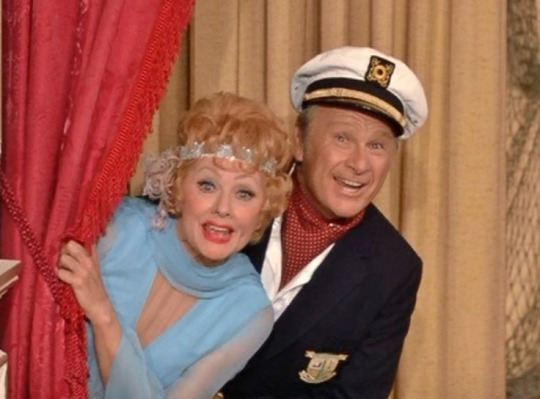
Eddie Albert (Oliver Wendell Douglas) first co-starred with Lucille Ball in The Fuller Brush Girl (1950). Albert played himself on a 1973 episode of “Here’s Lucy” titled “Lucy Gives Eddie Albert the Old Song and Dance”. He also appeared with Ball on an episode of “The Carol Burnett Show” (1968). For Desilu, he appeared on “The Westinghouse-Desilu Playhouse” (1958) and “The Greatest Show on Earth” (1963).
Eva Gabor (Lisa Douglas) played romance novelist Eva Von Graunitz in “Lucy and Eva Gabor” in 1968, as well as herself in a 1972 epsidoes set in a hospital room.
Hank Patterson (Fred Ziffel) appeared in an episode of the Desilu western “The Sheriff of Cochise” (1957), “The Westinghouse-Desilu Playhouse” (1958), “Guestward Ho!” (1961), and “The Untouchables” (1960-1962).
Barbara Pepper (Doris – aka Ruthie – Ziffel) was a Goldwyn Girl with Lucille Ball making 6 films together and becoming good friends. On the list of possible actors to play Ethel Mertz, she was in 10 episodes of “I Love Lucy” as various characters.

Roy Roberts (Norman Curtis / Game Warden Hughes) was first seen with Lucille Ball was in an uncredited role in Miss Grant Takes Richmond (1949). Roberts joined the cast of “The Lucy Show” at the start of season five, but not as the role he would become known for, bank president Mr. Cheever in 14 episodes, but as the Admiral in “Lucy and the Submarine” (TLS S5;E2) in September in 1966. Roberts returned to Lucille Ball Productions for 5 episodes of “Here’s Lucy.” For Desilu he appeared in a 1955 episode of “December Bride.”
Paul Wilbur (Bert Smedley) played Mr. Wilbur, owner of the ice cream parlor, in “Lucy is a Soda Jerk” (1962). For Desilu, he was seen on a 1963 episode of “The Greatest Show on Earth.”

Parley Baer (Judge Madison / Judge Turner / 3 Others) did four episodes of the radio version of “Green Acres” “Grandby’s Green Acres” starring Bea Benadaret, a summer fill-in for Lucille Ball’s “My Favorite Husband.” Baer appeared in 2 episodes of “I Love Lucy,” and 5 of “The Lucy Show”, one as a judge, just like on “Petticoat Junction.” On “Here’s Lucy” he played Dr. Cunningham, Harry Carter’s psychiatrist. For Desilu he was seen in “Whirlybirds,” “December Bride,” and “Westinghouse-Desilu Playhouse.”

Olan Soule (Stanley Benson / 3 Others) played Little Ricky’s doctor Dr. Gettelman on “I Love Lucy”. For Desilu, he appeared on several episodes of “The Untouchables,” “The Ann Sothern Show,” and “December Bride.”
Sarah Selby (Mrs. Frisby / Mrs. Grundy / 3 Others) was heard as Liz’s mother on Lucy’s radio show “My Favorite Husband.” She played bachelorette Dorothy Cook on “I Love Lucy.”
Barry Kelley (Sheriff Crandall / Hurley Feasel) played the Mayor of Bancroft on “The Lucy Show”. For Desilu he appeared on “The Untouchables,” “Whirlybirds,” and “Westinghouse-Desilu Playhouse.”
Jonathan Hole (Hank Thackery / Mr. Bunce / Mr. Earnshaw) was in 3 episodes of “The Lucy Show” and 2 of “Here’s Lucy.” For Desilu he was seen in “The Adventures of Jim Bowie.”
William O’Connell (Martin Evans / Mr. Agnew) was seen as a Beverly Hills hotel manager on “The Lucy Show” in 1967.
Herbie Faye (Jack Stewart / Doodles / 2 Others) was in a 1968 episode of “The Lucy Show.” and 4 episodes of “Here’s Lucy”. Ball did a 1959 cameo on “Sergeant Bilko” on which he played Fender for 139 episodes. He also did an episode of “Mothers-in-Law” for Desi Arnaz.

Shirley Mitchell (Mae Belle Jennings) became friends with Lucille Ball in the late 1940s when she was featured in 4 episodes of “My Favorite Husband.” Mitchell reunited with Lucille Ball on “I Love Lucy” playing Marion Strong, member of the Wednesday Afternoon Fine Arts League.
Jean Vander Pyl (Agnes Frisby / Gladys Miller / Alice Tuttle) was heard with Bea Benadaret on Lucille Ball’s radio show “My Favorite Husband.” Benadaret and Vander Pyl voiced Wilma and Betty on “The Flintstones.”
Peter Leeds (Syd Sparks / Gus Clegg) was heard on “My Favorite Husband.” On “I Love Lucy” he was the reporter questioning the Maharincess of Franistan in “The Publicity Agent”. He starred with Lucy in the films The Long, Long Trailer (1953) and The Facts of Life (1960). Leeds also appeared in “Lucy and Bob Hope” as well as an episode of “Here’s Lucy” in 1971.
Hugh Beaumont (Donald Elliott / Ronnie Beackman) is best known as Ward Cleaver in “Leave it to Beaver,” but also appeared uncredited in Du Barry Was a Lady (1943) starring Lucille Ball. For Desilu, he was seen in “Whirlybirds”.
Hal Smith (Ben Miller / 2 Others) is probably best remembered as Otis Campbell, the town drunk, on “The Andy Griffith Show” (filmed at Desilu). He appeared with Lucille Ball in the 1963 film Critic’s Choice. He was seen on 3 episodes of “The Lucy Show” and 1 episode of “Here’s Lucy” in 1972.
Maxine Semon (Mabel Snark / Lena Fenwick) played a nurse on “I Love Lucy” in “Nursery School” then a Yankee Stadium spectator in “Lucy and Bob Hope” (both aired in 1955). She was a Las Vegas chambermaid on “The Lucy-Desi Comedy Hour” (1958).

Benny Rubin (Chief Fleeteagle / 2 Others) played the Beverly Hills tour bus driver on “I Love Lucy.” He was seen on 2 episodes of “The Lucy Show.” For Desi Arnaz he was seen on “The Carol Channing Show.” For Desilu, he was in “December Bride.”
Lurene Tuttle (Adelaide Keane / Henrietta Greene / Mary Alice Perkins) played the outgoing president of The Wednesday Afternoon Fine Arts League in “The Club Election” (ILL S2;E19) in 1953.
Burt Mustin (Grandpa Jenson) did 3 episodes of “The Lucy Show” and played a juror with Joan Rivers on “Here’s Lucy.” Mustin played Uncle Jeff in Mame (1974).
Gail Bonney (Mrs. Tomley / Mrs. Robinson / 1 Other) was seen in 2 1950 films featuring Lucille Ball. She played mother of twins Mrs. Hudson in “The Amateur Hour”. She also did an episode of “The Lucy Show” and an episode of “Here’s Lucy.”
Eve McVeagh (Miss Hammond) played Bert, Lucy Ricardo’s hairdresser, in “The Black Wig” (1954). She also made a 1973 appearance as a store clerk on “Here’s Lucy.”
OTHERS FROM LUCYLAND WHO VISITED THE JUNCTION:
Rolfe Sedan, Frank Aletter, Milton Frome, Herb Vigran, Amzie Strickland, Ray Kellogg, Bob Jellison, Frank Wilcox, Eddie Quillan, Robert Carson, J. Pat O’Malley, Florence Lake, Ernest Truex, Dorothy Konrad, George O’Hanlon, Jack Collins, Ross Elliott, Iris Adrian, William Lanteau, Joi Lansing, Bernie Kopell, Lyle Talbot, Stanley Addams, Doris Packer, Don Brodie, Frank Nelson, Rich Little, Joan Blondell, Nancy Kulp, Sid Melton, Keith Andes, Hayden Rorke, Dick Patterson, Irwin Charrone, Rudy Vallee, Lloyd Corrigan, Jackie Joseph, and Barbara Morrison.
HOOTERVILLE & THE LUCVERSE

There were several Lucycoms that took place aboard trains, but the most notable is “The Great Train Robbery” (1955). Lucy and Desi took a publicity photo in front of the infamous emergency break wearing crumpled conductors caps. On this trip, Frank Nelson played the conductor pushed to his limit by Lucy Ricardo, a role he reprised when Lucy Carmichael took the train to Washington DC in 1963.

Coincidentally, Nelson appeared on “Petticoat Junction” in 1967, but not as a conductor, as the manager of the Flamingo Room in Springdale. He has the distinction of being the only actor to play two recurring characters (Freddy Fillmore and Ralph Ramsey) on “I Love Lucy.”
Hooteville’s train depot can best be compared to the whistle stop of Greenview in “Lucy Visits the White House” (1963). Greenview was a remote stop located somewhere between Danfield and DC.
Bancroft, California, the small town featured in “Main Street USA” and “Lucy Puts Main Street on the Map” (1967) was a town somewhat bigger than Hooterville, but smaller than Pixley. Lucy and Mr. Mooney arrived there by train to save their main street from becoming a superhighway.
Bancroft had a general store run by Doc Putnam. It featured a large red coffee grinder, just like Sam Drucker’s general store in Hooterville.
The Mayor of Bancroft was played by Barry Kelley, who appeared on “Petticoat Junction” as Sheriff Crandall. Bancroft citizens included Burt Mustin, who played Grandpa Jenson in three 1968 episodes of “Petticoat Junction,” and Hal Smith, who played Mr. Richardson / Ben Miller / Jug Gunderson on “Junction.”
A railroad handcar was prominently featured in “Lucy Hunts Uranium” (1958) featuring Fred MacMurray. In Hooterville, it was generally manned by Homer Bedloe (Charles Lane), who was also featured as a Claims Officer in “Lucy Hunts Uranium.” Also in that episode, Bob Jellison plays a Las Vegas bellboy. In Hooterville, Jellison played a salesman in 1968 and Ben Miller in 1970, the 4th and final actor to play that role. That episode also featured Lucyverse performers Sarah Selby and Parley Baer. It was directed by Elliott Lewis, producer of “The Lucy Show” and Desi Arnaz’s “Mothers-in-Law” as well as husband of Lucy sidekick Mary Jane Lewis.

The iconic Shady Rest Hotel is reminiscent of The Eagle Hotel, where Lucy and Ricky stayed in “The Marriage License” (1952). Running the Eagle Hotel are Mr. and Mrs. Willoughby (played by Irving Bacon and Elizabeth Patterson), who are reminiscent of Uncle Joe and Kate Bradley, who run the Shady Rest. In season one, Uncle Joe schemes to market the Shady Rest as a ‘honeymoon hotel.’
Richard Arlen and Charles ‘Buddy’ Rogers, the stars of the 1929 silent film Wings, the first film to win an Academy Award, were guest stars as themselves on both “Petticoat Junction” (1968) and “The Lucy Show” (1967). Both appearances revolved around their appearance in the film.
“Petticoat Junction” and “The Lucy Show” were both part of a DVD set titled The Best of Family TV.
-
FANCY PANTS on LUX RADIO THEATRE
September 10, 1950

Lux Radio Theatre (1935-55) was a radio anthology series that adapted Broadway plays during its first two seasons before it began adapting films (”Lux Presents Hollywood”). These hour-long radio programs were performed live before studio audiences in Los Angeles. The series became the most popular dramatic anthology series on radio, broadcast for more than 20 years and continued on television as the Lux Video Theatre through most of the 1950s. The primary sponsor of the show was Unilever through its Lux Soap brand.
Fancy Pants was broadcast live from Hollywood on CBS Radio in front of a live audience.
Produced and Hosted by William Keighley
Written by Edmund Hartman, who also wrote the screenplay
Libby Collins is billed as a “Hollywood Reporter” during the Act One commecial break and Joan Taylor is guest for the Act Two commerical break.
THE CAST
Lucille Ball (Agatha Floud, American Debutante) was born on August 6, 1911 in Jamestown, New York. She began her screen career in 1933 and was known in Hollywood as ‘Queen of the B’s’ due to her many appearances in ‘B’ movies. With Richard Denning, she starred in a radio program titled “My Favorite Husband” which eventually led to the creation of “I Love Lucy,” a television situation comedy in which she co-starred with her real-life husband, Latin bandleader Desi Arnaz. The program was phenomenally successful, allowing the couple to purchase what was once RKO Studios, re-naming it Desilu. When the show ended in 1960 (in an hour-long format known as “The Lucy-Desi Comedy Hour”) so did Lucy and Desi’s marriage. In 1962, hoping to keep Desilu financially solvent, Lucy returned to the sitcom format with “The Lucy Show,” which lasted six seasons. She followed that with a similar sitcom “Here’s Lucy” co-starring with her real-life children, Lucie and Desi Jr., as well as Gale Gordon, who had joined the cast of “The Lucy Show” during season two. Before her death in April 1989, Lucy made one more attempt at a sitcom with “Life With Lucy,” also with Gordon, which was not a success and was canceled after just 13 episodes. She died on April 26, 1989 at the age of 77.
Bob Hope (Mr. Arthur Tyler / ‘Humphrey’ aka ‘Oliver Grimes’ aka ‘Fancy Pants’) was born Lesley Townes Hope in England in 1903. During his extensive career in virtually all forms of media he received five honorary Academy Awards. In 1945, Desi Arnaz was the orchestra leader on Bob Hope’s radio show. Ball and Hope did three other films together. He appeared as himself on the season 6 opener of “I Love Lucy.” He did a brief cameo in a 1964 episode of “The Lucy Show.” He died in 2003 at age 100.
Norma Varden (Gwendolyn Fairmore / ‘Lady Maude Brinstead’) is probably best known for playing Frau Schmidt, the somewhat circumspect housekeeper at the Von Trapp mansion in 1965′s The Sound Of Music. Lucy fans will remember her as weepy Mrs. Benson, who Lucy Ricardo convinces to swap apartments in “The Ricardos Change Apartments” (ILL S2;E26) in 1953. The London-born actress turned up on an episode of “The Lucy Show”.
Gail Bonney was seen in two 1950 films featuring Lucille Ball. In March 1950, she played an uncredited bicyclist in A Woman of Distinction in which Lucille Ball had a cameo as herself. In September 1950, Bonney was seen in the Lucille Ball film The Fuller Brush Girl. Two years later, Gail Bonney played Mrs. Hudson in “The Amateur Hour,” (ILL S1;E14) hiring Lucy Ricardo to babysit her twin boys. She returned to do a 1965 episode of “The Lucy Show” titled “Lucy and The Ceramic Cat” (TLS S3;E16). Bonney’s final appearance on a Lucy sitcom was in a 1968 episode of “Here’s Lucy” titled “Lucy and Eva Gabor” (HL S1;E7).
Also featuring: Constance Cavendish (Effie Floud), Charlie Lung, Edwin Max, Robert O, and Dan O’Herlihy.
Fancy Pants is a 1950 American romantic comedy western film directed by George Marshall and starring Bob Hope and Lucille Ball. It is a musical adaptation of Ruggles of Red Gap. The Paramount film premiered on July 19, 1950.
Synopsis: In 1905, an American actor (Arthur Tyler) impersonating an English butler named Humphry is hired by a nouveau riche woman (Effie Floud) from New Mexico to refine her husband and her headstrong daughter (Aggie). Complications ensue when the town believes Arthur to be an Earl, and President Roosevelt decides to pay a visit.
Music: The Fancy Pants theme by Jay Livingston and Ray Evans is used at the broadcast’s act openings. Although in the film Lucille Ball’s vocals were dubbed by Annette Warren, here Ball does her own singing of the title tune.
As in the film, Bob Hope sings “Home Cookin’” by Jay Livingston and Ray Evans.
Exit music is from “Round-up on the Prairie” by Aaron Kenny.
FANCY TRIVIA
Bob Hope tended to ad-lib dialogue, sometimes based on current events or his whim. These ‘mentions’ by Hope may have been unscripted. It is often difficult to determine if it is Bob Hope, Humphrey the butler, or actor Arthur Tyler speaking. Most of the references are anachronistic as the action takes place in 1905.
THEODORE ‘TEDDY’ ROOSEVELT ~ was the 26th President of the United States from 1901 to 1909. The youngest man ever to be elected President at age 42, he was a statesman, conservationist, and soldier. The action of “Lucy Wins A Racehorse” (1958) is set at the now defunct Roosevelt Raceway on Long Island. The raceway is named after the village of Roosevelt, which was named for him.
Bob Hope mentions Stopette, an underarm deodorant sold from 1941 until 1956. It was a longtime sponsor of the CBS game show “What’s My Line?”. Lucille Ball made six appearances on the show, one alongside Bob Hope. Time Magazine called Stopette “the best-selling deodorant of the early 1950s”
After a joke about being pelted with tomatoes, Bob Hope mentions Red Skelton, a comic actor who appeared with him in 17 film and television projects, six of which also included Lucille Ball. Skelton appeared as himself on “The Lucy-Desi Comedy Hour” in 1959.
Hope mentions Jergens Lotion, a product marketed by the Andrew Jergens Company, founded in 1882 in Cincinatti, Ohio.
Bing Crosby is winkingly mentioned by Bob Hope. Hope and Crosby were screen partners, filming seven ‘Road’ pictures between 1940 and 1962.
The Act One commercial for bath size Lux Soap refers to the RKO film His Kind of Woman, starring Robert Mitchum and Jane Russell, who is said to be a Lux girl. The film is set in Mexico and produced by Howard Hughtes. The film wouldn’t be released for 11 months after the broadcast.
Telling a dramatic story, Bob Hope mentions Lipton Tea (“They cut off our Liptons!”). During the story, Hope starts to laugh and momentarily pauses before getting back on script. Historically, Thomas Lipton started selling tea in Scotland in 1871, his name eventually becoming synonymous with the product.
Talking about poor western hospitality, Hope mentions Spade Cooley, a musician and actor from Oklahoma who found success in Hollywood. Cooley was part Cherokee Indian. His biggest hit was “Shame On You”. Ten years after this broadcast, he was convicted of murdering his wife.
CART BELKNAP: “What happened to that big elephant you were riding?” HUMPHREY: “He’d gone to Washington to get ready for ’52.” (Hope ad libs after audience laughs) “I never dreamed of that!”
Hope is referring to the elephant that is the symbol of the Republican party. In 1950, it was expected that Democratic President Harry S. Truman would seek a third term. Truman had become President after the death of Franklin Roosevelt and then went on to win his first full term in 1948. In 1952, America would have had a Republican in the White House since 1933. As it turned out, Truman decided not to run in 1952, despite being exempt from term limit legistlation he himself signed into law. The winner was indeed a Republican, Dwight Eisenhower.
HUMPHREY: “Water! Water! Anything that’ll save my life! A packet of Chesterfields!” Hope was a spokesperson for the cigarette. The brand was manufactured by a subsidiary of Philip-Morris, the tobacco company that sponsored “I Love Lucy” in 1951. The studio audience laughs at this ad-lib.
HUMPHREY: “I’m no Earl. I’m not even Humphrey. I’m an Arthur Tyler, an actor: AFTRA, AGVA, and SAG. And paid up!”
Hope’s ad-lib refers to the performers unions American Federation of Television and Radio Artists (AFTRA), American Guild of Variety Artists (AGVA), and the Screen Actors Guild (SAG). At the time of broadcast, Ronald Reagan was president of SAG. Recently, SAG and AFTRA merged to create SAG-ATRA. Needless to say, these labor unions did not exist in 1905.
During the second act commercial break, Joan Taylor and William Keighley mention Paramount’s Here Comes the Groom starring Jane Wyman and Alexis Smith, both said to be “Lux Lovely”. The Frank Capra film was released September 20, 1951 and won a 1952 Oscar for Best Song: “In the Cool, Cool, Cool of the Evening.” Coincidentally, Gail Bonney, who is heard in this radiocast, appears uncredited as a telephone operator in the film.
After singing “Home Cookin’” with Ball, Hope quickly quips “Thank you, Margaret.“ In June 1950, Hope had joined songstress Margaret Whiting and the Starlighters to release a single of the song – sans Lucy. The mention of Margaret causes the studio audience to erupt in laughter, and the actress playing Effie has to say: “Listen! I’m talkin’ to you!”
HUMPHREY: “I’ve been practicing the royal sneer all morning. I’ll soon be getting fan mail from Basil Rathbone.”
Basil Rathbone was an actor best known for his portrayal of Sherlock Holmes in a series of films. In 1954, Hope and Rathbone starred together in the light comedy Casanova’s Big Night. Rathbone had previously guest starred on Hope’s 1941 radio show.
HUMPHREY: “The whole day on horseback! I may find a new place to put my Dr. Scholl’s foot pads!”
Dr. William Mathias Scholl was born on June 22, 1882 in La Porte, Indiana. He learned about foot care and shoes thanks to his grandfather, who was a shoemaker in Germany. He founded the Dr. Scholl’s company in 1906.
HUMPHREY: “Listen Aggie, I can’t ride a horse. I can’t even ride a jack ass. Even after all those road pictures we did together.”
Hope is making a snide joke about Bing Crosby, who (at that point) starred with him in five “Road To…” films, most with Dorothy Lamour. Two more would follow in 1952 and 1962.
After Act Three, Libby Collins and Mr. Keighley announce a contest to identify a mystery Hollywood Lux girl. They say that her first name is June. [It was later revealed to be June Allyson.]
At the conclusion of the story, Bob Hope and Lucille Ball are briefly interviewed by Mr. Keighley. Hope mentions a contest to win a world premiere of his next film, My Favorite Spy, in the listener’s hometown. The film premiered on Christmas Day 1952.
Keighley promotes next week’s Lux Radio Theatre, Sunset Boulevard, starring the original film stars Gloria Swanson and William Holden, and featuring Nancy Gates.
A final commercial suggests washing stockings in Lux.
-
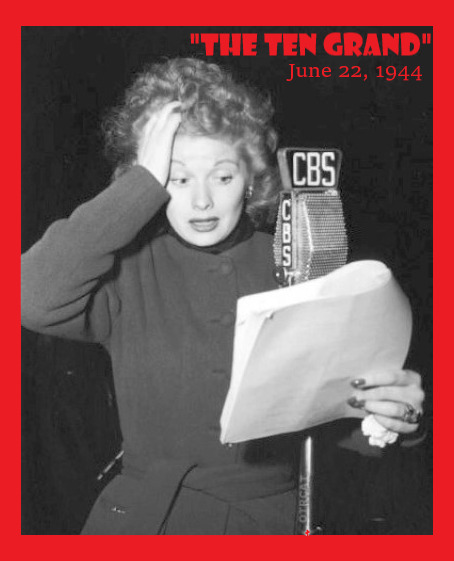
THE TEN GRAND
June 22, 1944
“The Ten Grand” was an episode of radio’s Suspense broadcast on June 22, 1944. The script is by Virginia Radcliffe. It was her only Suspense script in a long radio writing career. She was best recognized for many years of writing for Cavalcade of America. This story was included in Suspense Magazine #3.
The program was produced and directed by William Spier.
Synopsis: A broke chorus girl inexplicably finds ten thousand dollars in her purse after it’s been temporarily stolen on the subway. She’s not sure what to do about it, and it soon leads to trouble. She has been set up.
Suspense was a radio drama series broadcast on CBS Radio from 1940 through 1962. One of the premier drama programs of the Golden Age of Radio, it was subtitled “radio’s outstanding theater of thrills” and focused on suspense thriller-type scripts, usually featuring leading Hollywood actors of the era.
The program was sponsored by Roma Wines, a Cailfornia vintage. Schenley (the makers of Roma) sponsored Suspense from December 02, 1943 to November 20, 1947.
CAST
Lucille Ball (Gigi Lewis) had done a previous episode of Suspense in January 1944 titled “Dime a Dance”. In 1944, Ball was entering her second decade in Hollywood. Ball’s latest film, Meet The People, had been released three weeks before this radio broadcast. Playing a down-on-her-luck chorine was not so far afield for Ball, who was just that before being hired to be a Goldwyn Girl in Hollywood.
In the program, Gigi narrates her own story.
Harry Lang (Wino / Axis Agent) portrayed Pancho on Mutual Radio’s “The Cisco Kid”. He appeared in 87 films, mostly B pictures and shorts.
Patrick McGeehan (The Greek) was an actor and narrator who frequently was heard on radio, television, and in films.
In the story, Gigi calls him ‘Galahad’ till he reveals his true identity.
John McIntire (Fat Man on the Subway) is probably best remembered for playing the Sheriff in Alfred Hitchcock’s Psycho (1960). From 1959 to 1965 he was a regular on TV’s “Wagon Train”.
Jeanette Nolan (Old Lady on the Subway / Waitress) was a television, radio and film actress whose career spans over seventy years, although she is most remembered for her performances on radio. She made her film debut as Lady Macbeth in the 1948 film Macbeth starring Orson Welles, who also directed. She provided the voice of ‘Mother’ in Psycho (1960).
Joseph Kearns (The Man in Black) briefly played banker Rudolph Atterbury on Lucille Ball’s radio show “My Favorite Husband,” until the role was assumed by Gale Gordon, an actor who would figure prominently in Kearns’ career. He did his first episode of “I Love Lucy” playing psychiatrist Tom Robinson in “The Kleptomaniac” (ILL S1;E27) in 1952. In his second “I Love Lucy” appearance, Kearns played the theatre manager in “Lucy’s Night in Town” (ILL S6;E22) in 1957. In the fall of 1959, he created the role he would be best known for – and would ultimately be his last. Mr. George Wilson on TV’s “Dennis the Menace” appearing in 96 episodes starting with the very first. When he passed away during the show’s final season, his “Our Miss Brooks” co-star Gale Gordon took over for him, playing his brother John.
THE EPISODE
As the program opens, Gigi is standing in front of Lindy’s, a coffee shop on Broadway, dreaming of “a big t-bone steak smothered in onions.” She only has five cents for the subway in her pocket.
Ten years later, Ricky Ricardo takes everyone to Lindy’s when he hears about getting the part of Don Juan during “Ricky’s Contract” (ILL S4;E10).

Gigi is about to reach into her purse for the nickle to board the subway, when she discovers her purse has been snatched. The thief runs away, and a handsome man pursues him, getting the purse back for her. He gallantly returns it to Gigi. The handsome man bids her goodnight, and Gigi opens her purse for the nickle only to find a wad of cash. On the subway, a fat man strikes up a conversation with Gigi, recognizing her from the purse snatching on the platform.
Gigi gazes up at the poster for Miss Subways 1944, dreaming of furs, an apartment downtown, and expensive perfumes. She then considers that the money in her purse might well be counterfiet.
From 1941 to 1976, the women on the Miss Subways posters that lined subway cars and represented the diversity of New York City women: they were of all ethnicities and backgrounds, college students, secretaries, aspiring actresses and singers, as well as wartime nurses.
The fat man warns her that plainclothes policemen are in the subway car, which makes Gigi nervous. When the fat man leaves the train, she takes another peek in her purse and finds a note.
Get off at 161st Street and follow Yankee Doodle.
Gigi realizes a man has been whistling “Yankee Doodle Dandy” somewhere in the background. A nervous little old lady sits next to Gigi. She passes out! A man gives her a swig from his bottle and she revives. The little old lady is headed for her sister’s house on 169th Street. She reveals that five years ago someone stole her life savings – about ten grand. She tells GIgi she’ll get the money back someday becuase “It takes a thief to catch a thief.”
Gigi is suspicious that the old lady may be the brains of the operation, and asks her to whistle “Yankee Doodle”. The lady whistles it with a florish, but Gigi realizes it doesn’t help. They hear someone else whistling “Yankee Doodle.” A man who Gigi thinks “may have a slight case of murder on his mind.”
End of Act One
On the subway platform, Gigi keeps an eye out for the handsome stranger, and an ear out for “Yankee Doodle”. A nervous Gigi realizes that someone is ahead of her and behind her.
GIGI: “I’m the ham behind two slices of rye.”
She then sees that a third man is following her from across the street.
GIGI: “I’m a triple-decker sandwich now!”
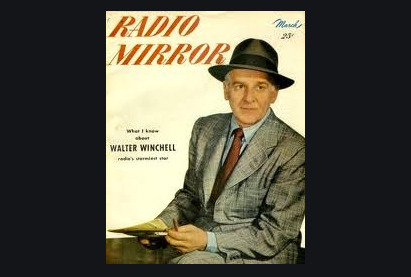
Gigi realizes the two men are following Yankee Doodle, not her. To make sure her clicking heels don’t give here away, she takes her shoes off. Gigi fantasizes that maybe famous columnist Walter Winchell will be cruising the streets with the cops, getting material for his column, and making her a star by writing about her.
Walter Winchell made his radio debut on May 12, 1930 with a 15-minute feature that provided business news about Broadway. That same year he made his screen debut (based on his column) in the Warner Brothers short film The Bard of Broadway, in which he played himself. In 1933, he appeared as himself in Broadway Thru A Keyhole (aka Walter Winchell’s Broadway Thru a Keyhole), also featuring Lucille Ball. His voice was heard in the 1949 Lucille Ball film Sorrowful Jones and on the Desilu crime series “The Untouchables” (1959-1964).
The handsome suddenly takes her aside into an alley to avoid the two men stalking them. He tells her he is a Greek working to fund his country’s resistance to the Nazis. Gigi decides to distract the two flatfoots with a flashlight. She conks the men on the head with her shoes.
GIGI: “I broke my heel on that heel!”
Fleeing, Gigi and the Greek take refuge in an all-night diner. They both order t-bone steaks – rare with plenty of onions. The man says the money was meant to support the Greek underground and that the two men are Axis agents. He tells Gigi she gets ten percent for her troubles but all Gigi can think about is her t-bone steak! When the waitress returns to their table, she tells them that she forgot it was “meatless Tuesday” so there’s no steaks!
Meatless Tuesdays was a wartime initiative to preserve meat supplies to ensure there would be enough for the armed forces.
End of Episode
After the final commercial, Lucille Ball reports that tonight she said more words per minute than any other actress on the series – but spares a few more words to give a pitch to buy War Bonds.
Lucille Ball appeared through the courtesy of Metro Goldwyn Meyer, producers of The White Cliffs of Dover.
The film featured future “I Love Lucy” guest star Van Johnson, Norma Varden (Mrs. Benson), and an uncredited ten-year-old Elizabeth Taylor, who later appeared as herself on “Here’s Lucy.”
Next week Suspense presents “The Walls Came Tumbling Down” starring Keenan Wynn.
Two years later, in 1946, the Jo Eisenger story was turned into a film by Columbia Pictures starring Lee Bowman, who played George Cugat (later renamed Cooper) in the pilot episode of Lucy’s radio sitcom “My Favorite Husband” (1948). The film also featured Moroni Olsen, who played the Judge in “The Courtroom” (1952). In 1938, Bowman was featured in Next Time I Marry with Lucille Ball.
-
TELEGRAM from LUCY
May 25, 1965
On May 25, 1965, Ann Miller received a telegram from Lucille Ball praising her performance on “The Hollywood Palace” on May 22, 1965. Miller was so surprised that she called Western Union to verify the telegram’s authenticity.
“The Hollywood Palace” was an hour-long television variety show that aired from 1964 to 1970. It was staged at the Hollywood Playhouse on Vine Street. Desi Arnaz Jr. appeared on the show with Dino, Desi & Billy in 1964 and 1968.
This episode was recorded on Friday, April 23, 1965.
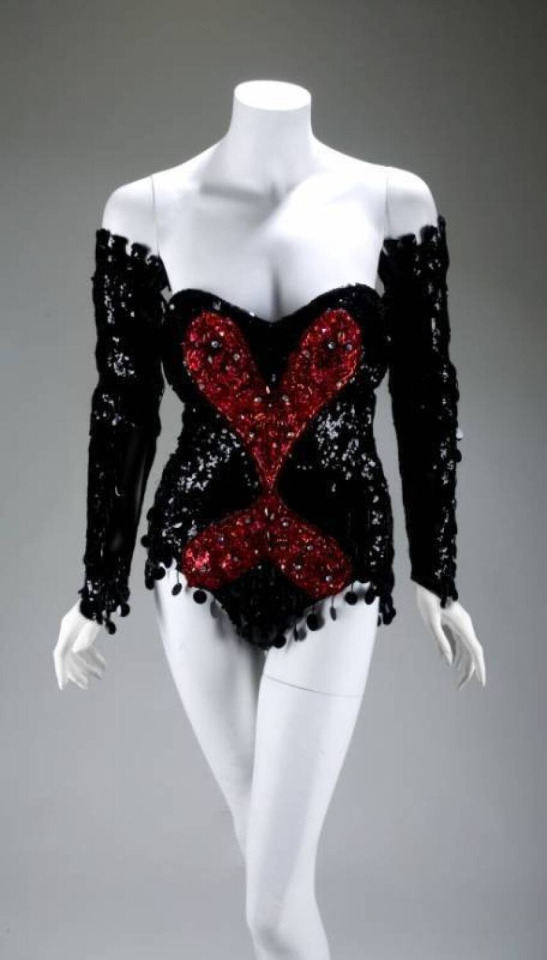
This was Miller’s fourth appearance on the program. She performed “Trapped in a Web of Love” and “Won’t You Come Home Bill Bailey” with a leg injury, defying a doctor who told her she needed to stay in bed. She asked Bob Mackie to prepare a special set of tights that would help her dance on her injured leg.
The costume was auctioned off in 2009 fetching more than $1,200.

Miller had appeared with Lucille Ball and Desi Arnaz in their 1939 film Too Many Girls.
Ball had several reasons to watch that evening’s episode of “Hollywood Palace”. In addition to Miller, the show was hosted by Tennessee Ernie Ford, who had appeared three times on “I Love Lucy” and would go on to make guest star appearances on “The Lucy Show” in 1967 and “Here’s Lucy” in 1969. In return, Ball also appeared on his television specials.
Guests included Edie Adams, who appeared on the very last episode of “The Lucy-Desi Comedy Hour” in April 1960. She went on to appear in a 1968 episode of “The Lucy Show.”
Comedian Jack Carter was the best man at Lucy’s wedding to Gary Morton in 1961. A few weeks later he married Paula Stewart, who played Lucy’s sister Janie in Broadway’s Wildcat. He acted in “Lucy Sues Mooney” (TLS S6;E12) and directed two episodes of “Here’s Lucy.”
-
COMMAND PERFORMANCE
May 24, 1945
Command Performance was a radio program which aired between 1942 and 1949. It was broadcast on Armed Forces Radio Network (AFRS) and transmitted by shortwave to the troops overseas. It was not broadcast over domestic U.S. radio stations. The show entertained requests from the troops overseas. It was produced in front of a live audience in Hollywood, California.
“The best wartime program in America.” ~ Time Magazine
“SUPPRESSED DESIRES” ~ May 24, 1945
- Ken Carpenter (Announcer)
- Lucille Ball
- Kitty Kallen
- Jack Carson
- Phil Reagan
- Robert Benchley
- The Town Criers
Ken Carpenter and Lucille Ball read a request from Sergeant Jim Blaine of APO 129 that asks about ‘suppressed desires’. Lucy asks Ken about his ‘suppressed desires’ and he replies that he hates Harry James. James was a bandleader married to one of Hollywood’s sexiest stars, Betty Grable.

In 1958, James and Grable appeared on an episode of “The Lucy-Desi Comedy Hour” titled “Lucy Wins a Racehorse”. They played themselves.
Lucy laughs and Ken reveals he wants to do an ‘honest’ radio commercial. He demonstrates by talking frankly about a fictional breakfast cereal named Squishy Squashies.
Lucy introduces Kitty Kallan, who sings “I’m Beginning To See The Light” by Duke Ellington, Johnny Hodges, and Harry James, with lyrics by Don George. Her recording reached #1 for two weeks in January 1945.
Ken askes Lucy what her ‘suppressed desire’ is and Jack Carson enters to infer that it is him! Carson had appeared with Ball in the films Stage Door (1937), Having Wonderful Time (1938), and Go Chase Yourself (1938). Lucy asks about his reputation as a womanizer. Carson says that his secret desire would be to be Lana Turner – so that he could make love to Jack Carson!
Lucy introduces The Town Criers, who perform “Idaho”, a song by Jesse Stone written in 1942. Originally comprised of the four Polk siblings, Gordon, Elva, Vernon and Lucy Ann, the Town Criers are probably best remembered today for their work with Tommy Dorsey.
Lucy introduces Robert Benchley. Benchley’s secret desire is to play ‘cryptogram’ with Lucy. He finally reveals his hidden desire is to be a mother! He wants to have 18 children.
Lucy introduces Irish tenor Phil Reagan who sings “Irish Lullabye”, written in 1913 by James Royce Shannon. The song became a hit for Bing Crosby who sang it in Going My Way (1944).
Carson implores Lucy to reveal her secret ambition. She says she’d like to be someone like Humphrey Bogart. She’s admired him since seeing him in To Have and Have Not (1944).
Bogart, Bacall, and To Have and Have Not would figure into a 1969 episode of “Here’s Lucy” titled “Lucy and the Bogie Affair.”
LUCY: “If you’re going to be Lana Turner, I can be Humphrey Bogart. I could cut off my hair, put on long pants and a man’s shirt and nobody’d know the difference.” CARSON: “You’d never fool Lauren Bacall…or me, for that matter.”
Lucy reveals she’s written a little play in which she’ll play Bogart, he’ll play Lana Turner, and Benchley will play Lana’s mother.
CARSON: “My Mother??? That’s what I get for not reading Winchell’s column.”
Gossip columnist Walter Winchell was a powerful figure in Hollywood. He was the first to break the story about Lucy and Desi losing a baby in the late 1940s. His name was mentioned in Desi’s song “We’re Having a Baby”. On television, he was the voiceover narrator for Desilu’s hit “The Untouchables,” later lending his iconic intonations to an episode of “Here’s Lucy” that satirized the crime drama.
Lucy reveals the title of the play: “Aunt Becky Got Her Bustle Caught in the Wringer or That’s What Made Her Hangover Square.” The play imagines Lana as a naive 18 year-old about to go on her first date with Humphrey. Mother tells her the story of the birds and the bees – literally. Ken briefly interupts with a commercial for Squishy Squashy. Humphrey arrives.
LUCY (as Bogart, to Benchley as Mother): “Who’s this broken down broad? She needs to shave.”
Mother warns them to be home by ten o’clock.
[Gunfire]
LUCY (to Benchley as Lana) : “Now we can hang out till midnight.”
End of Episode
-
TO LUCY, WITH LOVE
May 22, 1971

On May 23, 1971, Lucille Ball was proclaimed “Comedienne of the Century” at the Music Center of the Dorothy Chandler Pavilion in Los Angeles at a gala by the Diabetes Association of Southern California. In attendance were Jack Benny, Bob Hope, George Burns, Phyllis Diller, and Andy Williams, among others.
The event was held on a ‘dark’ night for the Pavilion’s current presentation, the final tour stop of Katharine Hepburn in the musical COCO, the story of designer Coco Chanel that originated on Broadway (also starring Hepburn) in 1968. In the above photo, members of the Diabetes Association hold the sign in front of the poster for COCO, which was choreographed by Michael Bennett and directed by Michael Menthall.
Ball and Hepburn had appeared together in the 1937 film STAGE DOOR and in 1945′s WITHOUT LOVE.
At the time, Ball had just finished season three of “Here’s Lucy,” which finished #3 in the ratings, the last time the show would be in the top ten.
The event was not broadcast.
-
RED CROSS DAY
May 8th
May 8th is World Red Cross Day. The first Red Cross Day was celebrated on May 8, 1948. This date is the anniversary of the birth of Henry Dunant, who was born on 8 May 1828. He was the founder of International Committee of the Red Cross (ICRC) and the recipient of the first Nobel Peace Prize. The Red Cross is a humanitarian organization founded in 1863 to protect human life and health, to ensure respect for all human beings, and to prevent and alleviate human suffering.
On March 11, 1949, Lucy’s radio sitcom MY FAVORITE HUSBAND presented “Charity Revue” (aka “Red Cross Benefit Revue”) in which Mr. Atterbury (Gale Gordon) asks George (Richard Denning) to work up a song and dance routine for the local Red Cross Charity Review. At the same time Liz’s (Lucy) women’s club recruits her to perform. The script was the basis for the “I Love Lucy” episode “The Benefit” (1952).
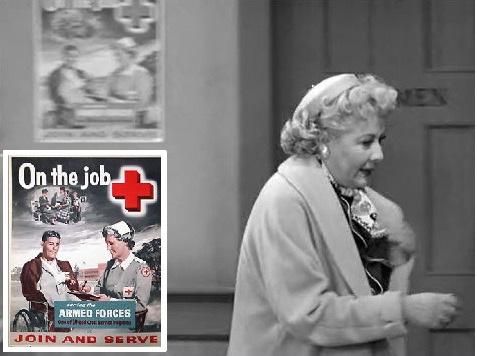
American Red Cross posters were a favorite of the Desilu set decorators on I LOVE LUCY.
They can be glimpsed in the subway during “Lucy and the Loving Cup” (1957),
on the walls of the rented hall in “Ricky Has Labor Pains” (1953),
in the butcher shop in “The Freezer” (1952),
and in the Westport train station in “Lucy Misses the Mertzes” (1957).
On THE LUCY-DESI COMEDY HOUR “Lucy Goes To Mexico” (1958), Lucy, Ethel and Fred are stopped at the border. Trying to get released in time for Ricky’s show on an aircraft carrier, Ethel suggest contacting the Red Cross and Lucy suggests calling her mother!
“I collect for the Red Cross. I buy savings bonds. I was with the WAVES. How much does that man in the White House want from me?” ~ Lucy Carmichael in “Lucy Becomes an Astronaut” (1962)
On THE LUCY SHOW, Lucy Carmichael and Carol Tilford (Carol Burnett) were in a show-within-the-show in which they played World War I Red Cross nurses in France. The episode aired on December 11 1967.
In 1979, Lucille Ball did a fundraising campaign for the American Red Cross: “Keep Red Cross Ready”.
The second episode of LIFE WITH LUCY (1986) “Lucy Makes a Hit with John Ritter” found Lucy and Ritter in a stage play where she played a Red Cross nurse in World War One France.
-
LUCY & THE SPACE RACE
April 12th – International Space Day

International Day for Human Space Flight takes place across the world on April 12th. The day celebrates the first space flight and the first human being in space — Soviet cosmonaut, Yuri Gagarin – on April 12, 1961. Naturally, the space age ramped up on TV as well.
Long before man actually went to space, people wondered what might be up there.
In the 1950′s, America was fascinated by the idea of aliens – mainly Martians. Books, films, and television shows all captalized on this fear of the unknown.
The fascination and fear of outer space can be traced back to “War of The Worlds”, an 1898 novel by H.G. Wells. In 1938, Orson Welles and the Mercury Radio Theatre used it as the basis for a broadcast that many believed to be an actual invansion from outer space!
In “Lucy Becomes an Astronaut” (November 5, 1962) Lucy Carmichael and Vivian Bagley successfully spend 24 hours in a simulated space ship as part of a ‘Women in Space’ experiment.
Lucy just calls it “the space program,” but her daughter Chris knows that it is actually called NASA – the National Aeronautics and Space Administration. President Eisenhower established NASA in 1958. Alan Shepard became the first American in space in May 1961, just three weeks after Russian Yuri Gargarin. Although the American team planned to launch earlier, delays continually pushed the launch back, allowing the Russian program to scoop the headlines.
“The Lucy Show” wasn’t the only TV show to use the space program as the basis for storylines. Three months later “Dennis the Menace” aired “Junior Astronaut,” where Dennis and his classmates participate in the ‘Junior Astronaut’ savings-stamp program. This episode starred Gale Godon, who would join “The Lucy Show” cast in season two. Star Jay North did a short promotional film for the real-life savings-stamp program to support NASA.
Also in January 1963, “McKeever & the Colonel,” a one-season sitcom that premiered on NBC a week before “The Lucy Show”, explored the topic in “McKeever’s Astronaut,” where a visiting astronaut turns out to be a chimp. Although not in the cast of this particular episode, Charles Lane (Lucy Carmichael’s banker Mr. Barnsdahl) was featured on the series in November 1962. Shirley Mitchell (Lucy Ricardo’s friend Marion Strong) was in the series premiere.
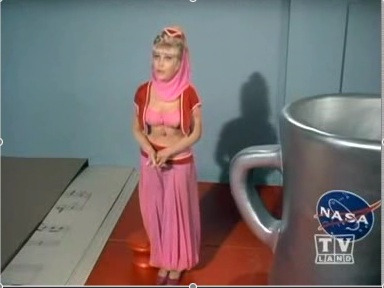
The most famous example of the space program on television is the sitcom “I Dream of Jeannie,” which premiered in 1965. It not only featured astronauts as the central characters, it was set in Cape Canaveral, Florida. After John F. Kennedy’s assassination in 1963, the name was changed to Cape Kennedy. It reverted to Cape Canaveral a decade later, although the NASA facilities are still known as the Kennedy Space Center. Jeannie was played by Barbara Eden, who made her sitcom debut on a 1957 episode of “I Love Lucy.”
Lucy revisited the subject on October 11, 1971 on the “Here’s Lucy” episode “Lucy and the Astronauts”. When Harry and Lucy attend a splash down, she rushes to hug the returning crew before they can be medically cleared, meaning she and Harry must be quarantined with the astronauts.
Barely tolerating Lucy in the isolation unit, Dr. Jamison (Roy Roberts) grumbles “We never had this trouble with Neil Armstrong.” Neil Armstrong was the first American astronaut to set foot on the moon on July 21, 1969. Armstrong traveled with Buzz Aldrin on Apollo 11. His famous quote when he stepped onto the moon’s surface was “That’s one small step for man, one giant leap for mankind.”
The episode incorporates stock footage of a televised moon walk and a splash down.
This episode was featured in a set of View-Master reels. The View-Master system was introduced in 1939 by GAF, four years after the advent of Kodachrome color film.
The third act of “Lucy and the Generation Gap” (1969) was set in a futuristic space age in a musical comedy context.
In 1966, Desilu produced a science fiction series that explored life in outer space – “Star Trek”. Each episode started with the iconic phrase:
“Space: The Final Frontier”
Ball was friends with Majel Barrett and thought Gene Rodenberry was a talented creator. She supported the show when the network rejected it. Thanks to Lucy, the now iconic franchise has immeasurably contributed to the popularity of the space program.
-
LUCY & THE IRS
Tax Day in the Lucyverse

“In this world, nothing is certain except death and taxes” ~ Benjamin Franklin, 1789
Although Lucycoms never joked about death, taxes were fair game – usually! Here are a few examples.
“The Absolute Truth” (1949) ~ Liz (Lucille Ball) and George (Richard Denning) bet each other that they can each go for 24 hours without telling a lie. George thinks Liz is trying to trick him into lying by sending a man to his office disguised as an IRS agent. Surely George will lie about his taxable income. George calls Liz to tell her he knows about her scheme. He is schocked when Liz says she didn’t send anyone to see him! George realizes he told the IRS all the details of his tax returns thinking he is talking to an impersonator!

When this episode was re-written for “I Love Lucy” as “Lucy Tells the Truth” (1953), the end of the episode featured Ricky fibbing about his taxes to an IRS agent. In the un-filmed scene we learn that Ricky went to Kentucky to play with the band, and won some money at the Kentucky Derby, which he failed to report. IRS agent Mr. Miller was to be played by Charles Lane, who specialized in authority figures.

Desi Arnaz refused to do the seen as written, feeling that Ricky would never cheat the government. He reasoned that it reflected poorly on immigrants and didn’t want people to think it was the sort of thing that he (Desi) condoned. He was grateful to be an American and (at the height of his success) he was determined to show that the American Dream was achievable. The scene was re-written and Lane was recast as a talent agent who witnesses Lucy participate in a knife-throwing act.

“Liz and the Green Wig” (1950) ~ George decides she can eliminate the $10 a week from Liz’s budget if he eliminates the money she’s spending on her hair. Liz buys a green wig to show George what might happen if she dyed her hair at home. Liz is tells Katie the maid (Ruth Perrott) that it is time for George to review her household accounts for the previous year for the income tax people, and she knows she hasn’t managed to save any money.
“Lucy Gets Ricky on the Radio” (1953) ~ Lucy thinks Ricky is a Cuban brainiac, so she gets them on a radio quiz show. To be sure he wins, she steals the answers. But then the questions are changed!
Originally, the first question was: “To whom do you make your federal tax check out on March 15?” but instead Fillmore asks “What is the name of the animal that fastens itself to you and drains you of your blood?” The answer Lucy memorized and blurts out is “The collector of Internal Revenue” when the real answer is “A vampire bat.” As a side note, Tax Day was set on March 1st in 1913. It was moved to March 15th in 1918 before being finally being set as April 15th in 1955.

“The Camping Trip” (1953) ~ Trying to make conversation, Ricky asks Lucy “What do you think of the new tax law?”
In 1952, President Eisenhower proposed reorganization of tax laws, including re-naming the Bureau of the Internal Revenue the Internal Revenue Service (IRS). Most importantly, starting in 1954, he changed the date tax returns were due from March 15th to April 15th.

“First Stop” (1955) ~ On the way to Hollywood, the gang’s only choice for food and lodging is One Oak Cabin and Cafe. Proprietor Mr. Skinner (Olin Howard) charges the foursome $4.80 for four stale cheese sandwiches, eighty cents of which is entertainment tax. When the gang questions the extra charge, Mr. Skinner croons a bit of “I’m Afraid to Come Home in the Dark” accompanying himself on the banjo. Rather than listen, they pay up and try to leave.
In 1957, Ingrid Bergman was talked about as the star of the second “Lucy-Desi Comedy Hour” “The Celebrity Next Door”, but tax problems prevented her from signing the contract. The script was re-written for Bette Davis, who withdrew at the last moment due to injury and was replaced by Tallulah Bankhead.
In December 1965, Lucille Ball was in tax court for back taxes, but emerged without paying a penny.
“Lucy, the Stockholder” (1965) ~ Lucy gets a letter from the Internal Revenue which turns out to be an income tax refund of $38.23. She decides to invest it all in the stock market and pays a visit to a nervous broker (Harvey Korman). When he finally hears that she has just $38.23 to invest he nearly has a nervous breakdown.
Lucy is so grateful for her tax refund that she wants to send “Lyndon” a thank you note. Lyndon Baines Johnson was the 36th President of the United States, assuming office from the Vice Presidency after the assassination of John F. Kennedy.
Yours, Mine and Ours (1968) ~ Lucille Ball hadn’t anticipated the film’s huge box-office success and failed to provide a tax shelter for her personal profits, resulting in most of her earnings going toward taxes. It is said this caused the redhead a good deal of consternation.
“Lucy Visits Jack Benny” (1968) ~ Jack Benny has turned his Palm Springs home into a hotel, and the Carters have made a reservation. Benny only charges $3 a night for rooms, but adds on ‘extra charges’ like eleven cents for towel rental – one penny of which is sales tax! When Lucy balks at paying a penny tax, Benny replies “Go fight with Ronald Reagan!” Former Hollywood actor Ronald Reagan had been elected Governor of California in 1967.

“Lucy and the Raffle” (1971) ~ Kim wins a sports car in a raffle, but Lucy won’t let her keep it. To pay the taxes on her win, they hold another raffle not knowing that it is illegal. Paul Picerni plays IRS Agent Frank Williams.
“Lucy’s Bonus Bounces” (1971) ~ On advice from his psychiatrist, Harry gives Lucy a $50 raise. But when Harry is visited by IRS Agent William McPherson (Paul Picerni), things get personal. Picerni plays his second IRS Agent in less than a year!
When the IRS Agent starts to focus on Lucy instead of Harry, Harry immediately suggests she be hauled off to prison!

“Funny Money” (2019) ~ CBS presents two newly-colorized episodes of “I Love Lucy”: “Bonus Bucks” and “The Million Dollar Idea” (both 1954). The press release touted that the special would relieve “Tax Day Blues”.
The I Love Lucy Funny Money Special Will Banish Your Tax Day Blues
Newly colorized versions of two classic Lucy episodes will air on April 19th. If you’re dreading Tax Day—and who isn’t?—fear not! The one and only Lucille Ball will be returning to your TV sets for a hilarious new one-hour special to wash those blues away.
MANY HAPPY RETURNS!
















-
Subscribe
Subscribed
Have a WordPress.com account? Log in now.

