-
“Off to Florida”

(S6;E6 ~ November 12,1956) Directed by James V. Kern. Written by
Madelyn Martin, Bob Carroll, Jr., Bob Schiller and Bob Weiskopf. Filmed September 13, 1956 at Ren-Mar Studios. Rating: 34.7/45

Synopsis ~ When Lucy misplaces their train tickets to Miami Beach, she and Ethel must share a car ride to Florida with Edna Grundy, a woman they suspect might be a hatchet murderess.

The long-awaited trip was first mentioned three episodes earlier in “Lucy Meets Orson Welles” (S6;E3). Lucy also gets in a plug for their destination, the Eden Roc Miami Beach Hotel.

Preparing for her trip, Lucy comes home laden down with gift boxes from Saks Fifth Avenue. Their logo is clearly visible and their thatched pattern box was a tell-tale sign that something was from Saks. Lucy also shopped at Saks in the sixth season opened, “Lucy and Bob Hope” (S6;E1). Although the high-end department store opened in NYC in 1857, they didn’t open a store in Los Angeles until 1938.

When Lucy can’t find the tickets, she asks Ethel how much money she has to re-buy them:
ETHEL: “Eighteen dollars and half a sheet of green stamps.”
Ethel is referring to S&H Green Stamps, which were a line of trading stamps popular from the 1930s until the late 1980s. They were distributed as part of a rewards program operated by the Sperry & Hutchinson company (S&H). Customers would receive stamps at the checkout counter of supermarkets, department stores, and gasoline stations among other retailers, which could then be redeemed for products in their catalog. Trading stamps are part of punchlines in
“Lucy, the Camp Cook” (TLS S3;E6), “Lucy Gets the Bird” (TLS S3;E12) and “Lucy and the Ring-a-Ding Ring” (TLS S5;E5).
Oops! Lucy searches her purse and finds $32.24. One of the coins drops to the floor as Lucy lifts her purse. She looks at it when calculating her total, but does not pick it up off the floor!
Lucy comes up with the idea of a ride share and consults the newspaper to find a driver headed south. Success!
What most viewers don’t realize is that although they look similar, two different model cars are used in the episode.

For the exterior footage, a 1949 Dodge Wayfarer was driven.

A 1951 Dodge Coronet was used in the studio shots.

On the trip, Mrs. Grundy’s cream-colored convertible gets a flat tire and she tells Lucy and Ethel to fix it, allowing an opportunity for some funny physical comedy by Lucille Ball. Lucy claims that she knows how its done because she watched Ricky do it on the way to California, one of the many things not shown on camera.

Mrs. Grundy is played by British character actress Elsa Lanchester. She is probably best remembered for playing The Bride of Frankenstein (1935), in which she also played novelist Mary Shelley. In 1950 she was nominated for an Oscar for Come to the Stable (1949) and would be nominated again for Witness for the Prosecution, just one year after this episode aired. That film also starred her husband Charles Laughton.
The Oscar-nominated actress received $2,000 for appearing in the episode, just $500 less than she was paid for The Bride of Frankenstein twenty years earlier. In “Lucy Writes a Play” (S1;E17), Ricky jokes that Ethel looks like the Bride of Frankenstein in her Spanish mantilla.

Lucy describes Miss Grundy’s watercress sandwiches as “buttered grass” – but eats it anyway.

Oops! When Miss Grundy reaches into the picnic basket behind Lucy and Ethel for her watercress sandwiches, the basket’s wicker lid hits the suitcase propped up behind Ethel and knocks it over – a domino effect. Had the valise been full, it would not have easily toppled over from a wicker basket lid.
The front on driving scenes were called process shots using rear projection. It was a technique first done in “California Here We Come!” (S4;E13), which was believed to be the first process shot on television.
The radio announcer is voiced by Roy Roberts. The big band music in the background was also heard in “Country Club Dance” (S6;E25).

The episode features second unit footage with cast doubles on location, likely in Southern California.

When Mrs. Grundy finally pulls over at a cafe, the man behind the counter is played by Strother Martin. Martin achieved success as a recognizable character actor later in his career, appearing in such hits as Cool Hand Luke (1967), where he introduced the now iconic line, “What we have here is a failure to communicate.” Two years later he was co-starring with Robert Redford and Paul Newman in and Butch Cassidy and the Sundance Kid (1969). His first film was an uncredited appearance in The Asphalt Jungle in 1950. In 1953, Martin played a soldier in George Bernard Shaw’s Androcles and the Lion which starred — Elsa Lanchester!

Lucy and Ethel try to get a signal to the cafe waiter while not alarming Miss Grundy, who by now thinks Lucy is the hatchet murderess!

At the end of the cross-fade between the second unit footage of the “North Miami” train station and the studio set of the same location, Lucy and Ethel’s doubles can be briefly glimpsed walking down the tracks on the left.

Having hitched a ride on a poultry truck, Lucy tries to explain the strange story of her journey to Ricky. Little Ricky looks doubtful!
FAST FORWARD!

Lucy must have liked working with Elsa Lanchester, because she cast her again as another oddball criminal named Mumsy Westcott in a 1973 episode of “Here’s Lucy” called “Lucy Goes to Prison” (HL S5;E18).
-
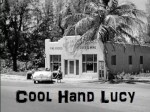

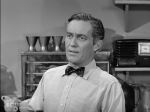
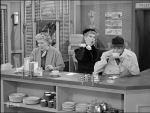

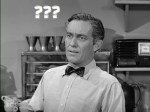


Cool Hand Lucy starring Lucille Ball, Vivian Vance, Elsa Lanchester and Strother Martin
-
“Lucy’s Italian Movie”

(S5;E23 ~ April 16, 1956) Directed by James V. Kern. Written by
Jess Oppenheimer, Madelyn Pugh, Bob Carroll, Jr., Bob Schiller and Bob Weiskopf. Filmed March 8, 1956 at Ren-Mar Studios. Rating: 47.1/63
Synopsis ~ When traveling through Italy, Lucy meets a movie director and is bound and determined to land a role in his new picture, Bitter Grapes.
To research the movie, she goes to a nearby vineyard to “soak up some local color.”

In 1997, TV Guide ranked this episode #18 on its list of the 100 Greatest Episodes of All Time.
Next to “Job Switching” (S2;E1) and “Lucy Does a TV Commercial” (S1;E30), this is considered one of the best-loved episodes of the entire series. All three concern Lucy dealing with food and drink with disastrous (but hilarious) results.

Coincidentally, the same night this episode was filmed (March 8, 1956) CBS aired “Red Wine,” an installment of “Four Star Playhouse”, a series that was promoted during “Lucy Meets Charles Boyer” (S5;E19). “Red Wine” starred David Niven and John Banner, who would do a cameo in “Lucy and Bob Crane” (HL S4;E22) in 1966.

This is the second time that a scene takes place on a train. The first was “The Great Train Robbery” (S5;E5). A New York subway train will feature several scenes during “Lucy and the Loving Cup” (S6;E12). In Italy, budget-conscious Fred has only booked one compartment for four people.

When Lucy is approached by director Vittorio Felipe she tries to impress him, reciting: “The calla lilies are in bloom again.”

This is a quote from Stage Door (1937), which Lucille Ball always called her ‘big break’. It was Katherine Hepburn’s first line in the play within the film, and was repeated throughout the movie. Ball always admired Hepburn, and it is possible the writers included the line as an homage to her.

Franco Corsaro (Vittorio Felipe) was born in New York City in 1900 into an immigrant family and spoke Italian fluently. Corsaro had been in the 1945 film Without Love with Lucille Ball. He played the role of Genco Abbandando in The Godfather, but his scene was cut and only reinstated in the television version, “The Godfather Saga."
To learn his lines, Corsaro memorized all the lines including the other actors. When the other actors yell "Has she ever considered acting?!” Coraso can be seen mouthing their lines in order to stay on track.

Lucy looks over Teatro, an Italian-language movie magazine.
Oops! Ricky tells Lucy that they’re in Rome for 10 days. Lucy tells Ethel they’ve been in Italy for a week. Before the trip began it was only for 3 weeks of one-night stands!

Saverio LoMedio played the hotel bellboy. He, too, was born in New York City to an Italian-American family.

The only actor actually born in Italy was the vineyard boss played by Ernesto Molinari. Like LoMedio, this was his first TV appearance. From 1961 to 1972 he was regularly seen on “Gunsmoke,” appearing in 29 episodes.

Rosa Barbato (uncredited) has been identified as one of the vineyard workers. She is probably the one who gossips with Tirelli about Lucy. The others go uncredited and have not been identified.

Lucy’s conversational Italian is limited to a few phrases, mostly influenced by her skill at charades.

Because the episode is set in Italy, “pizza” is a popular punchline.

When home in New York, Mario – a “Visitor from Italy” (above) – gets Lucy involved in actually making pizza!

California grape farmers gladly donated the grapes, as long as the script mentioned that wine was now made in modern factories, not by stomping out the juice by foot. Despite lines of dialogue to make good on that promise, the episode became so famous that many viewers still thought wine was made by stomping in vats despite the industry’s numerous technological advances by that time. “They set back the vision of the Italian wine industry 100 years,” wrote author Thomas Pellechia in his 2008 book The Complete Idiot’s Guide to Starting and Running a Winery.

The grapes that weren’t used during filming were taken home by the cast and crew to eat, much like the huge loaf of bread baked especially for “Pioneer Women” (S1;E25).

Lucille Ball didn’t rehearse with real grapes until the day of filming. She wanted her on-camera reaction to be genuine. She later said it felt like “stepping on eyeballs.” She also waited for the cameras to roll work with the raw eggs in “Lucy Does the Tango” (S6;E20), which resulted in the longest laugh ever on the show.
“Since we hadn’t worked with the grapes in the vat during rehearsals, I had no idea what I was in store for. Once the fight started, the lady was bent on drowning me. At one point, she literally held my head under water, and I had to fight to get my breath back. A lot of that was edited out of the final print. Looking back, of course, I’m glad it happened that way because the scene was so good.” ~ Lucille Ball

On various talk shows Lucille Ball sometimes exaggerated the danger she was in during the grape-stomping scene. She sometimes said that Teresa started a fight during filming and that the fight in the grape vat wasn’t scripted. Lucy sometimes said that Teresa almost drowned her in the grapes, and that she got grapes up her nose.

Fun Fact! The bottom of the grape vat was lined with a rubberized form of horse hair to cushion Lucy and Teresa’s falls.

Turo, the location of the vineyard, is a fictional Italian village.

Ingrid Bergman (1915-85) was a three-time Oscar-winning actress who was known for her serious roles. In 1954 she starred in Journey To Italy, set in Naples.

In 1959, Bergman met Lucy and Desi at a Hollywood party. The two were overwhelmed to meet each other. They worked together in the 1982 Bob Hope special “Women I Love: Beautiful But Funny”.

Although there was a persistent rumor that the other actress in the vat was a real grape stomper from Napa Valley, she was actually Teresa Tirelli D’Amico, an opera singer and motion picture actress. Born in Croatia in 1907, she moved to the United States in the early 1920s and performed in opera and was the hostess of a local radio program devoted to Italian-American music. She appeared as a midwife in The Godfather Part II.

Writer Bob Schiller says that the original script had Lucy lose one of her dangly earrings in the grape vat, and when she was bent down looking for it, Tirelli would push her down. The scene was changed because it didn’t seem realistic. Other sources report that the original script had Teresa stepping on Lucy’s lost earring, her pain causing her to be angry at Lucy.

Hairstylist Irma Kusely had to take extra care in how she tinted Lucy’s hair purple in the scene after the grape stomping. She was already dying and perming Lucy’s hair, and Lucy had sensitive skin, so they needed something gentle. Irma ended up using a very light lavender color.
FAST FORWARD!

On “The Dick Cavett Show” in 1974, Lucy recounts (and slightly embellishes) the plot of this show, which she claims to be one of her favorite episodes of “I Love Lucy.” She talks about casting the ‘stocky’ Italian women to play Lucy Ricardo’s fellow grape stompers. According to Lucy, the women spoke no English and had to be directed via a translator.
It is in this interview that Lucy puts forward the inaccurate idea that the other actress in the vat was a real grape stomper from Napa Valley when she was actually an opera singer and motion picture actress. Lucille Ball also mentions the episode in interviews with Phil Donohue (1974) and on “America Alive”!

In “Lucy’s Italian Movie” Lucy Ricardo meets an Italian and ends up turning purple from a vat of grapes. In “Lucy Meets a Millionaire” (TLS S2;E24) Lucy Carmichael meets an Italian and ends up turning green from a vat of dye.

In a 1970 episode of “Here’s Lucy”, Kim Carter does the same movie line from Stage Door that Lucy Ricardo does in “Lucy’s Italian Movie.”

A clip from this episode was included when Lucille Ball was honored at the “33rd Annual Primetime Emmy Awards” (1981).


In 1982, Lucille Ball directed her first (and only!) original sitcom pilot for NBC titled “Bungle Abbey” about the comical escapades of a monks in a monastery. The pilot was not picked up for series, but it began with the monks stomping grapes in a big vat – their feet covered in purple dye.

In the 1990 film Pretty Woman, Vivian (Julia Roberts) watches this episode in the penthouse. Director Garry Marshall had written 18 episodes of “The Lucy Show.”

In 2008, this episode was mentioned on CBS by an “Amazing Race” contestant tasked with stomping kiwis in New Zealand.

The episode was mentioned in the animated short film “Lily and Jim” (1997) by Don Hertzfeldt.

This is one of two episodes colorized for a 2013 Christmas Special on CBS entitled the “I Love Lucy Christmas Special,” the other being “The ‘I Love Lucy’ Christmas Show”.

When TV Guide eliminated their small-size format in 2004, Reba McEntire was asked to recreate their cover of Lucy stomping grapes.


The episode has inspired many vineyards to sponsor Lucy grape stomping events!
SELLING ‘LUCY’S ITALIAN MOVIE’!


Merchandise bearing the image of Lucy in the grape vat has been found on everything from t-shirts to Christmas ornaments!

The episode was recreated by Nicole Kidman in Being The Ricardos (2021).

-
“The Fox Hunt”

(S5;E16 ~ February 6, 1956) Directed by James V. Kern. Written by Jess Oppenheimer, Madelyn Pugh, Bob Carroll, Jr., Bob Schiller, and Bob Weiskopf. Filmed December 22, 1955 at Ren-Mar Studios. It was the 140th episode filmed.
Rating: 48.2/65

Synopsis ~The second episode set in Europe finds Lucy wangling an invitation to an English country estate for the weekend where she has to contend with her jealousy of Angela Randall, an English heiress flirting with Ricky. To keep an eye on him, she goes on a fox hunt despite never having ridden a horse.

The night before this episode premiered, Lucy and Desi appeared on “The Ed Sullivan Show” to promote their upcoming film Forever Darling. Desi sang the title song with the Ames Brothers.

Coincidentally, the date this episode first aired marked the fourth anniversary of Queen Elizabeth II’s succession to the throne of the United Kingdom.

The sport of Kings, Fox Hunting (or Riding to Hounds) as a formalized activity, originated in England in the sixteenth century, in a form very similar to that practiced until February 2005, when a law banning the activity in England and Wales came into force. The sport involves the tracking, chase and, if caught, the killing of a red fox by trained hounds, and a group of unarmed followers led by a “master of hounds”, who follow the hounds on foot or on horseback.

Lucy is bound and determined to wangle an invitation to an English Country Manor home of British movie producer Sir Clive Richardson, in spite of Ricky’s discouragement.
RICKY: “Lucy, you don’t want to be a moocher, do you?”
LUCY: “Just call me Minnie.”
“Minnie the Moocher” is a jazz song first recorded in 1931 by Cab Calloway and His Orchestra. It is most famous for its nonsensical ad libbed lyrics.

Sir Clive Richardson’s estate is called Berkshire Manor. This may provide a clue to its intended location. Berkshire is one of the home counties in England. It was recognized by the Queen as the Royal County of Berkshire in 1957, a year after this episode first aired, because of the presence of Windsor Castle. It is close enough to London to be the logical choice for a weekend get-away.

A few seconds of establishing stock footage of Berkshire Manor was taken from the 1938 Ernst Lubitch film Cluny Brown, which was filmed by 20th Century Fox in a Hollywood studio, but takes place in England. In the film, the home is named Friars Carmel Manor, but with the exception of the lettering bearing the name, the footage is identical.

The writers were very clever to select ‘veddy posh’ British sounding names. The mentioned (but unseen) Cecily Higgins (who is hosting a lawn party) is no doubt named in honor of he character of Cecily Cardew in Oscar Wilde’s play The Importance of Being Earnest and Henry Higgins in Shaw’s play Pygmalion. The musical version of the play, My Fair Lady, was just beginning its out-of-town tryouts at the time. Sir Clive Richardson might be a reference to actor Sir Ralph Richardson and possibly Colin Clive, the English actor who played Doctor Frankenstein in 1931.
When Lucy makes up a story about the Mertzes meeting an Earl in the hotel lobby, Sir Clive wonders if it was the Earl of Gloucester, Twickenham, or Chichester – all actual British towns. At the time of filming (and as of this writing) the 9th Earl of Chichester is John Pelham. The last Earl of Gloucester died in 1400, although there is a character by that name in Shakespeare’s King Lear. There is no record of any Earl(s) of Twickenham.

Lucy makes up that it was a new Earl, just promoted from Assistant Earl, the Earl of Wilson, who canceled because he’s got the gout! Lucy’s imaginary Earl is actually a reference to Earl Wilson (1907-87), a journalist and television panelist of the time. His nationally syndicated column frequently mentioned Lucy and Desi. Above, Lucy strikes a pose for Wilson during her promotional tour for Mame (1974).
When Lucy finds out that seductive young Angela Randall is actually Sir Clive’s daughter, she makes up an excuse to get out of the weekend she’s just wheedled her way into.
LUCY: “Dash it all! I just remembered. We’re scheduled to go to the cricket matches this weekend.”
SIR CLIVE: “At this time of year? Cricket’s out of season.”
LUCY: “Well…these are young crickets.”But Ricky intervenes and the weekend in the country is on!

This is the third and final time Lucy wears this Elois Jenssen brown skirt and top with dark brown darts.

When Ricky and Angela are looking at the rock garden for a bit too long, a jealous Lucy sarcastically wonders if they’re prospecting for Uranium! Uranium is a very heavy metal found in most rocks which can also be used as a source of concentrated energy. During the 1950s the U.S. Atomic Energy Agency would analyze rock samples and pay a $10,000 award for confirmed sources. Uranium-mania would be the subject of “Lucy Hunts Uranium” (above), a 1958 episode of “The Lucy-Desi Comedy Hour.”
LUCY (about Angela Randall): “The fox isn’t the only thing she’s hunting!”

Walter Kingsford (Sir Clive Richardson) really was English. He was born on September 20, 1881 in Redhill, Surrey, and was an experienced character actor from the London stage. His first screen appearance was in Outward Bound starring Leslie Howard (1930), but he was best remembered for Captains Courageous (1937). He died two years and a day after this episode first aired.

ANGELA: “Oh, now, Lucy. You’re not going to get in a stew, are you?”
LUCY: “You could feed the whole British Army on the stew I’m going to get into.”Although in real life she spoke with a pronounced English accent, actress Hillary Brooke (Angela Randall) was not really British; she was actually from Astoria, New York! She cultivated the accent in order to set herself apart from all the other tall blondes she would be competing with for roles. The tactic worked so well that producers who hired her expected to hear a blonde with a British accent on the screen, so she was forced to use the accent whenever she worked, and wound up using it all the time, even off screen.

ANGELA: (about Ricky) “He’s a prize!”
LUCY: “Yes, well that prize belongs in my box of Cracker Jack.”Cracker Jack was a candy-coated popcorn snack sold with a small toy or prize in the box. The snack food was mentioned previously as a joke about where Fred got Ethel’s wedding ring! The Cracker Jack Company began advertising on CBS television in 1955, the same year this episode was filmed. Unfortunately, in 2016 the toy prize was replaced by a QR code for redemption of a game.
The horse Lucy rides in “The Fox Hunt” is named Danny Boy. According to the book “Meet the Mertzes” by Rob Edelman, “Danny Boy” (the Irish ballad) was one of Vivian Vance’s favorite songs to perform.

LUCY: (about Danny Boy) “Haven’t you got, maybe, a smaller horse?”
GROOM: “No, ma’am.”
LUCY: “Have you got a large lamb?”Trevor Ward (the Groom) was British, but not English, let alone Cockney. He was born on August 23, 1908, in Aberystwyth, Wales. Two episodes later he would play a French gendarme in “Paris At Last” (S5;E18).

Oops! When the horses are exiting the set, the horizontal creases of the background drop can clearly be seen!

When the hunt is over and Lucy and Danny Boy are nowhere to be found, Ricky gets concerned.
RICKY: “Fred, I’m worried about her. She didn’t exactly look like Johnny Longden up there.”
One year later, in January 1957, award-winning jockey Johnny Longden will guest star as himself in “Lucy and the Loving Cup” (S6;E12, above).

In the final moments, Lucy has been out-foxed by the fox!
HORSING AROUND WITH LUCY

In addition to the hounds, the episode used several live horses. Luckily, Lucille Ball learned how to ride in her teen years. (Photo collage by LimeVid2 on YouTube)

It came in handy when filming Annabel Takes a Tour (1938) and Mame (1974, above), which both featured Lucy having trouble with her mount.

Lucy once again works with a live horse (named Whirling Jet) in a 1958 episode of “The Lucy–Desi Comedy Hour” called “Lucy Wins a Racehorse”.

A racehorse figures prominently on a 1965 episode of “The Lucy Show” (TLS S4;E6) which also featured William Frawley in what would be his final screen appearance.

Lucille Ball played a horse trainer in a 1963 episode of “The Greatest Show on Earth”.

Coincidentally, in the previous episode, Lucy played a horse in Ricky’s circus number!
Some other episodes of “Lucy” sitcoms with equine performers:
- “Pioneer Women” (ILL S1;E25)
- “Lucy’s Bicycle Trip” (ILL S4;E24)
- “Lucy Takes A Cruise To Havana” (LDCH S1;E1)
- “Lucy
Hunts Uranium” (LDCH S1;E3) -
“Lucy Goes To Sun Valley” (LDCH S1;E5)
- “Lucy Visits the White House”
(TLS S1;E25) - “Kiddie
Parties Inc.” (TLS S2;E2) - “Lucy and Arthur Godfrey” (TLS S3;E23)
- “Lucy Discovers Wayne
Newton” (TLS S4;E14) - “Lucy and Robert Goulet” (TLS S6;E8)
- “Lucy
and Tennessee Ernie’s Fun Farm” (HL S1;E23) - “Lucy and Wayne
Newton” (HL S2;E22)

After the initial airing, a tag at the end of the episode showed Lucy and Desi talking about the world premiere of their new movie Forever, Darling, which took place in Lucy’s hometown of Jamestown, New York, the next day. In the tag, Desi remarked, “This is my first try at being a movie producer.” Except for TV movies, it would also be his last.

“The Fox Hunt” was part of a collectible series of four cake plates by Vandor commemorating Lucy’s European trip. The white plate is decorated with a picture of Lucy in her riding outfit. The picture is surrounded by the words, "Berkshire Manor ~ The Fox Hunt #143”. The top of the plate is adorned with the ‘I Love Lucy’ heart logo and the bottom of the plate reads, “You could feed the whole British Army with the stew I’m going to get into.”
-
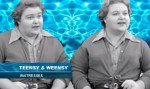
BIG BROTHER 1955 – The Bent Fork Twist
-
“Lucy Goes to a Rodeo”

(S5;E8 ~ November 28, 1955) Directed by James V. Kern. Written by Jess
Oppenheimer, Madelyn Pugh, Bob Carroll, Jr., Bob Schiller and Bob Weiskopf. Filmed October 27, 1955 at Ren-Mar Studios. Rating: 46.9/63Synopsis ~ Fred needs to stage a show for his lodge, but Ricky is busy with a radio show. When he finds out that the RADIO show is actually a RODEO show, everyone gets into the act to perform at Madison Square Garden.
This is the penultimate episode before the gang’s trip to Europe. The episode is sometimes referred to as “Lucy Goes to the Rodeo”.
Oops! In the stock footage of the MSG marquee, “Ricardo’s” is missing a possessive apostrophe. “Tonight” is spelled in a colloquial style – “Tonite”

The episode opens with Ricky looking through his book ‘gagement book and penciling in Lucy for a kiss on February 2nd. Lucy notes that February second is Groundhog Day. Groundhog Day is a North American cultural tradition for predicting arrival of spring based on whether a groundhog sees his shadow.

At first, Lucy and Ethel suggest reprising “The Pleasant Peasant,” a callback to “The Operetta” (S2;E5). Vivian Vance frequently used “Lily of the Valley” when required to sing a few bars of something by the script. Lucy is all set to play Camille again, and we even see her practicing her tambourine.

LUCY: “I got it! I’ve got my act for Fred’s Lodge show: ‘It’s Just the Gypsy in My Soul’.”
“(It’s Just the) Gypsy in My Soul” was a 1939 song by Clay Boland and Moe Jaffe that was covered by hundreds of artists, including by Bing Crosby in 1955. Coincidentally “Gypsy in My Soul” was also the name of a 1976 Shirley MacLaine television special co-starring Lucille Ball.
Although this song is not sung by Lucy, this is a very musical show, with Fred and Ethel singing “Birmingham Jail,” a song last heard in “Tennessee Bound” (S4;E14) sung by Tennessee Ernie Ford. Lucy even attempts to yodel “Home on the Range.” All this before the big Madison Square Garden performance.

If the framed portrait behind Ricky’s agent Johnny Clark looks familiar, it is because for much of season one it was on the Ricardo’s bedroom dresser. It is a print a painting of Major John Biddle by the 19th century portraitist Thomas Sully (1783-1872). In 1818, Biddle
(1792-1859) acquired 1,800 acres of land south of Detroit and built an estate which was later developed into the city of Wyandotte, Michigan. Lucille Ball was about a year old when her family moved to Wyandotte so that her father could take a job as a telephone lineman. Lucille’s family lived there until her father, Henry, died of typhoid fever in 1915. The family then moved back to Jamestown, New York, where Lucy was born in 1911. The death of Lucy’s father had a great impact on her and her work. Perhaps this is why the portrait of Major John Biddle was selected.This is the second and final appearance of John Gallaudet as Johnny Clark, Ricky’s agent. He had appeared with Lucille Ball in 1939’s Twelve Crowded Hours.
To cast his rodeo show, the first person Ricky calls is someone named Harry. This could be a reference to Harry Ackerman, a CBS executive responsible for bringing “I Love Lucy” to the network.

When Ricky is trying to find acts for the rodeo, he mentions Tex Ritter, George ‘Gabby’ Hayes, and Hugh O’Brian, star of the TV series “The Life and Legend of Wyatt Earp” (1955-58), which aired Tuesday nights on ABC. He also quips “I’d like to hear Roy Rogers singing ‘Babalu’!” In real-life Rogers frequently appeared at the Garden’s rodeo.

Before appearing in the rodeo show, Lucy, Fred and Ethel get some coaching by Rattlesnake Jones, played by Dub Taylor. Walter Clarence ‘Dub’ Taylor, Jr. (1907–94) was character actor who worked extensively in westerns. The name Walter was shortened to ‘W’ and then to ‘Dub.’ Taylor made his film debut in 1938 as Ed Carmichael in Frank Capra’s You Can’t Take It With You. The following year, he appeared in The Taming of the West, in which he originated the character of Cannonball, a role he continued to play for the next ten years, in over fifty films. Interestingly, this is the same name Lucy takes when she appears in the final scene as Western bell-ringer Lucy ‘Canonball’ McGillicuddy. One of Taylor’s last appearances was in Back to the Future Part III in 1990.

When Lucy makes fun of Ricky doing a Western show, he tells her that he was born in West Havana. In reality, there is no such place. Desi Arnaz was born in Santiago de Cuba, which is southeast of Havana. A few episodes later, Lucy will discover that she is from West Jamestown. This, too, is a non-existent place. Lucille Ball was born in Jamestown, and raised in Celoron, which is at least west of Jamestown!

Madison Square Garden was an indoor arena in New York City, the third bearing that name. It was built in 1925 and closed in 1968, and was located on Eighth Avenue between 49th and 50th Streets in Manhattan. It was the first Garden that was not located near Madison Square. The current Madison Square Garden is located between 7th and 8th Avenues from 31st to 33rd Streets and is situated atop Pennsylvania Station.

Leading into the Madison Square Garden performance, there is a stock footage montage of several scenes from the MSG Rodeo:
- The MSG Marquee
- A Pageant of Horseback Riders
- A Steer Roper
- A Female Stunt Rider (above)
The remaining performances were filmed on the Desilu soundstage in Hollywood, not at Madison Square Garden.

Doye O’Dell is the Master of Ceremonies. He sings "The Old Chisholm Trail“
accompanying himself on guitar, a cowboy song first published in 1910 by John Lomax although it dates back to the 1870s, when it was among the most popular songs sung by cowboys during that era. During the early 1950s, O’Dell hosted a popular kids’ TV show in the Los Angeles area called “Cowboy Thrills.” He can (briefly) be seen in Auntie Mame (1958) as Cousin Jeff, and in his final screen appearance Irma la Douce (1963).

Ricky adapts they lyrics of "Cuban Pete” into “Texas Pete” for the MSG performance.
The song was originally sung in “The Diet” (ILL S1;E3) and then again in “The Hedda Hopper Story” (ILL S4;E20).
He also adapted it as “Tokyo Pete” in “The Ricardos Go To Japan” (1959), the penultimate “Lucy-Desi Comedy Hour.”
Intentional Blooper! During the filming of “Texas Pete” Desi’s gun belt fell off causing filming to stop. Since the crew thought this was funny they decided to re-shoot the scene and incorporate this bit.

Fred and Ethel croon (and yodel) “Red River Valley,” a traditional folk song. In 1955 the Norman Luboff Choir featured the song on their album Songs of the West.

The finale features Lucy ‘Cannonball’ McGillicuddy and her Western Bellringers doing their rendition of “The Old Mill Stream,” a song written by Tell Taylor in 1908. It was one of the most popular songs of the early 20th century. The ‘booty shaking’ choreography is by Jack Baker, who even gets a vocal credit at the end of the show.

Before the act is introduced by O’Dell there is a hard edit in the film just as a cowboy stage hand starts to set up the boxes the gang will stand upon to perform.

At this point “I Love Lucy” was being sponsored by Sanka, instant decaffeinated coffee.

Lucy had previously donned Western garb in “Home Movies” (S3;E20) singing “I’m An Old Cowhand,” in “Amateur Hour” (S1;E14) singing “Ragtime Cowboy Joe,” and later turns up in cowboy duds in a 1965 episode of “The Lucy Show” that ended up in the show’s opening credits.

In 1958, CBS again turned to the rodeo at Madison Square Garden for a storyline of the crime drama “Richard Diamond, Private Detective” starring David Janssen.


-
“Ricky Sells the Car”
“Lots can happen in thirty minutes!” – Lucy Ricardo, Vice-President in Charge of Sneaky Swishes

(S5;E4 ~ October 24, 1955) Directed by James V. Kern. Written by
Jess Oppenheimer, Madelyn Pugh, Bob Carroll, Jr., Bob Schiller and Bob Weiskopf. Filmed September 29, 1955 at Ren-Mar Studios. Rating: N/A
Synopsis ~ Ricky sells the car and then forgets to buy train tickets home for the Mertzes, which causes a temporary rift between the couples.
This is the last complete episode set in Hollywood.
When Desi Arnaz first read the script, he didn’t like it. He thought the two new writers, Bob Schiller and Bob Weiskopf, had written it. But he changed his opinion when he learned that the old writers, Madelyn Pugh and Bob Carroll, Jr., were responsible for the episode.

The show opens with some silly antics caused by Little Ricky (the Mayer Twins) getting into Ricky’s shaving gear.

The scene is capped off with Fred returning from the store with billiard cues, instead of what Lucy actually sent him for: Q-Tips. Fred’s excuse is that “They wouldn’t sell me the tips without the cues.” Um…maybe Desi was right after all?

When Lucy remarks that she has twice as much stuff going home as she did coming to Hollywood. Fred uses this as an opportunity to make fun of Ethel’s weight.
FRED: “I’ve got twice as much Ethel as we had when I came out here. If Route 66 was downhill, I could roll you back to New York.”

Route 66 was one of the original highways in the U.S. Highway System. The highway, which became one of the most famous roads in the United States, opened in 1926 and originally ran from Chicago, Illinois, through Missouri, Kansas, Oklahoma, Texas, New Mexico, and Arizona before ending in Los Angeles County, California, covering a total of 2,448 miles. It was recognized in popular culture by both the hit 1946 song “(Get Your Kicks on) Route 66” and the “Route 66″ television series, which aired on CBS from 1960 to 1964. The Ricardos drove much of their journey to Hollywood on Route 66, especially in Texas and New Mexico, as seen in the above screen shot from “Ethel’s Hometown” (S4;E16).

As Lucy is gathering up her son’s toys, she holds Little Ricky’s favorite Teddy Bear, which was seen being packed in “California, Here We Come!” (S4;E13) and sitting around the room when “Don Juan is Shelved” (S4;E22). Lucy also holds a snare drum. This toy drum was made by Ohio Art especially for children. Thinking ahead, in “Little Ricky Learns to Play The Drums” (S6;E2), the gift of a snare drum threatens an end to the Ricardo marriage and their friendship with the Mertzes.

Ricky phones from the Studio to tell Lucy that his friend Ralph Berger bought the Pontiac for what Ricky originally paid for it. Ralph Berger was the name of the head of the Desilu Art Department. He was nominated for an Oscar for Art Direction of The Silver Queen (1942). In the spring of 1955 he won an Emmy for Art Direction of a television version of “A Christmas Carol” starring Fredric March. He won a second Emmy in 1960 for “The Desilu Westinghouse Playhouse,” a show hosted by Desi Arnaz himself.

ETHEL: “I presume when Ricky sold the car the back seat went with it.”
Lucy calmly tells Fred and Ethel that Ricky has arranged for them all to take the train home.

In a brief scene, Don Brodie plays the Union Pacific Railroad Clerk. Brodie and Lucy were busy contract players in the 1930s, both appearing un-billed in The Whole Town’s Talking (1935). Union Pacific Railroad would play a key role in the following episode, “The Great Train Robbery” (S5;E5), which features location footage of their ‘City of Los Angeles’ train.
Lucy gets a pitch in for Union Pacific’s new dome-liner and diner cars. These will be heavily promoted in the following episode, “The Great Train Robbery” (S5;E5), which will also be the first time a member of the main cast (Bill and Viv) leave the studio for location footage – albeit only to the Los Angeles train station. This partnership with UPR was the deciding factor in how the gang returned to New York, even if it is impractical in real life. The actual train route terminated in Chicago, where, presumably, the group transferred to a connecting train to New York City for “The Homecoming” (S5;E6). But let’s not get ahead of ourselves and keep the train on the proverbial tracks!

Desi’s camera and lighting stand-in and frequent series extra Bennett Green plays the messenger who delivers the train tickets.

Doubtful that Ricky will spring for their train fare home, Fred purchases an antique motorcycle. He weighs it down with all their belongings, just like the Pontiac in “California, Here We Come!” (S4;E13). The Mertzes are even attired in vintage leather riding outfits! Viewers who know their motorbikes guess that it is a Harley-Davidson Model DL 750cc from about 1929.

Oops! The sound of the motorcycle crashing happens before it is even off the screen. Also, Fred’s dialogue in this scene has been noticeably re-recorded (looped) because of the noise from the crash. In the above screen shot you can see the wire that pulled the motorcycle backward.

When Ethel and Fred check out of the hotel to head home on the motorcycle and then come back when Ricky agrees to pay for their train fare, they have to get a new hotel room. The old room was 317 and the new number is 372. This accounts for their room having a different layout than in previous episodes, something viewers sometimes mistake for a blooper.

This is one of my personal favorite moments in the series. Lucy and Fred scenes are rare (”Staten Island Ferry” being the exception). I particularly love Vivian Vance’s reaction to catching her best friend with her hand in her husband’s jacket. The lines below betrays that Vance is an accomplished actress. You can see in her face that the character is trying to work out what is happening while at the same time slowly showing righteous indignation.
ETHEL: “What are you doing?
LUCY: “Uh…”
ETHEL: “What are you doing?!
LUCY: “Now Ethel, I can explain.”
FRED: (waking up) “What’s going on?”
ETHEL: “What are you doing???”For once, Ethel shows a tinge of jealousy at Lucy’s attentions to her “old goat”!

Knowing a furious Fred and Ethel will follow her back to her room, Lucy quickly picks up a magazine and pretends to be casually reading. She grabs the September 13, 1954 issue of Time Magazine, more than a year old at the time of filming. On the cover is Alicia Patterson, the publisher of Long Island Newsday. The paper was founded by Patterson in 1940 and is still published today.

The episode has a bit of a twist ending, but all ends happily for the gang’s last day in Hollywood!
FAST FORWARD VRROOM!

This episode has it’s own page in the “I Love Lucy” Sound Book, although sadly it does not include an audio clip of the motorcycle crash!

In a 1966 episode of “The Lucy Show,” a motorcycle zooms by Lucy Carmichael selling maps to the movie stars homes. This time it is the driver who is old, not the cycle. As the old lady races off on her bike, Lucy shouts “Say hello to Steve McQueen!” Two of McQueen’s favorite things were racing and motorcycles. He famously rode a motorcycle in 1963’s The Great Escape.

This three-wheeled police motorbike appeared in a 1963 episode of “The Lucy Show” ridden by Richard Reeves, who also did nine episodes of “I Love Lucy.”

Lucy Carmichael’s California neighbor Mel Tinker (Mel Torme) kept his motorcycle indoors in this 1965 “The Lucy Show”. The bike is a 1962 Honda Dream. Question is – how did he get it up the stairs?

In 1966, mates Lucy Carmichael and Anthony Newley get around mod London any way they can – including motorcycle and side-car.

A biker gang shows up at Hamburger Hovel (home of the Bikeburger) in this 1967 episode of “Here’s Lucy” that reunites Lucy with Viv.
1955, Art Direction, Bob Carroll, Bob Schiller, Bob Weiskopf, Desi Arnaz, Don Brodie, Ethel, Ethel Mertz, Fred Mertz, Hollywood, I love lucy, Little Ricky, Lucille Ball, Lucy, Lucy Ricardo, Madelyn Pugh, motorcyle, Q Tips, Ralph Berger, Ricky Ricardo, Ricky Sells the Car, shaving cream, Train, Train Tickets, tv, Union Pacific Railroad, Vivian Vance, William Frawley -
“In Palm Springs”

(S4;E26 ~ April 25, 1955) Directed by William Asher. Written by
Jess Oppenheimer, Madelyn Pugh and Bob Carroll, Jr. Filmed March 17, 1955 at Ren-Mar Studios. Rating: 44.0/62
Synopsis ~ Upset by a quarrel with their husbands, Lucy and Ethel leave for a weekend in Palm Springs, where they encounter Rock Hudson.

The day this episode first aired, actress Constance Collier died at age 77. She had co-starred with Lucille Ball in the film Stage Door (1937) along with Katharine Hepburn, Eve Arden, and Ginger Rogers. Collier and Ball were also seen together in 1946′s The Dark Corner.

While Lucy is looking through the newspaper for a movie to see, the back page of the paper has an ad for the musical film Hit the Deck, which was released two weeks before the episode was filmed. Ann Miller, one of the film’s featured players, was also in Too Many Girls with Lucy and Desi in 1940.
For more about the newspapers seen on “I Love Lucy” – click here!

Before things get tense between the foursome, Ethel mentions the Pantages Theatre. Six months before this episode aired, Lucille Ball and Desi Arnaz attended the first televised Hollywood premiere for A Star is Born and were interviewed on camera. Its male star, James Mason, would star with them in Forever Darling (1956). Kathryn Card, who plays Lucy’s mother in this episode, had a small role in A Star is Born as did “I Love Lucy” character actors Irving Bacon, Nancy Kulp, Strother Martin, Barbara Pepper, Dub Taylor, Ruth Brady, Olin Howland, and ‘Queen of the Extras’ Bess Flowers.

The couples are getting on each others’ nerves, each in their own particular way:
- Ricky absentmindedly drums his fingers on a table top
- Lucy incessantly stirs her coffee
- Ethel is a noisy eater
- Fred continually jingles his pocket change and keys
RICKY (to Lucy): “Breakfast wouldn’t be breakfast without you pounding out ‘The Anvil Chorus’ on your coffee cup.”
“The Anvil Chorus” is the English name for the “Coro di Zingari” (Italian for “Gypsy Chorus”) from Giuseppe Verdi’s 1853 opera Il Trovatore. The orchestration includes actual anvils! The tune was parodied in Gilbert and Sullivan’s 1879 comic opera The Pirates of Penzance, and soon became a popular song with the lyrics “Hail, Hail, the Gang’s All Here.”
Ethel’s complaint compares Fred’s key and change noise to “Jingle Bells” and adds:
ETHEL: “For 25 years I’ve felt like I was married to the Good Humor Man.”
The traditional holiday song “Jingle Bells” was sung by the gang in their Christmas Tag added to episodes airing closest to December 25. In “Lucy Goes to Sun Valley,” a 1958 episode of “The Lucy-Desi Comedy Hour,” Lucy says that Ricky proposed to her at Christmastime, so their ‘song’ is “Jingle Bells,” or – as Ricky pronounces it – “Yingle Bells.”

The “Good Humor Man” quip refers to Good Humor brand ice cream, sold from ice cream trucks which were a fixture in American popular culture in the 1950s when the company operated up to 2,000 ‘sales cars’. The trucks were painted white and outfitted with jangling bells to alert children (and parents with cash) that they were in the neighborhood. The Good Humor Man is also the title of a 1950 film which featured actors George Reeves (Superman) and Vernon Dent, who played Santa in the “I Love Lucy” Christmas Tag, which brings things full circle!
Fred retaliates by saying Ethel chews like a cow – calling her ‘Old Bossy’!
In the mid-1800s, people began using ‘Bossy’ as a familiar name for a cow or calf. The bovine bossy is a diminutive form of boss, which came to English about 50 years earlier as a term for addressing a cow. The Latin ‘bos’ translates to ‘ox.’
ETHEL: “I’d like the key to the trunk, unless you need it to play a tune.”
FRED: “How’d you like to hear a couple of choruses of ‘Cow-Cow Boogie’.”
“Cow-Cow Boogie” is a song written by Don Raye, Benny Carter and Gene De Paul. It was written for the 1942 Abbott & Costello film Ride ‘Em Cowboy, which included frequent “Lucy” character actor Charles Lane in the cast.
With all these insults, clearly a ‘vacation from marriage’ (also the title of a season 2 episode) is in order. The women win the (much repeated) coin toss and escape to Palm Springs.

Lucy and Desi first visited Palm Springs, California when they were dating. Once married, they built a home there, raised a family there, and even constructed a hotel. The Desi-Arnaz Western Hills Hotel opened 1957 and was located between the 11th and 12th fairways of the Indian Wells Country Club. It is now called the Indian Wells Resort Hotel. Additionally, Lucy was Palm Springs Desert Circus Parade Queen of 1963. There is also a bronze statue of Lucy Ricardo sitting on a bench in downtown Palm Springs. Her second husband Gary Morton died there in 1999.

Meanwhile, back in Hollywood, Fred bemoans that the rain has caused him to miss “Hollywood Stars.” He’s not referring to celebrities, but baseball. The Hollywood Stars were a minor league baseball team, rivals of the Los Angeles Angels. In 1952 CBS, owner of Gilmore Field where the team played, announced plans to tear down the stadium to build CBS Television City, their new headquarters. Before the owners could make plans, however, the Brooklyn Dodgers confirmed their long-rumored move to Los Angeles which forced both the Stars and the Angels to relocate. The Stars were sold to Salt Lake City, becoming the Salt Lake Bees in 1958.

Stuck indoors, Ethel pages through the May 1955 issue of McCall’s to pass the time. Viewers never knew it, but Vivian Vance was actually reading about herself! This issue includes an article titled “I Don’t Run Away Anymore – Vivian Vance”. Vance was a staunch advocate of mental health, and talks about her award from the National Association of Mental Health. She shares with readers some of her darker days.
Back in Los Angeles, Fred thumbs through the March 21, 1954 issue of Sports Illustrated. Both Mertzes are waiting out a rainstorm. Although McCall’s stopped publishing in 2002, Sports Illustrated is still on news stands as of this writing. Lucille Ball was featured in the January 1953 issue of McCall’s.

For more about the magazines seen on “I Love Lucy” – click here!
Lucy reads in Hedda Hopper’s column that Rock Hudson is in Palm Springs resting up after a personal appearance tour for his latest film Captain Lightfoot (1955). The film is given a verbal mention by the “I Love Lucy” announcer during the final credits. Hopper had appeared as herself in a prior episode, so now it was Hudson’s turn. Dore Schary is also mentioned in this episode. He will be the subject of “Don Juan is Shelved” (S4;E21) a month later. Unlike Hopper, however, Schary will not play himself. Phil Ober played the MGM producer.
Munching on sweets, a star-struck Ethel nervously meets Rock Hudson for the first time:
ETHEL: “Would you like a piece of Rock, Mr. Candy?”

Rock Hudson (1925-85) was born Roy Harold Scherer, Jr. At the time this episode was filmed Hudson had already released Magnificent Obsession (1954) and the following year would appear in Giant (1956), which would earn him his only Oscar nomination. This is his first appearance in a scripted television series (albeit as himself), but he would go on to star on the small screen in “McMillan & Wife” (1971-77), “The Devlin Connection” (1982), and “Dynasty” (1984-85). He died of complications from AIDS in 1985, one of the first mainstream celebrities to go public with his illness. Just prior to his passing, he was part of “Night of 100 Stars II” with Lucille Ball and 98 others.

Like Liberace (who played himself on “Here’s Lucy”), Rock Hudson’s hidden sexuality was only known to Hollywood insiders during the 1950s. A masculine man could easily pass for heterosexual with the help of a studio publicity department. It is telling, however, that as he walks around the pool to approach Lucy, he pauses to speak to the young man reclining in a swimsuit, and not the young lady sitting next to him. In public, Hudson would certainly be mobbed by female fans – if this were not a television show, that is.

When the sun finally comes out, Lucy and Ethel go out and lounge by the pool. Lucy, however, is covered from head to toe in a robe and hat, claiming she doesn’t want to get sunburned, a callback to “The Fashion Show” (S4;E19), where a crippling sunburn almost cost Lucy a Don Loper dress!
LUCY (to Ethel): “I paid for the sun. It’s my business whether I use it or not!”

Rock Hudson is sent by Ricky and Fred to tell the girls a made-up cautionary tale, hoping to inspire a reconciliation between the couples. His tragic tale surrounds the marriage of an imaginary studio script girl at the named Adele Sliff, which was also the name of “I Love Lucy”’s script clerk.

Kathryn Card plays Mrs. McGillicuddy (someone has to watch the baby) and Little Ricky is played by the Mayer Twins. Lucy, Vivian, and Desi’s camera and lighting stand-ins Hazel Pierce, Renita Reachi and Bennett Green can be seen sitting around the Palm Springs pool.

FLASH BACK!

In 1942, Lucille and Desi appeared in an installment of RKO’s ‘Picture People’ titled “Palm Springs Week End”. The series, narrated by Arlene Francis, was made to accompany RKO films in cinemas.

The segment shows the couple biking in the desert and Lucy posing for photos taken by Desi.
FAST FORWARD!

In 1966, Lucy Carmichael and roommate Carol Bradford (Carol Burnett) also went to Palm Springs for a getaway.

In 1968, Lucy Carter and family also go on vacation to Palm Springs – staying in the home of notorious cheapskate Jack Benny, a fact they don’t know until they get there.

When the girls arrive in Palm Springs, it is raining. Ethel says that according to the newspaper, it hasn’t rained in Palm Spring during that month for 20 years.

The only other “I Love Lucy” episode in which it rains (on set) is “Lucy and Superman” (S6;E13) in 1957.

Lucy reads a newspaper article about a woman who became so irritated with her husband constantly cracking his knuckles that she ended up violently smashing them with a baseball bat. This incident bears some resemblance to a story from the Broadway musical Chicago’s “Cell Block Tango.” In the number, one of the ‘merry murderesses of the Cook County Jail’ explains how her boyfriend was always loudly popping his gum. She gives him a warning not to pop his gum anymore. When he inevitably does, she fires off two warning shots… into his head. Well, he had it coming. Coincidentally, Lucille Ball’s friend and former co-star Ginger Rogers played the title role in Roxie Hart, the 1942 film the musical is based on. It also featured William Frawley (Fred Mertz)!
1955, California, Captain Lightfoot, CBS, Desi Arnaz, Ethel, Ethel Mertz, Fred Mertz, Hollywood, Hollywood Stars, I love lucy, Indian Wells Country Club, Indian Wells Resort Hotel, Little Ricky, Lucille Ball, Lucy, Lucy Ricardo, McCalls, Palm Springs, Ricky Ricardo, Rock Hudson, Sports Illustrated, tv -
“The Star Upstairs”

(S4;E25 ~ April 18, 1955) Directed by William Asher. Written by Jess Oppenheimer, Madelyn Pugh and Bob Carroll, Jr. Filmed March 3, 1955 at Ren-Mar Studios. Rating: 47.5/67

Synopsis ~ Lucy figures out that she has seen 99 movie stars since arriving in Hollywood, and when she hears that Cornel Wilde is staying in the penthouse above her, she targets him as #100. She enlists the help of Bobby the Bellboy to get a glimpse of ‘the star upstairs.’

During season 6, this episode was shown as a re-run with a new flashback opening featuring Lucy and Ricky showing Little Ricky their Hollywood scrapbook. Since re-runs were not usual at the time, it was felt the audience wouldn’t accept them unless they were in flashback format.

This star upstairs was originally scheduled to be Van Johnson, but he was unable to appear because of a conflict with Philip Morris’s competitor Lucky Strike. After the conflict was worked out, Johnson ended up starring as “The Dancing Star” (S4;E27).

The date this episode first aired (April 18, 1955), theoretical physicist Albert Einstein died at age 76. Both Einstein and Lucille Ball died from aortic disease. His name will be mentioned two weeks later by Ethel in “The Dancing Star” (S4;E27). That episode was filmed on March 30, 1955.

Cornel Wilde was born Kornél Lajos Weisz in 1912 in Hungary. He came to the US at the age of 7. He qualified for the US fencing team prior to the 1936 Summer Olympic Games, but quit the team to take a part in a play. In 1940 he played Tybalt opposite Laurence Olivier’s Romeo on Broadway and acted as Olivier’s fencing instructor. His first credited screen role was in High Sierra (1941) starring Humphrey Bogart.

He was nominated for an Oscar for A Song To Remember in 1945. In 1952, he starred in The Greatest Show On Earth which Lucille Ball was supposed to be in as well, had she not become pregnant. In the episode, Ricky manages to get in a plug for Wilde’s new movie The Big Combo, which had opened in February, two weeks before the episode was filmed. Wilde died of leukemia in 1989, three days after his 77th birthday and just six months after the death of Lucille Ball.

This marks the last of Bob Jellison’s six appearances as Bobby the bellboy although he’d also tote bags for Mrs. Ricardo in “Lucy Hunts Uranium,” a 1958 episode of “The Lucy–Desi Comedy Hour.”
When Lucy tosses Cornel Wilde’s newspaper to him while he is in the bathtub, it gets soaking wet and the pages become virtually translucent.
WILDE: “I thought President Eisenhower was playing golf with Little Orphan Annie.”
The fact that First Lady Mamie Eisenhower didn’t play golf was mentioned in “The Golf Game” (S3;E30).
Lucy was unfavorably compared to comic strip character Little Orphan Annie when her home perm and handmade dress are a failure in “Lucy Wants New Furniture” (S2;E28).

Oops! Close-up shots reveals that the backdrops of Hollywood outside of the fictional Beverly Palms Hotel are only still photographs; a truck is caught in the middle of a street and flags are captured fully extended by the wind. Also, Lucy’s hotel room has a completely different view than Cornel Wilde’s, even though his is only one flight up.

From his room, the marquee for the Mirror Theatre can be seen. The real-life Hollywood cinema was located at 1615 Vine Street, first opening in 1927 as the Vine Street Theatre and then as the Studio.

Unsurprisingly, it was owned by CBS until 1954, when it re-opened as the Huntington Hartford Theater, which it still is today.

“I’m not funny. What I am is brave.” ~ Lucille Ball
This episode is a prime example of bravery and Lucy’s dedication to physical comedy.

It is also a showcase for Vivian Vance’s wonderful comic timing, as she tries to cover for Lucy who is “hanging around” the hotel.

When Lucy climbs onto the balcony after falling from the penthouse, her right foot has no shoe on it. Someone in the studio audience can be heard over the laughter saying, “She lost her shoe” followed by “she threw her shoe down”, referring to an earlier scene when Lucy throws her shoe from the penthouse balcony onto the balcony of her suite, to get Ethel’s attention.

In the final scene, the Band-Aid on Lucy’s face after she falls off the balcony wasn’t just for comic effect. It was due to a real injury sustained while doing the stunt. She is also seen holding her Robert Taylor autographed orange, which will be referenced in future episodes alongside her Richard Widmark grapefruit.
BELLHOP TO THE FRONT DESK!!!

This episode is later referenced in “The Tour” (S4;E30), five weeks later, when Ricky says that people he meets ask about Lucy’s antics and say, “Is it true that she sneaked into Cornel Wilde’s hotel room disguised as a bellhop?”

Lucy first disguised herself as a bellhop when she pretended to be the Philip-Morris living mascot Johnny Roventini in “Lucy Does a TV Commercial” (S1;E30).

So did Bert Willoughby (Irving Bacon) in “The Marriage License” (S1;E26).

Sam Edwards plays the bellboy at London’s (fictional) Wimbelshire Hotel in “Lucy Meets the Queen” (S5;E15).

A bellboy played by Saverio LoMedico translates an Italian magazine article for Lucy when they stay in Rome during “Lucy’s Italian Movie” (S5;E23).

Sid Melton plays a Nome bellboy when “Lucy Goes To Alaska” (LDCH 1959).

When “Lucy Meets the Mustache” (LDCH 1960), the bellboy is played by Dick Kallman, a young actor who was taking acting classes from Lucille Ball on the Desilu / RKO lot.

Bringing things full circle, Bob Jellison dons the bellboy’s uniform again when the gang stays at the Las Vegas Sands Hotel in “Lucy Hunts Uranium” (LDCH 1958).

In May 1959, Lucille Ball, Desi Arnaz, little Lucie and Desi Jr. pose in front of a row of bellboys aboard the SS Liberte. One of them holds her expensive fur coat!

-
“Tennessee Bound”

(S4;E15 ~ January 24, 1955) Directed by William Asher. Written by Jess Oppenheimer, Madelyn Pugh, and Bob Carroll, Jr. Filmed at Ren-Mar Studios on November 18, 1954. It was the 112th episode filmed.

Syopsis ~ While on their way to California with Lucy at the wheel, the group gets lost in Tennessee, which can only mean the return of Tennessee Ernie Ford.

This marks Ford’s third appearance as the same character (basically himself) after two episodes at the end of season 3. He’d return to work with Lucille Ball in episodes of “The Lucy Show” and “Here’s Lucy.”

A few months after this show aired, Ford recorded “Davy Crockett” (which reached #4 on the country chart), and scored an unexpected hit on the pop charts with his cover of “Sixteen Tons,” coal-miner’s lament first recorded by Merle Travis in 1946.

When the on-location scene of their Pontiac speeding through fictional ‘Bent Fork’ was filmed, second unit director Jack Aldworth wanted the car to go faster. So he got behind the wheel himself and was promptly pulled over for speeding, just as in the episode! He got the charges dropped when he discovered that the police officer was a huge Lucy fan. He promised the officer an autographed picture.

The town of Bent Fork is fictional, although there is a town in Tennessee called Middle Fork, located near the Pinson Mountains of Henderson County.

Holding an unfolded map, Ethel notes that if they aren’t lost, Highway 60 must be! This would mean that they are about 65 miles off course. They ask directions of Zeke, a hillbilly gas station attendant, played by future award-winning TV producer Aaron Spelling.

Spelling was just 27 at the time and had only been acting for about 14 months when cast by Lucy and Desi. They used him again in the pilot of their new series “Willy” (1954). At the time, he was married to Carolyn Jones (Morticia in “The Addams Family”). Later, as producer, he was responsible for such mega-hits as “Dynasty,” “Melrose Place,“ and "Fantasy Island.” With Lucy’s second husband, Gary Morton, he produced “Life with Lucy” (1986), Lucille Ball’s failed final sitcom. He is probably best known today as the father of Tori Spelling. He died in 2006.

Will Wright (Bent Fork’s Sheriff) was one of those familiar character actors who seems to have been born old. He specialized in playing crusty old codgers, rich skinflints, crooked small-town politicians, and the like. He previously played Mr. Walters, the locksmith from Yonkers in “The Handcuffs” (S2;E4). In 1949, he appeared with Lucy in the film Miss Grant Takes Richmond.

Much of the visual humor of the show came from the rotund The Borden Twins, Rosalyn and Marilyn, playing Teensy and Weensy, the Sheriff’s daughters. While appearing on “All Star Revue” in 1953 they caught the attention of Lucille Ball, who promised to find a part for them on her show.

They sang “Ricochet Romance,” a song recorded by Theresa Brewer in 1953 and featured in a film of the same name in 1954. Performing since the age of 3, their final TV appearance together was appropriately on “All Star Party for Aaron Spelling” in 1998 and attended “Lucy Fest” in Jamestown in 2000. Roz died in 2003, and Marilyn in 2009.
To break Lucy out of her cell, the gang sing a boisterous version of “Old MacDonald Had A Farm” led by Ernie. While in the jail cell, Ernie sings a few bars of “Birmingham Jail.” During the square dance finale, the instrumentalists are actually some of the same musicians that made up the Ricky Ricardo Orchestra at the Tropicana.

It is hard to believe, but the original idea for the end of the episode was a taffy pull, not a square dance, with the Bent Fork residents bound up in taffy instead of rope! According to the road sign, the population of Bent Fork is just 54 people – but probably very few taffy pullers. Conveniently, the number of residents is the same as the year this episode was filmed.

Thinking she’ll never see Hollywood, Lucy tells Ethel to say hello to Clark Gable for her. Gable is the most-mentioned celebrity on the series, being referenced seven times in season four alone! While Gable never appeared opposite Lucille Ball, she did impersonate him to nearsighted Carolyn Appleby.

There is a lost scene in which Ernie describes the situation with the Sheriff’s daughter. He got a little too tipsy at an auction event and bid on a dinner with Teensy by mistake and the Sheriff jumped the gun and assumed it was a proposal. The scene now appears in the DVD extras.

In order to capture the square dance and Ernie’s goal of tying up the twins and the Sheriff with clarity for the viewers, the show uses a very high angle camera, never seen before on the show’s studio portions. It is likely that this scene had to be re-filmed again from this angle after the studio audience left.
Before the closing credits, announcer Johnny Jacobs tells the audience:
“Next week ‘I Love Lucy’ will be brought to you by Procter and Gamble, makers of Cheer!”

-
Subscribe
Subscribed
Already have a WordPress.com account? Log in now.
 Papermoon Loves Lucy