S2;E2 ~
September 29, 1969
Directed
by George Marshall ~ Written by Gene Thompson
Synopsis
Visiting
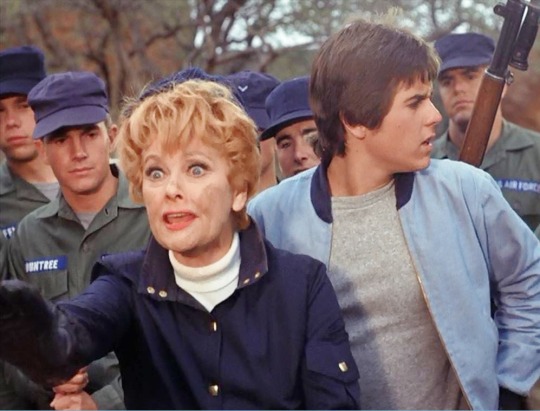
the U.S. Air Force Academy, Lucy takes a tour and mistakes the
General in charge for a janitor!
Regular
Cast
Lucille
Ball (Lucy
Carter), Gale
Gordon (Harrison
Otis Carter), Lucie
Arnaz (Kim
Carter), Desi
Arnaz Jr. (Craig
Carter)
Guest
Cast
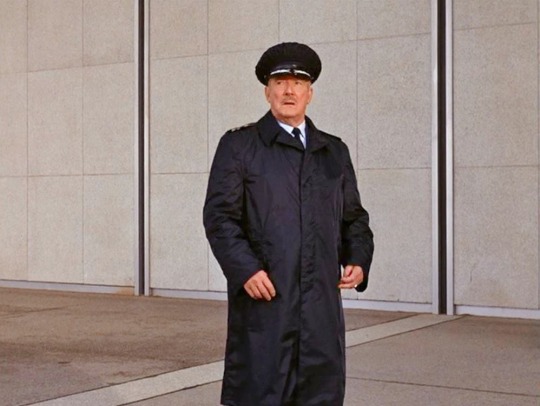
Roy
Roberts
(Superintendent) was
born Roy Barnes Jones in Tampa, Florida in 1906. His early career
was on the Broadway stage, gracing such plays as Old
Man Murphy
(1931),
Twentieth
Century (1932),
The
Body Beautiful
(1935)
and My
Sister Eileen
(1942).
In Hollywood, the veteran character actor clocked over 900 screen
performances in his 40 year career, most of which were authority
figures. He and Lucille Ball appeared together in Miss
Grant Takes Richmond
(1949).
On “The Lucy Show” he first appeared as a Navy Admiral in “Lucy
and the Submarine” (S5;E2)
before
creating the role of Mr. Cheever,
a recurring
character he played through the end of the series. This is the first
of his 5 episodes of “Here’s Lucy.” Roberts died in 1975 at age
69.
Roy
Roberts played the same character in “Lucy
Goes to the Air Force Academy: Part 1” (S2;E1).
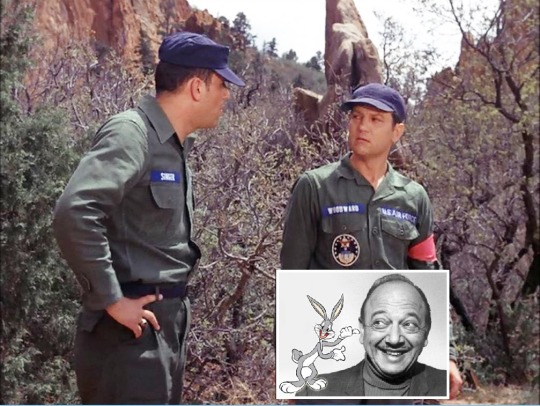
Mel
Blanc (Red Squad Radio voice / Woodward voice, uncredited) is
best known as the voice of Bugs Bunny and other Warner Brothers
characters, but had acted with Lucille Ball on radio and in the 1950
film The Fuller Brush Girl.
I’d
be curious to know how Lucy convinced her old friend Mel Blanc to
come to the ADR (automated dialogue replacement) session and do these
two voices. Possibly he was in the studio that day anyway. It would
also be interesting to learn how the uncredited actor/cadet playing
Woodward reacted to being dubbed by the great Mel Blanc!
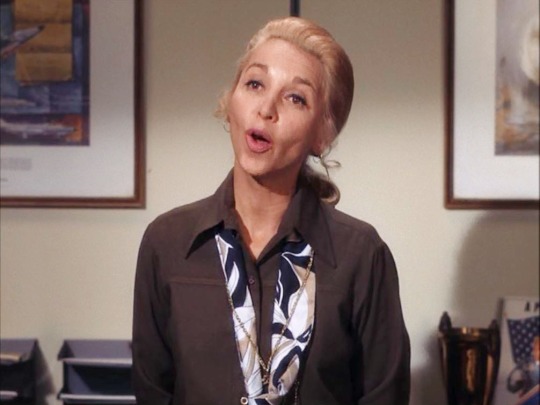
Beverley
Garland (Secretary, uncredited) is best remembered as Barbara,
Fred MacMurray’s new wife on “My Three Sons.” Roy Roberts
(Superintendent) played a dentist on a 1970 episode of the show.
This is her only appearance with Lucille Ball. She died in 2008.
Antonio
Garcia Tony (Kid on Field Trip, uncredited) makes his screen
debut with this episode. He continued to play uncredited background
characters and also became a casting director.
John Erwin (Narrator, uncredited) was a voice-over artist primarily known for voicing Reggie on the “Archie” cartoons. Erwin’s voice over comes at the start of the episode to tell the audience what happened in part 1.
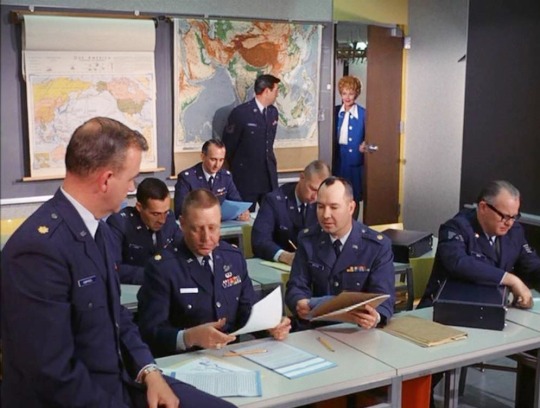
Actual
Air Force Academy students and staff play themselves.
This
episode is the second of a four-part on-location story arc created
with the cooperation of the Air Force and the state of Colorado. At
the Academy, filming was done right in the dormitories and
administrative buildings. The Air Force viewed this as a sort of TV
commercial at a time when the public was very down on the military
due to its involvement in the Vietnam War.
Unlike
studio filming, only one camera was used on location, although
Lucille Ball insisted on her studio lighting instruments,
despite their great weight and bulk.
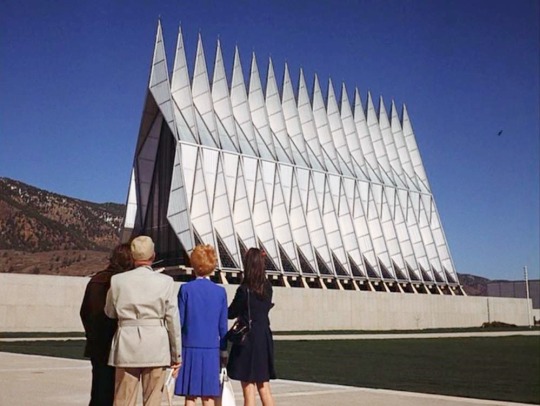
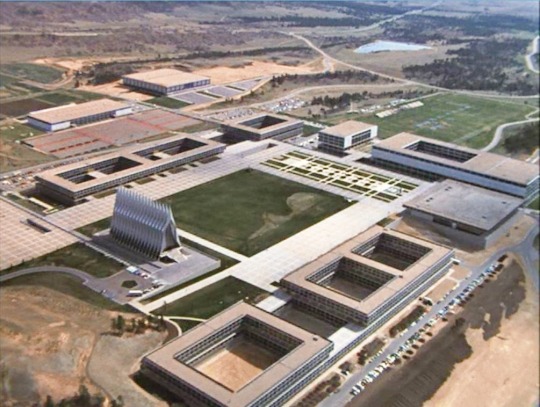
The
US Air Force Academy was founded in 1954. The
buildings were designed in a modernist style and make extensive use
of aluminum on building exteriors, suggesting the outer skin of
aircraft or spacecraft.
The
most controversial aspect of the design was the Cadet
Chapel,
designed by architect
Walter Netsch.
It is currently the most
visited man-made tourist attraction in Colorado.
It features 17 spires that shoot 150 feet into the sky. On the tour,
Lucy understandably mistakes the Chapel for a large aircraft. This
scene is underscored by the Air Force Academy choir singing a hymn.
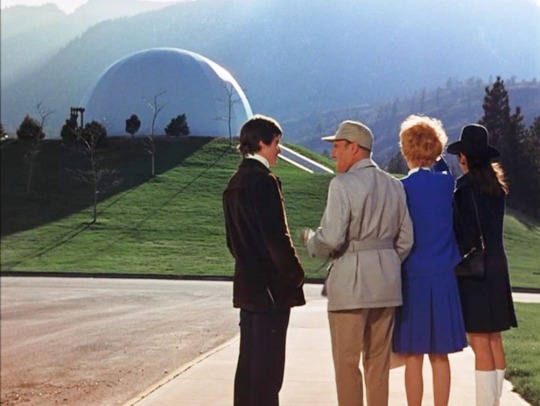
Harry
mistakes the domed planetarium
building for a UFO. The site used to be open to the public, but is now used exclusively for cadet training.
The choir
switches to “Air Force Blue” an unofficial
Air Force song composed during 1956 by Marilyn Scott and Keith
Textor.
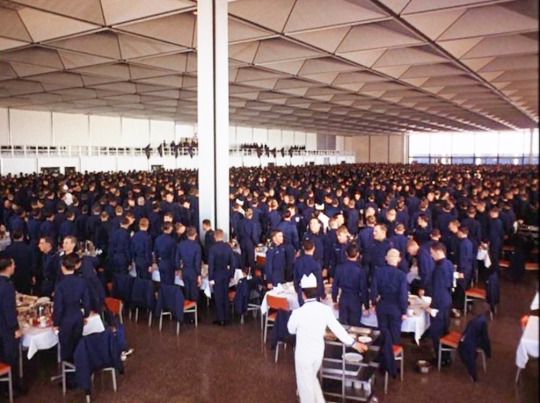
They
look through the windows at Mitchell
Hall,
the cadet dining hall, which is named in honor of Brigadier General
William Mitchell. This three and a half story structure sits on 1.7
acres and has the capability of serving the entire Cadet Wing (more
than 4,000 people) simultaneously in less than 30 minutes. During
this scene the choir sings a song based on the poem “The
Coming American” by Samuel
Walter Foss.
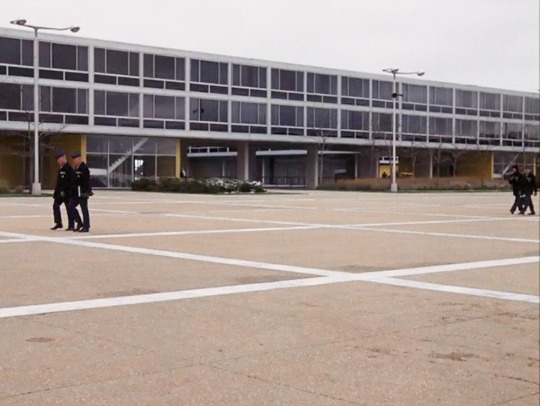
They
next see Vandenburg
Hall,
a quarter mile long dormitory. Vandenberg
Hall is the second-largest university dormitory in the country, after
the United States Naval Academy’s Mitchell Hall. The dorms are
named after General Hoyt S. Vandenberg, the second Air Force chief of
staff. The
main buildings in the Cadet Area surround a large pavilion known as
The
Terrazzo,
designed by landscape architect Dan Kiley. The name comes from the
walkway’s terrazzo tiles that are set among a checkerboard of
marble strips.
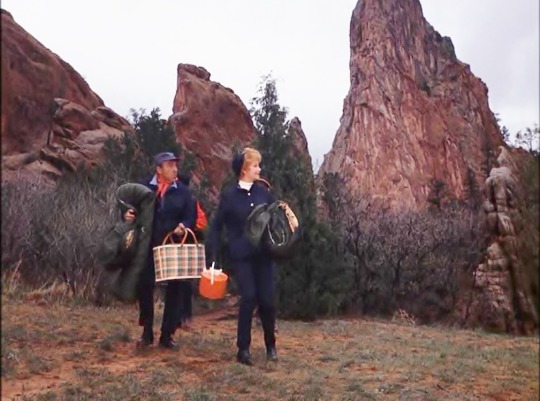
The
scene where Lucy is dragged by a floor polisher through the hallways
of one of the buildings is accomplished by Lucille herself without a
stunt double. A special dolly is placed under her body to glide her
along, and the film was sped up so she appears to be moving much
faster than she actually was.
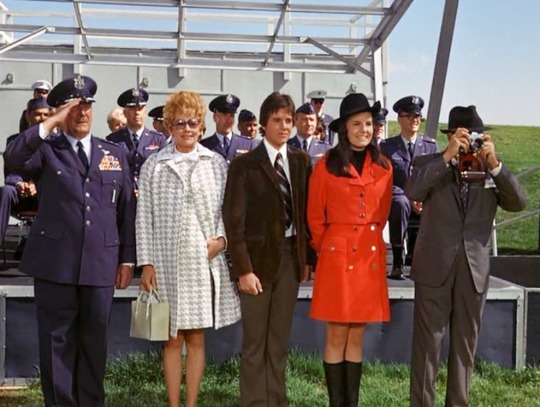
When
Lucy and the Carters are guests at the grand parade, Lucille Ball
wears the prescription
sunglasses
she wore in real life. Lucy Carter never wore glasses on the series,
so it momentarily reminds us that these cadets are all parading for
the real-life celebrity Lucille Ball.
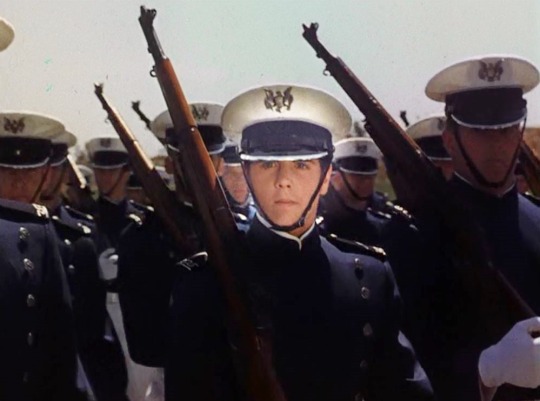
As
the parade of cadets passes, the show takes a surreal turn when Lucy,
with Craig standing beside her watching the men march by, sees the
face of her son in the formation. The camera irises in and focuses
on Craig in full military inform. The march is accompanied by “El
Capitan” (1896) by John Philip Sousa.
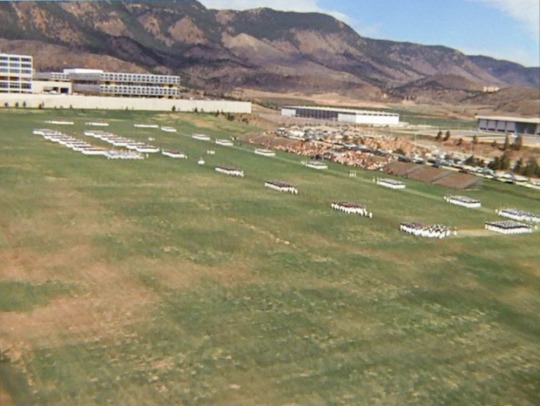
The
episode ends with a helicopter shot of the parade and the Academy
campus to the strains of “Off We Go, Into the Wild Blue Yonder”
(aka “The U.S. Air Force Song” written in 1938 by Robert
MacArthur Crawford).
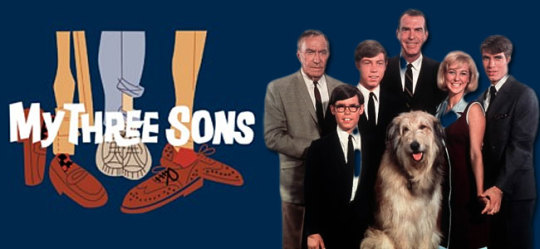
In
addition to Beverly Garland and Roy Roberts, Lucy shows and “My
Three Sons” have a lot of actors in common. First and foremost
William Frawley (Fred Mertz on “I Love Lucy”) who played Uncle
Charlie. Star Fred MacMurray played himself on a 1958 episode of “The
Lucy-Desi Comedy Hour.” In early episodes of “The Lucy Show”
Barry Livingston (Ernie, youngest of the three sons) played Mr.
Mooney’s son Arnold on two episodes. Don Grady (Robbie, eldest of
the three sons) also did an episode of “The Lucy Show” as one of
Lucy’s daughter’s friends. Candy Moore and Jimmy Garrett, who played
Lucy Carmichael’s children on “The Lucy Show,” each did one
episode. Doris Singleton, who played Caroline Appleby on “I Love
Lucy” and characters on each of Lucy’s shows, also played two
characters on eight episodes of “My Three Sons.”
Other shared
character actors include Maurice Marsac (Tropicana Maitre D’), Reta
Shaw, Jerry Hausner (Jerry the Agent), Maxine Semon, Lou Krugman, Ted
Eccles (who also played Arnold Mooney), Richard Reeves, Ed Begley,
Gail Bonney, Jay North (Wendell Mooney), Rolfe Sedan, Tyler McVey,
Sandra Gould, Richard Deacon, Eve Arden, Mabel Albertson, Joan
Blondell (Joan Brennan), Elvia Allman, Herb Vigran, Dayton Lummis,
Mary Wickes, Lurene Tuttle, Dick Patterson, Jamie Farr, Tol Avery,
Robert Carson, Amzie Strickland, Barbara Morrison, Louis Nicoletti,
Eddie Quillan, Barbara Pepper, Dub Taylor, Kathleen Freeman, Ray
Kellogg, Stafford Repp, Jay Novello, William Meader, Arthur Tovey,
Bess Flowers (”Queen of the Extras”), Ed Haskett, Hans Moebus, Bert Stevens, James Gonzales,
Steve Carruthers, Norman Stevans, and George DeNormand.
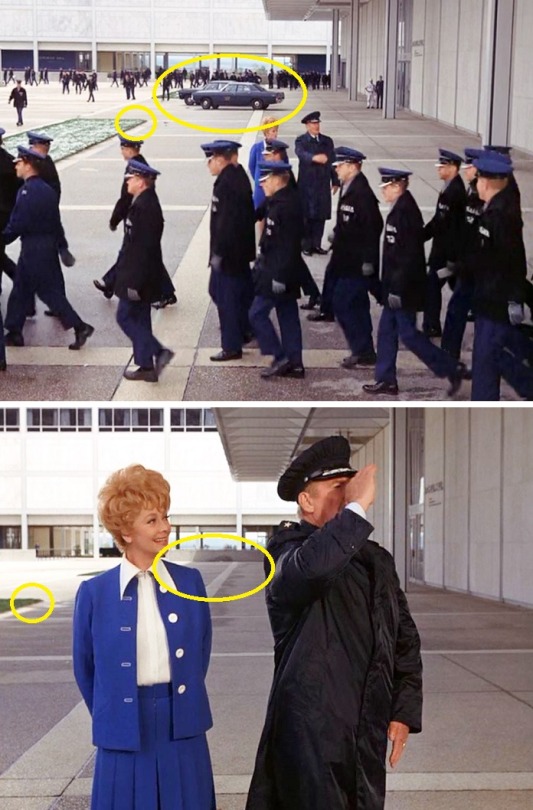
During
the saluting scene, cars disappear and reappear; They’re present in
the long shots and gone in the close-ups.
Same
for the snow (small circle); there is snow on the grass in the long
shots and none in the close-ups.
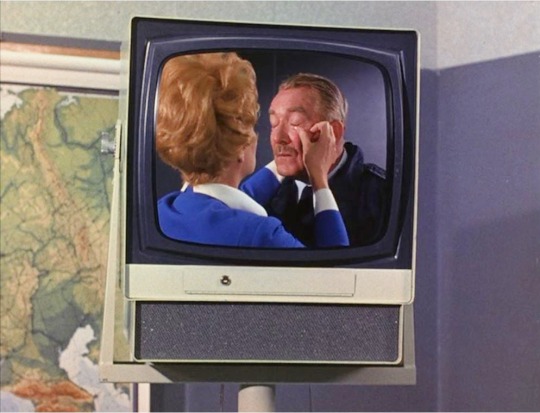
Lucy
mistakes the Superintendent (Roy Roberts) for a janitor despite the fact that he’s
wearing a military hat!
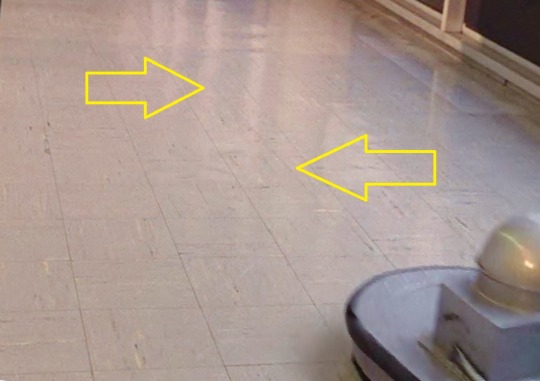
The
wire pulling the runaway floor polisher down the hallway can be
clearly seen in one shot, although it is difficult to see in the
still photos.
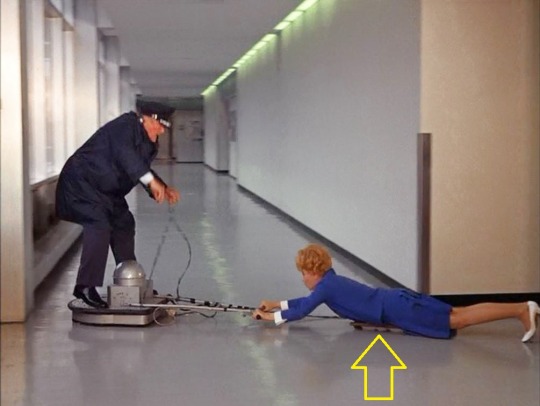
In another shot you can see the dolly underneath Lucy.
“Lucy Goes to the Air Force Academy: Part 2” rates 3 Paper Hearts out of 5
These
two episodes feel more complete if viewed as one. Lucy’s display of
physical comedy is truly memorable. The tour of the Academy is
basically a recruitment video for cadets. The military pageantry of
the ending, combined with Lucy’s hallucination of Craig in uniform,
is a bit odd.
 Papermoon Loves Lucy
Leave a comment